
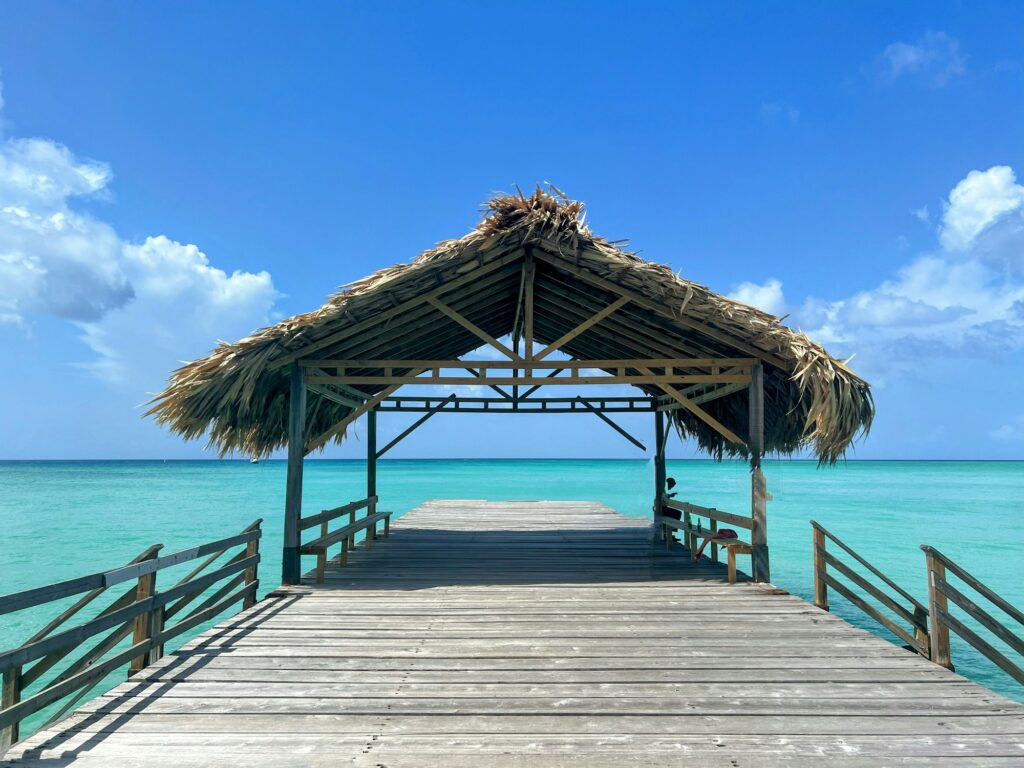
No — in the vast majority of cases, you should not cancel your Caribbean trip in September 2026. The hurricane season is forecast to be quiet (NOAA: 7-13 named storms, ACE index about 78% below normal as of 19 August), and the 10 September peak is a climatological average, not a forecast for 2026. The ABC islands, Barbados and St Lucia show 2-8% annual impact odds. The right strategy: pick your destination, buy insurance before a storm is named and favour hotels with hurricane guarantees.
10 September is the official peak of the Atlantic hurricane season, yet 2026 is shaping up to be one of the quietest seasons in recent memory. As of 19 August, only three storms have been named (Arthur, Bertha, Cristobal), none has reached hurricane strength, and cumulative activity is about 78% below normal: the slowest start since 1988. Should you cancel your Caribbean holiday because of that? We reviewed the official forecasts, per-destination odds, cancellation guarantees and insurers’ policies to answer with numbers, not fear.
1. Why 10 September is the hurricane peak
The National Hurricane Center (NHC) is categorical: « The peak of the Atlantic hurricane season is September 10, with most activity occurring between mid-August and mid-October », according to NHC. This is not a forecast for 2026: it is a statistical fact, computed from more than 170 years of observations. Since 1851, 86 hurricanes have occurred on a 10 September, the absolute record for any calendar day (NOAA compilation picked up by USA Today).
One month, three weather reasons
September concentrates about 41% of the season’s major hurricanes for three physical reasons: tropical Atlantic sea-surface temperatures reach their maximum (29-30 °C, after a full summer of accumulated heat), vertical wind shear drops to its yearly minimum, and African easterly waves (the famous Cape Verde hurricanes) are at their most frequent and best organised. As a result, about 75% of the season’s hurricanes form between mid-August and mid-October (Going.com), and NOAA’s 6 August 2026 update notes that 96% of major-hurricane days fall in that window (CBS17).
2. The 2026 season: quiet on paper, keep an eye on the water
The picture as of 19 August 2026 is unambiguous: three named storms (Arthur on 25 June, Bertha in mid-July, Cristobal in early August), zero hurricanes, and an ACE index (Accumulated Cyclone Energy, meteorologists’ cumulative activity measure) of about 2.6 — roughly 78% below normal for this date. It is the quietest start to a season since 1988, according to the NHC/NOAA synthesis relayed by the weather press (Miami Herald).
Forecasters confirm that trajectory. NOAA predicted 8-14 named storms in May, then adjusted its range to 7-13 storms, 2-6 hurricanes and 0-2 major hurricanes in its 6 August update (NOAA CPC). Colorado State University (CSU) expects 9 storms, 4 hurricanes and 1 major (tropical.colostate.edu), the UK Met Office 9 storms, 5 hurricanes and 2 major, with an ACE of 72 against an average of 121 (Met Office). Only one higher forecast: Tropical Storm Risk (UCL), which sees 14 named storms (tropicalstormrisk.com).
El Niño, the Atlantic’s shield
The reason for this calm is well identified: a strong El Niño episode, ongoing since 2026 and possibly on track to reach record strength since 1950 according to NOAA (ENSO Diagnostic Discussion). El Niño strengthens vertical wind shear over the tropical Atlantic: this wind that changes direction and speed with altitude « beheads » thunderstorms before they organise into cyclones. The NINO.3 anomaly measured by Japan reached +2.5 °C in July, and the WMO estimates about a 90% probability of persistence until the end of 2026 (WMO). This is the mechanism we detailed in our guide to the best destinations for an El Niño summer.
The paradox: warmer waters than ever
The flip side: the western tropical Atlantic, the Caribbean Sea and the Gulf of Mexico show sea-surface temperatures 1-3 °C above normal (Copernicus). A storm that manages to survive the shear can therefore intensify brutally near the islands. That is exactly the scenario of Hurricane Melissa in October 2025: category 5, winds of 185 mph (298 km/h) and a pressure of 892 mb off Jamaica, one of the most intense cyclones ever observed in the Caribbean, with more than $10 billion in damage (GDACS, Reuters). Its name was retired from the hurricane list in March 2026 (AP). Fewer storms does not mean harmless storms: 2026 could be a « sawtooth » season, and CSU puts the probability of a major hurricane in the Caribbean at 17% this year, against a 47% historical average. Better than usual, certainly, but not zero.
3. The ABC islands, the Caribbean’s safety ring
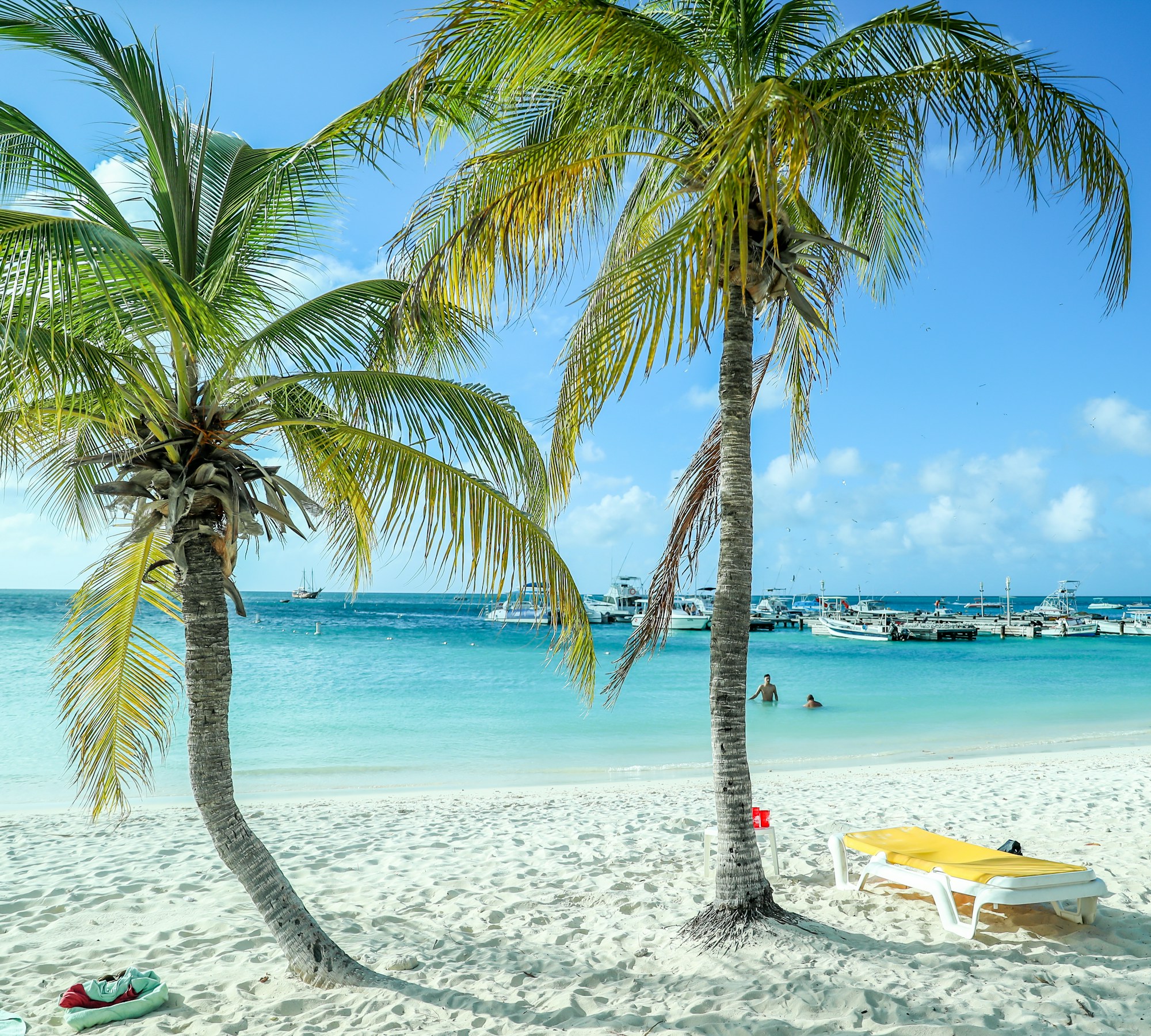
Aruba, Bonaire and Curaçao: outside the belt
Nestled at 12-13°N, at the very south of the hurricane belt, the ABC islands (Aruba, Bonaire, Curaçao) have recorded no direct cyclone impact since modern records began: hurricanes rarely pass below the 14th parallel. The last serious event, Felix in 2007, passed about 80 km north of Curaçao without touching the island. Philip Klotzbach’s work (CSU) puts the annual probability of a hurricane passing within 50 nautical miles of Bonaire at about 2% (tropical.colostate.edu). The only historical nuance: the 1877 « Orkan Grandi », classified category 2 in the Dutch archives, hit Curaçao before modern records. The risk exists — it is simply the lowest in the basin.
Highlights
- Steady trade winds: the least rainy Caribbean islands in September
- Modern hotel infrastructure, built for storms (and rarely tested)
- Ideal base for diving, snorkelling and day trips
4. The southern belt: a low, manageable risk
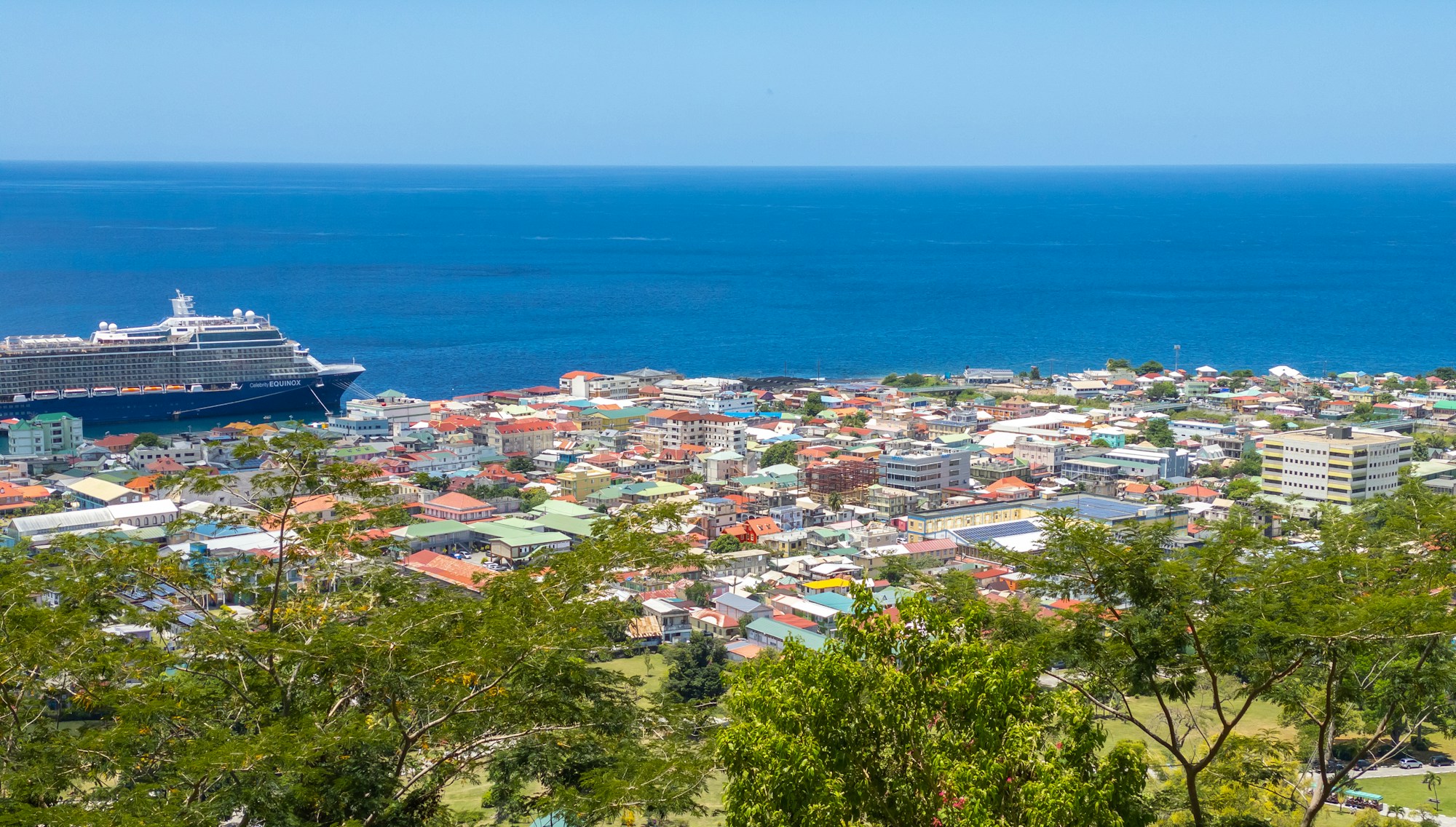
Barbados, St Lucia, Grenada, Trinidad and Tobago
The « southern belt » of the Antilles arc (Barbados, St Lucia, Grenada, Trinidad and Tobago, St Vincent) is the second safest option: annual hurricane passage probabilities range from 4% to 8% (Klotzbach model, 1880-2020 averages, CSU). These Windward Islands enjoy the most consistent trade winds in the basin, which also makes them among the least rainy in September. The Caribbean Hotel & Tourism Association sums it up well: even when a hurricane hits one part of the basin, « the majority of the region experiences ideal tropical weather » (statement by Nicola Comito relayed by Afar).
Highlights
- Historically rare cyclone tracks: most late-season hurricanes pass to the north
- Water at 29 °C and world-class snorkelling (Carlisle Bay turtles, the Pitons)
- Direct flights from London most of the year, or a short hop via the US in low season
5. The Bahamas, Cuba, Jamaica, Cancún: the most exposed zones
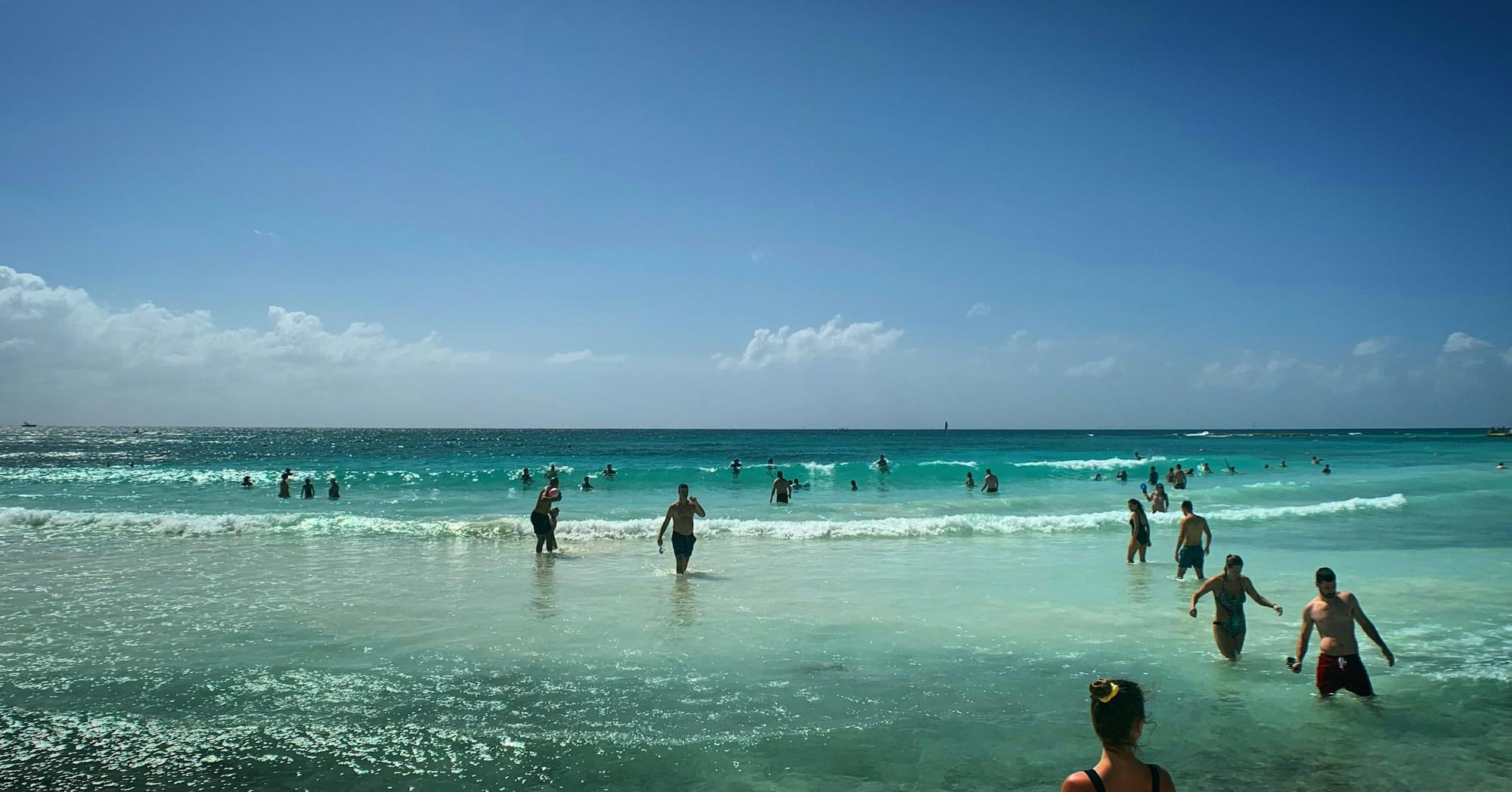
The central belt and Quintana Roo
Probabilities climb in the centre and north of the basin: 8-15% a year for the Dominican Republic, Puerto Rico, Guadeloupe and Martinique, 10-20% for Cuba and Jamaica, and 15-25% for the Bahamas, statistically the most battered archipelago in the basin (Dorian in 2019, Irma in 2017, CSU). Mexican Quintana Roo, meanwhile, is hit on average once every five to seven years (Wilma in 2005, Dean in 2007, Beryl in 2024), with efficient alert infrastructure and hotels built to withstand storms. Not a reason to strike Cancún off the map, but a destination where vigilance is required in September.
And in 2026, Cancún has another problem, far more concrete than hurricanes: sargassum. Quintana Roo collected about 105,000 tonnes of seaweed in the first half of the year, four times the 2025 volume over the same period, and 56 of its 140 beaches were on red alert by mid-August, including stretches of Tulum and Playa del Carmen (Noticaribe, El Universal). The trend usually eases in September, but 2026 is bucking the norm. If you are targeting the Mexican Caribbean, favour northern Cancún, Isla Mujeres or the west coast of Cozumel, or explore our Mexico itinerary beyond Cancún. For Cuba, our complete Havana, Trinidad and Viñales guide still stands, but avoid planning a stay in the three weeks around the 10 September peak.
Highlights
- Unbeatable prices: all-inclusives from ~$80-100/night in the Dominican Republic
- Efficient alert networks (CENAPRED/Conagua in Mexico, FCDO alerts in the British territories)
- Modern hotels built to strict cyclone standards
6. French Caribbean: the protocol when a storm hits
Guadeloupe, Martinique, St Martin: six-colour vigilance
The French départements and territories (Guadeloupe, Martinique, St Martin, St Barthélemy) run the most complete alert system in the basin: Météo-France’s cyclone vigilance works on six colours — green (no danger), yellow (be alert), orange (be very careful), red (avoid all travel), purple (absolute alert, winds above 73 mph / 118 km/h, strict confinement) and grey (gradual return to normal). Each territory also runs a local emergency plan with declared shelters and emergency numbers (112). If you are staying in the British territories instead — Anguilla, the British Virgin Islands or Turks & Caicos — the FCDO updates its travel advice alerts on gov.uk as each storm develops, and the emergency line is 911.
If a hurricane hits during your stay, the protocol is almost always the same: stay at the hotel and follow the staff. Structured properties have an internal lockdown plan (reinforced common room, generator, water and food reserves), and airports usually reopen within 24 to 72 hours. Prepare a simple emergency kit: papers and medication in a waterproof bag, chargers and a power bank, water (2 litres per person per day), a torch and cash. Above all, do not go outside during the eye of the cyclone: this 20 to 60-minute lull is deceptive, the second half of the eyewall arrives next. After the storm passes, contact your insurer (trip interruption), your hotel (rebooking) and your airline (waiver).
Highlights
- Six-colour cyclone vigilance, the most precise in the basin, with translated instructions
- Territorial emergency plans: shelters, evacuations, local emergency numbers
- Equipped hotels (generators, reserves) and staff trained for lockdown
7. Should you cancel? No — if you cover yourself
Let’s put the numbers end to end. On average, 60-70% of Atlantic hurricanes never make landfall (NHC). An annual probability of 8-15% for the central belt, divided by the twelve weeks of the season and reduced to a one-week stay, gives a real risk of around 0.5-3% for a moderately exposed destination. And in 2026, forecasts divide that risk by nearly three again (ACE at about 60% of normal). The opportunity cost, meanwhile, is massive: September is the cheapest month of the year in the Caribbean (20-50% off hotels, cruises from ~$70-90/night, flights often 15-30% below winter fares, Sandals, Expedia), for weather that stays excellent: 28-31 °C, short late-afternoon showers, water at 29 °C.
| Zone | Direct-impact probability (per season) | September verdict |
|---|---|---|
| ABC islands (Aruba, Bonaire, Curaçao) | 2-4% | Go, worry-free |
| Southern belt (Barbados, St Lucia, Grenada, T&T) | 4-8% | Go, with insurance |
| Central belt (Guadeloupe, Martinique, Puerto Rico, DR) | 8-15% | Go, well covered |
| Cuba, Jamaica | 10-20% | Weigh the pros and cons |
| Bahamas | 15-25% | Pick another season |
Annual probabilities of a hurricane passing within 50 nautical miles, 1880-2020 historical averages (Klotzbach/CSU model, orders of magnitude).
Insurance: the real answer to the risk
Rule no. 1 of travel insurance is the moment of purchase: a hurricane is only covered if the policy was bought before the storm was named (the « known event » exclusion, universal at Allianz, AXA, Europ Assistance and comparison sites such as Squaremouth). Once « Arthur » or « Bertha » is named, no new policy covers that event. Coverage triggers are precise: an official hurricane warning in effect at the destination, mandatory evacuation, accommodation declared uninhabitable or airport closure. A mere threat or a tropical storm watch does not suffice. Budget 4-10% of the trip price for standard cover, and if the very idea of a hurricane worries you, the CFAR (Cancel For Any Reason) option lets you cancel without a motive and recover 50-75% of the cost: buy it within 14-21 days of the first payment, cancel up to 48h before departure, for a surcharge of $40-200 depending on the contract. Our complete 2026 travel insurance comparison details the offers on the market.
Waivers, hotels and cruises: everyone plays along
On the transport side, the reflex is the waiver: when a named storm threatens, airlines issue waivers 48-72h before it passes, allowing free rebooking, usually within seven days around the date, for the airports concerned. The mechanism is common to American carriers (American, United, Delta) and European ones — including British Airways and Virgin Atlantic — and Caribbean airports reopen very quickly, rarely more than 72h after a hurricane. On the accommodation side, « hurricane » guarantees have become a major marketing argument: Sandals offers a fully transferable credit if a warning is issued within 48h of arrival or during the stay (sandals.com/hurricane), the Cayman Islands cap billing at one night if a hurricane hits during the stay (Worry Free Hurricane Guarantee 2026, Visit Cayman Islands), and Airbnb refunds in full in declared natural disasters (Major Disruptive Events Policy, airbnb.com).
Finally, cruises are structurally the most resilient trips: lines decide on rerouting 48-72h before departure, replace ports and compensate. Published 2026 policies include $50-100 on-board credits per cabin if a port is skipped (Royal Caribbean), a future cruise credit worth 100% of the price paid plus up to $200 of flight fees (Carnival), or $200 of onboard credit if two or more ports are missed, with a $300-per-person rebooking if cancelled (Norwegian), according to the advisories cited by Cruise Critic. On a September itinerary, expect about one rerouting in five: you don’t lose your holiday, you move it.
The 6 reflexes before you book
- Choose the destination by exposure: ABC or the southern belt by default, the Bahamas rather in winter
- Buy travel insurance immediately, before any storm is named
- Favour hotels with hurricane guarantees and rates cancellable up to 72h before arrival
- Note your airline’s waiver number and check its rebooking policy
- Monitor nhc.noaa.gov from five days before departure
- Keep a plan B: date shifts or an alternative destination — most guarantees are deferrals
Practical info for a Caribbean September
Follow the NHC and FCDO alerts, message your family and keep plan B within reach with a local eSIM, installed in two minutes before you leave. Regional data packs from a few euros.
Regional packs from a few eurosCancellation, trip interruption, medical costs and re-routing: insurance is the only real answer to hurricane risk, provided it’s bought before a storm is named. Nomad Insurance covers you globally from $56/4 weeks — 10% off via our link.
From $56 / 4 weeksTo compare data plans before you go, our eSIM travel comparison remains the reference.
Frequently asked questions
Should I cancel my Caribbean trip in September 2026 because of hurricanes?
No, in most cases. The 2026 season is forecast quiet (NOAA: 7-13 named storms; CSU: 9/4/1; ACE about 60% of normal) and direct-impact odds per island range from 2% to 25% a year — far less for a one-week stay. The right reflex: a suitable destination, insurance bought before any storm is named and flexible bookings. NOAA CPC.
Why is 10 September the peak of the hurricane season?
Because it is when the tropical Atlantic is warmest (29-30 °C), wind shear is at its minimum and African waves are most active. Since 1851, 86 hurricanes have occurred on a 10 September, the record for any calendar day. It is a climatological average, not a forecast for a given year. NHC.
Which islands are safest in September?
Aruba, Bonaire and Curaçao (no direct impact since 1851, outside the hurricane belt), then Barbados, St Lucia, Grenada and Trinidad and Tobago (southern belt, 4-8% annual probability). Bermuda is also calm in September, with its activity peak in October-November. CSU.
Does travel insurance cover hurricanes?
Yes, but only if the policy is bought before the storm is named, and on precise triggers: official hurricane warning, mandatory evacuation, uninhabitable accommodation or closed airport. A mere threat does not suffice. The CFAR option lets you cancel without a reason (including hurricane fear) and recover 50-75% of the cost. Squaremouth.
What happens if a hurricane hits during my stay?
The hotel applies its cyclone plan: lockdown in a reinforced common room, generator and reserves. The instruction is to stay at the hotel and never try to reach the airport during an alert. Airports usually reopen within 24-72h, and insurance covers trip interruption and extra costs. FCDO.
Do airlines refund you when there’s a hurricane?
They don’t refund outright, but they issue waivers: free rebooking, usually within seven days around the date, for flights to the airports concerned. Waivers are published 48-72h before the storm passes, and Caribbean airports reopen very quickly. Afar.
And sargassum in Cancún in September 2026?
2026 is a record year: about 105,000 tonnes collected in the first half and 56 of 140 beaches on red alert in Quintana Roo by mid-August. Volumes usually drop in September but remain active. Favour northern Cancún, Isla Mujeres or Cozumel (west side), or choose a low-exposure destination such as the ABCs or Barbados. Riviera Maya News.
Sources
- National Hurricane Center: hurricane season climatology: 10 September peak, historical statistics
- NOAA CPC: Atlantic Hurricane Season Outlook: May forecast and 6 August 2026 update
- CSU Tropical Meteorology Project: 2026 forecast (9/4/1) and landfall probabilities (Klotzbach)
- Met Office: seasonal forecast of cyclone activity: ACE 72 vs 121
- NOAA: El Niño/Southern Oscillation Diagnostic Discussion: 2026 episode, 18 August 2026
- WMO: El Niño Update: persistence estimated at ~90% until end of 2026
- Copernicus Climate Change Service: tropical Atlantic sea-surface temperatures (summer 2026)
- FCDO (gov.uk): tropical cyclones guidance: monitoring, insurance and local procedures
- GDACS: Hurricane Melissa assessment (2025)
- Squaremouth: hurricane insurance guide: coverage triggers, CFAR
- Sandals: Hurricane Guarantee: deferral policy
- Visit Cayman Islands: Worry Free Hurricane Guarantee 2026: one-night billing cap
- Airbnb: Major Disruptive Events Policy: refunds in declared disasters
- Cruise Critic: 2026 cruise line hurricane policies
- Noticaribe: sargassum in Quintana Roo (July-August 2026)
- Afar: travelling the Caribbean during hurricane season
Sources consulted on 19 August 2026.

Plan your trip with Pixidia
Pixidia learns how you travel and helps you build a trip that truly fits you and everyone coming along.
Open the planner