
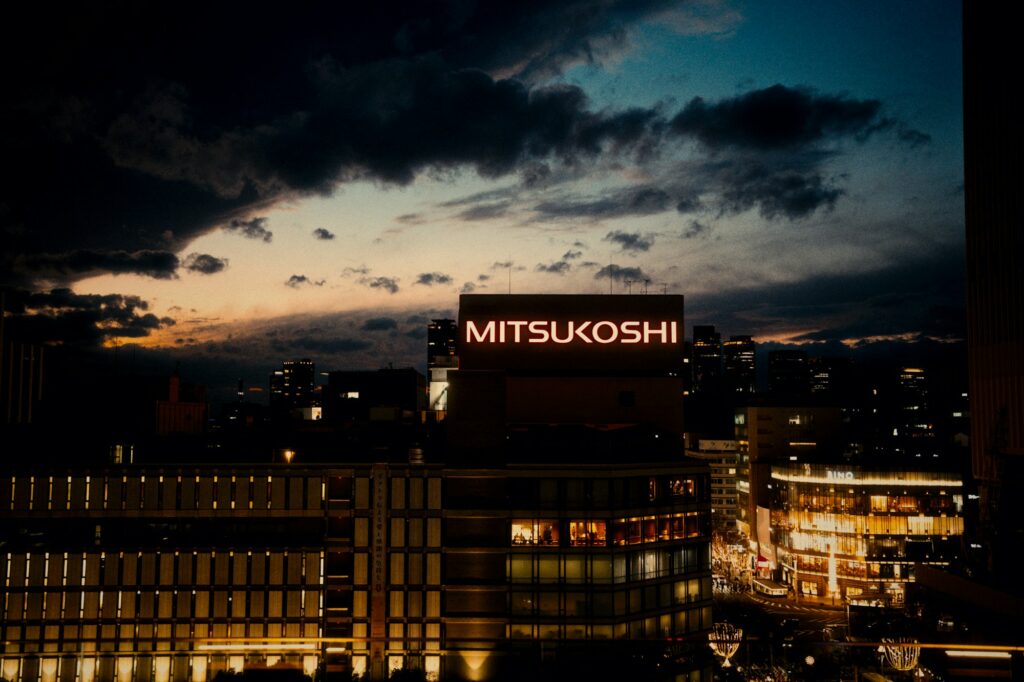
The 2026 Asian Games run in Nagoya from 19 September to 4 October, with up to 17,000 athletes and officials across more than 40 sports — more than at the Paris 2024 Olympics. With no purpose-built athletes’ village, part of the delegations are housed on the Costa Serena cruise ship moored at the port. There’s no direct flight from London: your best bet is to fly into Tokyo or Osaka, then reach Nagoya by Shinkansen in 35 to 100 minutes. Long dismissed as a city to skip, Nagoya is well worth a proper stop — castle, street food and a thousand-year-old shrine — before you carry on to the Nagoya Matsuri festival on 10 October.
For sixteen days, Nagoya will host more people than the Paris 2024 Olympics, without a single athletes’ village built to put them up. It’s also the city Japan itself branded the country’s most boring, in a 2016 municipal survey, and the one most guidebooks sum up in a single word: skipped. The 2026 Aichi-Nagoya Asian Games are a rare chance to test whether that verdict still holds, and to work out why the city is worth stopping in, both during the Games and long after they’re over.
1. The 2026 Asian Games: the event that changes everything for Nagoya
Aichi-Nagoya 2026: a mega-event in a city that doesn’t usually play in this league
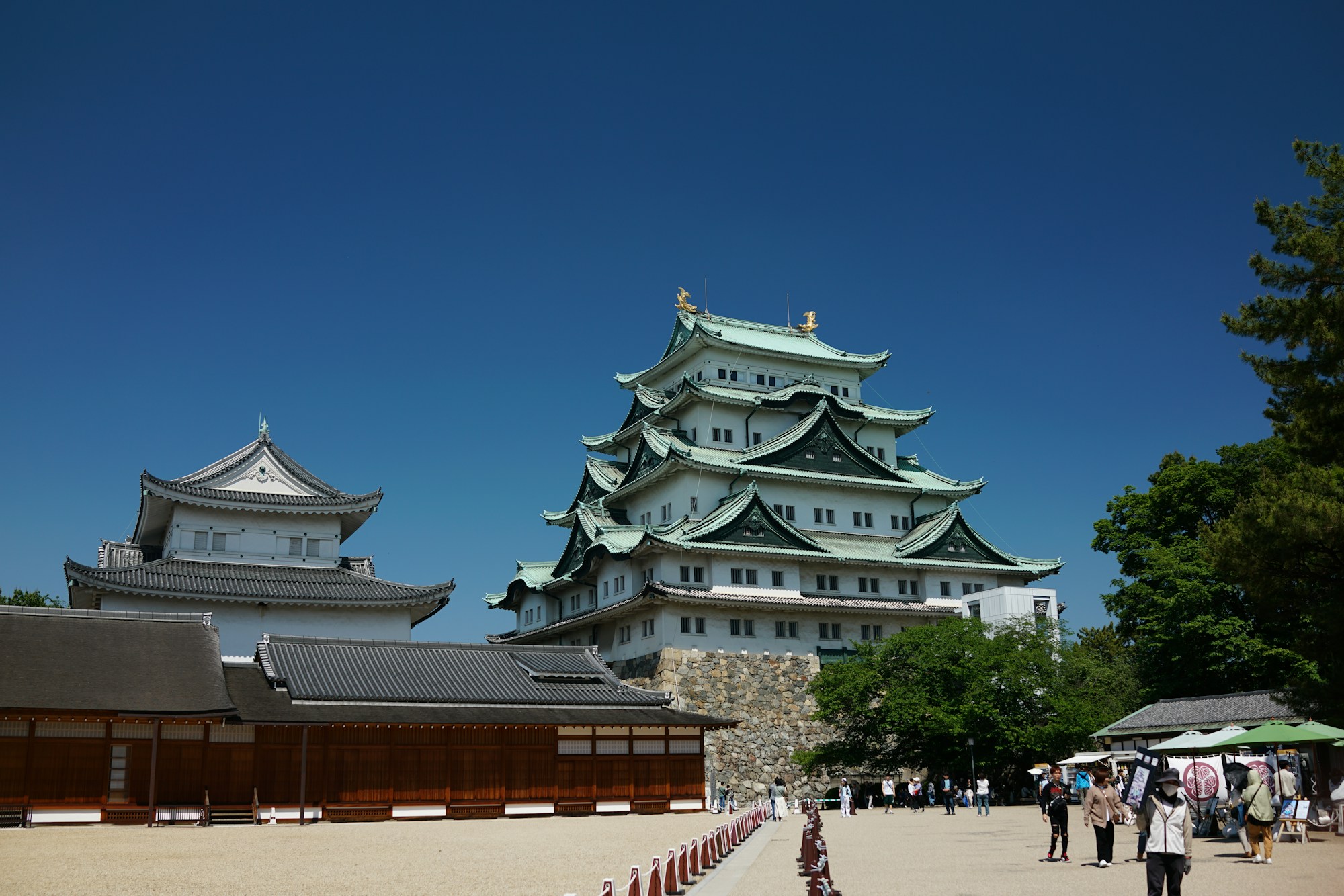
The 20th Aichi-Nagoya 2026 Asian Games run from 19 September to 4 October 2026, opening and closing ceremonies included, centred on the Paloma Mizuho Stadium. According to the Olympic Council of Asia, the event covers more than 40 sports and close to 470 events for 45 to 46 national committees, with participant numbers climbing over the year to around 17,000 athletes and officials — more than at the Paris 2024 Olympics. It’s the first time Nagoya has hosted the Games, and only the third time Japan has done so since Tokyo 1958.
The programme mixes classic Olympic sports with disciplines that carry a strong Asian identity and never make the Olympics: kabaddi, sepak takraw, wushu, dragon boat racing. 2026 also brings surfing, breaking and MMA into the fold, plus a full esports tournament (League of Legends, Street Fighter 6, Tekken 8 and more) running from 23 September to 2 October at the Aichi Sky Expo, according to Wikipedia.
With no purpose-built athletes’ village, between 4,000 and 5,000 athletes and officials are staying aboard the Costa Serena, an Italian cruise ship chartered for the occasion and moored at Nagoya port, backed up by container-huts for another 2,000 people. According to the Gulf Times, organisers are billing the solution as both cost-effective and unprecedented. By late August 2026, though, the organising committee’s chairman had admitted to a shortage of staff and budget to absorb the late surge in participant numbers, according to the South China Morning Post — to the point of asking some sports federations to find their own accommodation.
Highlights
- Ticket sales open with no lottery since 30 June 2026, from around €10 for a single sports session
- 53 competition venues, mostly clustered in Nagoya and across Aichi Prefecture
- IC cards (TOICA, Suica, Pasmo) work everywhere, and there’s no visitor parking at the main venues
2. Nagoya, the city Japan has snubbed for forty years
The phenomenon even has a name in Japan: « Nagoya skipping » (名古屋飛ばし). It dates back to the 25 concerts Michael Jackson played in Japan between 1987 and 1989 without ever stopping in Nagoya, according to Wikipedia. The clearest symbol is the Nozomi 301 Shinkansen service, launched in 1992 to deliberately bypass the Nagoya and Kyoto stations and shave time off the journey for business travellers racing to Osaka. It was eventually withdrawn in 1997 after a wave of local protests — proof the snub genuinely stung on the ground.
The numbers back it up. According to Unseen Japan, Nagoya attracted just 1.83 million hotel visitors in 2023, against 43.64 million for Tokyo and 18.76 million for Osaka over the same reference period: the city ranks 11th among prefectures for foreign tourists, even though 92.5% of Japan’s international visitors include Tokyo or Osaka in their itinerary. In 2016, a municipal survey reported by the Japan Times went as far as naming Nagoya « the most boring city in Japan » out of eight major cities studied, coming last or near-last in most categories.
The reasons are well documented and overlap: no international airport to rival Narita, Haneda or Kansai; the near-total loss of pre-modern architectural heritage in the 1942–1945 firebombing raids, unlike Kyoto, which was spared; a rebuild in generic post-war architecture; and chronic under-marketing as a destination, with most guidebooks giving the city a page or two at most. As writer Satoshi Ash Kanemura sums it up on Medium, most itineraries treat it « like a transfer station, not a destination. »
3. Why stop anyway: the case that’s changed
Seven lesser-known reasons, plus three new ones from this year
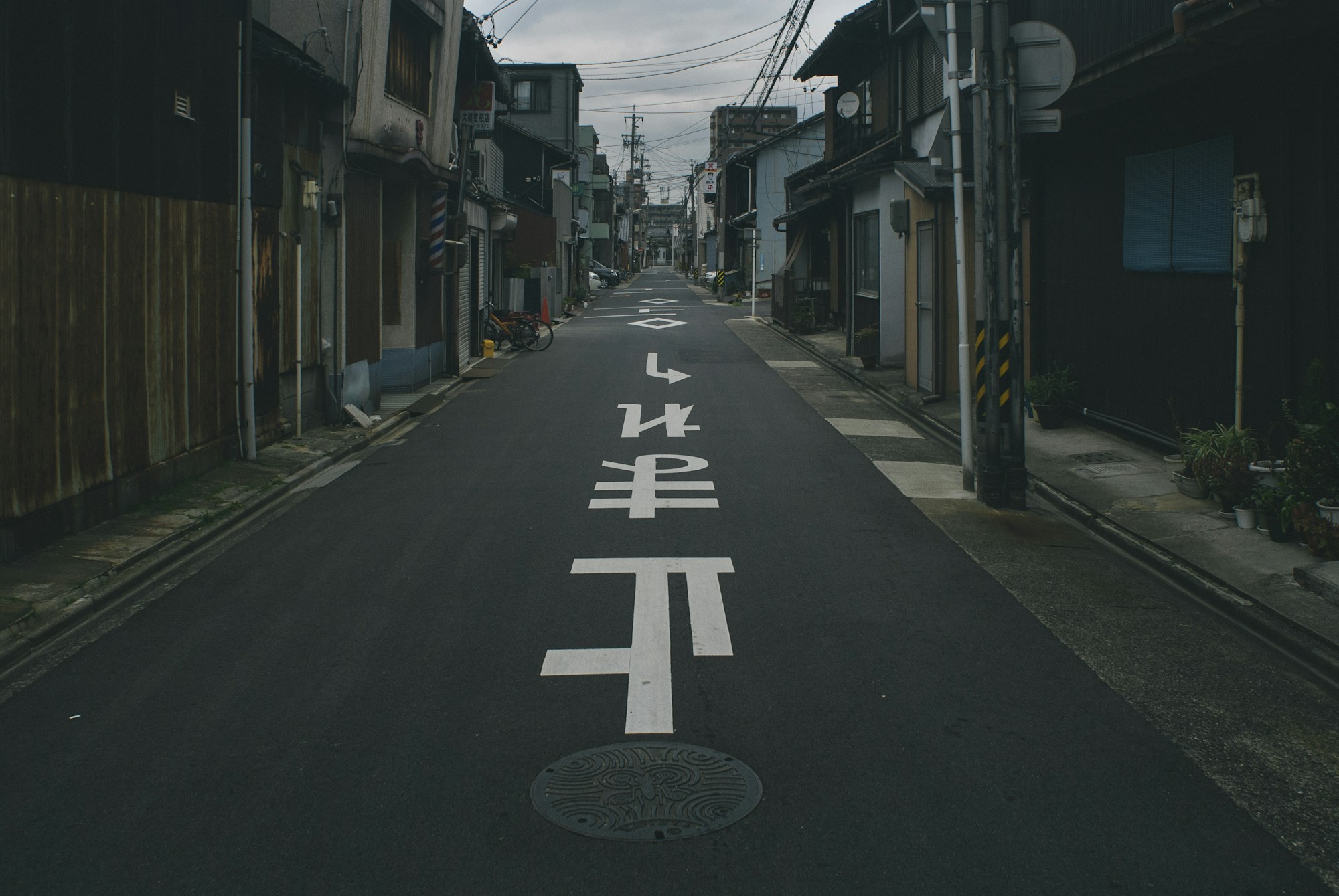
According to The Invisible Tourist, Nagoya hides a richer pre-war history than most people assume: the Osu Kannon shrine was relocated here in 1612, the city was a major stop on the old Tokaido road between Kyoto and Edo, and the Shikemichi district preserves one of the few pockets of Edo-era lanes to survive the 1942–1945 bombing raids. Hommaru Palace, inside the castle grounds, was rebuilt to match its 1615 appearance exactly (some original paintings survived) and reopened in 2018: it’s considered a high point of samurai residential architecture.
2026 adds three arguments that didn’t exist five years ago. Ghibli Park, 30 to 50 minutes from Nagoya in Nagakute, has been screening an exclusive short film since 8 July 2026, A Night in the Valley of Witches, viewable only on site and never released for streaming (our full guide to visiting Ghibli Park covers the tickets). The Conrad Nagoya, Hilton’s first luxury property in the city, opened on 31 July 2026, according to Travel Industry Today. And the city has begun rebuilding its castle keep in wood to the original 1610 plans, a project expected to finish around 2032.
In a Japan setting tourism records in 2026, with visible strain in Kyoto, Tokyo and Osaka, Nagoya doubles as an antidote: « even in busy areas like Nagoya Station or Sakae, crowds stay manageable, » notes a comparison cited by Plan Japan Smart.
Highlights
- LEGOLAND Japan: around a 5-minute average wait, against up to 2 hours elsewhere in Japan
- Arimatsu village, a preserved Edo-era pocket and the birthplace of shibori tie-dyeing
- A handy gateway to the Japanese Alps: Takayama, Gujo Hachiman, Gero Onsen
4. Planning your trip: flights, visas, budget and typhoon season
No direct flight connects London to Nagoya. Connections run via Hong Kong (Cathay Pacific), via Helsinki on a seasonal route (Finnair), or through other Asian hubs, from around £538 return according to Skyscanner. The strategy most recommended by specialist Games guides is instead to fly into Tokyo (Narita or Haneda) or Osaka (Kansai), then reach Nagoya by Shinkansen: 35 minutes from Kyoto, around 50 from Osaka, and between an hour and a half and two hours from Tokyo. The local airport, Chubu Centrair (NGO), is worth knowing about if you’re following the esports events: it sits right next to the competition venue (Aichi Sky Expo, in Tokoname), around 30 minutes from Nagoya Station on the Meitetsu μ-SKY express.
For a tourist stay, British passport holders remain visa-exempt for up to 90 days. Japan’s upcoming electronic travel authorisation, JESTA, was approved in May 2026 but won’t launch until fiscal year 2028 at the earliest — so it has zero bearing on a 2026 trip. Think of it as Japan’s answer to the US ESTA rather than an EU-style scheme: once live, it will apply to visa-exempt travellers, UK citizens included, but not before then.
On budget, the yen was trading in mid-2026 at around 161 JPY to the dollar, one of its weakest levels since 1986, according to Kanko-map: a trip effectively costs 20 to 30% less in foreign currency than it did a few years back. Budget, excluding flights, from $49 a day on a tight budget to $197 for a comfortable trip. Nagoya’s hotel rates climb noticeably in September–October because of the Games, but the city stays structurally 20 to 40% cheaper than Tokyo, Kyoto or Osaka in normal times: booking early is still the best lever, especially since Tokyo’s hotels will also be squeezed by the swimming and equestrian events held there. Our guide to Japan’s 2026 changes for tourists also covers the new departure tax (¥3,000 per person since July) and the revised tax-free shopping procedure from 1 November.
One last thing: the Games fall right in the middle of typhoon season, which peaks in August–September. Nagoya, on the Pacific coast, sits at a moderate risk level though, well below Okinawa or Kyushu. According to Selfguidejapan, most travellers encounter nothing worse than a rainy afternoon or a minor train delay.
5. « Nagoya Meshi » and the culture you won’t find anywhere else
The local cuisine, nicknamed Nagoya Meshi, is an argument for stopping here all by itself. The signature trio, according to Tabelog: hitsumabushi, grilled eel served over rice in a wooden container and eaten in three stages (plain, with condiments, then doused in dashi broth); miso katsu, a breaded cutlet topped with a thick local red-miso sauce; and tebasaki, fried chicken wings popularised by the restaurant Furaibo. Add to that kishimen (flat noodles), misonikomi udon, and ogura toast, grilled bread topped with sweet red bean paste.
- Atsuta Horaiken for hitsumabushi, Yabaton for miso katsu
- Kissaten (old-school cafés) throw in a mini breakfast — toast, egg — with any drink ordered in the morning
- The Osu district, around 1,200 shops, blends a shrine with vintage fashion and cosplay culture
This kissaten « morning culture, » common elsewhere in Japan, is taken to another level in Nagoya: thick toast, butter, a boiled egg, sometimes soup or salad, in a wood-panelled setting where, according to one specialist guide, you can work for hours on a tablet or listen to local retirees put the world to rights. The local dialect, nagoya-ben, is enjoying a revival of its own too: an annual festival, the Yattokame, is dedicated to it, with 84% support across all generations.
The Osu district is also the epicentre of the World Cosplay Summit, which drew a record 42 countries and regions in late July 2026, with a parade of a thousand cosplayers through the streets, according to Aichi Now. A few minutes away, Atsuta Jingu shrine, Japan’s second most revered Shinto site after Ise and founded around 1,900 years ago, houses one of the country’s three imperial regalia and draws more than 9 million visitors a year, according to Kanpai-Japan.
6. After the Games: the Nagoya Matsuri and side trips worth staying on for
The Games’ closing ceremony on 4 October isn’t the end of the interesting window for visiting Nagoya. The city’s biggest autumn festival, the Nagoya Matsuri, takes place on 10 and 11 October 2026, just a week later, according to Festinjapan: it’s free, with a parade of three giant animated floats (karakuri ningyō) and a procession of samurai dressed as Oda Nobunaga, Toyotomi Hideyoshi and Tokugawa Ieyasu, the three unifiers of Japan, all of them local to the region. The Asian Para Games, hosted in Japan for the first time, follow from 18 to 24 October for travellers staying on even longer.
From Nagoya, several under-an-hour side trips are worth the detour: Inuyama (30 minutes on the Meitetsu line), home to one of Japan’s few authentic wooden castle keeps, with views over the Kiso River and the Meiji-Mura open-air museum; Nabana no Sato, a flower park known for its illuminations; and Tokoname, a centuries-old pottery village that also hosts the Aichi Sky Expo esports venue during the Games. To go further afield, the Takayama-Hokuriku Area Tourist Pass (¥19,800 for 5 days, on sale from Chubu Centrair airport) covers Takayama, Kanazawa and a bus to the UNESCO-listed village of Shirakawa-go, according to JRailPass. Our Kyoto and Osaka foodie guide also makes a logical extension, since Nagoya sits almost exactly between the two cities.
Practical info for planning your trip
An eSIM you install before you fly, so you’re connected the moment you land in Tokyo, Osaka or Chubu Centrair, no airport counter required.
From a few euros for several days of dataJapan isn’t covered by any UK reciprocal healthcare scheme, so a policy covering repatriation is worth having for the whole trip, typhoon season included.
From $56 / 4 weeksFrequently asked questions
Is the 2026 Nagoya Asian Games definitely going ahead, despite the budget problems?
Yes, entirely. By late August 2026, the international sports press was covering final preparations just weeks before the 19 September opening. The documented budget and housing problems concern the logistics of the organisation, not whether the event itself is happening, according to the South China Morning Post.
Do UK citizens need a visa to visit Nagoya?
No. British passport holders are visa-exempt for tourist stays of up to 90 days. Japan’s upcoming electronic travel authorisation (JESTA) won’t launch until fiscal year 2028 at the earliest, so it has no bearing on a 2026 trip.
How do you get to Nagoya from the UK?
There’s no direct flight between London and Nagoya. The simplest solution is still to land in Tokyo or Osaka, then take the Shinkansen to Nagoya, between 35 and 100 minutes depending on your starting point, rather than chasing a long connection into the local Chubu Centrair airport.
Can you still get tickets for the Games?
Yes. General sales have been open since 30 June 2026, with no lottery system, and prices starting from around €10 for a single sports session. The official portal regularly releases more stock, so an « unavailable » listing doesn’t necessarily mean sold out.
Why does Nagoya have a reputation as a boring city?
The city lost most of its historic heritage in the 1942–1945 bombing raids, has no international airport to rival its competitors, and suffers from chronic under-marketing as a destination. A 2016 municipal survey even named it « the most boring city in Japan » out of eight major cities, according to the Japan Times.
Is it worth staying in Nagoya after the Games end?
Yes. The free Nagoya Matsuri festival runs the weekend of 10–11 October, a week after the closing ceremony, and Ghibli Park, 30–50 minutes from the city, is worth half a day on its own. The Asian Para Games follow from 18 to 24 October.
Sources
- Official website of the Aichi-Nagoya 2026 Asian Games: organising committee AINAGOC
- Olympic Council of Asia: dates, programme and official venues
- Wikipedia, 2026 Asian Games
- Wikipedia, Cricket at the 2026 Asian Games: preliminary event schedule
- Wikipedia, Nagoya skipping
- Tripmojo: 2026 Asian Games travel guide
- South China Morning Post: the Games’ housing crunch
- Gulf Times: the Costa Serena cruise ship
- Unseen Japan: Nagoya tourism numbers
- Japan Times: the « most boring city » survey
- Medium: Nagoya, Japan’s most underrated city
- The Invisible Tourist: why visit Nagoya
- Plan Japan Smart: overtourism in Japan in 2026
- Travel Industry Today: new hotels in Nagoya
- Ghibli Park: official calendar
- Skyscanner: London–Nagoya flights
- Selfguidejapan: 2026 typhoon season
- Kanko-map: the weak yen in 2026
- Tabelog: 30 local Nagoya dishes
- Japanesefestival.net: the kissaten morning culture
- Aichi Now: World Cosplay Summit 2026
- Kanpai-Japan: Atsuta Jingu shrine
- Festinjapan: Nagoya Matsuri 2026
- JRailPass: Takayama-Hokuriku Area Tourist Pass
- Klook: Japan entry requirements for UK citizens
- Kanpai-Japan: JESTA, Japan’s new travel authorisation
Research conducted on 31 August 2026.

Plan your trip with Pixidia
Pixidia learns how you travel and helps you build a trip that truly fits you and everyone coming along.
Open the planner