
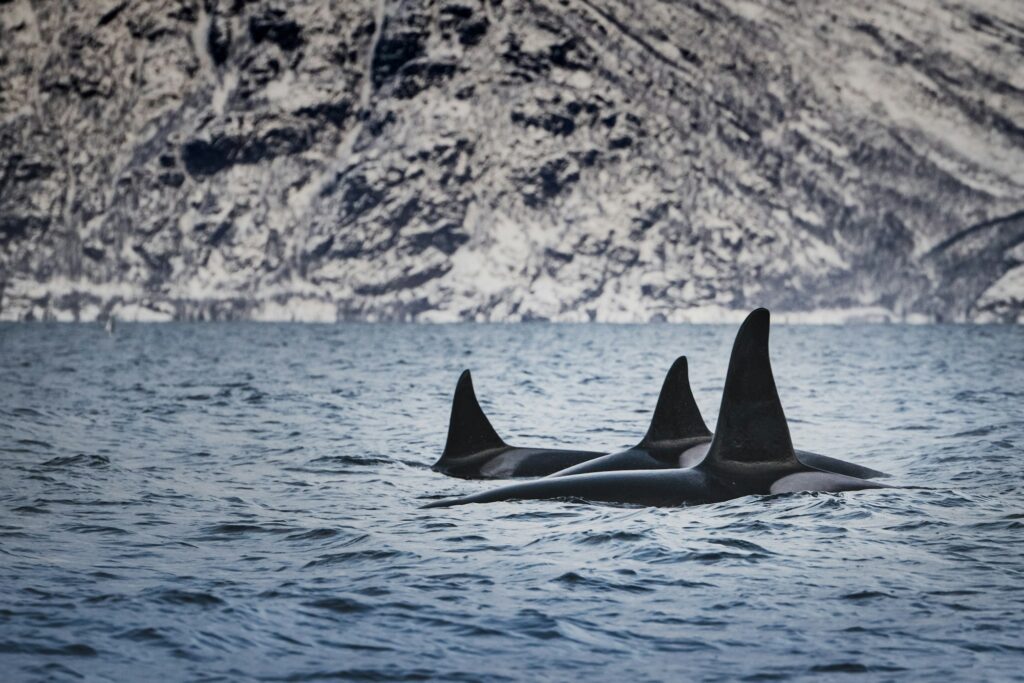
To see orcas in Norway between November and January, the most cited base is Skjervøy, in Troms county. Operators say the window runs from mid-October to the end of January, with a peak from November to January. For 2026-2027, the start is announced for 16 or 19 October, with the season ending on 31 January 2027. From Tromsø, a day trip is possible; from Skjervøy, allow about two hours by fast boat. Sightings are never guaranteed, because orcas follow the herring.
Watching orcas from a boat on a fjord in northern Norway is one of the most memorable winter experiences you can have. But between trips from Skjervøy, trips from Tromsø and cruises, the options differ a lot. This guide covers the 2026-2027 season, the rules for approaching the animals, snorkelling, the prices we checked and the practical logistics, so you can decide without us promising what nobody can guarantee.
1. Where to see orcas in Norway this winter
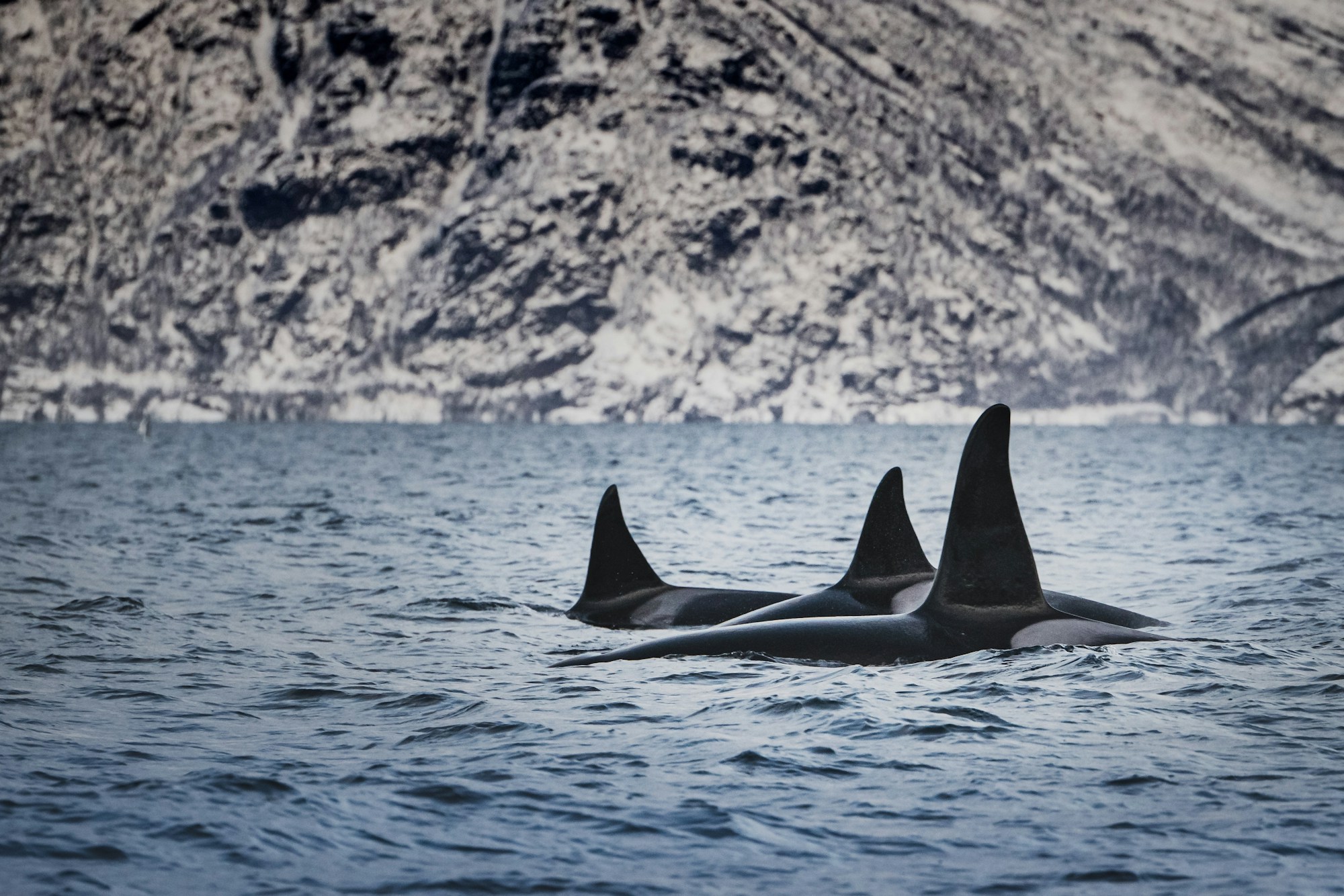
Skjervøy, the base to start from
Skjervøy is a small island municipality in Troms county, about two hours by fast boat north of Tromsø. Visit Tromsø, the regional tourist office, says whale activity has been concentrated in this area since 2017. Orcas, sometimes with humpback whales, follow the winter herring shoals here.
Highlights
- Skjervøy is the closest base to the areas where activity is concentrated, according to Visit Tromsø.
- The peak runs from November to January, according to operators.
- Andenes is not a winter alternative: it is a base for sperm whales, mainly in summer.
There are also day trips from Tromsø. They take more time at sea, but offer more comfort and facilities on board. The right choice depends mainly on your budget, how well you cope with the cold and the logistics you are happy to manage.
Viator runs a full-day trip from Tromsø to Skjervøy, lasting around eight hours. Departures are open on 92 days, from 1 November to 31 January (checked on 8 October 2026). The price below is the one shown on the listing on that date.
2. When to go: the 2026-2027 season according to operators
Dates announced by operators, not yet confirmed by the authorities
For 2026-2027, several operators announce a start on 16 or 19 October 2026 and an end on 31 January 2027. These are operator dates. When we wrote this, on 8 October 2026, we found no official Norwegian announcement confirming them. Check the departure date with the operator before you book.
The only season figures we found come from one operator, Brim Explorer, for 2025-2026: 96 cetacean sightings between 23 October 2025 and 15 January 2026, with 9 to 14 boats out at the same time, and 8 sightings in 10 within 100 metres of the boat. That shows activity, not a promise: no independent public data gives a success rate.
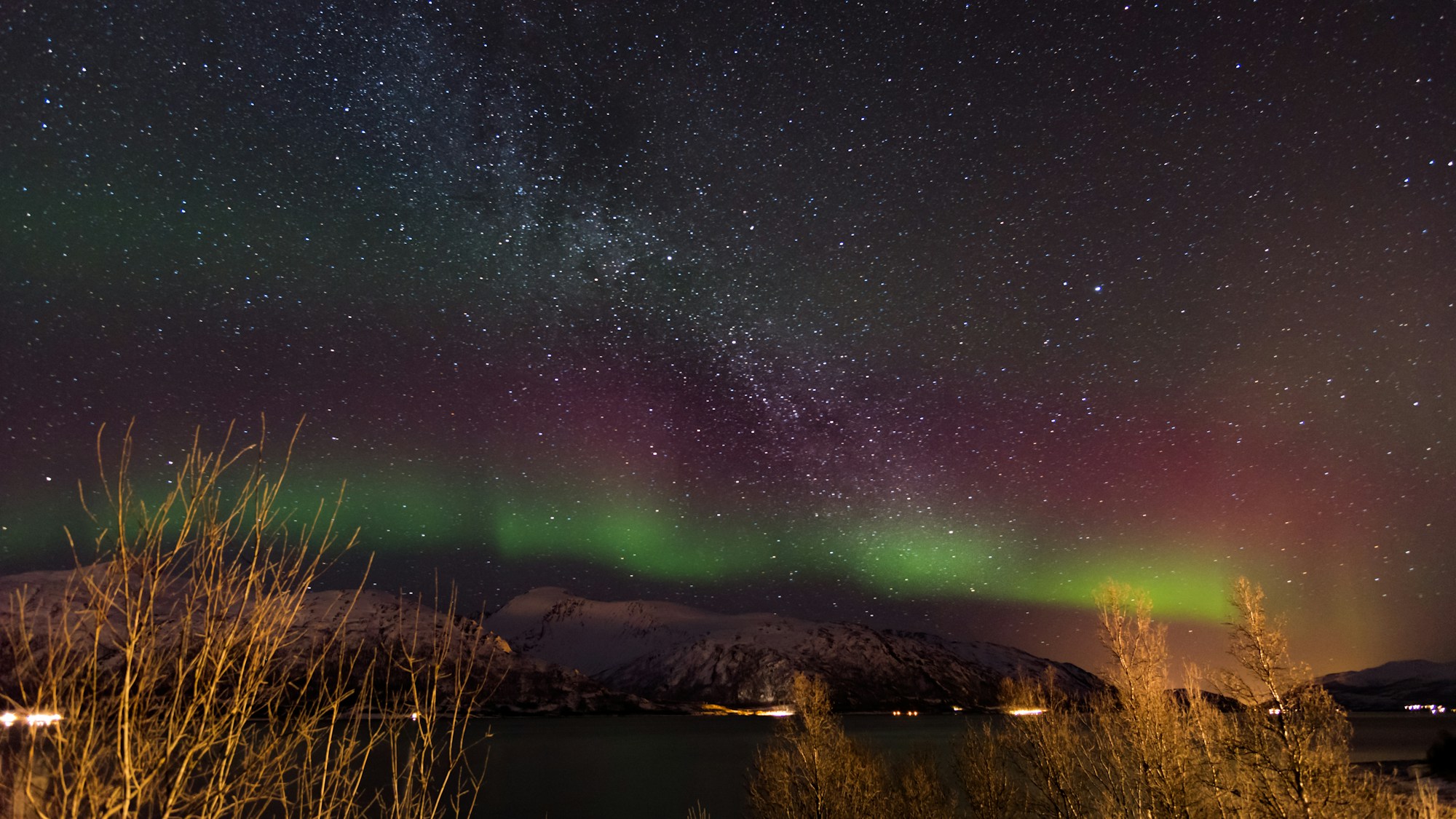
Northern lights are still possible at night in Tromsø, but never guaranteed. Our guide to the northern lights in Tromsø covers night experiences, and our look at the moon-free window in October 2026 helps you time a stay early in the season.
3. Approaching orcas: what the law requires and what stays voluntary
The rules protect fishing boats, not whales
The Norwegian whale-watching regulation (FOR-2019-12-05-1651, amended by FOR-2022-10-28-1968, in force since 1 November 2022) sets a minimum distance of 370 metres from boats and fishing gear, and 740 metres for swimming, diving and paddling. It sets no fixed distance from the whales themselves. For behaviour around the animals, operators follow Visit Tromsø’s guidelines, which are not binding.
These guidelines ask operators to slow down within 300 metres, stay under 5 knots, keep a minimum speed at 100 metres, go to idle at 50 metres, limit the number of boats around one group to three, and not spend more than 30 minutes per encounter or 3 hours per trip.
- Ask the operator whether they follow these guidelines and how many boats share one group.
- Watch the boat’s speed and approach distance from the first contact.
- A written commitment is easy to compare: it is a concrete criterion for choosing between two operators.
4. Snorkelling with orcas: a lightly regulated activity
An activity on offer, but debated
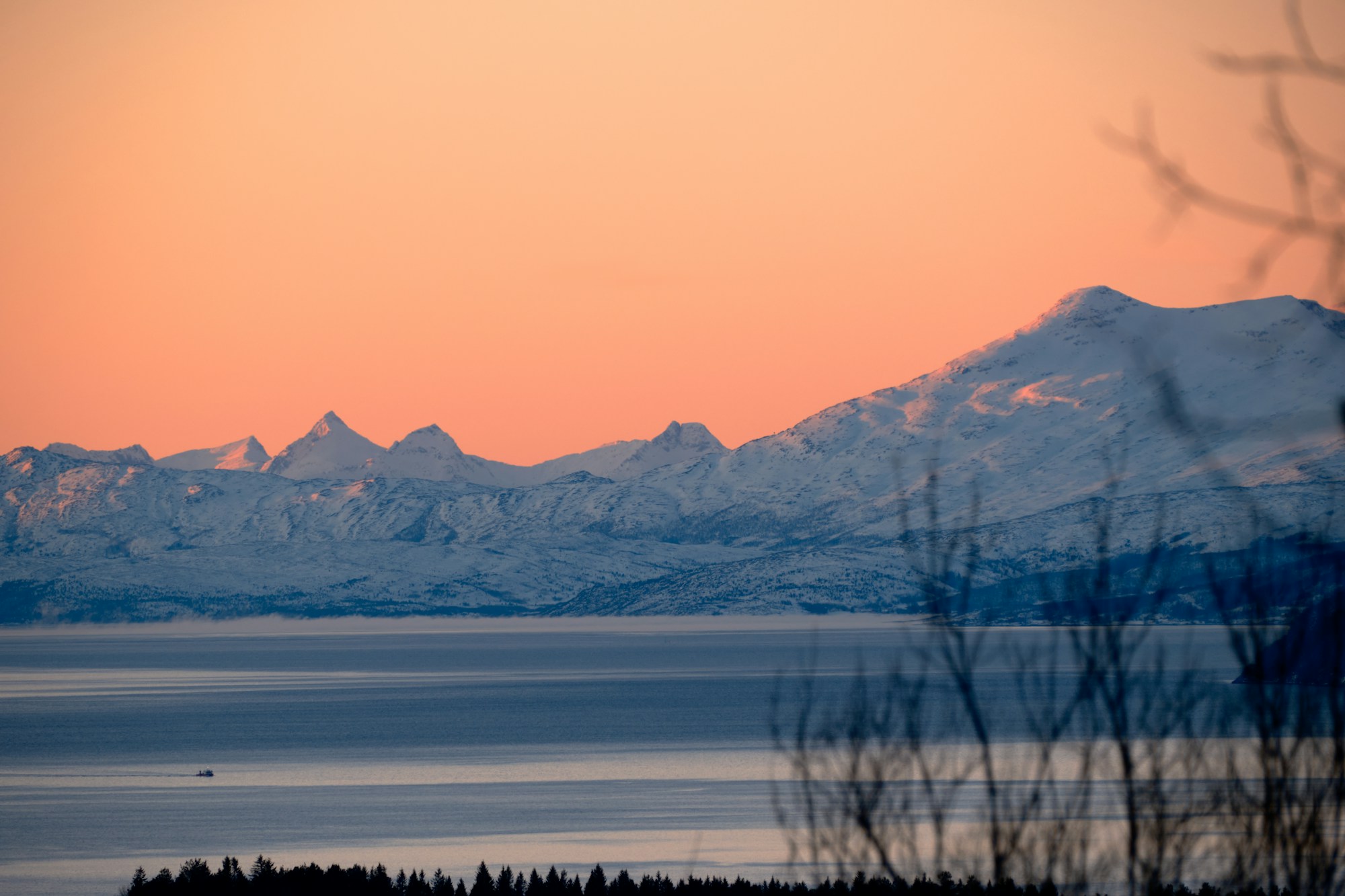
Some operators in Skjervøy offer swimming with orcas, with a wetsuit, mask and snorkel provided and a guide on board. It is the most debated activity in the area. A 2025 university study by S. E. Hale, published in the journal Environment and Planning E, describes it as unregulated: no specific licence and no cap on the number of boats. According to a summary shared on a marine mammal specialists’ mailing list, Norway would be the only country offering it without regulation. We have not read the full text, so treat this as a reading of one study, not an independent finding.
The concerns cover disturbance to the animals, the effect of several boats and several swimmers around one group, and the imbalance that sets in when people surround wild animals. We found no documented incident in the sources we checked. That does not prove there are none, and this activity should not be considered risk-free.
- Ask how many swimmers are in each group and what training the guide has.
- Check the kit provided: wetsuit, mask, snorkel, and how you get into the water.
- Walk away if the team cannot clearly answer these questions.
5. Boat, RIB or cruise: comparing the options
Three options checked on 8 October 2026
The prices below are in Norwegian kroner (NOK), as shown on the listings we checked. A reference rate of about NOK 10.97 to €1, noted in early August 2026, gives a rough idea. Confirm each price with the operator when you book.
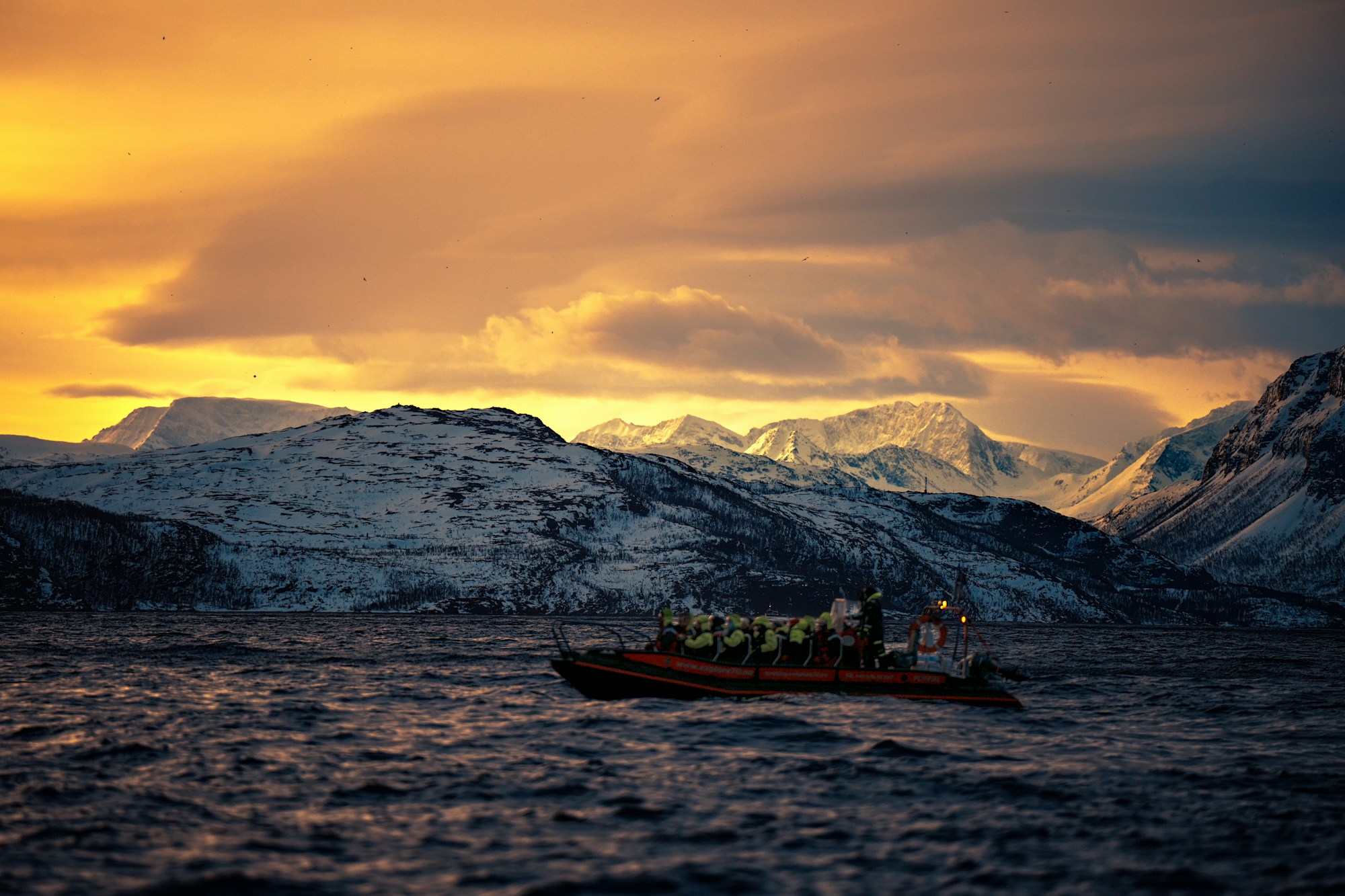
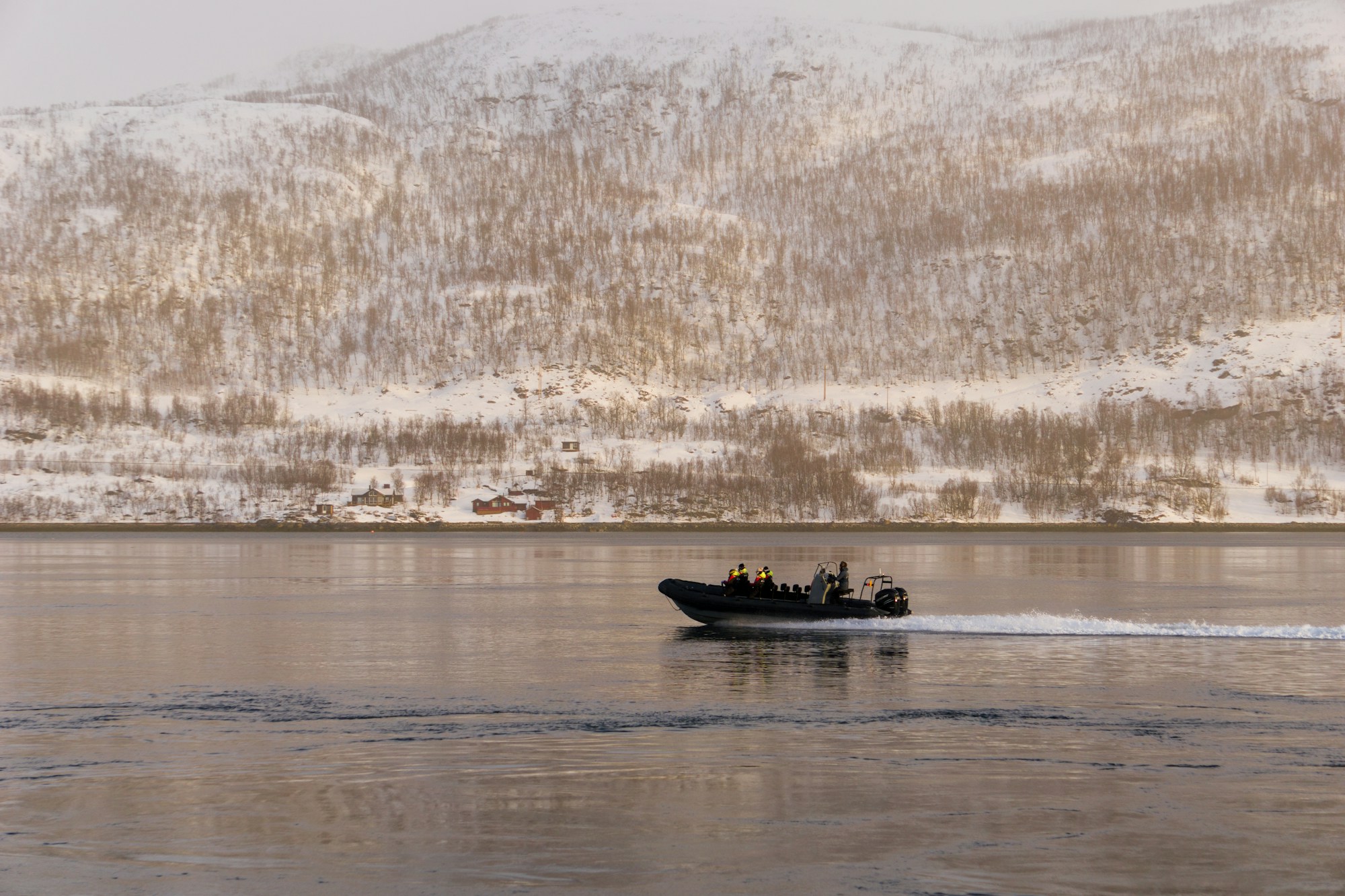
- RIB Explore 70 Degrees, from Skjervøy: about 3 hours, up to 12 people per boat. Visit Tromsø lists NOK 1,890 for an adult and NOK 945 for a child aged 6 to 14. Another page shows NOK 1,790 and a different departure time, so check the price and the meeting time before you book. Wetsuit, mittens, goggles and a hat are provided; food and drinks are not included, according to Expedia.
- Arctic Whale Tours, Hagbart Waage, from Skjervøy: a refitted former rescue boat with a heated cabin. Trips last 2 to 3 hours and the listing gives a departure around 10:30, from NOK 1,600 per person, with a minimum of 20 passengers. The « Whale Pass » guarantee offers a free rebooking within 12 months if no whale is seen, but Visit Tromsø describes a more restrictive version: read the conditions before relying on it.
- Brim Explorer, from Tromsø: a quiet hybrid catamaran, with an electric motor when close to the animals. Trips last from 3 hours 30 minutes to 8 or 9 hours, depending on distance. One page shows NOK 1,290 for an adult, another NOK 1,690: check the price before you book. A departure at 8:00 is listed.
6. Tromsø to Skjervøy: fast boat or car
About 250 km, two options
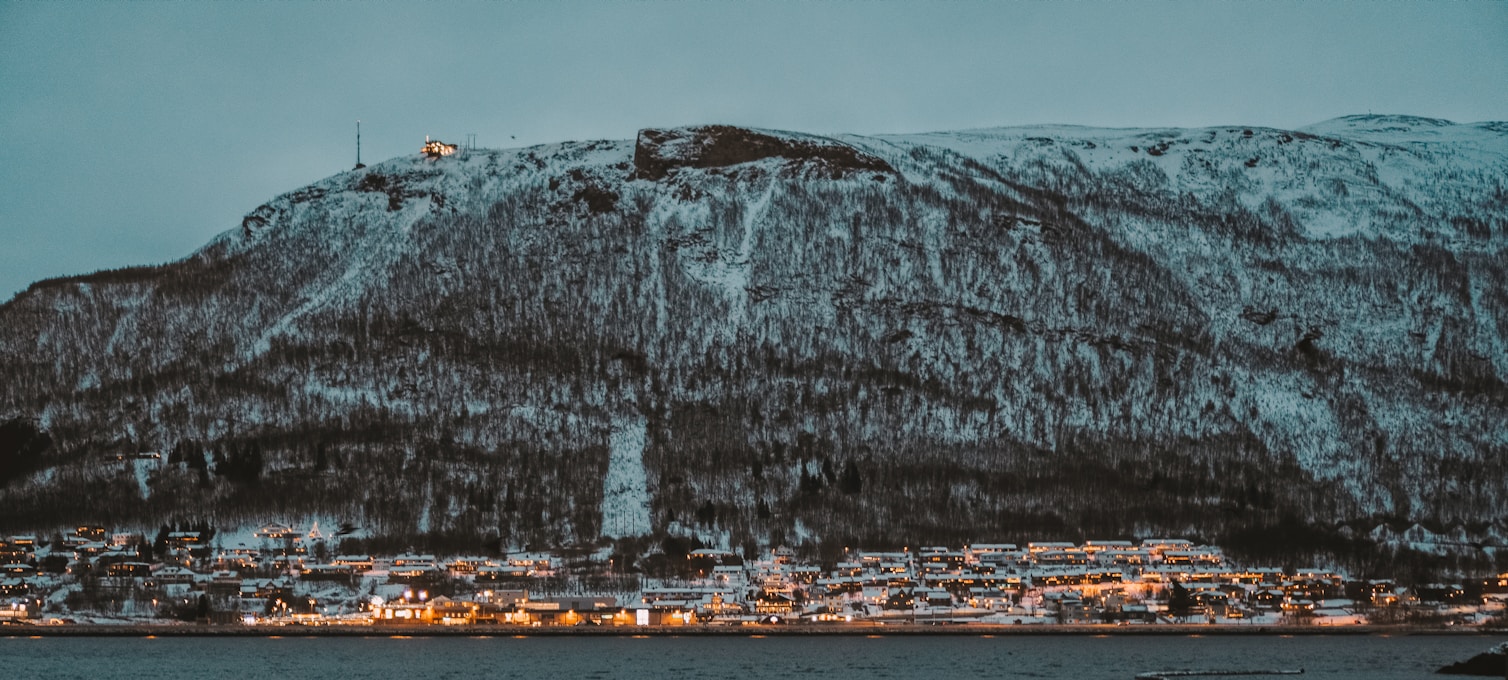
Skjervøy is not next to Tromsø. By road it is about 250 km, roughly 3.5 to 4 hours of driving including two ferries. By fast boat, allow about 2 hours to 2 hours 50 minutes, with one sailing a day except Saturday according to the tourist office listing. Check timetables and season fares with the operator.
- Breivikeidet–Svensby ferry: about 20 minutes. A car under 6 metres costs NOK 104 in 2026, or NOK 52 with a prepaid pass.
- Lyngseidet–Olderdalen ferry: 35 minutes. The same car pays NOK 152 in 2026, or NOK 76 with a prepaid pass. These are the operator’s published fares.
- Getting to the island: Skjervøy has no car ferry. It is linked to the mainland by a subsea tunnel opened in 1991 (Maursund) and by a bridge from the island of Kågen.
7. Getting ready: entry rules, money, kit
Entry rules, money, kit
As a British citizen you do not need a visa for Norway, which is part of the Schengen area, for stays of up to 90 days in any 180-day period. You do need a valid passport, not an ID card, because the UK is outside the EU. Schengen passport rules apply: the passport must have been issued within the last 10 years and must be valid for at least three months after you plan to leave the Schengen area. ETIAS, the EU’s electronic travel authorisation (€20 for most adults), will apply to UK visitors once it starts. The EU target was the last quarter of 2026, but reports suggest it could slip into 2027. The Entry/Exit System (EES), which records your passport details with your fingerprints and a facial photo at the border, has been rolling out since October 2025. Check the UK government’s Norway advice before you go.
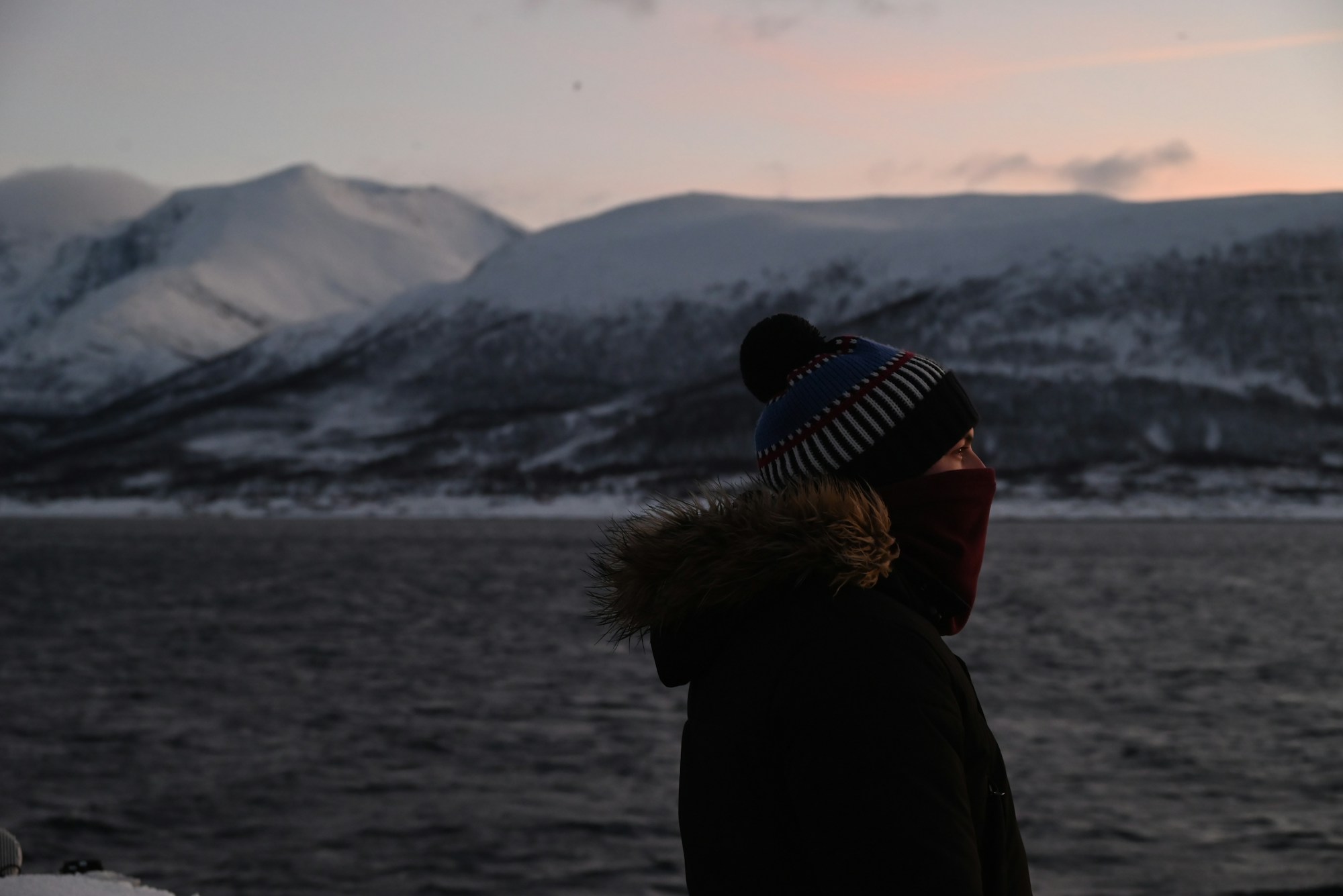
The currency is the Norwegian krone (NOK). Cards and Vipps, the Norwegian mobile payment app, are the norm, and you rarely need cash. Tipping is optional. For kit, bring warm layers, gloves, a hat and sunglasses: the light reflected off snow and water is strong, and wind on the water makes the cold feel sharper than the air temperature suggests.
Direct flights to Tromsø have run from London in recent winters, from Gatwick and Heathrow, with several airlines. We did not find a confirmed 2026-2027 schedule or a dated fare for November 2026: check each airline’s website for dates and prices.
Practical information for your trip
Data from the moment you land, useful for checking ferry times and operator listings, and for booking at the last minute.
Plans depend on duration and data volume, see the site for pricesMedical costs and emergency evacuation if something goes wrong during the trip, useful in Arctic winter, far from quick help.
Cost depends on duration and profile, see the site for pricesFrequently asked questions
Where can you see orcas in Norway in winter?
Skjervøy, in Troms county, is the most cited base for seeing orcas from November to January, when they follow the herring. Trips leave from Skjervøy or, for a day, from Tromsø. Visit Tromsø, Whale Route Skjervøy.
When is the best time to see orcas?
Operators announce a window from mid-October to the end of January, with a peak from November to January. For 2026-2027, the announced dates run from 16 or 19 October to 31 January 2027. These are operator dates, so confirm them before you book. Visit Lyngenfjord, Green Gold of Norway.
Are orca sightings guaranteed?
No. Operators remind you that whales are wild animals and that a sighting is not guaranteed. Arctic Whale Tours offers a free rebooking within 12 months if no whale is seen, but Visit Tromsø describes a more restrictive guarantee. Arctic Whale Tours.
How much does an orca trip cost?
In Skjervøy, the listings we checked start at NOK 1,600 per adult for a 2 to 3 hour trip, and go up to NOK 1,890 for a RIB. From Tromsø, the eight-hour Viator trip is €238.96 per adult (based on 2 adults), checked on 8 October 2026. Confirm prices when you book. Visit Tromsø, RIB Skjervøy.
Is orca snorkelling regulated?
According to a 2025 university study, summarised on a specialist mailing list, the activity is subject neither to a specific licence nor to a cap on boats. We have not read the full text, so treat this as a reading of that study. Marine mammal mailing list, summary of S. E. Hale’s study.
Do UK citizens need a visa for Norway?
No. British citizens can visit Norway without a visa for up to 90 days in any 180-day period, but you need a valid passport, not an ID card. ETIAS, which will apply to UK visitors once it starts, is not yet in force, and the EU has said it may slip into 2027. UK government, Norway entry requirements.
Sources
- Lovdata, regulation FOR-2019-12-05-1651: approach distances from fishing boats, with no fixed distance from whales.
- Visit Tromsø, whale watching from Skjervøy: refitted rescue boat, starting price and guarantee conditions.
- Visit Tromsø, RIB safari from Skjervøy: adult and child fares, duration, capacity.
- Visit Tromsø, Whale Route Skjervøy: activity concentrated around Skjervøy since 2017.
- Visit Lyngenfjord, Green Gold of Norway: season window from mid-October to end of January.
- Arctic Whale Tours, blog on the Skjervøy trip: rebooking guarantee and advice on spare nights.
- Magazine.travel, snorkelling with orcas in Skjervøy: description of the activity.
- Marine mammal mailing list, summary of S. E. Hale’s 2025 study: unregulated snorkelling framework, relayed through a summary.
- Visit Tromsø, express boat and ferries: express boat link and journey times.
- Fergeruter, Breivikeidet–Svensby: 2026 ferry fare table.
- Fergeruter, Lyngseidet–Olderdalen: 2026 ferry fare table.
- Visit Norway, currency and prices: cards, Vipps and tipping.
- UK government, Norway entry requirements: passport rules, visa-free stay, ETIAS and EES for British citizens.
- Wikipedia, Skjervøy Municipality: geography, access by tunnel and bridge, population.
Sources checked on 8 October 2026. Season dates and prices are as of that date and subject to confirmation by the operators.

Plan your trip with Pixidia
Pixidia learns how you travel and helps you build a trip that truly fits you and everyone coming along.
Open the planner