
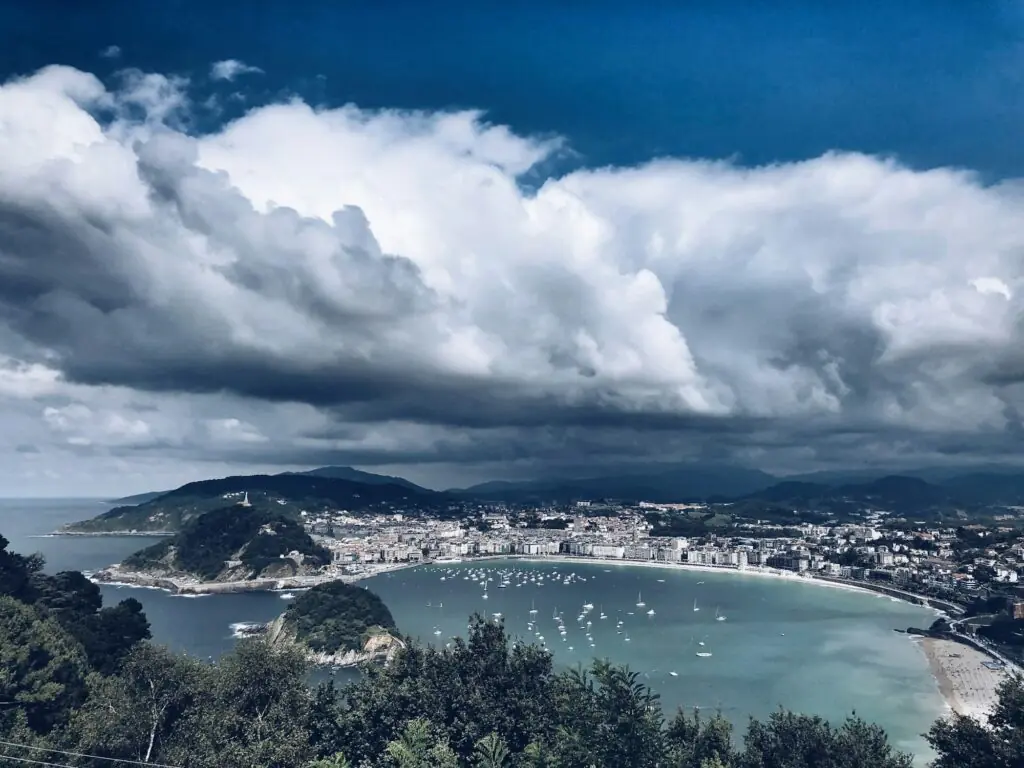
The Spanish Basque Country’s tourist tax applies from 1 January 2027 (foral rules published in June 2026), with a maximum of 6 taxed nights per stay. The rate grid runs from €0.50 to €6.50 per person per night, excluding cruises. In San Sebastián, the initial approval sets €6.50 for higher-category hotels.
Checked on against the official sources cited (BOPV, BOB, BOTHA, San Sebastián municipal note).
The Spanish Basque Country doesn’t have a tax that applies to your nights yet, but it’s already decided. Three foral regulations, one per province, take effect on 1 January 2027. What’s still open is the exact amount each town sets. This article separates what is settled (the law, the rate grid, the cap) from what still has to be voted (the ordinances of San Sebastián, Bilbao and Vitoria-Gasteiz). The figures come from the official bulletins, the San Sebastián municipal note and, for Bilbao and Vitoria, the press. They were checked on 14 October 2026.
1. What’s settled: three foral rules, one grid
The 2027 regime is set by three foral regulations (normas forales), adopted in June 2026 by the Juntas Generales of Gipuzkoa, Bizkaia and Álava and then published in the official bulletins. The amount you pay, however, depends on your town’s ordinance, within the range: without an ordinance, the maximum rate applies. Each province has its own text, but the rate grids are identical. The traveller pays a foral tax, and the territory where you stay determines which text applies.
- Gipuzkoa (San Sebastián): Foral Regulation 3/2026, signed on 12 June 2026, published in BOPV no. 119 on 25 June 2026.
- Bizkaia (Bilbao): Foral Regulation 3/2026, dated 18 June 2026, published in BOB no. 120 on 26 June 2026.
- Álava (Vitoria-Gasteiz): Foral Regulation 13/2026, dated 10 June 2026, published in BOTHA no. 71 on 22 June 2026.
The three texts take effect the day after publication, but they only produce their effects from 1 January 2027. No traveller pays this tax before that date. The table below reproduces the grid of Article 9, meaning the minimum and maximum per person and per unit of stay (one unit equals one night), next to the amounts proposed or published in each city.
| Category | Minimum (€) | Maximum (€) | San Sebastián (initial approval) | Bilbao (draft) | Vitoria (draft) |
|---|---|---|---|---|---|
| 5-star hotel | 4.50 | 6.50 | 6.50 (higher category) | 5.00 | 4.50 |
| 4-star hotel | 3.50 | 5.50 | not published | 4.00 | 3.50 |
| 3-star hotel | 1.50 | 3.50 | not published | 2.00 | 1.50 |
| 2-star hotel | 1.00 | 2.50 | not published | 1.50 | not published |
| 1-star hotel | 0.75 | 1.75 | not published | 1.00 | not published |
| Pensions, campsites, albergues | 0.75 | 1.75 | not published | 1.00 | 0.75 |
| Tourist apartments (apartamentos turísticos) | 1.50 | 3.50 | not published | not published | 1.50 |
| Entire home (VUT) | 4.50 | 6.50 | 6.50 (tourist lodgings) | 6.50 | 4.50 |
| Agroturismo | 0.50 | 1.25 | 1.25 | not published | 0.50 |
| Cruise | 6.00 | 7.00 | 7.00 (unit of the note) | 6.00 | not published |
Source: BOPV no. 119, Foral Regulation 3/2026, article 9 (same grid in the Bizkaia and Álava texts); San Sebastián: municipal note of 28 July 2026; Bilbao: Hosteltur, 22 July 2026 (press); Vitoria: GasteizHoy (press). Checked on 14 October 2026. The municipal note does not say how star ratings map to the grid: « higher-category hotels » and « tourist lodgings » are quoted as written, without being linked to a line of the grid.
The six-night cap
One person doesn’t pay more than 6 units of stay for a continuous stay in the same establishment. That’s Article 9.3 of the Gipuzkoa and Bizkaia texts, and Article 9.2 of the Álava text. Beyond the sixth night, nothing more is due. Hosteltur (15 May 2026) describes this cap as an increase over five nights, so articles that still mention five nights are behind the published text. The preamble of the Bizkaia rule does mention « 5 units », but the operative article is the one that counts. A corrigendum to this text appeared in BOB no. 138 on 22 July 2026. We haven’t reviewed it.
Surcharge and reduction by municipality
Article 11 of each rule lets a municipality, through a fiscal ordinance, apply a recargo (surcharge) of up to 50% if it has 750 or more tourist accommodation places, or 5,000 inhabitants or more with a tourist intensity of at least 10%. It can also grant a bonificación (reduction) of up to 100% to the smallest municipalities. The two mechanisms don’t stack. Without an ordinance, the maximum rates apply. This matters for the announced rates: San Sebastián’s note doesn’t say whether its €6.50 includes a surcharge.
2. San Sebastián: the most detailed rates, at initial approval
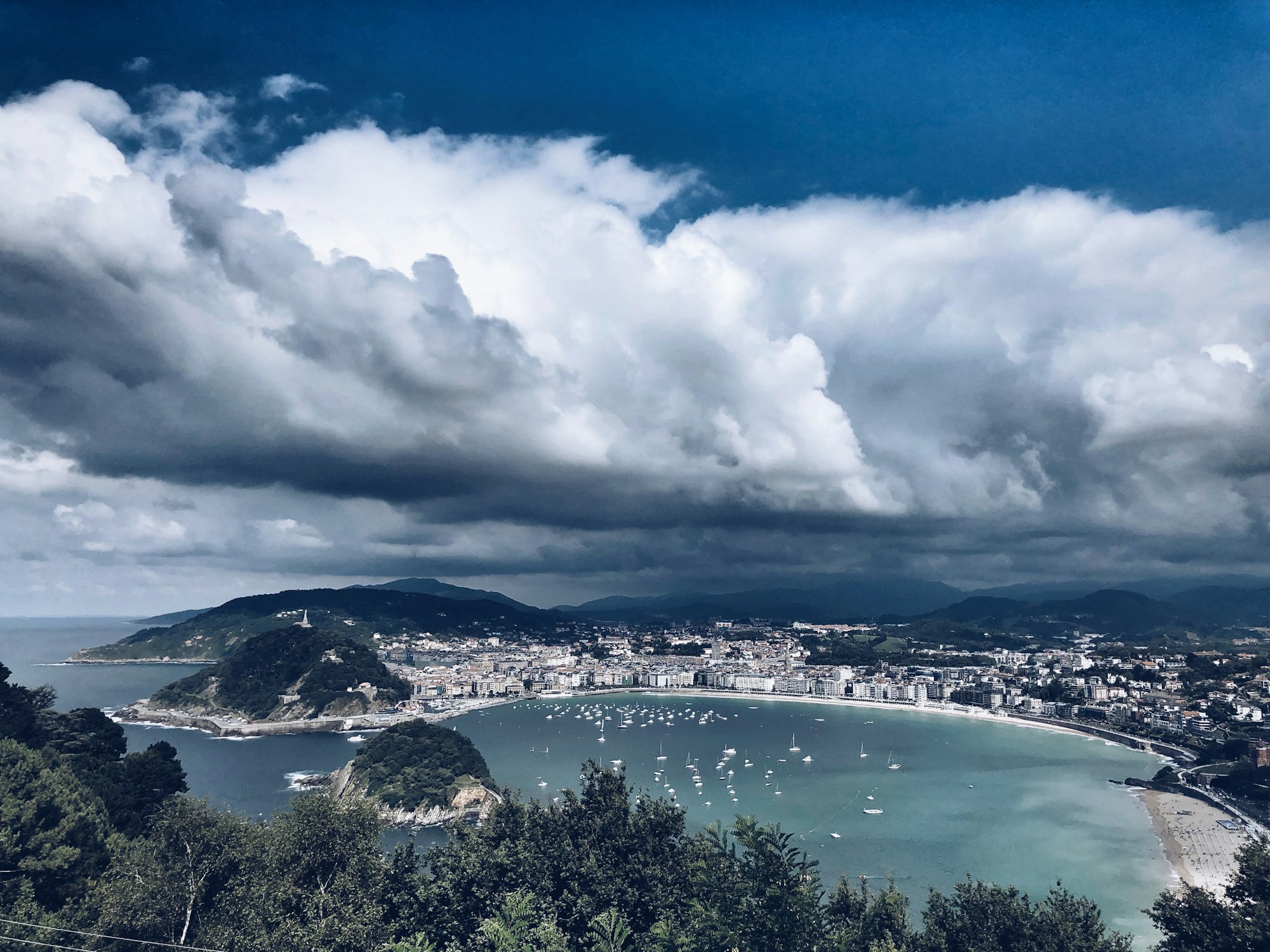
San Sebastián (Donostia)
The Local Governing Board (Junta de Gobierno Local) gave initial approval to the regulatory ordinance on 28 July 2026, as confirmed by the municipal note published the same day. It sets three rates: €6.50 for higher-category hotels and tourist lodgings, €1.25 for agroturismos and €7 for a cruise, in the unit stated in the municipal note. Two steps remain: final approval by the plenary session (pleno), then publication in the Boletín Oficial de Gipuzkoa. No final vote date had been found as of 14 October 2026.
What the municipal note says
- Announced exemptions: under-18s, people with disabilities or dependency and their companion, accommodation linked to public health, education or research programmes, beneficiaries of social programmes, force majeure.
- The rates for 4-, 3- and 2-star hotels are not published in the note: they will depend on the final ordinance.
- Mayor Jon Insausti estimates the revenue at around €8 million a year, for about 2 million overnight stays.
The tax applies to the overnight stay, per person per night, up to six nights: a guided tour doesn’t trigger it. For a trip that combines nights in San Sebastián with a visit to the old town, the tour below only makes sense if it’s open on your dates. Checked on 14 October 2026 through the Viator API, it was open 29 days out of 31 between 20 October and 19 November 2026. For the city’s festival calendar, see our guide to the San Sebastián festival 2026.
3. Bilbao: a draft approved in July, a vote still to confirm
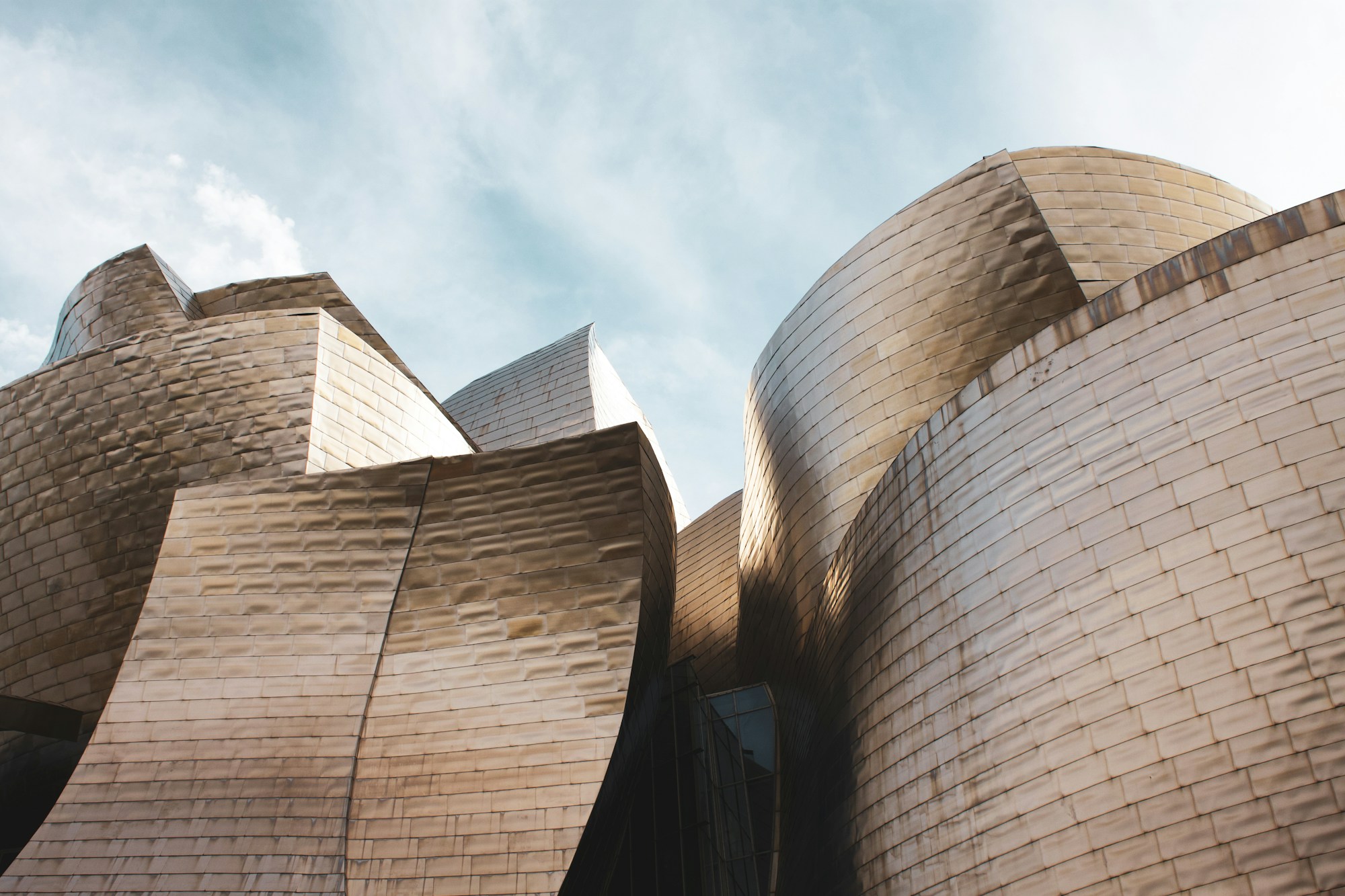
Bilbao (Bizkaia)
On 22 July 2026, the Local Governing Board (Junta de Gobierno Local) approved the draft 2027 fiscal ordinances, which include the tourist tax. The draft text has not been published in the official bulletin. Hosteltur announced an ordinary plenary session for 24 September 2026, but the minutes of that session could not be found. A La Razón article dated 12 October 2026 repeats the €6.50 figure. We could not read its text.
The proposed rates are €5 for a 5-star hotel, €4 for a 4-star, €2 for a 3-star, €1.50 for a 2-star, €1 for a 1-star, pensions, campsites and albergues, and €6.50 for an entire home rented as a VUT (tourist-use home). The councillor for finance, Carlos Urgoiti, said the rates would « se van a situar por encima del mínimo previsto », meaning they would sit above the planned minimum of the range, which is consistent with these amounts.
Watch out for a common mix-up in the press: the €6.50 figure applies to an entire home rented as a VUT, not to apartamentos turísticos. The latter fall under a range of €1.50 to €3.50. So an apartment rented as an apartamento and an entire home rented as a VUT don’t pay the same tax.
4. Vitoria-Gasteiz: a draft at the bottom of the range
The Álava rule will apply in Vitoria-Gasteiz from 1 January 2027, as in the other two provinces. The municipal amount, however, remains a draft. According to GasteizHoy, the text sets rates at the minimum of each range: €4.50 for a 5-star hotel and an entire home, €3.50 for a 4-star, €1.50 for a 3-star and apartamentos, €0.75 for pensions, campsites and albergues, and €0.50 for agroturismo. The EH Bildu group, for its part, is asking for VUT to be set at the maximum of €6.50. We have not seen the draft text directly.

Vitoria-Gasteiz (Álava)
According to the press, the timetable foresees a committee meeting on 23 September, a provisional plenary in September, publication in the BOTHA in early October, a period of public information, then a final plenary in November 2026. None of these acts had been seen in the BOTHA at the date of checking.
5. Timeline: what’s fixed and what still has to be voted
The three foral rules are adopted and published. What remains open are the municipal votes, which set the amount you pay within the range. In Bilbao, the draft was approved by the Junta de Gobierno on 22 July 2026, and the plenary announced for 24 September is not confirmed. Moncloa (5 August 2026) says the plenaries must vote the final ordinances between October and November 2026. In Vitoria-Gasteiz, the committee was scheduled for 23 September and the final plenary is announced for November, according to the press. In San Sebastián, initial approval dates from 28 July 2026, and no final approval date is known. The table separates confirmed dates from dates still to be confirmed.
| Date | Step | Status as of 14 October 2026 |
|---|---|---|
| 10 June 2026 | Foral Regulation 13/2026 (Álava) | Published in the BOTHA on 22 June 2026 |
| 12 June 2026 | Foral Regulation 3/2026 (Gipuzkoa) | Published in the BOPV on 25 June 2026 |
| 18 June 2026 | Foral Regulation 3/2026 (Bizkaia) | Published in the BOB on 26 June 2026 |
| 22 July 2026 | Bilbao: draft tax ordinances approved by the Junta de Gobierno | Plenary vote not confirmed |
| 28 July 2026 | San Sebastián: initial approval of the ordinance | Final approval pending |
| November 2026 (expected per the press) | Vitoria-Gasteiz: final plenary | Expected, not confirmed |
| 1 January 2027 | Effects of the three foral rules | Settled (text published) |
Source: BOPV, BOB and BOTHA for the rules; San Sebastián municipal note; press for Bilbao and Vitoria. Checked on 14 October 2026.
For Bilbao, the plenary announced for 24 September 2026 left no verifiable trace. If you book a night in 2027 in one of these cities, the sensible step is to check the official bulletin of the province (BOG, BOB or BOTHA) at the time of booking, to read the ordinance that applies to the municipality.
6. What a stay costs: calculation examples
The tables below apply the Article 9 ranges to two adults. These are calculations, not published rates: they help set a budget bracket until the final ordinances are in.
| Profile | Assumption per person per night | Total for two adults |
|---|---|---|
| 4 nights, 3-star hotel | €1.50 to €3.50 | €12 to €28 |
| 4 nights, 5-star hotel | €4.50 to €6.50 | €36 to €52 |
| 7 nights, 5-star hotel | Six-night cap at €6.50 | €78 |
| 4 nights, 5-star hotel with a 50% surcharge | €9.75 (theoretical ceiling) | €78 |
| 4 nights, entire home as a VUT (Bilbao proposal) | €6.50 | €52 |
| 4 nights, campsite | €0.75 to €1.75 | €6 to €14 |
Source: BOPV no. 119, Foral Regulation 3/2026, articles 9 and 11. Editorial calculation, checked on 14 October 2026. The 50% surcharge is a theoretical ceiling: no municipality had published it at that date.
Three practical consequences follow. First, a seven-night stay costs the same as a six-night stay at the same establishment, because the cap applies. Second, the gap between a 3-star and a 5-star hotel adds up to tens of euros for a couple over a week, not hundreds. Third, camping and agroturismo remain the least taxed options, which can matter on a long stay.
7. The French side: a different tax, which doesn’t replace the first
The confusion is common, because searches for « Basque Country tourist tax » mix up both sides of the border. On the French side, the Basque Country urban community (CAPB) already applies the French taxe de séjour (tourist tax), with rates by accommodation category published each year on its dedicated portal. It isn’t governed by the foral rules.
In practice, a stay in Hendaye falls under the French tax. A stay in Irun or Hondarribia falls under the Gipuzkoa foral rule from 1 January 2027, like San Sebastián. Their municipal ordinances have not been checked. A trip that straddles the two countries is subject to both, each on its own territory. French rates are not covered in this article: check the rate of the town where you sleep.
If you want to compare with another European framework, our guide to the Barcelona tourist tax in 2026 explains how the Catalan system works. Barcelona doubled its tax from 1 April 2026 (secondary sources whose totals differ).
8. What this changes for your stay
- Who pays. The traveller is the taxpayer. The host must collect the tax with the room rate, then pay it over to the Hacienda Foral (the provincial tax authority). You don’t pay the town hall directly.
- Ask for an invoice. Request a detailed invoice that shows the tax. It will serve as proof if your stay is ever disputed.
- Online bookings. The published texts don’t describe how booking platforms collect the tax. Before you pay, check how it appears in the displayed price.
- An unconfirmed grandfather clause. The June 2026 press mentions an exemption for bookings made before 5 February 2026. No official text confirms it: don’t count on it in your budget.
- Families. Under-18s are exempt. A family of two adults and two children therefore pays for the two adults only.
To plan your days in San Sebastián, our guide to pintxos tours and the 7-day Basque Country itinerary lay out a practical way to organise your days.
What other guides don’t tell you
Several guides and press articles repeat wrong or outdated figures. Here are six points checked against the official texts or the San Sebastián municipal note.
- The 2027 regime is settled at foral level. June 2026 articles announce a tax from this summer in San Sebastián (Spanish headlines such as « cobra ya » and « este verano », roughly « charging now » and « this summer »). The three rules only take effect on 1 January 2027, as confirmed by the municipal note of 28 July 2026 (BOPV no. 119; Donostia note) (checked on 14 October 2026).
- The cap is six nights, not five. Several general guides still say five nights. Article 9.3 of the Gipuzkoa and Bizkaia texts sets six units of stay (BOPV no. 119) (checked on 14 October 2026).
- An entire home and a tourist apartment aren’t taxed the same. An entire home as a VUT is set between €4.50 and €6.50, tourist apartments (apartamentos turísticos) between €1.50 and €3.50. Some articles write « €6.50 in an apartment » (BOPV no. 119, article 9) (checked on 14 October 2026).
- San Sebastián has given initial approval to its reference rates. Guides repeat a general range of €0.75 to €5. The municipal note gives €6.50 for higher-category hotels and tourist lodgings, €1.25 for agroturismo and €7 for a cruise, in the unit stated in the note (municipal note of 28 July 2026) (checked on 14 October 2026).
- The €7.50 figure doesn’t match any voted rate. None of the three texts sets that amount: the grid’s ceiling for one night is €6.50. The €7.50 comes from a calculation of €5 plus 50%. With a 50% surcharge, the theoretical ceiling rises to €9.75 per person per night, but no municipality has published it (BOPV no. 119, articles 9 and 11) (checked on 14 October 2026).
- The Bizkaia rule is dated 18 June 2026. Several sites give 17 June. The text was published in BOB no. 120 on 26 June 2026 (BOB no. 120) (checked on 14 October 2026).
Practical info for planning your stay
A data eSIM to activate before you leave, so you can arrive in Bilbao or San Sebastián without looking for a local SIM card.
Plans vary by duration and data volume, shown on the siteTravel insurance to compare before you leave.
Plans to compare on the insurer’s siteFrequently asked questions about the tourist tax in the Spanish Basque Country
Does the tourist tax already exist in the Spanish Basque Country?
Not yet for travellers. The three foral rules were adopted in June 2026 and published in the official bulletins, but they only take effect on 1 January 2027. San Sebastián has given initial approval to its ordinance, with no application before next year. No tax is due for a stay in these cities in 2026.
How much is the tourist tax in San Sebastián (Donostia) in 2027?
According to the municipal note of 28 July 2026, €6.50 per person per night in higher-category hotels and tourist lodgings, €1.25 for an agroturismo and €7 for a cruise, in the unit stated in the note. These amounts are at initial approval: the final ordinance can change them. The rates for 4-, 3- and 2-star hotels are not published at this stage.
How much is the tourist tax in Bilbao in 2027?
The municipal draft approved on 22 July 2026 sets €5 for a 5-star hotel, €4 for a 4-star, €2 for a 3-star and €6.50 for an entire home rented as a VUT. These rates come from the press, because the text has not been published, and the plenary vote is not confirmed at the date of checking. The cap of the range for a 5-star hotel remains €6.50.
How many nights are taxed?
Six nights at most, per person and per continuous stay in the same establishment. Beyond the sixth night, the tax doesn’t increase. This rule is in Article 9.3 of the Gipuzkoa and Bizkaia texts, and Article 9.2 of the Álava text. Some guides still say five nights.
Who is exempt from the tax?
Under-18s, people with disabilities or in a situation of dependency and their companion, people housed for public health, education or research reasons under public programmes, beneficiaries of social programmes, and people forced to find accommodation due to force majeure. This list comes from the San Sebastián note: final exemptions depend on each municipal ordinance.
Is the rate per person or per room?
It is per person and per unit of stay, one unit being one night. A family of two adults and two children who spend three nights in a hotel therefore pays six units of tax, that is three nights for each of the two adults, the children being exempt. The amount per unit depends on the category of the establishment.
Who collects the tax and who pays it?
The traveller is the taxpayer. The host must collect it with the room rate, then pay it over to the Hacienda Foral, without going through the town hall. Ask for a detailed invoice that shows the tax. The published texts don’t describe how booking platforms collect it, so check the detail when you pay.
If the town doesn’t vote its ordinance, which rate applies?
The maximum rate of the range applies, as set by the foral rules (additional provision one in Gipuzkoa). For a 5-star hotel, that means €6.50 per person per night. A town can however choose a lower rate, provided it publishes its ordinance.
Does Vitoria-Gasteiz apply the tax?
The Álava rule will apply in Vitoria-Gasteiz from 1 January 2027. The municipal amount remains a draft, with rates at the bottom of the ranges according to the press. Without an ordinance, the maximum rate of the range applies, which is €6.50 for a 5-star hotel.
Does the Spanish tax replace the French tourist tax?
No. The French taxe de séjour, applied by the Basque Country urban community (CAPB), already exists and continues to apply in France. The foral tax applies in the three Basque provinces of Spain, including Irun and Hondarribia (Gipuzkoa rule), San Sebastián, Bilbao and Vitoria-Gasteiz. The amount depends on each municipality’s ordinance: the ordinances of Irun and Hondarribia have not been checked. A trip that straddles the two countries is subject to both, each on its own territory.
Sources
- BOPV no. 119, Foral Regulation 3/2026 (Gipuzkoa): official text, article 9 (grid), 9.3 (cap), 11 (surcharges), published 25 June 2026.
- BOB no. 120, Foral Regulation 3/2026 (Bizkaia): official text, dated 18 June 2026, published 26 June 2026.
- BOTHA no. 71, Foral Regulation 13/2026 (Álava): official text, dated 10 June 2026, published 22 June 2026.
- Municipal note of Donostia-San Sebastián: reference rates and initial approval, 28 July 2026.
- Última Hora, initial approval in San Sebastián: press, 28 July 2026, confirms application from 1 January 2027.
- Hosteltur, Bilbao draft: press, 22 July 2026, rates proposed in the municipal draft.
- Hosteltur, Basque Country rate table: press, 15 May 2026, table consistent with the official text.
- GasteizHoy, Vitoria-Gasteiz draft: local press, draft rates and timetable.
- CAPB tourist tax portal: French tax, to be told apart from the Spanish tax.
Sources checked on 14 October 2026. The official texts prevail; the Bilbao and Vitoria-Gasteiz amounts come from the press, as no published text exists.

Plan your trip with Pixidia
Pixidia learns how you travel and helps you build a trip that truly fits you and everyone coming along.
Open the planner