
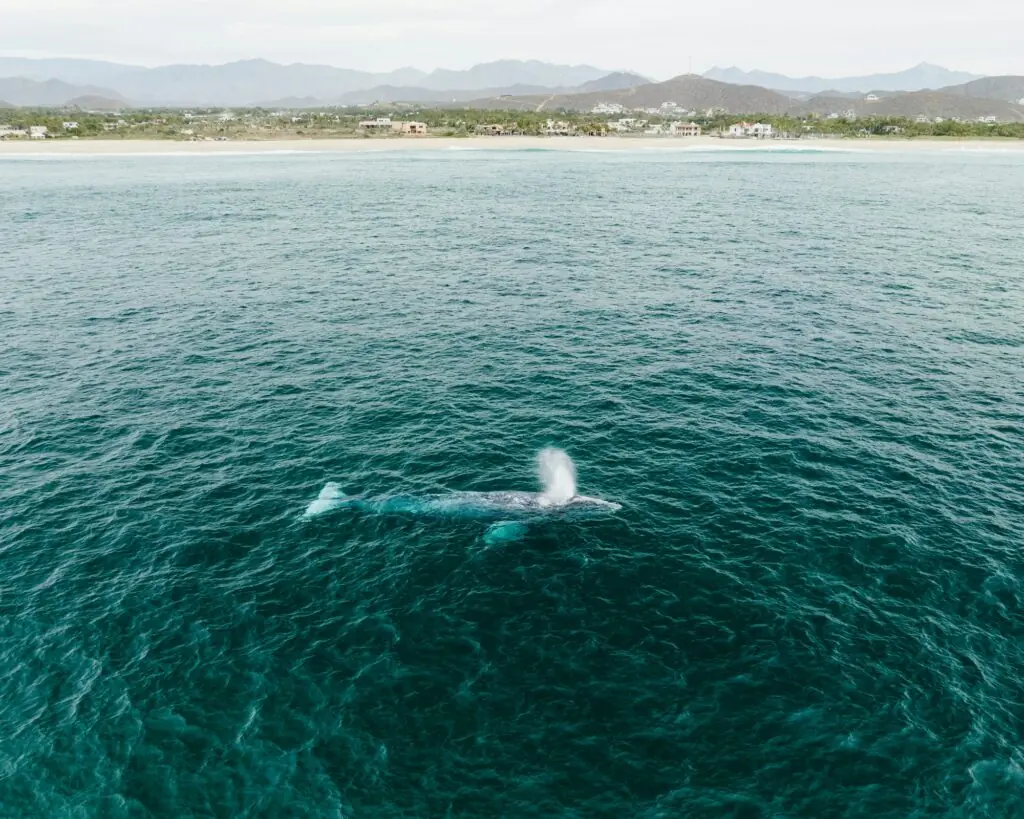
Gray whales can be watched from 15 December to 30 April at Ojo de Liebre and San Ignacio, according to the 2025-2026 notice in Mexico’s official gazette (DOF). Peak density falls between mid-February and late March. In 2024-2025, the reserve counted 568 whales at Ojo de Liebre. For 2026-2027, confirm the dates before you book.
Checked on against the official sources cited (Diario Oficial de la Federación, NOM-131 standard) and the press that cites the reserve.
Each winter, gray whales head for the sheltered lagoons on Mexico’s Pacific coast to breed and calve. On the Baja California peninsula, three places run boat trips: Ojo de Liebre, San Ignacio and Bahía Magdalena. Plenty of guides cover them, but few give exact dates for each site, the approach rules in numbers, or dated prices. Every figure here shows its source and date; press figures are labelled as such.
1. When to go: the official windows by site
The reference calendar is the notice published each year in the Diario Oficial de la Federación (DOF), under the NOM-131-SEMARNAT-2010 standard. The 2025-2026 notice is dated 2 October 2025. It sets a different window for each site, and that is exactly where most guides stay vague. Oceanic Society mentions late April or early May, Akampa April, and several French-language guides mid-April for the whole peninsula.
For the 2026-2027 season, we found no equivalent notice as of the check date, 18 October 2026. The dates in the table below are therefore the 2025-2026 ones. Treat them as a reference and confirm before you book a flight or a trip.
| Site | Opening | Closing |
|---|---|---|
| Ojo de Liebre, San Ignacio, El Vizcaíno (Mulegé) | 15 December 2025 | 30 April 2026 |
| Bahía Magdalena and Bahía Santa María (Comondú) | 1 January 2026 | 30 April 2026 |
| Puerto Chale, Puerto Cancún, Bahía Almejas, Bahía de Loreto national park | 1 January 2026 | 30 April 2026 |
| Bahía de Todos Santos (Ensenada, Baja California) | 15 December 2025 | 15 May 2026 |
| Cabo San Lucas, Cabo Pulmo, Los Frailes | 15 December 2025 | 30 April 2026 |
Source: Diario Oficial de la Federación, 2025-2026 notice, dated 2 October 2025, checked on 18 October 2026.
The core of the season comes down to three markers. The first whales arrive in late December or early January. Density peaks from mid-February to late March, when mothers bring their calves close to the surface. In April the large groups scatter, although some mothers and calves stay until early May, according to Oceanic Society.
For a first trip, March is the safest bet: you get high density and a comfortable margin before the official end of the season. Travellers also describe morning trips as calmer than afternoon ones, since the wind can pick up mid-morning. That observation comes from personal accounts, not measurements.
2. Three lagoons, three ways to meet the whales
The guides name three observation sites. They are not equal: the number of whales, the size of the lagoon, access and the level of protection all vary a lot from one to the next. The table sums up the figures, then each site gets its own profile.
| Site | Official window | Access | What to know |
|---|---|---|---|
| Bahía Magdalena | 1 January to 30 April | From La Paz or Loreto | Open bay, with mangroves and islands; less protected according to Oceanic Society |
| Ojo de Liebre (Guerrero Negro) | 15 December to 30 April | Federal Highway 1, then Guerrero Negro | The most whales: 568 in 2024-2025, according to the reserve |
| San Ignacio | 15 December to 30 April | 150 km from Guerrero Negro, about 2 hours | Smaller and more isolated lagoon: 91 whales in 2024-2025, according to the reserve |
Source: Expansión Política, 6 September 2025, citing the El Vizcaíno Biosphere Reserve; DOF, 2025-2026 notice; checked on 18 October 2026.
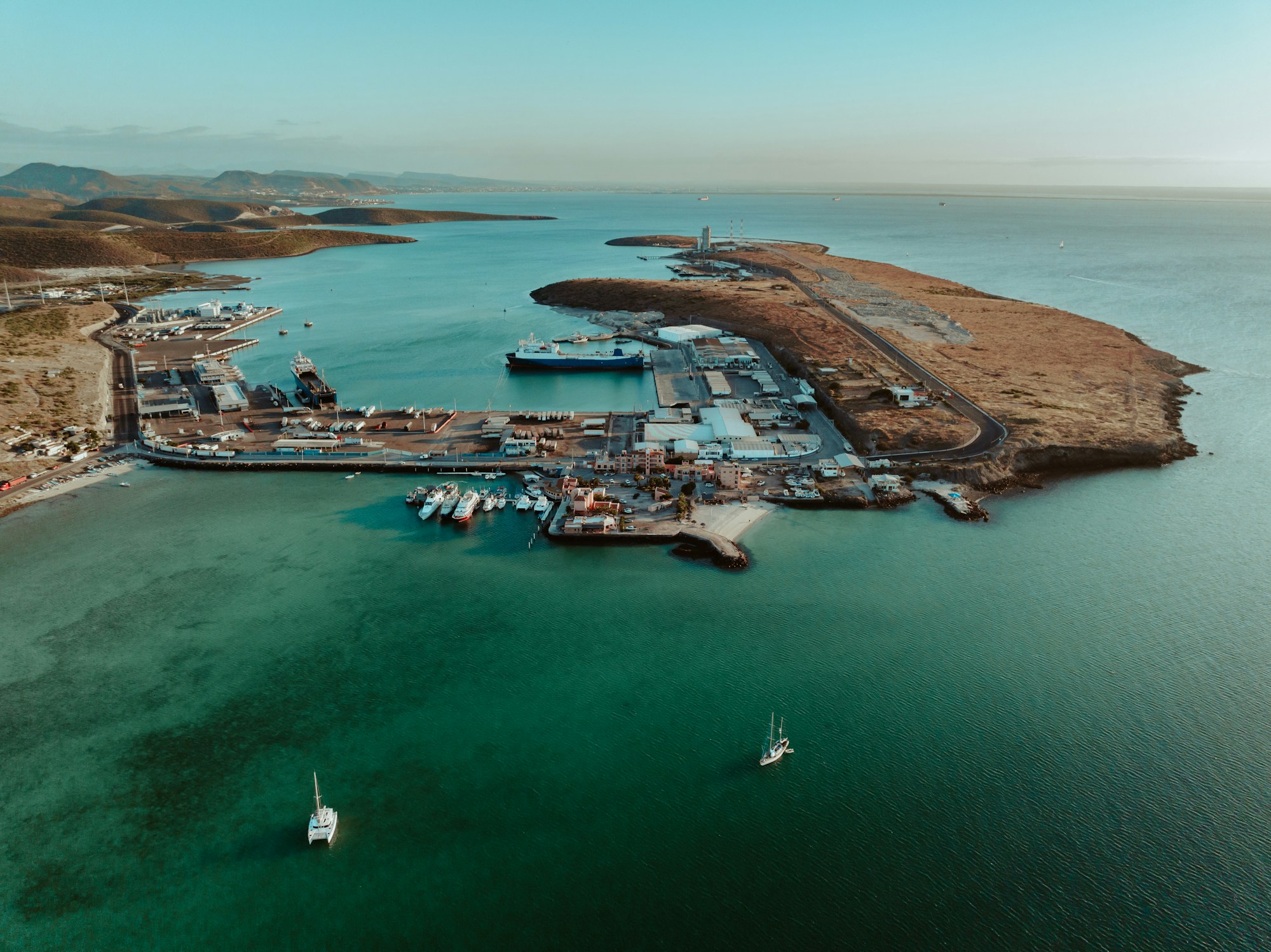
Full-day trip from La Paz, lagoon not named in the listing
The listing title doesn’t name a lagoon. To find out where you’ll go, check the exact itinerary on the listing before you book.
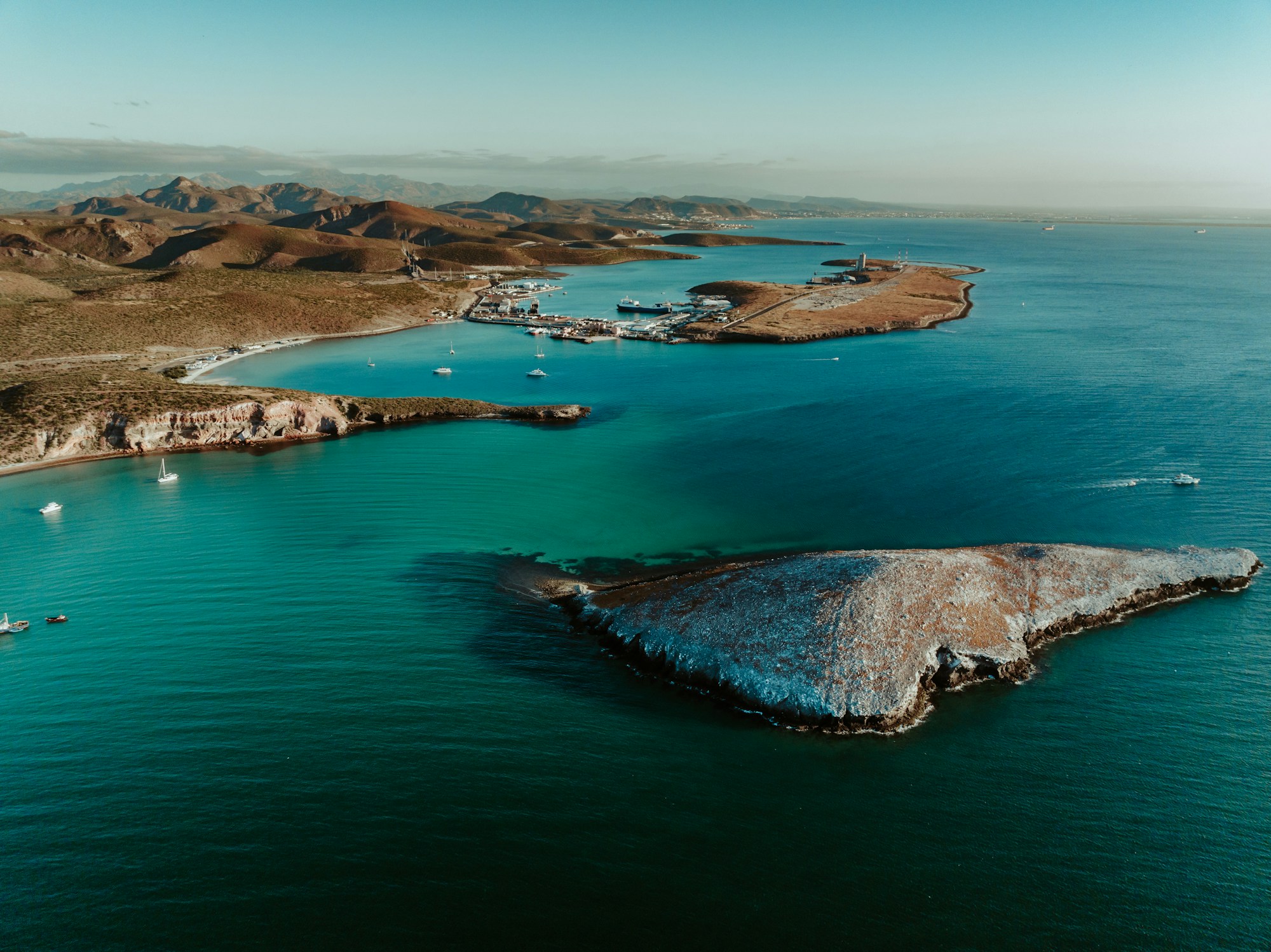
Bahía Magdalena: the bay reachable from La Paz
Bahía Magdalena is a wider, more open bay than the lagoons, lined with mangroves and dunes, with islands that offer shelter. Rutopía places it on the Loreto and La Paz side, with an access it describes as easier, without a distance figure. Oceanic Society rates it as less protected: cruise boats pass through it, and cases of whale chasing have been reported there.
Highlights
- A varied landscape of mangroves, dunes and islands, a change from the feel of an open lagoon
- An access route described as easier from La Paz or Loreto (Rutopía)
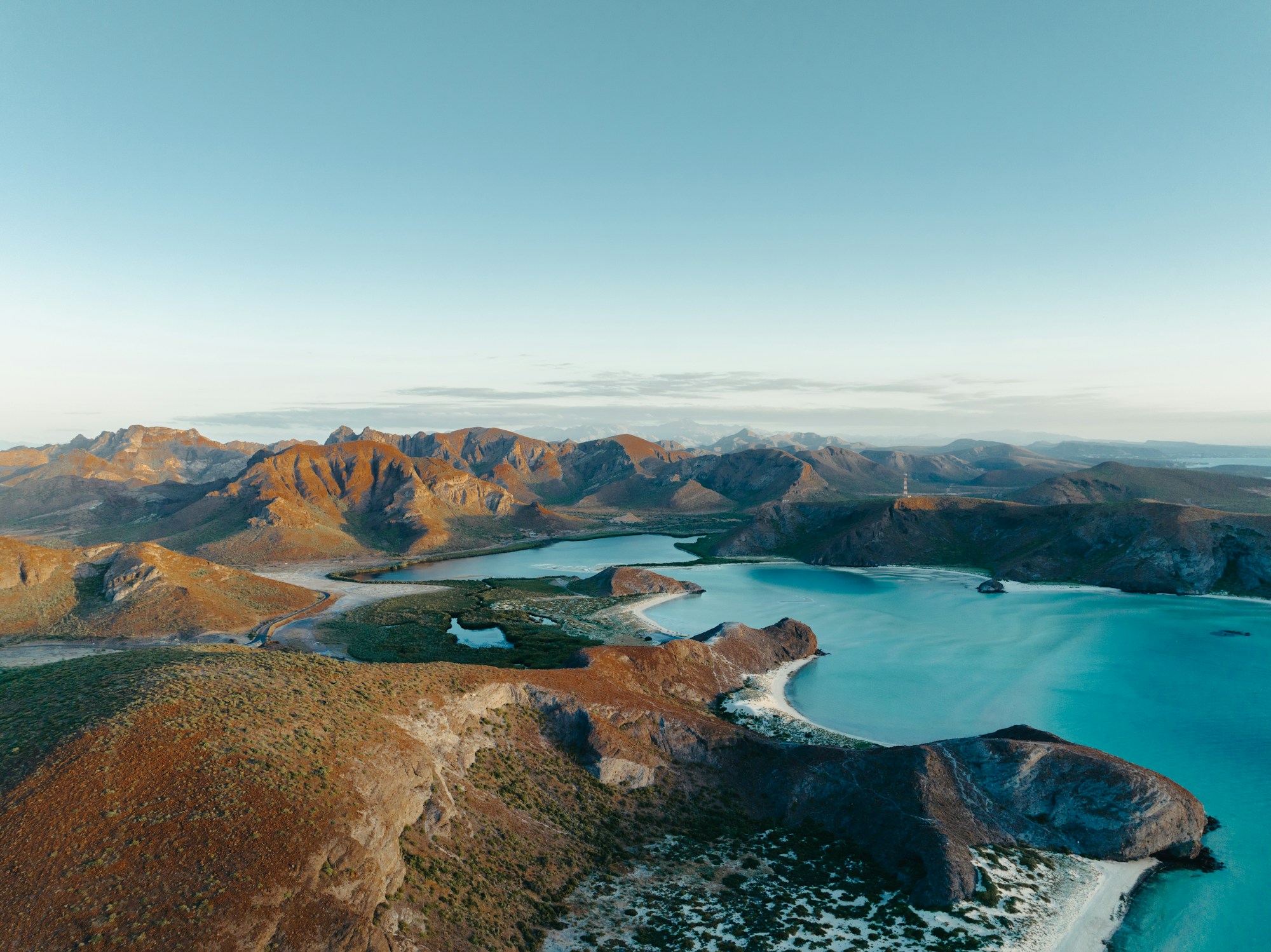
Ojo de Liebre: the largest concentration
Ojo de Liebre, also called Scammon’s Lagoon, sits inside the El Vizcaíno Biosphere Reserve. Rutopía says the reserve has been a UNESCO World Heritage Site since 1993, but we could not consult the UNESCO listing for this check. It is the lagoon with the most whales in the reserve: 568 counted in 2024-2025, against 758 the season before, a drop of about 25%. Trips leave from Guerrero Negro, reached via Federal Highway 1. An industrial salt works borders the lagoon, which, according to Voyage Basse-Californie, weakens the site’s protection.
Highlights
- The most whales counted at any of the three sites, according to reserve data
- The most operators, and simple logistics from Federal Highway 1
- A breeding area inside a biosphere reserve
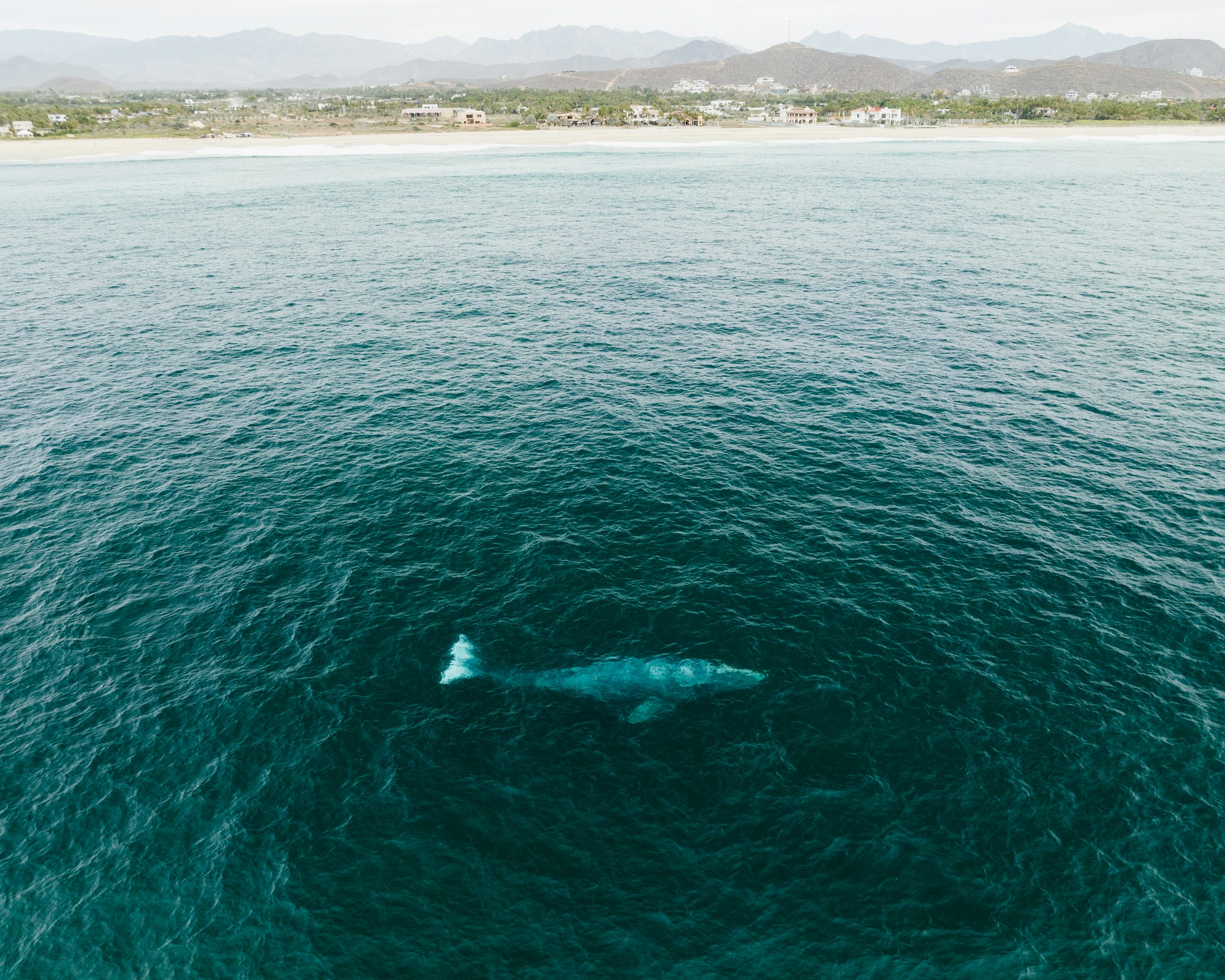
San Ignacio: the lagoon of the « friendly » whales
San Ignacio is a smaller lagoon, with little development and more isolation. Oceanic Society describes it as the site where whales most readily approach boats, hence the name « friendly whales » (ballenas amigables). There is no commercial airport nearby: you need a rental car or a private transfer from Loreto, La Paz or San José del Cabo. According to Expansión Política (6 September 2025), citing the El Vizcaíno Biosphere Reserve, the reserve’s director has called for a limit on the number of boats present at the same time. We found no published decision as of the check date.
Highlights
- Whales that Oceanic Society rates as the most approachable of the three sites
- A wild feel, with few tourist facilities
- A choice recommended by travellers for the end of the season
3. Getting there: distances, airports and roads
Ojo de Liebre and San Ignacio are a long way from the major airports. The table gives the distances and driving times reported by regional press in March 2026, plus two aggregator estimates we could not cross-check.
| Route | Distance | Stated duration | Source status |
|---|---|---|---|
| La Paz to San Ignacio | 720 km | 9 to 10 h | Regional press |
| Loreto to San Ignacio | 370 km | About 4 h, then 1 h 20 to the lagoon | Regional press |
| Guerrero Negro to San Ignacio | 150 km | About 2 h | Regional press |
| Tijuana to Guerrero Negro | About 700 km | 11 to 12 h | Aggregator, not cross-checked |
| Ensenada to Guerrero Negro | About 570 km | 6 to 7 h | Guide, not cross-checked |
Source: Tus Buenas Noticias, 31 March 2026 for the first three rows; the last two come from secondary sources, checked on 18 October 2026.
Flights land at Loreto, La Paz or San José del Cabo. Loreto has an international airport, and a flight aggregator lists direct links from Guadalajara and Tijuana, though the airline has not confirmed them. In any case, San Ignacio has no commercial airport, so a rental car or a private transfer is the way in. To place the peninsula in a wider trip, see our itinerary from Mexico City to Oaxaca.
Federal Highway 1, the Transpeninsular, links La Paz, Loreto, Mulegé and Guerrero Negro. For some lagoons, the last few kilometres are on dirt track. One traveller describes about 22 miles of corrugated road. Several forum posts, undated, recommend a high-clearance vehicle.
If your route goes through Tijuana or Tecate, read the UK Foreign, Commonwealth & Development Office (FCDO) advice, updated 16 October 2026. It advises against travel to Tijuana and Tecate, including between the two, unless absolutely necessary, with exceptions that include transit through the airport. Baja California Sur is not named in any FCDO warning. Check the FCDO Mexico page again before you leave, since advice changes: gov.uk/foreign-travel-advice/mexico.
For driving, Mexican third-party liability insurance is required to drive in Mexico, including in Baja California Sur. According to Baja Bound, a foreign insurance policy is not recognised as valid. We have not cross-checked this with an official source: confirm it with your insurer or your rental company before you leave.
Entry formalities. None of the official sources we checked sets out the visa rules by nationality. Commercial sources mention a 180-day tourist stay without a visa, which you need to verify for your own passport. According to travel guides, an electronic migration form (FMMd) now replaces the paper form on arrival. Check the entry requirements on the FCDO page and with the Instituto Nacional de Migración (INM) before you go.
4. Approach rules: what the standard requires
NOM-131-SEMARNAT-2010 governs whale watching in Mexico. The rules below come from the text published in the DOF that we read. They do not depend on the operator, and a boat that breaks them can be reported. Profepa, Mexico’s federal environmental enforcement agency, receives these reports: photo or video, boat name, registration number, date and place, according to Rutopía’s page.
| Rule | Value | Article |
|---|---|---|
| Speed in the observation zone | Under 5 knots (about 9 km/h) | 4.10 |
| Speed on entering the zone | 2 knots (about 4 km/h) | 4.10 |
| Waiting distance for all vessels | 240 m | 4.13 |
| Vessels around one group | 4 at most, the others wait at 240 m | 4.11 |
| Observation time for one group | 30 minutes at most | 4.16 |
| Harassment and forced physical contact | Prohibited | 3.2 and 4.19 a) |
| Feeding the whales | Prohibited | 4.19 i) |
Source: Diario Oficial de la Federación, NOM-131-SEMARNAT-2010, text checked on 18 October 2026.
We could not confirm observation distances in metres, apart from the 240 m waiting distance. Check the DOF text before you choose an operator that quotes one.
The standard also covers behaviour. Forcing physical contact counts as harassment, and the approach has to stay slower than the slowest whale in the group. Travellers describe whales that come up and rest their head against the hull. That cannot be forced: it is an encounter, not a guaranteed show.
5. Budget: what’s been quoted, what’s missing
There is no official price list for the lagoons. The prices below are quotes, some with no currency given, and they can’t be compared with each other. The table separates what is dated and sourced from what is not. Where a source gives no clear currency, we don’t publish the figure.
| Offer | Place | Price quoted | Currency | Date quoted |
|---|---|---|---|---|
| Observation trip (operator not named) | Bahía Magdalena | Figure withheld: no clear currency | Not stated | 15 February 2026 |
| Catamaran (outside the lagoon) | Cabo San Lucas | Figure withheld: no clear currency | Not stated | 15 February 2026 |
| 4-hour trip | Ensenada (Baja California, outside the BCS season) | Figure withheld: currency not confirmed | Probably pesos, not confirmed | 30 March 2026 |
Sources: Posta México, 15 February 2026; Tus Buenas Noticias, 30 March 2026.
The listing for a full-day trip from La Paz was not checked in this research: prices and availability need confirming on the listing before you book.
The oldest figures, around 50 US dollars per person in blogs published between 2010 and 2018, should not be used as a baseline. An operator advertised a half-day rate in dollars in 2026, with part payable in pesos on the spot, but we could not open that source, so we don’t use it. A full budget still needs a rental car, accommodation in San Ignacio or Guerrero Negro, and meals. We have no dated figures for those.
To compare two offers, convert both to a price per person in the same currency, and ask what’s included: the guide, hotel pick-up, taxes and tips. We found no reliable tipping guideline in the sources we checked, so we don’t give one.
6. A typical plan: one morning on the water
Travellers describe trips of between 1.5 and 3 hours, and Gray Whale Camp offers two 2- to 3-hour whale trips a day. A full-day trip adds driving time, a break and a longer programme. We did not check its exact length in this research, so confirm it on the listing.
Here is one possible plan for a trip from Guerrero Negro:
- The day before. Confirm the time and the meeting point. A traveller forum describes a visitor centre in Guerrero Negro, where the ejido (a local community landholding) runs some of the departures, and says boats leave on a first-come, first-served basis.
- Departure. Arrive early. Trips run in groups, and reputable operators brief passengers on the rules: stay seated, don’t stand up, let the whales take the lead.
- On the water. The encounter isn’t guaranteed. Whales come close when they choose to. Travellers describe mothers presenting their calves, spy-hopping and contact when the animals decide on it.
- Time on the water. The standard caps observation of one group at 30 minutes. A boat that stays longer with the same group does not follow the DOF text.
Plan the way back too. Dirt roads can be hard going late in the day. Ask the operator whether they provide transport back to your accommodation.
7. Which trip suits you
With family. A 2- to 3-hour trip may be enough for a first encounter and leaves room for the rest of the day. Keep in mind that pangas (open skiffs) are low and exposed: bring warm clothes for the morning and sun protection.
As a couple. San Ignacio, smaller and more isolated, is described by Oceanic Society as the site where whales most readily approach boats. Ojo de Liebre, which according to the guides we read has more operators, lets you compare several offers.
On a tight budget. Compare prices per person in the same currency, and ask what’s included. The roughly 50-dollar fares from blogs published between 2010 and 2018 are too old to use as a baseline.
For a first visit. Aim for March: density peaks between mid-February and late March. At Ojo de Liebre, though, an undated forum post says some whales leave the lagoon after the second week of March. Book early: according to an official delegate quoted by Semanario ZETA (13 January 2026), about 700 permits a year on average are granted to tour operators in Baja California Sur, more than 500 of them at the end of December.
With reduced mobility. The sources we checked don’t document how accessible the pangas are. One archived Journey North page says a boat can carry up to ten passengers plus a driver. Ask the operator how boarding works before you book.
For a longer trip in Mexico. If you extend your stay towards the centre of the country, Pixidia has a guide to the monarch butterflies of Michoacán.
8. What other guides don’t tell you
The points below come from official sources or from the press that cites the reserve. They are missing or vague in the guides we read.
- The windows change from one site to another. Ojo de Liebre and San Ignacio close on 30 April, Todos Santos Bay on 15 May, and Magdalena opens on 1 January, not 15 December, according to the DOF notice for 2025-2026 (checked on 18 October 2026).
- The approach rules come with numbers. Under 5 knots inside the zone, 2 knots on entering, a 240 m waiting distance, four boats at most around one group, and 30 minutes maximum. The NOM-131 from the DOF sets these values (checked on 18 October 2026); the guides we read summarise them with a general phrase.
- The population has fallen sharply. About 27,000 whales in 2016 and about 14,500 in 2023 for the northeast Pacific population, according to NOAA Fisheries (article of 27 June 2023, checked on 18 October 2026). Guides talk about an annual return without mentioning this decline.
- Fewer whales in the lagoons in 2024-2025. According to the reserve, reported by Expansión Política (6 September 2025, checked on 18 October 2026), 568 whales were counted at Ojo de Liebre against 758 the year before, and 91 at San Ignacio against 125. The same count recorded 44 stranded gray whales at Ojo de Liebre. The reserve’s director attributes the decline to changed migration routes and less food in the Arctic.
- Tijuana isn’t a neutral starting point. The FCDO (update of 16 October 2026) advises against travel to Tijuana and Tecate unless necessary, while Baja California Sur is not covered. The guides we read suggest Tijuana or Ensenada as access points without that warning.
- Permits are counted in the hundreds. About 700 permits a year for tour operators in Baja California Sur, more than 500 of them at the end of December, according to an official delegate quoted by Semanario ZETA (13 January 2026, checked on 18 October 2026). No guide we read gives this figure.
Practical info: getting around and entry formalities
To check maps and timetables along the Transpeninsular, without relying on a local SIM card. Plans vary by destination and duration.
Plans vary by destination and durationCheck that your policy covers boat trips, since whale watching takes place at sea. Also check that it stays valid if you travel to an area under an official travel warning.
Plans vary by duration and coverFrequently asked questions
When should you go to see gray whales in Baja California Sur?
For Ojo de Liebre and San Ignacio, watching is allowed from 15 December to 30 April according to the DOF notice for 2025-2026. The first whales arrive in late December or early January, and density peaks from mid-February to late March. For 2026-2027, confirm the dates before you book.
Ojo de Liebre or San Ignacio: which one should you choose?
Ojo de Liebre is the bigger lagoon. It has the most whales, more operators and easy access from Federal Highway 1. San Ignacio is smaller and more isolated, and Oceanic Society describes it as the site where whales are most approachable. If you want a calm encounter and don’t mind a rough track, choose San Ignacio.
Can you touch the whales?
Whales sometimes come up to the boat and let themselves be touched, but forced physical contact is prohibited. NOM-131 defines harassment as forcing contact (article 3.2) and bans it (article 4.19 a). Reputable operators ask you to stay seated and let the whales decide. An operator who promises contact is not following the standard.
How much does a boat trip cost?
There is no official price. The quotes we found for Ensenada, Bahía Magdalena and Cabo San Lucas in February and March 2026 don’t state a currency we can confirm, so we don’t publish the figures. Compare prices per person, in the same currency, and ask what’s included.
How do you get to Ojo de Liebre or San Ignacio from Tijuana, Loreto or La Paz?
From La Paz, San Ignacio is 720 km, or 9 to 10 hours’ drive. From Loreto it’s 370 km, about 4 hours to San Ignacio, then 1 hour 20 minutes on track to the lagoon. From Tijuana, Guerrero Negro is about 700 km, according to an aggregator we could not cross-check. San Ignacio has no commercial airport, so plan on a rental car or a private transfer.
Do you need special insurance, and is the road safe?
Mexican third-party liability insurance is required to drive in Mexico, including Baja California Sur, according to Baja Bound. That information has not been cross-checked. The FCDO, updated 16 October 2026, does not name Baja California Sur in its warnings, but advises against Tijuana and Tecate unless necessary. Travellers report no particular danger in the lagoons, but the final track is rough.
Are gray whales disappearing?
The population hasn’t disappeared, but it has fallen sharply. According to NOAA, the northeast Pacific population was about 27,000 in 2016 and 14,500 in 2023. In the lagoons, the reserve recorded a drop of about 25% at Ojo de Liebre and 27% at San Ignacio between 2023-2024 and 2024-2025. The NOAA report for 2025-2026 exists, but we did not check its figure for this article.
Can you see the whales from the shore, without a boat?
Some guides mention sightings from the shore at Ojo de Liebre and Bahía Magdalena. No official source confirms this, so treat it as a lead: ask on site or with an operator whether a viewpoint is accessible from land before you plan a day without a boat.
Sources
- Diario Oficial de la Federación, 2025-2026 notice: observation windows by site, checked on 18 October 2026
- NOM-131-SEMARNAT-2010: approach rules for cetaceans, checked on 18 October 2026
- NOAA Fisheries: northeast Pacific population, article of 27 June 2023
- Expansión Política: 2024-2025 counts from the El Vizcaíno Biosphere Reserve, 6 September 2025
- Semanario ZETA: tour operator permits, 13 January 2026
- Posta México: prices quoted, 15 February 2026
- Tus Buenas Noticias: access to San Ignacio, 31 March 2026
- Tus Buenas Noticias: prices in Ensenada, 30 March 2026
- Oceanic Society: reference guide, checked on 18 October 2026
- Akampa: season and lagoons, 29 August 2025
- Rutopía: observation guide, 14 October 2025
- Gray Whale Camp: lagoon comparison
- Voyage Basse-Californie: activities and lagoons
- FCDO: travel advice for Mexico, updated 16 October 2026
- Baja Bound: mandatory insurance in Mexico, not cross-checked
- Viator: experience page, title and address confirmed via the API on 18 October 2026; prices and availability not checked
Research and checks carried out on 18 October 2026. Press sources are flagged in the text.

Plan your trip with Pixidia
Pixidia learns how you travel and helps you build a trip that truly fits you and everyone coming along.
Open the planner