
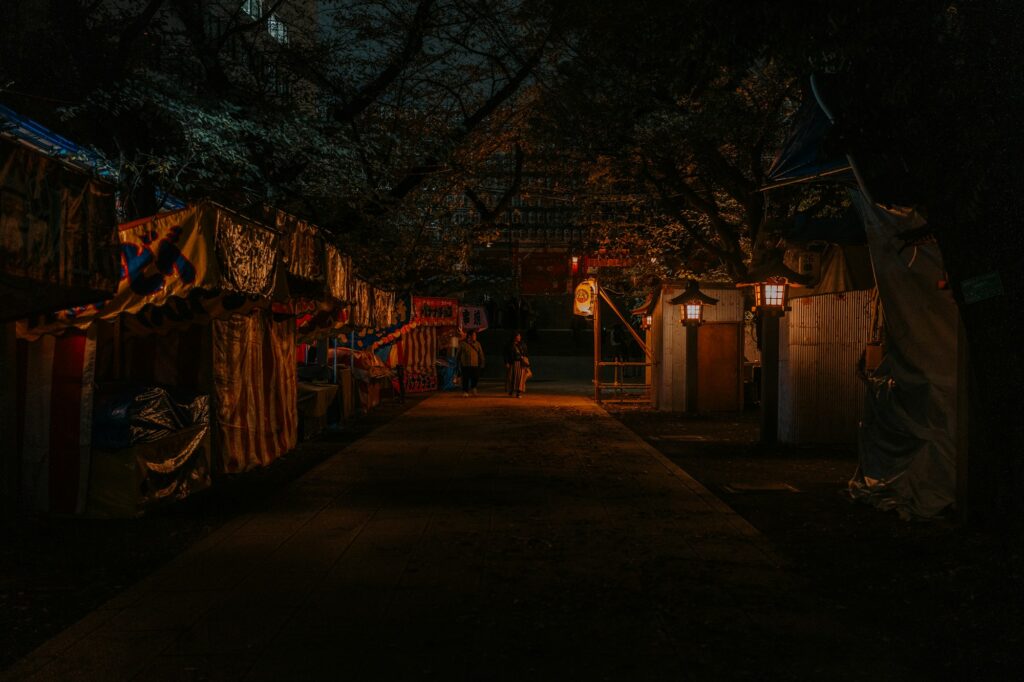
The Tori no Ichi 2026 runs on Saturday 7 and Thursday 19 November 2026, 24 hours a day, at Otori Shrine and Chokokuji Temple in Senzoku, Taito ward. Entry to the site is free according to guides, but the amulets and kumade are paid. From Iriya (Hibiya Line), exit 3: 7 minutes on foot according to the organiser.
Checked on against the official sources cited (torinoichi.jp and the Tokyo Metropolitan Government).
Every November, Tokyo hosts a fair where you can buy decorated rakes said to bring prosperity and customers. The Tori no Ichi, or « rooster market », returns in 2026 on Saturday 7 and Thursday 19 November. The trap is well known, and the first section explains it. This guide gives the official dates, the exact access, the prices of amulets and kumade, the rule for returning an old one, and how a festival night unfolds, with the date each piece of information was checked.
1. Where the fair is held: Senzoku, not Sensō-ji
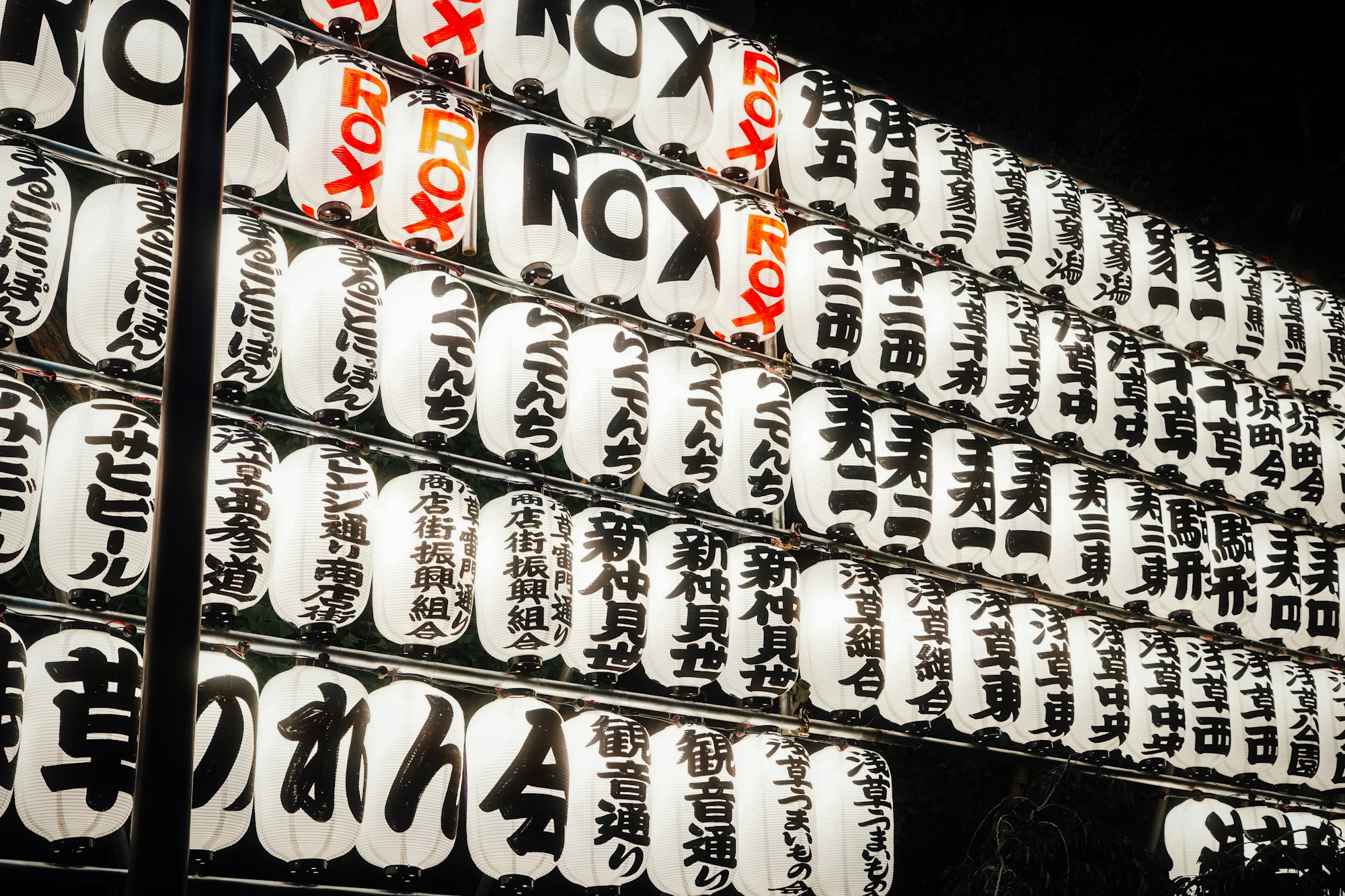
Otori Shrine and Chokokuji Temple
The Tori no Ichi (酉の市) takes place within the grounds of Otori Shrine (鷲神社) and Chokokuji Temple (長國寺), in Senzoku, in Taito ward. The traditional calendar sets it on the rooster days (酉の日), which come every 12 days in November. The organiser’s website remains the reference for dates and rules.
- Location: Senzoku (千束), Taito ward
- Dates 2026: Saturday 7 November (first rooster day) and Thursday 19 November (second rooster day)
- Hours: 24 hours a day on each festival day, no parking, which the organiser discourages
Peak crowds fall between 7 pm and 11 pm on the evening before each festival day, according to livejapan. If you want to round off your stay, a walking tour of Sensō-ji is bookable: it does not cover the fair, but it takes you through the temple and the old quarter, a few minutes south of Senzoku. To compare other tours, see our comparison of Tokyo guided tours.
2. Dates and hours 2026: two nights, not three
In 2026 the fair runs over two days: Saturday 7 November (first rooster day) and Thursday 19 November (second rooster day). The organiser states there is no third festival this year. There is no simple rule such as « the second Saturday of November »: the rooster days follow the traditional calendar, and the dates change from one year to the next.
Be wary of older pages. Some sites still list 12 and 24 November, which were the 2025 dates according to the Tokyo tourism office. Others say « mid-to-late November, dates to be confirmed ». For 2026, only the organiser’s website counts.
The official hours are 24 hours a day. Decorative kumade go on display from 9 pm the evening before, and some stalls close between 3 am and 9 am. The table below sums up the moments of the night, where « the eve » means the evening before each festival day.
Torinoichi.jp mentions neither an entry ticket nor a booking for attending the festival, and real-japan-guide says there is no general reservation. Ordinary amulets require no particular step (torinoichi.jp, Q&A). The only exception written on the site is the « 十番札 » (tenth ticket), for which advance registration is required. The page gives neither the date, the place nor the price of this registration: check torinoichi.jp before you leave if you are aiming for this amulet.
| Time slot | Situation |
|---|---|
| Eve, 7 pm to 11 pm | Peak crowds |
| Eve, from 9 pm until about 1:30 am | Decorative kumade on display |
| Midnight, festival day | Opening with a drum, according to japanactivity |
| 3 am to 9 am | Some stalls closed |
| 3 pm to 5 pm | Family atmosphere, according to japanactivity |
Source: torinoichi.jp, Q&A; livejapan (13 July 2026); japanactivity (18 September 2026), checked on 18 October 2026.
3. Getting there: stations, walk and tickets
Many guides give about 10 minutes from Iriya or Minowa. The organiser publishes precise walking times for each station, which help you pick the right exit. The simplest option is the Hibiya Line to Iriya, exit 3.
| Station | Line | Minutes on foot |
|---|---|---|
| Iriya, exit 3 | Tokyo Metro Hibiya | 7 |
| Asakusa (Tsukuba Express) | Tsukuba Express | 8 |
| Minowa | Tokyo Metro Hibiya | 9 |
| Minowa-bashi | Toden | 11 |
| Uguisudani | JR | 19 |
| Inaricho | Tokyo Metro Ginza | 19 |
| Asakusa (Ginza or Tobu) | Tokyo Metro Ginza / Tobu | 20 |
| Toei Asakusa | Toei | 22 |
| Ueno, Iriya exit | JR | 25 |
Source: torinoichi.jp, map and access, checked on 18 October 2026. The organiser discourages parking and does not offer any.
Watch out for the name « Asakusa ». Asakusa station on the Tsukuba Express is 8 minutes on foot, while Asakusa station on the Ginza or Tobu lines is 20 minutes away. Japanactivity gives 15 to 20 minutes on foot from Asakusa station, through the crowd.
Subway tickets
The Tokyo Subway Ticket covers the 9 Tokyo Metro lines and the 4 Toei lines. It does not cover JR lines, including the Yamanote, nor private lines. Fares changed on 14 March 2026: guides still showing 800 yen for the 24-hour ticket, or 1,200 and 1,500 yen for the 48- and 72-hour tickets, are out of date.
| Ticket | Adult 2026 (yen) | Former fare (yen) |
|---|---|---|
| 24 hours | 1,000 | 800 |
| 48 hours | 1,500 | 1,200 |
| 72 hours | 2,000 | 1,500 |
Source: Tokyo Metropolitan Government press release, 30 January 2026, checked on 18 October 2026. Children pay half the adult fare.
For an evening in Senzoku, a return trip on the Hibiya Line is often enough. The 24-hour ticket only makes sense if you string together several journeys in one day.
4. Buying a kumade: fixed prices at the shrine, negotiated prices in shops
Two circuits run side by side. The shrine’s amulets, including the table kumade, have a fixed, displayed price. Kumade sold by the fair’s shops show no price: they are negotiated, and the ranges vary widely by size.
| Amulet | Price (yen) |
|---|---|
| Large opening kumade (開運大熊手守り) | 3,000 |
| Large kumade for financial luck (金運大熊手守り) | 3,500 |
| Kakkome (かっこめ熊手守り) | 1,200 |
| Kakkome for financial luck (金運かっこめ守り) | 1,400 |
| Limited edition Kakkome Washi Myōken (鷲妙見かっこめ守り) | 1,800 |
| Table kumade (開運置型熊手) | 1,800 |
| Amulets for road safety, marriage, study and koban | 700 |
Source: torinoichi.jp, shrine amulets and kumade, checked on 18 October 2026.
A notice dated 3 October 2026 announces that some amulets will be revised from the first festival day, 7 November. The amount of the revision is not on the page we consulted: the prices above may therefore change on the festival day.
| Size | Range (yen) |
|---|---|
| Small decorative kumade | 1,000 to 3,000 |
| Medium-sized kumade | about 20,000 to 50,000 |
| Company or shopkeeper kumade | from about 50,000 |
| Large monumental kumade | more than 300,000 |
Source: real-japan-guide, 2026 edition for small and company models; for medium sizes, a synthesis of sources including nippon.com (2018 article). Checked on 18 October 2026.
Haggling is part of the ritual. One guide mentions a kumade brought down from 50,000 to 45,000 yen: that is a single example, not a guarantee. The sale often ends with a tejime, a three-beat hand clap (sanbon-jime, 三本締め) described by nippon.com. You are not obliged to join in, but it may be offered to you.
Choose the size to fit your suitcase. A kumade is bulky: measure the space you have before you buy.
5. Returning your old kumade: the organiser’s rule
The shrine asks you to bring last year’s kumade back to the drop-off point (熊手納め所) in front of the main gate of Chokokuji Temple. Returned kumade are purified by a priest. The organiser then recommends buying a new kumade, wishing for more good fortune in the year ahead (torinoichi.jp, amulets page).
Many visitors don’t know this rule. If you leave with a new kumade without dropping off the old one, you miss the part of the ritual the festival puts forward.
None of the official sources we could consult provides for posting a kumade from Japan. Parcel services exist, but whether they accept an item of this size still needs confirming with the carrier. Before you buy, measure the space you have in your luggage.
6. How a festival night unfolds
A festival night breaks down into very different moments. Each one calls for a different approach.
- Late afternoon. Scout the site while it is still light. According to japanactivity, the atmosphere is family-friendly between 3 pm and 5 pm, which suits checking out the location in daylight. The quietest slot, according to the same source, runs from 3 am to 10 am.
- Evening, 7 pm to 11 pm. The crowd is at its densest. Yakitori, dango and takoyaki stalls and hot sake are all there, but the lanes fill up fast. If you are in a group, agree on a meeting point before 7 pm.
- Midnight. According to japanactivity, a drum marks the opening of the festival. The organiser has not confirmed the name of the group playing it, so we don’t cite it.
- 3 am to 9 am. Some stalls close between 3 am and 9 am (torinoichi.jp, Q&A). If you want a kumade, buy it before 3 am.
Some stalls close between 3 am and 9 am: if you want a kumade, buy it before 3 am. Last-train times are not in our sources: check them on the Tokyo Metro website before you go, especially for the night of 18 to 19 November.
Our sources give no information on thefts specific to this festival. General guides to Asakusa advise keeping valuables in a small bag worn in front of you, and your smartphone in a closed pocket: that is general advice, to apply especially in the densest lanes.
7. Budget: what to plan for
Without a kumade to bring home, the spend covers the journey, the metro ticket and street food. The items to know:
- Site entry: free according to tourist guides. The official FAQ does not state this explicitly.
- Tokyo Subway 24-hour ticket: 1,000 yen.
- Common shrine amulet: 700 yen; kakkome: 1,200 yen.
- Small decorative kumade: 1,000 to 3,000 yen. For a medium-sized model, the most widely quoted range is about 20,000 to 50,000 yen (synthesis of sources, rough order of magnitude).
- Special prayer: from 5,000 yen, according to chloeinjapan.com.
- Street food: not priced by our sources.
A medium-sized kumade takes a night from a few thousand yen to several tens of thousands. Prices are negotiable: treat this budget as indicative.
8. Depending on your profile
First time in Tokyo
Keep the fair for one evening and book the next day for Sensō-ji and the old quarter. To extend the day, our guide to the old Yanaka district shows another side of old Tokyo.
With family
The child ticket costs half the adult fare. Japanactivity advises against strollers and large bags in the crowd: the lanes are narrow and packed. Agree on a meeting point and a departure time before you go into the crowd.
Small budget
A visit without buying anything costs only the journey and a street-food meal. The kumade is optional: the pleasure lies in wandering, the stalls and the atmosphere of the night.
Kumade buyer or shopkeeper
Company kumade start at around 50,000 yen and are negotiated. Haggling is part of the sale: compare two or three shops before you decide, using the ranges in section 4.
Reduced mobility
Our sources describe neither the accessibility of the site nor that of the stations. The site is outdoors, in narrow streets, and very crowded at night. If this question affects your visit, contact the temple before you go (contact details are on torinoichi.jp).
9. Mistakes to avoid
- Looking for the fair at Sensō-ji. It is held at Otori Shrine and Chokokuji Temple in Senzoku.
- Aiming for 12 and 24 November. Those are the 2025 dates, not 2026’s.
- Coming by car. The organiser discourages parking and does not provide any.
- Buying without planning the space. A kumade is bulky, and postal shipping is not verified.
- Forgetting the old-kumade rule. Drop-off is in front of Chokokuji’s main gate.
- Leaving without warm clothes. Evenings are cool, and the night is spent outdoors.
- Taking shop prices for fixed prices. They are negotiated, unlike the shrine’s amulets.
10. Weather and conditions on the night
According to third-party weather sources, the temperature is 10 to 17 °C during the day and 7 to 12 °C in the evening in November, with the cold setting in towards the end of the month. Nordot gives this order of magnitude, which we do not present as an official average.
In rain or snow the festival goes ahead, according to the organiser (torinoichi.jp, Q&A). Bring a compact umbrella, a warm coat, a scarf and closed shoes: the night is spent outdoors for several hours.
What other guides don’t tell you
Three points appear on the organiser’s site and are absent or sketchy in the guides we consulted. The detail is in sections 3 to 5.
- The previous year’s kumade is dropped off at Chokokuji. Drop-off is in front of the main gate, where a priest purifies the kumade. torinoichi.jp, amulets (checked on 18 October 2026).
- Some amulets change price from 7 November. The notice is dated 3 October 2026, but the amount of the revision is not published on the page. torinoichi.jp (checked on 18 October 2026).
- Official walking times are not « about 10 minutes » everywhere. Iriya, exit 3, is 7 minutes away, Minowa 9 minutes and the Tsukuba Express 8 minutes. torinoichi.jp, access map (checked on 18 October 2026).
Practical info before you go
Maps, routes and transport timetables stay on hand once you’re there, from getting off the train to getting back to your hotel.
Plans by duration and data volume, shown on the siteInsurance covers medical costs and unexpected events during your stay in Japan. Compare the cover before you leave.
Rate depends on trip length and age, shown on the siteCheck entry requirements on the official websites of the Japanese authorities before you travel.
Frequently asked questions about the Tori no Ichi 2026
When is the Tori no Ichi 2026 near Asakusa?
On Saturday 7 November and Thursday 19 November 2026, according to the organiser. The fair is open 24 hours a day on each of those two days. There is no third festival in 2026, and the 12 and 24 November dates belong to the 2025 edition. torinoichi.jp.
Is the Tori no Ichi free?
Entry to the site is free according to the tourist guides we consulted, such as real-japan-guide and selfguidejapan. The official FAQ does not state this explicitly. However, the shrine’s amulets, the kumade sold by shops, special prayers and food are paid. Budget accordingly.
How much does a kumade cost?
Shop kumade have no displayed price and are negotiated. A small decorative model costs between 1,000 and 3,000 yen, and a company kumade from 50,000 yen (real-japan-guide). For a medium-sized model, the most quoted range is about 20,000 to 50,000 yen (synthesis of sources, rough order of magnitude). Shrine amulets have a fixed price, from 700 to 3,500 yen.
Is the Tori no Ichi held at Sensō-ji temple?
No. The fair is held in Senzoku, around Chokokuji Temple and Otori Shrine, a few minutes north of Sensō-ji. Visitors who look for kumade along Nakamise street miss the festival. To get there, Iriya station, exit 3, is 7 minutes on foot according to the organiser. torinoichi.jp, access map.
Which station should I take for the Tori no Ichi?
Iriya station, Hibiya Line, exit 3, is the closest: 7 minutes on foot according to the organiser. Minowa, on the same line, is 9 minutes away, and Asakusa station on the Tsukuba Express 8 minutes. Asakusa station on the Ginza or Tobu lines is 20 minutes on foot. There is no parking for the festival. torinoichi.jp.
Should I bring back my old kumade?
Yes, that is the rule the organiser asks for. Last year’s kumade is dropped off at the drop-off point in front of the main gate of Chokokuji Temple, where a priest purifies it. The organiser then recommends buying a new one for the year ahead. torinoichi.jp, amulets.
Can you send a kumade by post from Japan?
We found no official source that provides for it, so the question remains to be confirmed. Japanese parcel services exist, but whether they accept a bulky item is not verified. The safest option is to carry it in your luggage, after measuring the space you have, or to check with the carrier before you leave.
What happens at midnight at the Tori no Ichi?
The festival opens at midnight with a drum, according to japanactivity. The organiser has not confirmed which group plays it. Decorative kumade go on display from 9 pm the evening before, and some stalls close between 3 am and 9 am. torinoichi.jp, Q&A.
Sources
- torinoichi.jp: official site of the festival, dates and rules
- torinoichi.jp, Q&A: opening hours, the eve, stalls, rain
- torinoichi.jp, map and access: walking times by station
- torinoichi.jp, amulets and kumade: fixed prices and the return rule
- torinoichi.jp, contact: contact details for Chokokuji
- Tokyo Metropolitan Government, press release of 30 January 2026: Tokyo Subway Ticket fares
- Tokyo Tourism Office, event page: past editions
- real-japan-guide: 2026 guide, price ranges
- livejapan: peak crowds (updated 13 July 2026)
- japanactivity: the night’s timeline (updated 18 September 2026)
- chloeinjapan: special prayers, access
- selfguidejapan: 2026 dates, free entry
- nippon.com: tejime, origins (2018 article)
- Nordot: order of magnitude for temperatures (third-party weather source)
Sources checked on 18 October 2026. Kumade prices are indicative and negotiable. Amulet prices may change from 7 November 2026.
Plan your trip with Pixidia
Pixidia learns how you travel and helps you build a trip that truly fits you and everyone coming along.
Open the planner