
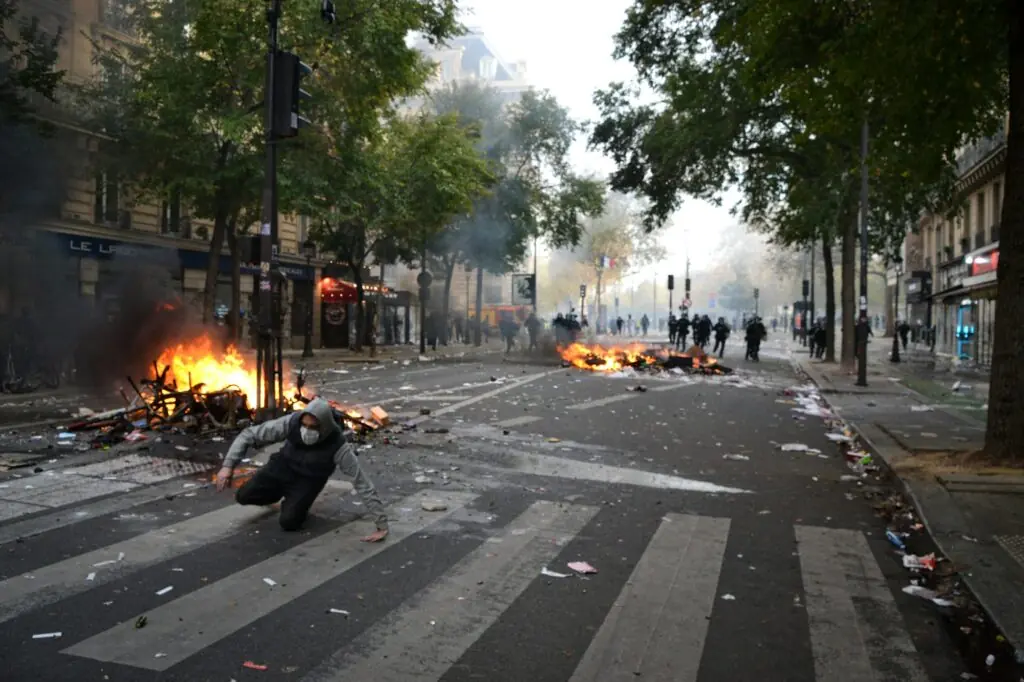
No government we checked bans travel to France as of 21 October 2026, but the 17 October protests (550,000 participants according to the Interior Ministry) mean you should adapt your journeys. Closed metro stations, local curfews, the Louvre blocked on 19 October: watch 24 October and 5 November. We found no figures on cancellations in our sources as of 21 October.
Checked on against the official and press sources cited (Légifrance, Canada’s advisory, City of Lyon, Louvre, SNCF Connect, Paris je t’aime).
Travelling in France is still possible, and most museums, monuments and tourist sites are open as normal, but the period from 17 October to 5 November 2026 calls for planning your journeys. A school-student movement that began in Créteil on 21 September joined a cost-of-living protest day on 17 October, the first day of the All Saints’ school holidays. Here is, as of 21 October 2026, what is confirmed, what is only announced and what nobody is measuring yet, starting with the effect on tourism. Every figure comes with its date and source.
What has happened since 21 September
The movement started on 21 September 2026 at the Saint-Exupéry secondary school in Créteil (some sources give 18 September). According to Amnesty France, citing the Interior Ministry, more than 5,000 people were arrested between 21 September and 2 October, around 85% of them minors (consulted on 21 October 2026).
On Saturday 17 October it joined a day “against the cost of living”, born on social media in early September around fuel prices (Public Sénat, 15 October). Turnout: 550,000 demonstrators according to the Interior Ministry, including 110,000 in Paris, and 800,000 according to the organisers. Violence and looting hit Paris, Lyon, Marseille, Lille, Bordeaux, Limoges and other towns (Économie Matin, 19 October). The authorities distinguish peaceful demonstrators from rioters (the “casseurs”), and that is the reading to keep in mind.
The tallies changed depending on the time. On Saturday evening, Prime Minister Sébastien Lecornu cited 1,200 arrests and 150 police officers and gendarmes injured (Paris Match Belgique, 18 October). Later counts go up to nearly 2,400 arrests and about 1,000 police officers and gendarmes injured according to Al Jazeera. So be wary of any figure that has no time attached.
On the tourism side, the most widely shared image is the arson attack on the Lyon Tourist Office pavilion, Place Bellecour, early in the afternoon of 17 October, which the City describes as a “major heritage loss” (Ville de Lyon, 19 October).
Emmanuel Macron ruled out a state of emergency on 18 October and said prefects could “ban certain gatherings” (Public Sénat). On 19 October, Sébastien Lecornu announced “partial” and very localised curfews, judging a state of emergency “not appropriate for now” without ruling it out (LCP), then short-time working support (chômage partiel) at 100% from 20 October for affected shops, at least 3,000 according to the trade minister (Dakaractu, 19 October).
Paris, airports, trains and museums: what is running
Paris: metro, curfew and neighbourhoods
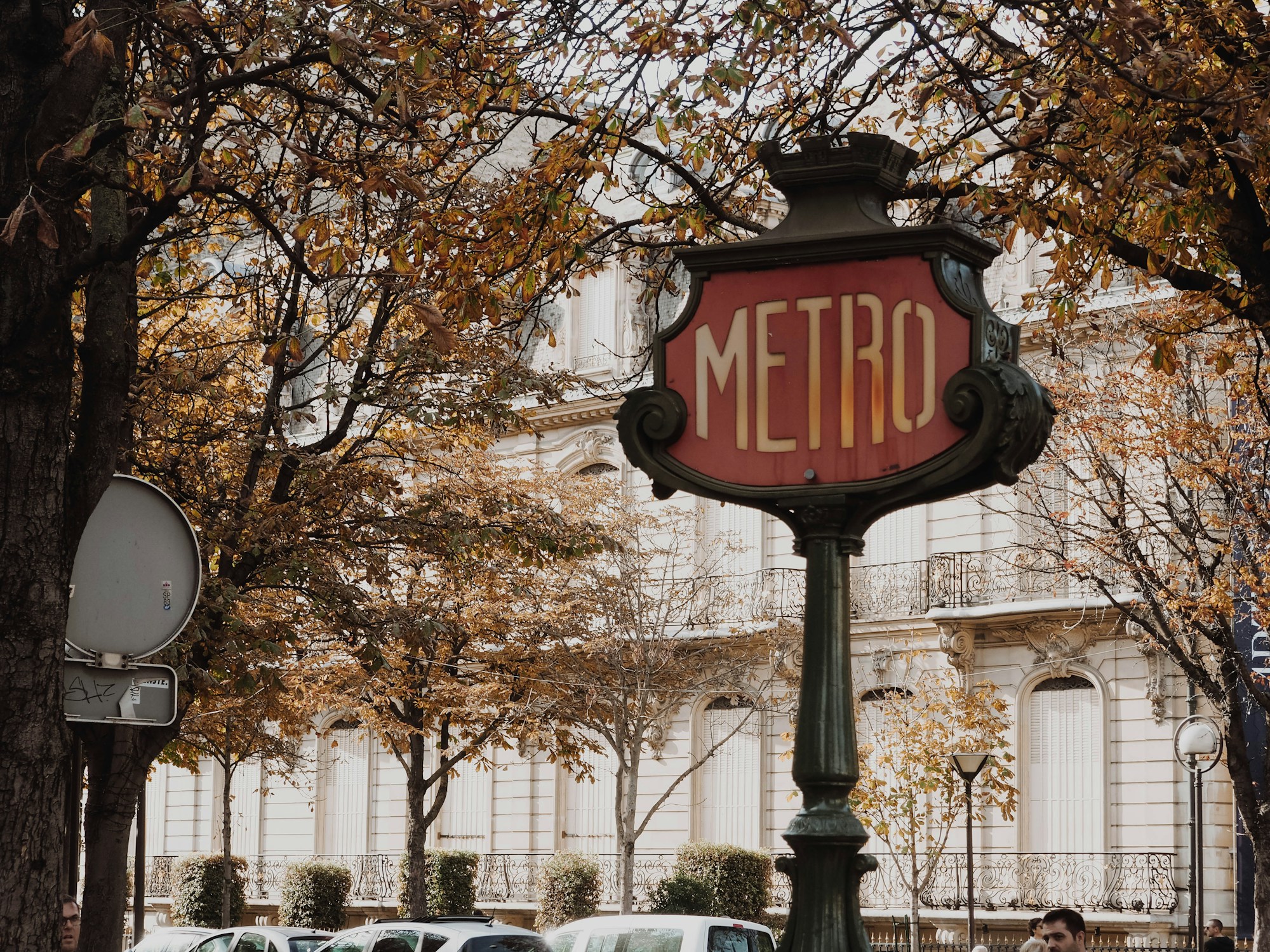
Station closures are decided by the Paris police prefecture and applied by the RATP: trains run through without stopping. On 17 October, 25 metro and RER stations closed, 16 from 8 am and 9 from midday (Sortiraparis, 17 October). On 20 and 21 October, Châtelet, Les Halles and République are inaccessible after 10 pm, and the RER B is suspended between Saint-Michel-Notre-Dame and Châtelet-Les Halles from 10 pm on the 21st to 6 am on the 22nd (Sortiraparis, 21 October). Buses and trams are running broadly as normal (Paris je t’aime, 21 October). No RATP strike notice was found in our sources as of 21 October: the closures come from the prefecture, not from industrial action at the RATP.
The Paris curfew only covers a specific area, detailed in the table below. The Prime Minister ruled out a curfew for the whole capital: “There is no question of all of Paris being under curfew, it makes no sense” (LCP, 19 October).
What remains usable, what needs a margin
- Outside mobilisation days, the sensitive neighbourhoods stay open: the press mentions République, Bastille, Nation, Place de Clichy, the Grands Boulevards and the Champs-Élysées (Sortiraparis, 17 October).
- No Paris police prefecture order for 24 October was found in our sources as of 21 October: station closures are decided at the last minute.
Flights, trains and getting to the airports
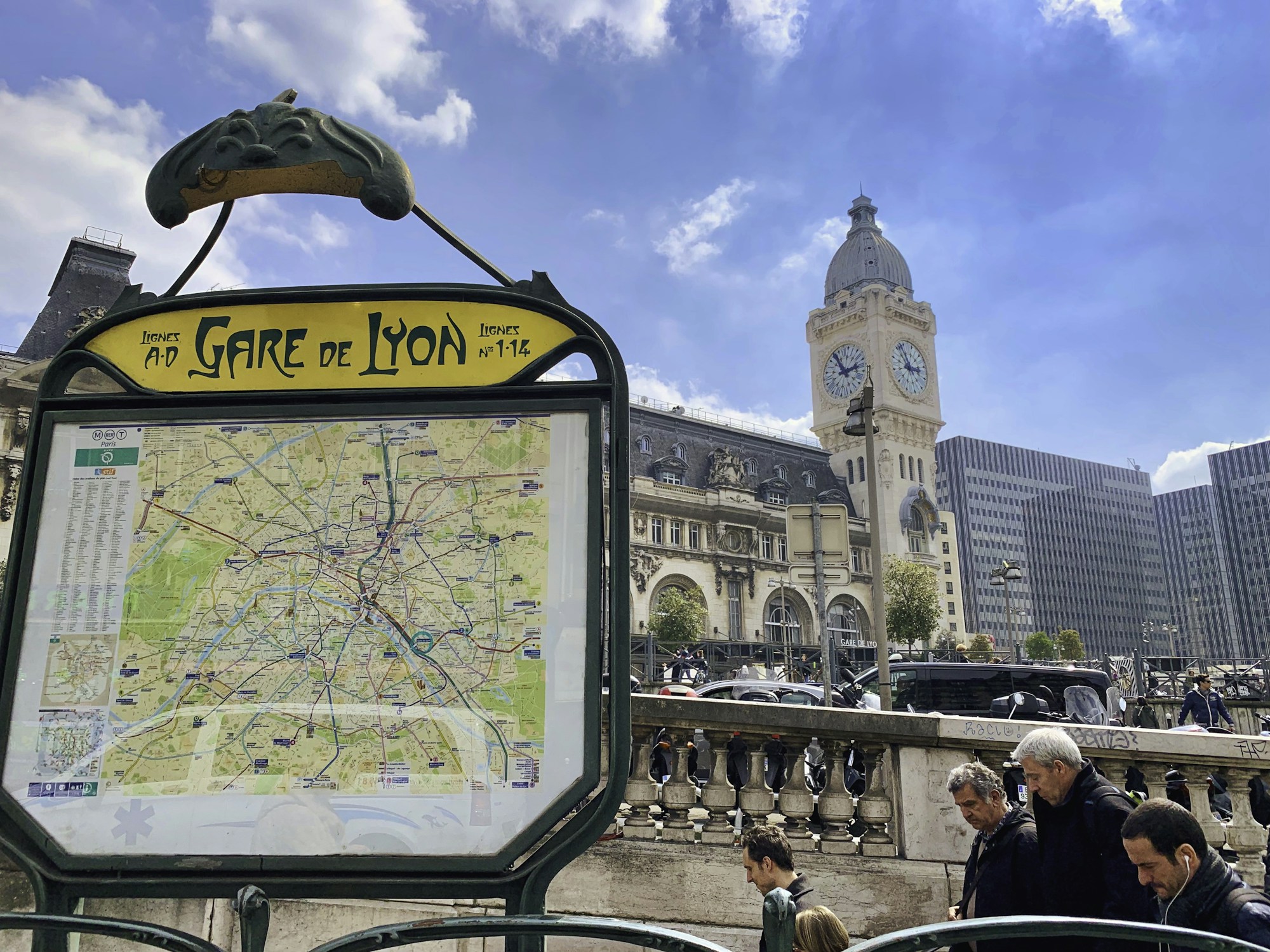
Flights. The flight crew strike notice for 17 to 21 October was suspended on 9 October by the union alliance, pending a decree: it is a suspension, not a cancellation (TourMaG, 9 October). Paris-Charles-de-Gaulle and Orly are described as broadly unaffected (Travel Market Report, 20 October). It is road access that can be slowed: taxis driving slowly towards Roissy, and notices from road transport unions (Sortiraparis, 17 October).
Trains. No national notice and no disruption was reported on 17 October on SNCF or Eurostar (Sortiraparis, 17 October; Afar, 20 October). The date to watch is Thursday 5 November: four rail unions are calling for a joint strike (TourMaG, 16 October), with no formal strike notice established to date. For the background to the cross-sector strike day, see our article on the 5 November 2026 strike: its status dates from 13 October and does not yet mention the rail workers’ call of 16 October.
Roads. Heavy traffic is expected on the A6 and A10 in the direction of All Saints’ departures (InfosTourisme, 12 October): the weekend of 24 October combines holiday departures and the announced mobilisation.
Museums and sites: the Louvre case
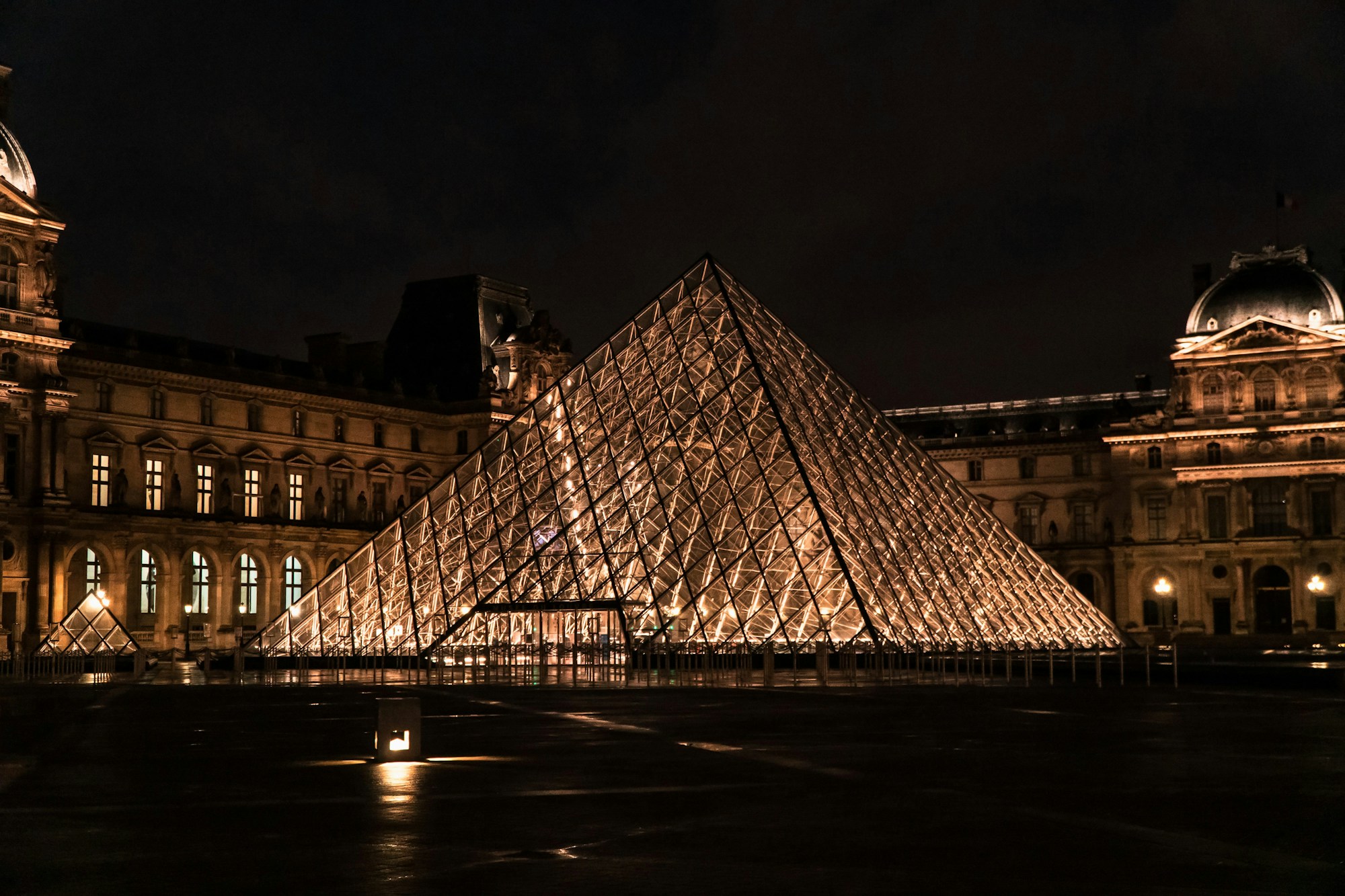
On Monday 19 October, the Louvre could not open on time: around fifty students from the École du Louvre, according to the management cited by AFP, blocked the entrance in support of the school students (Euronews, 19 October). How long it lasted is not established: “until at least midday” according to the CGT, “briefly blocked” according to Travel Market Report and a “brief blockade” according to Afar on 20 October, and no official reopening statement was found. As of 21 October, the museum’s website showed no alert (louvre.fr).
For other sites, the Paris tourist office advises contacting the venue before your visit: most museums and monuments are open as normal (Paris je t’aime, 21 October). No alert was found for the Eiffel Tower, Versailles or Orsay, but their official websites could not be read for this article: check on the morning itself. In Lyon, how the Tourist Office is receiving visitors since the fire is not documented: contact it before counting on the Place Bellecour pavilion.
Curfews: city by city
The curfews announced from 19 to 21 October are partial and localised. At night, they ban presence within a given area, with exemptions, except in Denain where the mayor announces a curfew across the whole town (Brut, 19 October).
| City | Area | Hours | Who is affected and exemptions | Announced duration |
|---|---|---|---|---|
| Paris | Central island of Place de la République and part of the Les Halles district | 11 pm to 6 am | Movement banned; residents, professionals and emergency services exempt with proof; shops open | Night of 20 to 21 October; extension on the 21st possible, not confirmed |
| Paris (centre) | Several central areas | 8 pm to 6 am | Undeclared demonstrations banned | From 19 October at 8 pm to 20 October at 6 am |
| Lyon | Part of the Presqu’île (rue Constantine to the north, Rhône quays, rue de Condé, Saône quays); bridges excluded | 9 pm to 6 am | Presence on foot banned; bars, restaurants and cinemas open; journeys to a hotel, a home or a workplace allowed | Night of 19 to 20 October; what follows not confirmed |
| Lille, Douai, Wattignies, Denain | Parts of the towns (Denain: the whole town according to the mayor) | 8 pm to 6 am | Partial and localised; one source says minors only | Until Sunday 25 October |
| Nice | City centre, Old Nice, the rue Trachel – Gare du Sud area | 9 pm to 6 am | Sources differ: everyone (Le Grand Continent) or minors (Euronews, AFP) | Night of 19 to 20 October |
| Marseille | Gatherings and demonstrations banned | 12 pm to 8 pm on Monday 19 October | Everyone | 1 day |
Sources: Paris je t’aime, Lyon Mag, Le Grand Continent, Euronews, checked on 21 October 2026.
In Lyon, journeys to a hotel, a home or a workplace are allowed, with proof that is checked (Lyon Mag, 19 October). In Nice, who is affected is not established: ask your accommodation. Outside the big cities, no trouble is reported in the sources we read, apart from a farmers’ demonstration, about twenty tractors, on the A47 at Chasse-sur-Rhône (Euronews, 19 October); that is an absence of signal, not proof of absence.
What governments are saying
None of the governments we consulted bans travel to France. The only one that mentions postponing is Malaysia, for non-essential travel, specifying that travel remains unrestricted. The others recommend vigilance and avoiding gatherings.
| Country | Message | Date | Source |
|---|---|---|---|
| Canada | Level 2 out of 4, “exercise a high degree of caution”; demonstrations, local curfews and looting mentioned | 19 October 2026, 6:38 pm (ET) | Global Affairs Canada |
| Germany | No formal travel warning; avoid demonstrations as far as possible | 21 October 2026 | ADAC (relaying the Auswärtiges Amt) |
| Malaysia | Consider postponing non-essential travel; travel not restricted | 18 October 2026 | The Star |
| Italy | Register, avoid crowds, “extreme caution” | 19 October 2026 | Devdiscourse (aggregator) |
| Czech Republic | Avoid demonstrations and gatherings | 19 October 2026 | Devdiscourse (aggregator) |
| Poland | Avoid demonstration sites; France remains safe to visit | 19 October 2026 | Devdiscourse (aggregator) |
Source: official pages and relays cited in the table, checked on 21 October 2026. The US State Department and US embassy pages could not be consulted: check them directly. The general UK page (GOV.UK) reminds travellers that demonstrations can take place “with little or no notice”; the version we read does not mention October 2026.
Your rights if a journey, flight or visit is cancelled
Cancelling for fear of an incident does not entitle you to a refund. What matters is the type of booking and who cancels.
| Booking | Rule | What to do |
|---|---|---|
| Package (transport and stay bought together) | Termination without fees before departure if unavoidable and extraordinary circumstances, at the destination or in its immediate vicinity, have significant consequences for the contract or the transport (French Tourism Code, L211-14 II); full refund, no additional compensation | Ask the organiser in writing; subjective fear is not enough |
| Train (TGV INOUI, Intercités) | Delay of more than 30 minutes on arrival: 25% of the ticket (30 min to 2 h), 50% (2 h to 3 h), 75% beyond, whatever the reason (G30 guarantee) | Claim the compensation; a cancelled ticket is not refunded automatically |
| Flight | Flight cancelled by the airline: refund or re-routing; flight operating: no refund beyond the fare conditions | Go through the airline; compensation unlikely when the cause is outside its control |
| Museum ticket (Louvre) | Valid for the date and slot chosen, non-refundable unless the museum cancels or changes the service | Keep the confirmation, claim from the museum in case of closure |
| Hotel | No rule specific to demonstrations found: the conditions of the booked rate apply | Choose a flexible rate for upcoming bookings |
Sources: Légifrance, L211-14, SNCF Connect, AirHelp, louvre.fr, checked on 21 October 2026.
We found no public recognition of the October 2026 protests as “unavoidable and extraordinary circumstances”, by a travel organiser or a ministry, in our sources as of 21 October: the question depends on each contract and, in the last resort, on a judge. Cancellation insurance very often excludes riots and civil commotion, and a cancellation linked to an event already known at the time of purchase is generally not covered: only your own policy counts. For the general framework of a transport strike, see our article on passenger rights during a train and flight strike.
What could change before you leave
What happens next depends on dates already announced. None is guaranteed, and several rest on a single call.
| Date | What | Status as of 21 October | For your trip |
|---|---|---|---|
| Saturday 24 October | “Act II” of the gilets jaunes (yellow vests) (Lyon: Place Bellecour, 2 pm); 76 actions on the organisers’ map on 19 October | Announced | No Paris police prefecture order found; check the metro the day before and in the morning |
| Sunday 25 October | Announced end of the curfews in the North | Announced | Lille, Douai, Wattignies, Denain: free evenings afterwards if the end is confirmed |
| Saturday 31 October | “Act III” possible, last weekend before school resumes | Announced by several sources, not all | Don’t build a tight plan on this date, and don’t rule it out either |
| Monday 2 November | School resumes; school-student mobilisation announced for the return | Official resumption | School blockades may return, with no direct effect on the sites |
| Tuesday 3 November | Rail workers’ rally in Saint-Denis | Announced | A signal before 5 November |
| Thursday 5 November | Union alliance day of strikes and demonstrations; rail workers’ call | Call confirmed, SNCF strike notice not established | Check the transport plan about 48 hours before |
Sources: Lyon Mag, Sud Radio, TourMaG, Voyages d’Affaires, French Ministry of Education, checked on 21 October 2026.
Where to check before you go
- Metro, RER and buses: RATP and Île-de-France Mobilités, 24 to 48 hours before and again on the morning itself.
- Orders, curfews and perimeters: the Paris police prefecture, or the prefecture of the département you are visiting.
- Trains: SNCF Connect; flights: the airline’s app and Paris Aéroport.
- Museums and monuments: the venue’s website on the day itself, and your own country’s travel advice.
Keep, adapt or postpone: depending on your situation
OUISTARS does not recommend automatic cancellation (17 October). What remains is to look at your precise situation, without deciding on images alone.
A stay in Paris in the next few days
Keep it, with three adjustments: accommodation away from the usual march areas (République, Bastille, Nation, Place de Clichy), outdoor or morning visits on mobilisation days, and back at the hotel before nightfall in the areas under curfew.
A departure by plane or train
Keep the ticket, add a transport margin and watch the carrier’s alerts. For 5 November, wait for the transport plan before paying for a change.
A package or tour already paid for
Contact the organiser before cancelling: without recognised unavoidable and extraordinary circumstances, cancelling yourself can cost you fees. Several US tour operators (Avanti Destinations, Collette, Globus) said on 20 October that they had seen no cancellations or itinerary changes (Travel Market Report): statements from operators, not a statistic.
A stay outside the big cities
Apart from the farmers’ demonstration on the A47 mentioned above, no trouble is reported in the sources we read. The point of vigilance remains a journey that goes through a big city on a Saturday of mobilisation. For day-out ideas, see our selection of day trips from Paris.
If you come across a march
Move away, follow the police’s instructions, and do not stay in a gathering after dispersal warnings (articles 431-3 and 431-4 of the French Criminal Code). Emergencies: 112 or 17. Germany reminds its citizens that they risk fines and damages if they refuse to leave a banned demonstration after being ordered to (ADAC, 21 October).
Tourism and France’s image: what we know, what we don’t
No figures on cancellations or a fall in visitor numbers linked to the October 2026 protests were found in our sources as of 21 October 2026 (trade bodies, Atout France, airports). Everything written about the economic impact is, at this stage, a fear or an anticipation, not a measurement.
What is documented: a joint statement by ADN Tourisme, ANETT, CAT and INNTO France, dated 18 October, condemns the “violence, looting and abuses”, cites the arson attack on the Lyon tourist office and calls for an end to them (TourMaG, 19 October).
The only measured precedent is the gilets jaunes. According to INSEE, in the first quarter of 2019, hotel overnight stays in Île-de-France fell by 4.6%, “probably linked to the yellow vest movement”, and foreign visitors across the whole of France by 3.4% (report of 9 May 2019, relayed by Maire-Info). That is an order of magnitude for an episode lasting several weeks, not a forecast for 2026. For scale: 2025 saw 102 million international arrivals and €77.5 billion in revenue (review by Bercy and Atout France of 19 February 2026, Banque des Territoires).
For your trip, what matters is the day and the area: check the state of the metro and the prefecture’s orders the evening before, then again on the morning itself.
What other guides don’t tell you
Several guides published since 17 October remain general or dated. Here is what they leave out, with the source and the date consulted.
- The Paris curfew only covers one area. The guides we read write “curfews” without the area (République and part of Les Halles) or the exemptions: in Lyon, the order even allows journeys to a hotel, according to Paris je t’aime and Lyon Mag (consulted on 21 October 2026).
- The flight crew strike notice for 17 to 21 October has been suspended since 9 October. Some guides still present it as active; it is a suspension, which can be lifted, according to TourMaG (consulted on 21 October 2026).
- Louvre tickets are only refunded if the museum cancels or changes the service. No guide we read gives this rule, or the compulsory booking from 17 October to 1 November, according to louvre.fr (page updated on 14 September 2026, consulted on 21 October 2026).
- Cancelling a package without fees follows a precise criterion. Article L211-14 II requires unavoidable and extraordinary circumstances that seriously affect the contract or the transport. The guides say “don’t cancel” or “it’s a personal decision” without the criterion, according to Légifrance (version in force since 1 July 2018, consulted on 21 October 2026).
- Canada’s advisory was updated on 19 October 2026 at 6:38 pm (Eastern time). It adds demonstrations, looting and local curfews to the level 2 already in force; an article from the morning of 19 October still considered it not updated, according to Global Affairs Canada (consulted on 21 October 2026).
- Germany issues no formal travel warning, so no automatic right to withdraw, but reminds travellers of the fines for staying in a banned demonstration. In France, staying in a gathering after a dispersal warning is punishable by one year in prison and a €15,000 fine, according to Légifrance and ADAC (consulted on 21 October 2026).
Frequently asked questions
Should I cancel my trip to France because of the protests?
Not automatically. No government we consulted bans travel to France, and Malaysia, the most cautious, only advises considering postponing non-essential travel. A package can only be terminated without fees if unavoidable and extraordinary circumstances seriously affect the trip (Légifrance).
Is it dangerous to go to Paris right now?
The violence is concentrated in specific areas and at specific times: mobilisation Saturdays, evenings, the République and Grands Boulevards areas. Canada recommends a high degree of caution (level 2 out of 4); the UK reminds travellers that most demonstrations are peaceful but can happen with little notice (voyage.gc.ca, 19 October).
Is the Louvre open during the protests?
It could not open on time on Monday 19 October because of a student blockade. As of 21 October, its website shows no alert and reminds visitors that booking is compulsory from 17 October to 1 November. It is closed on Tuesdays. Check louvre.fr on the day itself.
Is there a curfew in Paris?
A partial curfew covered the central island of Place de la République and part of Les Halles, from 11 pm to 6 am, on the night of 20 to 21 October. It does not cover all of Paris, and residents and professionals can move around with proof (Paris je t’aime, 21 October). An extension was not confirmed.
Is there a flight or train strike at the moment?
The flight crew strike notice for 17 to 21 October has been suspended since 9 October, and no national SNCF notice was reported for 17 October. Rail workers are calling for a strike on Thursday 5 November, with no formal notice established to date (TourMaG).
When are the next protests in France?
Saturday 24 October, with “Act II” of the gilets jaunes, possibly Saturday 31 October, and Thursday 5 November, a union alliance day with a call from rail workers. “Act III” on 31 October is announced by several sources, not all (Lyon Mag).
Will I get a refund if my train, flight or visit is cancelled?
Train cancelled: refund or exchange on request, and compensation of 25 to 75% beyond 30 minutes’ delay on TGV INOUI and Intercités. Flight cancelled by the airline: refund or re-routing. Museum: refund possible only if it cancels (SNCF Connect, louvre.fr).
Does my travel insurance cover riots?
Often not: riots and civil commotion are very frequently excluded from cancellation cover, and a cancellation linked to an event already known at the time of purchase is generally not covered (Afar, 20 October). Only your own policy counts: read the list of exclusions before buying.
What should I do if I come across a protest?
Move away, follow the police’s instructions and avoid gatherings. Do not stay in a gathering after dispersal warnings: article 431-4 of the French Criminal Code provides for one year in prison and a €15,000 fine. In an emergency, call 112 or 17 (Légifrance).
Sources
- Amnesty France ; Public Sénat, 15 October ; Économie Matin: school-student movement, 17 October day, tallies
- Paris Match Belgique ; Al Jazeera: provisional tallies and government reaction
- Public Sénat, 18 October ; LCP ; Dakaractu: government announcements
- Ville de Lyon ; Lyon Mag, curfew ; Lyon Mag, 24 October: Lyon
- Paris je t’aime ; Sortiraparis, 17 October ; Sortiraparis, 21 October: transport and curfew in Paris
- Le Grand Continent ; Brut ; Euronews, curfews ; Euronews, Louvre ; louvre.fr
- TourMaG, flight crew ; TourMaG, rail workers ; Voyages d’Affaires ; TourMaG, tourism professionals
- Canada ; GOV.UK ; ADAC ; The Star ; Devdiscourse: travel advice
- Tourism Code, L211-14 ; Criminal Code, 431-3 onwards ; SNCF Connect ; AirHelp: passenger rights
- Afar ; Travel Market Report ; OUISTARS ; InfosTourisme: travel press
- Maire-Info (INSEE, 2019) ; Banque des Territoires ; French Ministry of Education ; Sud Radio: visitor numbers and calendar
Situation as of 21 October 2026, around 2 pm. The tally figures come from the press relaying the Interior Ministry.

Plan your trip with Pixidia
Pixidia learns how you travel and helps you build a trip that truly fits you and everyone coming along.
Open the planner