
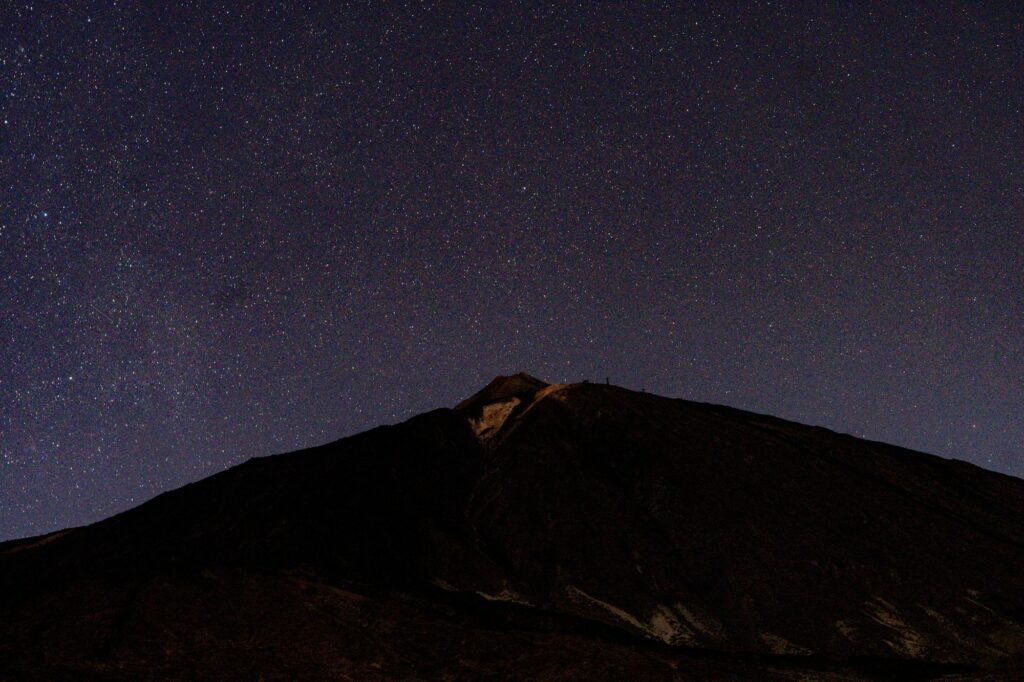
The Leonids peak on November 17, 2026, with 10 to 15 meteors per hour under a very dark sky. Most sources point to that date. Two of them put the maximum at 1 a.m. in France on November 18, in the same night. The Moon sets between 11 p.m. and midnight, depending on the city.
Checked on against the official sources cited at the end of this article. Several are excerpts, marked as such.
The Leonids are an autumn meteor shower, produced by debris from comet 55P/Tempel-Tuttle. Their radiant lies in the constellation Leo, which gives them their name. In 2026, the peak is forecast for November 17, a Tuesday. Sources that recommend a single night pick the night of November 17 to 18. But the date is not enough: the Moon, the time you watch and the quality of your sky matter just as much. This article answers three questions: when to look, how many meteors to expect, and where to go for a truly dark sky.
When to see the Leonids in 2026: the November 17 peak
The 2026 calendar of the International Meteor Organization (IMO) sets the peak on November 17, for activity running from November 6 to 30. These are the reference dates for this article. They don’t tell the whole story: sources disagree on the exact peak time, and that is where they diverge.
The table below lists what each source announces for the peak, along with the day it picks. Read it as a set of clues, not as a guaranteed timetable.
| Source | Announced peak time | Moonset | Moon illumination on November 17 |
|---|---|---|---|
| IMO, 2026 calendar (table 5) | not specified, solar longitude 235°27 | not specified | not specified |
| Sterngucker | 3:52 p.m. Central European Time on November 17 (calculated for Berlin) | around 11:30 p.m. in Berlin | 54% |
| EarthSky | midnight Universal Time on November 18 (attributed to the American Meteor Society) | around midnight | 45 to 50% |
| SVBony | midnight Universal Time on November 18 | early in the evening | 45% |
| UniversalTimeDate | around 6 a.m. Universal Time on November 17 | around midnight, local time | 50 to 53% |
Source: IMO 2026 calendar, table 5; Sterngucker, page checked on October 13, 2026; EarthSky, SVBony (page dated July 27, 2026) and UniversalTimeDate, checked on October 23, 2026.
Three things stand out. First, most sources pick November 17. Second, the time varies by source and time zone: from 3:52 p.m. Central European Time on the 17th to midnight Universal Time on the 18th, which is 1 a.m. in France. EarthSky and SVBony therefore place the peak in the same night as the others. Third, the sources that recommend a single night point to November 17 to 18: Sterngucker, EarthSky, SVBony, Darkskiesatlas and Meteomedia. To watch, aim for the whole night, not one specific minute.
The Moon is the factor that weighs most on your night. It reaches first quarter on November 17 at 11:48 UT, according to EarthSky, and lights between 45 and 54% of the disc depending on the source. It sets between 11 p.m. and midnight depending on the city. It gets in the way early in the night, while you set up your gear, and leaves the end of the night clear.
The activity lasts almost a month. The IMO calendar puts it from November 6 to 30; EarthSky gives a wider window, from November 3 to December 2. Use November 6 to 30, with a peak forecast for November 17.
If you enjoy autumn meteor showers, the Geminids 2026 peak, according to our research, on December 14. That date still needs confirming, because we did not open a primary source. These are two separate showers, with different windows and constellations, so don’t mix up their dates.
How many meteors to see, and under what sky
The reference rate published by the IMO is a ZHR of 15 meteors per hour in a normal year. The ZHR is a theoretical figure: it assumes the radiant is directly overhead and a sky of a purity rarely reached. The table below lists the rates announced for each type of sky, starting with that theoretical reference.
| Sky type | Announced rate (ZHR or observed) | Source |
|---|---|---|
| Theoretical rate (ZHR, normal year) | 15 per hour | IMO, 2026 calendar (table 5) |
| Very dark sky, far from cities | 10 to 15 per hour | EarthSky, Royal Museums Greenwich, Darkskiesatlas, SVBony |
| Rural, very dark sky | 10 to 20 per hour | UniversalTimeDate |
| Suburban area | 5 to 8 per hour | UniversalTimeDate |
Source: IMO, 2026 calendar; EarthSky; Royal Museums Greenwich; Darkskiesatlas; UniversalTimeDate, checked on October 23, 2026.
These figures apply to a person watching the sky with the naked eye, for several dozen minutes, with no screen. They are not a promise. A given night can be quieter than average, and a cloudy sky cuts the number of visible streaks. Hold on to the order of magnitude: a few dozen meteors on a good night under a dark sky, and far fewer from a city.
Particles enter the atmosphere at 71 km/s (about 44 miles per second), according to the IMO. That speed is high, which is why the streaks are often bright, even though the count stays modest from one year to the next.
Historic storms, but no outburst forecast
The Leonids are known for historic storms, outbursts of several thousand meteors an hour. We don’t give any figure here, because we found no reliable open source. For 2026, none of the sources we checked forecasts an outburst: expect an ordinary year, and treat any gain as a good surprise.
Where to watch: dark skies in France and beyond
A dark sky matters more than the date. In France, the reference label is the International Dark Sky Reserve (RICE in French), awarded by the International Dark-Sky Association (IDA). Outside France, Starlight-certified destinations offer comparable skies, at a different cost and with different logistics. Here are the options we found in our sources, with their level of verification.
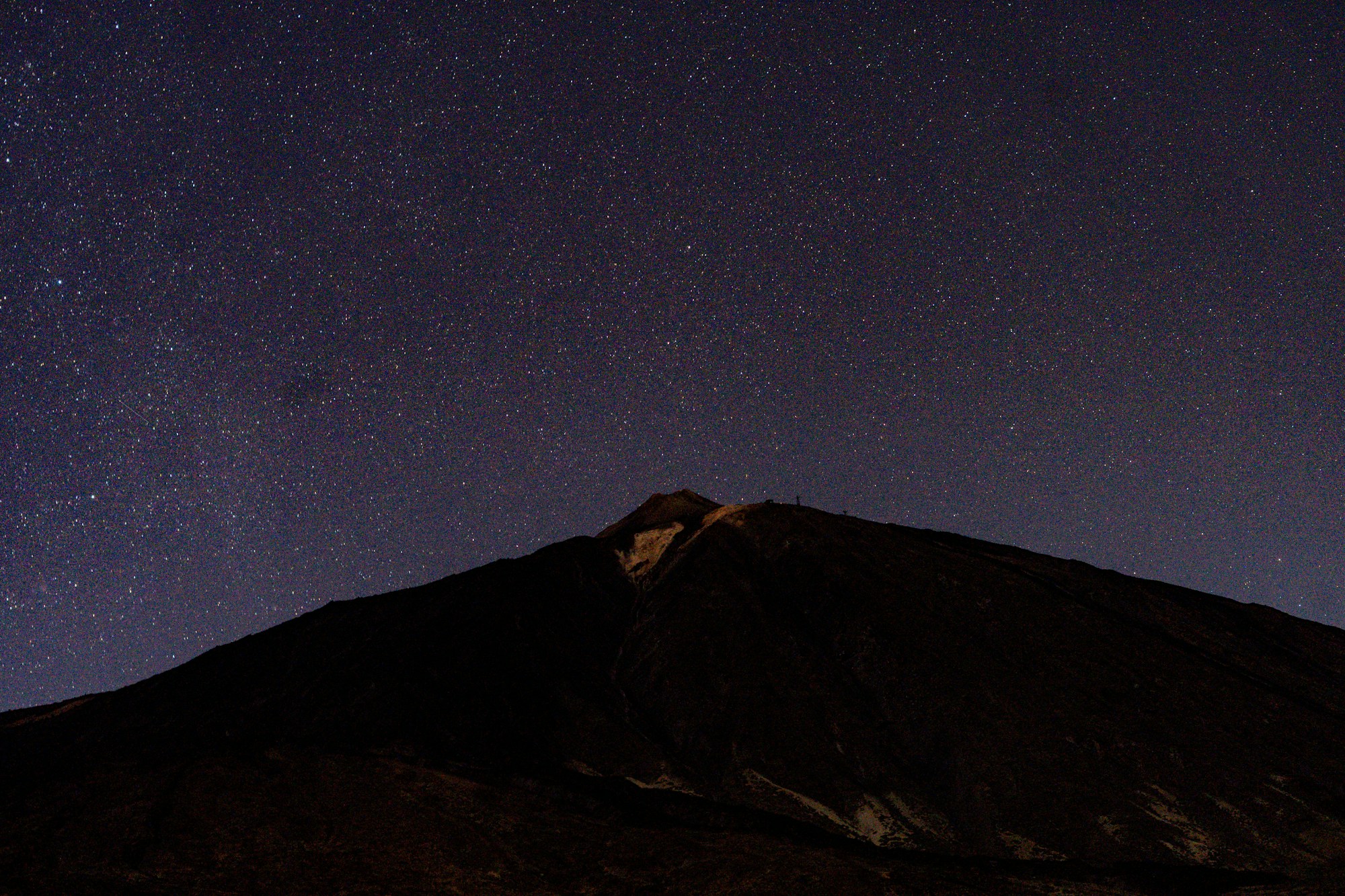
Teide, Tenerife: volcano and a Starlight-certified sky
Teide has been a Starlight destination since October 2013, according to the Starlight Foundation’s list. The national park is visited at night on guided tours. The Viator listing for the tour we selected lasts 8 hours and includes hotel pickup from a set of meeting points in south Tenerife. On November 17, the Moon is at first quarter: it will be up early in the night.
Two details to keep in mind. The cable car does not go to the summit: it stops at La Rambleta, below the peak. And access to the summit, according to regional press and a travel blog, has required a permit since January 19, 2026, at €15 for non-residents. Tenerife residents and children under 14 are reportedly exempt. This point still needs confirming with the Cabildo de Tenerife (the island government): we could not consult the official source.
Highlights
- Starlight-certified sky since 2013, in a volcanic landscape.
- Hotel pickup from selected spots in south Tenerife, return included.
- The drive commentary is in English, according to the listing. The stargazing part is guided in English, Spanish or French.
- Full refund up to 24 hours before departure, according to the listing.
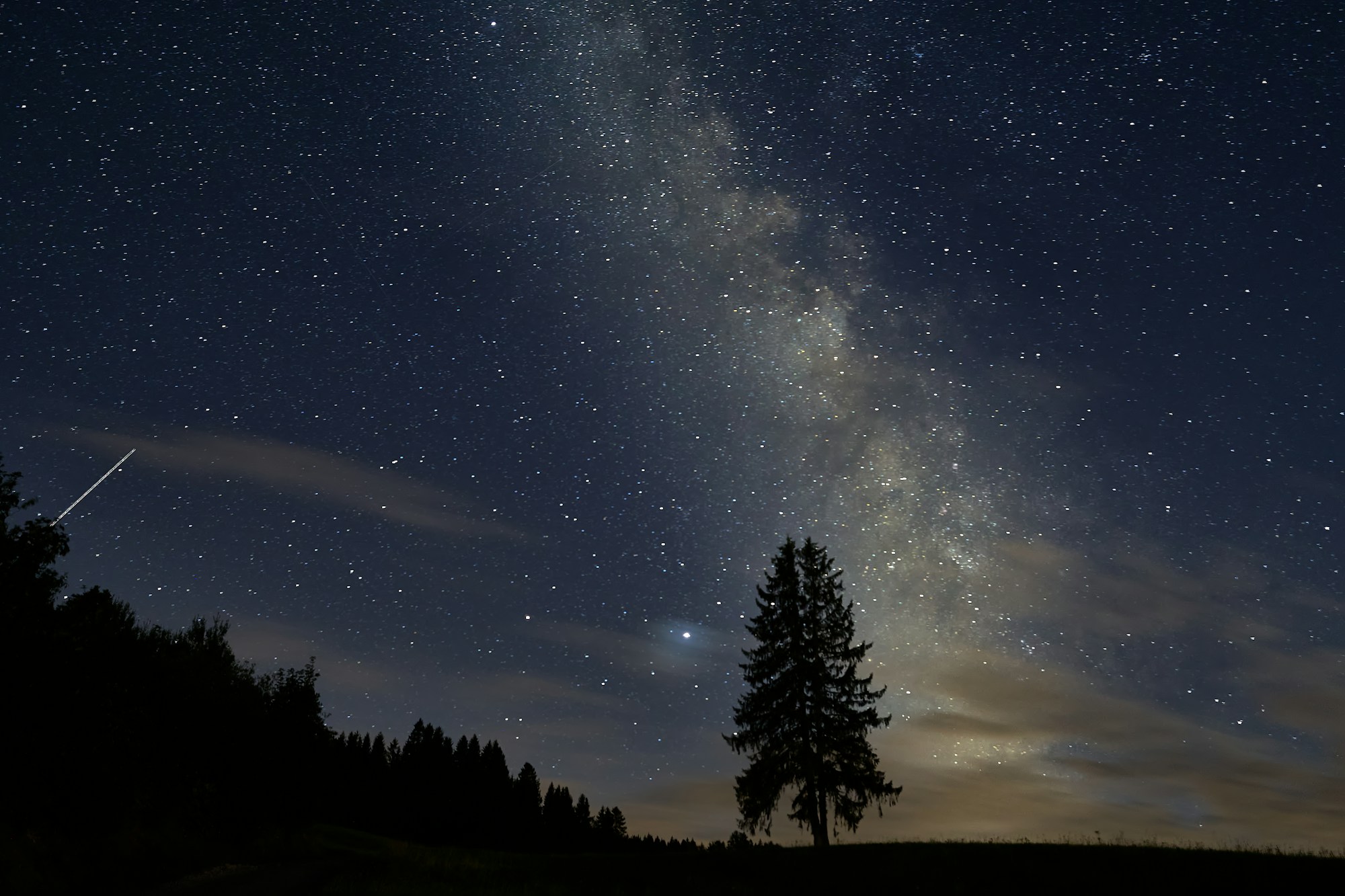
Cévennes and Landes de Gascogne: dark skies, free observing
The Cévennes National Park received the RICE label from the IDA in August 2018, according to a 2018 press excerpt. An IDA presentation we could not open gives a ten-year term: check the label’s status for the dates of your stay. Since 2013, the park has worked with its municipalities on a lighting plan that limits artificial light.
No official night outing is announced for November 2026. One landmark cited by the local tourist office: Lac des Pises. Check access and night parking before you go, and scout the spot in daylight.
Landes de Gascogne: an IDA announcement seen in our research (February 2025) points to a RICE reserve. We could not open the IDA page during our check: the boundaries and the date still need confirming with the IDA.
Pic du Midi and Haute-Provence Observatory: the observatory option
The Pic du Midi, in the Pyrenees, offers nights at the summit, according to our research; we did not verify the booking process. We found no public night rate: don’t put it in your budget until the observatory confirms it. The summer 2026 galactic evenings are over.
The Haute-Provence Observatory (OHP), in southern France, offers guided visits and observing evenings. The rates we found for 2025 were €7 per adult for a guided visit and €19 per adult for an evening. We cannot guarantee them for November 2026: ask for the current programme.
Corsica and Causses du Quercy: applications, not confirmed labels
For the Causses du Quercy, a July 2026 internship offer from a regional natural park says an application is in preparation. For Corsica, the press reports an application; we found no decision in our sources. Don’t present them as labelled reserves. You can still observe the sky there like any dark sky, without waiting for a formal label.
Outside France: Mont-Mégantic, La Palma and NamibRand
In Quebec, Mont-Mégantic is the North American reference. ASTROLab’s daytime visits are announced until November 8, 2026, which places them outside the period around the peak. In Spain, La Palma is Starlight-certified and hosts the Roque de los Muchachos observatory, whose public visits require prior authorization from the IAC. Finally, the NamibRand reserve in Namibia has held IDA Gold status since 2012. It is a long trip, but it makes sense if your journey already takes you to southern Africa.
What a night of observing looks like
Here is a concrete plan, from late afternoon to dawn. Adapt it to your location and to the moonrise and moonset times in your city.
Late afternoon: check and scout
Check the weather three days ahead, then again on the day, on Météo-France, Meteoblue or Windy. We found no usable forecast for mid-November 2026: don’t book anything based on a clear sky announced three weeks out. Scout your spot in daylight, away from streetlights, with a clear horizon. The radiant rises around midnight, according to EarthSky, so meteors stay rare early in the evening.
11 p.m. to midnight: let the Moon pass
This is when the Moon sets, depending on the city: around 11:30 p.m. in Berlin according to Sterngucker, around midnight according to EarthSky. Few meteors show while it lights the sky. This is not the time to count: use it to set up your gear, put screens away and pick out the horizon.
From 1 a.m.: the useful window
Sterngucker gives the window as 2 a.m. to 5:30 a.m., and SVBony as 2 a.m. to 5 a.m., when the radiant is highest. Darkskiesatlas says midnight to 5:30 a.m. This is the slot to aim for: give your eyes 20 to 30 minutes to adapt to the dark, without looking at a screen, which undoes that adaptation in seconds.
Position and gear
Lie back, facing the zenith. A Star Walk page, whose publication year is not confirmed, advises scanning the whole sky rather than staring at the radiant, since meteors appear in every direction. No telescope: its narrow field misses streaks, according to the same page. Bring warm clothes, a blanket and a hot drink. Mid-November is cold, especially at altitude.
The rule that is specific to the Leonids fits in one sentence: the Moon sets between 11 p.m. and midnight depending on the city, and the useful window starts after it sets, around 1 a.m.
Budget: what a night of observing can cost
Watching the Leonids in France costs little if you stay at an open site: the sky is free, and travel is what adds up. Real costs appear once you target an observatory, a guided tour or a trip to the Canaries. The table lists the rates we checked, with their status. A price checked before November can change, so verify before you buy.
| Site or activity | Rate checked | Status |
|---|---|---|
| Teide, sunset and stargazing tour, no dinner (2 adults, November 17 and 18) | €130 (€65 per adult) | checked on October 23, 2026 via the Viator API; calendar open on November 17 and 18 |
| Teide, same tour with a three-course Canarian dinner | €85 per adult, €60 per child aged 4 to 12 | checked on October 23, 2026 via the Viator API (period November 17 to 20) |
| Teide cable car, round trip, non-resident adult | €42 (resellers) | not confirmed by the official site, could not be checked |
| Teide summit access, non-resident | €15 since January 19, 2026 | regional press and travel blog, to be confirmed with the Cabildo |
| Pic du Midi, night at the summit | no public rate found | ask the observatory |
| OHP, adult guided visit | €7 (2025 rate) | to be reconfirmed |
| OHP, adult observing evening | €19 (summer 2025) | to be reconfirmed |
Source: Viator API, Teide excursion listing, checked on October 23, 2026; RTVC, January 2026 (excerpt); Taquilla and Meliá resellers (excerpts read); Haute-Provence Observatory, 2025 rates (excerpt), checked on October 23, 2026.
Three costs matter. First, transport: our sources give no price for the trip to an observing site, and it depends on where you start. Then lodging, which can be a single night nearby if you target a French site close to home. Finally, the guided activity, which is not essential in France. At Teide, the excursion includes hotel pickup, according to the Viator listing.
Another 8-hour excursion with an observatory, offered by Barceló, is listed at €109 per adult in an undated excerpt: treat it as a rough figure, not a confirmed price.
On a tight budget, the cheapest option is a French dark-sky site that you observe on your own. Add a guided tour only if you are heading to the Canaries anyway.
By traveler type: first time, family, couple, reduced mobility
First time, small budget
Pick a dark sky near home, in a French park or reserve, and plan a single night of observing. Check the weather three days ahead: if the sky is clouded over, the following night is still an option. Stay close by so you don’t pay for the trip twice.
With kids
Kids rarely last until dawn. Aim for the 1 a.m. to 3 a.m. slot, with a warm break between sessions outdoors, rather than the whole night. An observatory with a guided visit, like the OHP, offers a more structured program than observing on your own. At Teide, the Viator listing says strollers are fine for babies and toddlers.
As a couple
Teide lets you combine stargazing with sightseeing. According to the Viator listing, the 8-hour tour includes a stop for the sunset at Montaña Sámara, then stargazing with guides and telescopes. The three-course Canarian dinner option costs €85 per adult, versus €65 without dinner. For a shorter trip, a French dark-sky site remains the simplest choice.
Reduced mobility
For the Teide tour, the Viator listing says it suits all fitness levels, but it is not recommended for people with serious medical conditions affected by altitude. For the other high-altitude sites (Pic du Midi, Roque de los Muchachos), we found no accessibility information: ask the organizer directly before booking.
Mistakes to avoid
- Aiming for one exact time. The peak times given range from 3:52 p.m. to 1 a.m. (France time), depending on the source. Aim for the whole night of November 17 to 18, once the Moon has set.
- Mixing up editions. Pages about the 2025 Leonids don’t cover 2026. Check the year on each page before you trust it.
- Watching one spot in the sky. The radiant is in Leo, but meteors show up everywhere. Scan the whole sky.
- Watching from the city. Announced rates drop in suburban areas, from 10 to 15 per hour down to 5 to 8 per hour, according to UniversalTimeDate.
- Buying a night ticket without checking. For the Pic du Midi, we found no public rate. At Teide, the press reports a summit permit: check before you pay.
What other guides don’t tell you
- The peak does not fall at the same time in every guide. Sterngucker gives 3:52 p.m. Central European Time on November 17; EarthSky and SVBony give midnight Universal Time on November 18, which is 1 a.m. in France. Source: Sterngucker, checked on October 13, 2026; EarthSky, checked on October 23, 2026.
- The activity starts on November 6 according to the IMO, and on November 3 according to EarthSky. Source: IMO, 2026 calendar (table 5), checked on October 23, 2026; EarthSky, checked on October 23, 2026.
- The Moon is at first quarter on November 17, not a 6% crescent. EarthSky places first quarter at 11:48 UT; the Farmers’ Almanac, updated on August 19, 2026, nonetheless shows a 6% crescent, which does not match that date. Source: EarthSky and Farmers’ Almanac, checked on October 23, 2026.
- Teide’s summit reportedly costs money since January 2026 (regional press). According to the regional press, summit access requires a permit since January 19, 2026, at €15 for non-residents. Tenerife residents and children under 14 are reportedly exempt. Source: RTVC, January 2026 (excerpt); to be confirmed with the Cabildo de Tenerife.
- The Cévennes label may have an expiry date. Awarded in August 2018, the RICE label is described as valid for ten years in an IDA presentation we could not open. Source: 2018 press excerpt (Objectif Gard); IDA presentation, not opened. Check its status before your trip.
- Visits to the Roque de los Muchachos require an authorization. The IAC requires prior authorization for public visits. Source: IAC, checked on October 23, 2026.
Practical info for your trip
Two services to compare before a night trip, in France or Spain.
Compare plans by destination before you buy, based on your route.
Check that the policy covers outdoor activities and transport before you go.
Frequently asked questions about the Leonids 2026
When is the Leonid meteor shower in 2026?
The IMO calendar puts the peak on November 17, 2026, with activity from November 6 to 30. Most sources agree on that day. Two of them, EarthSky and SVBony, put the maximum at midnight Universal Time on November 18, which is 1 a.m. in France, in the same night. The times differ from one source to another.
How many meteors can you see per hour?
Under a very dark sky, the sources we checked announce 10 to 15 meteors per hour. The IMO’s reference ZHR is 15 in a normal year. In suburban areas, the figure drops to 5 to 8 per hour according to UniversalTimeDate. These are averages: a given night can be quieter, and a cloudy sky cuts the number of visible streaks.
Does the Moon get in the way?
Yes, early in the night. On November 17, the Moon is at first quarter, lit at 45 to 54% depending on the source, and it sets between 11 p.m. and midnight depending on the city. The end of the night, from 1 a.m., gives a darker sky and the best window to observe.
Do you need a telescope?
No. Meteors are seen with the naked eye, across a wide field of view. A telescope’s narrow field misses most streaks, according to a Star Walk page whose publication year is not confirmed. Let your eyes adjust for 20 to 30 minutes in the dark, without a screen, and look at the whole sky rather than one spot.
What time should you watch the Leonids?
Sterngucker gives the window as 2 a.m. to 5:30 a.m., and SVBony as 2 a.m. to 5 a.m., when the radiant is highest. Darkskiesatlas says midnight to 5:30 a.m. The radiant rises around midnight, so meteors are rare before then. Aim for the last hours of the night, checking when the Moon sets in your city.
Where can you see the Leonids in France?
The Cévennes have an RICE label awarded in August 2018, according to a press excerpt. The Landes de Gascogne are the subject of an IDA announcement pointing to a RICE reserve, still to be confirmed. The Pic du Midi and the OHP also offer options, with bookings and rates to confirm. Corsica and the Causses du Quercy are in the process, with no label decision found to date.
What will the weather be like in mid-November 2026?
Nobody can say for certain at this date: no usable forecast existed when we checked. Check the weather three days ahead on Météo-France, Meteoblue or Windy, then again on the day itself. If the sky is clouded over on the 17th, the following night is still a chance. Don’t book a trip on the strength of a clear sky announced weeks ahead.
When should you watch the peak itself?
The sources don’t agree on the time. Sterngucker gives 3:52 p.m. Central European Time on November 17, while EarthSky and SVBony put the maximum at midnight UT on the 18th, which is 1 a.m. in France. To watch, the useful question is not the exact time of the peak but the whole night of November 17 to 18, once the Moon has set.
Sources
- International Meteor Organization, 2026 meteor shower calendar (table 5): peak, activity, ZHR and speed. Checked on October 23, 2026.
- Sterngucker, Leonids page (in French): peak time, Moon, observing window. Checked on October 13, 2026.
- EarthSky, Leonids guide: first quarter, announced peak time, activity. Checked on October 23, 2026.
- SVBony, 2026 guide: observing window, Moon, rates. Page dated July 27, 2026.
- UniversalTimeDate: rates by sky type, peak time. Checked on October 23, 2026.
- Royal Museums Greenwich, Leonids: peak rates and observing tips. Checked on October 23, 2026.
- Darkskiesatlas, Leonids: observing window and Moon illumination. Checked on October 23, 2026.
- Farmers’ Almanac: Moon data set aside because it does not match the first quarter. Checked on October 23, 2026.
- Meteomedia, observing tips (in French): eye adaptation, clothing. Article dated October 19, 2026.
- Instituto de Astrofísica de Canarias (IAC): prior authorization for public visits. Checked on October 23, 2026.
- Starlight Foundation: list of Starlight destinations, Teide and La Palma (excerpt; page hard to read).
- Cévennes National Park (in French): RICE label and lighting plan (excerpt). Checked on October 23, 2026.
- Objectif Gard, 2018 (in French): award of the Cévennes RICE label (press excerpt). Checked on October 23, 2026.
- International Dark-Sky Association: announcement on the Landes de Gascogne and presentation on label duration, neither opened (access refused). Checked on October 23, 2026.
- Haute-Provence Observatory (in French): 2025 rates (excerpt). Checked on October 23, 2026.
- RTVC (in Spanish): access to the Teide summit, January 2026 (press excerpt). Checked on October 23, 2026.
- La Maleta Inquieta: travel blog, Teide summit permit (excerpt). Checked on October 23, 2026.
- Regional natural parks (in French): Causses du Quercy internship offer, July 2026 (excerpt). Checked on October 23, 2026.
- Corse Net Infos (in French): Corsica RICE application reported by the press (excerpt). Checked on October 23, 2026.
- ASTROLab du Mont-Mégantic: 2026 daytime visit hours (flyer, excerpt). Checked on October 23, 2026.
- NamibRand Nature Reserve: IDA Gold designation in 2012 (site excerpt). Checked on October 23, 2026.
- Barceló, Teide excursion with observatory: adult price (excerpt, date not stated). Checked on October 23, 2026.
- Viator, Teide sunset and stargazing tour listing: duration, options and price, dates for November 17 and 18, 2026, rating. Checked on October 23, 2026 (raw API response kept on file).
Plan your trip with Pixidia
Pixidia learns how you travel and helps you build a trip that truly fits you and everyone coming along.
Open the planner