
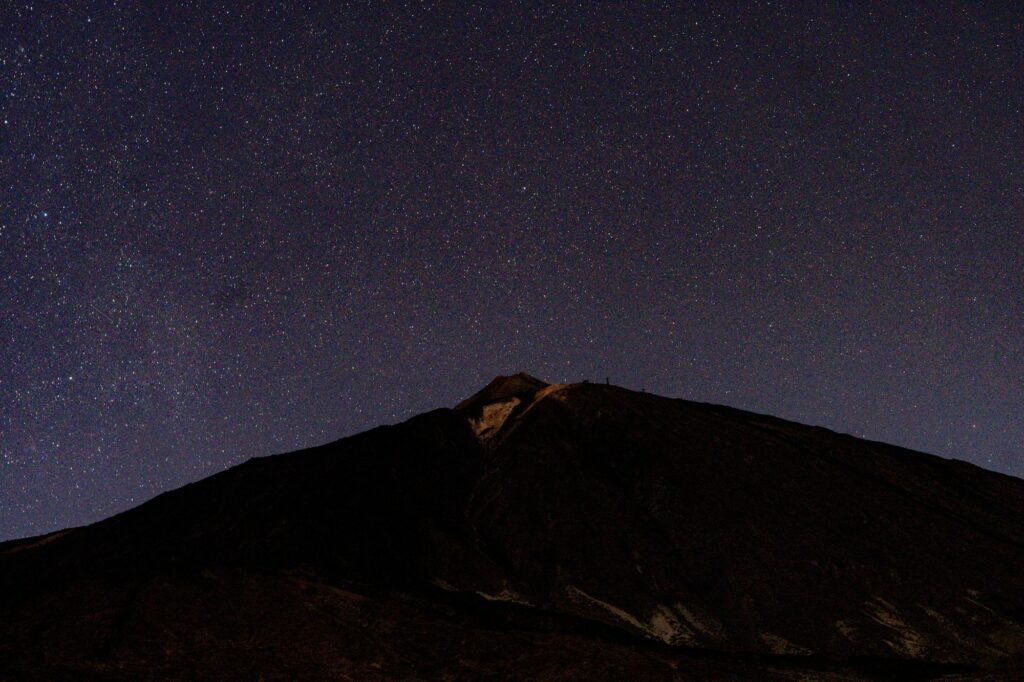
The Quadrantids 2027 peak is expected on Monday 4 January around 4:25 am in Paris, with an uncertainty of about two and a half hours (IMO). The reference forecast is 80 meteors per hour, but under a dark countryside sky you will more likely count 30 to 50 around 4 am and 5 am.
Checked on against the official sources cited in this article (IMO, NASA, Star Walk, Astrobro, Tourisme Occitanie, IDA).
The Quadrantids are one of the most intense meteor showers of the year, and one of the shortest. In 2027, the peak falls on the night of 3 to 4 January, in the early hours of the 4th: a window of a few hours, not a whole night.
This guide answers five questions: what time to look, how many meteors to expect, what the Moon changes, where to observe in France, and whether it’s worth waiting for daylight. Every figure comes with its source and the date we checked it, 25 October 2026. When a 2027 detail had not been published by that date, we say so.
When: the night of 3 to 4 January, peak in the early hours of the 4th
The maximum is set for 4 January 2027 at 03:25 UT, which is 4:25 am Central European Time in Paris. This value comes from the 2027 calendar of the International Meteor Organization (IMO), which gives an uncertainty of about two and a half hours. Sunrise in Paris that day is at 8:43 am, so the peak falls well before dawn. For a reader in London, 03:25 UT is 3:25 am (UK time is GMT in January); in New York, it is 10:25 pm on 3 January.
Because the uncertainty covers several hours, don’t aim for a single minute. Stay outside from 3 am until the dark sky ends. The shower’s activity runs from 28 December 2026 to 12 January 2027, but the strong peak only lasts a few hours.
| Source | UT time | Paris time (CET) | What it means for France |
|---|---|---|---|
| IMO, 2027 calendar (reference used) | 03:25 | 4:25 am | Peak during the night, uncertainty of about 2.5 hours |
| Star Walk (cites the AMS) | about 03:30 | about 4:30 am | Close to the IMO |
| Astrobro | not given | about 4:20 am | Close to the IMO |
| EarthSky | 05:47 | 6:47 am | Alternative forecast, two-hour gap with the IMO |
Source: IMO, Meteor Shower Calendar 2027 (imo.net); Star Walk (French edition, starwalk.space); Astrobro; EarthSky (earthsky.org), checked on 25 October 2026. Paris times: UT + 1 hour.
How many meteors: 80 per hour on paper, 30 to 50 from the countryside
The number everyone quotes is the ZHR, short for zenithal hourly rate. It is the number of meteors an observer would see in one hour under a perfectly dark sky, with the radiant straight overhead. In practice, the radiant’s height, the transparency of the sky and the fatigue of your eyes all bring the count down.
The IMO uses a reference ZHR of 80 for 2027, with an accepted range of 60 to 200. The higher values are ceilings, not forecasts.
| Source | Stated value | Context |
|---|---|---|
| IMO, 2027 calendar | ZHR 80 (range 60 to 200) | Reference forecast |
| Star Walk (French edition) | up to 120 | Ideal conditions, theoretical ceiling |
| EarthSky | 110 to 120 in theory; 25 to 60 under a rural sky | Theoretical value, then observation from the countryside |
| Astrobro | 30 to 50 around 4 am and 5 am | Countryside; about ten in town |
| Quadrantids 2025 (eMeteorNews) | ZHR 60 to 70 at the maximum | Peak passed over the Pacific, not seen from Europe |
Source: IMO, 2027 calendar; Star Walk (French edition, starwalk.space); EarthSky (earthsky.org); Astrobro; eMeteorNews, article of 19 June 2025. Checked on 25 October 2026.
The Quadrantids play out over a few hours, unlike the Geminids 2026, whose peak lasts longer. For this winter shower, the night matters more than the week.
The Moon: a very thin crescent, and a new Moon on 7 January
At the peak, the Moon is a very thin waning crescent, lit by about 12%. Astrobro gives 12%, Universal Time Date about 13% at the end of the night, and another source a range of 9 to 15%. The new Moon falls on 7 January 2027 at 20:24 UTC, three days after the peak.
Its moonrise in Paris, however, is not settled. Universal Time Date gives 3:56 am on 4 January, while Astrobro gives between 5:30 and 6:45 am depending on the city. Check the exact time the day before in an ephemeris app, using your precise location.
| Item | Value | Source |
|---|---|---|
| Sunrise | 8:43 am | Calendriergratuit.fr |
| Moon phase at the peak | Waning crescent, about 12% lit (range 9 to 15%) | Astrobro, Universal Time Date |
| New Moon | 7 January 2027, 20:24 UTC | USNO, TheSkyLive, Star Walk |
| Moonrise in Paris, 4 January | Not settled: 3:56 am (Universal Time Date) or 5:30 to 6:45 am (Astrobro) | Check the day before in an ephemeris app |
Source: cited sources, checked on 25 October 2026.
Where to observe in France: get out of the cities and pick a dark-sky reserve
Location matters as much as the date. In town you will count about ten meteors an hour; in the countryside the count climbs noticeably. The International Dark-Sky Reserve label (RICE), awarded by the International Dark-Sky Association (IDA), recognises the quality of the night sky. It is not a tourism label: it guarantees neither good weather nor access, and several reserves only open their sites in summer.
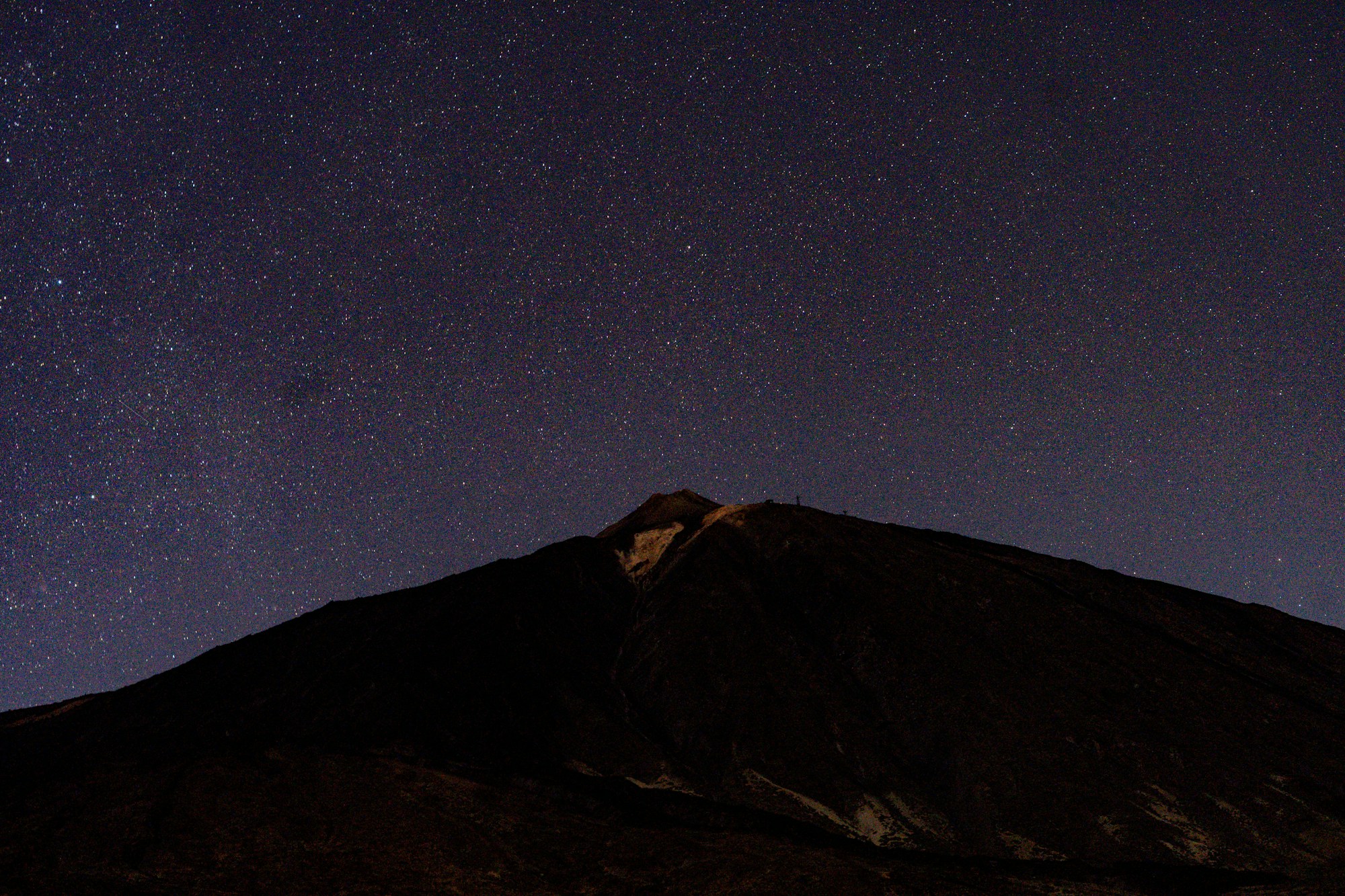
Alpes Azur Mercantour: the reserve in the hills behind Nice
The Alpes Azur Mercantour reserve received its label in December 2019, for an area of 3,700 km² according to the IDA’s extension announcement (checked on 25 October 2026). We found no winter observing programme for January 2027, so the park is the right contact before you go.
Key points
- Ask the park which observation points are open and which access roads stay open in snow.
- Check the parking and the night drive before the big night.
If you are in Nice on 3 or 4 January, a day trip can fill part of your day, with no link to the sky: a half-day to Monaco, Monte-Carlo and Eze, in a small group. It won’t show the Quadrantids, and we found no night-time observation tour on Viator for those dates.
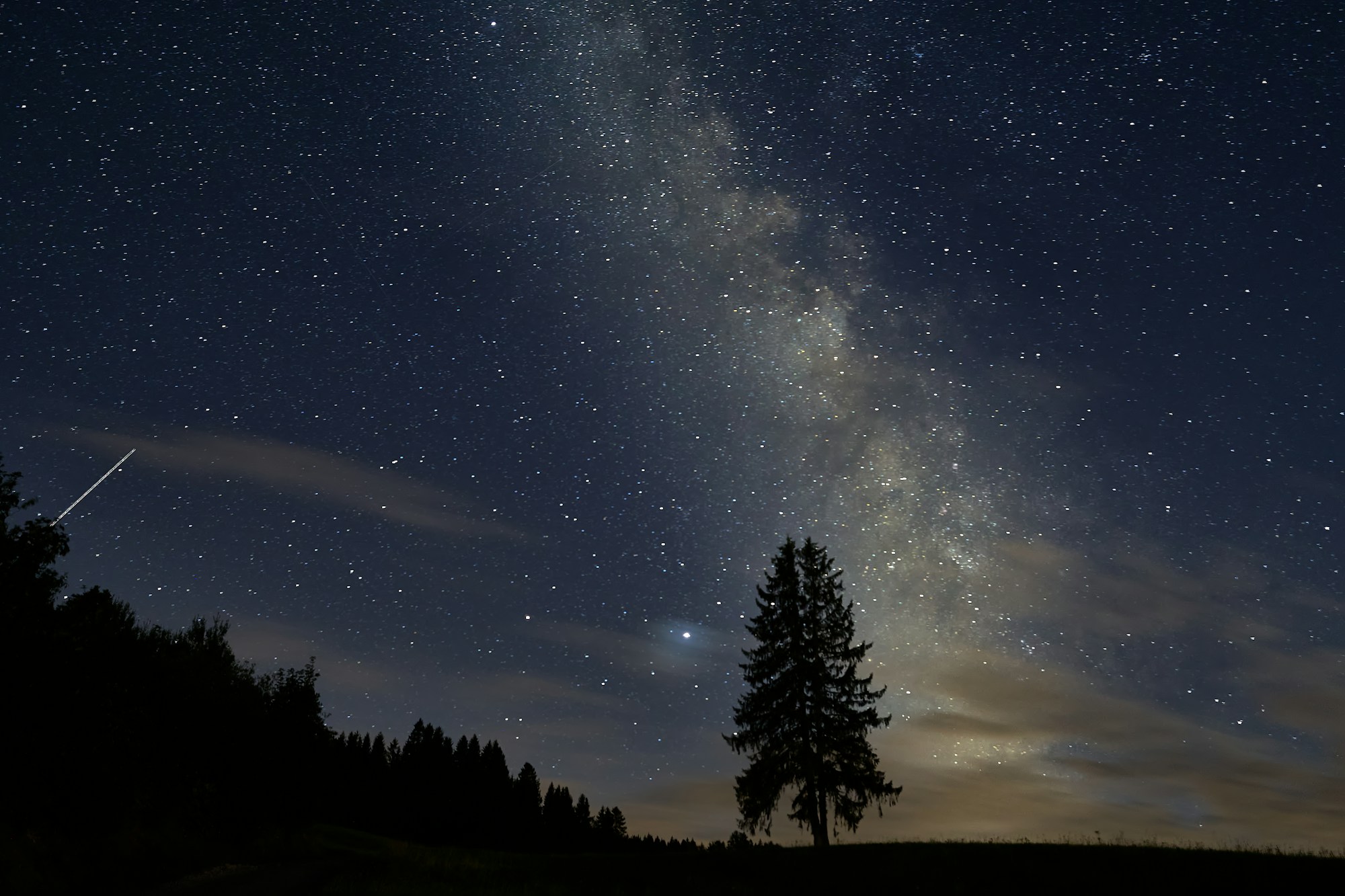
Vercors: France’s fifth reserve, with an observatory in the Trièves
The Vercors became France’s fifth reserve, and the 22nd in the world, in July 2023, according to the Parc’s 2023 press kit. The Trièves observatory, in Gresse-en-Vercors, announces summer evenings with booking: €6 for an adult and €4 for a child under 16 (summer 2026 announcement, unidivers.fr, checked on 25 October 2026). No winter schedule has been published so far.
The table below compares France’s reserves, their label and their status at the time of our research. It does not name a winner: none has confirmed a programme for 3 or 4 January 2027.
| Reserve | Label (date) | Winter access | Status at 25 October 2026 |
|---|---|---|---|
| Pic du Midi de Bigorre | Not verified | Night at the summit possible (27 places); snowshoeing in winter | 2026 season closed on 1 November 2026; winter 2026-2027 not published |
| Cévennes (national park) | 13 August 2018 | Mont Lozère station open from 19 December 2026 to 31 March 2027 | AstroLab observation evenings in summer only |
| Alpes Azur Mercantour | December 2019 | Not documented | Not verified for January 2027 |
| Millevaches (regional nature park) | 30 November 2021 | Not documented | « Sous les étoiles » sites announced, dates not verified |
| Vercors | July 2023 | Trièves observatory, summer sessions with booking | Summer 2026 announcements |
| Landes de Gascogne (regional nature park) | Early 2025 | Marquèze, star nights in summer | Not verified for January 2027 |
| Morvan (regional nature park) | 2025 | Park house at Saint-Brisson | Observatory project at Château-Chinon, opening not confirmed |
Source: park and reserve pages, Tourisme Occitanie listings, Observatoire du Trièves announcements (unidivers.fr) and IDA press releases, checked on 25 October 2026. Dates are those of the press releases we checked.
To compare with another shower, our Perseids 2026 guide covers the same type of site, with summer sessions you should not confuse with winter evenings.
Where to look in the sky: Boötes, and don’t stare at the radiant
The meteors all seem to come from one point, the radiant, which lies in the constellation Boötes. The IMO’s coordinates for it are a right ascension of 230 degrees and a declination of +49 degrees. The name « Quadrantids » comes from Quadrans Muralis, a constellation dropped in 1922.
Don’t look straight at the radiant: the streaks show up everywhere in the sky. Astrobro and Sterngucker advise lying back, head pointing south, to cover as much sky as possible. The radiant’s height depends on latitude: in Paris, a rough calculation puts it at around 44 degrees at 4:25 am. In Tenerife (28° N), it barely reaches 20 degrees at the same time.
Where the shower comes from: asteroid 2003 EH1
The parent of the Quadrantids is asteroid 2003 EH1, discovered on 6 March 2003 by the LONEOS programme, which NASA presents as the source of the shower (science.nasa.gov, checked on 25 October 2026). Its nature is still debated: several researchers see an old comet nucleus, and this article does not settle the question.
A typical night: from the first dark hours to dawn
This plan assumes a clear sky and a dark site.
Before midnight. Settle in without white light, with a reclining chair, blankets, a hat, gloves and a hot drink. Skip the alcohol: according to Astrobro, it disrupts your eyes’ adaptation and does not keep you warm.
From 1 am to 3 am. Let your eyes adjust to the dark for 20 to 30 minutes, without a screen. A few meteors may appear, but the count stays modest.
From 3 am to 4:30 am. The useful window opens. The radiant climbs, the number of meteors rises, and this is the moment to stay outside even when the cold pushes you to go in. Look wide and sweep the sky zone by zone.
Around 4:25 am, then until dawn. That is the peak forecast by the IMO. Keep watching until the dark sky ends, because the maximum could shift by two and a half hours.
Daytime or dusk? No, not in practice. The Sun rises in Paris at 8:43 am on 4 January (Calendriergratuit.fr), and the radiant is too low early in the evening to produce many meteors. None of the sources we checked gives a dusk time, so the useful window is the night, roughly 3 am to 6 am depending on where you are.
To set up your kit and habits before January, the Leonids 2026 offer a rehearsal in November.
Depending on your profile: first time, family, small budget, photographer
For a first time. You don’t need any equipment. You observe with the naked eye, and a telescope narrows the field of view. Pick a site where you can park and walk back without a white torch.
With family. Plan an evening from 3 to 5 am, which covers most of the peak, and bring something warm for the car. A lower-altitude backup spot stops you from heading home empty-handed if clouds roll in.
On a budget. Observing itself is free. The only possible costs are the drive, a guided outing or an observatory visit.
For photographers. A long exposure on a tripod, a fast lens and a remote release are enough. Take plenty of shots: most frames contain no meteor at all.
Mistakes to avoid
- Aiming for 3 January. The night is 3 to 4 January, but the peak falls on the 4th in the early hours, around 4:25 am.
- Expecting 120 meteors an hour. That is the ceiling Star Walk quotes. The IMO forecast is 80, and the rural count tends to sit between 25 and 60.
- Leaving without confirming the site. The Pic du Midi has not published its winter schedule, and the AstroLab on Mont Lozère only observes in summer.
- Relying on a screen’s light. A phone on normal brightness wipes out your eyes’ adaptation in seconds.
What other guides don’t tell you
Most general guides read alike. Here are four points where the official sources or the reference publications add information that is badly phrased, or missing, elsewhere.
- The official ZHR is 80, not 120. Star Walk quotes 120, and EarthSky gives 110 to 120 in theory. The IMO entry for 2027 gives 80, with a range of 60 to 200 (IMO, 2027 calendar; checked on 25 October 2026).
- In 2025, the peak was missed from Europe. The maximum happened over the Pacific, with a ZHR of 60 to 70, and arrived 3.4 hours earlier than predicted (eMeteorNews, article of 19 June 2025; checked on 25 October 2026). The 2027 forecast could therefore shift too.
- No French reserve has published an observing programme for January 2027. The 2026 season at the Pic du Midi ends on 1 November 2026, and the AstroLab on Mont Lozère only observes in summer (Tourisme Occitanie and AstroLab announcements; checked on 25 October 2026).
- France has at least seven RICE reserves. The Landes de Gascogne (early 2025, France’s 6th reserve) and the Morvan (2025, France’s 7th and the 24th in the world) join the sites that older guides still list (press kits, checked on 25 October 2026).
Practical information: 2026 prices, access and weather
No 2027 price had been published at the time of this research. The prices below are from the 2026 season and are there to give you a sense of scale, not to book with.
| Place | Price checked (2026) | Access | Status for January 2027 |
|---|---|---|---|
| Pic du Midi de Bigorre | €44 adult at the catalogue rate | In winter, ascent on snowshoes | No 2027 price published; winter schedule not published |
| Trièves Observatory (Vercors) | €6 adult, €4 under 16 (summer 2026) | Gresse-en-Vercors | Summer sessions announced, winter not published |
| Mont Lozère (Cévennes) | Not checked | Nearest train station at Alès or Mende, then carpool; LiO bus stop at Cubières | Station open from 19 December 2026 to 31 March 2027; AstroLab evenings in summer only |
Source: Tourisme Occitanie (Pic du Midi and Mont Lozère listings), Observatoire du Trièves announcements (unidivers.fr), checked on 25 October 2026. These prices do not apply to 2027.
Weather. None of the sources we checked gives a reliable frequency of clear nights in January in France. Météo-France describes winters dominated by anticyclones and frequent fog in the north, with no percentage given. Check the forecast the day before, and plan a lower-altitude alternative if the sky clouds over.
Frequently asked questions
When to see the Quadrantids 2027?
The night of 3 to 4 January 2027, with a maximum on 4 January around 4:25 am Paris time according to the IMO, which gives an uncertainty of about two and a half hours. The strong peak lasts a few hours. The best practical time is from 3 am until the end of the dark sky, since an observation that starts at midnight misses part of the count. IMO, 2027 calendar, checked on 25 October 2026.
What phase is the Moon in during the peak?
The Moon is a very thin waning crescent, lit by about 12% according to Astrobro (range of 9 to 15% across sources). The new Moon falls on 7 January 2027 at 20:24 UTC. Its moonrise in Paris is not settled between sources (3:56 am according to Universal Time Date, 5:30 to 6:45 am according to Astrobro), so check it the day before in an ephemeris app.
How many meteors an hour will you see?
The IMO’s reference forecast is a ZHR of 80, with a range of 60 to 200. Star Walk quotes up to 120, which is a theoretical ceiling. Under a countryside sky, Astrobro counts 30 to 50 meteors an hour around 4 am and 5 am, and only about ten in town.
Do you need a telescope or binoculars?
No. You observe with the naked eye, as Sterngucker, Astrobro and Sky at Night all recommend. A telescope narrows the field, which makes scanning the sky less effective. Give your eyes 20 to 30 minutes in the dark, without a screen, before you start counting.
What are the best places in France?
France’s RICE reserves look like the best bets on paper: Pic du Midi, Cévennes, Alpes Azur Mercantour, Millevaches, Vercors, Landes de Gascogne and Morvan. None has confirmed a programme for January 2027. Check opening with each manager before you go.
Can you see the Quadrantids during the day or at dusk?
Not in practice. The Sun rises in Paris at 8:43 am on 4 January 2027 (Calendriergratuit.fr, checked on 25 October 2026), and the radiant is too low early in the evening. None of the sources gives a dusk time, so the useful window is the night, roughly 3 am to 6 am depending on where you are.
Sources
- International Meteor Organization, Meteor Shower Calendar 2027: peak time, ZHR, radiant, activity. Checked on 25 October 2026.
- NASA, Quadrantids: parent body 2003 EH1, LONEOS discovery. Checked on 25 October 2026.
- Star Walk, Quadrantids (French edition): peak time, ceiling of 120 meteors an hour. Checked on 25 October 2026.
- EarthSky, Quadrantid meteor shower: alternative forecast, observations under rural skies. Checked on 25 October 2026.
- Astrobro, Quadrantids January 2027: rates in the countryside and in town, Moon phase, observing tips. Checked on 25 October 2026.
- Universal Time Date: moonrise in Paris, phase at the peak. Checked on 25 October 2026.
- Calendriergratuit.fr: sunrise in Paris on 4 January 2027. Checked on 25 October 2026.
- Tourisme Occitanie: listings for the Pic du Midi de Bigorre (catalogue price, 2026 season closed on 1 November 2026) and Mont Lozère. Checked on 25 October 2026.
- eMeteorNews, article of 19 June 2025 on the 2025 Quadrantids. Checked on 25 October 2026.
- International Dark-Sky Association: press release on the Alpes Azur Mercantour reserve. Checked on 25 October 2026.
- Météo-France: monthly climate bulletins for January 2019 and January 2025. Checked on 25 October 2026.
Research carried out on 25 October 2026. The check dates apply to every figure cited in the article.
Plan your trip with Pixidia
Pixidia learns how you travel and helps you build a trip that truly fits you and everyone coming along.
Open the planner