
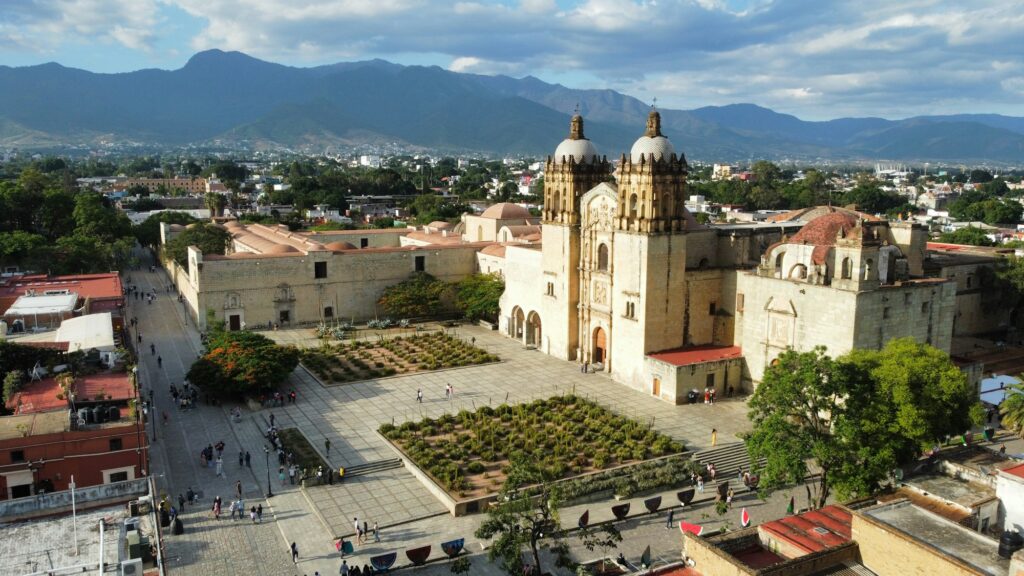
In 2027, Mexico’s non-resident fee (DNR) is proposed at 1,158 pesos (about €55), up from 983 pesos in 2026. The bill passed the Senate on 27 October 2026 and was not yet published in the Diario Oficial (DOF) on 6 November. Entry into force is expected on 1 January 2027. The amount you pay depends on how you arrive.
Checked on against the official sources cited (INM, the Federal Duties Law read via mley.mx, the DOF index of 6 November) and the Mexican press.
Planning a trip to Mexico in 2027? One question comes up before any other: how much will the non-resident fee cost, and who pays it? The short answer has three parts. The fee is 983 pesos today. A rise has passed the Senate, but the text had not yet been published in the Diario Oficial (DOF) when we checked. Finally, the amount you actually pay depends on how you arrive and on your airline. This article separates what is established, what is announced and what still needs confirming, with the date each piece of information was checked.
1. An amount passed, not yet published
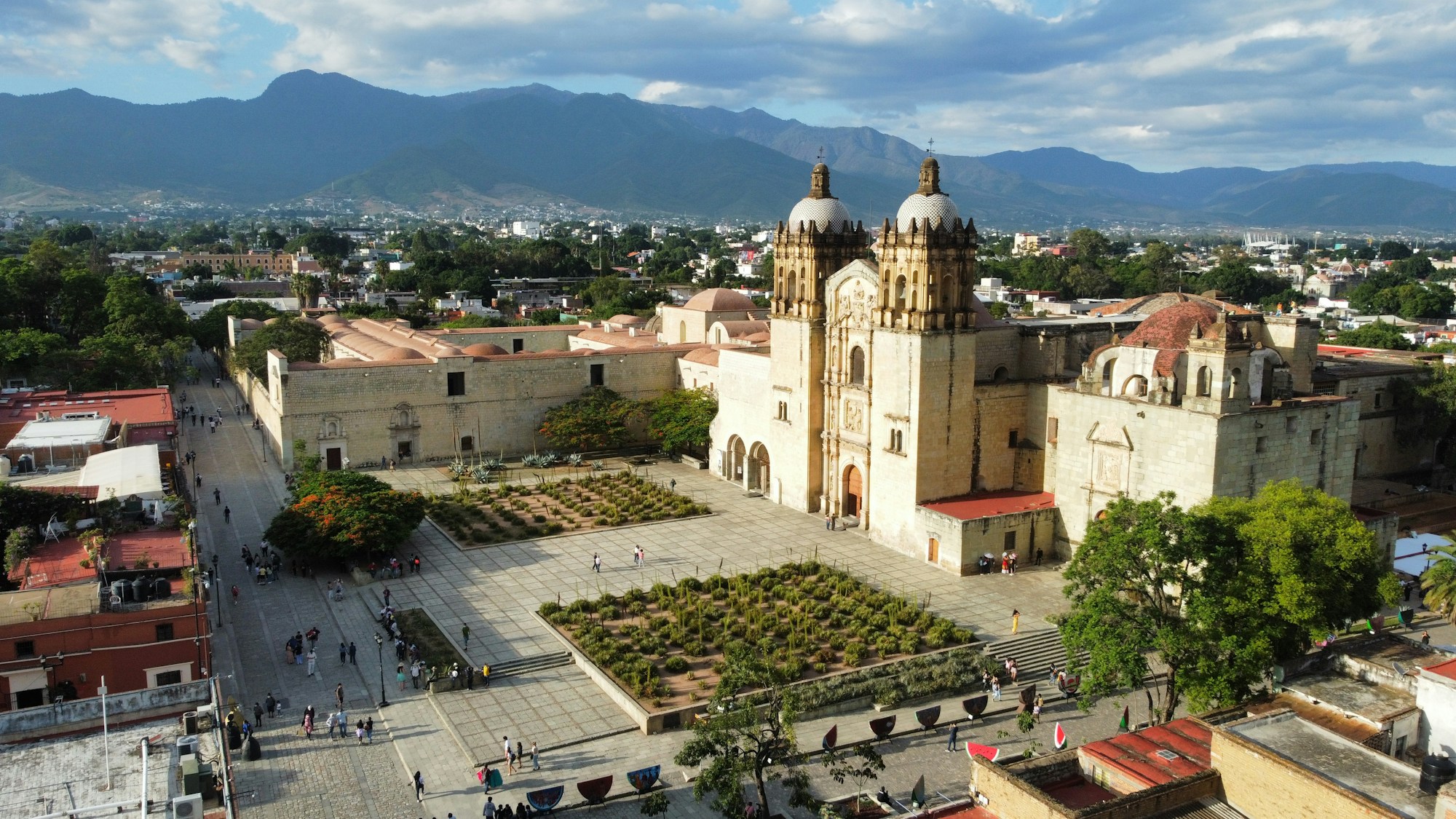
The non-resident fee (DNR) in 2026 and 2027
The DNR is a federal fee, officially called Derecho de No Residente. It is set out in Article 8, section I of the Ley Federal de Derechos (Federal Law of Duties). The amount that applies in 2026 is 983 pesos, according to the National Migration Institute (INM), consulted on 8 November 2026.
The 2027 revenue bill moved through Congress quickly. The Chamber of Deputies’ committee approved it on 12 October 2026, by 40 votes to 10, according to El Universal. The Chamber then adopted it in plenary, according to the press. The Senate approved it on 27 October by a wide majority, according to published accounts. The bill was then sent to the executive branch for publication.
What still needs confirming
- Publication of the decree in the Diario Oficial (DOF): it does not appear in the index for 6 November 2026.
- Reading the published text, to confirm Article 8, section I and the exact amount.
- The date of entry into force, expected on 1 January 2027 according to Expansión.

2. The amount, year by year and in euros
The first table traces the amounts on record. The 2027 row shows the bill that was passed, not a published text. The second converts the amounts at the Banxico rate of 3 November 2026.
| Year | Amount (MXN) | Status | Source |
|---|---|---|---|
| 2025 | about 860.56 | in force (press figure) | Traviatic |
| 2026 | 983.00 | in force | INM, procedures page |
| 2027, initial proposal | 1,334.80 | dropped, revised during the debate | El Universal, 12 October 2026 |
| 2027, bill passed | 1,158.00 | passed by the Senate on 27 October 2026, not published in the DOF as of 6 November | Expansión, 27 October 2026 |
Source: INM for 2026, Expansión for the bill passed, El Universal for the initial proposal, checked on 8 November 2026.
The rise in the bill is 175 pesos, or 17.8% compared with 2026. That is much smaller than the initial proposal, which reached 1,334.80 pesos before being revised during the debate. Some October articles still quote that figure as the current amount. That is a misreading: the amount in force in 2026 is 983 pesos.
| Amount | Pesos (MXN) | Euros (approx.) | US dollars (approx.) |
|---|---|---|---|
| DNR 2026 | 983 | €46.87 | $52.40 |
| DNR 2027 (bill passed) | 1,158 | €55.21 | $61.73 |
| Increase | 175 | €8.34 | $9.33 |
Source: UnoTV, rate of 3 November 2026 (1 euro = 20.9747 pesos; 1 dollar = 18.7592 pesos), checked on 8 November 2026. Indicative conversions.
The exchange rate moves every day. The reference amount is therefore the one in pesos, the figure in the official text. The euro conversion is only there to help you budget.
3. Who pays, depending on how you arrive
By air, the DNR is usually charged with your ticket. By land, a stay of seven days or less is generally exempt, according to the press. Cruise passengers face a separate tax.
By air, the most common case
The DNR targets foreigners who enter Mexico without a work permit. On a flight, the airline usually collects it with the ticket or at check-in. Volaris states on its dedicated page that an automatic exemption applies only to holders of a Mexican passport or a temporary or permanent residence card, and that the document you present must match your booking.
These are airline policies, not legal rules. Another airline may apply a different procedure. Check the tax line on your ticket before you pay.
By land, a short stay is generally exempt
For an overland entry, Proceso and Expat Insider Mexico cite an exemption generally granted to stays of seven days or less, under Article 11 of the law. We could not read this article in an official version: treat this rule as a press report, and confirm it with the INM before you cross. Beyond seven days, the DNR is due and is paid when you leave the country.
Cruises, a separate tax
Cruise passengers pay a tax collected by the cruise lines, which is not the air DNR. Its amount depends on a 2025 decree that we could not check in the official text. We therefore publish no rate here. Ask your cruise line for the amount, and do not confuse it with the DNR.
Visitax, the Quintana Roo tax
If you travel to Cancún, the Riviera Maya or Tulum, you will come across the Visitax, levied by the state of Quintana Roo. It has no link to the federal DNR, and both can apply to the same trip. The official site visitax.gob.mx does not publish an amount. Check it for the current rate and payment method.
| Arrival mode | Subject to the DNR | Reported exemption | Source |
|---|---|---|---|
| Air | Yes, in principle | Mexican passport or residence card, depending on the airline | Volaris, DNR page, checked 8 November 2026 |
| Land, stay of seven days or less | Generally no | Exemption cited by the press (Article 11, text not read) | Proceso, 14 October 2026 |
| Land, stay of more than seven days | Yes | None, paid on exit | Proceso, 14 October 2026 |
| Cruise | Separate tax | Not covered here | 2025 decree, not verified in the DOF |
Source: Volaris and Proceso (14 October 2026), checked on 8 November 2026. Airline rules change: check them before you travel.
Visa rules for French passport holders, and the DNR absent from the official advice
The DNR applies to foreign visitors, whatever their nationality. The visa rules below are those for French passport holders. French citizens do not need a visa for a tourist stay of less than 180 days, according to the French foreign ministry’s travel advice for Mexico, updated 15 September 2026 and checked on 8 November 2026. You need a passport that is still valid. On arrival, the same page lists the FMM form, the entry stamp or the E-gate ticket as entry formalities. The Mexico Relocation Guide explains the FMM form in detail. That page does not mention the DNR. This silence is not an exemption: it only means the ministry does not address the point.
Some media mention visa increases for other nationalities. They do not concern French citizens, and we do not quote the amounts, because the text we consulted does not let us confirm them.
4. Exemptions: what is said, and what is not
An exemption applies only if a source describes it precisely. The table separates what rests on a text or an airline, what comes from the press, and what has not been published.
| Case | What the sources say | Status of the information |
|---|---|---|
| Mexican passport | Automatic exemption, according to the airline | Volaris policy, not a legal rule |
| Temporary or permanent resident | Exempt, according to the airline and a specialist guide | Airline policy and press |
| Land stay of seven days or less | Generally exempt | Press; Article 11 not read in the official text |
| Minors | No exemption found in the text consulted | Not published; to be confirmed with the INM |
| Connecting passenger | Volaris says they are not exempt | Airline policy, not confirmed by the INM |
Source: text of Article 8, section I, Volaris, Expat Insider Mexico, checked on 8 November 2026.
For children, we cannot say whether the DNR applies, because no published text specifies it. Do not rely on a guide that says children travel free. Ask the INM or the airline for the rule in writing before you buy the ticket, and keep the answer.
5. Paying, and getting a refund
For procedures handled by the INM, such as renewing or replacing the DNR form, the institute’s site accepts only bank cards, not cash, according to the INM site as checked on 8 November 2026. Reconfirm this on the payment page before you travel. This rule covers INM procedures. It does not describe how your airline will charge the DNR on your ticket.
On refunds, no public rule we checked says the DNR is refundable if you cancel. Profeco’s rules (Mexico’s consumer protection agency) cover cancelled or delayed flights in general: ticket refund, compensation or replacement transport, depending on the case. They do not say what happens to the tax. Do not assume it will be refunded, and ask the airline for the answer in writing.
6. How the DNR changes depending on your profile
The DNR weighs differently depending on the trip. Here are five situations, from the most exposed to the least exposed.
- Solo traveler, by air. This is the most direct case. You pay 983 pesos in 2026, about €47, and 1,158 pesos under the bill, about €55. These are per-person amounts, converted at the 3 November 2026 rate.
- Couple, by air. These are calculations from the per-person amounts, not recorded amounts: 2 × 983 = 1,966 pesos in 2026, about €94; 2 × 1,158 = 2,316 pesos under the bill, about €110. These figures are indicative, at the 3 November 2026 rate, and should be adjusted to the amount published.
- Family with children. The text we consulted does not provide an exemption for minors. Before you count on a free ride, get the answer in writing from the INM and the airline, and budget for the fee by default.
- Budget traveler arriving by land. A stay of seven days or less is generally exempt, according to the press. Beyond that, the DNR is paid on exit: keep some local currency or plan for the payment method requested.
- Trip combined with Cancún or the Riviera Maya. The DNR is paid on arrival by air, and the Visitax applies in Quintana Roo. These are two separate taxes, so budget them on separate lines.
If you plan a land entry beyond seven days, or an arrival in Cancún, budget the DNR and the Visitax on separate lines.
7. Practical timeline: what to do, and when
The final text is not yet published. Here is the order of steps to follow before you leave.
- Now (November 2026). Follow the index of the Official Gazette. While the 2027 law is not in it, the 2027 amount remains a bill that was passed, and the reference amount stays at 983 pesos.
- When it is published (date unknown). Read Article 8, section I of the published text, and compare the amount with 1,158 pesos. If there is a gap, the published text wins.
- When you book your ticket. Read the tax line on your ticket, check that your ID matches the booking, and ask the airline which rule applies to your case.
- Before departure. Convert the amount to pesos at the day’s rate, and keep a safety margin for arrival costs.
- On arrival. Keep the receipt or proof of payment until you leave the country, in case a check asks for it.
8. Mistakes to avoid
- Taking an October article as the current status. Several texts still describe a bill waiting for the Senate. The Senate voted on 27 October 2026.
- Reading 1,334.80 pesos as the current amount. That is the initial proposal, revised during the debate. The amount in force is 983 pesos.
- Confusing the DNR, the Visitax, the cruise tax and the visa. These are four separate regimes, with different legal bases, amounts and payers.
- Counting on an exemption you have not checked. For children, transit or refunds, no public rule we consulted lets anyone promise anything. Ask for the answer in writing.
- Budgeting in euros without considering the exchange rate. A fixed amount in pesos changes in euros from day to day. The 3 November 2026 rate applies to this article only.
What other guides don’t tell you
These six points rest on an official source or an identified press source, and they are missing or wrong in some of the guides published on the subject.
- The Senate approved the bill on 27 October 2026. Some articles dated 19 October still say it is waiting for a vote. Source: Expansión (checked on 8 November 2026).
- The amount in force is 983 pesos. It appears in Article 8, section I, amended in the DOF on 7 November 2025. Source: mley.mx, LFD article 8 (checked on 8 November 2026).
- The 2027 law was not in the DOF index of 6 November 2026. Source: DOF, index of 6 November 2026 (checked on 8 November 2026).
- Visitax has no published official amount. The tax’s site gives no rate, unlike many comparison sites. Source: visitax.gob.mx (checked on 8 November 2026).
- The president puts the increase at about ten dollars. Claudia Sheinbaum defended the 175-peso increase, describing it as « 175 pesos, about 10 dollars more or less » (our translation of « son 175 pesos, son 10 dólares más o menos »). Source: El Financiero, 15 October 2026 (checked on 8 November 2026).
- The French foreign ministry’s page does not mention the DNR. Anyone who checks the official French advice will not find the answer there. Source: diplomatie.gouv.fr, updated 15 September 2026 (checked on 8 November 2026).
Practical information for your budget
983 pesos in 2026, about 47 euros at the 3 November 2026 rate. The bill that was passed sets 1,158 pesos, about 55 euros, with entry into force expected on 1 January 2027.
A passport that is still valid. No tourist visa for French passport holders for a stay of less than 180 days, according to the French foreign ministry, checked on 8 November 2026. On arrival, the ministry’s page lists the FMM form, the entry stamp or the E-gate ticket.
Bank card only for INM procedures on the DNR, according to the INM site checked on 8 November 2026; reconfirm on the payment page before you travel. For the ticket, follow the airline’s payment method.
Frequently asked questions
How much is the DNR in Mexico in 2026?
The non-resident fee is 983 pesos in 2026, according to the INM and Article 8, section I of the law. At the 3 November 2026 rate, that is about 47 euros. The amount is set each year in the revenue law, so check the figure in force on your travel date.
Will the DNR go up in 2027?
The 2027 revenue bill sets 1,158 pesos, according to the press. The Senate approved it on 27 October 2026. It had not yet been published in the Diario Oficial on 6 November, and entry into force is expected on 1 January 2027. The published text will be the one that counts, so read it before booking a trip that falls after that date.
By how much does the DNR rise in 2027?
According to the bill that was passed, the increase is 175 pesos, or 17.8% over 2026. In euros, that is about 8.34 euros at the 3 November 2026 rate. The initial proposal was higher, reaching 1,334.80 pesos before being revised during the debate.
Do French citizens have to pay the DNR?
By air, yes in principle: the DNR targets foreigners without a work permit, and a French citizen is one, unless the airline grants an exemption. By land, a stay of seven days or less is generally exempt, according to the press. French citizens do not need a visa for a tourist stay of less than 180 days. The French foreign ministry’s travel advice for Mexico, checked on 8 November 2026, does not mention the DNR, and that silence is not an exemption.
Is the DNR paid at the airport?
On a flight, it is usually charged with the ticket or paid at check-in, depending on the airline. Volaris grants an automatic exemption only to holders of a Mexican passport or a residence card. Practice varies from one airline to another, so check the details on your booking.
What if I arrive by car or on foot?
For an overland entry, the press cites an exemption generally granted to stays of seven days or less, under Article 11 of the law. Beyond that, the DNR is due and paid on exit. We could not read Article 11 in the official text: confirm the rule with the INM before you cross the border.
Do children pay the DNR?
We cannot confirm it. The text of Article 8, section I that we consulted does not provide an exemption for minors, and no official source says more. Do not assume it is free: ask the INM or the airline before you buy the ticket, and keep their answer in writing.
Is the DNR refundable if my flight is cancelled?
No public rule we checked provides for a refund of the DNR. Profeco’s rules on cancelled flights, such as ticket refunds or compensation, do not say what happens to the tax. Ask the airline in writing what is refunded.
Are the DNR and the Visitax the same thing?
No. The DNR is a federal tax. The Visitax is a tax of the state of Quintana Roo, which covers Cancún, the Riviera Maya and Tulum. Both can apply to the same trip. The official site visitax.gob.mx does not publish an amount, so check it for the current rate.
What about the cruise tax?
It is a separate tax, collected by cruise lines, and not the air DNR. Its amount depends on a 2025 decree that we could not check in the official text. Ask your cruise line for the rate, and do not confuse it with the DNR.
Sources
- INM, DNR procedures : 2026 amount (983 pesos) and payment methods.
- Ley Federal de Derechos, article 8 : text and amendment history, last amended on 7 November 2025.
- Diario Oficial de la Federación, index of 6 November 2026 : no publication of the 2027 law.
- Expansión, 27 October 2026 : Senate vote and expected entry into force.
- SDP Noticias, 27 October 2026 : vote details and reservations.
- El Universal, 12 October 2026 : committee vote, initial proposal and how the revenue is allocated.
- Proceso, 14 October 2026 : legal basis, land stays and payment on exit.
- Volaris, DNR page : exemptions applied by the airline.
- French Ministry of Foreign Affairs, travel advice for Mexico : visa and entry formalities, updated 15 September 2026.
- Mexico Relocation Guide, FMM 2026 : FMM form.
- Visitax, official site : Quintana Roo tax, no amount published.
- UnoTV, 4 November 2026 : Banxico exchange rate of 3 November 2026.
- El Financiero, 15 October 2026 : the president’s remarks on the increase.
- Diario de Yucatán, 15 October 2026 : position of the Quintana Roo hotel sector.
- Traviatic : 2025 amount (about 860.56 pesos, unofficial press figure).
- Expat Insider Mexico, DNR 2027 : resident exemption and land stays, specialist press.
Sources checked on 8 November 2026. Official sources are listed first.

Plan your trip with Pixidia
Pixidia learns how you travel and helps you build a trip that truly fits you and everyone coming along.
Open the planner