
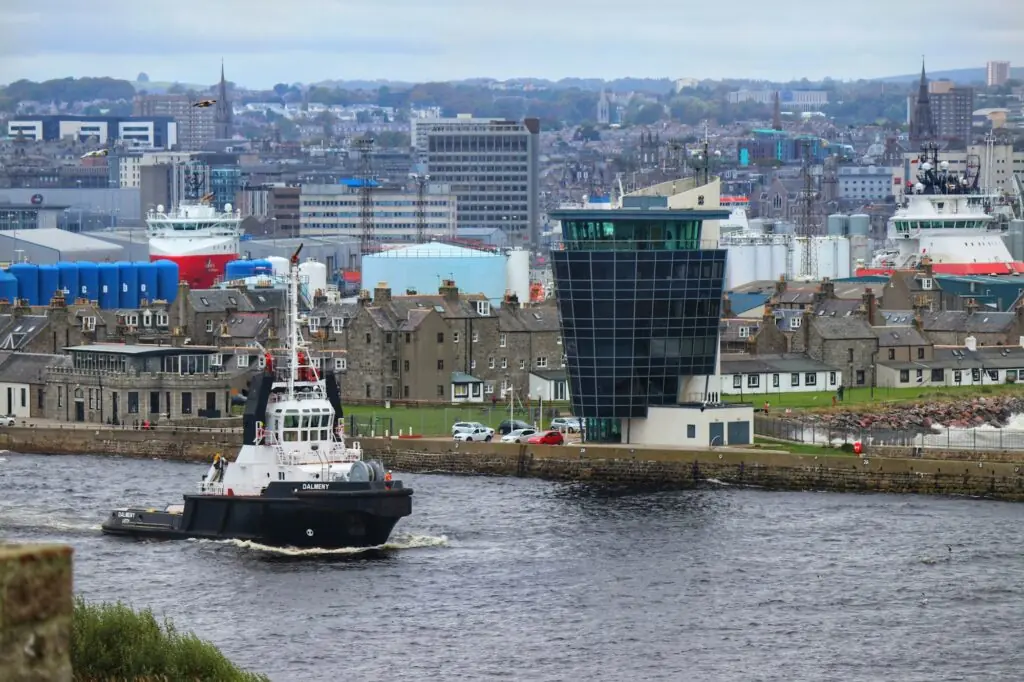
Aberdeen’s tourist tax is set at 7% of the accommodation price excluding VAT, with no cap on nights, from 1 April 2027 at the earliest. For a room at £70 incl. VAT a night, it works out at about £4.90 per night. For a booking already made, the date rule is still to be confirmed.
Checked on against the official sources cited (VisitScotland, legislation.gov.uk, edinburgh.gov.uk) and extracts of Aberdeen council documents.
Aberdeen will charge a tax on every paid night’s stay, at 7%, the highest rate announced in Scotland so far. The city’s Finance and Resources committee approved this rate in August 2025. The tax cannot take effect before 1 April 2027, and it does not apply to stays already completed. If you are booking a spring or summer 2027 stay now, two questions matter: from which booking the tax applies, and how much it adds to the bill. This article answers both, and separates what is settled from what still needs confirming.
A 7% rate, set for April 2027 at the earliest
VisitScotland’s visitor levy page gives a rate of 7% for any stay in Aberdeen, from April 2027. STV News already reported on 7 August 2025 that the committee had approved the rate, presenting it as the highest in the UK. The rate applies to the accommodation price, not the total cost of the stay: breakfast, meals or parking are not part of the base.
Aberdeen and its tax at a glance
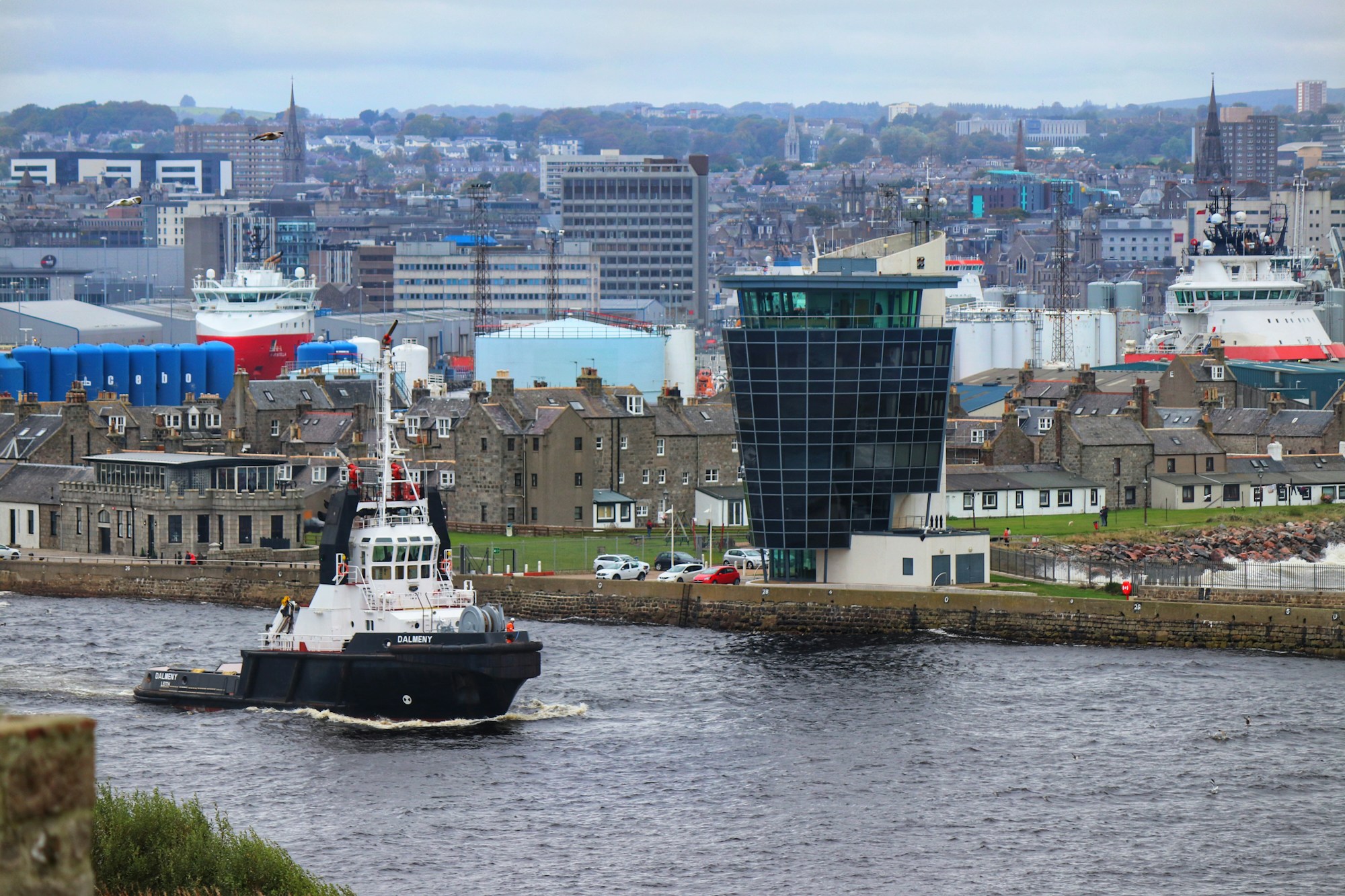
Aberdeen is the main city in north-east Scotland, the gateway to Royal Deeside and the castles of Aberdeenshire. According to one media outlet, the tax would cover the city only, not the whole county; the council’s own text could not be read to confirm this. For a three-night stay at £70 incl. VAT a night, the tax comes to £14.70, with no cap.
What to keep in mind
- The 7% rate applies to the accommodation part, excluding VAT, according to VisitScotland.
- There is no cap: each extra night costs the same tax as the one before.
- The booking date that triggers the tax for an existing reservation is not settled in the official sources checked.
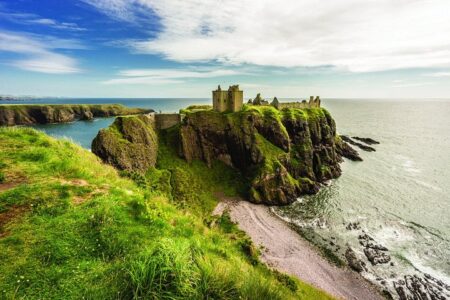
If you set aside a day to get out of the city, a day trip from Aberdeen takes you to Dunnottar Castle and Royal Deeside without driving. It has 219 reviews and an average rating of 4.9 out of 5.
The maths: £4.90 a night for a £70 room
The tax is calculated on the room price, according to Marcliffe, an Aberdeen hotel. For an accommodation provider that is not registered for VAT, the calculation is straightforward: 7% of the price paid. For a VAT-registered provider, the VisitScotland guide for councils (August 2026) describes a different method: the tax is calculated on the room’s price excluding VAT, then 20% VAT is added to the tax for stays of fewer than 28 nights. In both cases, the tax is £4.90 a night for a £70 room incl. VAT.
The £70 incl. VAT a night price is not a 2027 rate. It is a benchmark cited by the council in its consultation documents and picked up by the press. Replace it with the price of your own room to get your own calculation.
| Line | Provider not VAT-registered | VAT-registered provider (20%) |
|---|---|---|
| Price paid per night, incl. VAT | £70.00 | £70.00 |
| Accommodation part excluding VAT | £70.00 | £58.33 |
| Visitor levy (7% of the part excluding VAT) | £4.90 | £4.08 |
| 20% VAT on the levy (stay under 28 nights) | none | £0.82 |
| Total levy paid per night | £4.90 | £4.90 |
| Total levy for 3 nights | £14.70 | £14.70 |
| Total levy for 7 nights | £34.30 | £34.30 |
Source: VisitScotland, rate and calculation, checked on 23 November 2026; VAT method from the VisitScotland guide for councils (August 2026). Amounts in pounds sterling; indicative euro conversions at the Frankfurter (ECB source) rate of 23 November 2026.
The total levy for 3 nights, £14.70, is the same in both columns: 7% of a price excluding VAT, plus 20%, gives the same amount as 7% of a price including VAT. The VisitScotland guide says the advertised price must include the levy. If the total shown does not include it, the levy is added on top of the room rate. Anyone comparing two places to stay should therefore check this point, rather than comparing room prices alone.
When your booking falls under the tax
This is the trickiest point in this article, and public sources alone cannot settle it. Caravan Industry & Park Operator gives 1 October 2026 as the booking date (article of 16 November 2026), and an extract of the Aberdeen council documents also mentions it, without a full document confirming it. Yet Marcliffe, an Aberdeen hotel, carries two contradictory statements: one exempts bookings paid before 1 October 2026, the other targets bookings made after that date. Both cannot be true at once.
According to an extract of the council documents, a booking made from 1 October 2026 for a stay from April 2027 would be affected. Caravan Industry cites the same booking date, without the stay condition. No full council document read confirms it, and Marcliffe says the opposite for bookings paid before that date. The VisitScotland guide for councils asks each council to set transition rules for bookings made before the law takes effect, and for deposits already paid. Aberdeen City Council’s pages could not be read on the date checked. So ask your accommodation in writing which rule it applies, and whether a deposit already paid counts.
| Date | What happens | Source |
|---|---|---|
| 6 August 2025 | The Finance and Resources committee approves the 7% rate | Extract of the council release; STV News, 7 August 2025 (approval) |
| 21 May 2026 | Royal Assent for the Scottish visitor levy amendment act | legislation.gov.uk, asp 2026/18 |
| 1 October 2026 | Booking date cited by Caravan Industry and in a council extract, with no full document confirming it; disputed by a local hotel | Caravan Industry, 16 November 2026; Marcliffe |
| 1 April 2027 | Earliest date the tax takes effect in Aberdeen | VisitScotland, checked 23 November 2026 |
Source: sources listed above, checked on 23 November 2026. The 1 October 2026 date is not confirmed by an official document read in full.
The 2026 amendment act adds an option: a fixed amount per night, on top of the percentage. At the time of this check, no change of model had been found for Aberdeen, which stays on the 7% rate. If that changes, the calculation in this article would change too.
Who is exempt, and how to get a refund
Some people do not pay the tax, but the system works the other way round: the traveller pays at booking or during the stay, then claims a refund online after the stay, with the required supporting documents. Exemptions are therefore not automatic, and they do not replace keeping a record of your stay.
| Case | Status | Refund | Source |
|---|---|---|---|
| Recipients of certain disability-related benefits (Adult Disability Payment, Disability Living Allowance, Personal Independence Payment, Attendance Allowance) | National exemption, mandatory | Yes, after the stay, with supporting documents | VisitScotland guide for councils (August 2026) |
| Hospital appointments | Proposed during the consultation (70.1% of responses in favour), adoption not confirmed | If the exemption is adopted: refund with supporting documents, procedure not yet published | Council documents (extract), Marcliffe |
| Companion who shares the room | Exempt according to the Marcliffe hotel | No, nothing to claim if they share the room | Marcliffe |
| People without a stable home | Exempt according to the Marcliffe hotel (commercial source), procedure not published | Not published | Marcliffe |
| Business travel | No business exemption in Edinburgh; no « work » exemption found for Aberdeen | Not applicable | Edinburgh (exemptions); search of Aberdeen documents |
Source: City of Edinburgh, exemptions for comparison; other rows from the sources listed, checked on 23 November 2026.
The only exemption that does not depend on any local decision is the one for disability-related benefits, set at national level. For hospital appointments, the proposal was in the 2025 public consultation, but final adoption is not confirmed in the texts checked. The refund procedure therefore still has to be requested from the council.
Business travel is not exempt. In Edinburgh the rule is explicit: tourists and people travelling for work both pay the tax. For Aberdeen, no « work » exemption was found in the sources read, so a company booking for an employee should budget for the tax in its travel costs.
Aberdeen vs Edinburgh, Glasgow and Stirling
Aberdeen has the highest rate of any Scottish city that has announced a tax. Edinburgh already charges its own, at 5%, with a five-night cap. Glasgow launches in early 2027 at 5%. Stirling follows later at 3%, and West Dunbartonshire at 5%.
Edinburgh, the closest reference point
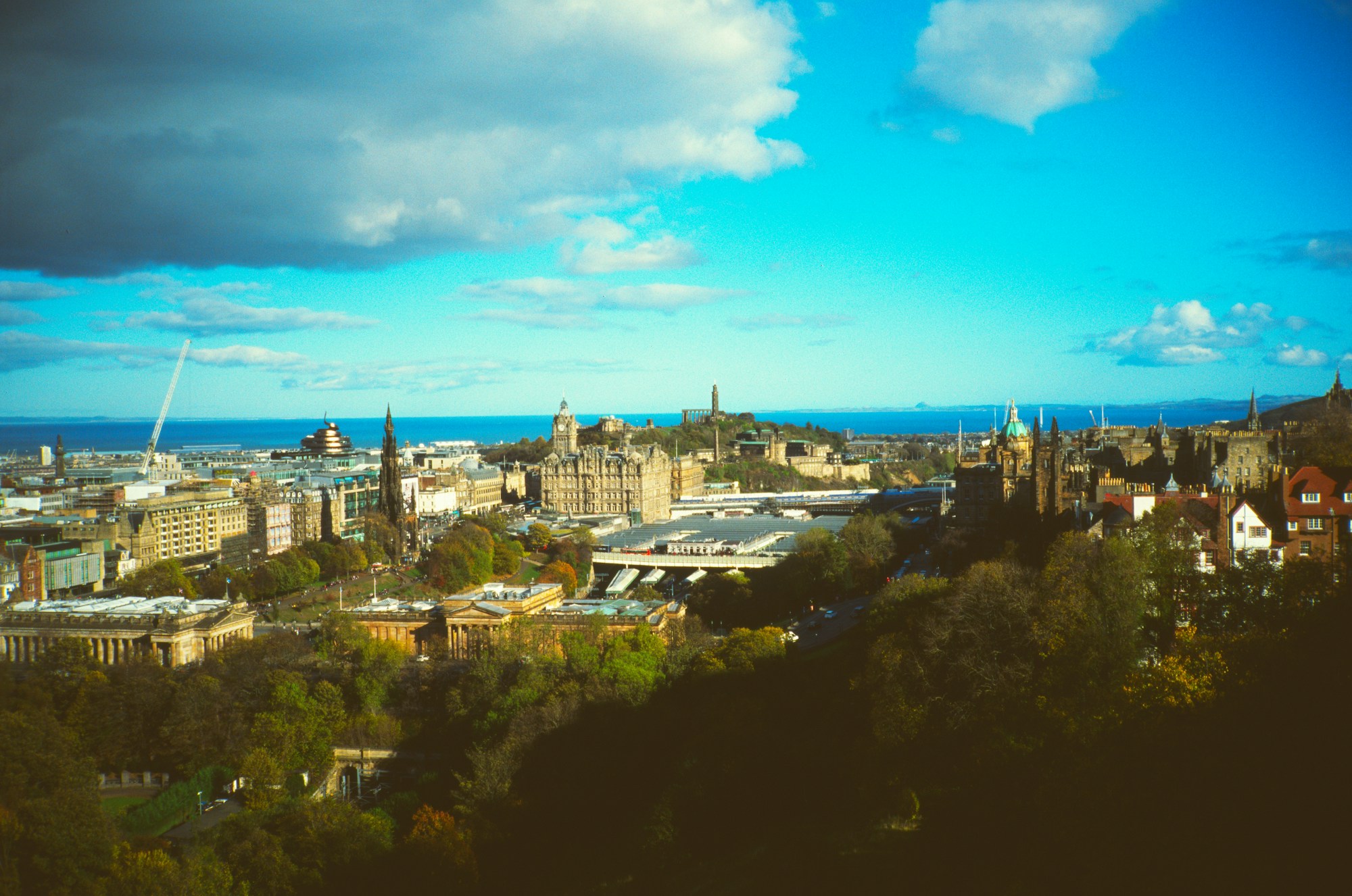
Edinburgh, the first major Scottish launch since the 2024 law, is a useful reference for reading Aberdeen’s rules. The city chose a 5% rate, capped at five nights, with effect from 24 July 2026. On a long stay, that difference in cap matters more than the difference in rate.
| Council | Rate | Night cap | Takes effect |
|---|---|---|---|
| Aberdeen | 7% | None | 1 April 2027 at the earliest |
| Edinburgh | 5% | 5 nights | 24 July 2026 |
| Glasgow | 5% | None stated by VisitScotland | 25 January 2027 |
| Stirling | 3% | 7 nights | June 2027 (announced) |
| West Dunbartonshire | 5% | None stated by VisitScotland | July 2027 (announced) |
Source: VisitScotland, rates by council; VisitScotland FAQ for businesses for Glasgow; City of Edinburgh for Edinburgh. Checked on 23 November 2026.
For a three-night stay at £70 incl. VAT a night, the gap between 7% and 5% comes to about £4.20 more in Aberdeen, all else being equal. That is modest, but it adds up with the rest of the trip. If your stay mixes both cities, our guide to day trips from Edinburgh helps you split your nights, and our Glasgow tourist tax guide sets out that city’s timetable.
Budget: what the tax adds to your stay
The tax is a small item next to the price of a room, but it repeats every night. Based on a room at £70 incl. VAT a night, these are the totals to plan for. Conversions use £1 = €1.1951, the rate checked on 23 November 2026 (indicative, it moves):
- A two-night weekend: about £9.80 in tax (about €11.71), or £4.90 a night (about €5.86).
- A three-night stay: about £14.70 (about €17.57).
- A seven-night week: about £34.30 (about €40.99), with no cap.
Three habits help avoid nasty surprises. First, compare total prices including the tax: the VisitScotland guide says the tax must appear in the advertised price at the point of purchase. Next, keep your invoice or booking confirmation, which serves as proof if you claim a refund. Finally, if several travellers share a room, only one calculation applies: the tax is worked out on the room price.
Your budget should not stop at the tax. A room in Aberdeen is the main cost of your trip, and the tax does not change the choice of accommodation, unless that choice depends on one or two euros a night. In that case, compare two places on the same terms (cancellation and inclusions) rather than on raw prices.
Profiles: what the tax changes for your trip
Couple on a short stay
A couple spending two nights in Aberdeen before a day trip pays about £9.80 in tax for a room at £70 incl. VAT a night. The point to check is the date: if you book now for a stay from 1 April 2027, ask the hotel to confirm which rule it applies.
Family in a family room
A family booking a single room pays the tax on the price of that room, according to Marcliffe. For two rooms, no source read specifies the calculation: ask your accommodation in writing before booking.
Business travel
Business travel is not exempt. A company booking a hotel for an employee should include the tax in the travel budget, and ask the hotel for the tax per night and the total on the invoice.
Someone receiving a disability-related benefit
Someone receiving one of the benefits listed by VisitScotland does not have to pay the tax. They must, however, go through the refund process after the stay, with the required documents. The simplest approach is to keep the invoice and a copy of the benefit award letter from the time of booking.
Long stay
Aberdeen has no cap: the tax builds up night after night, at 7% of the accommodation part. For a VAT-registered provider, the VisitScotland guide notes that the VAT rate on accommodation can change beyond 28 consecutive nights (VAT Notice 709/3, not read in full), so ask your accommodation for details on a stay this long. Over several weeks, the gap between two places to stay can be bigger than the gap in rate between two cities.
Step by step: what to do at each stage
- Before booking. Ask the accommodation in writing whether the tax is included in the advertised price, from which booking date it applies, and how it is collected.
- At checkout. Check that the total shown includes the tax, or that the tax is listed separately. Keep the booking confirmation.
- On arrival or during the stay. If the tax is paid on site, ask for the per-night breakdown and the total, so you can check the invoice when you leave.
- After the stay. If you are exempt, file the refund request online with the supporting documents. The timescale depends on the council’s procedure, which was not fully published at the date checked.
What other guides don’t tell you
Mainstream guides repeat the 7% rate but leave out the points that actually change the amount, or the decision to book. The points below are checked against an official source, except the medical exemption (press and a hotel), as of 23 November 2026.
- The tax is calculated excluding VAT, and 20% VAT is added to the tax for a VAT-registered provider. For a stay under 28 nights, the base is the room’s price excluding VAT, then 20% VAT is added to the tax. Beyond 28 consecutive nights, the guide refers to VAT Notice 709/3, where the rate for some accommodation can change; this notice has not been read in full.
- The medical appointment exemption is proposed, not granted. It was in the February 2025 proposal and in the consultation, but final adoption is not confirmed. STV News, 13 February 2025 (checked on 23 November 2026).
- The legal timetable requires at least eighteen months. Between the decision and the start date, the law requires at least 18 months, which makes 1 April 2027 consistent with an August 2025 decision. The 2026 amendment act also allows a fixed amount per night. legislation.gov.uk, asp 2026/18 (checked on 23 November 2026).
- Business travel is not exempt. The rule is explicit in Edinburgh, where the official text covers people travelling for work. For Aberdeen, no business exemption was found. City of Edinburgh, exemptions (checked on 23 November 2026).
- Aberdeen is the most expensive of the announced Scottish levies. At 7%, the city is above Edinburgh and Glasgow at 5%, and Stirling at 3%. No cap applies in Aberdeen. VisitScotland, rates by council (checked on 23 November 2026).
Practical information for your stay
The tax is payable in pounds sterling. At £1 = €1.1951, checked on 23 November 2026 (indicative), £70 is about €83.66. The rate moves, so convert on the day you pay.
How the tax is collected (at booking, with the balance or on site) should be asked of the accommodation before any payment.
Frequently asked questions
How much is the tourist tax in Aberdeen?
It is calculated at 7% of the room price, excluding VAT. For a room at £70 incl. VAT a night, the traveller pays £4.90 a night, whether or not the provider is VAT-registered. The £70 figure is a benchmark cited by the council, not a 2027 rate: apply the rate to your own price. The rate is published by VisitScotland.
From which date does the tax apply in Aberdeen?
The legal timetable does not allow it to take effect before 1 April 2027, so the tax will apply to stays from that date at the earliest. The date that triggers the tax for a booking made before then is a separate question, covered in the next answer.
Is a booking made today for 2027 affected?
According to an extract of the council documents, bookings made from 1 October 2026 for stays from 1 April 2027 would be affected. Caravan Industry (16 November 2026) cites the same booking date, without the stay condition. No full council document read confirms this, and Marcliffe, an Aberdeen hotel, states a contrary rule for bookings paid before that date. Ask your accommodation in writing which rule it applies, and whether a deposit already paid counts.
Is there a cap on nights?
No. VisitScotland says the tax applies to every stay, with no cap in Aberdeen. Edinburgh caps the tax at five nights, and Stirling at seven. On a long stay the tax therefore builds up night after night: about £34.30 for seven nights at £70 incl. VAT a night.
Who is exempt from the tax in Aberdeen?
Recipients of certain disability-related benefits are exempt nationally, with a refund after the stay. An exemption for hospital appointments was proposed during the consultation, but adoption is not confirmed. According to the Marcliffe hotel, people without a stable home are also exempt, with no procedure published. A companion who shares the room is not taxed separately. Business travellers are not exempt.
Do you have to pay the tax and then ask for a refund?
Yes, for exemptions. The traveller pays first, then requests the refund online after the stay, with the required documents. For hospital appointments, if the exemption is adopted, the Marcliffe hotel says the procedure will be published later. Keep your invoice and your proof of appointment.
Is the tax charged on breakfast, parking or meals?
No. The tax base is the accommodation part of the room. Breakfast included, meals, parking, laundry, leisure and transport are not part of the calculation, according to the press and the VisitScotland guide for councils. A package must therefore be broken down: only the accommodation part is taxed.
What about a trip that also goes through Edinburgh or Glasgow?
Each city sets its own rate and timetable. Edinburgh has applied 5% since 24 July 2026, capped at five nights. Glasgow applies 5% from 25 January 2027, according to VisitScotland. Aberdeen stays at 7%, with no cap. For details on Glasgow, see our dedicated guide.
Sources
- VisitScotland, visitor levy: rates, caps and timetable by council.
- VisitScotland, Guidance on the Visitor Levy for Local Authorities (August 2026, guide for councils): basis of the VAT method, the national exemption, the 18-month timeline and the transition rules.
- VisitScotland, FAQ for businesses: Glasgow timetable and collection rules, published 25 September 2025.
- Scottish Government, local visitor levy: councils that have approved a levy and the 18-month minimum delay.
- Legislation.gov.uk, Visitor Levy (Amendment) (Scotland) Act 2026: amendment act, Royal Assent on 21 May 2026, with the fixed-amount option.
- City of Edinburgh, « Visitor levy comes into effect »: 5% rate, five-night cap, effective 24 July 2026.
- City of Edinburgh, exemptions: exempt cases and the rule for business travel.
- STV News, Aberdeen approves most expensive tourist tax in UK: approval of the 7% rate by the committee, 7 August 2025.
- STV News, consultation on the 7% tax: proposed exemptions, 13 February 2025.
- Caravan Industry & Park Operator, 770 accommodation providers affected: booking date cited and estimated revenue, 16 November 2026.
- Marcliffe, rules of an Aberdeen hotel: commercial source, read with caution and checked against the official sources.
- The Caterer, Aberdeen to introduce visitor levy: calculation at £4.90 for a £70 room, 11 August 2025.
- Frankfurter, GBP to EUR rate (ECB source): £1 = €1.1951, checked on 23 November 2026, indicative conversion.
Sources checked on 23 November 2026. The pages and text of Aberdeen City Council were not readable at the time of checking: the facts attributed to the council come from extracts, press or secondary documents, and are flagged as such.

Plan your trip with Pixidia
Pixidia learns how you travel and helps you build a trip that truly fits you and everyone coming along.
Open the planner