
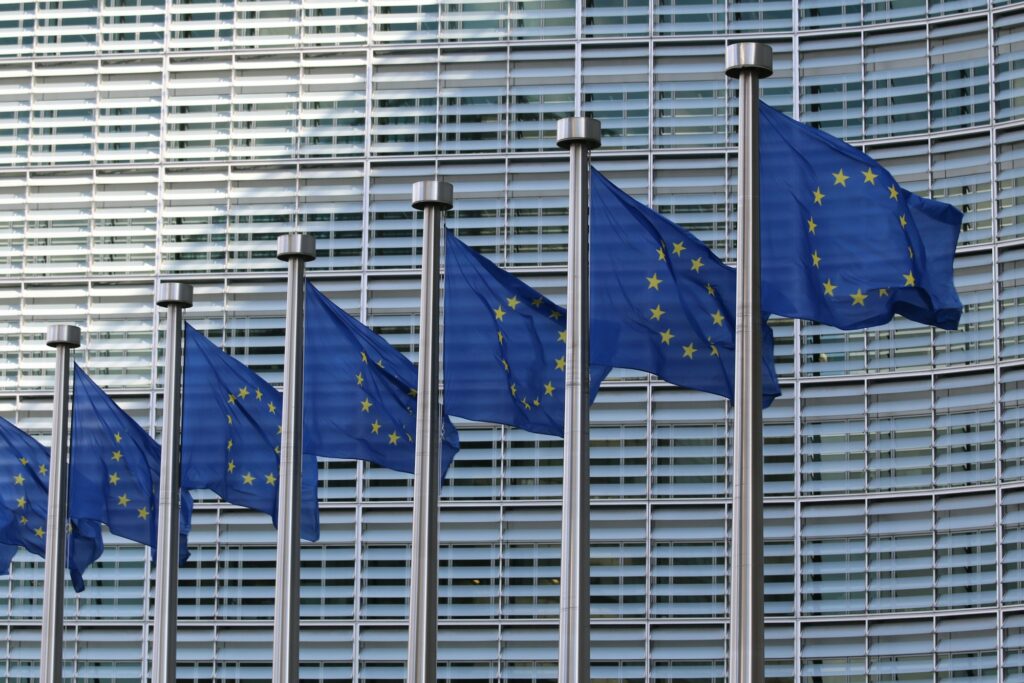
On April 22, 2026 in Brussels, the European Commission presents a four-point kerosene emergency plan. Since the Strait of Hormuz blockade on February 28, 2026, jet fuel prices have surged from $88 to $216 per barrel. IATA confirms summer airfare increases of 20 to 40%. SAS has already cancelled 1,000 flights, KLM 160, and Lufthansa has shut down its CityLine subsidiary. Golden rule: never cancel yourself — wait for the airline to cancel to preserve your EC261 rights.
Your July flight is in the front line. Three days before the European emergency meeting on jet fuel scheduled for April 22 in Brussels, the situation is unprecedented since the 2008 crisis: aviation fuel prices have more than doubled in six weeks, several Member States have only eight to ten days of strategic reserve autonomy left, and Italy is already rationing fuel at seven airports. This guide explains what Brussels is preparing, which airlines risk cancelling, and how to protect your summer holiday.
1. The Double Shock Shaking European Aviation
Iran War + Strait of Hormuz = Unprecedented Double Shock
Since the outbreak of the conflict between the United States, Israel, and Iran on February 28, 2026, the maritime passage through the Strait of Hormuz — through which approximately 20% of the world’s oil and up to 40% of aviation kerosene supply transits — has become nearly impassable for hydrocarbon transport. According to RTÉ Brainstorm, tanker traffic through the strait has fallen by 70 to 80%.
What makes the situation worse: airlines are simultaneously facing two distinct shocks. On the one hand, fuel prices have exploded — $88/barrel at end of February, $197/barrel on March 20, $216/barrel in mid-April 2026. On the other hand, consumption has increased: the closure of airspace over the Gulf forces aircraft into detours of 90 to 120 extra minutes, burning up to 5,600 additional gallons of jet fuel per Tokyo-London flight, according to Carnets de Voyages. Filling a Boeing 737-800 cost $17,000 on February 27 — less than a week later, it cost more than $27,000.
Even during the Ukraine war in 2022, jet fuel only peaked at $180/barrel. We are already 20% beyond that record. For airlines that had budgeted 26% of their operating costs based on $88/barrel, the bill is catastrophic: with average margins of 4%, they cannot absorb this additional cost, confirms Air Journal.
What This Means Concretely
- IATA confirms a 20 to 40% rise in airfares this summer, across all airlines
- 75% of Europe’s kerosene imports come from the Middle East, versus only 8 internal EU refineries
- Turkish Airlines — a hub not exposed to the Gulf — paradoxically becomes one of the few relative winners of the crisis
- Tourism to the Middle East is in free fall: -65% in summer 2026 bookings
2. The Strait of Hormuz: The World’s Jet Fuel Chokepoint
25 to 30% of Europe’s Jet Fuel Passes Through the Gulf
The Strait of Hormuz is not just a geostrategic waterway — it is Europe’s primary aviation fuel supply valve. Approximately 25 to 30% of European kerosene comes from the Persian Gulf, and 75% of total imports come from the Middle East, according to Al Jazeera. With tanker traffic down 70 to 80%, the supply chain is structurally weakened.
The situation is so serious that IEA Executive Director Fatih Birol declared that Europe has « maybe six weeks of kerosene left », warning of possible flight cancellations « soon » if oil supplies remain blocked. Several Member States have, according to Déplacements Pros, only 8 to 10 days of reserve autonomy before introducing rationing.
Italy is already in the front line. Since April 6, 2026, major jet fuel restrictions have affected seven Italian airports. Air BP Italia, the country’s main aviation fuel supplier, confirmed these limitations to several airlines that reported being unable to refuel sufficiently for domestic flights. Milan Linate, Venice Marco Polo, Treviso, and Bologna airports are the most affected.
European Reserves on the Brink
- Italy: 7 airports under active rationing since April 6 — Rome Fiumicino and Milan Malpensa under surveillance
- Spain: a more favorable position thanks to 8 internal refineries and net exporter status
- UK: vulnerable — over 60% of demand covered by imports
- Shocking revelation: no coordinated EU-level mapping or monitoring of aviation fuel exists
3. What Brussels Is Concretely Preparing for April 22
The European Commission confirmed it would present a package of measures on April 22, 2026 to mitigate the consequences of the Iran war on energy markets, particularly on aviation fuel. According to information provided by Airlines for Europe (A4E) — the association grouping Ryanair, Lufthansa, Air France-KLM, easyJet, and IAG — the package revolves around four pillars:
Measure 1 — Mapping of European Refineries
A comprehensive mapping of refining capacities across the 27 Member States aims to maximize intra-European production and identify bottlenecks. This is the direct response to the shocking revelation from the Commission’s Oil Coordination Group meeting: no coordinated EU-level assessment existed on kerosene production and availability.
Measure 2 — Joint Kerosene Purchasing (2022 Gas Model)
This mechanism, modelled on the natural gas joint purchasing plan set up after Russia’s invasion of Ukraine in 2022, would improve visibility on available volumes and strengthen bargaining power against major oil groups. A4E also proposes adapting the 90-day strategic oil reserve obligation to include a specific kerosene-dedicated requirement, currently absent from European legislation.
Measure 3 — Temporary Suspension of Aviation Carbon Market (ETS)
This is the flagship measure requested most insistently by airlines. The carbon tax on intra-European aviation constitutes an amplifying surcharge during a crisis, and also discourages third-party suppliers from signing supply contracts for summer 2026. A temporary suspension would release immediate operational margins.
Measure 4 — Dedicated Aviation Kerosene Strategic Reserves
Brussels is working on the creation of strategic reserves specific to aviation fuel. The absence of such a mechanism — separate from general oil reserves — is the structural flaw exposed by the crisis. The decision timeline is: Commission package on April 22, European Council end of April, then negotiations with A4E on the SAF mandate revision.
4. Which Airlines Risk Cancelling Your Flights This Summer?
Airlines’ vulnerability depends primarily on their fuel hedging rate — i.e. the percentage of their projected consumption purchased at a fixed price in advance. Here is the ranking established by Ulysse News:
❌ Tier 3 — High-Risk Airlines for Cancellations
- SAS (0% hedging): has already cancelled 1,000 flights. The Scandinavian airline is the most exposed in the European sector.
- KLM: announced on April 16, 2026 the cancellation of 160 flights at Amsterdam Schiphol, explicitly citing fuel cost increases linked to the Iran war, according to ABC News.
- Lufthansa: on April 16, the airline announced the closure of its regional subsidiary CityLine and the permanent withdrawal of 27 aircraft.
- Ryanair: despite its strong hedging (see below), the Irish group warns it could cut up to 10% of its flights between May and July 2026 if tensions persist.
✅ Tier 1 — Well-Protected Airlines
- Ryanair (80% hedged at $67/barrel): according to CEO Michael O’Leary, the airline saves approximately $1,000/tonne compared to the current spot price. Paradoxically both the best-hedged and the one warning of cuts if it continues.
- easyJet (84% in H1): solid hedging for the first half, more exposed in the second.
- Air France-KLM (87% in H1): broad hedging and diversified hubs, although KLM is already cancelling flights.
- IAG (British Airways, Iberia): direct access to Spanish refineries via Madrid — Spain, a net kerosene exporter, is one of the few EU countries in a favorable position.
5. How Much Will You Pay for Summer Airfares?
Kerosene surcharges have been in effect since March 2026. Here is the situation as of April 19, compiled from AirHelp and France Info:
- Air France: surcharge of approximately €50 round trip in economy class (since March 11, 2026); on transatlantic flights, the surcharge reaches €319
- British Airways: +£28.50 per journey, currently being deployed
- Lufthansa: doubled surcharge since March 18. Hong Kong–Europe: €62 → €129 round trip. Some long-haul: up to $149.20 per segment
- IATA estimate: a 20 to 40% rise on all tickets issued this summer, across all airlines
Three Scenarios for Summer 2026
Optimistic scenario: The aviation ETS is effectively suspended on April 22, triggering a drop in operating costs and a stabilization of fares by July. This is the scenario defended by A4E.
Median scenario: The Strait of Hormuz remains closed in June. Targeted cancellations affect the least-hedged airlines. Prices stabilize at +20-30% for others.
Pessimistic scenario: The Strait still closed in June, joint purchasing works but primarily benefits France and Germany, leaving European peripheries under pressure. Mass cancellations.
6. Your Passenger Rights When Flights Are Cancelled
This is the central issue for any traveller with already purchased summer tickets. Regulation (EC) No 261/2004 remains your main shield — but with a crucial nuance depending on the reason for the cancellation.
EC Regulation 261/2004: What You Are Entitled To
- €250 fixed compensation for flights up to 1,500 km
- €400 for intra-EU flights over 1,500 km
- €600 for all flights over 3,500 km
- Full ticket refund within 7 days or free re-routing
- Meals, accommodation, and hotel-airport transport covered even in case of extraordinary circumstances
The Crucial Distinction: Economic vs Force Majeure
Cancellation for economic reasons (fuel cost increases, network restructuring, subsidiary closure like CityLine): you are fully eligible for EC261 compensation. The fuel surge is an economic risk borne by airlines — it is not an unforeseeable and unavoidable event in the legal sense. AirHelp anticipates that the first legal disputes on this point will be favorable to passengers.
Cancellation due to airspace closure (extraordinary circumstances within the meaning of the regulation): the airline is exempt from fixed compensation. But it remains obligated to fully refund the ticket and provide assistance (meals, accommodation, transport). It cannot disengage entirely.
7. Protecting Your Summer 2026 Holiday: The Method
Facing this unprecedented crisis, here are concrete recommendations drawn from the sector analyses of Ulysse News and passenger rights experts.
Before Booking
- Favour well-hedged airlines: for short and medium-haul, Ryanair and easyJet maintain more stable fares thanks to their hedging. For long-haul, IAG and Air France.
- Avoid SAS, Volotea and regional operators: their low hedging exposes them more to targeted cancellations.
- Book on Monday: prices are on average 7% lower than mid-week.
- Set price alerts on Google Flights, Hopper or Skyscanner — fares fluctuate daily right now.
If You Already Have a Ticket
- Never cancel yourself: this is the golden rule. Wait for the airline’s cancellation to keep all your EC261 rights.
- In case of cancellation, demand a cash refund: explicitly state that you refuse any voucher or credit note, citing Article 8 of EC Regulation 261/2004.
- Prepare a land-based backup plan: Paris-Milan TGV has increased its frequencies; the Frecciarossa allows you to reach Venice, Bologna and Florence without depending on airport refuelling.
When Will Prices Normalize?
According to analysts cited by CBS News, once tankers resume normal navigation through the Strait of Hormuz, fuel prices will not return to normal immediately: it will take weeks, even months to stabilize supply and bring oil prices back to normal levels.
Practical Tips to Secure Your Summer
Your cancelled flight entitles you to up to €600 EC261 compensation. AirHelp handles the entire process on your behalf.
Commission only if successfulStay connected during travel disruptions: airline alerts, Google Maps, messaging. Instant activation.
From €4.50Cancellation coverage, emergency evacuation, baggage. Essential during periods of flight disruptions.
From $1.88/dayFrequently Asked Questions About the Jet Fuel Crisis
Can my already purchased ticket be surcharged by the airline?
No. Airlines cannot apply fuel surcharges to an already purchased and paid ticket. Surcharges only apply to new bookings issued after their introduction. Your summer ticket purchased before March 2026 remains at the price you paid, even if the airline has since introduced a kerosene surcharge of €50 to €100.
If my flight is cancelled due to jet fuel shortage, am I entitled to EC261 compensation?
It depends on the reason given. If the airline cancels for economic reasons (unabsorbable fuel cost increases, network restructuring), you are eligible for the fixed EC261 compensation (€250 to €600 depending on distance). If the airline invokes airspace closure due to the conflict (extraordinary circumstances), it is exempt from fixed compensation but remains obligated to fully refund your ticket and cover your meals, accommodation and transport. AirHelp can assess your case for free.
What does the kerosene emergency plan presented in Brussels on April 22, 2026 actually contain?
The European Commission package includes four main measures: (1) a mapping of the 27 Member States’ refining capacities to maximize internal production; (2) a joint kerosene purchasing mechanism modelled on the 2022 gas plan; (3) a temporary suspension of the aviation carbon market (ETS), the most urgent measure according to Airlines for Europe; (4) the creation of strategic reserves dedicated specifically to aviation fuel, currently absent from European legislation.
Which airline should I choose this summer to minimize the risk of cancellation?
For short and medium-haul, Ryanair (80% hedged at $67/barrel), easyJet (84% in H1) and Air France (87% in H1) offer the best protection against price rises. IAG (British Airways, Iberia) benefits from direct access to Spanish refineries. Conversely, SAS (0% hedging), Volotea and regional operators present the highest risk of targeted cancellations through July 2026.
How do I get a cash refund rather than a voucher if my flight is cancelled?
Explicitly state in your written request to the airline that you are claiming a cash refund (not a voucher, not a credit note), citing Article 8 of EC Regulation 261/2004 which guarantees this right. If the airline refuses or delays beyond 7 days, contact your national civil aviation authority (CAA in the UK, DGAC in France) or a dispute resolution body like AirHelp.
Does my travel insurance cover cancellations related to the Iran war?
In most cases, no. The vast majority of standard travel insurance policies contain a clause explicitly excluding damage resulting from a civil or foreign war, insurrection, or political unrest. Carefully review your policy and, if travelling to a high-risk zone, opt for « cancel for any reason » (CFAR) insurance that specifically covers geopolitical events. SafetyWing’s Nomad Insurance covers this type of situation.
How long after a reopening of the Strait of Hormuz will airfare prices normalize?
According to analysts cited by CBS News, the normalization of fuel prices after a reopening of the Strait of Hormuz would take several weeks, even several months. First, stocks along the supply chain need to be rebuilt, then refineries need to adjust their output, and finally the airlines’ hedging contracts need to be renegotiated. Tickets purchased during the crisis may therefore remain overpriced even after the geopolitical resolution.
Is the train a genuinely viable alternative to cancelled flights to Italy?
For Italian destinations within 6-7 hours by train, yes. The Paris-Milan TGV connects the two cities in 7 hours with regular frequencies. The Frecciarossa then connects to Venice (30 min), Bologna (1h), Florence (1h30) or Rome (3h). These connections are independent of airport refuelling, currently rationed at 7 Italian airports. For the Alps or the French Riviera, the train is often the most reliable solution this summer.
Sources
- Air Journal (Apr 16, 2026) — Kerosene: European airlines demand emergency plan from Brussels
- Ulysse News — EU kerosene emergency plan — April 22 package
- Al Jazeera (Apr 16, 2026) — Jet fuel shortage: Why Iran war could ground flights in Europe
- RTÉ Brainstorm (Mar 30, 2026) — How Iran war is causing massive turbulence for aviation industry
- Air Journal (Apr 12, 2026) — Kerosene shortage: Spain reassures while Italy rations airports
- Déplacements Pros — European airports alert Brussels on imminent jet fuel shortage
- AirHelp — Rising airfares: your rights in case of cancellation
- Boursorama/Reuters (Apr 16, 2026) — EU prepares emergency measures in face of kerosene shortage risk
- BNN Bloomberg (Apr 14, 2026) — Jet fuel shock from Iran war worsens crisis for global airlines
- ABC News — Iran war could spark a global jet fuel crisis ahead of summer travel
- CBS News — Airlines cut routes in response to rising jet fuel costs amid Iran war
- Ulysse News — Anti-crisis kerosene guide: protect your summer 2026 holiday
- Ulysse News — Kerosene hedging ranking of airlines for summer 2026
Research conducted on April 19, 2026
Plan Your Trip Despite the Crisis
Even in times of aviation turbulence, hundreds of verified and secure itineraries await you on Pixidia. Discover destinations easily accessible by train, circuits outside the Middle East, and inspiration for a peaceful summer.
Explore all itineraries