
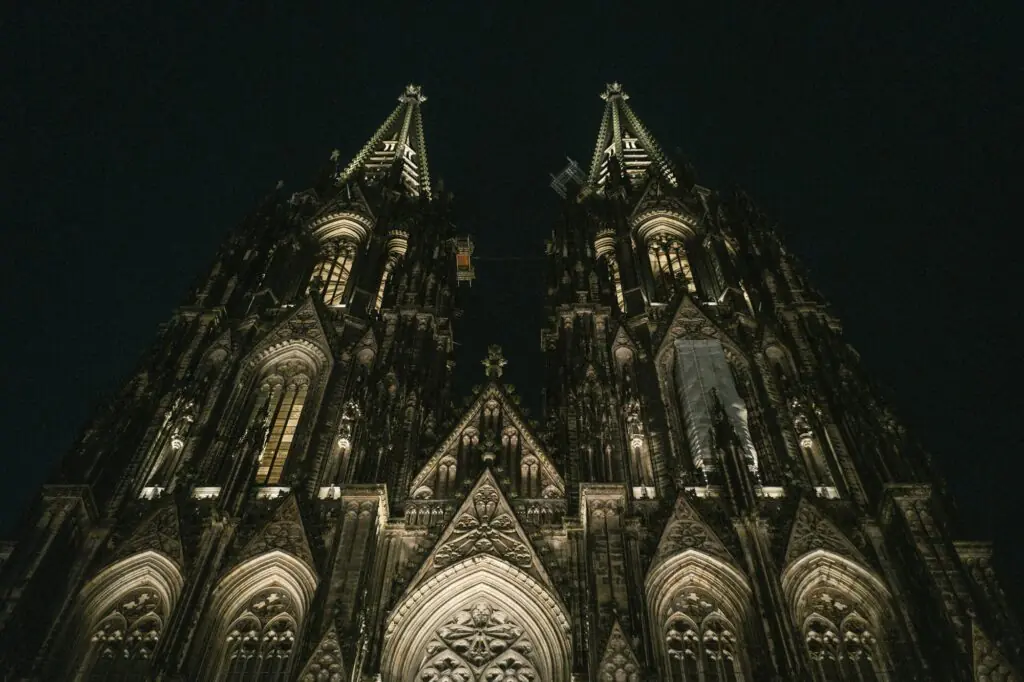
Cologne’s 2027 carnival runs from Thursday 4 to Tuesday 9 February, with the Rosenmontag parade on Monday 8 February. The parades are free to watch from the roadside. Grandstand seats were listed from €54 on the city’s page (year not stated), and the 2027 timings have not been published yet.
Checked on against the official sources cited (koeln.de, Stadt Köln, gesetze-im-internet.de).
Cologne’s carnival happens in February, and the 2027 dates are now fixed. Weiberfastnacht falls on Thursday 4 February, Rosenmontag on Monday 8 February. This guide separates what is settled (dates, alcohol law) from what isn’t yet (route, timings, grandstands, hotels, 2027 glass rules), so you can plan your stay without guessing. The opening of the season in November is covered in our article on Elften im Elften 2026 and where to stand; this one focuses on February.
1. The 2027 carnival dates
The carnival calendar is calculated from Easter. In 2027, Easter falls on 28 March: Ash Wednesday is therefore 10 February, Weiberfastnacht falls 52 days before Easter (Thursday 4 February) and Rosenmontag 48 days before Easter (Monday 8 February). The City of Cologne publishes the same dates on its official portal, which confirms the calculation.
| Day | Date 2027 | Highlight | Status |
|---|---|---|---|
| Thursday | 4 February | Weiberfastnacht, the street opens at 11:11 am on the Alter Markt | Date confirmed, time carried over from 2026 |
| Friday | 5 February | Karnevalsfreitag, neighbourhood parades heading to the Alter Markt (Sternmarsch) | Date calculated, programme and route not confirmed |
| Saturday | 6 February | Frühschoppen (morning drinks) at the Neumarkt, Geisterzug in the evening | Date calculated, 2026 programme carried over |
| Sunday | 7 February | School and neighbourhood parades, more family-friendly | Date calculated, list not published |
| Monday | 8 February | Rosenmontag, the big parade | Date confirmed, route not published |
| Tuesday | 9 February | Veilchendienstag, neighbourhood parades and the Nubbel | Date confirmed, list not published |
| Wednesday | 10 February | Ash Wednesday, end of the festivities | Date confirmed |
Source: koeln.de, Karneval in Köln, checked on 25 October 2026. Times and programmes marked « not published », « not confirmed » or « carried over from 2026 » are not yet confirmed for 2027.
The street carnival lasts six days, from Thursday to Tuesday, from Weiberfastnacht to Veilchendienstag. The peak is Monday 8 February, with Rosenmontag. The motto for the 2027 season was announced by the City during Rosenmontag 2026: « Morje es, wat do drus mähs », roughly « Tomorrow is what you make of it ». For a visitor, that means being on site from Thursday morning for the opening, and arriving early on Monday at the parade route, because the best spots go fast.
2. Cologne before the parade: a party born in 1823, and the local beer
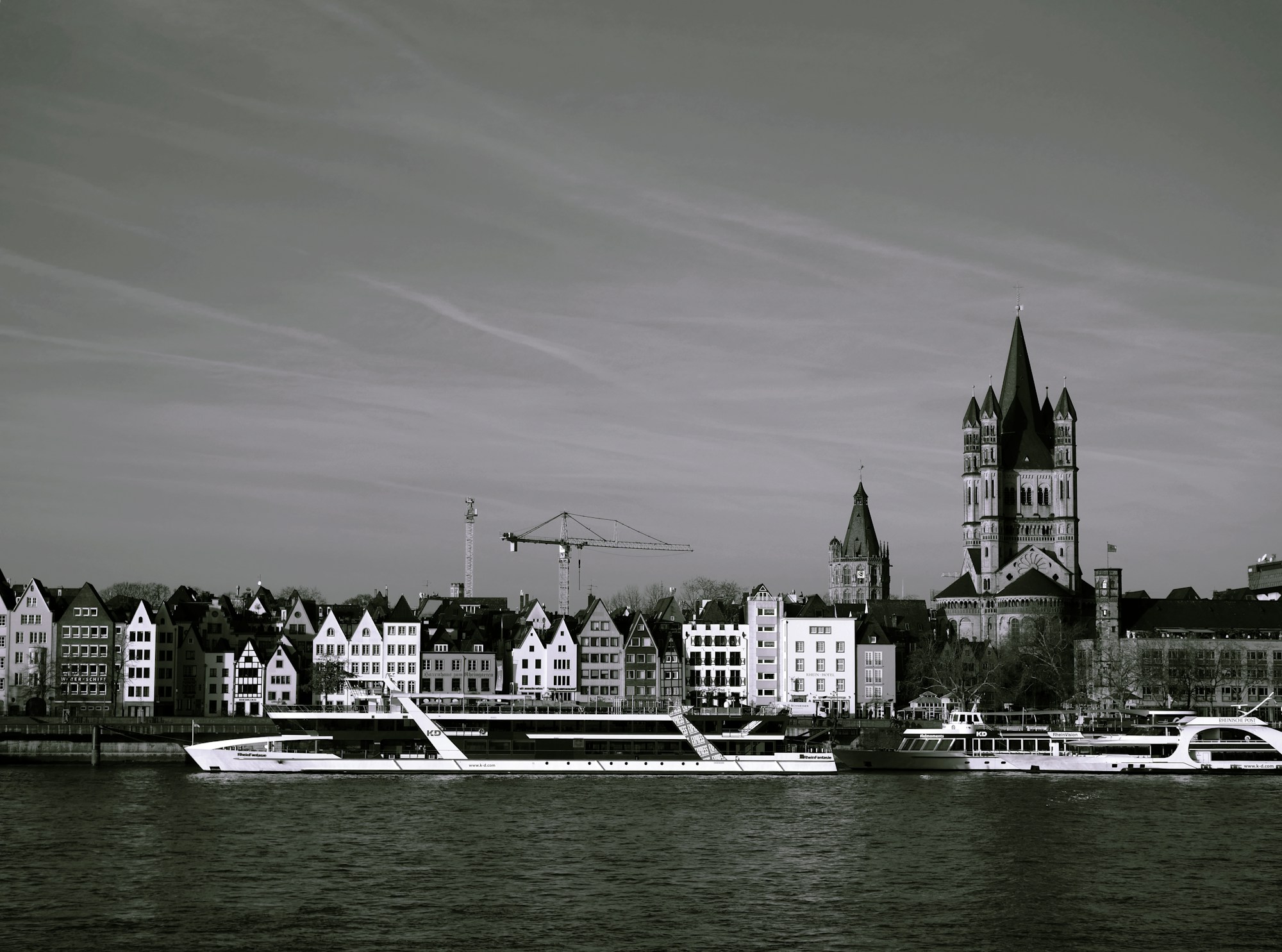
The carnival, a party run by the city’s notables
The most solid fact, and the one guides repeat least, comes down to one date: 10 February 1823. That day, a first Rosenmontag procession was organised by a committee of notables who wanted to frame a popular festival that had until then been very free-form. The upper middle class drew on the Venetian carnival and on religious processions. The committee it founded, the Festkomitee Kölner Karneval, still organises the parade and the presidential trio today. Knowing this origin explains why the festival has such a formal structure, with its floats, titles and committee, alongside the street and its excesses. Planet-Wissen (WDR) on the Rhineland carnival, accessed 25 October 2026.
The carnival is also a drinking festival. Kölsch, a top-fermented blonde beer of about 4.8% alcohol, is served in a 0.2-litre cylindrical glass, the Stange. The Köbes, the waiter, brings a fresh glass as long as you don’t put a beer mat on yours, and he tracks your drinks on that mat. Ordering an Altbier in Cologne goes down badly, according to blogs: that beer is drunk in Düsseldorf. Porch Drinking, Kölsch vs Altbier (alcohol content), and koeln.de, Kölsch page (service).
Highlights
- The carnival is a street event, not a paid show: most of it is watched standing up, outdoors.
- Kölsch is served in a 0.2-litre Stange, and the Köbes keeps count on your beer mat.
- A brewery tour helps you understand the service before you join the crowd.
This brewery tour is a practical way to try Kölsch before festival week. The availability check of 25 October 2026 shows it running every day from 4 to 8 February 2027, for two adults.
3. Weiberfastnacht, Thursday 4 February
Weiberfastnacht, literally « women’s carnival », opens the street. The tradition says women symbolically take over that day and cut men’s ties with scissors. The custom is still visible, even though the festival is now open to everyone. In 2026 the day started at 11:11 am on the Alter Markt, with the presidential trio, music groups and confetti (koeln.de). The 2027 time has not been published yet, and the trio’s presence at the 2027 opening is not confirmed.
Thursday is a busy day in the historic centre. In 2026, koeln.de described a rainy day, with tens of thousands of people in the centre. The City does not publish a figure for this day itself: « hundreds of thousands » is press language, not an official count. If you stay near the Alter Markt, allow extra time for walking access from the morning.
For the atmosphere, Weiberfastnacht needs no grandstand or ticket: the parades pass along the roadside, free of charge. You can get into the rhythm of the week before coming back for the Monday parade.
4. Neighbourhood parades: Friday, Sunday and Tuesday
The Veedelszöch, neighbourhood parades, are the most local part of the carnival. On Friday, a Sternmarsch is meant to bring parades together towards the Alter Markt, according to an unofficial source: its 2027 programme and route are not confirmed. On Sunday, mostly schools and neighbourhoods parade, in a more family-friendly mood (Insight Guides). On Tuesday, for Veilchendienstag, neighbourhood parades follow one another. The City publishes the list of Tuesday parades each year on koeln.de: the 2026 edition included Deutz, Ehrenfeld and Junkersdorf, among others. The 2027 list is not published yet.
One cancellation is already known. The Zollstocker Dienstagszug will not take place in 2027, according to an announcement made on 12 October 2026 by its organisers and reported by the press. The reasons given are the cost of security and a shortage of volunteers. The parade’s president mentions around €13,000 in costs a year; these figures come from the press and are not confirmed by the City. Press article on the cancellation (leinetal24), accessed 25 October 2026.
This case shows a wider pressure. Neighbourhood committees pay for their parade’s security costs. For you, that means a parade listed in a guide from two years ago may no longer exist. Check the list on arrival, on site, before you choose your Tuesday.
5. Rosenmontag, Monday 8 February: the big parade
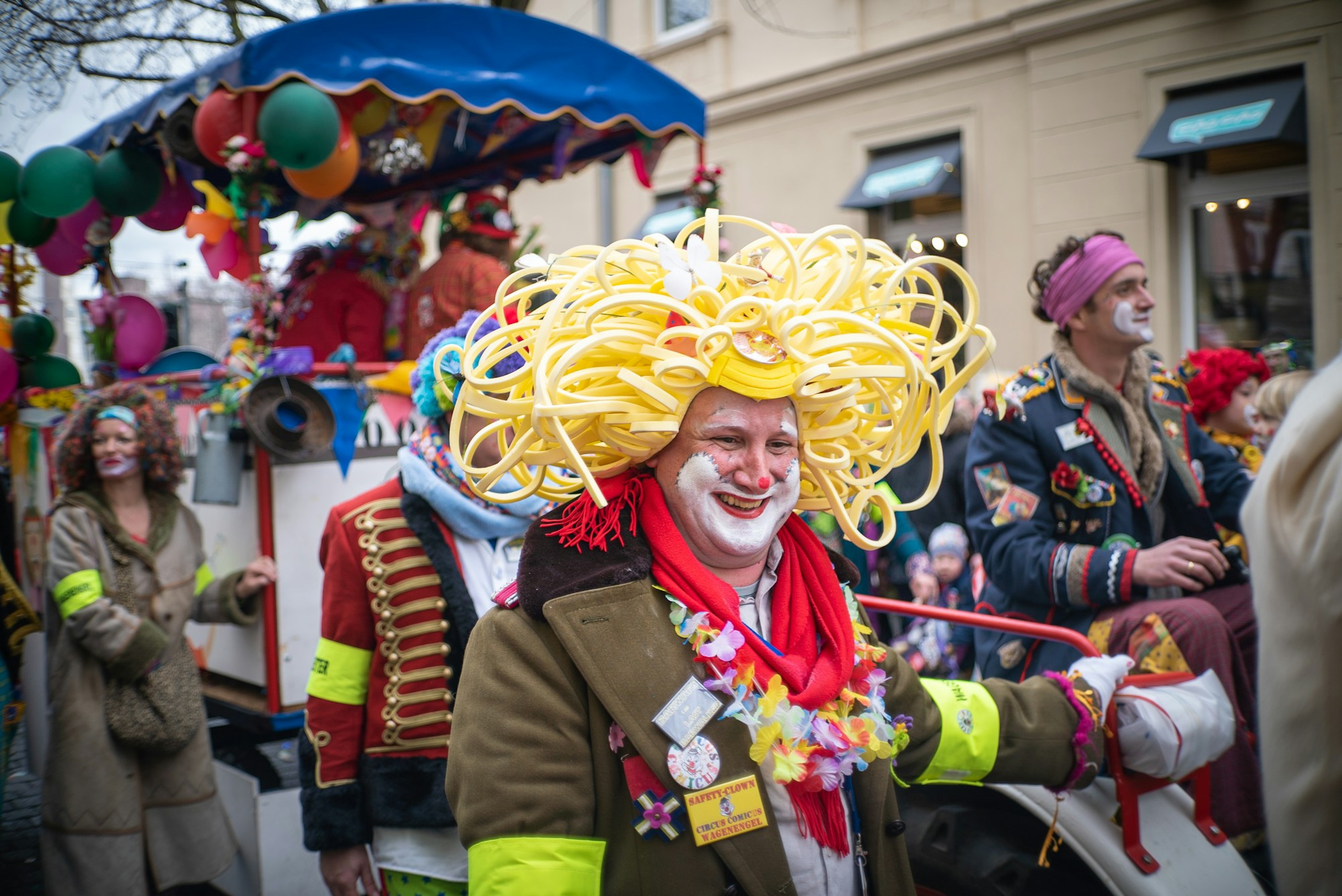
The 2026 parade, the reference point for 2027
Rosenmontag is the high point of the carnival. The City’s official page, drawn up for 2026, describes an 8.5 km route and 171 vehicles: 21 satirical floats, 74 festive floats, 70 luggage floats and 6 small trains. Around 11,500 participants march, according to the same page, although other texts say 12,000. The throws amount to roughly 300 tonnes of sweets, the Kamelle, plus small flower bouquets, the Strüßjer. Some guides give 6 or 7 km: that is wrong for the reference edition.
Attendance figures run into the millions. According to Wikipedia (EN), accessed 25 October 2026, the authorities speak of « more than a million » spectators and the organisers of around 1.4 million. These are orders of magnitude, not a measurement: the City has not published its own count for 2026.
Highlights
- The satirical floats, with their political take on the year.
- The sweets and flowers thrown from close to the parade.
- The groups in costume, walking and playing music, who follow the floats.
The 2027 route and start time have not been published yet. The 2026 edition started at 10 am, with the head of the parade reaching around 1:45 pm and the last groups arriving later. These landmarks give the shape of the day, not the exact time you’ll arrive.
Where to stand
The roadside is free. The Insight Guides guide names Friesenplatz and Appellhofplatz as viewing spots along the parade, provided you arrive early. That guide dates from 2019, though: confirm the route once the 2027 map is published. Grandstands, on the other hand, are paid: access starts between 9:45 am and 12:15 pm depending on the stand in the table below.
| Stand | Access from | « From » price |
|---|---|---|
| Mühenbach, stand 5 | 9:45 am | €67 |
| Hohenzollernring, stands 30 to 32 | 10:45 am | €67 |
| Burgmauer, stands 52, 53 and 55 | 11:15 am | €67 |
| EL-DE-Haus, stand 57 | 11:45 am | €67 |
| Heumarkt West, stand 87.2 | 11:45 am | €54 |
| Heumarkt West, All-In 87.3 (food included) | 11:00 am | €110 |
| Taubenbrunnen, stand 105 | 12:15 pm | €67 |
Source: koeln.de, Rosenmontag grandstands, checked on 25 October 2026. Year not stated on the page. Another City page, undated, lists higher prices (from €65 to €166): compare on the ticket platform before you buy.
Grandstand seats are booked online, each with its own link to the parade ticket platform. Sales usually start in November. No 2027 sales date has been published so far, and 2027 prices are not known.
6. The 2027 Dreigestirn: the presidential trio, announced
The carnival is presided over by a trio, the Dreigestirn: the Prinz (prince), the Bauer (farmer) and the Jungfrau (maiden). For the 2027 season, the press announces Prinz Marius I., Bauer Alex and Jungfrau Johanna, from the Kölner Narren-Zunft von 1880, presented in September 2026. These names are not yet confirmed by the Festkomitee in the sources consulted.
The Jungfrau was long played by a man, but the Nazi regime required a woman to take the role between 1936 and 1943. This exception is often left out of guides, some of which say the Jungfrau has always been a man (Golden Triangle, drawing on Wikipedia). The 2026 trio was presented at the Gürzenich in front of more than 1,300 guests, according to the City. The trio traditionally attends the opening of Weiberfastnacht, but the 2027 programme does not yet confirm it.
7. Glass, alcohol and safety: the rules to know
Glass is the rule you’re most likely to run into. The times and zones below are those of the 2026 edition: they’re given relative to the week (Weiberfastnacht, Saturday, Rosenmontag) rather than as dates, and the 2027 times have not been published yet. In the glass-ban zones, glasses and glass bottles are prohibited. PET bottles, plastic cups and cans are allowed. Kiosks and snack stands in the zones may only sell drinks in non-glass containers. The fine can reach €60 depending on container size.
| Zone | Start | End | Penalty |
|---|---|---|---|
| Altstadt | Weiberfastnacht, 8:00 am | Friday, 8:00 am | Up to €60 |
| Altstadt, Saturday | Saturday, 6:00 pm | Sunday, 8:00 am | Up to €60 |
| Kwartier Latäng (Zülpicher Viertel) | Weiberfastnacht, 8:00 am | Friday, 8:00 am | Up to €60 |
| Kwartier Latäng, Friday | Friday, 3:00 pm | Saturday, 8:00 am | Up to €60 |
| Kwartier Latäng, Saturday | Saturday, 12:00 pm | Sunday, 8:00 am | Up to €60 |
| Kwartier Latäng, Rosenmontag | Rosenmontag, 3:00 pm | Tuesday, 8:00 am | Up to €60 |
| Inneres Grüngürtel, Uniwiese, Hiroshima-Nagasaki-Park | Weiberfastnacht, 10:00 am | Friday, 8:00 pm | Up to €60 |
| Inneres Grüngürtel, continued | Friday, 11:00 am | Rosenmontag, 10:00 pm | Up to €60 |
Source: koeln.de, Glass ban zones carnival 2026, checked on 25 October 2026. The Südstadt (Severinsviertel) has no ban: the City asks people to go without glass there voluntarily.
On alcohol, federal law applies everywhere in Germany. Under section 9 of the Youth Protection Act (JuSchG), beer, wine and sparkling wine are banned for under-16s, and spirits and other alcohol for under-18s. An exception lets a young person accompanied by a parent drink beer or wine, but it does not cover spirits. A local source mentions a threshold of 14: the law does not provide for it, and the law is what counts. JuSchG § 9 on gesetze-im-internet.de, accessed 25 October 2026.
Enforcement has been stepped up considerably. The City’s review published on 18 February 2026 reports 174 glass-related offences, 5,030 prevention conversations, and failed alcohol test purchases in 65 of 78 checks. The City deployed more than 200 public order officers and hundreds of private security staff each day. For you, the takeaway is simple: don’t carry glass, keep your ID on you, and avoid the densest areas late in the evening.
8. Costumes, shouts and etiquette
No official text requires you to wear a costume in Cologne. The custom is very strong all the same: many locals go out in fancy dress, and a visitor in everyday clothes stands out. Wigs, make-up, masks and costumes are everywhere, including on children. The themes change from year to year: film characters, fairies, pirates, political figures.
The city’s cry is « Kölle Alaaf! ». « Helau » belongs to Düsseldorf and Mainz, and shouting it in Cologne is seen as a faux pas by locals. As the floats pass, people shout « Kamelle! » for sweets and « Strüßjer! » for flowers. Kamelle originally meant caramels; today it refers to anything thrown from the floats.
On etiquette, men are used to having their ties cut off on Thursday, which is done in good humour. For sweets, avoid picking up the ones children are scrambling for: that’s blog advice, not a rule, but it avoids misunderstandings.
9. Getting there, getting around and where to stay
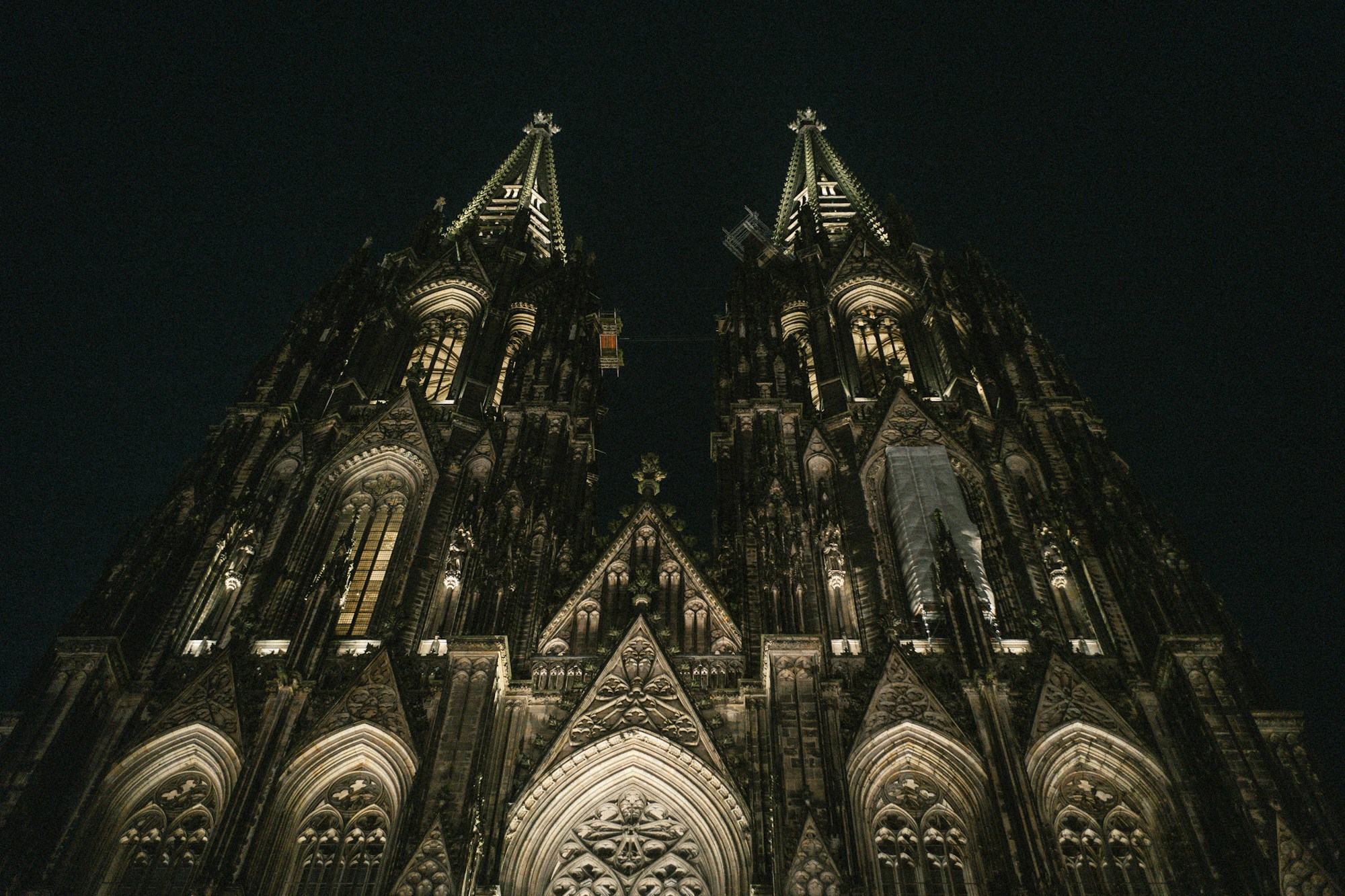
The centre, between the cathedral and the Altstadt
The historic centre is where the festival happens, around the cathedral, the Alter Markt and the Altstadt. For transport, in 2026 the KVB ran a special timetable on Rosenmontag Monday: trams on the Friday timetable, buses on the Sunday one, with extra journeys before and after the parade. In 2026 some bus routes were diverted along the Rheinuferstraße from about 10 am to 5 pm. The 2027 plan has not been published yet, so check koeln.de before you set off.
Highlights
- The centre is walkable from the station, with the cathedral as your landmark.
- The Südstadt, less touristy, is still close to the neighbourhood parades.
- Staying near a tram line lets you skip the car, which is best left at home.
Trains: the press reports special regional services for the 2026 edition, announced for the big cities nearby. The details could not be verified, and nothing has been published for 2027 as of this guide.
From London, the usual route is Eurostar to Brussels (about 2 hours from St Pancras), then a direct Eurostar or ICE train to Cologne (about 2 hours). Allow roughly 4 to 5 hours door to door on the fastest journeys, and check the timetable before you book, as engineering works can change journey times. B-Europe, London to Cologne route, accessed 25 October 2026.
Cologne Central Station (Köln Hauptbahnhof) is due for planned works from Friday 8 January 2027 at 9 pm to Tuesday 19 January 2027 at 9 pm, to replace the electronic signal box. The federal government’s reply to the Bundestag describes a partial closure, then a full closure, of the station during that period. This does not concern the carnival, but it matters for a stay passing through Cologne in January 2027. Government reply, Drucksache 21/7364, accessed 25 October 2026.
The Deutschlandticket will rise to €66.80 a month from 1 January 2027, up from €63 in 2026. That figure comes from the press (dpa, 30 September 2026). Its exact coverage on KVB lines had not been checked as of that date.
No 2027 hotel rate has been published or found in the sources consulted: any figure shown today would be an estimate.
10. Budget and accommodation: what the studies say
No sourced 2027 hotel rate exists. The studies available do not cover the same nights or the same benchmarks. Several studies estimate a 65 to 80% price rise during the carnival, but the figures can’t be compared with each other: the table presents them separately, without merging them.
| Source | Year | Benchmark | Average price | Increase |
|---|---|---|---|---|
| Check24, press release | 2023 | Friday before Rosenmontag, compared with the February average | €180 | +19% |
| Check24, press release | 2024 | Weiberfastnacht | €294 | +46% |
| IW (reported by the press) | 2025/26 | Cologne, during the season | About €221 | +66% (+€88) |
| IW (reported by the press) | Not stated | Cologne compared with Düsseldorf | Not stated | +79% (+€105) |
Sources: Check24 press releases from 2023 and 2024; IW Köln, reported by the press, checked on 25 October 2026. The two IW studies are not directly comparable: one covers the 2025/26 season, the other a comparison with Düsseldorf, with no date.
A typical budget comes down to four items: accommodation, grandstand seats if you want to sit (from €54 on the City’s page, year not stated), guided tours and drinks. Roadside parades and the street party are free. A brewery tour costs around €27.50 per adult for two people, according to the availability check of 25 October 2026. If you’re comparing with another season, our guide to the Cologne Christmas markets 2026 covers the costs of a winter visit.
11. The Nubbel: the final night
The Cologne carnival ends with the Nubbel, a straw dummy hung on doors and bar counters during the festivities. It is burned to close the season and « carry off » the excesses of the week. The exact moment varies between sources: Tuesday evening, or the night from Tuesday to Ash Wednesday. No reliable time is published; use Tuesday evening as a rough guide and check on site. It’s a moment of its own, often in front of pubs, and it isn’t scheduled like a parade.
For another big winter carnival, see our guide to the 2027 Venice carnival.
What other guides don’t tell you
Travel guides often repeat the same generalities. The points below come from official sources, legal texts or press reports flagged as such, accessed 25 October 2026.
- Glass zones have precise times and a list of allowed containers. The Grüngürtel zone has its own time slots, and only plastic cups and cans are allowed. These times are from 2026. koeln.de, Glass ban zones 2026 (accessed 25 October 2026).
- The 2026 parade measured 8.5 km and had 171 vehicles. The 21 satirical floats, 74 festive floats, 70 luggage floats and 6 small trains don’t appear in any guide we read, and several give 6 or 7 km. koeln.de, Rosenmontag parade (accessed 25 October 2026).
- The 2026 review counts offences and test purchases. 174 glass-related offences, and failed alcohol test purchases in 65 of 78 checks. Stadt Köln, press release 28202 of 18 February 2026 (accessed 25 October 2026).
- The parental exception on alcohol covers only beer, wine and sparkling wine. There is no 14-year threshold in the law, despite what a local source says. JuSchG § 9 (accessed 25 October 2026).
- The Zollstocker Dienstagszug is cancelled for 2027. The announcement came from the organisers on 12 October 2026, not from the City (press source). It shows that neighbourhood parades are also disappearing because of security costs. Press (leinetal24) (accessed 25 October 2026).
Practical information for planning your stay
- Central station. Planned works from 8 January 2027, 9 pm, to 19 January 2027, 9 pm: partial closure, then full closure, according to the government reply. Outside the carnival window (Drucksache 21/7364).
- Transport. Deutschlandticket at €66.80 a month from 1 January 2027, according to the press (dpa, 30 September 2026). The KVB 2027 plan has not been published.
- Glass. Zones, times and containers checked for 2026; those for 2027 have not been published yet (koeln.de).
- Alcohol. 16 for beer, wine and sparkling wine; 18 for spirits (JuSchG § 9).
- Grandstands. Online booking, sales usually from November; no 2027 sales date has been published so far.
Sources: koeln.de, Stadt Köln, Bundestag, gesetze-im-internet.de; checked on 25 October 2026.
Frequently asked questions about the 2027 Cologne carnival
When is the Cologne carnival in 2027?
The 2027 street carnival runs from Thursday 4 February (Weiberfastnacht) to Tuesday 9 February (Veilchendienstag). The big Rosenmontag parade is on Monday 8 February, the peak of the festivities, and Ash Wednesday falls on 10 February. The dates come from the City of Cologne and match the Easter 2027 calculation, with Easter on 28 March. Parade times have not been published yet. koeln.de, Karneval in Köln.
When does the Cologne carnival season start?
The 2026/27 season opens on 11 November 2026. The street festival, though, centres on February, after a break for the end-of-year holidays. Our article on the Elften im Elften 2026 covers the November opening and where to stand to see it.
Is the Rosenmontag parade free?
Yes if you watch from the roadside: you can see the parade for free, as long as you arrive early, because the best spots go quickly. Grandstands cost money. The City’s page lists them from €54 for Heumarkt West (year not stated), and from €67 for most of the others. 2027 prices and the sales date are not yet published. koeln.de, grandstands.
Can you drink beer in the street from a glass?
No, not in the glass-ban zones (Altstadt, Kwartier Latäng, Grüngürtel, according to the 2026 times): glasses and glass bottles are prohibited. Plastic cups, PET bottles and cans are allowed. The fine can reach €60 depending on container size. The Südstadt has no ban, but the City asks people to go without glass there voluntarily.
How long does the Cologne carnival last?
The season lasts about 100 days, according to an IW estimate reported by the press for 2025/26. The street carnival itself lasts six days, from Thursday to Tuesday: Weiberfastnacht, Friday, Saturday, Sunday, Rosenmontag and Veilchendienstag. Ash Wednesday closes the festivities. In 2027, the sequence runs from 4 to 9 February, and those dates are calculated from Easter.
Do you have to wear a costume for the Cologne carnival?
No official rule requires a costume, and no official source consulted mentions an obligation. The custom is very strong all the same: many people go out in costume, wig or make-up, and a visitor in everyday clothes stands out. A simple costume that’s warm and easy to wear is enough, since the festival takes place outdoors in February.
What does « Alaaf » mean?
« Alaaf » is Cologne’s rallying cry, in Kölsch, often translated as « Cologne above all ». The full phrase is « Kölle Alaaf ». Helau is the cry of Düsseldorf and Mainz: shouting it in Cologne is a faux pas. Kamelle are the sweets thrown from the floats, and Strüßjer are small flower bouquets.
What is the legal drinking age in Cologne?
Under federal law (JuSchG § 9), beer, wine and sparkling wine are banned for under-16s, and spirits and other alcohol for under-18s. A young person accompanied by a parent may drink beer or wine, but that exception does not cover spirits. A local source mentions a threshold of 14: the law does not provide for it. JuSchG § 9.
Sources
- koeln.de, Karneval in Köln: 2027 dates from the official portal, accessed 25 October 2026
- koeln.de, 11.11 and the opening of the 2026/27 season: opening date, accessed 25 October 2026
- koeln.de, Rosenmontagszug: 2026 edition (route, vehicles, participants), accessed 25 October 2026
- koeln.de, Grandstands: « from » prices (year not stated), accessed 25 October 2026
- koeln.de, Glass ban zones 2026: times and containers, accessed 25 October 2026
- Stadt Köln, press release 28202: 2026 carnival review, 18 February 2026
- gesetze-im-internet.de, JuSchG § 9: legal drinking age, accessed 25 October 2026
- Bundestag, Drucksache 21/7364: closure of Cologne Central Station in January 2027, 27 July 2026
- koeln.de, Kölsch: service and glass, accessed 25 October 2026
- Porch Drinking, Kölsch vs Altbier: alcohol content and Stange, accessed 25 October 2026
- koeln.de, 2027 motto announcement: « Morje es, wat do drus mähs », announced at Rosenmontag 2026, accessed 25 October 2026
- Planet-Wissen (WDR), Rheinischer Karneval: 1823 origin and formulas, accessed 25 October 2026
- Wikipedia (EN), Cologne Carnival: attendance figures given by the authorities and organisers (undated), accessed 25 October 2026
- Golden Triangle, Carnival in Cologne: Jungfrau exception (1936-1943), Frühschoppen and Geisterzug, accessed 25 October 2026
- Insight Guides, Carnival in Cologne: viewing spots, Sunday parades, guide dated 2019, accessed 25 October 2026
- Check24, Cologne hotel prices press release 2024: hotel price increases, accessed 25 October 2026
- Press (leinetal24), Dreigestirn 2027: trio announced, not confirmed by the Festkomitee, accessed 25 October 2026
- B-Europe, London to Cologne: Eurostar and ICE services via Brussels, accessed 25 October 2026
Sources accessed on 25 October 2026. Data marked « 2026 », « press » or « not confirmed » is flagged as such in the text.
Plan your trip with Pixidia
Pixidia learns how you travel and helps you build a trip that truly fits you and everyone coming along.
Open the planner