
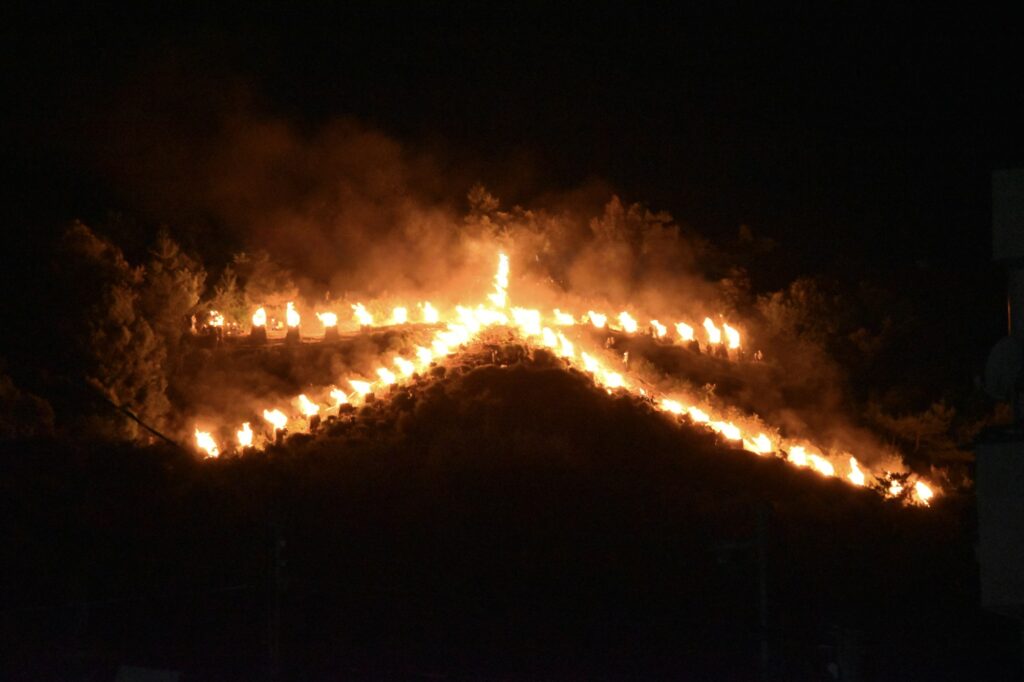
The Dosojin fire festival at Nozawa Onsen runs 13 to 15 January, and the rule published for 2026 requires a night in the village, with the accommodation issuing the ticket. The 2027 notice was not yet published as of 27 November 2026. A night costs 11,350 to 27,830 yen per person (2026-27 listings).
Checked on against the official sources cited (Nozawa-gumi notice, Soumu, MLIT, JR West, GOV.UK).
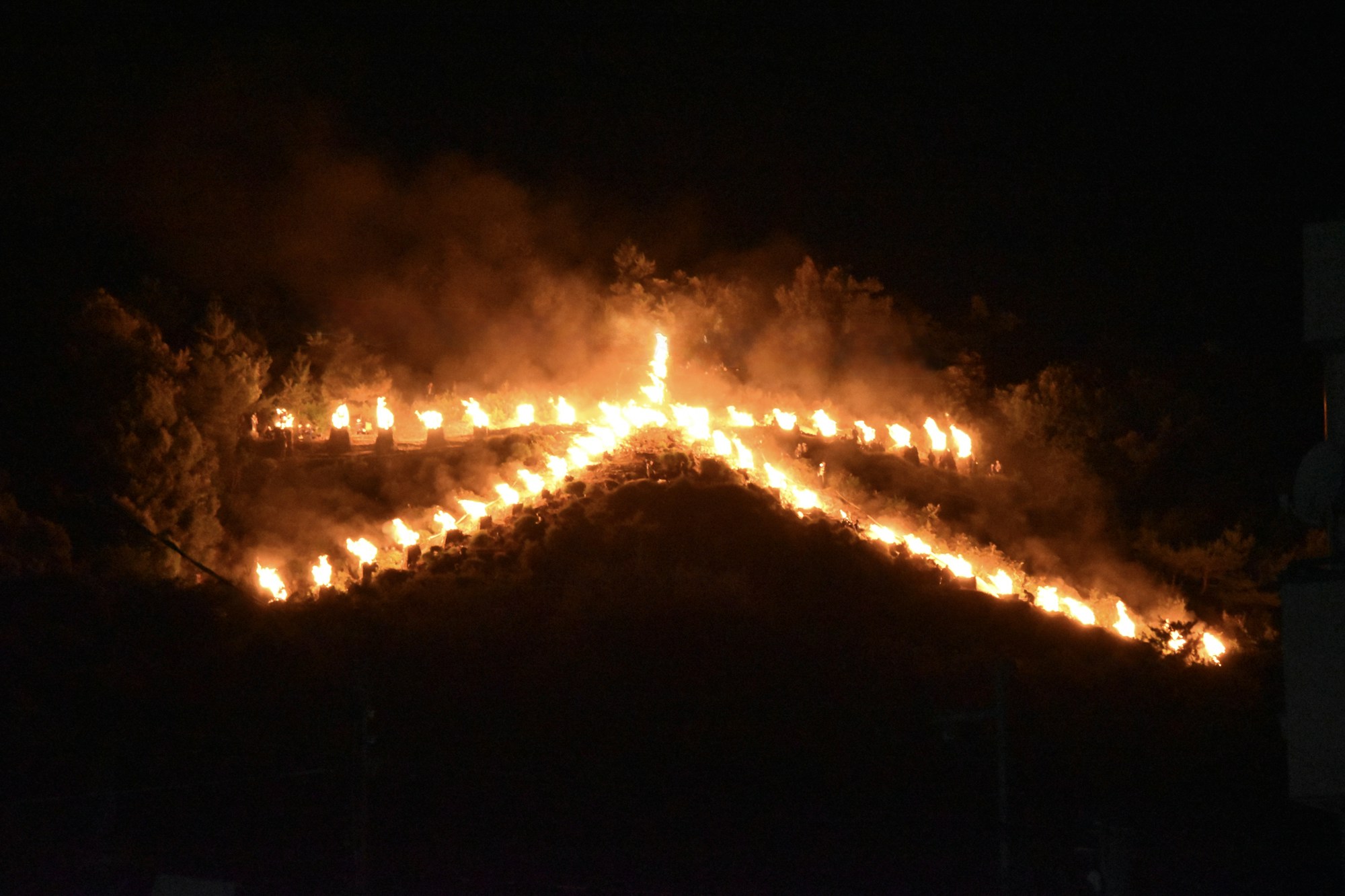
Every year, on the evening of 15 January, the hot-spring village of Nozawa Onsen in Nagano Prefecture burns a temporary shrine built from beech wood. The shrine is built from five beech trunks chosen on 13 January.
1. Nozawa Onsen, a hot-spring village that runs on snow
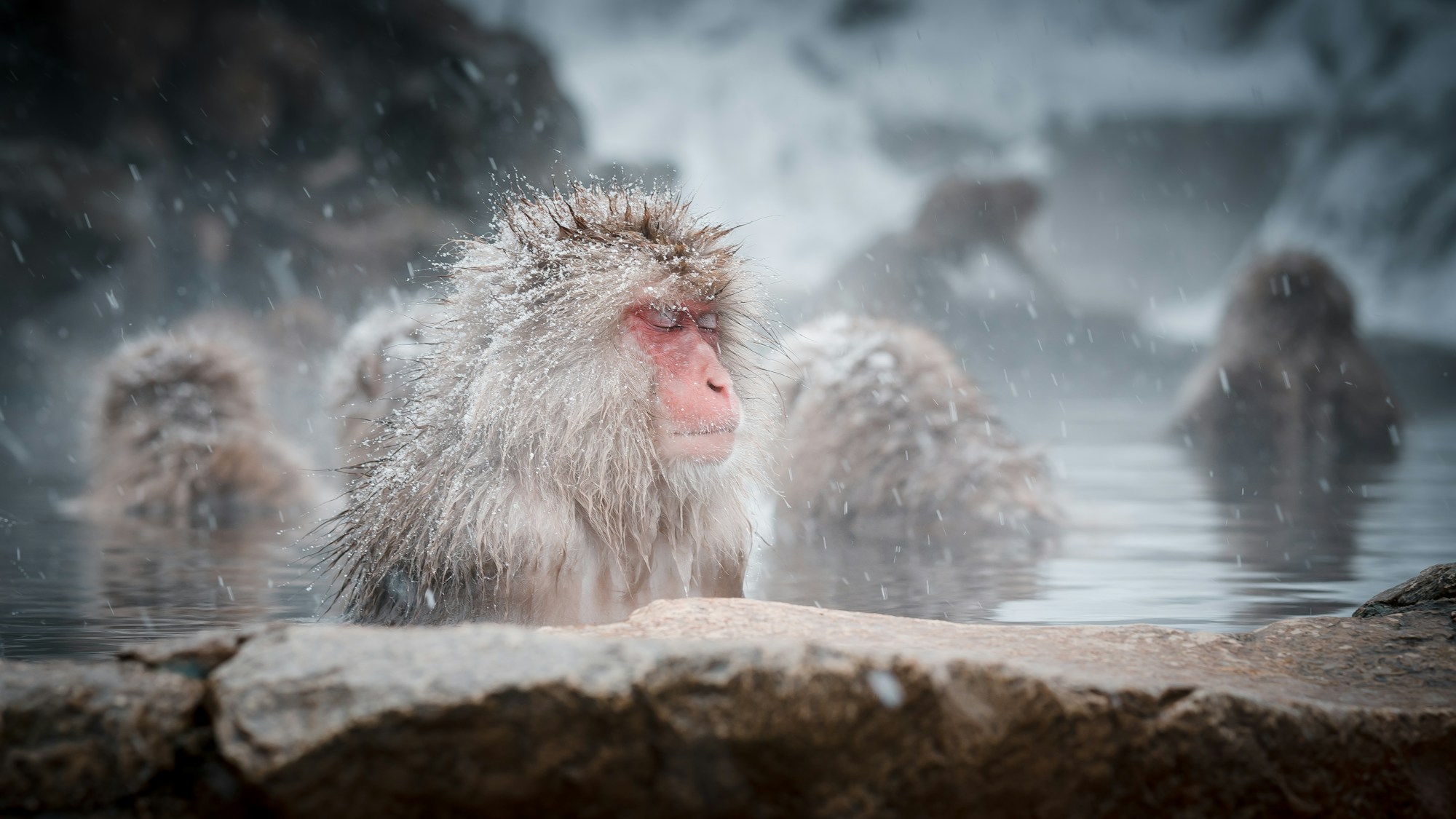
Nozawa Onsen and the surrounding area
Nozawa Onsen is both a hot-spring village and a ski resort in Nagano Prefecture (village overview by Nozawaski). The fire is carried by the Nozawa-gumi, the village association, and announced by the tourist office on nozawakanko.jp. If you’re coming for the evening of the 15th, plan at least two full days on site: 13 January marks the start of preparations, when five beech trunks are chosen for the shrine.
On the 13th or the 14th, a day on the snow is a good way to get out of the village without leaving the region. This tour heads to the Jigokudani monkey park, with a stop at Zenko-ji temple. It lasts 8 to 9 hours. Departures recorded for 13 January 2027 are at 8:50 am or 9:00 am, and the meeting point is to be confirmed on the listing. It isn’t part of the fire programme: it’s a separate outing, booked separately.
Highlights
- A full day in the snow without changing accommodation, pickup point to be confirmed
- Jigokudani monkey park and Zenko-ji temple on the same route
- Available 13, 14 and 15 January 2027 per our check on 27 November 2026

2. The Dosojin fire, step by step
The Dosojin Matsuri at Nozawa Onsen honours the Dosojin, protective spirits placed at the edges of villages. The tradition goes back to 1863 according to the MLIT heritage record (MLIT), and the festival is listed among Japan’s Important Intangible Folk Cultural Properties. The word Dōsojin (道祖神) refers to these deities.
The festival runs over three days, from 13 to 15 January. On the 13th, five beech trunks are chosen to build the temporary shrine. Men aged 25 and 42, considered unlucky ages (yakudoshi), take the central roles, according to the MLIT record. The fire is lit on the evening of 15 January: that is when most visitors come.
The time of the evening ceremony is not set for 2027. The sources consulted give 7 pm, 8:30 pm, or a window from 7 pm to 11 pm depending on the text, and none of them is authoritative for next year. Don’t plan your evening around a specific time: arrive early and follow the village’s instructions on the day.
3. Entry rules: what we know for 2026, what is still to be confirmed for 2027
The rule published for the 2026 ceremony is the only one whose text is known. The Nozawa-gumi notice, dated 30 November 2025 and consulted on 27 November 2026 on nozawakanko.jp, states that access to the evening ceremony on 15 January is reserved for residents and for visitors with an overnight stay in the village. The entry ticket is issued by the accommodation.
For 2027, the notice is not published as of 27 November 2026. Don’t assume it will repeat the 2026 rule word for word: the 2026 notice arrived at the end of November 2025, so that is the calendar to watch. Four questions remain open for 2027:
- whether the overnight stay requirement for access to the evening site is kept;
- how the ticket is issued and what it costs;
- the exact time of the ceremony;
- the rules on drones and photography.
On drones, a 2026 ban is cited by a third-party guide, but the official text was not read. Don’t present it as a 2027 rule until the notice is published.
4. Tickets: the open question
For 2026, an entry ticket was required for the evening ceremony, and it was issued by the accommodation where you stay. No official source consulted publishes the price. One tourist source, on the other hand, describes the festival as free. That contradiction is still not resolved, so this article gives no amount.
The sensible move is simple. Ask your accommodation for the amount and the conditions when you book, get the answer in writing, and keep the confirmation. A ticket sold outside this channel does not guarantee you access to the site.
5. Accommodation: one night in the village
Accommodation is the key to the fire. The table below lists the 2026-27 rates shown on the booking pages of a few establishments in the village, per person per night, for two people sharing a room. These are listings: prices can change before you book, and 15 January has not been compared with the other days.
| Accommodation | Option | Price per person (yen) | Source |
|---|---|---|---|
| Chitosekan Nozawa | room only | 11,550 | reserve.489ban.net |
| Azegami-kan | room only | 11,350 | reserve.489ban.net |
| Chitosekan Nozawa | breakfast | 12,650 | reserve.489ban.net |
| Chitosekan Nozawa | half board | 14,850 | reserve.489ban.net |
| Azegami-kan | half board | 22,350 | reserve.489ban.net |
| Ryokan Sakaya | two meals, Japanese-style twin or compact room | 19,800 | reserve.489ban.net |
| Hôtel Ohtaki | two meals, one night | 27,830 | reserve.489ban.net |
Source: booking pages of Chitosekan Nozawa, Azegami-kan, Ryokan Sakaya and Hôtel Ohtaki (reserve.489ban.net), checked on 27 November 2026.
At Chitosekan Nozawa, breakfast adds 1,100 yen per person to the room-only rate, and half board adds 3,300 yen. On a tight budget, room only is enough if you eat in the village. Book early: the overnight stay is the condition for access to the fire in 2026, so it directly affects the night of 15 January.
6. From Tokyo: train, shuttle and pass
The most common route combines the Hokuriku Shinkansen to Iiyama Station, then a shuttle to the village. The Tokyo-Iiyama Shinkansen takes about 1 hour 45 minutes, a duration given by a booking site and not confirmed by JR East. The Nozawa Onsen Liner shuttle takes about 25 minutes from Iiyama Station (stop no. 4, on the Chikuma River side). The Shinkansen fare for 2026-27 has not been checked: read it on the JR East website. Check the official timetables before you book your tickets.
The Iiyama-Nozawa Onsen shuttle cost 600 yen for an adult in the 2024-25 season, according to a secondary source. Its 2026-27 fare is not confirmed. An alternative leaves from Haneda Airport with the Nagano Snow Shuttle, whose fare was 14,850 yen in 2025-26; the 2026-27 fare has not been checked.
On passes, the adult Hokuriku Arch Pass for 7 days has cost 35,000 yen since 14 March 2026 (JR West). To decide, compare that with the return Shinkansen fare from Tokyo to Iiyama, which we could not find, and check that the pass really covers the stretch. For the national Japan Rail Pass, a price rise had been announced for 1 October 2026 (JR Central press release of 9 April 2026): the price at purchase is the one on the JR website, so check it.
| Route or pass | Price | Validity | Status |
|---|---|---|---|
| Hokuriku Arch Pass adult, 7 days | 35,000 yen | since 14 March 2026 | official, JR West; coverage of the route to check |
| Nozawa Onsen shuttle from Iiyama, adult | 600 yen | 2024-25 season | secondary source; 2026-27 not confirmed |
| Nagano Snow Shuttle from Haneda | 14,850 yen (reference) | 2025-26 season | 2026-27 fare not checked; confirm with the operator |
| Shinkansen Tokyo to Iiyama | not checked | 2026-27 | check on JR East |
Source: JR West, Hokuriku Arch Pass; Nozawaski, timetables and shuttle (secondary source), checked on 27 November 2026.
7. Taxes and fees to know about
Three taxes apply directly to your stay. The accommodation tax is confirmed by the Ministry of Internal Affairs (Soumu) and by the booking pages of the establishments. The onsen tax is added at village establishments. The Japan departure tax, finally, went up on 1 July 2026.
| Tax | Amount | Application | Source |
|---|---|---|---|
| Accommodation tax | 3.5% of the room rate, excluding meals | from 1 June 2026, until 31 May 2029, then 5% | Soumu |
| Onsen tax | 150 yen per adult (13 and over) per night | village accommodation | booking pages |
| Japan departure tax | 3,000 yen | from 1 July 2026 | MLIT |
Source: Soumu, accommodation tax; MLIT, departure tax; accommodation booking pages, checked on 27 November 2026.
An exemption for stays under 6,000 yen is mentioned by a secondary source. It was not found in the official text consulted: don’t count on it before you book.
8. Budget: the costs to plan for
A budget can’t be fixed for 2027 until the ticket and the shuttle fares are published. Here are the items to price, with the sourced amounts from the sections above.
- Accommodation: 11,350 to 27,830 yen per person per night depending on the option (2026-27 listings), taxes on top.
- Taxes on site: 3.5% of the room rate excluding meals, plus the onsen tax of 150 yen per adult per night.
- Transport from Tokyo: Shinkansen fare to check; shuttle at 600 yen in the 2024-25 season (to reconfirm), or the Hokuriku pass at 35,000 yen if the route is covered.
- Day tour: from €127.62 per person (based on 2 adults), checked on 27 November 2026.
- Departure tax: 3,000 yen, usually included in your flight ticket; check your booking.
- Fire ticket: price not set, ask your accommodation.
To stay on a tight budget, go for room only, eat in the village and limit paid outings to a single day. The price of the fire ticket is still to be asked of your accommodation: until it is published, don’t assume it is either free or paid.
9. A suggested three-day plan
A trip with some breathing room comes together in three stages. This plan is an editorial suggestion: it does not reproduce an official programme, and the festival times remain to be confirmed.
Day one (12 or 13 January). Arrive in the village, settle in and walk the streets and hot springs on foot. On the 13th, the choice of the five beech trunks marks the start of the shrine preparations: a good moment to understand the festival before watching it.
Day two (14 January). On the 14th, the shrine is assembled: it’s the eve of the fire, worth seeing if you stay on site. Book a day on the snow, for example the outing to the Jigokudani monkey park, and save your energy for the evening. An excursion is not a must: on a free day, the village baths and a winter walk are enough.
Day three (15 January, a Friday). Keep the day quiet, have dinner early and head to the fire site before the ceremony starts. The exact 2027 time is not published: ask your accommodation as soon as you arrive, and follow the instructions on site.
10. What to wear, the cold and mistakes to avoid
You watch the fire standing outside, in deep cold. January is the coldest and snowiest month in the region. In late January 2026, around 150 cm of snow fell in a little over 24 hours at Nozawa Onsen, according to a specialist news site (secondary source, with no verified official record).
- Base layer: go for wool or thick cotton. Avoid synthetic down jackets: embers and sparks burn holes in them quickly.
- Outer layer: a waterproof windproof jacket and grippy shoes, since snow is common at the site.
- Mistake to avoid: counting on a ticket without booking a night’s stay. In 2026, access went through the accommodation.
- Mistake to avoid: treating the 2026 rules as the 2027 ones. The 2027 notice will be the one that counts.
- Mistake to avoid: paying a 1,000-yen departure tax, the figure in 2025 guides. The rate in force is 3,000 yen.
11. Depending on your profile
First time in Japan. Stay three nights in the village and leave a free day between your arrival and the fire evening. The village’s slow pace lets you understand the ritual without rushing.
Couple. One night on half board in a ryokan leaves time for the baths and dinner before the evening of 15 January. Book early, as soon as your dates are set.
Tight budget. The cheapest room-only rate, meals taken in the village and a single paid outing. The costs to watch remain the taxes and the transport from Tokyo.
Family. Pack warm clothes for the children and keep a day free of a busy schedule before the fire. Ask your accommodation about the conditions for younger children to attend the evening.
Reduced mobility. The fire site and the village paths can be snowy and slippery in January. Ask your accommodation for the exact access to the site and for the walkable routes before you book.
If you’re planning other winter festivals in 2027, the guide to the Château-d’Œx balloon festival covers a Swiss festival, and the guide to the Cosquín folklore festival covers another tradition on the 2027 calendar.
What other guides don’t tell you
These five points appear in the official texts we consulted. They are missing or out of date in most mainstream guides.
- Five beech trunks are chosen on 13 January. The temporary shrine is built from that choice, which makes the 13th the first concrete day of the festival. MLIT heritage record (accessed 27 November 2026).
- The accommodation tax has been 3.5% since 1 June 2026. It runs until 31 May 2029, before moving to 5%. Soumu (accessed 27 November 2026).
- The Japan departure tax has been 3,000 yen since 1 July 2026. Guides from 2025 still show 1,000 yen. MLIT (accessed 27 November 2026).
- The Hokuriku Arch Pass has cost 35,000 yen since 14 March 2026. Guides still quote 30,000 yen. JR West (accessed 27 November 2026).
- The 2026 rules date from 30 November 2025. Most guides don’t give that date, or confuse it with the 2027 one. Nozawa-gumi notice (accessed 27 November 2026).
Frequently asked questions about the Dosojin fire
Can you watch the fire without staying overnight in Nozawa Onsen?
Not under the 2026 rules: access to the evening ceremony on 15 January was reserved for residents and for visitors with an overnight stay in the village, as stated in the Nozawa-gumi notice. The 2027 rule is not published as of 27 November 2026. Check it before you book, and reserve accommodation as soon as your dates are set.
Do you need a ticket for the fire, and how much does it cost?
For 2026, an entry ticket was issued by the accommodation. Its price is not published in any official source consulted, and one tourist source describes the festival as free. That contradiction is still not resolved. Ask your accommodation for the amount when you book, and keep the written confirmation.
How do you get from Tokyo to Nozawa Onsen in January?
The classic route takes the Hokuriku Shinkansen to Iiyama Station, then a shuttle to the village. The shuttle cost 600 yen for an adult in the 2024-25 season, according to a secondary source. The Shinkansen fare for 2026-27 has not been checked. An alternative leaves from Haneda Airport with the Nagano Snow Shuttle.
How much is a night in Nozawa Onsen for 15 January?
2026-27 listings range from 11,350 to 27,830 yen per person per night, depending on the option and the establishment. Add the accommodation tax of 3.5% of the room rate excluding meals, and the onsen tax of 150 yen per adult per night. Prices vary by date, so book early.
What should you wear for the fire evening?
Wear wool or thick cotton as a base layer, with a waterproof windproof jacket on top. Avoid synthetic down jackets: embers and sparks burn through them easily. Grippy shoes help on snow, as recommended in the practical tips from Letz Nozawa.
Is there an accommodation tax in Nozawa Onsen?
Yes. The accommodation tax is 3.5% of the room rate, excluding meals, since 1 June 2026, according to the Ministry of Internal Affairs (Soumu). It runs until 31 May 2029, before moving to 5%. The onsen tax of 150 yen per adult per night is added at village establishments.
Do I need a visa for Japan with a UK passport?
For a short tourist stay of up to 90 days, British nationals can get a visa on arrival and do not need to apply before travelling, according to the UK government’s Japan travel advice. Your passport must be valid for the length of your stay. Check the official page before you fly.
What’s the weather like in Nozawa Onsen in January?
It’s very cold, and snow is frequent in January: it’s the coldest and snowiest month in the region, and the village is also a ski resort. In late January 2026, around 150 cm of snow fell in 24 hours, according to a secondary source. Dress in layers and check the forecast in the days before you leave.
What time does the fire ceremony start?
The 2027 time is not published as of 27 November 2026. The sources consulted give different times: 7 pm, 8:30 pm, or a window from 7 pm to 11 pm. None of them is authoritative for 2027. Arrive early on site and ask your accommodation for the time once the notice is published.
Sources
- Nozawa Onsen Tourism Association : official festival notice, published 30 November 2025
- MLIT, multilingual heritage database : tradition dating from 1863, records H30-00628 and H30-00630
- Soumu : accommodation tax, 3.5% since 1 June 2026
- MLIT, departure tax : 3,000 yen since 1 July 2026
- JR West, Hokuriku Arch Pass : adult 7-day fare since 14 March 2026
- JR Central, press release of 9 April 2026 : national Japan Rail Pass price rise
- GOV.UK, Japan travel advice : visa on arrival for tourism up to 90 days, no application needed before travel; passport valid for the length of stay
- Snowbrains : late January 2026 snowfall at Nozawa Onsen, secondary source
- Nozawa Onsen bookings (reserve.489ban.net) : 2026-27 accommodation rates, listings
- Nozawaski : timetables and Iiyama-Nozawa shuttle, secondary source
- Letz Nozawa : practical tips for the fire evening
Research carried out on 27 November 2026

Plan your trip with Pixidia
Pixidia learns how you travel and helps you build a trip that truly fits you and everyone coming along.
Open the planner