
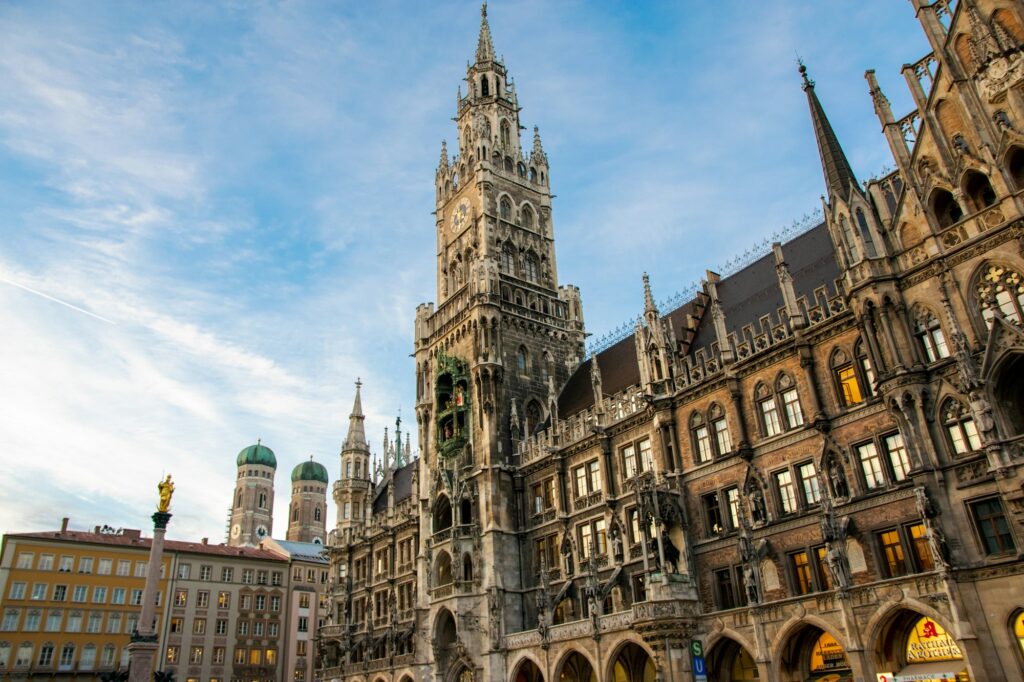
Wednesday 6 January 2027 is a public holiday in Bavaria, Baden-Württemberg, Saxony-Anhalt and all of Austria, but a working day in the rest of Germany. In the three German states, four days off (4, 5, 7 and 8 January) give you ten free days, according to the ADAC’s calculation. In Austria, our own calculation gives the same result.
Checked on against the official sources cited: texts for Bavaria, Baden-Württemberg and Austria; for Saxony-Anhalt, calendars and regional press, the law itself not read.
6 January 2027 falls on a Wednesday, in the first full week of the year, since 1 January is a Friday. The day goes by several names: Dreikönigstag in Germany, Heilige Drei Könige in Austria, Epiphany for the Catholic and Protestant churches, Three Kings’ Day in many other countries. Whether it is a public holiday, though, doesn’t follow those names. It depends on each German state’s law, on Austrian legislation and on each Swiss canton. This guide answers the three questions travellers ask: is the day off, where, and is it worth taking a few days’ leave to make a long break? Every rule cited was checked on 7 November 2026. Check them again before you travel, since the texts can change.
1. Where is 6 January 2027 a public holiday?
The table below gives the status for each territory. The Bavarian, Baden-Württemberg and Austrian lines rest on official texts. The Saxony-Anhalt line rests on calendars and regional press: the law itself has not been read. The Swiss lines rest on cantonal lists and press extracts, so check them against cantonal law before quoting them as final.
| Territory | Public holiday on 6 January 2027? | Basis or source |
|---|---|---|
| Bavaria | Yes, across the whole state | Article 1 of the Bavarian Holidays Act (BayFTG) |
| Baden-Württemberg | Yes, across the whole state | List of statutory public holidays from the state interior ministry (Innenministerium Baden-Württemberg) |
| Saxony-Anhalt | Yes, across the whole state, since 1993 | Law passed in 1992, according to regional press; the law text has not been read (Volksstimme) |
| The other 13 German states | No, working day | Ferienwiki calendar, where 6 January is only a religious feast (Ferienwiki) |
| Austria | Yes, across the whole country | Federal Act on Public Holidays of 1957, § 1 (RIS) |
| Schwyz | Yes | Official 2027 list of the canton, extract (sz.ch); Swiss 2027 calendar (Ferienwiki) |
| Ticino, Uri | Yes | Swiss 2027 calendar (Ferienwiki); press extract (Blick) |
| Part of Graubünden | Yes, depending on the municipality | Swiss 2027 calendar (Ferienwiki); press extract (Blick). The municipalities are not listed. |
| Zurich, Lucerne | Working day according to a press extract, to be confirmed under cantonal law | Press extract (Südostschweiz) |
| Other Swiss cantons | Not checked | No source we consulted covers all the cantons |
Source: Ferienwiki, Heilige Drei Könige, and the texts and calendars listed at the end of this article, checked on 7 November 2026.
Two mix-ups come up often in the sources. The first is thinking 6 January is a public holiday across Germany. It is a regional holiday, set state by state. The second is treating Austria and Switzerland as one block. In Austria the day is a holiday across the whole country; in Switzerland it depends on the canton.
2. Germany: three states take the day off, the rest work
Of Germany’s sixteen states, three make 6 January a statutory public holiday: Bavaria, Baden-Württemberg and Saxony-Anhalt. In the other thirteen, it is a working day, even though the churches observe it.
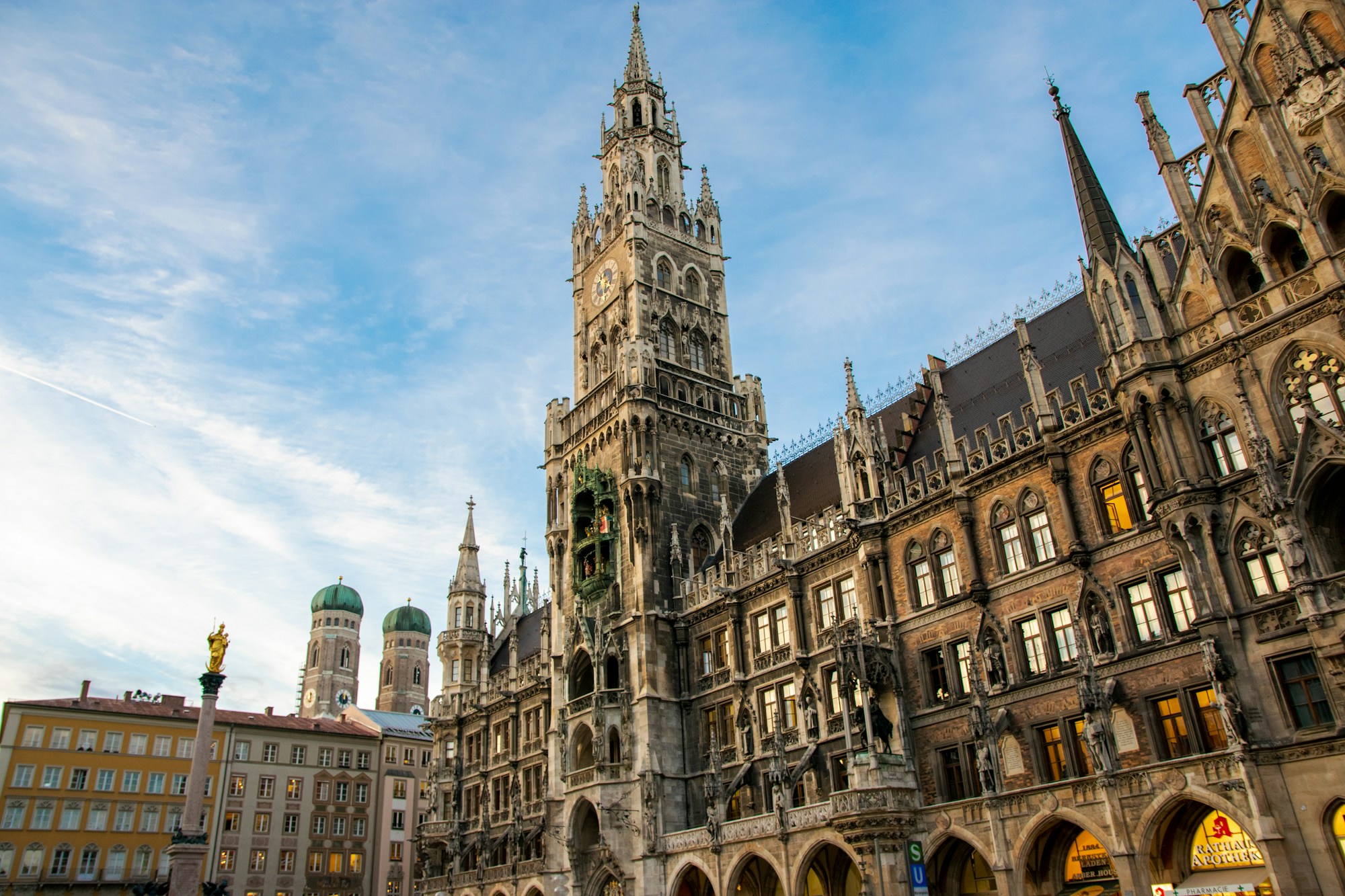
Bavaria, Baden-Württemberg and Saxony-Anhalt
In Bavaria, 6 January appears in Article 1 of the state holidays act, among the statutory public holidays of the state (BayFTG, Article 1). Baden-Württemberg’s interior ministry lists it among the statutory holidays (Innenministerium Baden-Württemberg). Saxony-Anhalt has observed it since 1993 (Volksstimme).
Key points
- Bavaria: a public holiday across the whole state, Munich included.
- Baden-Württemberg: a public holiday across the whole state, Stuttgart included.
- Saxony-Anhalt: a public holiday since 1993, after a debate in the state parliament in 1992, according to regional press.
In the other thirteen states, 6 January stays a working day. That includes Berlin, Hamburg, Hesse and Lower Saxony, according to the Ferienwiki calendar. Some websites list more states. Those lists don’t reproduce the text of the laws, so don’t cite them as sources.
3. Who gets the day off: the workplace decides
In Germany, the right to a public holiday follows the state where you work, not the state where you live or where your employer has its head office. Volksstimme makes the point in its article of 9 January 2023, and Haufe covers the same case for pay.
Two cases show the rule. Someone who lives in Stuttgart and works in Frankfurt, in Hesse, where 6 January is a working day, works that day. Someone who lives in Frankfurt and works in Stuttgart has 6 January off. The calendar of their home state doesn’t count.
On pay, an extract from Haufe, checked on 7 November 2026, says there is no compensation if you wouldn’t have worked that day anyway. Check your contract before you book leave for the bridge: this extract doesn’t replace your own situation.
4. Austria: a holiday everywhere, and the last day of the holidays
In Austria, 6 January is a public holiday across the whole country. The Federal Act on Public Holidays of 1957 lists it in § 1 under the heading « 6. Jänner (Heilige Drei Könige) » (RIS). The City of Vienna confirms Wednesday 6 January 2027 (wien.gv.at), and a 2027 calendar lists the same day in all nine Austrian states (Ferienwiki Austria 2027).
What sets Austria apart is the overlap with school holidays. According to the official calendar updated on 25 August 2026, the Christmas holidays run from Thursday 24 December 2026 to Wednesday 6 January 2027 in all states, and classes resume on Thursday 7 January. So the public holiday is also the last day of the children’s holidays. The pages we consulted don’t link these two calendars.
5. Switzerland: a cantonal holiday
In Switzerland, the cantons set their own public holidays. The cantons confirmed by our sources are Schwyz, Ticino, Uri and part of Graubünden. In Schwyz, 6 January 2027 is on the canton’s official 2027 list, in an extract (Kanton Schwyz). In Ticino, Uri and part of Graubünden, it appears in the Swiss 2027 calendar from Ferienwiki and in an article from the daily Blick. The same article says the holiday applies only in some parts of Graubünden. The municipalities concerned are not listed here.
Zurich and Lucerne appear as working days in a press extract from the Südostschweiz. That point needs checking against cantonal law before we treat it as a rule. The other cantons have not been checked.
The Dreikönigskuchen, a yeast cake with a figurine hidden inside, is still very much part of the tradition, especially in German-speaking Switzerland. Whoever finds the figurine becomes « king » (Blick). Sources disagree on where the cake comes from. We don’t settle that here.
6. End of the Christmas holidays and return to school
The end of the school holidays matters as much as the public holiday when you plan a trip. The table gives the last day of holidays and the return date for the three German states concerned and for Austria. The return date in Bavaria and Baden-Württemberg is a calculation from the last day of holidays.
| Territory | Last day of holidays | Return to school |
|---|---|---|
| Bavaria | Friday 8 January 2027 | Monday 11 January 2027 (calculated) |
| Baden-Württemberg | Saturday 9 January 2027 | Monday 11 January 2027 (calculated) |
| Saxony-Anhalt | Saturday 2 January 2027 | Monday 4 January 2027 (calculated) |
| Austria, all states | Wednesday 6 January 2027 | Thursday 7 January 2027 |
Source: KMK, Ferien im Schuljahr 2026/2027 (status 9 October 2025) for Germany, and oesterreich.gv.at, Ferienkalender 2026/2027 (updated 25 August 2026) for Austria, checked on 7 November 2026.
Some aggregated calendars differ by a day on when the holidays begin, for example for Saxony-Anhalt. We go with the official calendars.
7. The bridge: four days off for ten free days
The first week of 2027 is easy to read. Friday 1 January is a public holiday. The weekend covers 2 and 3 January. Monday 4 and Tuesday 5 are working days, Wednesday 6 is a public holiday in the states concerned and in Austria, Thursday 7 and Friday 8 are working days, and the weekend covers 9 and 10 January.
In the three German states where 6 January is a holiday, and in Austria, taking four days off (Monday 4, Tuesday 5, Thursday 7 and Friday 8 January) gives you ten free days, from Friday 1 to Sunday 10 January. For the three German states, that calculation comes from the ADAC, published on 21 August 2026 (ADAC, Feiertage und Brückentage 2027). For Austria, the same pattern is our own calculation, which the ADAC does not publish. The table below lists it day by day.
| Date | Day | Take leave? | Result |
|---|---|---|---|
| 1 January | Friday | No | Public holiday (New Year’s Day) |
| 2 and 3 January | Saturday and Sunday | No | Weekend |
| 4 January | Monday | Yes | Time off |
| 5 January | Tuesday | Yes | Time off |
| 6 January | Wednesday | No | Public holiday |
| 7 January | Thursday | Yes | Time off |
| 8 January | Friday | Yes | Time off |
| 9 and 10 January | Saturday and Sunday | No | Weekend |
Source: ADAC, Feiertage und Brückentage 2027 (21 August 2026) for the total; day-by-day calculation, checked on 7 November 2026.
In the other thirteen states, where 6 January is a working day, the maths changes. Taking 4 and 5 January off gives you five free days, from 1 to 5 January, but there is no ten-day block, since Wednesday 6 is a working day.
Whether this counts as a « bridge » is debated. Kalenderpedia argues that 6 January, falling midweek, doesn’t work as a bridge day. The ADAC calculation shows the real driver is New Year’s: because 1 January is a Friday, the block of time off starts on the 1st and runs to the 10th. What checks out is the count: four days of leave, ten days off.
8. Traditions: Epiphany, Sternsinger and the king cake
6 January marks Epiphany, which in Greek means the manifestation of Christ to the non-Jews, shown through the adoration of the Magi (Matthew 2:1-12). The Catholic and Protestant churches celebrate it under this name (German Wikipedia, Dreikönigstag). The names of the Magi, Caspar, Melchior and Balthasar, don’t appear in the Gospel. They come from a later tradition (Vatican News).
The Sternsinger, children dressed as the Magi, go from house to house, sing and chalk the initials C+M+B on the doors. They stand for Christus mansionem benedicat, « May Christ bless this house », according to one reading. Another reading sees the first names of the Magi (German Wikipedia).
Elsewhere in Europe, 6 January is lived differently. In Italy, La Befana is marked the same day, and our Befana 2027 guide covers the places and traditions. In Spain, the Three Kings Parade in Barcelona has its own article. We don’t repeat those pieces here.
9. What other guides don’t tell you
The points below don’t appear in the sections above. Each one links to a source checked on 7 November 2026.
- The number of public holidays depends on the source. Bavarian law counts twelve public holidays across the whole state. A school calendar lists thirteen by including regional feasts, and the Baden-Württemberg ministry gives twelve. BayFTG ; Schulferienplaner, Brückentage Bayern 2027 ; Innenministerium Baden-Württemberg.
- One end-of-holiday date is wrong in Bavaria. A muenchen.de page (extract) gives 10 January, which falls on a Sunday in 2027. The KMK calendar (status 9 October 2025) gives Friday 8 January. KMK.
10. Practical info for the day itself
Our sources don’t confirm opening hours for shops, banks and public offices on 6 January 2027. In the three states where the day is a holiday, check the hours of the business or municipality on the day itself.
For the 2025/26 season, the ADAC reported heavy traffic on Tuesday 6 January 2026 in Bavaria and Baden-Württemberg, then a clear improvement. It named hotspots on the way to the ski resorts: Garmisch-Partenkirchen on 1 January, Innsbruck on 4 January and Bischofshofen on 6 January. No 2027 forecast had been published at that date: these are trends, not a timetable (auto motor und sport, ADAC extract, checked on 7 November 2026).
A public holiday is confirmed by the law of the state or canton in force. Press extracts and travel calendars are useful pointers, but their lists sometimes differ: the official texts are the reference.
Frequently asked questions
What day is Dreikönig in 2027?
Dreikönig falls on Wednesday 6 January 2027. Since 1 January 2027 is a Friday, a block of time off at the start of the year is possible. The calendars checked on 7 November 2026, including Ferienwiki, give the same date.
Is 6 January 2027 a public holiday in Germany?
Yes, but only in three states: Bavaria, Baden-Württemberg and Saxony-Anhalt. In the other thirteen, it is a working day, even though the churches observe it. For an employee, the state where you work counts, not the state where you live. The Bavarian text is in Article 1 of the state holidays act (BayFTG).
Is it a public holiday in Austria?
Yes, across the whole country. The Federal Act on Public Holidays of 1957 lists 6 January as Heilige Drei Könige, in § 1. Vienna confirms Wednesday 6 January 2027. The day also marks the end of the Christmas holidays in all states, with classes resuming on Thursday 7 January, according to the official calendar updated on 25 August 2026.
And in Switzerland?
It depends on the canton. The cantons confirmed by our sources are Schwyz, Ticino, Uri and part of Graubünden. Zurich and Lucerne appear as working days in a press extract, to be checked against cantonal law. The other cantons have not been checked.
Do you need to take leave to make the bridge?
In the three German states, taking four days off (4, 5, 7 and 8 January) gives you ten free days, from 1 to 10 January 2027, according to the ADAC calculation of 21 August 2026. In Austria, the same pattern is our own calculation. In the other states, two days get you five free days, from 1 to 5 January. Kalenderpedia disputes that this is a bridge, but the number of days off checks out.
Are shops closed on 6 January 2027?
Our sources don’t confirm opening hours for shops, banks and public offices on 6 January 2027. In the three states where the day is a holiday (Bavaria, Baden-Württemberg, Saxony-Anhalt), check with the business or municipality. Elsewhere in Germany, it is a working day.
What do the letters C+M+B chalked on the doors mean?
The Sternsinger chalk these initials on the doors of the houses they visit. They stand for Christus mansionem benedicat, « May Christ bless this house », according to one reading. Another reading sees the first names of the Magi, Caspar, Melchior and Balthasar. Both interpretations appear in German Wikipedia.
Dreikönig, Epiphany or Heilige Drei Könige: is it the same day?
Yes, it is the same day, 6 January. Epiphany, Erscheinung des Herrn and Heilige Drei Könige all name the same feast, which recalls the adoration of the Magi. The legal name varies by state: the Bavarian law (BayFTG) says « Heilige Drei Könige (Epiphanias) », and the Baden-Württemberg interior ministry says « Erscheinungsfest (6. Januar) ». The day stays the same.
Sources
- Bavarian Holidays Act (Bayerisches Feiertagsgesetz), Article 1 : list of statutory public holidays in Bavaria, including 6 January.
- Innenministerium Baden-Württemberg, Feiertage : statutory public holidays of the state, including 6 January.
- Volksstimme, Heilige Drei Könige: über Feiertag entscheidet Arbeitsort : the workplace determines the public holiday (updated 9 January 2023).
- Volksstimme, Warum wir am 6. Januar frei haben : origin of the Saxony-Anhalt holiday, regional press (law text not read).
- Stuttgarter Zeitung, Heilige Drei Könige: wo ist der 6. Januar ein Feiertag : states concerned, extract.
- Haufe, Entgeltfortzahlung für Feiertage bei unterschiedlichem Arbeitsort : pay rules by place of work, extract.
- Ferienwiki, Heilige Drei Könige : states concerned and 2027 date (checked 7 November 2026).
- Kalenderpedia, Heilige Drei Könige : opposing view on whether there is a bridge.
- ADAC, Feiertage und Brückentage 2027 : 4 days off for 10 free days, 1 to 10 January 2027 (published 21 August 2026).
- RIS, Feiertagsruhegesetz 1957, § 1 : 6 January, Heilige Drei Könige, legal holiday in Austria.
- City of Vienna, Amtshelfer Feiertage : confirms Wednesday 6 January 2027.
- Ferienwiki, Public holidays Austria 2027 : nine Austrian states concerned.
- oesterreich.gv.at, school holidays 2026/2027 : Christmas holidays from 24 December 2026 to 6 January 2027 (updated 25 August 2026).
- Ferienwiki, Public holidays Switzerland 2027 : 6 January observed in Schwyz, Ticino, Uri and part of Graubünden.
- Kanton Schwyz, Feiertage 2027 : official list of the canton, extract.
- Blick, Heute ist Dreikönigstag : public holiday in Ticino, Schwyz, Uri and part of Graubünden, extract.
- Südostschweiz, 6. Januar: Bräuche am Dreikönigstag : Zurich and Lucerne as working days, press extract.
- Blick, Dreikönigskuchen : tradition of the king cake in Switzerland, extract.
- KMK, Ferien im Schuljahr 2026/2027 : Christmas holiday dates in Bavaria, Baden-Württemberg and Saxony-Anhalt (status 9 October 2025).
- Schulferienplaner, Brückentage Bayern 2027 : 13 public holidays in Bavaria, including regional feasts.
- German Wikipedia, Dreikönigstag : origin of the feast, meaning of Epiphany, C+M+B initials.
- Sonntagsblatt, Heilige Drei Könige oder Epiphanias : Catholic and Protestant celebration, extract.
- Vatican News, Von Magiern und Sternendeutern : the names of the Magi come from a tradition later than the Gospel, extract.
Checked on 7 November 2026. Check the official texts again before you travel.

Plan your trip with Pixidia
Pixidia learns how you travel and helps you build a trip that truly fits you and everyone coming along.
Open the planner