
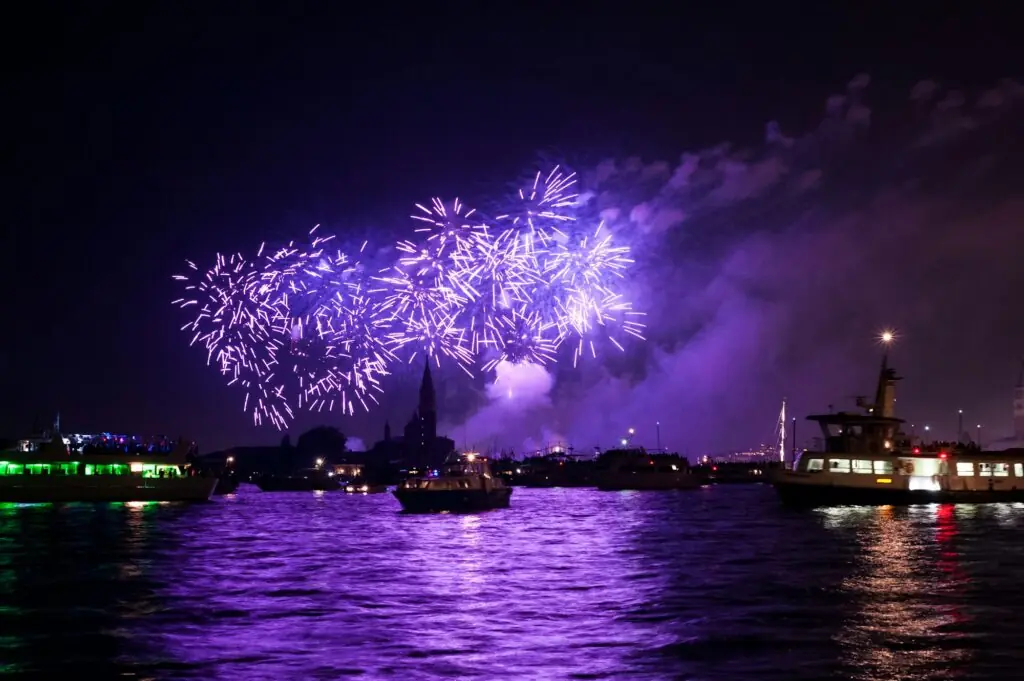
The Festa del Redentore 2026 takes place on 18 and 19 July in Venice. Fireworks are launched from 5 barges in St Mark’s Basin on Saturday at 11:30pm, lasting 40 to 45 minutes, with 6,500 pyrotechnic effects. A 334-metre votive bridge links Dorsoduro to the island of Giudecca from 7pm. Public spaces are free to enter; day visitors without Venice accommodation pay a €5 access fee (pre-booked) or €10 on the day. Book your Venice accommodation 3 to 6 months ahead for this exceptional weekend.
Every third weekend of July, Venice lights its lanterns and pushes its boats out into St Mark’s Basin to celebrate the Redentore. Born in 1577 from a solemn vow by the Doge to thank God for sparing the city from the Great Plague, the Festa del Redentore is today one of Italy’s most emotionally charged popular celebrations — an ephemeral 334-metre votive bridge, 6,500 fireworks lighting up the lagoon at 11:30pm, thousands of boats decorated with flowers and lanterns, and street food rooted in Venice’s fishing traditions. In 2026, the festivities fall on Saturday 18 and Sunday 19 July.
1. Programme 2026: Saturday 18 & Sunday 19 July
The Redentore weekend follows a precise programme, handed down and refined over four and a half centuries. Here are the confirmed key moments for 2026, according to Venezia Unica and the Comune di Venezia:
| Time | Event |
|---|---|
| Saturday 18 July 2026 | |
| 7pm–8pm | Official opening of the votive bridge (Zattere → Giudecca) |
| 7:30pm | First mass at the Chiesa del Redentore |
| All evening | Boat parties, orchestras, traditional meals in St Mark’s Basin |
| 11:30pm | Fireworks begin (duration: 40–45 minutes, ~6,500 effects) |
| 12:30am | Second mass at the Chiesa del Redentore |
| After midnight | Traditional migration to Lido for beach parties |
| Sunday 19 July 2026 | |
| 8:00am | Third morning mass at the Chiesa del Redentore |
| 4:00pm | Regata del Redentore: two-oar pupparini race (youth) |
| 4:45pm | Two-oar pupparini race (men) |
| 5:30pm | Two-oar gondola race (men) |
| 7:00pm | Solemn votive mass at the Chiesa del Redentore |
2. The Notte Famosissima: 6,500 fireworks over the lagoon
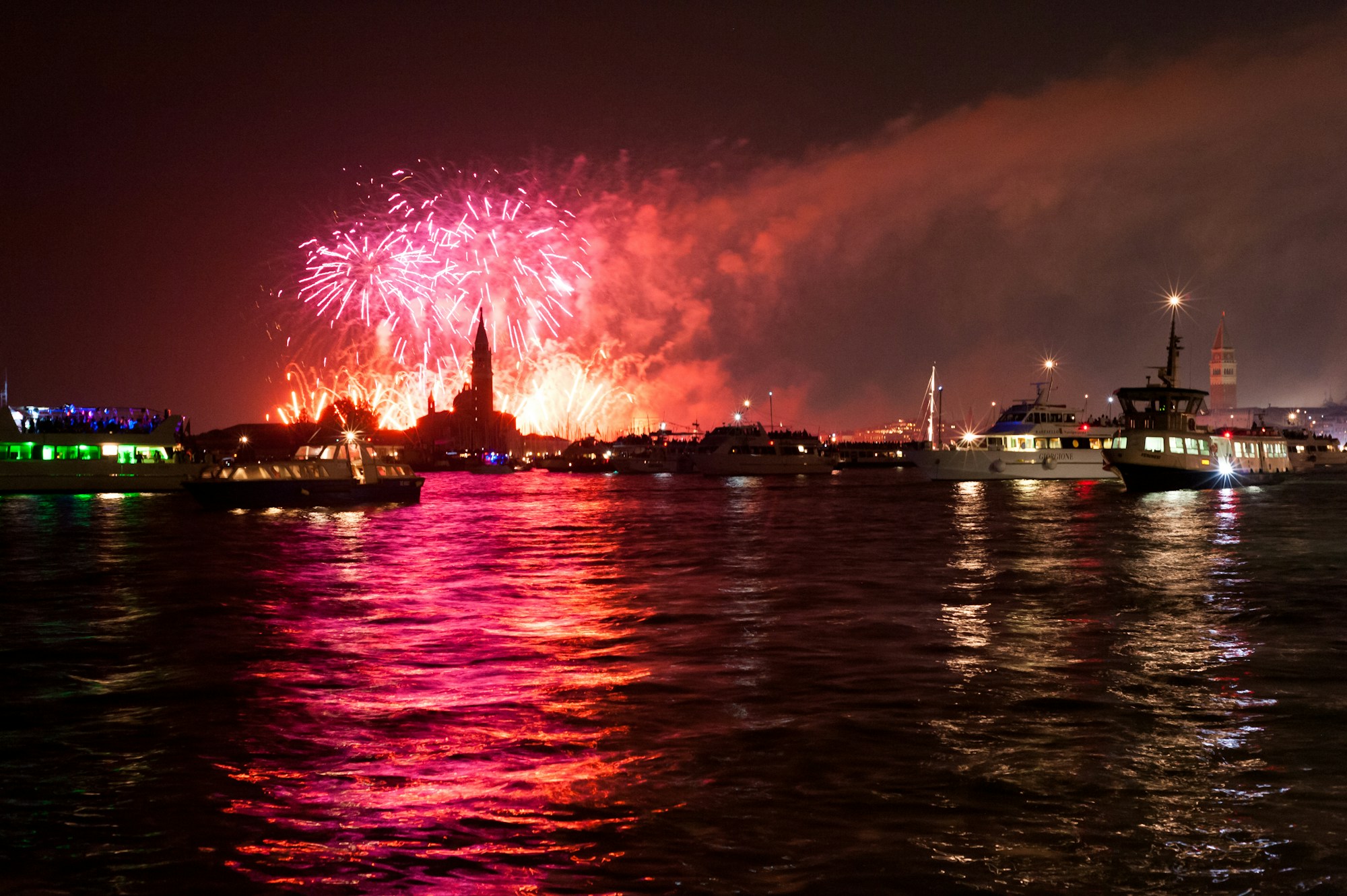
The Very Famous Night — as Venetians call it
Venetians call this night the « Notte Famosissima » — the Very Famous Night. That name says it all about the emotional intensity locals attach to it. According to Vivovenetia, the pyrotechnic display is designed for a single visual effect: the reflections of the explosions on the still surface of the lagoon double every light and simultaneously illuminate the facades of the historic palazzi.
The technical setup is considerable — around 5 barges for the high-altitude effects and 25 pontoons for lower, trailing effects, positioned in St Mark’s Basin near San Giorgio Maggiore island. At 11:25pm, the city’s lights gradually dim — an unofficial signal that the show is about to begin, plunging the lagoon into near-silence. The double reflection on the water is the display’s signature: there’s nothing quite like it anywhere else in Italy.
Best free viewpoints
- Riva degli Schiavoni: up to 28,000 spectators, direct panoramic view of the basin — arrive by 2pm
- Sant’Elena (eastern tip): a residential district little-known to tourists, unobstructed view, far less crowded than Zattere
- Giudecca quaysides, canal-side: local atmosphere, direct view of the Basin, usually less packed than the opposite bank
- Dinner cruises with panoramic deck: from €159 to €250/person according to Vivovenetia — book months ahead
3. The votive bridge: 334 metres of floating memory
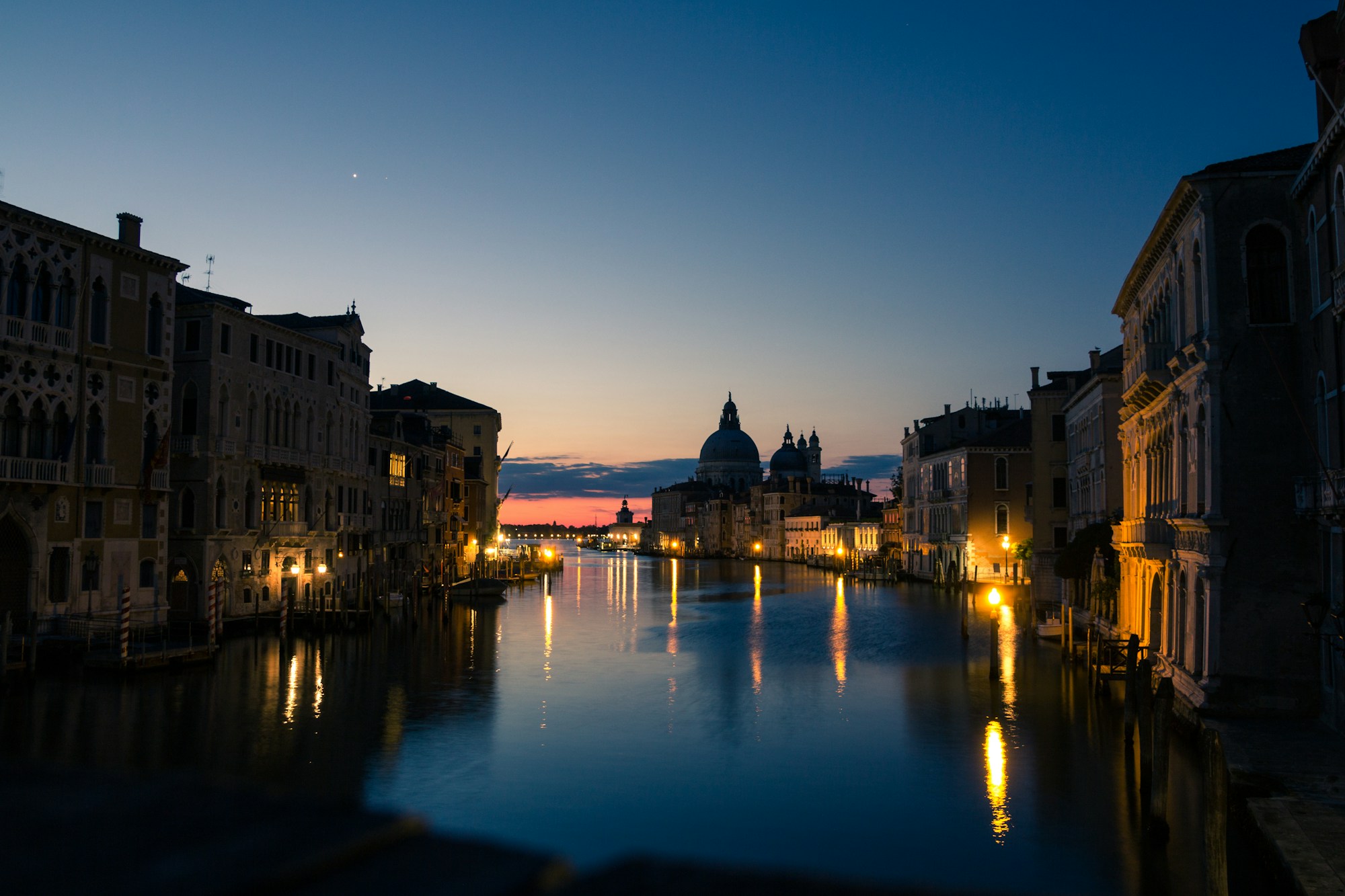
A symbolic crossing of the lagoon
The original 1577 bridge was a row of military galleys linked by wooden planks, stretching 620 metres. Doge Sebastiano Venier led the first procession across the Giudecca Canal on 21 July 1577 — the day officially declared free of contagion. Over the centuries, galleys gave way to peote, then to Bailey bridges from the 2nd Engineer Regiment (until 2000), and today to floating metal platforms covered with wooden planks, according to Vivovenetia. The structure is assembled in a few days and dismantled as soon as the festivities are over.
Crossing this ephemeral bridge symbolises the passage « from darkness to light, from illness to recovery. » Thousands of Venetians walk it every year as a secular pilgrimage. The crossing can take anywhere from 5 to 45 minutes depending on the time: before 8pm or after midnight it flows freely; between 7pm and 10pm the crowd is dense — but the atmosphere stays festive, carried by the scent of Venetian cooking and the sound of orchestras on boats moored in the canal.
Highlights
- Sweeping views of the lantern- and flower-decorated boats in the Giudecca Canal
- Direct access to the Chiesa del Redentore on Giudecca — for the 7:30pm mass or a cultural visit
- Sunday morning the bridge remains open in a very calm atmosphere — ideal for a crowd-free crossing before dismantling begins
4. The Chiesa del Redentore and the Great Plague of 1575–1577
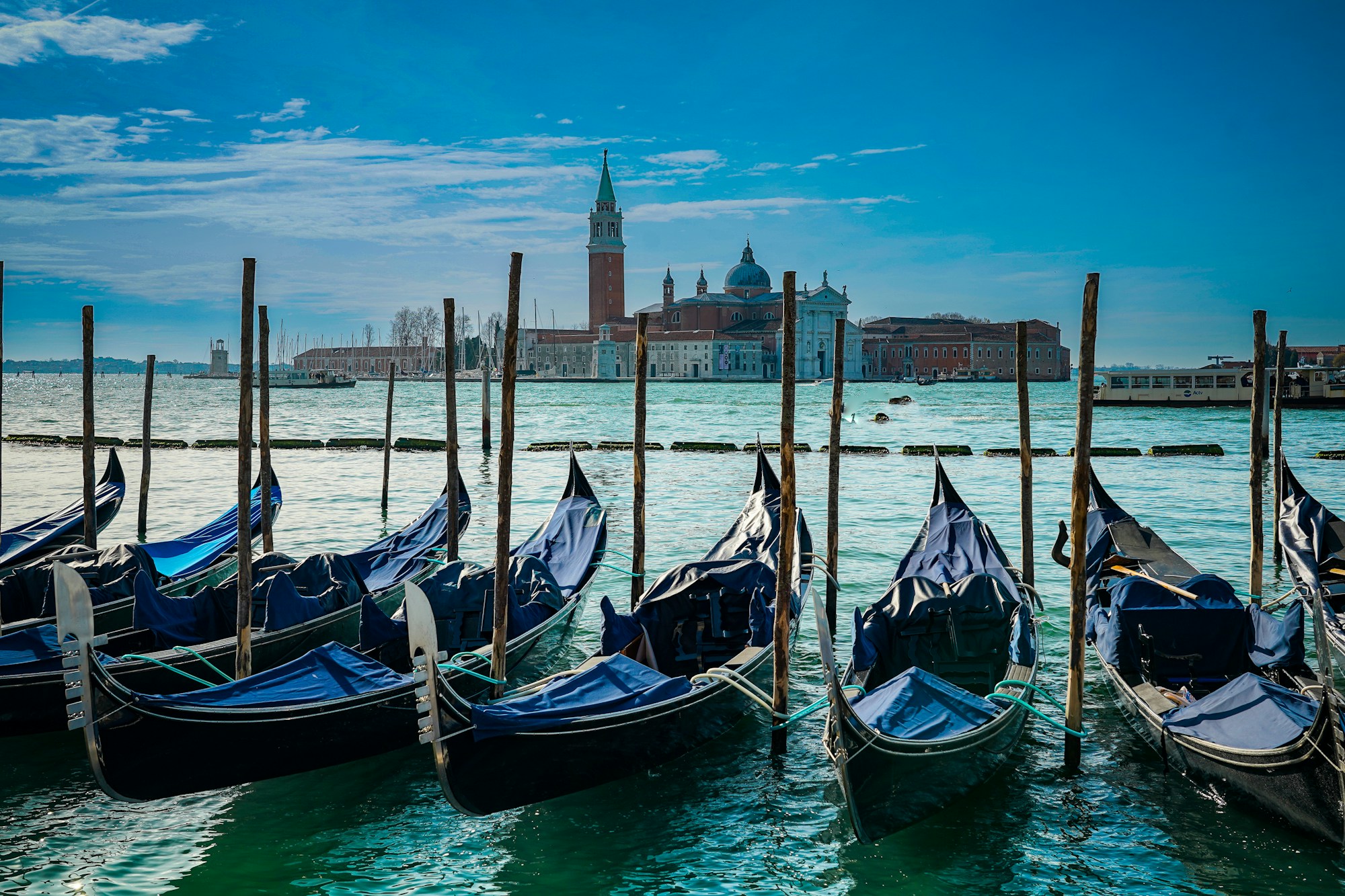
From the Doge’s vow to Palladio’s masterpiece
Between 1575 and 1577, the Great Plague devastated Venice, killing between 50,000 and 60,000 Venetians — around a third of the population, including the painter Titian (Tiziano Vecellio), who died in August 1576. In September 1576, with the epidemic at its peak, the Senate passed a solemn decree: if God spared the city, a monumental church would be built on the island of Giudecca in honour of Christ the Redeemer. Doge Alvise I Mocenigo made the vow on their behalf. According to e-venise.com, the city was declared free of contagion on 21 July 1577.
The foundation stone was laid on 3 May 1577 by architect Andrea Palladio (1508–1580), then Proto of the Serenissima — chief architect of the Venetian Republic. His facade draws on the Pantheon in Rome: a central triangular pediment dominating a wider lower pediment, set atop 15 steps designed so that « the ascent is gradual, so that the climb inspires devotion. » Consecrated on 27 September 1592, the church houses works by Tintoretto, Paolo Veronese, Jacopo Bassano and Palma il Giovane. It forms part of the « Venice and its Lagoon » UNESCO World Heritage Site since 1987.
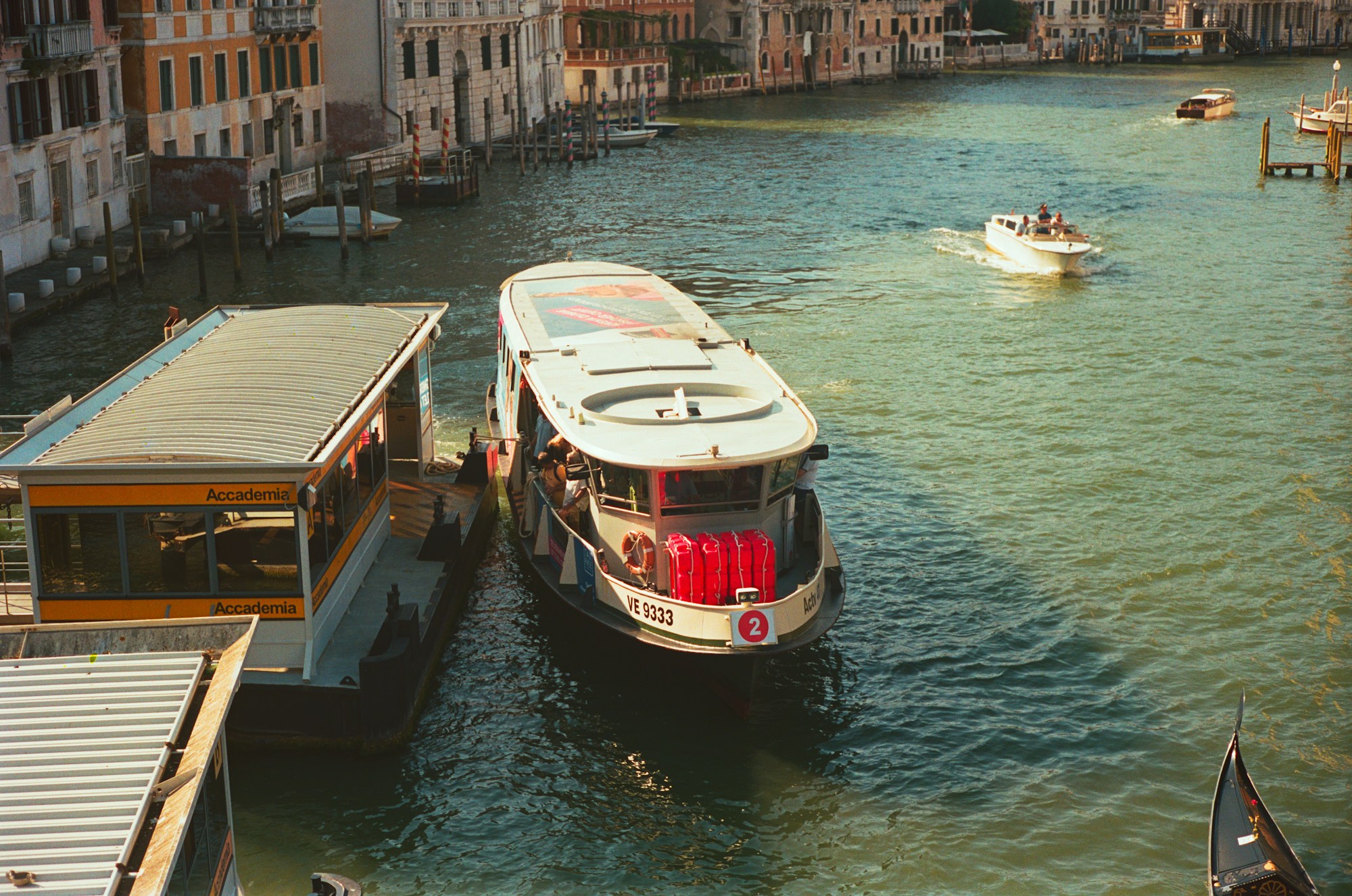
The church belongs to the Chorus network (Association for the Churches of the Patriarchate of Venice). It’s accessible by vaporetto Line 2 from St Mark’s Basin in 5 minutes. Giudecca — the long island south of the main sestieri — can only be reached by boat, which makes crossing the votive bridge all the more symbolic.
Highlights
- Palladian neoclassical facade visible from across the lagoon — a landmark of Italian Renaissance architecture
- Artistic treasures: workshops of Tintoretto, Veronese and Bassano; sacristy with Franciscan wax heads (1710)
- Chorus Pass at €12: access to 16 churches in the Patriarchate of Venice — excellent value for a cultural weekend
5. A night on the water — Redentore food traditions
The real Redentore experience: living the festa on the water
The real Redentore experience is lived on the water. From sunset, around 3,500 vessels moor or cruise slowly through St Mark’s Basin. Each boat is decorated with paper lanterns, flowers and coloured garlands. On deck, families and groups of friends lay proper tables, bring out the cutlery, pop the Prosecco DOC Valdobbiadene and start eating hours before the fireworks. According to Vivovenetia, dinner cruises range from €159 to €3,400/person depending on the package.
The Redentore’s traditional menu is as fixed as a folk ritual: sarde in saor (fried sardines marinated in white wine vinegar with raisins and pine nuts — prepare 24–48 hours ahead), bigoli in salsa (thick Venetian pasta with anchovies and slow-cooked onions), pasta e fagioli, and angouria (watermelon) for dessert. The bacari and osterie in Dorsoduro — notably La Palanca on Giudecca and Cantine del Vino già Schiavi near the Squero di San Trovaso — are booked up weeks in advance for the evening of 18 July.
Highlights
- Aperitivo spritz or ombra di vino at Zattere from 6pm, then settle on the quaysides with a home-made picnic
- Half a day on the lagoon islands on Friday or Saturday morning: Murano (glassblowing) and Burano (lacemaking), 45 min by vaporetto
- After the fireworks, Venice’s younger crowd traditionally heads to Lido for beach parties through the night
6. Getting there & budget: everything for 18–19 July
Venice tourist access fee 2026
Venice City Hall has applied a Tourist Access Contribution (CDA) for day visitors since 2024. 18 and 19 July 2026 are chargeable days. For full details, our article on the Venice tourist tax 2026 covers the procedures and exemptions.
- €5/person (over 14s) if pre-booked before the day before on cda.ve.it
- €10 if paid on the day at check points
- Checks run from 8:30am to 4pm only; after 4pm, no more checks at the city entrances
- Automatic exemption if you’re staying overnight in Venice (online registration required to get your QR code)
Accommodation: book 3 to 6 months ahead
The Redentore weekend is one of the most sought-after nights of the year in Venice. To sleep in central Venice and be exempt from the access fee: the Hilton Molino Stucky Venice (Giudecca, from €240/night) has a panoramic rooftop terrace with a direct view over St Mark’s Basin — ideal for the fireworks. The Palazzo Experimental (Dorsoduro) offers a private pontoon on the Giudecca Canal. For a budget option on the mainland, hotels in Mestre start from around €70–100/night, with a 10-minute train into Venice — our guide Mestre or central Venice can help you choose based on your travel style.
Getting to Venice from the UK: train, flights & budget
- London to Venice by train: Eurostar London St Pancras → Paris (~2h20, from ~£35) then Frecciarossa Paris–Milan (~7h, from €40) + Milan–Venice (2h10, from €6) — a scenic option for those who enjoy the journey
- Direct flights from London: Heathrow (British Airways), Gatwick (easyJet) or Stansted (Ryanair) to Venice Marco Polo Airport (VCE) — ~2h15, from £49 return (expect 30–50% higher fares in July)
- ATVO bus from the airport: 20 min, €10 to Piazzale Roma; Venice Santa Lucia station is right on the Grand Canal
Practical info: eSIM & travel insurance for Italy
4G/5G connectivity in Italy — no physical SIM needed. Activate before you leave, ready to use the moment you land at Venice Marco Polo or arrive at Santa Lucia station.
From €5 / 1 GBNomad Insurance: global coverage from $56/4 weeks. 10% off via our link. Covers medical, cancellation and repatriation — perfect for a Venice trip.
From $56 / 4 weeksFrequently asked questions about the Festa del Redentore 2026
When exactly is the Festa del Redentore 2026?
The Festa del Redentore 2026 takes place on Saturday 18 July (fireworks at 11:30pm, votive bridge open from 7pm) and Sunday 19 July 2026 (regattas from 4pm, solemn mass at 7pm). The date is fixed: third Sunday of July = 19 July, the preceding Saturday = 18 July. Confirmed by Venezia Unica and six independent sources.
Is the Festa del Redentore only for practising Catholics?
Not at all. The festival is both religious and secular. The crossing of the votive bridge and the masses at the Chiesa del Redentore are the devotional dimension — but the fireworks, boat dinners, regattas and the festive atmosphere on the quaysides are completely open to everyone, regardless of faith or nationality. It’s one of the rare Venetian events where locals and visitors genuinely share the same celebratory space.
Do I need to pay the Venice tourist tax to attend the Redentore?
If you’re staying overnight in Venice (hotel, Airbnb, B&B), you’re exempt from the Tourist Access Contribution — but must pre-register on cda.ve.it to get your QR code. If you’re visiting for the day without Venice accommodation, the €5 pre-booked fee (or €10 on the day) applies on both 18 and 19 July, from 8:30am to 4pm. After 4pm, checks are lifted. Under-14s are exempt.
How do I get the best spots for the fireworks without a reservation?
Arrive on the quaysides between 2pm and 4pm and set up with a picnic. The best free public viewpoints are the Riva degli Schiavoni (panoramic direct view, up to 28,000 spectators), the Fondamenta delle Zattere (view of Giudecca), and above all Sant’Elena (Venice’s eastern tip) — little-known to tourists, with a perfectly unobstructed view of the basin. Waterfront restaurants with a direct lagoon view are fully booked weeks in advance.
How long does it take to cross the votive bridge?
Between 5 and 45 minutes, depending on the time. The crowd is densest between 7pm and 10pm. Before 8pm or after midnight the crossing is much smoother. The bridge links the Fondamenta delle Zattere (Dorsoduro district) to Giudecca island across 334 metres of floating metal platforms. On Sunday morning it’s still open in a very calm atmosphere — ideal for a peaceful crossing to the church.
Does the vaporetto run all night during the Redentore?
Yes. Reinforced timetables and special night lines (Line N) operate during the festivities. Line 2 (Grand Canal + Giudecca) runs all night. Route changes near the votive bridge are possible. Check the AVM Venezia app (the official ACTV operator app) for real-time schedules on the evening of 18 July 2026.
Can I hire a boat to watch the Redentore fireworks?
Yes — boat rental companies with a skipper operate for the Redentore night, but you must book several months ahead: it’s the single busiest night of the year for lagoon cruises. Dinner cruises with a panoramic deck (from €159/person according to Vivovenetia) are a more accessible option. The official mooring zones in St Mark’s Basin are limited and allocated with priority to Venetian residents.
What happens if the weather is bad on fireworks night?
July in Venice is warm (25–30°C) with short evening thunderstorms possible. The fireworks are only cancelled in the event of serious weather risk (strong winds), at the discretion of Venice City Hall. If cancelled, they’re generally rescheduled for Sunday evening. Follow official communications from Venice City Hall and redentorevenezia.it on the day before and the day itself. The risk of acqua alta in July is near zero — that’s an autumn-winter phenomenon.
Sources
- Venezia Unica, Festa del Redentore 2026: official programme
- Comune di Venezia, Festa del Redentore: history and logistics
- Vivovenetia, Redentore Venice 2026: dinner cruises and traditions
- ITALYscapes, Festa del Redentore 2026 — Complete Guide
- VeniceWelcome, Feast of the Redeemer Venice
- Feast of the Redeemer, Wikipedia EN
- e-venise.com, Feast of the Redeemer: origins and traditions
- CDA.ve.it, Venice Tourist Access Contribution 2026
- Visit Venice Italy, Festa del Redentore 2026
- La Biennale di Venezia, Venice Biennale 2026: parallel programme July–August
- Palazzo Experimental, Festa del Redentore 2026 guide
Research conducted on 27 June 2026 from 67 independent sources.