
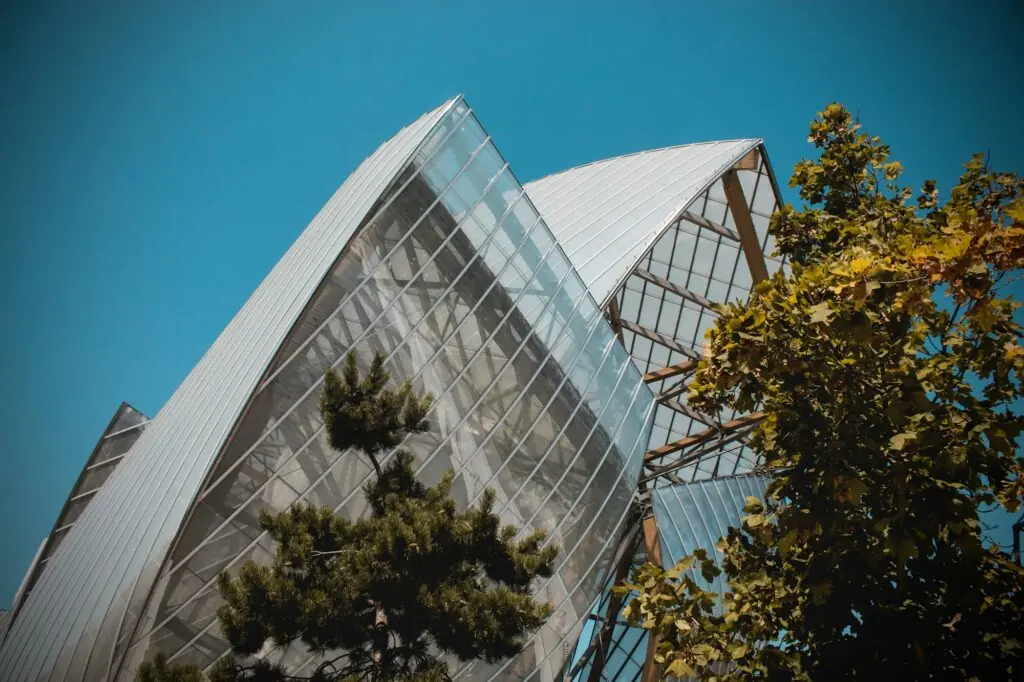
The Fondation Louis Vuitton reopens on 9 October 2026 with « Gustave Fayet, Collector – Designer », a 767-work exhibition that brings Van Gogh’s Self-Portrait with Bandaged Ear and Pipe back to Paris. The painting hasn’t been shown in France since 1937 and hadn’t been loaned to a temporary exhibition since 1990. Full-price entry is €18 and the show runs until 8 March 2027. The Fondation stays closed until this reopening — book your slot as soon as sales open, since the two previous exhibitions in the series each topped a million visitors.
A painting France hasn’t seen since 1937 is about to reappear in the Bois de Boulogne. On 9 October 2026, the Fondation Louis Vuitton dedicates its biggest exhibition to date to Gustave Fayet, a little-known collector who was nonetheless one of the very first buyers of Van Gogh, Gauguin and Odilon Redon. Here’s what you need to know to plan your visit — from the exceptional artworks on show to the logistics of a Paris trip built to dodge the crowds.
The Gustave Fayet exhibition: what awaits you at the Fondation Louis Vuitton
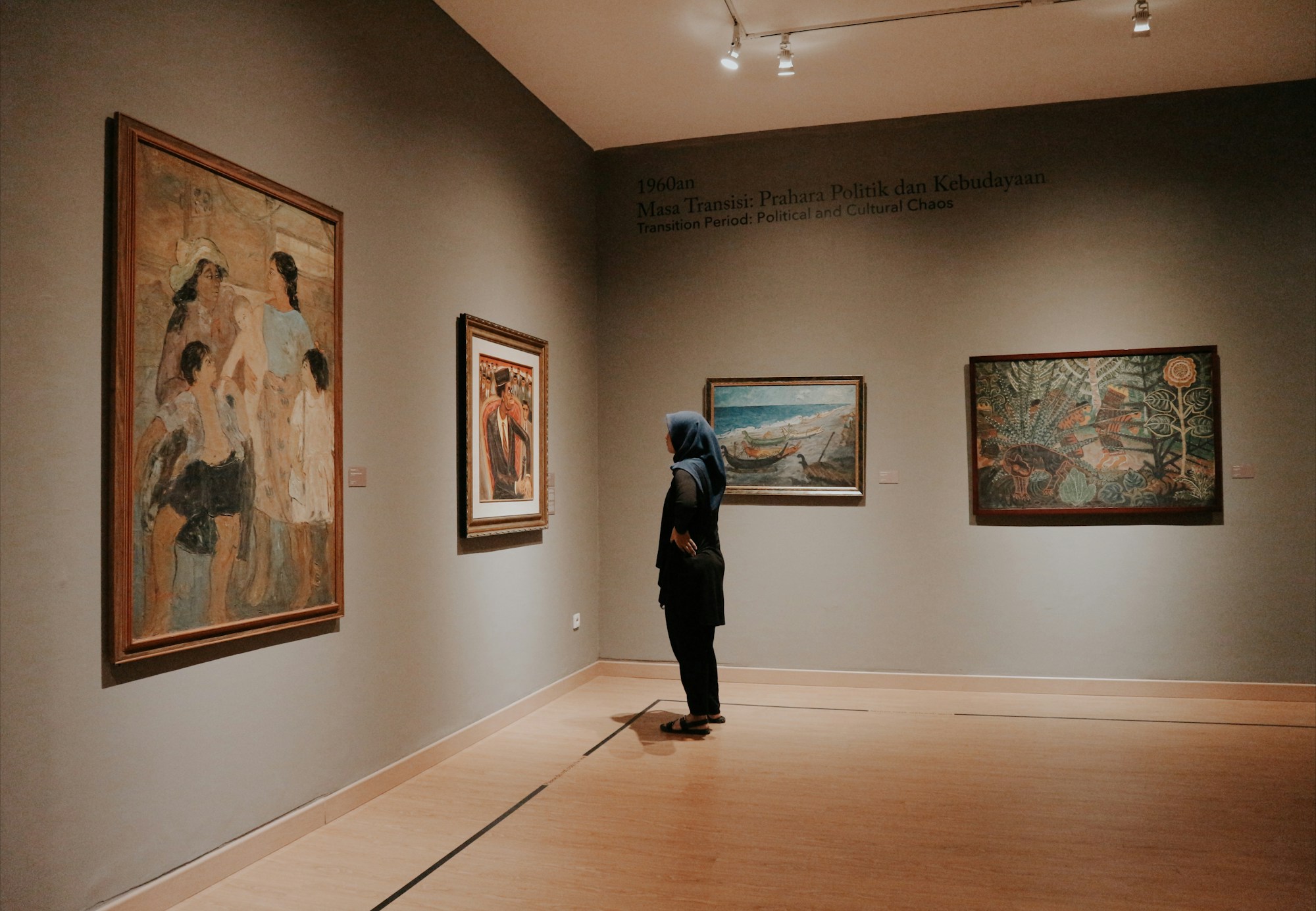
Titled « Gustave Fayet, Collector – Designer. Icons of Modern Art », the exhibition takes over every level of the Frank Gehry-designed building with 767 works and documents spread across 28 sections, according to the Fondation’s official press release. It’s the third show in the « Icons of Modern Art » series, following the Shchukin (2016-2017) and Morozov (2021-2022) collections, each of which drew more than a million visitors.
The exhibition unfolds in two parts: over 250 works assembled by Fayet himself (including 10 paintings by Van Gogh, 78 by Gauguin and 88 by Odilon Redon, brought together for the first time in a century), plus 325 of Fayet’s own creations as a painter, ceramicist and textile designer, most of them never shown to the public before.
What your ticket covers
- Access to the entire exhibition and the adjoining Jardin d’Acclimatation
- The rooftop terraces, with views over the Bois de Boulogne and a glimpse of the Eiffel Tower
- Reduced rates of €10 (under 26) and €5 (under 18, jobseekers); free for under-3s
The Self-Portrait with Bandaged Ear and Pipe: a painting back after 1937
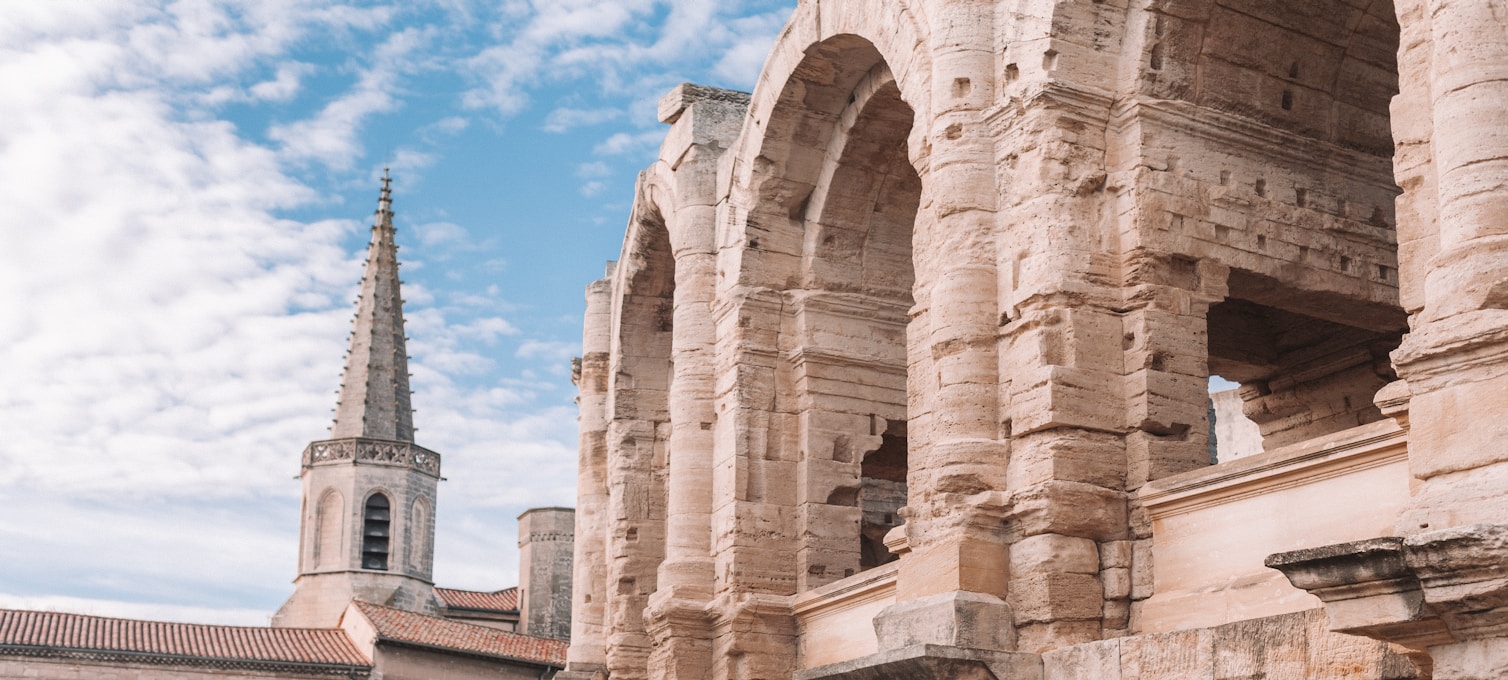
Vincent van Gogh painted this self-portrait in January 1889 in Arles, just after severing part of his left ear on 23 December 1888 following a violent argument with Paul Gauguin. Two very similar versions exist: one held at the Courtauld Gallery in London since 1928, and the one on show in Paris, recognisable by the pipe the painter is holding, according to the Wikipedia entries for both versions. Don’t mix them up — only the one at the Fondation Louis Vuitton is part of this exhibition.
The painting’s ownership history is straightforward: Gustave Fayet bought it in 1902 directly from the dealer Émile Schuffenecker. It stayed within the Fayet family before Greek shipping magnate Stavros Niarchos acquired it in the early 1970s. Since Niarchos’s death in 1996, the painting has belonged to his heirs, in a private collection. It hasn’t left that collection for a temporary exhibition since 1990.
Thirty-six years off public walls
- Last seen in France: 1937
- Last loaned for a temporary exhibition, at the Kunsthaus Zürich: 1990
- A single ticket gives access to the painting, part of the « collection » section of the route
Who was Gustave Fayet, the collector Paris is rediscovering?
Born in Béziers in 1865 and died in Carcassonne in 1925, Gustave Fayet owed his fortune to his family’s vineyards in the Aude. As curator of the Béziers Fine Arts Museum between 1900 and 1904, he staged Gauguin and Picasso exhibitions that rivalled the Paris salons, before local resistance pushed him to move to the capital, according to the biography available on Wikipedia.
In his Paris flat on Rue de Bellechasse, he set up a private « Gauguin museum » of nearly 200 works, where Picasso, Matisse and Russian collector Ivan Morozov — whose own collection was the subject of an earlier exhibition in this same series — all passed through. British critic Waldemar Januszczak, in an in-depth piece published in September 2026, describes this salon as « collecting of a different order ».
A largely overlooked southern figure
- In 1908, he bought and restored the Abbaye de Fontfroide, near Narbonne
- He commissioned Odilon Redon’s monumental triptych Day, Night and Silence for the abbey library
- His granddaughter, Roseline Bacou, went on to become a curator at the Louvre and a specialist on Odilon Redon
For travellers already won over by the Paris exhibition, the Musée Fayet in Béziers and the Abbaye de Fontfroide remain overlooked stops for international visitors, despite this direct link to modern art history.
Tickets, prices and opening hours: what to check before you go
Your ticket covers the entire exhibition and the adjoining Jardin d’Acclimatation. On the Fondation’s official site, expect €18 full price, €10 reduced (under 26, students, teachers) and €5 super-reduced (under 18, artists, jobseekers). The family pass (1-2 adults plus up to 4 children) costs €36. Third-party platforms such as Fnac or Tiqets charge slightly more, with service fees included.
Hours to confirm depending on the season
Most sources agree on the following hours: Monday, Wednesday and Thursday 11am-8pm; Friday 11am-9pm (an exceptional late opening until 11pm on the first Friday of the month); Saturday and Sunday 10am-8pm; closed Tuesday. During French school holidays (zone C — broadly the Paris region, over Christmas, February and Easter breaks), the Fondation opens daily 10am-8pm. These hours shift by season, so check them on the official ticketing page before booking your slot.
How to get there and avoid the queues
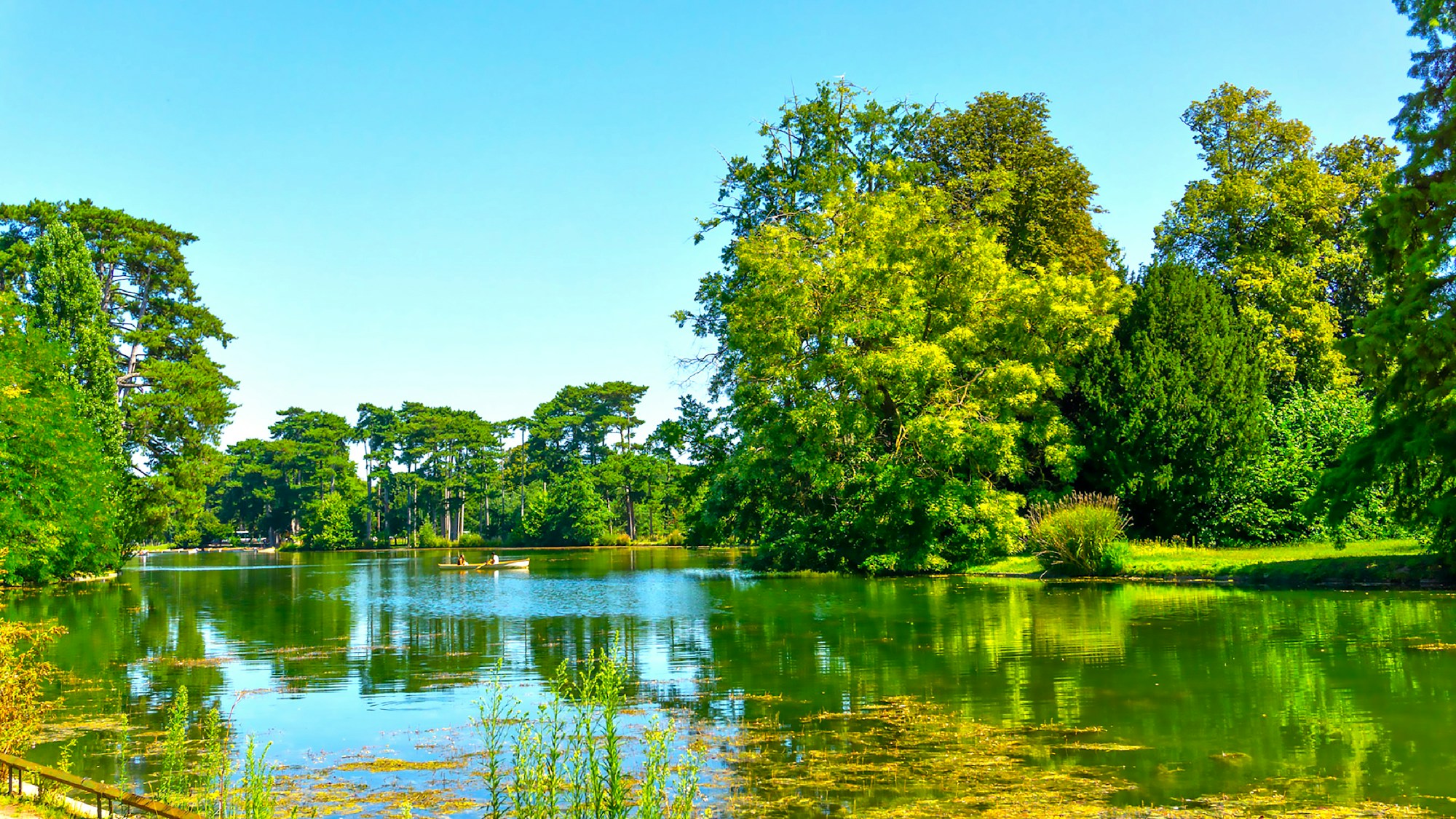
The Fondation sits inside the Jardin d’Acclimatation, in the heart of the Bois de Boulogne. From central Paris, coming from London by Eurostar (about 2h15 from St Pancras to Gare du Nord), take metro line 1 to Les Sablons, then it’s roughly a 15-minute walk. The official electric shuttle, more direct, links exit 2 of Charles de Gaulle-Étoile to the Fondation every 15 to 20 minutes for a €2 return, on presentation of an exhibition ticket, according to the Fondation’s official visitor page.
Expected crowds mean it pays to plan ahead
- Shchukin Collection (2016-2017): over 1.3 million visitors
- Morozov Collection (2021-2022): 1.25 million visitors, extended twice
- If there’s a queue at the main entrance, the Jardin d’Acclimatation entrance (€3) gives access to a second door
A Frank Gehry building that’s a destination in itself
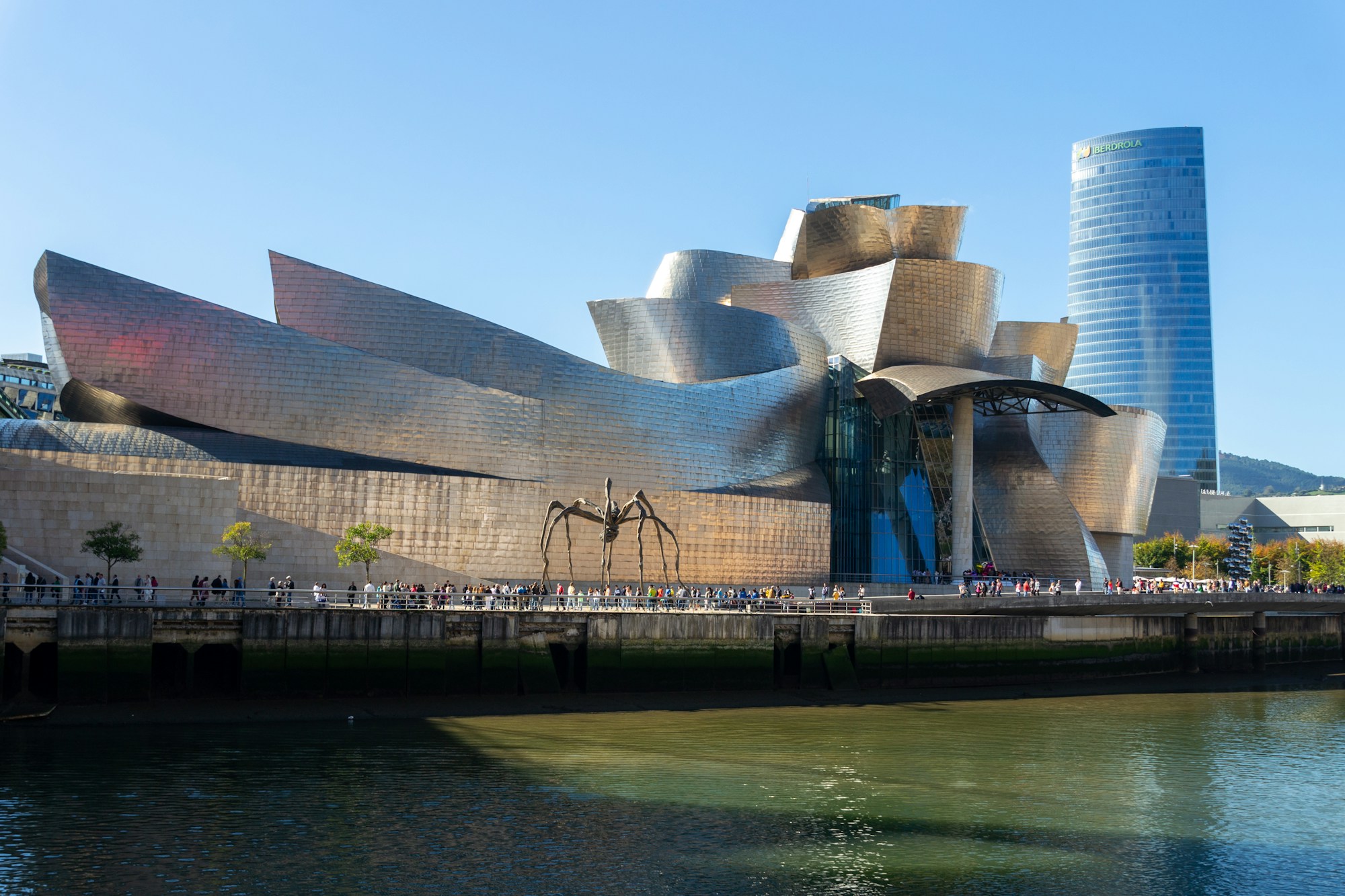
Opened in 2014, the Fondation Louis Vuitton building is designed as a « glass sailing ship »: 12 translucent sails made of 3,600 curved panels, set on a basin in the Bois de Boulogne. Frank Gehry has cited the great 19th-century glass conservatories, including the Paris Grand Palais, as an inspiration, according to the building’s official presentation. The photo above shows the Guggenheim in Bilbao, another work by the same architect — the same organic, flowing forms, but in titanium rather than glass.
The rooftop terraces offer views over the Bois de Boulogne and, through a narrow gap, a glimpse of the Eiffel Tower, especially photogenic at sunset. On site, Le Frank restaurant, run by Michelin-starred chef Jean-Louis Nomicos, is accessible with a Fondation ticket, with booking required for the evening service. A simpler, walk-in café rounds out the offering on the west terrace.
What to combine with your visit during a Paris trip
The exhibition runs for close to five months, spanning three quite different tourist seasons. For an art-focused trip in early October, the Qatar Prix de l’Arc de Triomphe takes place at the nearby ParisLongchamp racecourse on 3 and 4 October, just days before Fayet opens. Art Basel Paris, the former FIAC, then occupies the renovated Grand Palais from 23 to 25 October, right in the middle of the exhibition’s run.
- The Bois de Boulogne: cycling paths, rowing boats on the Lac Inférieur (from €6 for half an hour, March to October)
- Auvers-sur-Oise, where Van Gogh spent his last two months in 1890, about an hour by train from Paris
- To extend the trip south: the Musée Fayet in Béziers and the Abbaye de Fontfroide, 15 minutes from Narbonne
Want to widen your itinerary even further? Our pick of the best getaways from Paris and our guide to the best museum nights in Paris round out a culture-focused stay in the capital nicely.
Where to stay near the Fondation Louis Vuitton
To sleep as close as possible, look at Neuilly-sur-Seine or the 16th-17th arrondissements: Le 5 Particulier and Hôtel Le Jardin de Neuilly both back directly onto the Bois de Boulogne, while Le 10 Bis, between Porte Maillot and the Palais des Congrès, is a 15-minute bus ride or walk through the wood. Hôtel Residence Foch, in the 16th, sits around 2 km from the Fondation.
A more practical option for a multi-site trip: stay in a central area (Champs-Élysées, Étoile) and use the Fondation’s free electric shuttle from Charles de Gaulle-Étoile, rather than trading proximity to Paris’s other must-sees for a hotel further out. Our guide to where to stay in Paris breaks down the trade-offs by budget.
Budget and entry requirements for your Paris trip
Budget €95 to €140 per person per day if you’re being economical, up to €260 for a comfortable trip, based on the benchmarks compiled by Girl About Travel. For getting around, the Paris Visite pass (€30.60 a day) or the Navigo Découverte weekly card (about €32.40) cover the whole network, airport RER included.
As a UK passport holder, you’re a non-EU visitor: no visa is needed for stays under 90 days in any 180-day period, but do carry travel insurance covering at least €30,000 in medical costs and repatriation. Worth flagging since the exhibition runs into March 2027: from late 2026, the ETIAS travel authorisation is due to become mandatory for UK travellers, who have so far been exempt from a visa for the Schengen area — it costs €20, is valid for three years, and is applied for online before you travel.
Our tailor-made trip planner helps you fit these entry requirements around the rest of your Paris itinerary.
Before you go
Stay connected from the moment you land, so you can book time slots and check the audio guide without hunting for Wi-Fi.
Data plans from a few eurosNomad Insurance: global coverage from $56/4 weeks, useful cover for the trip alongside your standard travel insurance.
From $56 / 4 weeksFrequently asked questions
When can I see the Van Gogh self-portrait at the Fondation Louis Vuitton?
From 9 October 2026 to 8 March 2027, as part of the « Gustave Fayet, Collector – Designer » exhibition. It’s the first time since 1990 that this specific painting has been loaned to an exhibition, and the first time since 1937 that it’s been on view in France, according to the Fondation’s official press release.
How much is a ticket for the Gustave Fayet exhibition?
€18 full price on the Fondation’s official site (up to €22 on third-party platforms with skip-the-line access), €10 reduced for under-26s, €5 for under-18s, and free for under-3s and visitors with disabilities plus one companion.
Do I need to book ahead to see the exhibition?
Yes, strongly recommended. The Fondation’s two previous flagship exhibitions, Shchukin and Morozov, each drew more than 1.2 million visitors, with fully booked slots on some weekends.
How do I get to the Fondation Louis Vuitton from central Paris?
By metro (line 1, Les Sablons station, about a 15-minute walk) or via the Fondation’s electric shuttle from Charles de Gaulle-Étoile, departing every 15 to 20 minutes, €2 return on presentation of an exhibition ticket. If you’re coming from the UK, Eurostar runs from London St Pancras to Gare du Nord in around 2h15.
Who was Gustave Fayet?
A vineyard owner, painter and collector born in Béziers in 1865 and who died in 1925, and one of the very first buyers of Van Gogh and Gauguin before they were publicly recognised. He also restored the Abbaye de Fontfroide, in the Aude, where Odilon Redon painted a monumental triptych for the library.
Is the exhibition suitable for a family visit?
Yes: the ticket includes access to the adjoining Jardin d’Acclimatation, France’s oldest amusement park, and a dedicated app for children aged 8 to 12 lets them explore the building’s architecture while the adults tour the exhibition.
How much time should I set aside for the visit?
At least 2 to 2.5 hours: the exhibition takes over every level of the building, with 767 works spread across 28 sections. Allow extra time if you’re adding the terrace or the Jardin d’Acclimatation.
What else is there to do nearby during the exhibition?
The Bois de Boulogne (cycling, rowing boats on the Lac Inférieur), the Qatar Prix de l’Arc de Triomphe (3-4 October 2026, right before the opening) or Art Basel Paris at the Grand Palais (23-25 October 2026) all make it easy to extend an art-focused stay.
Sources
- Official press release (Fondation Louis Vuitton, English): full presentation of the Gustave Fayet exhibition
- Pricing conditions (Fondation Louis Vuitton): official ticket prices
- The building (Fondation Louis Vuitton): Frank Gehry’s architecture
- Self-Portrait with Bandaged Ear (Wikipedia): history of the exhibited painting
- Gustave Fayet (Wikipedia): the collector’s biography
- Waldemar Januszczak: British critic’s editorial take on the exhibition
- Visit the Fondation (official): access to the Fondation
- Morozov exhibition attendance (Fondation Louis Vuitton press office)
- Musée d’Orsay: Van Gogh collection in Paris
- Girl About Travel: budget benchmarks for a Paris trip
Information verified in September 2026 — check official sites before you travel to confirm.

Plan your trip with Pixidia
Pixidia learns how you travel and helps you build a trip that truly fits you and everyone coming along.
Open the planner