
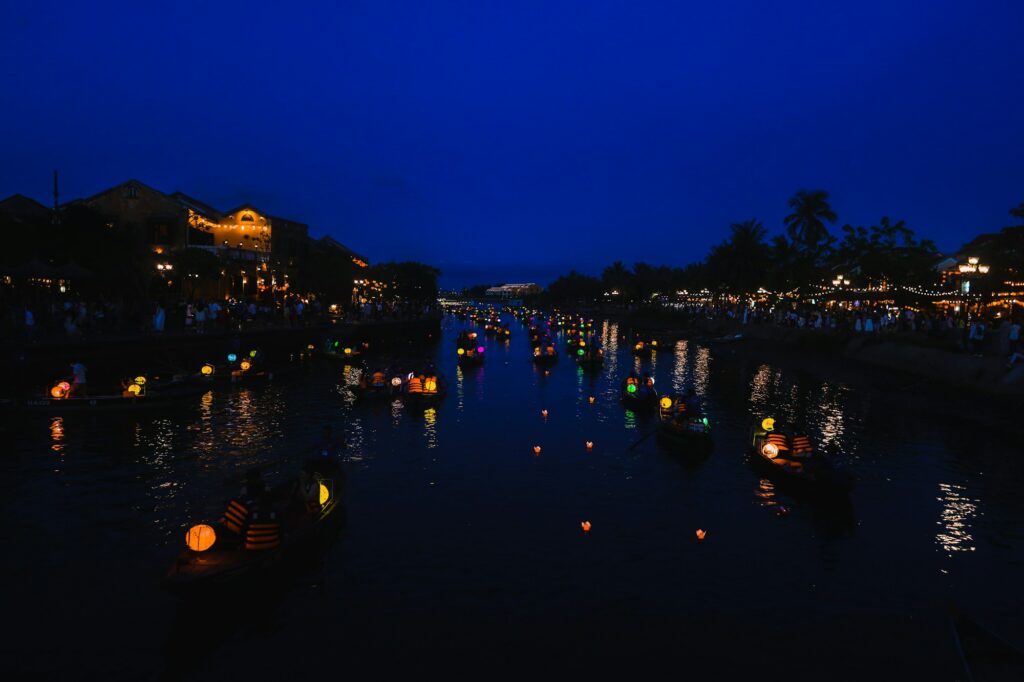
Hoi An’s Lantern Festival takes place every month on the 14th day of the lunar calendar: 12 nights in 2026, including 26 August, the eve of Vu Lan. The Buddhist festival of filial gratitude falls on Thursday 27 August 2026, according to Circular No. 252/TB-HĐTS of the Vietnam Buddhist Sangha. Street access is free and a floating lantern costs 10,000-40,000 VND. To experience both celebrations, target the 26-27 August nights.
Hoi An doesn’t have an « annual lantern festival »: the old town lights up once a month, on the 14th day of the lunar calendar, and 2026 is no exception. This practical guide rounds up the 12 nights of the year, unpacks Vu Lan on 27 August (whose eve coincides with the monthly lantern night), and gives the prices, opening hours and on-the-ground tips to enjoy it without being crushed by the crowds.
1. The lantern festival: the essential guide (12 nights in 2026)
One night a month, under the full moon
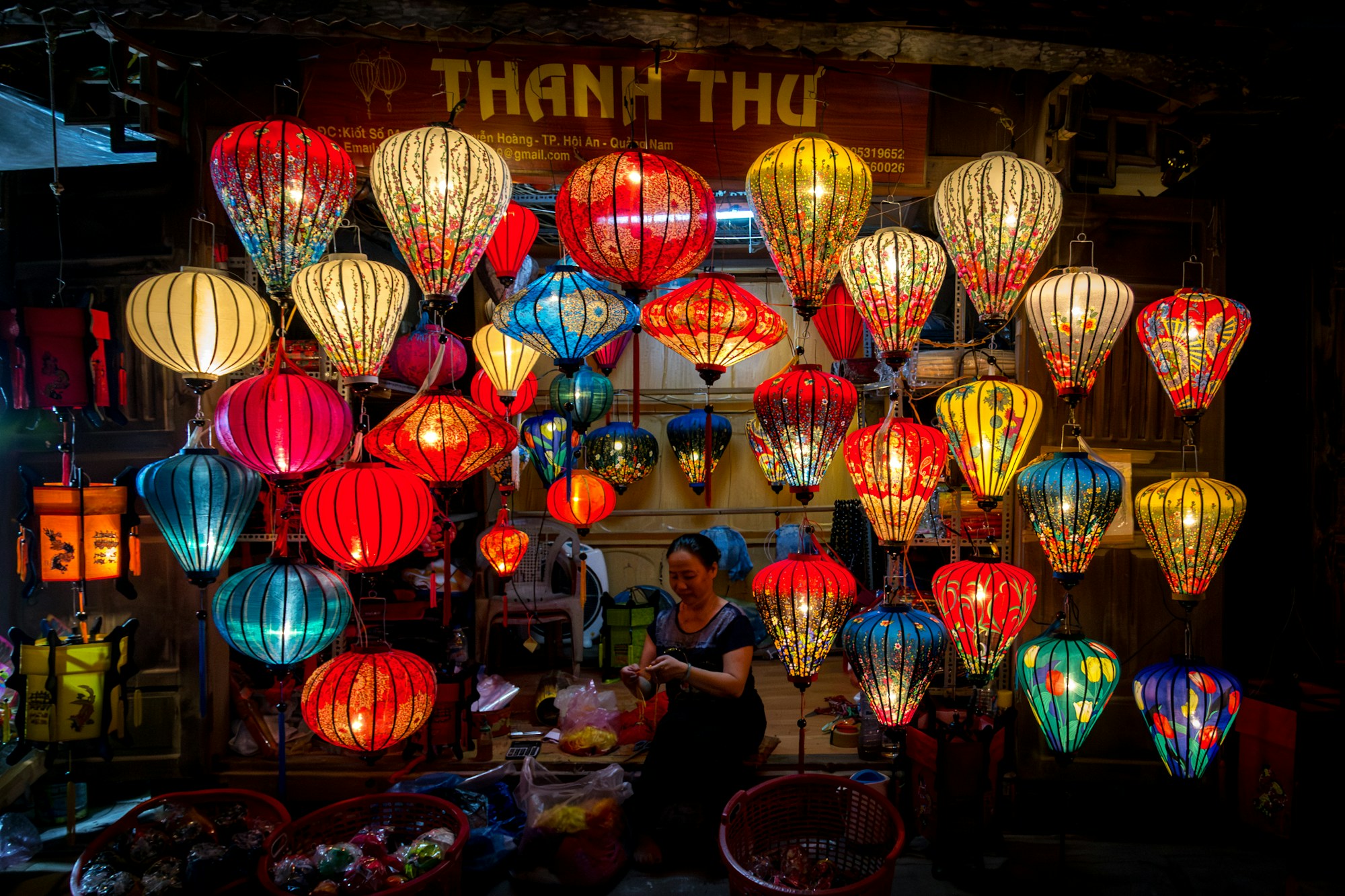
The Hoi An Lantern Festival is held every month, on the eve of the full moon — the 14th day of the lunar calendar. Many English-language guides write the 15th day: that’s a mistake, the 15th belongs to Vu Lan and Tết Trung Thu. In 2026 that gives 12 nights, from 2 January to 22 December, according to the calendar compiled by Hoi An It and Nghê Prana.
The tradition goes back to the Chinese (Fujian, Guangdong, Chaozhou) and Japanese merchants who settled in the town in the 16th and 17th centuries; the monthly full-moon ritual itself was established by the local authorities in 1998, with an unexpected success that has never faded, as Vespa Adventures recounts. The full moon is sacred in Buddhism: lanterns honour ancestors, bring good luck, and the one released on the water symbolises a wish.
Here’s how a typical evening unfolds, according to Nghê Prana: motorbikes are cleared from the pedestrian heart of the town from 5:30 pm, electric lighting is switched off from 6 pm to 10 pm in favour of lanterns, candles and moonlight, and the release of floating lanterns on the Hoài river is in full swing between 7 pm and 9 pm. Most visitors arrive around 6:30 pm; the crowd peaks between 7:30 pm and 9 pm.
| 2026 date | Day | Highlight |
|---|---|---|
| 2 January | Friday | First night of the year |
| 1 February | Sunday | Quiet night |
| 2 March | Monday | Tết Nguyên Tiêu, the biggest night (celebrations 2-4 March) |
| 1 April | Wednesday | Quiet night |
| 30 May | Saturday | Weekend, busy |
| 28 June | Sunday | Quiet night |
| 27 July | Monday | Quiet night |
| 26 August | Wednesday | Vu Lan eve, memorial significance |
| 24 September | Thursday | Mid-autumn eve, the most spectacular night alongside 2 March |
| 23 October | Friday | Off-peak |
| 22 November | Sunday | Quiet night |
| 22 December | Tuesday | Last night of 2026 |
Two dates stand out: 2 March, Tết Nguyên Tiêu (the first full moon of the lunar year, a national intangible cultural heritage since February 2023), and 24 September, the eve of Tết Trung Thu (Mid-Autumn Festival), which connoisseurs describe as the most beautiful night of the year. Conversely, the night of 30 April will probably not be held: it coincides with Reunification Day, a public holiday, as Vietnam Gift points out. Check with your hotel if your stay falls in late April.
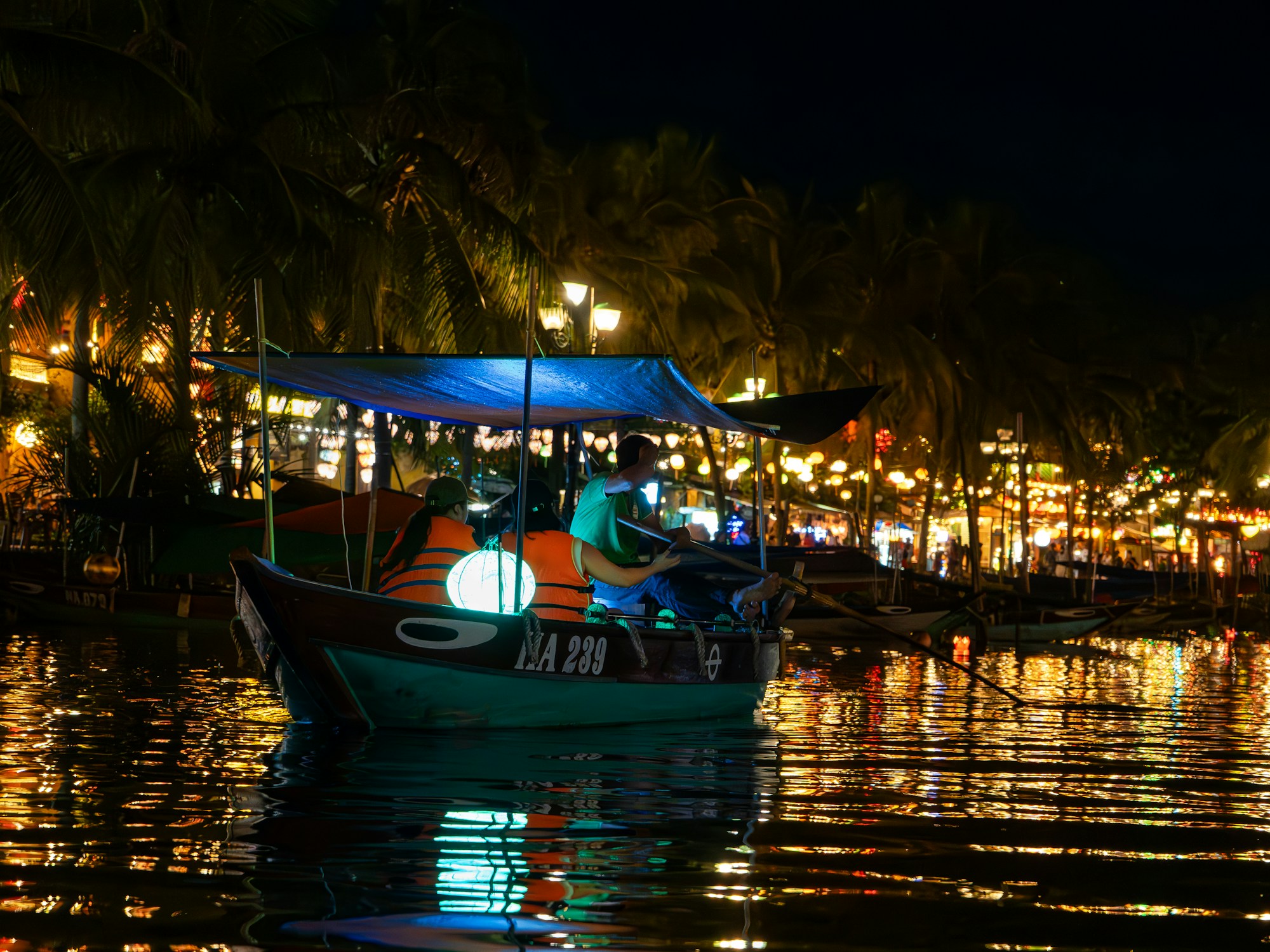
On the budget side: access to the streets and the spectacle is free. A floating lantern to release on the river costs 10,000-40,000 VND (roughly €0.40-1.50), more on the busiest quays; a traditional boat for 15-20 minutes can be negotiated at the official ticket booth near An Hội bridge for 150,000-220,000 VND per boat (1-5 people), cash only. A lantern-making workshop costs 250,000-350,000 VND (€9-17) according to Hoi An Local.
Highlights
- A unique atmosphere: lights off, the town lives by lanterns and moonlight alone
- Releasing a floating lantern on the Hoài river, from 10,000 VND
- Beautiful photos without flash: raise your ISO, expose on the brightest lantern
- 12 chances a year, including 2 spectacular nights (2 March, 24 September)
2. Vu Lan 2026: the festival of wandering souls (26-27 August)
Thursday 27 August: filial gratitude, the rose and a vegetarian meal
Vu Lan (Lễ Vu Lan Báo Hiếu) is, after Tết, Vietnam’s biggest traditional festival: a Buddhist day devoted to gratitude towards parents and ancestors, told through the legend of the monk Mục Kiền Liên (Maudgalyayana) saving his mother from hell thanks to the collective prayers of the 7th lunar month, as UNESCO-ICHCAP recalls. In 2026 it falls on Thursday 27 August (15th day of the 7th lunar month), a date confirmed by Circular No. 252/TB-HĐTS of 20 July 2026 from the Vietnam Buddhist Sangha, reported by SGGP. It is not an official public holiday.
The day before, Wednesday 26 August, coincides with the monthly lantern night: the river fills with lanterns with, this year, an added memorial dimension, since Vu Lan is also the moment when the dead are honoured, explains Nghê Prana. In Vietnam, the festival overlaps with the « month of wandering souls »: as the gates of hell stay open all through the 7th lunar month, people feed spirits without families (white rice porridge after sunset) and avoid weddings and shop openings, details Local Vietnam.
For a traveller, the most visible gesture is the rose pinned to the chest: red if the mother is alive, white if she has passed away — a custom popularised by Zen master Thích Nhất Hạnh. Hoi An’s pagodas hold rose-pinning ceremonies, chanting and releases of birds and fish (phóng sinh). Three places stand out: Chúc Thánh pagoda (founded in 1454, the oldest in town, free entry 8 am-6 pm), Pháp Bảo pagoda (seat of the local sangha) and Vạn Đức pagoda (17th century, 3.5 km from the centre), according to Local Vietnam and VinWonders.
Highlights
- A unique 48-hour window: lantern night on the 26th, Vu Lan on the 27th
- Taking part as a traveller, respectfully: accept the rose, attend the ceremonies
- Eating vegetarian that day, as tradition dictates (cơm chay eateries and markets)
- Releasing a lantern in memory of a loved one, in the memorial spirit of the night
3. Hoi An in 2026: heritage, news and day trips
A UNESCO-listed town in the middle of an administrative reshuffle
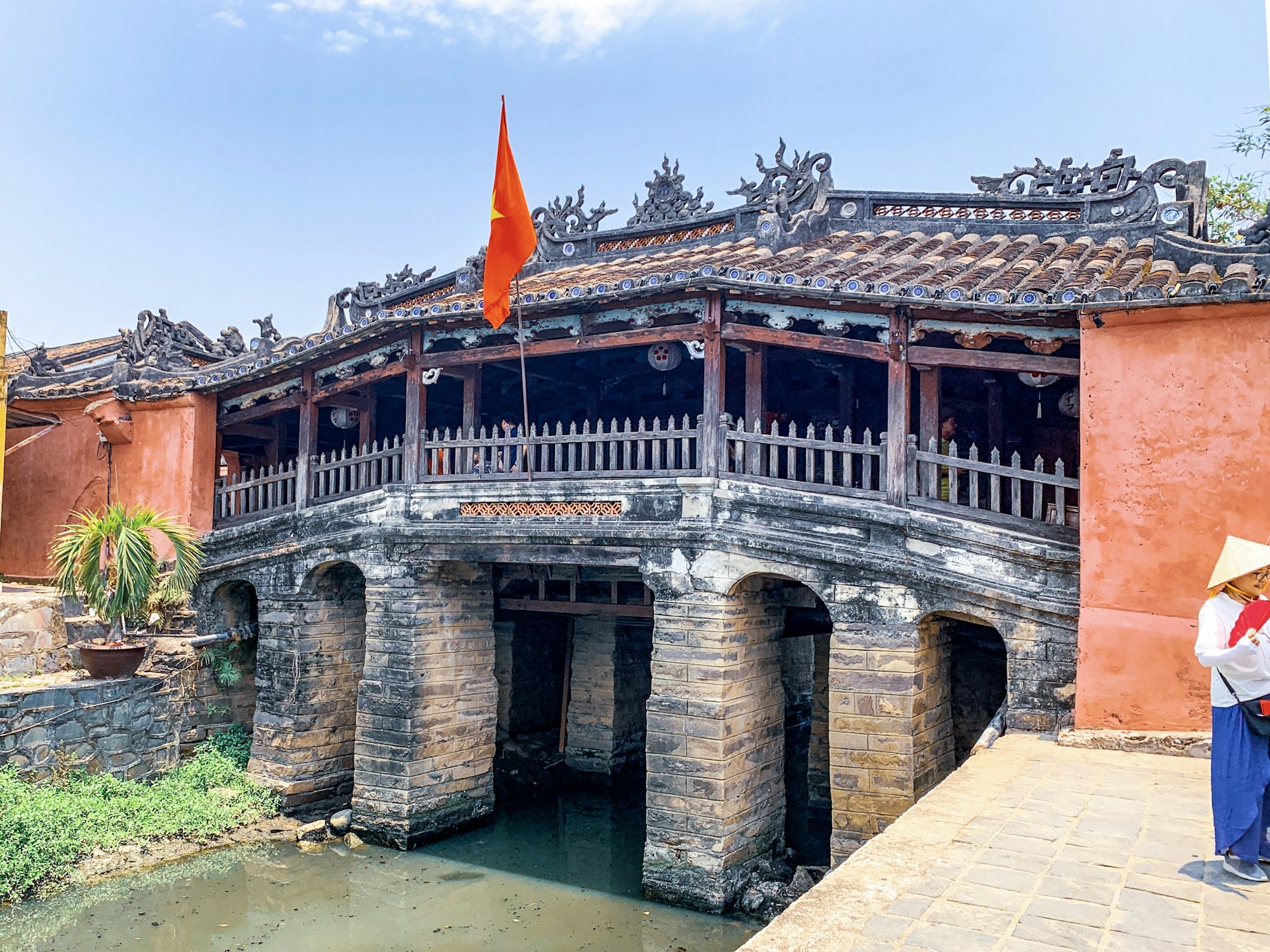
A former trading port on the Silk Road, Hoi An has been a UNESCO World Heritage Site since 4 December 1999 (ref. 948), described as an « exceptionally well-preserved Asian trading port »: 30 protected hectares, around 1,360 monuments including more than 1,000 old houses, according to the UNESCO assessment and the 25-year review by VietnamPlus. The Japanese Covered Bridge (Chùa Cầu), built around 1593-1595, reopened in August 2024 after 19 months of restoration financed with Japanese help, as Nhan Dan reports.
Three stories mark 2026. Since 1 July 2025, Hoi An has been part of an expanded Da Nang (merger with Quang Nam): Vietnam’s largest city now brings together three UNESCO sites (Hoi An, My Son and the Son Tra peninsula) and is targeting 19.1 million visitors in 2026, details VietnamPlus. In December, the town will host its 1st International Lantern Festival from 3 to 6 December (theme « Hoi An, colours of heritage », 15 monumental installations and a nightly parade), announced by Tuoi Tre. Finally, the Hoi An Creative Week (28 August – 2 September) opens the post-merger cultural season, with a digital creative map and craft villages, according to Vietnam.vn.
A point to watch: old town ticketing changes on 10 August 2026. Da Nang Resolution 98/2026 introduces a single rate of 20,000 VND per person per site (My Son: 40,000 VND), while 2026 guides still cite the 5-coupon booklet at 120,000 VND, notes Vietnam.vn. Both systems coexist in the sources: check on site at the entrances, and beware of fake inspectors roaming the streets (checks only happen at monument entrances), warns Hoi An Local.
Highlights
- My Son, Champa sanctuary from the 4th to the 13th century (UNESCO 1999), half a day away by road
- Cu Lao Cham, UNESCO biosphere reserve 20 minutes by speedboat (April-September season)
- Craft villages: Thanh Hà pottery, Kim Bồng carpentry, Trà Quế vegetable gardens
- Hoi An Memories Show: 500 artists, a nightly show over 25,000 m² (520,000-1,200,000 VND)
4. Budget, transport, weather: planning your stay
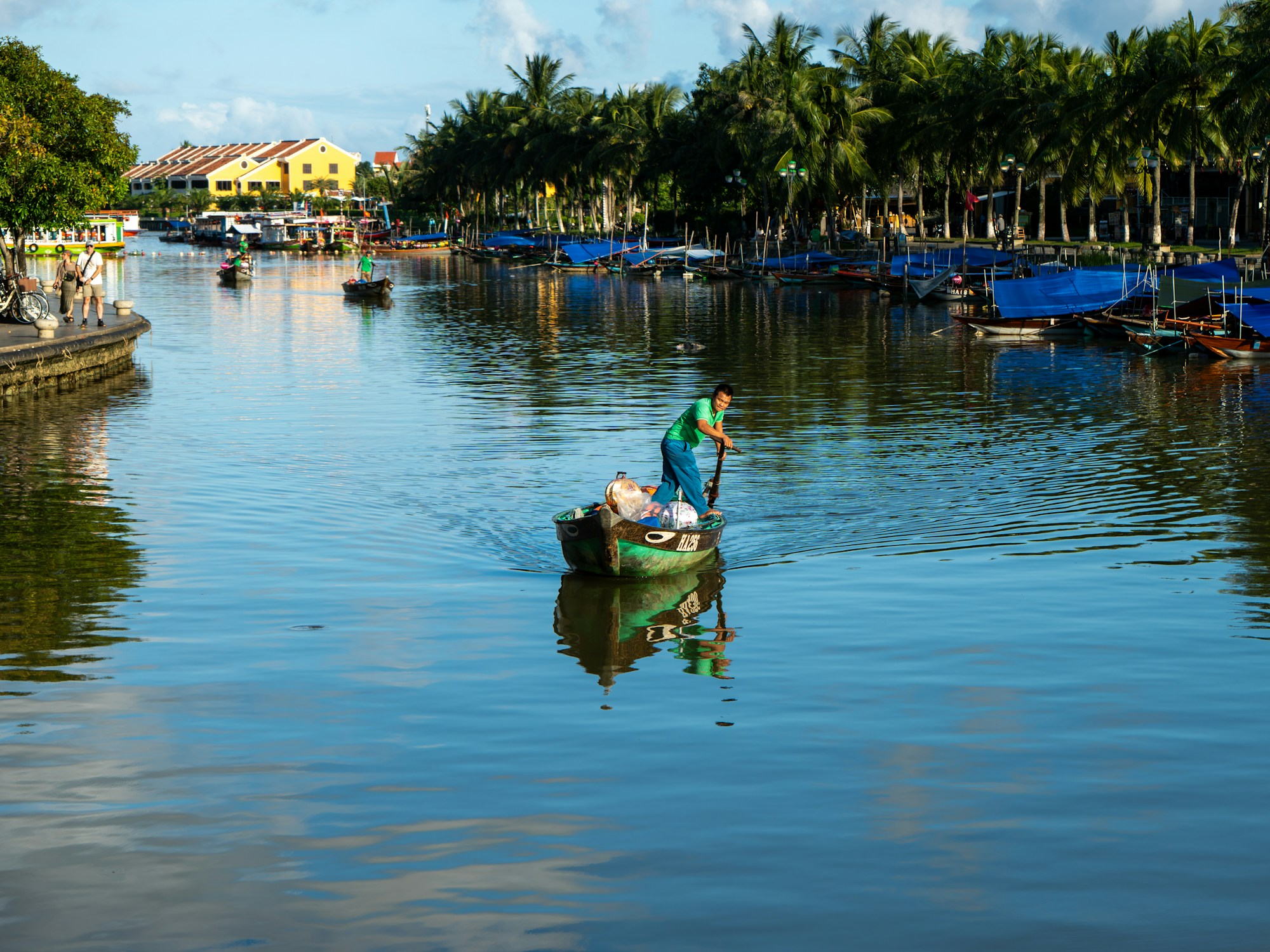
The real cost of the festival and crowd-beating rules
A festival evening works out at 300,000-500,000 VND per person (€11-18): shared or private boat, two lanterns, street-food dinner and a souvenir, based on the 2026 ranges compiled by TripPick and Hoi An Local. For the full stay, budget €25-35 a day in budget mode (dorm, street food, bike), €40-80 in comfort (boutique hotel, restaurants) and €200+ in luxury. Banh mi costs 20,000-50,000 VND, cao lầu at the central market 25,000-70,000 VND. Bring cash: almost all street vendors refuse cards.
Getting there. Hoi An is reached via Da Nang airport (30 km, 30-50 minutes by road, no direct train): Grab 200,000-450,000 VND, metered taxi 250,000-500,000 VND, private car 350,000-500,000 VND (recommended for late arrivals) or shared shuttle $6-8, details Day Trips Vietnam. From Huế, the most beautiful road goes over the Hai Van Pass (car or Easy Rider motorbike). Once there, the bike is king, often lent by the hotel.
Visa. British citizens benefit from the 45-day visa exemption (Resolution 44/NQ-CP, valid until 14 March 2028); beyond that, a 90-day e-visa is available on the official portal evisa.gov.vn ($25-50, 3-5 working days), according to Sondax Travel. Since 1 July 2026, a health declaration must be completed within 7 days before entry (Decree 165/2026), reminds Voye Global. Also consider comparing eSIM deals to stay connected, like in our 2026 travel eSIM comparison.
When to go. The best window remains February-April (20-28 °C, clear skies, calm sea), according to Vietnam Online. August, the Vu Lan window, is hot and humid (32-36 °C, brief showers): liveable if you schedule activities in the morning. Conversely, avoid the 5 October-15 November window: recurrent typhoons and floods (three floods in 20 days in November 2025, with 1.55 m of water on Bạch Đằng street), documented by VietnamNet. Book accommodation away from low-lying areas (Cẩm Châu, Cẩm Thanh) and travel insurance covering cancellation, like in our travel insurance comparison.
Where to sleep. The old town itself has no hotels: pick the Thu Bồn riverbank for the best value, An Hội island for the view over the illuminated town (20-30% cheaper), Cẩm Phô or Cẩm Châu for peace and quiet, and An Bàng for the beach, according to TripPick. For the big nights (2 March, 26 August, 24 September), book 1-2 months ahead, advises Nghê Prana. If your itinerary stretches north, our Halong Bay cruise comparison helps extend the trip.
Highlights
- A full festival evening for €11-18: boat, lanterns, dinner, souvenir
- 45-day visa waiver for British citizens, 90-day e-visa otherwise
- Cash in small denominations: night vendors refuse cards
- February-April for the climate, August for Vu Lan, never October-November
Practical info: eSIM and travel insurance
Stay connected from touchdown at Da Nang: 1 GB / 3 days from around $4, 3 GB / 7 days from $8-9, on Vinaphone and Viettel networks (4G). Installed in 2 minutes, no local SIM card needed.
From ~$4Motorbike rides, monsoon downpours, October-November floods: insurance covering health, cancellation and repatriation is essential in Vietnam. Nomad Insurance offers global coverage from $56/4 weeks, with 10% off via our link.
From $56 / 4 weeksFrequently asked questions
When does the Hoi An Lantern Festival take place in 2026?
Every month, on the 14th day of the lunar calendar (the eve of the full moon). The 12 nights of 2026: 2 January, 1 February, 2 March, 1 April, 30 May, 28 June, 27 July, 26 August, 24 September, 23 October, 22 November and 22 December. The two biggest: 2 March (Tết Nguyên Tiêu) and 24 September (Mid-Autumn eve). Hoi An It.
When does Vu Lan fall in 2026?
On Thursday 27 August 2026 (15th day of the 7th lunar month), confirmed by Circular No. 252/TB-HĐTS of the Vietnam Buddhist Sangha. The night before, 26 August, is Hoi An’s monthly lantern night: the two festivals follow one another over 48 hours. SGGP.
Is the Hoi An Lantern Festival free?
Yes: access to the streets and the spectacle is free. Only the heritage sites charge entry (5-coupon booklet at 120,000 VND, or 20,000 VND per site since 10 August 2026 under Da Nang Resolution 98/2026: check on site, both regimes coexist). Floating lantern: 10,000-40,000 VND; boat: 150,000-220,000 VND per boat. Hoi An Local.
What’s the best time to see the lantern night?
Arrive around 5:30-6 pm to watch the electric lights go out. The crowd peaks between 7:30 pm and 9 pm, right when the floating lantern release is at its height. After 9 pm, the streets empty out and the atmosphere lingers. Vietnam Gift.
Do UK citizens need a visa for Vietnam?
No for up to 45 days: the exemption (Resolution 44/NQ-CP) stays valid until 14 March 2028. Beyond that, a 90-day e-visa is available at evisa.gov.vn ($25-50, processing 3-5 working days). Since 1 July 2026, a health declaration is also required within 7 days before entry. Sondax Travel.
Can tourists take part in Vu Lan?
Yes, respectfully: attend the pagoda ceremonies (Chúc Thánh, Pháp Bảo, Vạn Đức), accept the rose offered to you, eat vegetarian and release a lantern in memory of a loved one. Cover up, stay silent during chanting, ask before photographing. Nghê Prana.
Sources
- Hoi An Lantern Festival 2026: Full-Moon Dates — Hoi An It (2026 dates, evening schedule)
- Vu Lan Festival 2026 promotes gratitude and remembrance — SGGP (Circular No. 252/TB-HĐTS)
- Hoi An Lantern Festival — Dates & Guide — Nghê Prana
- Vu Lan Festival Hoi An 2026: Dates & Meaning — Nghê Prana
- The Complete 2026 Guide to the Hoi An Lantern Festival — Vietnam Gift (30 April night not held)
- Hoi An Old Town Tickets: Prices, Sites & Scams — Hoi An Local
- Da Nang adjusts entrance fees for cultural sites — Vietnam.vn (Resolution 98/2026)
- 25 years of Hoi An as UNESCO World Cultural Heritage Site — VietnamPlus
- Vietnam’s Hoi An to host int’l lantern festival for 1st time in December — Tuoi Tre
- How Much Does Hoi An Cost? 2026 Budget Guide — TripPick
- Da Nang Airport to Hoi An: Taxi, Grab & Shuttle 2026 — Day Trips Vietnam
- Vietnam visa for UK citizens: the 45-day rule explained — Sondax Travel
- Hoi An Weather in August — Best Date Weather
- Third flood in 20 days turns Hoi An into a floating attraction — VietnamNet
- Full Moon July in Vietnam: Wandering Soul’s Day and Vu Lan Day — UNESCO-ICHCAP
Accessed 9 August 2026.

Plan your trip with Pixidia
Pixidia learns how you travel and helps you build a trip that truly fits you and everyone coming along.
Open the planner