
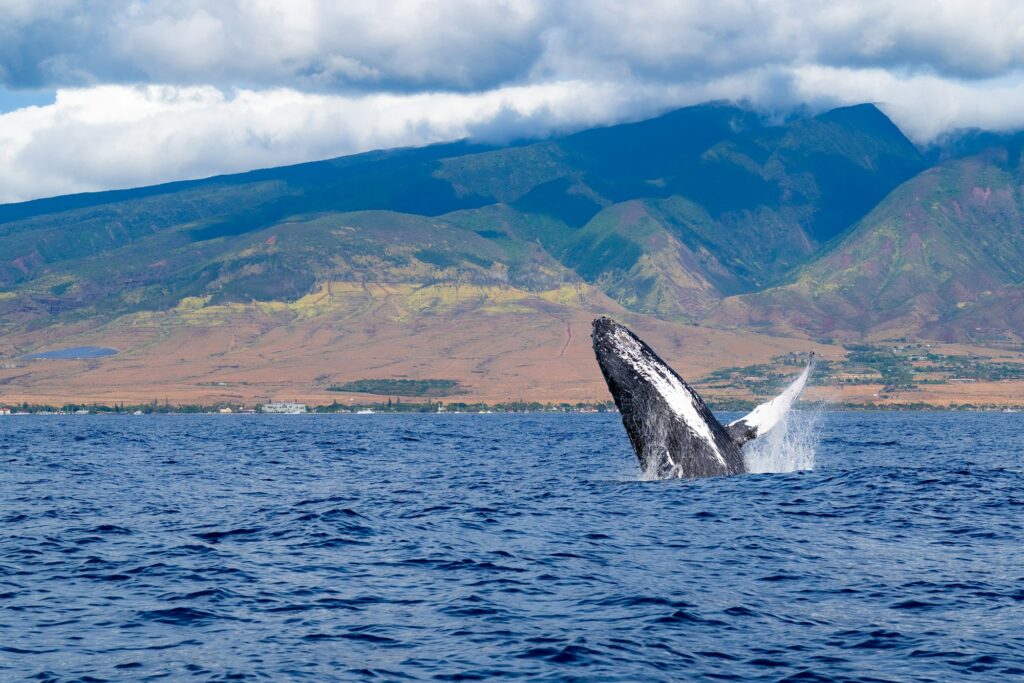
The humpback whale season in Maui runs from November to May, with a peak from January to March. At the 28 February 2026 count, volunteers recorded 847 whales across Maui’s count sites. Boats leave from Māʻalaea, Lahaina and Kāʻanapali, and Papawai Point offers a free view from the shore.
Checked on against the official sources cited (NOAA, DLNR, Maui Now, Pacific Whale Foundation).
Humpback whales come back to Maui every winter. When is the best time, and where should you watch from? The peak runs from January to March according to NOAA, Pride of Maui sails from 16 December to 31 March, and the 2026 season counts are now published. This guide separates what is verified, what comes from an operator, and what still needs confirming.
1. Watching whales by boat: departures, prices and cancellations
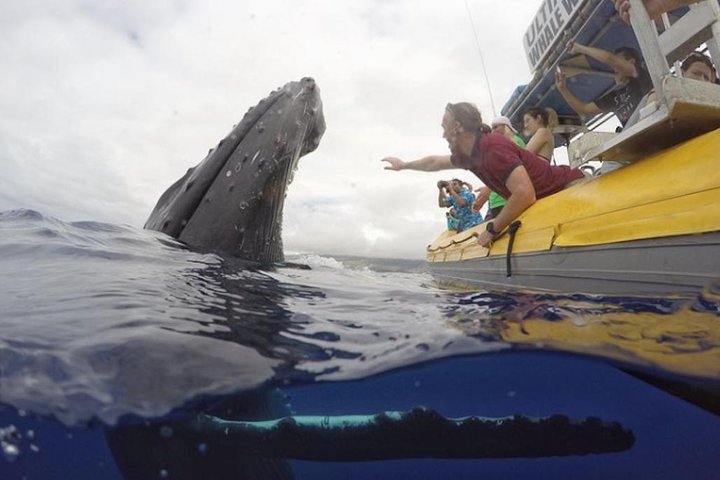
Boat trips from Māʻalaea, Lahaina and Kāʻanapali
Being close to the whale on a boat often means a longer view than from the shore. During the season, operators in Māʻalaea, Lahaina and Kāʻanapali run trips of 2 to 4 hours: 2 hours for the observation tours, 3.5 hours for Pride of Maui’s cruise, and 4 hours for the snorkel and whale watch offered by Pacific Whale Foundation. Kaʻanapali Ocean Adventures announces a commercial season from 15 December to 15 May, with peak density in February, according to the operator.
The map card below shows a small-group trip from Lahaina. The Viator listing, checked on 24 October 2026, gives a duration of 105 to 130 minutes and a price of €69.94 to €79.93 per adult for two adults. Departures are open on all 121 days from 1 December 2026 to 31 March 2027 in the availability calendar. Prices were confirmed on six dates within that window.
Highlights of this trip
- A small-group trip from Lahaina. Viator gives the meeting point as Mala Ramp or 1223 Front Street, with check-in 20 minutes before departure
- A duration of 105 to 130 minutes on the Viator listing (1.5 to 2 hours according to the reseller AAA)
- A full refund if you cancel at least 24 hours before departure, and a cancellation option in case of bad weather (STANDARD policy on the Viator listing)
Who it suits: families with children aged 3 and over (the Viator listing applies a child rate for ages 3 to 12) and travellers who prefer a short trip in a small group.
The catch: Viator does not accept children under 3 and advises against the trip for pregnant women and people with back or heart problems. Lahaina harbour only partly reopened on 15 December 2025 (see section 5): the Viator meeting point does not prove the state of the harbour, so confirm boarding with the operator before you book.
Guarantee claimed: the operator’s description, repeated on Viator, promises a free new trip if no whale is seen on departures from December to April. This is the operator’s promise, which Pixidia has not verified: ask for it in writing before you book.
Another option from Māʻalaea: Pride of Maui runs a 3.5-hour cruise with snorkelling and whale watching, from 16 December to 31 March. In 2025-2026 the price was $136.38 per adult, all included, and $113.64 for a child. A cancellation requested at least 24 hours before departure is refunded. If the weather turns, the operator offers a rescheduling or a refund, and the captain makes the call.
Pacific Whale Foundation’s price list gives a sense of the 2025-2026 season. These are sale prices, quoted in US dollars:
| Tour | Duration | Departure | Sale price |
|---|---|---|---|
| Classic Whale Watch | 2 hours, morning | Māʻalaea | $84.19 |
| Whale Watch Sail | 2 hours, morning | Māʻalaea | $101.96 |
| Small Group Whale Watch | 2 hours | Māʻalaea | $110.46 |
| Sunset Whale Watch Sail | 2 hours, evening | Lahaina | $127.46 |
| Exclusive Whale Watch With The Experts | 2.5 hours, morning | Māʻalaea | $135.96 |
| Maui Snorkel & Sunset Whale Watch | 4 hours, afternoon | Māʻalaea | $152.96 |
| Sunset Dinner & Whale Watch | 3 hours, evening | Not specified | $161.46 |
Source: Pacific Whale Foundation, tour list, checked on 24 October 2026. The 2026-2027 price list is not yet published.
To compare formats side by side, the table below lines up three tours by duration, departure and price per adult. Currencies are not converted: Viator prices are in euros, the operators’ prices in dollars.
| Tour | Duration | Departure | Price per adult | Checked |
|---|---|---|---|---|
| Maui: Ultimate Whale Watch from Lahaina (Viator) | 105 to 130 min (Viator listing) | Lahaina, Mala Ramp | €69.94 to €79.93 (based on 2 adults, incl. tax) | 24 October 2026 |
| Classic Whale Watch (Pacific Whale Foundation) | 2 hours, morning | Māʻalaea | $84.19 (sale price, 2025-2026 season) | 24 October 2026 |
| Pride of Maui (snorkel cruise) | 3.5 hours | Māʻalaea | $136.38 (all included, 2025-2026 season) | 24 October 2026 |
Sources: Viator listing for the Ultimate Whale Watch from Lahaina, checked on 24 October 2026; Pacific Whale Foundation; Pride of Maui, checked on 24 October 2026.
Price alone does not settle it. The Viator trip lasts less time than Pride of Maui’s cruise, and each operator has its own cancellation policy: that policy decides what you get back if the weather changes your plans.
For a private trip rather than a group one, our guide Maui: 8 private excursions to book before you go compares the options on the island.
2. When to go: season, peak and counts
The season runs from November to May. Sources do not agree on the exact dates: NOAA lists a presence from November to May, and Go Hawaii says December to May, with a peak from January to early April. The peak is January to March according to NOAA; Go Hawaii extends it to early April. The February 2026 count (847 whales around Maui) beat January’s (694).
| Month | Whale presence | Commercial tours |
|---|---|---|
| September and October | First sightings, in September or October according to a Pacific Whale Foundation study (secondary source) | Few operators |
| November | Occasional arrivals | Sunset trip from Lahaina from 15 November (Pacific Whale Foundation) |
| December | Growing presence | Several operators open, including Kaʻanapali Ocean Adventures (15 December) and Pride of Maui (16 December) |
| January to March | Peak presence | All tours |
| April and May | End of season | Pacific Whale Foundation until April, Kaʻanapali Ocean Adventures until 15 May |
| June to August | Isolated cases | None |
Source: NOAA, humpback whale sanctuary, Go Hawaii and operators, checked on 24 October 2026.
The 2026 season counts
The Great Whale Count, run by Pacific Whale Foundation, and the sanctuary’s Ocean Count take place on the last Saturday of January, February and March (Maui Now, 30 March 2026). According to Pacific Whale Foundation, the 2026 dates were 31 January, 28 February and 28 March, which makes three Saturdays. In January, volunteers counted 694 whales around Maui and 1,954 across the state. In February they counted 847 around Maui and 1,935 across the state, with 487 volunteers at 46 sites on the main islands.
| Count | Date | Maui | Whole state |
|---|---|---|---|
| January | 31 January 2026 | 694 | 1,954 |
| February | 28 February 2026 | 847 | 1,935 |
| March | 28 March 2026 | 141 (site coverage to be confirmed) | not recorded |
Source: Maui Now, January 2026, Maui Now, February 2026 and Maui Now, March 2026, checked on 24 October 2026.
These figures measure presence at the count sites, not a population. For 2027, the dates have not yet been checked with the organiser. One blog gives 30 January, 27 February and 27 March, but this information is unverified. World Whale Day falls on Sunday 21 February 2027 (National Today).
3. The distance rules, drones included
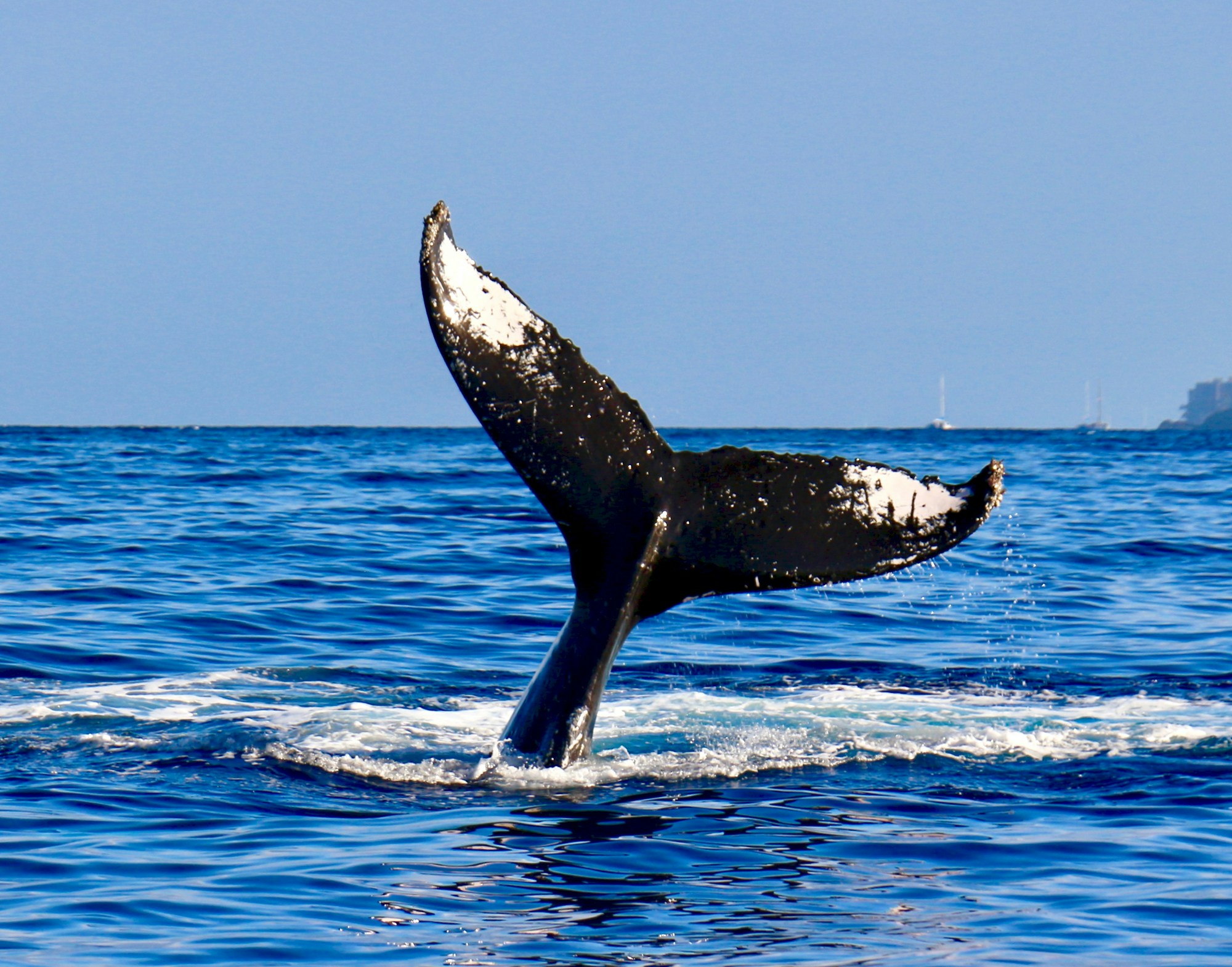
Distances and craft covered
The most useful rule fits in one sentence: you must not approach a humpback whale within 100 yards, or 90 m according to NOAA, by any means. The official list does not only name boats: it includes swimmers, paddleboarders, kayakers, canoeists and drones. For an aircraft, the limit is 1,000 feet, or 300 m. NOAA’s page has no rule of its own for drones, but drones appear in that list: the 100-yard rule therefore applies to a drone filming a whale.
Before you head out
- Do not get closer than 100 yards to a whale, whatever the means of travel
- An aircraft must stay at least 1,000 feet (300 m) from whales
- The speed and gear-in-neutral rules some guides mention do not appear on the NOAA page read for this article: we do not repeat them until the official text is checked
| Target | Minimum distance | Note |
|---|---|---|
| Humpback whale, approached by boat, paddleboard, kayak, swimming or drone | 100 yards (90 m per NOAA) | Any means, no rule of its own for drones |
| Aircraft (plane, helicopter) | 1,000 feet (300 m) | Distance to keep on approach |
Source: NOAA, humpback whale sanctuary regulations, checked on 24 October 2026.
4. Watching whales from the shore, no boat needed
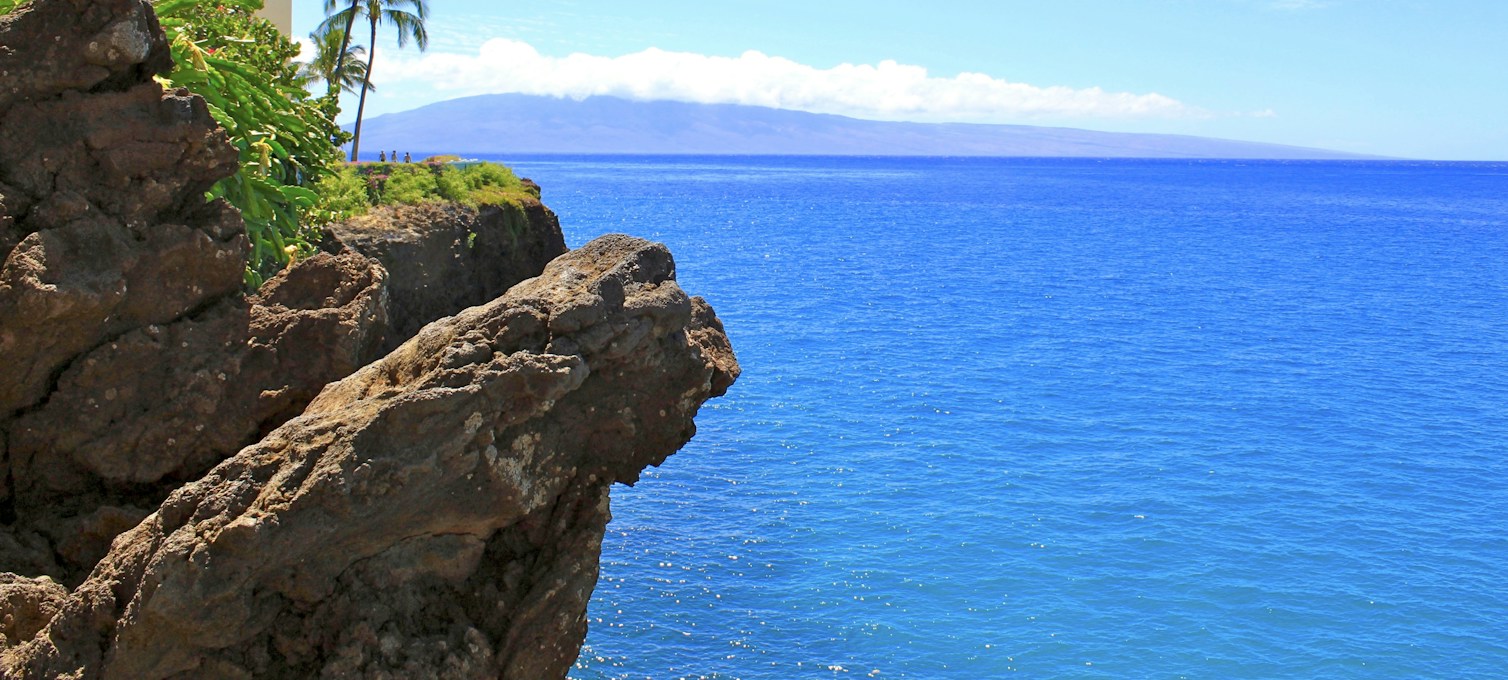
Papawai Point and the west and south coast lookouts
The most cited spot is Papawai Point, also called McGregor Point, about 3 miles north-west of Māʻalaea harbour, on the Honoapiʻilani Highway. It is a free lookout on land, described by Maui Snorkeling. Visibility depends on the weather and the time of day: come with binoculars, and do not wait for a calm sea before you look.
Other lookouts
- Kāʻanapali: the boardwalk has a clear view of Molokaʻi and Lānaʻi, according to travel guides
- Kīhei: Kamaʻole beach looks out towards Kahoʻolawe, Lānaʻi and Molokini, according to travel guides
- Black Rock (Puʻu Kekaʻa), in Kāʻanapali, is a well-known viewpoint
5. Lahaina in 2026: what has changed for departures
Lahaina harbour partly reopened on 15 December 2025, for four businesses. The DLNR statement dated 2 December 2025 sets commercial activity at sea from 8 am to 6 pm, bans mooring in the harbour and gives no timetable for full restoration. At that date, the electricity was still cut off. No official source more recent than this statement was found when this check was made.
A trip that leaves from Lahaina therefore depends on the operator as much as on the harbour. The meeting point for the Viator trip in section 1 is Mala Ramp or 1223 Front Street, Lahaina. When you book, ask the operator for the exact boarding point and departure time, and plan a fallback in Māʻalaea or Kāʻanapali.
6. Field tips: morning, seasickness, layers and booking
- Pick the morning. The trade winds make mornings calmer and afternoons windier, with small boats bouncing more (advice from operators and guides).
- Plan for seasickness. Keep your eyes on the horizon, stay in the middle of the boat and take your medication before boarding if you are prone to it. These tips come from blogs: no medical source and no NOAA page confirms them.
- Bring a windproof jacket, even in the sun. Winter is windier than summer, and the wind often picks up at sea.
- Book early. Guides advise booking as soon as you arrive for the period from Christmas to early January, and for Presidents’ Day week in February, when prices are highest.
- Read the cancellation policy. It differs from one operator to another: a refund is offered in case of bad weather, but the deadline and conditions vary. For the Viator trip above, the listing shows a full refund if you cancel at least 24 hours before departure.
What other guides don’t tell you
Three points missing from most guides, each with its source and date of consultation.
- Mothers and calves avoid shallow water close to the shore. A 2012 peer-reviewed study observed that they avoid water less than 20 m deep and areas within 2 km of the coast. A Pacific Whale Foundation study (2013-2017) suggests that groups with calves stay further south, near Māʻalaea. That second work comes from an operator that sells tours, so read it with this conflict of interest in mind. PLoS ONE, 2012 (accessed 24 October 2026).
- The counts do not give a headcount. The sanctuary does not publish a global total and acknowledges the risk of double counting. The 2026 volunteer figures track presence at the sites, not population size. Maui Now, 30 March 2026 (accessed 24 October 2026).
- Lahaina has a timetable and a mooring ban to know about. The DLNR limits commercial activity at sea to 8 am to 6 pm, bans mooring in the harbour and gives no full restoration timetable. DLNR, statement of 2 December 2025 (accessed 24 October 2026).
Practical information for getting to Maui
For a rental car at Kahului (OGG), the arrival airport, a survey by the comparison site CheapCarRental (December 2025 to February 2026) gives a winter average of around $104 a day. It is a comparison-site average, not a guaranteed rate: compare offers for your dates.
The journey from the airport to your departure point has not been checked for this article. Work it out on a map before you book a morning trip, because departures are early.
Pacific Whale Foundation and Pride of Maui leave from Māʻalaea, and PWF also runs a sunset trip from Lahaina. Some boats and sailing vessels leave from Kāʻanapali, for example Kaʻanapali Ocean Adventures. Depending on the departure port, boarding changes: check it before you book.
Frequently asked questions
When can you see humpback whales in Maui?
The season runs from November to May, with a peak from January to March according to NOAA. Go Hawaii says December to May, with a peak from January to early April: both versions coexist. For the highest numbers, aim for January, February or March. At the 28 February 2026 count, volunteers recorded 847 whales around Maui.
How far should you stay from whales?
The federal rule sets 100 yards, or 90 m according to NOAA, for any means: boat, paddleboard, kayak, swimming or drone. For an aircraft, the distance is 1,000 feet, or 300 m. These distances apply all year round in the sanctuary. NOAA, sanctuary regulations.
Can you see whales from the beach without a boat?
Yes. Papawai Point, about 3 miles north-west of Māʻalaea harbour, is a free lookout on land, according to Maui Snorkeling. Travel guides also cite the beaches of Kāʻanapali and Kīhei. Visibility depends on the weather and the time of day, and binoculars help.
Are drones allowed to film whales?
NOAA’s page sets no rule of its own for drones, but it names them in its list of « by any means ». The 100-yard rule therefore applies. For special cases, the regulatory text is the reference, and the stricter distance is always the safer one. NOAA.
How much does a whale watching trip in Maui cost?
For the 2025-2026 season, Pacific Whale Foundation offered trips from $84.19 to $161.46, at sale prices. Pride of Maui asked $136.38 per adult, all included, for 3.5 hours. On Viator, the Ultimate Whale Watch trip in section 1 is listed from €69.94 per adult, based on two adults, checked on 24 October 2026. Pacific Whale Foundation.
Can children come on board?
The minimum age depends on the operator. The Viator listing for the Ultimate Whale Watch trip accepts children from 3 to 12 at a child rate, and does not accept children under 3. Some boats from Māʻalaea and Kīhei require age 8, according to resellers, to be confirmed with the operator. Pride of Maui listed $113.64 for a child. Check each operator’s rule before you book.
What happens if the trip is cancelled because of the weather?
The operator usually offers a rescheduling or a refund, and the captain decides on the day. At Pride of Maui, a cancellation requested at least 24 hours before departure is refunded. On the Viator listing for the Ultimate Whale Watch trip, a cancellation at least 24 hours in advance is fully refunded, and cancelling for bad weather is available. An older help page mentioned 48 hours: check the policy when you book. Pride of Maui.
Should you book in advance?
Guides advise booking as soon as you arrive for Christmas and New Year, then for Presidents’ Day week in February, when prices are highest. The Viator listing for the Ultimate Whale Watch trip shows open slots across the whole window from December 2026 to March 2027, but availability can change: check it before you pay.
Is seasickness common?
No figures were found for this article. Common tips, such as keeping your eyes on the horizon, staying in the middle of the boat and taking medication in advance, come from blogs and are not confirmed by any medical source. Mornings are calmer than afternoons, according to operators’ advice.
Is Lahaina harbour open?
Partly. Since 15 December 2025, commercial activity at sea has been allowed there from 8 am to 6 pm, for four businesses according to the DLNR, and mooring is banned in the harbour. The statement gives no timetable for full restoration. Confirm your departure point before you book. DLNR.
Sources
- NOAA, sanctuary regulations: distances, means covered, aircraft.
- NOAA, humpback whale sanctuary: season, peak presence, annual count.
- DLNR, statement of 2 December 2025: state of Lahaina harbour.
- Maui Now, January 2026 count.
- Maui Now, February 2026 count.
- Maui Now, end of the 2026 counts: last-Saturday rule, no global total.
- Pacific Whale Foundation, whale watching in Maui: 2026 count dates, according to the operator.
- Pacific Whale Foundation, tour list: 2025-2026 prices in dollars.
- Pride of Maui, cancellation policy.
- Viator, listing for the Ultimate Whale Watch from Lahaina: price, duration, rating, cancellation policy and availability, checked on 24 October 2026 (map card in section 1).
- Maui Snorkeling, whale season: Papawai Point.
- Go Hawaii, whale watching: season, according to the tourist office.
- Kaʻanapali Ocean Adventures, monthly breakdown: the operator’s commercial season.
- PLoS ONE, 2012 study on mothers and calves.
- National Today, World Whale Day.
Research carried out on 24 October 2026

Plan your trip with Pixidia
Pixidia learns how you travel and helps you build a trip that truly fits you and everyone coming along.
Open the planner