
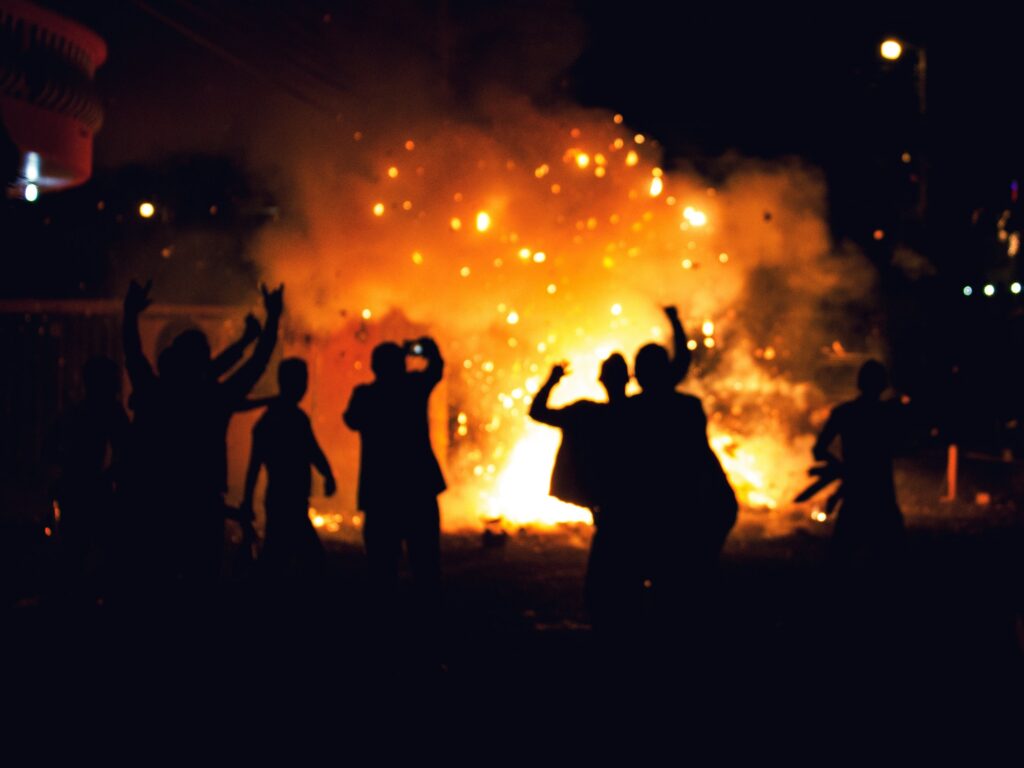
The night of Saturday 16 January 2027 is the expected date for the Luminarias of San Bartolomé de Pinares, the eve of San Antón (Saint Anthony), if the festival keeps to its tradition. No official programme had been published when we checked: confirm the start time with the town hall.
Checked on against the official sources cited (Poder Judicial, Junta de Extremadura, AEMET) and the press listed at the end of the article.
Las Luminarias is a festival of fire and horses held in a village in the province of Ávila. Bonfires are lit in the paved streets, then riders and horses pass through the smoke. This guide sets out the 2027 date, which is still unofficial, the start time, which no reliable source confirms, how to get there from Madrid and Ávila, and the controversy that has surrounded the festival for years.
The subject doesn’t lend itself to guesswork. A provisional date, an unpublished time and a documented controversy call for separating what is established from what is still debated. That is the thread running through this article.
1. Date 2027: an expected night, not yet announced
The night of 16 January, the eve of San Antón
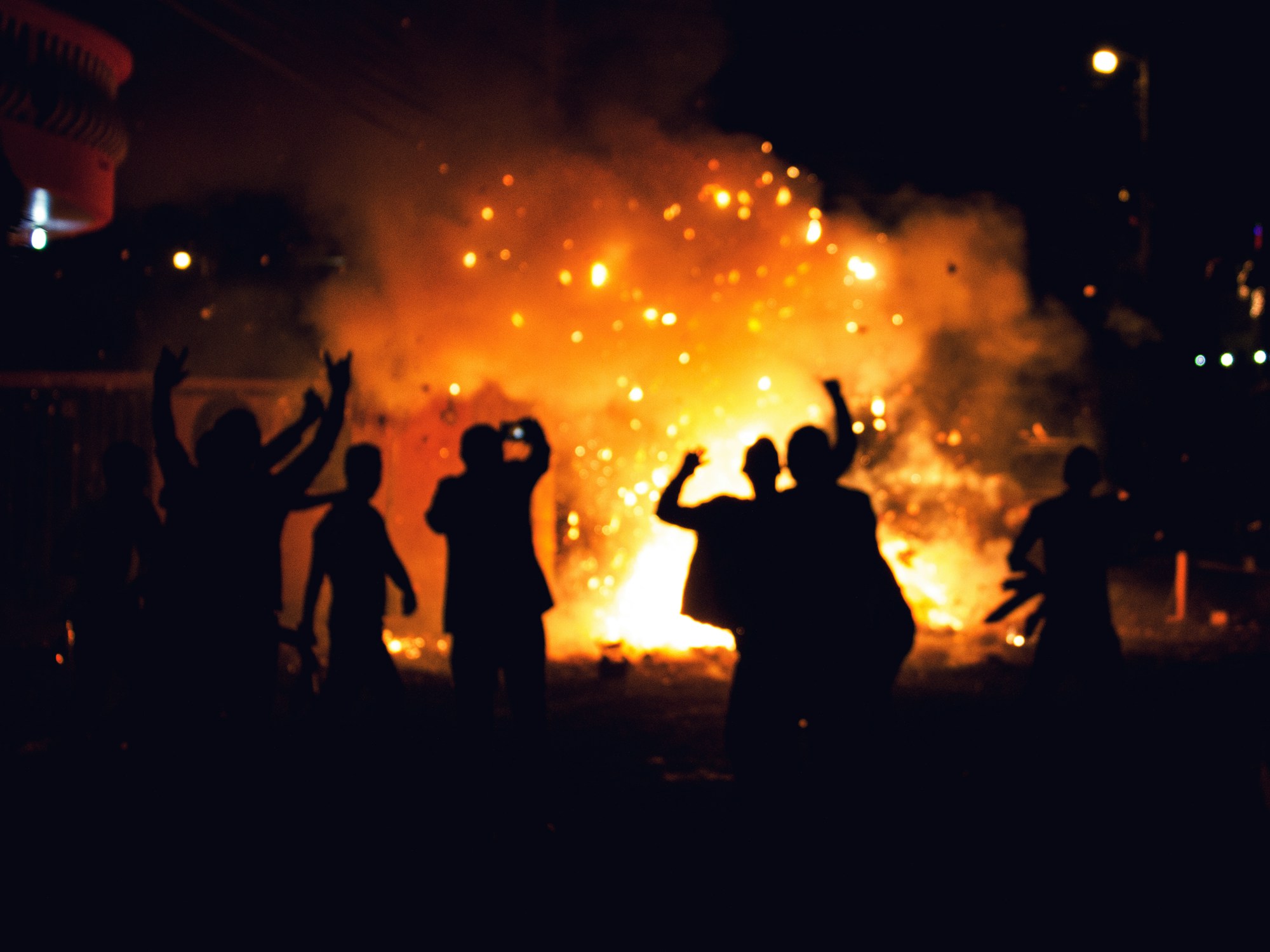
Tradition puts the night of the fire on 16 January, the eve of Saint Anthony (San Antón), patron saint of farm animals. Editions on record confirm it: 2017, 2018, 2022 and 2026. According to AP, as carried by KSAT, the 2026 festival took place on Friday 16 January.
For 2027, the only announcement we found is a third-party listing, Monumentos Llenos, which gives “16 and 17 January 2027” with no time. The town hall has published no programme: the footer of its website still reads ©2020.
Highlights
- A date that holds by tradition: the night of 16 January has been on record since at least 2017.
- A festival you experience on foot, through the village streets.
- Smoke, bonfires and horsemen in the winter night.
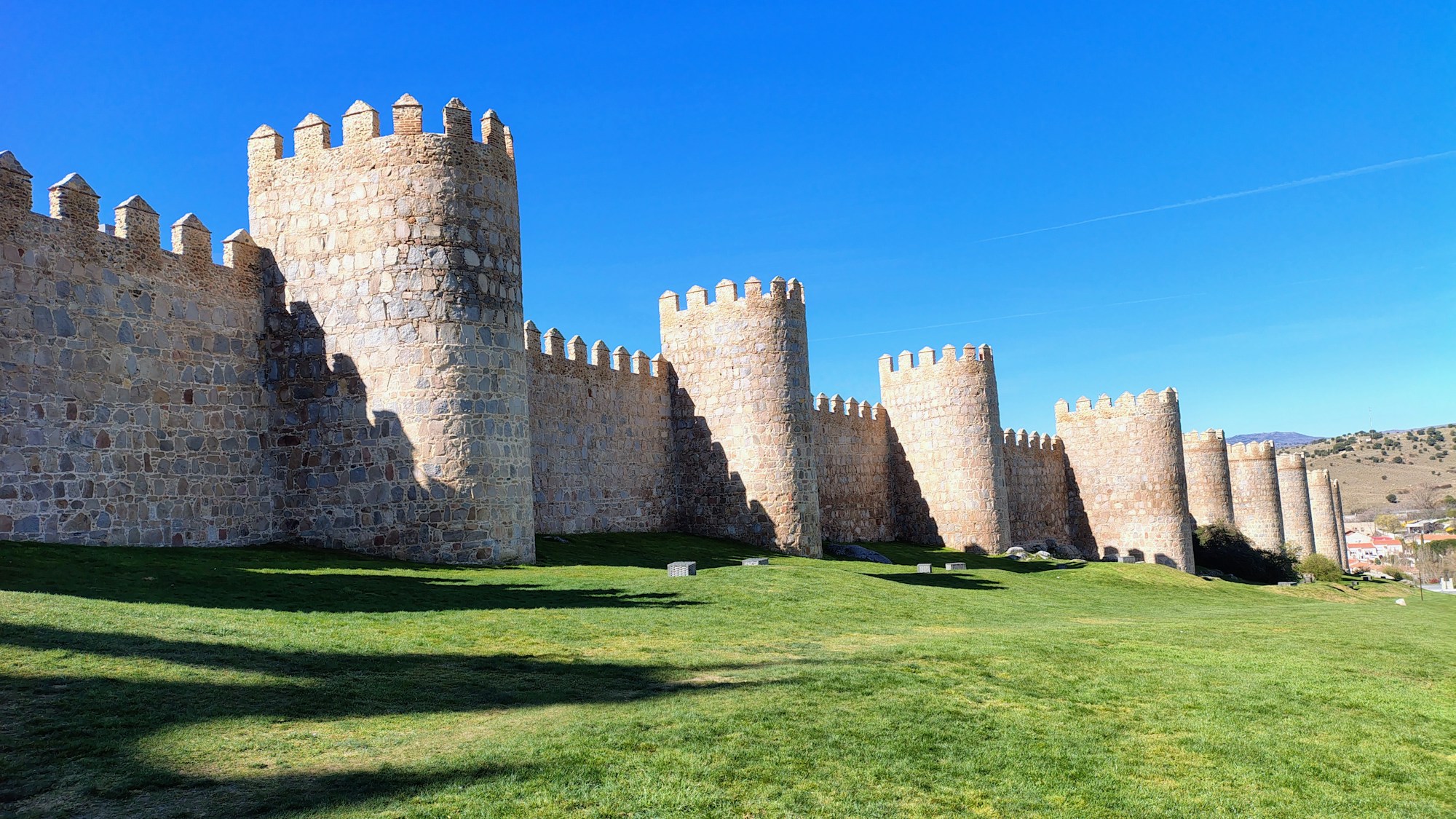
If you’re coming from Madrid, a day trip lets you see Ávila, surrounded by medieval walls, and Segovia, both in Castilla y León. It suits anyone who wants to see those two cities without sleeping over, and it has no link to the festival. Its return time hasn’t been checked: it may not leave you time to reach the village for the night of the fire. No Viator product has been verified for the festival itself. The availability shown below only concerns this day trip, on 16 January 2027.
2. The ritual: bonfires, smoke and horsemen
The ritual unfolds in stages. Branches are gathered from the countryside, then piled into bonfires in the paved streets. Tribuna de Ávila’s report on the 2026 edition counts about twenty bonfires and around 135 mounts, a figure that comes from a single local outlet. The horses’ manes and tails are tied back to limit burns, and riders receive a wristband when they register.
The tradition gives it a meaning: the blessing of animals. The fire and the smoke are said to purify them and protect them from disease, under the patronage of San Antón. A resident interviewed by Euronews in 2022 sums up what has been kept: “blessing the animals with fire”.
The sources don’t detail the exact order of events. The table below gathers what comes up consistently.
| Moment | What happens | Source |
|---|---|---|
| Evening of 16 January | Mass of San Antón, listed at 7.30pm (for the mass) | Tradiciones y Fiestas |
| Night | Bonfires lit, blessing, riders and horses pass through the smoke | Tribuna de Ávila, Euronews FR |
| After the passage | Gathering around the fires, with food grilled on the embers | The Junta’s educational material |
| 17 January | Feast of San Antón, with a cintas race (to be confirmed) | Tradiciones y Fiestas |
Source: Tradiciones y Fiestas, Tribuna de Ávila, Euronews FR, checked on 26 November 2026.
Watch the time: 7.30pm is the time of the mass, not of the fire. None of the sources we checked gives the time the bonfires are lit.
On the origin, the sources don’t agree. The Junta’s educational material points to the 17th century, after an epidemic that is said to have hit the village’s animals (search extract, PDF not opened). A resident interviewed by Euronews may be talking about the Middle Ages. One secondary source mentions “five centuries”. No primary source settles it, so this article does not pick a century.
3. Horses in the fire: two positions, no public decision
The most debated question concerns the horses that pass above the flames. AP’s report on the 2026 edition describes horses jumping through the fires. In 2017, the mayor, María Jesús Martín, replied that no horse is obliged to jump and that there had been neither burns nor injured horses, a statement repeated by The Objective.
Opponents have been speaking out for several years. The Observatorio de Justicia y Defensa Animal, quoted by AP in 2017, considers that the situation subjects the animals to stress contrary to their nature. In 2026, the ANPBA called for “strict monitoring” during the festival and an official report from the Guardia Civil (Seprona). Its article carries a headline about a ban, but its text does not explicitly call for one. PETA, in an article dated 22 January 2026, calls for an end to horses taking part, without backing its claims about burns with veterinary data.
Three findings stand out. No public veterinary report has been found. No municipal or regional decision on the horses had been published when we checked. Finally, the ANPBA claims that the authentic tradition involves smoke rather than passing through the fire, citing a 2005 report from the Procurador del Común and a written statement from the town hall. Neither was read, so treat it as the association’s claim.
The town hall and the associations don’t agree, and the file doesn’t allow us to settle it. Visitors can attend while keeping their distance, or decide the festival doesn’t fit their views.
4. Safety: what the courts have ruled
The most concrete fact for a traveller comes from a court ruling. The Castilla y León High Court (TSJ) ordered the municipality of San Bartolomé de Pinares to pay €30,600 to a spectator injured by a horse at the 2018 edition. According to the court’s press release, dated 6 May 2021, the horse had left the riders’ route and entered the pavement where the spectator was standing. The court held that the municipality did not meet its duty of care.
The ruling doesn’t judge whether the ritual is lawful. It concerns the municipality’s responsibility to protect spectators. The full judgment hasn’t been read, so this article relies on the press release.
No written guidance for spectators has been found, as the town hall’s website is not up to date. The tips below are not official instructions. They follow directly from the ruling and from the photo reports we checked:
- stay clear of the corners where the riders pass;
- don’t stand on an unprotected pavement, exactly where the ruling placed the injured spectator;
- don’t approach the bonfires, where the smoke is dense and embers fall;
- wear clothing that can take smoke and sparks.
5. Getting there from Madrid and Ávila
Ávila, then about 20 km
The Renfe Media Distancia train runs from Madrid Príncipe Pío to Ávila, with 12 to 19 departures a day according to aggregator sites. These figures don’t replace Renfe’s official timetable, which we weren’t able to check: confirm it for the day you choose.
From Ávila, the village is about 20 km away. A bus line (VACL149, which uses the AV-503) is flagged, but its timetable hasn’t been confirmed, and no taxi service was found. By car, the A-6 motorway takes you to Ávila, then roughly 20 km of road. No drive time has been verified: check it before you leave.
To check before you go
- The official Renfe train timetable for your date.
- The actual times of the Ávila-village bus line.
- Your way back after the fires, as no night-time service is documented.
To plan your route step by step, the Pixidia itineraries can serve as a working base.
| Route | Duration | Price | Frequency | Status |
|---|---|---|---|---|
| Madrid Príncipe Pío to Ávila, Renfe Media Distancia | 1h 26 to 1h 40 | €7 to €15 | 12 to 19 a day | Indicative, aggregators |
| Madrid to Ávila, Jiménez Dorado bus | about 1h 12 | not checked | not checked | Indicative, Omio |
| Ávila to the village, line VACL149 | not confirmed | not checked | not confirmed | To check |
| Madrid to the village, by car | A-6 then about 20 km of road; drive time not verified, check before you leave | fuel | not applicable | Not sourced |
Source: Omio, Kombo, checked on 26 November 2026. Renfe’s official timetables were not consulted.
6. Indicative budget for a night on site
We found no entry fee in the sources, and the town hall has published no prices. Grandstand tickets, or any voluntary contribution, have not been checked. The budget therefore comes down to transport, accommodation and food. The table below gathers only the figures the open sources give.
| Item | Range found | Source | Status |
|---|---|---|---|
| Train Madrid to Ávila, one way | €7 to €15 depending on the date | Omio, Kombo | Indicative |
| Whole house for the night | €70 to €160 a night | Clubrural | To confirm with the host |
| Entry to the festival | No fee found; prices not checked | Not found in the sources | To check with the town hall |
| Meal on site | Not checked | No priced source | Not sourced |
Source: Clubrural, Kombo, checked on 26 November 2026.
The maths uses the ranges found, with no group rate. For one person, a return train costs €14 to €30 (two one-way trips at €7 to €15). A whole house at €70 to €160 a night, shared between four people, works out at €17.50 to €40 per person per night, before food.
7. Where to stay and when to book
Accommodation is scarce in the village. Most of the offer is in casas rurales: casasrurales.net lists 16 houses within 25 km. Hotels are few in the village itself; the wider choice is in Ávila, which isn’t priced here.
Book early for the night of 16 January. No official source says so, but it follows directly from the limited number of beds.
| Offer | Capacity | Indicative price | Status |
|---|---|---|---|
| Casas rurales, casasrurales.net | 16 houses within 25 km | not checked | From the directory |
| Whole houses, Clubrural | not checked | €70 to €160 a night | To confirm with each host |
| Casa El Molino I and II | not checked | not checked | Turismo Castilla y León listing |
Source: casasrurales.net, Clubrural, checked on 26 November 2026.
8. Depending on your profile
The festival is experienced differently depending on who you are. The tips below are reading advice, drawn from the accounts and photo reports we checked, not official instructions.
First time
Arrive early in the afternoon to get your bearings in the streets, the square and the routes the riders take before dark. Walk the village first, then pick a viewpoint away from the pavements where the closest spectators stand.
With children
The smoke is dense and the January cold is real. Keep children away from the bonfires and the riders, and plan to leave before the fires end. The passage of the horses can overwhelm younger children.
Photographers
The photo reports we checked describe smoke that cuts visibility and horses close to the fire. A telephoto lens lets you keep your distance, and the safest angle is not the one on the route.
If animal welfare matters to you
You can choose not to watch the horses pass, and stay in the village for the atmosphere. That choice implies no judgement about the participants: the controversy is real, and it divides the town as much as the associations.
9. Weather and kit
In January, the average minimum temperature in Ávila is -1.6°C and the average maximum 7.6°C, according to AEMET’s 1983–2010 normals for the Ávila station. The festival night is therefore cold, and the smoke adds to it.
Pack warm layers, shoes with good grip for the cobbles, and clothes that can take smoke and sparks. People sensitive to smoke should keep well away from the bonfires, as the photo reports we checked recommend.
10. Villar del Rey: another festival, in October
The name Luminarias causes confusion. Villar del Rey, in the province of Badajoz in Extremadura, also holds a Luminarias festival, but on the first Saturday of October. The Junta de Extremadura lists it on its festival page, updated on 2 October 2025.
The two events have neither the same date nor the same village. A booking for the night of 16 January only concerns San Bartolomé de Pinares. In Poyales del Hoyo, another fire festival exists, with no verified date.
What other guides don’t tell you
Guides we read sometimes mix up festivals, present a date as settled, or pick an origin without sourcing it. Here are five points we checked in open sources.
- The 2027 date isn’t official. The only announcement we found is a third-party listing, pointing to a programme that hasn’t been published. The town hall’s site still shows a ©2020 footer (Monumentos Llenos, checked on 26 November 2026).
- The court ordered the municipality to pay €30,600 over a 2018 injury. The press release from the Castilla y León High Court, dated 6 May 2021, is missing from the guides we read (Poder Judicial, checked on 26 November 2026).
- Villar del Rey is not the same festival. It takes place on the first Saturday of October, according to the Junta de Extremadura, whose page was updated on 2 October 2025 (Junta de Extremadura, checked on 26 November 2026).
- The origin is contested. The 17th century is put forward by the Junta’s educational material, the Middle Ages by a resident interviewed in 2022. No primary source settles it (Euronews FR, checked on 26 November 2026).
- The fire time isn’t sourced anywhere. The 7.30pm given by Tradiciones y Fiestas is the time of the San Antón mass, not of the bonfires (Tradiciones y Fiestas, checked on 26 November 2026).
Practical info
Confirm with the town hall or the Ávila tourist office the 16 January 2027 date and the start time, which no reliable source gives.
Keep your distance from the routes and the bonfires. No written guidance for spectators has been found.
Book early. Casas rurales are the main option, and hotels are scarce in the village.
Frequently asked questions
When are the Luminarias of San Bartolomé de Pinares in 2027?
The expected date is the night of Saturday 16 January 2027, the eve of San Antón. It rests on tradition and on a third-party listing, Monumentos Llenos, which gives “16 and 17 January 2027” with no time. No announcement from the town hall has been found. Confirm the date with the town hall before you plan your trip.
Did the Luminarias take place in 2026?
Yes. The festival took place on Friday 16 January 2026, according to AP’s dispatch of 17 January 2026, carried by KSAT, and Tribuna de Ávila’s report. The latter counts about twenty bonfires and around 135 mounts, figures from a single local outlet. An ONCE notice from January 2025 devotes a lottery ticket (cupón) to the festival (extract); no 2025 report has been read.
What time does the festival start?
No reliable source gives the time the bonfires are lit, and the town hall has not published it. Tradiciones y Fiestas lists 7.30pm, but for the San Antón mass, not for the fire. Confirm the time with the town hall before you leave.
Do the horses really jump through the fire?
According to the 2026 reports, yes: riders take their horses through the smoke and, for some, above the flames. The town hall says no horse is obliged to jump. The ANPBA and PETA dispute this practice. No public veterinary report has been found to settle the question.
Has anyone been injured?
Yes, according to the courts. A spectator was injured by a horse at the 2018 edition. In a ruling whose press release is dated 6 May 2021, the Castilla y León High Court ordered the municipality to pay €30,600, holding that it did not meet its duty of care: the horse had left the riders’ route and entered the pavement. Stay clear of the corners where the riders pass.
How do I get to San Bartolomé de Pinares from Madrid?
Take the Renfe Media Distancia train to Ávila, about 1h 26 to 1h 40 according to aggregators, then roughly 20 km to the village. A bus line from Ávila (VACL149) is flagged, but its timetable is not confirmed. By car, take the A-6: the drive time hasn’t been checked. Verify all timetables on the official sites before you leave.
Do I need to book accommodation?
Yes, and early. Hotels are scarce in the village, and most of the offer is in casas rurales: casasrurales.net lists 16 houses within 25 km. Clubrural gives €70 to €160 a night for a whole house, to confirm with each host. This isn’t official advice, but it follows from the limited number of beds.
Is there the same festival in Villar del Rey?
There is a Luminarias festival in Villar del Rey, in the province of Badajoz, but it takes place on the first Saturday of October. It is not the 16 January festival of Ávila. The Junta de Extremadura describes it on its official page, updated on 2 October 2025.
What’s the weather like in January in Ávila?
In January, the average minimum is -1.6°C and the average maximum 7.6°C, according to AEMET’s 1983–2010 normals for Ávila. The night is cold, and the smoke adds to the discomfort. Pack warm layers and shoes that grip on the cobbles.
Sources
- Poder Judicial, Castilla y León High Court press release: €30,600 compensation, 6 May 2021
- Junta de Extremadura, Luminarias festival page: Villar del Rey, first Saturday of October
- AEMET, climate values for Ávila: 1983–2010 normals, station 2444
- Monumentos Llenos, 2027 listing: 16 and 17 January 2027, no time, no municipal source
- Tradiciones y Fiestas: San Antón mass at 7.30pm, cintas on 17 January
- Tribuna de Ávila, report on the 2026 edition: bonfires, mounts, wristbands
- Euronews FR, 17 January 2022: the ritual and the meaning of the festival
- The Objective, 18 January 2017: positions of the mayor and the Observatorio
- PETA, 22 January 2026: call to end the participation of horses
- Avila Red, ANPBA article: call for monitoring and an official report
- KSAT, AP dispatch of 17 January 2026: 2026 edition held on the Friday
- Wikipedia EN, San Bartolomé de Pinares: population (479) and distance (about 20 km)
- Omio, Madrid to Ávila by train: indicative durations and fares
- Clubrural, rural homes in San Bartolomé de Pinares: indicative price range
- ONCE, notice on the lottery ticket about the Luminarias: trace of a 2025 edition, January 2025 (extract, page not read)
Sources checked or consulted on 26 November 2026. Sources read only in part, or by extract, are flagged in the body text.
Plan your trip with Pixidia
Pixidia learns how you travel and helps you build a trip that truly fits you and everyone coming along.
Open the planner