
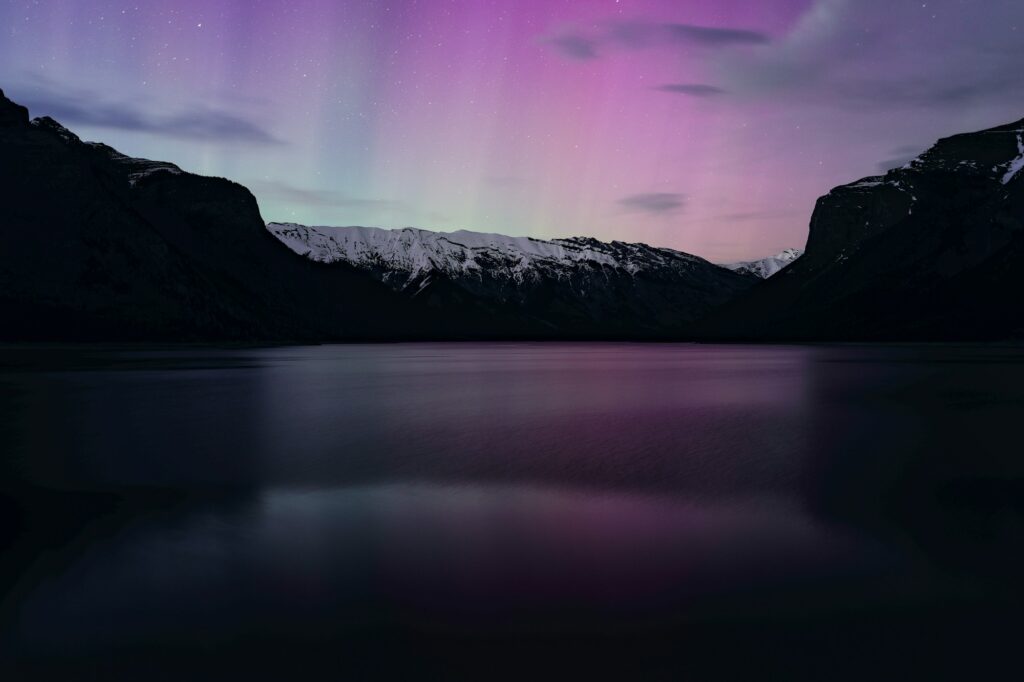
From 1 December 2026 to 31 March 2027, aurora season is on in Yellowknife, with February and March giving the clearest skies. The December average is -21.8 °C. Plan four to six nights, three at minimum, to leave room for cloudy days.
Checked on against the official sources cited (canada.ca, City of Yellowknife, Air North, Environment Canada normals as reproduced by Wikipedia).
Yellowknife, capital of the Northwest Territories, sits under the auroral oval, and its winter is long. For a UK traveller this is not a short European break: the cold is real, the flight always goes through a large Canadian city, and the success of the trip depends mostly on how many nights you book. This guide covers the 2026-2027 season month by month, the cold and sky figures, the entry paperwork from the UK, the budget and the outings worth the trip.
December to March: the season, month by month
A season from mid-November to early April
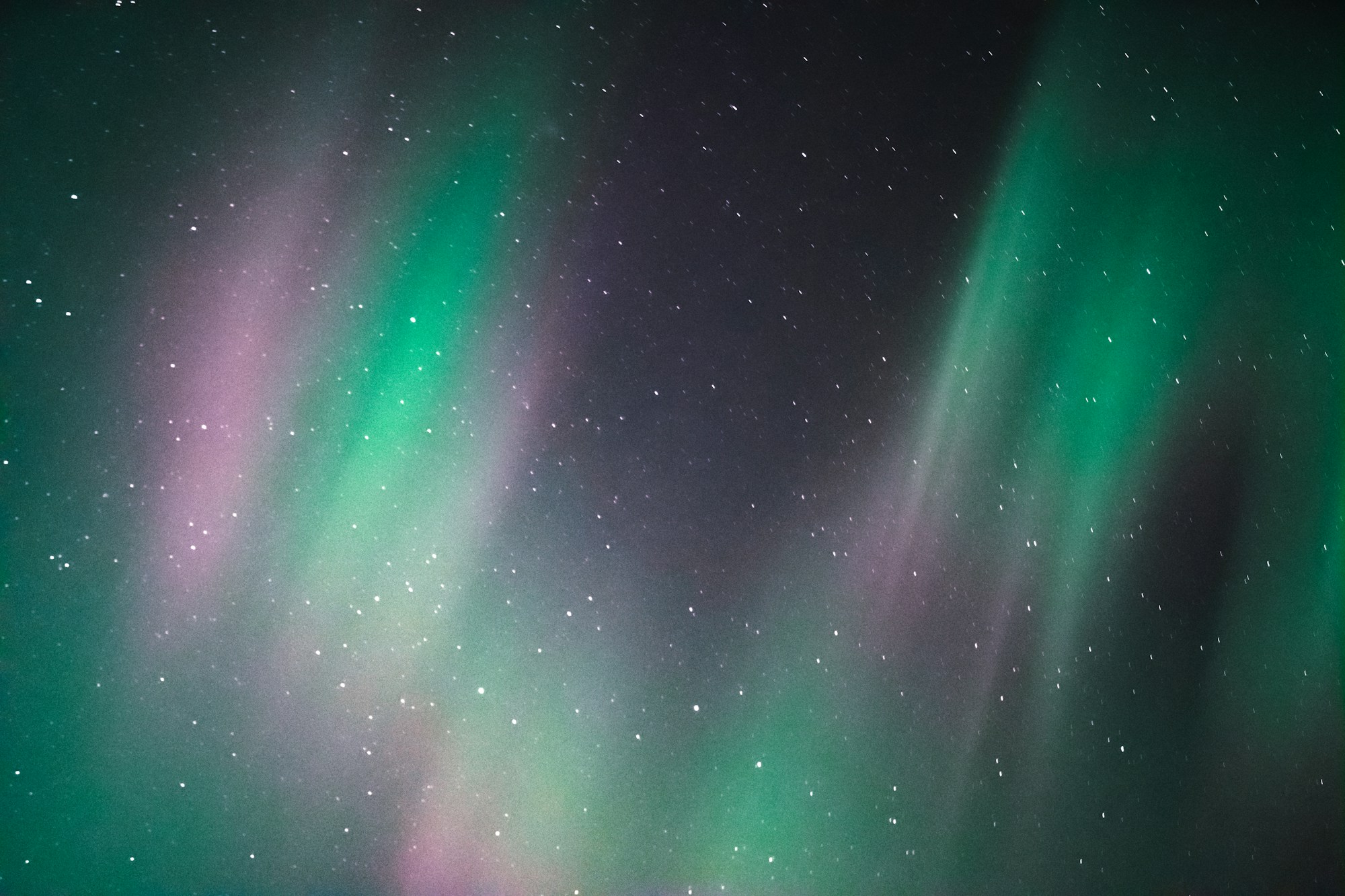
The City of Yellowknife announces an observation season from mid-November to early April, and notes that late August and September also offer good chances. Destination Canada, the national tourism office, shows the curve: the low point runs from early October to mid-November, when cloud cover is thickest, and the best conditions for first-time visitors fall in late February and March. The sources agree on the window and disagree on the order of the months: some put December first, others February.
December works differently. These are the longest nights of the year, but the sun is rare, with about 24.6 hours of average sunshine over 1981-2010. Early in the month is often cloudy and snowy, and the holidays close part of the city: shops, restaurants and public buildings are shut on 25 December, and often on 26 December. One older local source (ykonline, probably from 2018) puts observation nights at around 21 on average for this month. Treat that as an order of magnitude, not a guarantee.
For a first night without a car or cold-weather experience, a night bus outing is the simplest format to fit into a trip. It gives you time to get the hang of it before booking a second night, in a group or privately.
The table below gives the month-by-month reading, from autumn to April, with Destination Canada’s recommendation where one exists.
| Month | Average sunshine (h) | Recommendation (Destination Canada) | Remarks |
|---|---|---|---|
| August | 276.2 | Good, end of the autumn season | Dark night only at the end of the month |
| September | 157.7 | Good, first trip recommended | Lakes not yet frozen |
| October | 65.0 | Avoid, maximum cloud cover | See the guide to the October 2026 window |
| Mid-November | not given | Good, start of the winter season | Aurora Village opens 20 November 2026 |
| December | 24.6 | Not specified | Long nights, often grey skies early in the month, holidays |
| January | 50.6 | Not specified | Hardest cold of the season |
| February | 107.3 | Very good, among the best conditions of winter | First truly bright month |
| March | 188.4 | Very good, window for first-time visitors | The sunniest month of the dark season |
| April | 276.4 | Limited, nights getting shorter | Aurora Village closes 7 April 2027 |
Source: Wikipedia, sunshine data from Environment Canada (1981-2010); Destination Canada; Dark Skies Atlas, checked on 18 October 2026.
Reading the table: the darkest nights fall in December and January, but the sky clears in February and March. If you arrive between 23 December and 2 January, the CAD 50 per adult holiday supplement is added to the Aurora Village package; outside those dates, it does not apply.
The cold: averages first, extremes after
December to February: averages below -20 °C
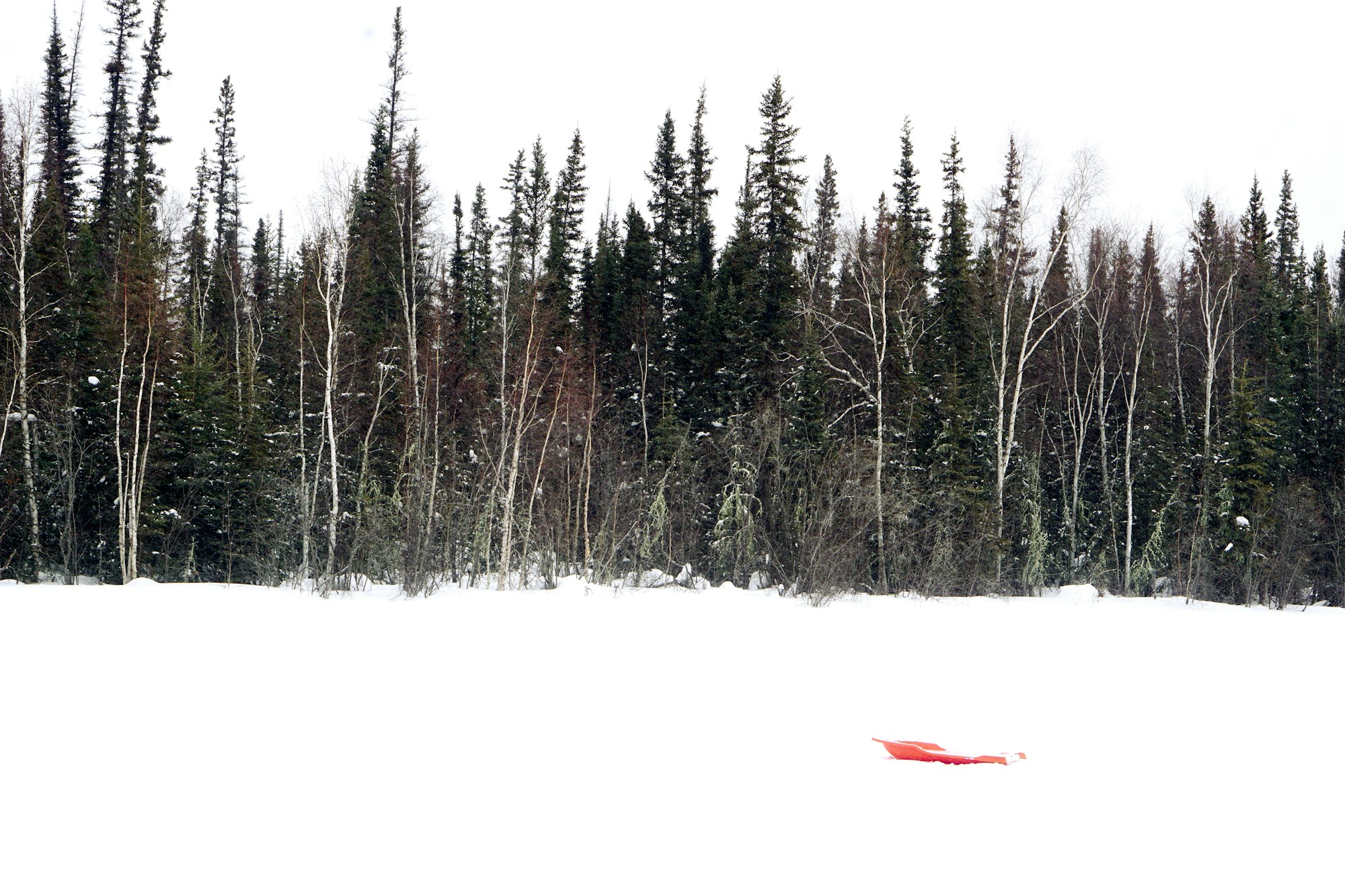
Environment Canada’s 1991-2020 normals, reproduced by Wikipedia which cites this data, give a December daily mean of -21.8 °C and an average low of -25.6 °C. January is the coldest month, at -25.5 °C on average and -29.4 °C for the lows. February stays around -22.7 °C, then March eases to -16.6 °C.
These are averages: any given day can be much colder. That is why guides talk about -30 to -40 °C. Those are extremes and personal accounts, not the typical climate. One photographer reports seeing auroras under a clear sky at -38 °C in February: a real experience, but not a description of the month’s average.
| Month | Average high (°C) | Daily average (°C) | Average low (°C) | Average snowfall (cm) |
|---|---|---|---|---|
| December | -18.0 | -21.8 | -25.6 | 23.7 |
| January | -21.6 | -25.5 | -29.4 | 21.7 |
| February | -18.0 | -22.7 | -27.4 | 16.1 |
| March | -10.6 | -16.6 | -22.5 | 19.2 |
Source: Wikipedia, climate table citing Environment Canada (1991-2020 normals), checked on 18 October 2026.
Colder figures found elsewhere are not used here. One commercial guide gives a December average of -30 °C, almost 8 degrees below the official normal. We stick with the normals and present the extremes for what they are.
Sky, cloud and sun: the factor people forget
An aurora is only visible through a clear sky, so winter sunshine matters as much as solar activity. December and January combine very long nights with rare light, with 24.6 hours of average sunshine in December and 50.6 hours in January. February gets 107, and March 188, which makes it the brightest month of the dark season (1981-2010 normals, via Wikipedia).
Published figures range from an 80% chance of seeing an aurora over two nights (voyage-canada) to 98% over three nights (Canadian Geographic, cited by Dark Skies Atlas), with 95% over three nights (voyage-canada). These are operator or publication figures with no published method, and they do not always distinguish a visible aurora from a clear sky: Canada Spirit gives 80 to 85% clear sky. Keep the order of magnitude in mind: three nights at minimum, four to six to have a margin against cloudy days.
Destination Canada mentions up to 240 aurora nights a year. This figure circulates widely without a primary source; we present it as an estimate, never as a measured average.
On the sun side, solar cycle 25 peaked in October 2024, with a monthly smoothed value of 161 according to the Royal Observatory of Belgium (SILSO). Winter 2026-2027 falls in the declining phase. That does not rule out big storms: NASA notes that significant geomagnetic storms often occur during the decline, as reported by an article in Narcity. The cycle detail and the 2026 window are covered in our guide Northern Lights 2026: last chance before 2031, which we don’t repeat here.
October is one to avoid for a trip: it is the month with the highest cloud cover, at 65 hours of average sunshine. Our October 2026 window guide covers that particular month.
Getting there from the UK: eTA, flights and connections
No direct flight, one connection in Canada
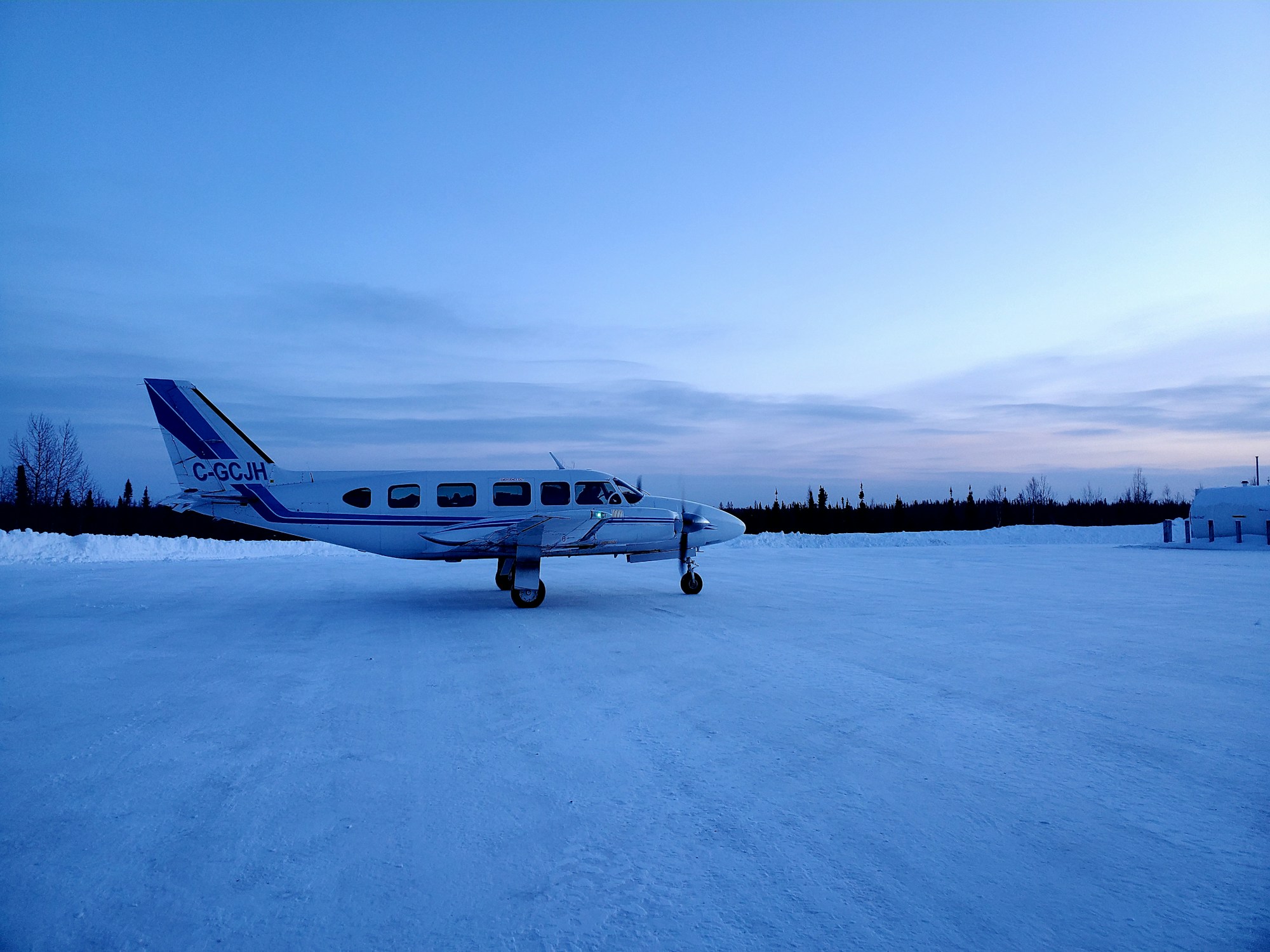
No direct flight links London to Yellowknife. The journey goes through a large Canadian city, Edmonton, Calgary, Vancouver or Toronto depending on the airline, then on a regional plane. One third-party source gives an average journey time of around 19 hours including connections. That is an order of magnitude, which depends mostly on the connection times.
- Air North says it will fly Edmonton to Yellowknife all year from December 2026, two flights a week. Its 11 August 2026 press release gives no start date for the service.
- The same release announces a return to Whitehorse in December 2026, and seasonal service to Vancouver from August 2026 to March 2027.
- An international ticket must include the connection to Yellowknife. Otherwise, tickets are separate and no connection is guaranteed.
The eTA: CAD 7 for air travel
The canada.ca page we read on 18 October 2026 says the electronic travel authorisation (eTA) costs CAD 7, non-refundable, for air travel. Canada’s official eTA bulletin (page dated 5 June 2026) lists the United Kingdom among the countries whose nationals need one to fly to Canada, so UK citizens need to apply. Check your eligibility on canada.ca before paying.
Third-party sources give a validity of five years, or until the passport expires if that comes first. That period is not confirmed on canada.ca. The passport used for the application must be the one you travel with, according to the same sources.
Three things to watch on arrival
- Winter stretches journey times: flights can be delayed by weather, and the final regional leg can be cancelled. Keep two nights of margin at the start or end of your stay.
- Air North and Air Canada don’t necessarily use the same arrival airports in Edmonton. Check the terminal on your ticket before booking accommodation.
- Aurora Village’s shuttle picks up arrivals between 12 pm and 9 pm, on Air Canada or WestJet flights landing before 8 pm. Outside these conditions, arrange transport.
France’s foreign ministry travel advice for Canada (updated 10 September 2026) flagged active wildfires in western Canada, including the Northwest Territories, and possible disruption to domestic flights. Germany’s Federal Foreign Office notice dated 18 October 2026 reports no current fire in the Northwest Territories, only a recurring fire risk. The FCDO’s Canada advice on GOV.UK, checked on 18 October 2026, does not mention either point. Check the advice again before you leave, not only when you book.
Budget: packages, tours and costs to plan
Three costs weigh on the budget: the flight, accommodation with its aurora nights, and clothing if you don’t have any. For the flight, the only dated fare in our sources is Edmonton-Yellowknife from CAD 155 on Air Canada (October 2026 dates, one-off check, not guaranteed). Compare flights on your exact dates before budgeting the rest.
The best-documented package for winter 2026-2027 is Aurora Village’s: city-centre accommodation, airport shuttle and aurora outings. The rates below are per person, double occupancy, excluding 5% GST. The package includes winter clothing for 2 to 4 nights depending on the option; confirm this with the operator for the option you want.
| Package | Explorer Hotel Superior | Chateau Nova Standard |
|---|---|---|
| 2 nights, 3 days | 740 | 715 |
| 3 nights, 4 days | 1,010 | 970 |
| 4 nights, 5 days | 1,165 | 1,110 |
Source: Aurora Village, winter and spring packages 2026-2027, checked on 18 October 2026. These packages include neither meals nor drinks.
Three points to read before booking:
- Holiday supplement: CAD 50 per adult for arrivals from 23 December to 2 January. Arriving before or after that period avoids it.
- Accommodation tax: the top of the page mentions an extra 4% tax, but the inclusions section lists it as included. Ask for written confirmation before paying.
- Cancellation: full refund up to 15 days before arrival, minus CAD 100 per person in fees. Between 14 and 8 days, 50% is not refunded; between 7 and 3 days, 75%; under 48 hours, nothing.
Outside a package, a guided night tour costs CAD 130 to 200 per person in a group, and CAD 400 to 700 privately or with a photographer, according to Canada Spirit (undated page). An all-inclusive four-night package is advertised at CAD 2,500 to 5,000 per person by a travel blog. The gap is too wide to be useful on its own: compare what’s included, not just the price. Renting an extreme-cold parka costs around CAD 40 to 80 a day, according to a general indication.
Outings and viewing spots: city, lakes and camp
Get out of the city’s light
City light is the aurora’s enemy. Operators therefore advise getting away from the town lights, and their outings head north-east along the Ingraham Trail (route 4), or to Prelude Lake, about 28 km south-east. The city runs an official scheme: the Northern Lighthouses, small lights placed around town, signal an active aurora forecast for the evening, so you can follow the activity without leaving the centre. Without a car, the way to reach sites outside town is an excursion: no regular shuttle goes there, according to our sources.
| Place | Distance from the city | Format | Good to know |
|---|---|---|---|
| Northern Lighthouses | In the city | City programme | Signal an active aurora forecast for the evening |
| Ingraham Trail (route 4) | North-east, outside the city | Classic viewing spot | Cited by all three main sources (City of Yellowknife, Canada Spirit, Spectacular NWT) |
| Prelude Lake Territorial Park | About 28 km south-east | Territorial park | Lake and open sky, far from light pollution |
| Tibbitt Lake | About 30 km east | Place cited by operators | To confirm with your chosen operator |
| Dettah Ice Road | Crosses Yellowknife Bay | Ice road | Season January to March according to a local guide; 2026-2027 opening not confirmed |
| Camp Tugáh, Kam Lake | About 10 minutes from downtown | 30-minute dog sled ride | 20 people maximum |
Source: City of Yellowknife; Canada Spirit; Spectacular NWT, checked on 18 October 2026.
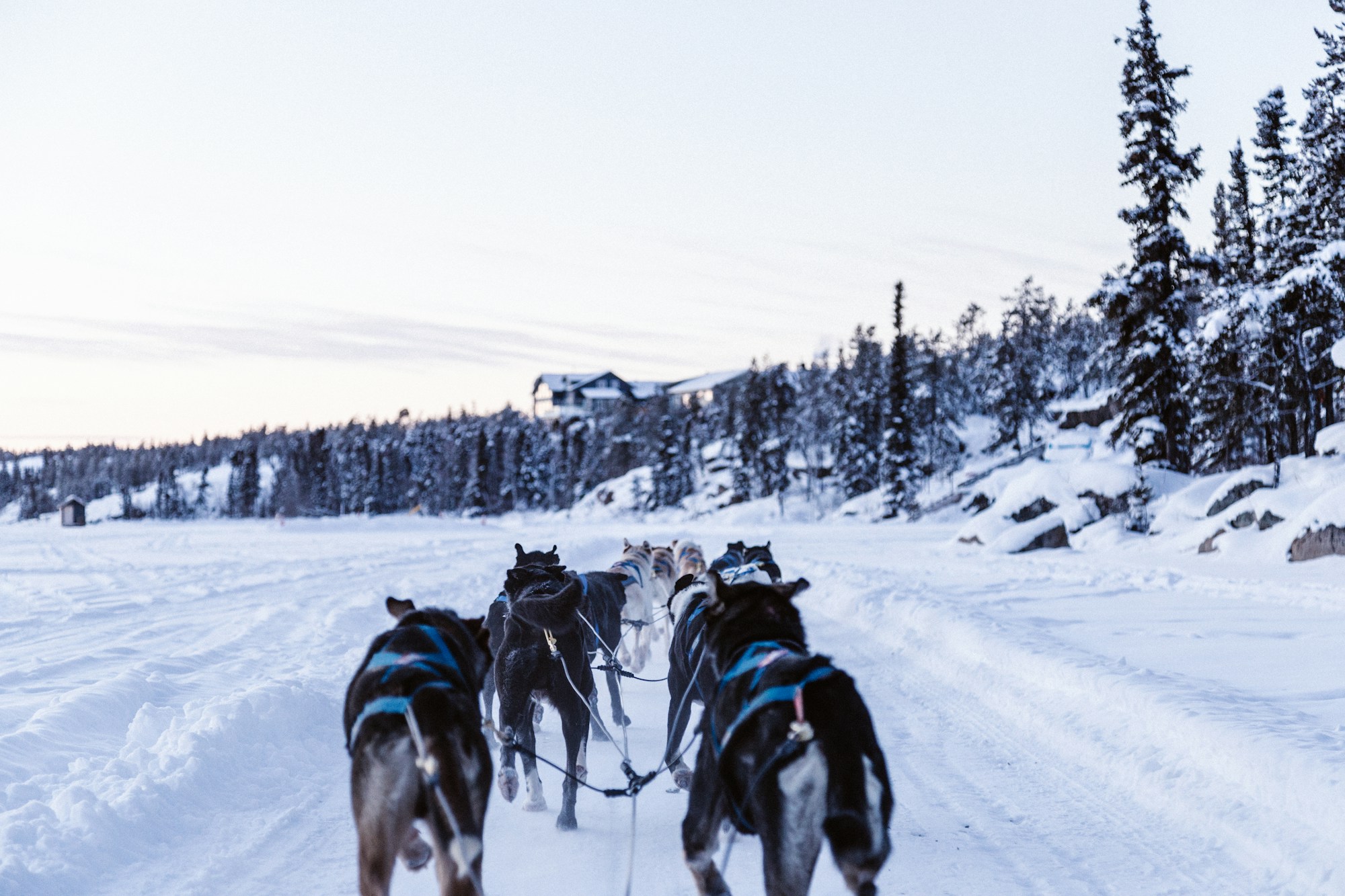
For a different outing, the Tugáh dog sled ride lasts 30 minutes and takes up to 20 people, from the Kam Lake camp. The Northwest Territories tourism office also offers a Winter Aurora Fireside evening on Joliffe Island, in the houseboat district, with a minimum of 4 participants and cancellation possible up to 48 hours before. These are product pages: confirm the time and conditions directly with the operator.
A typical four-night stay, day by day
The rhythm that works combines a day to acclimatise, two outings and a catch-up night. Here is a plan that accounts for year-end closures and flight delays.
- Day 1: arrive late in the day, take the shuttle if you have a package, then spend your first evening in town spotting the Northern Lighthouses and checking the forecasts from Astronomy North.
- Day 2: a quiet day to get used to the cold, buy or rent the clothing you’re missing, and check with your operator on the weather for the coming nights.
- Day 3: first night outing out of town, in a group or privately depending on budget.
- Day 4: second outing, or a catch-up outing if the previous night was clouded out. That is the purpose of the spare nights.
- Day 5: departure, with the connection planned in Edmonton, Calgary or Vancouver and a margin in case the regional flight is delayed.
For a December stay, do your shopping and plan your meals from the 24th: shops, restaurants and public buildings are closed on the 25th, and often on the 26th. The territorial campgrounds are closed in winter.
What to wear: the list that matters
The list below reflects advice from a local guide, several operators and photographers. It comes down to four layers and a few accessories that make a real difference for photos.
- Base layer in merino or synthetic, against the skin. Avoid cotton.
- Breathable mid layer, in fleece or wool.
- Windproof, waterproof hooded shell for windy nights.
- Balaclava or neck gaiter, and a hat that covers your ears.
- Mitts rather than gloves, as they keep heat better. Add thin liner gloves to work the camera.
- Insulated, waterproof boots rated for -30 °C, with a grippy sole. Hiking boots don’t hold up on long outings.
- UV-protective glasses with anti-glare for snow.
- Chemical hand warmers, and a camera battery kept in an inside pocket.
Depending on your profile
With family
None of the sources we read covers children. Ask the operator you choose about the minimum age allowed, the real length of the night and whether there is a warm place to rest between phases of observation. Keep a free day between two outings, and do your shopping before 25 December, since year-end closures weigh more with children. If you’re weighing another northern destination at Christmas, our guide to Finnish Lapland with kids, in Rovaniemi compares a different kind of trip.
As a couple
The simplest format is an Explorer or Chateau Nova package, plus a private outing. For a more memorable experience, lodges outside town, such as Blachford Lake Lodge, reached by ski plane, book up well in advance: six months in high season, and nine to twelve months for the most popular ones (voyage-canada, a commercial source).
On a tight budget
Go for the two-night package at CAD 715 per person, or the three-night one at CAD 970, and avoid holiday dates to skip the CAD 50 supplement. The flight remains the biggest cost: compare dates either side of your preferred ones, and keep the clothing budget for last if you already have a parka.
First time
Aim for late February or March, which Destination Canada recommends to first-time visitors. Book at least three nights, with a guided outing on the first free evening. That gives you a second chance if the first night is clouded out.
Reduced mobility
The sources we read don’t detail the accessibility of outings or whether you can stay warm while observing. Ask the operator about the type of vehicle, the ground (snow, ice) and shelter options before you book.
What other guides don’t tell you
The guides we read have uneven dates: ykonline around 2018, Taketours from January 2024 (prices in USD), Canada Spirit undated. The points below come from official sources or operators, and do not appear, or not in this form, in those guides. All sources were checked on 18 October 2026.
- The CAD 7 eTA for air travel, which UK citizens need. Sources: IRCC eTA bulletin (page dated 5 June 2026), which names the United Kingdom, and the canada.ca eTA page, checked on 18 October 2026, which gives the fee. None of the guides we read covers entry formalities.
- Edmonton-Yellowknife flights all year from December 2026. Source: Air North press release of 11 August 2026, checked on 18 October 2026. One guide announces a « daily service » with no date or airline.
- The 2026-2027 season of an accommodation provider, with its holiday supplement. Source: Aurora Village website, checked on 18 October 2026: from 20 November to 7 April, and a CAD 50 holiday supplement from 23 December to 2 January.
- December normals that are less cold than the figures quoted. Source: Environment Canada 1991-2020 normals, reproduced by Wikipedia, checked on 18 October 2026: -21.8 °C daily average, against -30 °C in a commercial guide.
- The solar cycle, quantified, and the next cycle. Sources: SILSO (October 2024 peak, smoothed value 161) and SWPC (NOAA), checked on 18 October 2026: cycle 26 is expected between January 2029 and December 2032. The SWPC page we read gives no numerical forecast for 2026-2027, and does not confirm the widely repeated claim of a favourable winter announced by NOAA.
Practical information before you go
- Currency: the Canadian dollar (CAD). Convert at the day’s rate, and allow a margin for prices shown in CAD.
- Forecasts: Astronomy North publishes daily forecasts and a live AuroraMAX feed; the city flags forecast auroras with its Northern Lighthouses.
- Entry: the CAD 7 eTA covers air travel. Canada’s eTA bulletin lists the United Kingdom among the countries whose nationals need one. Check on canada.ca before paying.
Frequently asked questions
What’s the best time to see the northern lights in Yellowknife?
The observation season runs from mid-November to early April, according to the City of Yellowknife. For the sky, February and March are the most recommended months, as Destination Canada cites them for first-time visitors. December and January have the longest nights, but the sky is more often cloudy early in the month. If you can only pick one month, take March, which combines a clear sky and daylight.
How many nights should I plan to see an aurora?
Guides agree on three nights at minimum, and four to six nights to leave a margin against cloudy days (voyage-canada). One night is a gamble. Add a day of margin for regional flight delays, as winter often lengthens them.
What are my chances of seeing an aurora in Yellowknife?
Published figures range from an 80% chance of seeing an aurora over two nights (voyage-canada) to 98% over three nights (Canadian Geographic, cited by Dark Skies Atlas). These are operator or publication figures with no published method. The number of aurora nights a year, up to 240 according to Destination Canada, is the same kind of estimate. Remember that cloud cover often decides as much as solar activity.
Does a UK passport holder need an eTA for Yellowknife?
Yes, if you fly. Canada’s official eTA bulletin lists the United Kingdom among the countries whose nationals need one. The eTA costs CAD 7 for air travel. For road or sea travel, the sources we read don’t settle the question. Third-party sources give a validity of five years or until the passport expires, but canada.ca does not confirm this period, so check on canada.ca before you pay.
Is there a direct flight from London to Yellowknife?
No. The journey goes through Edmonton, Calgary, Vancouver or Toronto depending on the airline, then on a regional plane. One third-party source gives an average of about 19 hours with connections. Allow two nights of margin at the start or end of your stay, since weather can delay or cancel the final leg.
Does Air North fly to Yellowknife all year round?
From December 2026, Air North says it will fly Edmonton to Yellowknife all year, two flights a week, according to its 11 August 2026 press release. The release gives no precise start date. The airline also announces a return to Whitehorse in December 2026. Check the timetable when you book.
What budget should I plan for an aurora trip to Yellowknife?
The Aurora Village winter 2026-2027 package starts at CAD 715 per person for two nights in a standard room, and CAD 1,110 for four nights, excluding GST and flights. A guided group outing costs CAD 130 to 200 per person, and CAD 400 to 700 privately. The flight is the most variable cost: compare fares for your travel dates.
What temperatures should I expect in December in Yellowknife?
The 1991-2020 December normal is -21.8 °C as a daily average, with an average low of -25.6 °C. Much colder days, down to -40 °C according to accounts, do occur, but they do not make up the month’s average. Pack layers, mitts and boots rated for -30 °C.
Sources
- canada.ca, electronic travel authorisation (eTA): official page on fees and air travel.
- IRCC, eTA operational bulletin: list of countries whose nationals need an eTA, including the United Kingdom (page dated 5 June 2026).
- GOV.UK, FCDO travel advice for Canada: checked on 18 October 2026; page updated 2 June 2026.
- France’s foreign ministry (diplomatie.gouv.fr), Canada travel advice: wildfires and domestic flight disruption, updated 10 September 2026.
- City of Yellowknife, weather and aurora borealis: season and Northern Lighthouses.
- Air North, press release of 11 August 2026: year-round Edmonton-Yellowknife service.
- Destination Canada, best times to see the aurora in Yellowknife: month-by-month reading.
- Spectacular NWT, northern lights: Northwest Territories tourism office, outings and viewing spots.
- Astronomy North: daily forecasts and AuroraMAX.
- Wikipedia, Yellowknife: Environment Canada normals 1991-2020 and sunshine 1981-2010 (secondary source citing Environment Canada).
- SILSO, Royal Observatory of Belgium: solar cycle 25 maximum in October 2024.
- NASA SVS, announcement of the solar cycle 25 maximum.
- SWPC (NOAA), solar cycle progression: cycle 26 expected between 2029 and 2032.
- Aurora Village, winter 2026-2027 packages: rates, dates, holiday supplement, cancellation.
- Canada Spirit, aurora viewing in Yellowknife: tours and spots (undated page).
- voyage-canada, aurora guide 2026: length of stay and packages (commercial source).
- ykonline, Yellowknife in December: clothing, closures, observation nights (older article, around 2018).
- Dark Skies Atlas, Yellowknife month by month: sunshine and cloud cover.
Sources checked on 18 October 2026 unless another date is given. Publication dates of third-party sources are indicated where known. Estimated figures are flagged as such in the text.
Plan your trip with Pixidia
Pixidia learns how you travel and helps you build a trip that truly fits you and everyone coming along.
Open the planner