
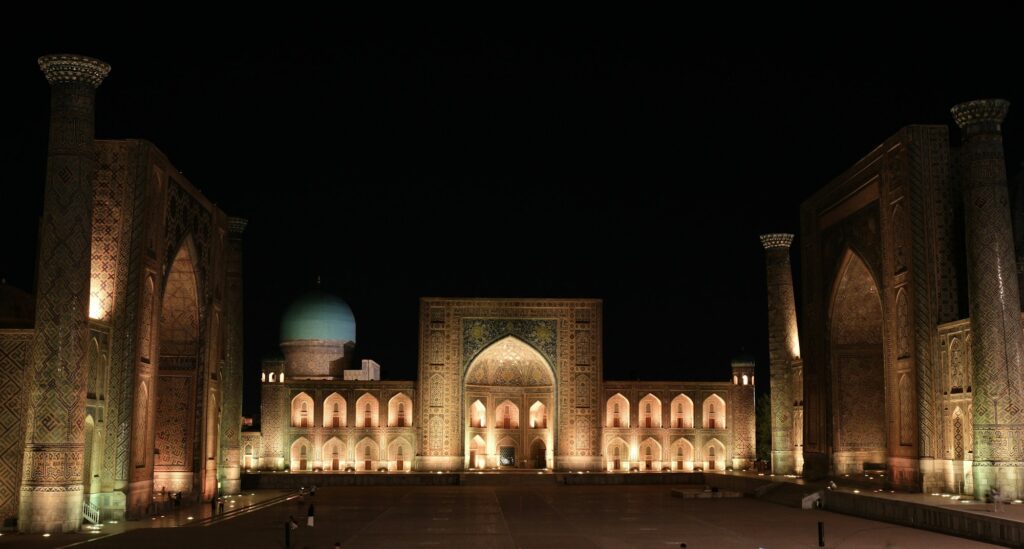
Is Central Asia a real alternative to the Middle East in 2026? Yes. Uzbekistan grants visa-free entry to EU, UK, and US passport holders (30 days) and carries a US State Department Level 1 rating — the same as France. Add Turkmenistan’s Darvaza gas crater and Tajikistan’s Pamir Highway, and a full 2-3 week loop through all three countries costs $25-80/day, roughly half the price of a comparable Middle East itinerary. Best windows: April-May or September-October for the cities, June-September for high-altitude trekking in the Pamirs and Fan Mountains. Our pick: start in Tashkent, end in Dushanbe.
On February 28, 2026, the outbreak of war in Iran instantly closed a destination that attracted thousands of travelers every year. Isfahan, Persepolis, Yazd, Shiraz — names that once evoked the promise of a refined Orient — are now out of reach. Across the broader Middle East, the situation is equally complex: Lebanon is still rebuilding, Israel and Gaza remain in permanent tension, Syria is still recovering. But this geopolitical vacuum has thrown wide open a door long left ajar: Central Asia. Uzbekistan, Turkmenistan, Tajikistan — the three guardians of the new Silk Roads — are emerging in 2026 as the most compelling alternatives for travelers seeking cultural richness, authentic hospitality, and landscapes ranging from the scorching Karakum desert to the dizzying summits of the Pamirs.
This complete guide takes you through these three underrated but remarkably accessible destinations: visa-free entry to Uzbekistan, Islamic architecture as stunning as Isfahan, legendary hospitality, and adventure potential that few other regions can match.
Uzbekistan: The Heart of the Silk Road
Uzbekistan is the natural gateway to Central Asia. Served by direct flights from major European hubs, boasting a rapidly growing hotel infrastructure, and offering visa-free entry for EU citizens (30 days), the destination combines accessibility with remarkable historical depth. The Samarkand–Bukhara–Khiva triangle remains one of the most spectacular architectural circuits on earth.
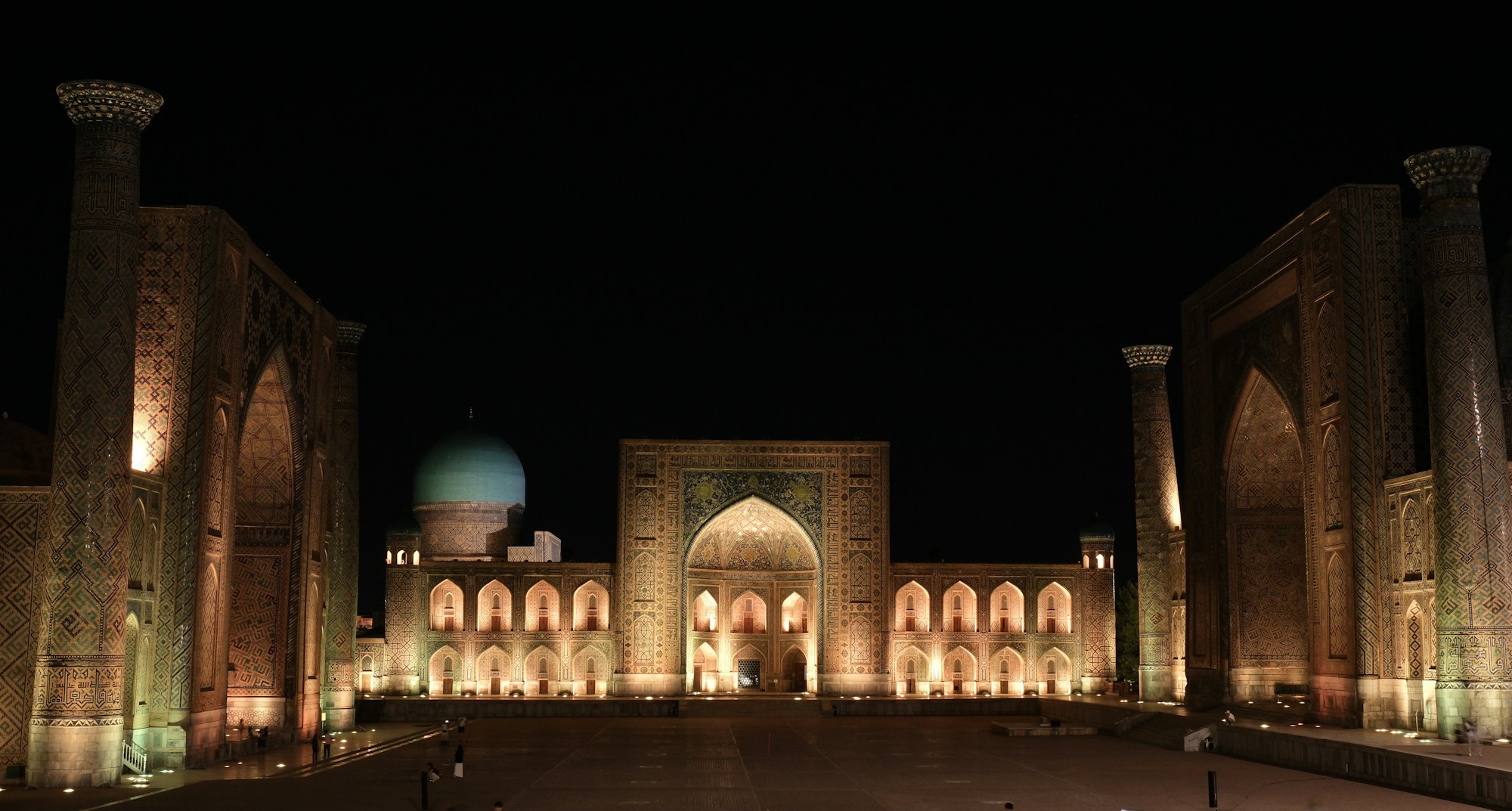
Samarkand — Tamerlane’s Blue City
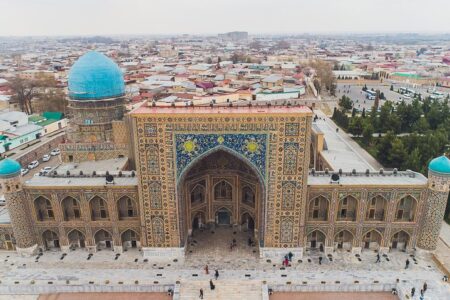
Samarkand is arguably the most photographed city in Central Asia — and for good reason. The Registan square, flanked by three madrasas adorned with turquoise and cobalt tilework, rivals the Alhambra or Angkor Wat for sheer visual impact. Founded in the 7th century BCE and rebuilt as the crown jewel of the Timurid empire in the 15th century, Samarkand was a global center of knowledge, mathematics, and astronomy. The Gur-e-Amir mausoleum (Tamerlane’s tomb), the Shah-i-Zinda necropolis, and the Ulugh Beg Observatory fill two to three packed days.
The difference with Iran? No conflict zone, no diplomatic threat. The US State Department travel advisory for Uzbekistan sits at « Level 1: Exercise Normal Precautions » — the same level as France or Japan. In major tourist cities, dedicated tourist police patrol continuously.
Highlights
- Registan square at sunrise, before tour groups arrive
- Gur-e-Amir mausoleum, a masterpiece of Timurid ceramics
- Shah-i-Zinda necropolis with breathtakingly blue tilework
- Siab Bazaar and local handcrafted ceramics
- Afrosiyob high-speed train to Bukhara (1h40, ~$8)
Private guide to explore the Registan, Shah-i-Zinda, and Siab Bazaar. Fully customizable to your pace. ⭐ 4.8 (57 reviews) · From $23
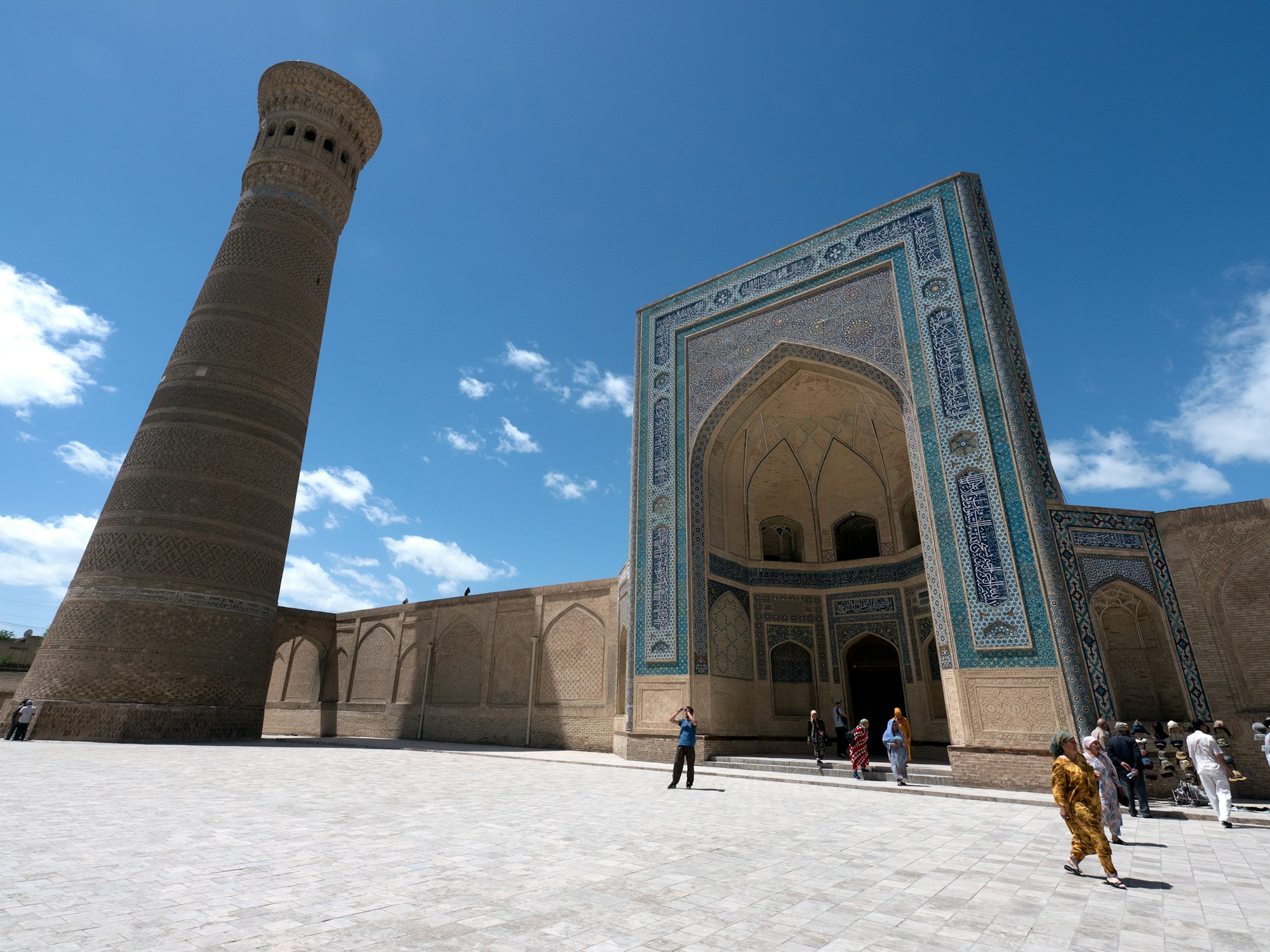
Bukhara — The Living Open-Air Museum
Unlike many « historic » cities, Bukhara has remained genuinely inhabited for 2,500 years. Its old city is a UNESCO World Heritage Site where over 140 architectural monuments coexist with daily life: carpet merchants, silk weavers, copper beaters. The Kalon Minaret (12th century), the Ark fortress, the Lyabi-Hauz ensemble, and the domed bazaars create a near-perfect snapshot of medieval Central Asia. The city holds two days of exploration without ever feeling repetitive.
Highlights
- Kalon Minaret, the « tower of death » that even Genghis Khan spared
- Lyabi-Hauz: the city’s social heart, perfect for a tea break
- Chor Minor, the four-towered madrasah that defies all convention
- Traditional silk ikat workshops (open visits)
- Samarkand–Bukhara day trip by Afrosiyob train (departure from Tashkent)
Full day tour from Tashkent to Samarkand covering the Registan, Shah-i-Zinda, and Gur-e-Amir. ⭐ 4.8 (326 reviews) · From $204
Khiva — The Frozen Silk Road City
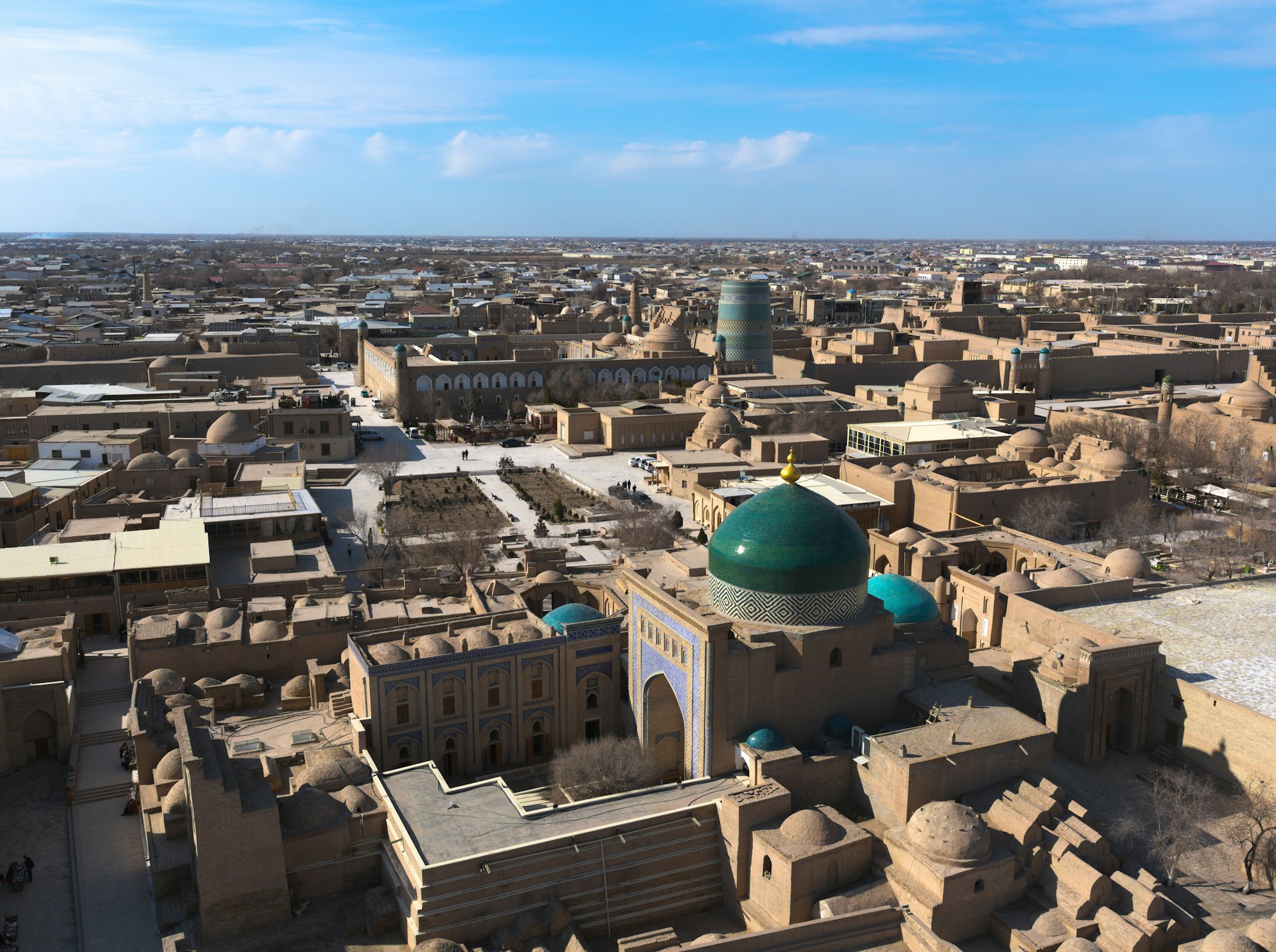
Khiva is the most preserved Silk Road city in Central Asia — a perfectly intact walled city that feels suspended in the 10th century. The Ichan Kala (inner city) contains over 50 monuments within its mud-brick ramparts. Unlike Samarkand and Bukhara, Khiva sees far fewer tourists, creating a more intimate experience. The Islam Khoja minaret, the Tash-Hauli harem palace, and the covered streets of the old city make it a photographer’s paradise at dawn.
Highlights
- Islam Khoja minaret: views over the entire Ichan Kala
- Tash-Hauli Palace: the harem frozen in time
- Sunrise walk along the city walls with zero crowds
- Overnight stay within the walls for the full night atmosphere
Turkmenistan: The Most Enigmatic Country on Earth
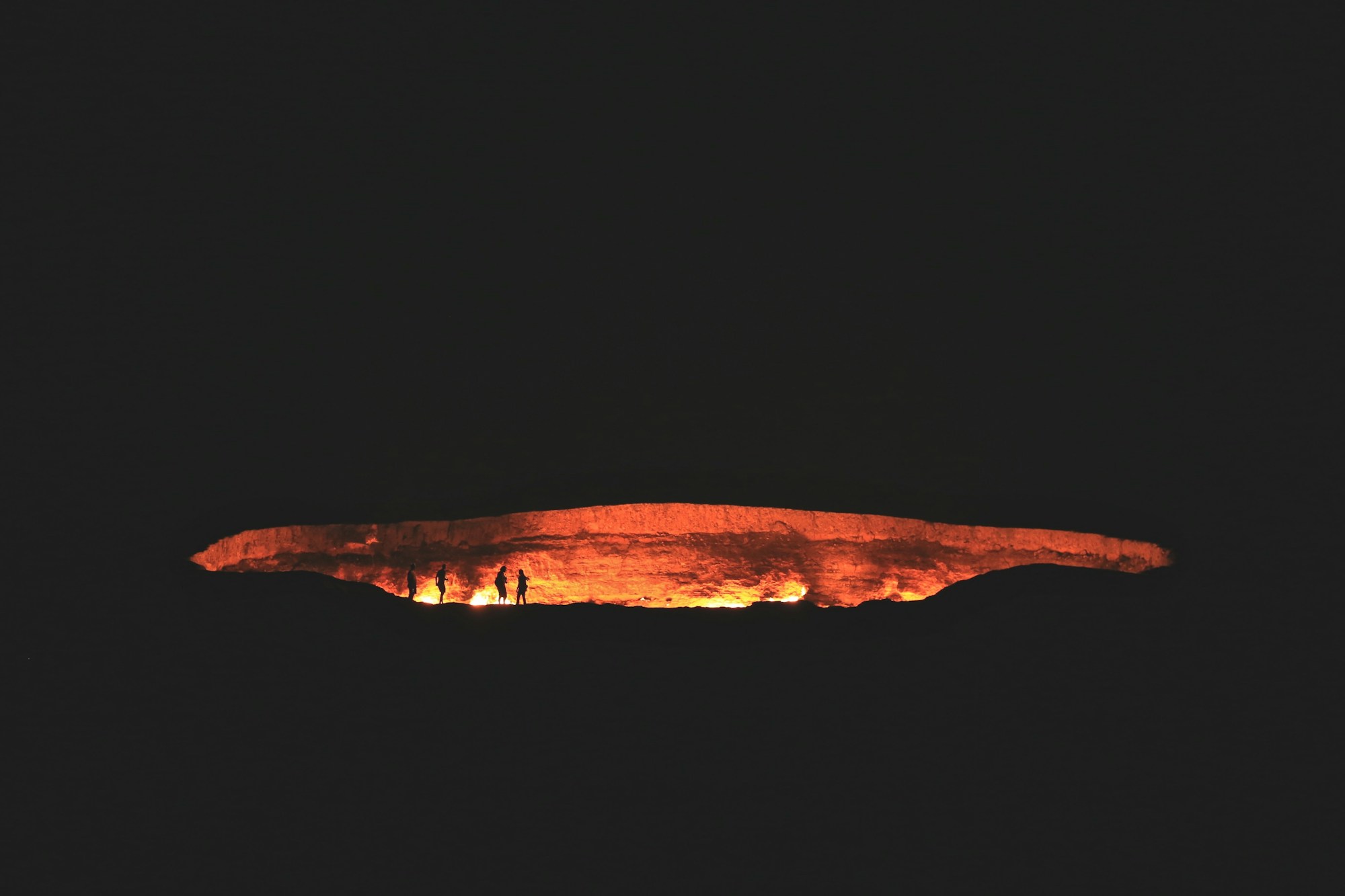
Turkmenistan is not a destination for the faint-hearted — but that’s precisely why it’s becoming a bucket-list item for seasoned travelers. One of the world’s most closed countries, it requires an organized visa and tour, but rewards the effort with experiences that are literally unique on earth. Most famously: the Darvaza gas crater, known as the « Door to Hell, » a 70-meter-wide crater that has been burning continuously since 1971. This is the kind of spectacle that no other destination in the Middle East, or anywhere, can replicate.
Darvaza — The Door to Hell
The Darvaza crater appeared when a Soviet drilling rig collapsed into a natural gas cavern in 1971. The decision to set it alight to prevent methane poisoning backfired spectacularly — it has never stopped burning. Watching it at night, alone under the stars of the Karakum Desert, is one of the most surreal experiences in modern travel. This is not something you will find anywhere else.
Turkmenistan also offers Merv, a UNESCO-listed ancient city that was once one of the largest on earth; the bizarre white marble capital Ashgabat — a Soviet-meets-Las Vegas fever dream; and the Parthian fortresses of Nisa, just 18 km from the capital.
Highlights
- Darvaza crater at night — truly unmissable
- Merv ancient city, UNESCO World Heritage Site
- Ashgabat’s marble-and-gold architecture — utterly unlike anything else
- Nisa Parthian fortresses, near Ashgabat
Tajikistan: The Roof of the World
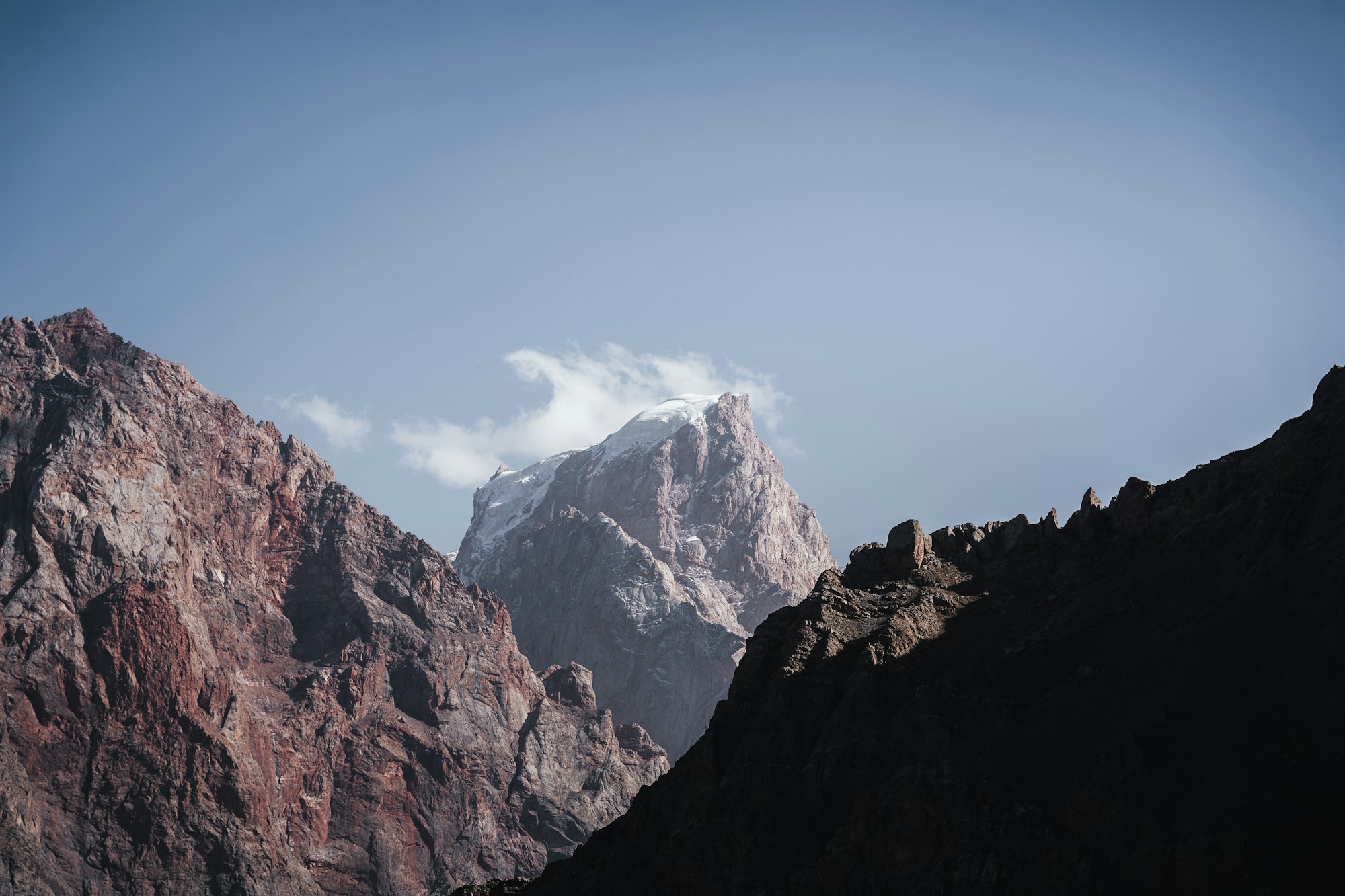
If Uzbekistan offers architectural wonders and Turkmenistan mystery, Tajikistan brings raw natural grandeur. The Pamir Highway — stretching over 1,200 km through mountains that regularly exceed 6,000 meters — is one of the world’s great road trips. The Fan Mountains offer trekking that rivals Nepal, with a fraction of the crowds and costs. And unlike most adventure destinations, Tajikistan’s e-visa is available online in under 48 hours.
Pamir Highway & Fan Mountains
The Pamir Highway (M41) is one of the highest roads in the world, crossing four mountain ranges and two vast plateaus at elevations between 3,500 and 4,600 meters. Dushanbe to Osh via Khorog takes around a week by 4WD, passing mirror-flat lakes, nomadic yurt camps, ancient Buddhist sites, and Soviet ghost towns. The Fan Mountains, a shorter detour from Samarkand, offer superb multi-day trekking between turquoise lakes in a landscape of epic scale.
Highlights
- Pamir Highway from Dushanbe to Osh — one of the great road trips
- Fan Mountains trekking: Kulikalon lakes circuit (3–5 days)
- Wakhan Corridor and ancient Silk Road caravanserais
- Iskanderkul lake — Alexander the Great’s legendary camp
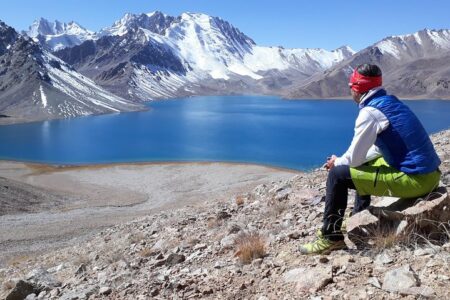
Guided cultural and adventure tour along the legendary Pamir Highway, combining Tajikistan and Kyrgyzstan. ⭐ 4.6 (9 reviews) · From $1,680
Central Asia vs. Middle East: The 2026 Comparison
The core question for many travelers is simple: does Central Asia offer a comparable experience to what the Middle East offered before the current wave of instability? The honest answer is: it’s different, and in some ways better.
Middle East vs. Central Asia 2026
Safety: Middle East (variable, Level 3–4 for Iran, Lebanon, Gaza) vs. Central Asia (Level 1–2 across all three countries)
Visa: Iran (suspended for most nationalities) vs. Uzbekistan (visa-free EU, 30 days), Tajikistan (e-visa 48h), Turkmenistan (organized tour required)
Budget: Middle East ($60–150/day) vs. Central Asia ($25–80/day — significantly cheaper)
Architecture: Both regions offer world-class Islamic architecture. The Registan rivals the Blue Mosque; Bukhara rivals Isfahan’s bazaars.
Crowds: Central Asia sees 5–10× fewer visitors — a decisive advantage for authenticity seekers.
Nature: Central Asia wins unambiguously: the Pamirs, Fan Mountains, and Karakum Desert have no Middle Eastern equivalent for adventure travelers.
Still drawn to the Middle East itself? Two destinations remain excellent and currently sit well outside the affected areas: Jordan and Oman.
Suggested 18-Day Silk Road Itinerary
Days 1–6 — Uzbekistan: Tashkent (1 day) → Samarkand (2 days) → Bukhara (2 days) → Khiva (1 day, fly back to Tashkent via Urgench).
Days 7–11 — Turkmenistan: Overland transit visa via Uzbekistan → Darvaza crater (1 night camping) → Ashgabat and Nisa (2 days) → Merv (1 day) → back to Uzbekistan.
Days 12–18 — Tajikistan: Fly Tashkent–Dushanbe → Fan Mountains trekking (4 days) or the Pamir Highway to Khorog (5–6 days) → fly home from Dushanbe.
Shorten to 10–14 days by dropping either the Pamir Highway (keep the Fan Mountains) or Turkmenistan’s Merv detour.
Frequently Asked Questions
Is Central Asia safe to visit in 2026?
Yes. Uzbekistan and Tajikistan both hold US State Department Level 1 advisories (« Exercise Normal Precautions »), equivalent to France or Japan. Turkmenistan is Level 2 (increased caution, mainly due to its authoritarian government, not crime or terrorism). None of the three countries is involved in any active conflict. Petty crime is low; violent crime targeting tourists is extremely rare. The main practical risks are altitude sickness in Tajikistan and the logistical complexity of Turkmenistan’s visa system.
Do I need a visa to visit Uzbekistan?
EU, UK, US, and most Western passport holders can enter Uzbekistan visa-free for up to 30 days. Tajikistan requires an e-visa, which can be obtained online in 24–48 hours for around $50. Turkmenistan requires either a tourist visa (applied through a registered local agency) or a transit visa (5 days, easier to obtain), plus mandatory use of a licensed tour operator.
What is the best time of year to visit?
The ideal seasons are spring (April–May) and autumn (September–October) for Uzbekistan and Turkmenistan, when temperatures are mild (18–28°C). Summer (June–August) is scorching in the lowlands (40°C+) but perfect for high-altitude trekking in Tajikistan’s Pamirs and Fan Mountains. Winter is possible in Uzbekistan’s cities but cold (-10°C in January).
How much does a trip to Central Asia cost?
Central Asia is one of the world’s best-value travel regions. Budget travelers can manage on $25–35/day in Uzbekistan (hostel + local food + transport). Mid-range travelers spend $50–80/day (boutique hotel + restaurant + guided tours). Tajikistan is similar or slightly cheaper; Turkmenistan is more expensive ($60–100/day) due to the mandatory organized tour requirement. Flights from Europe typically range from $400–700 return.
Can you combine all three countries in one trip?
Yes, and this is the recommended approach for maximum impact. A classic 3-week circuit: fly into Tashkent (Uzbekistan) → Samarkand → Bukhara → Khiva → transit Turkmenistan (Darvaza, Merv, Ashgabat, 5-day transit visa) → fly or drive to Dushanbe (Tajikistan) → Fan Mountains or Pamir Highway → fly home. The Silk Road combines perfectly with the Pamir for a genuinely unforgettable journey.
How do you travel between Uzbekistan, Turkmenistan, and Tajikistan?
Most itineraries fly into Tashkent (Uzbekistan) first. From there, a licensed Turkmenistan tour operator arranges the overland border crossing near Bukhara or Khiva for the Darvaza-Merv-Ashgabat loop, then returns you to Uzbekistan — Turkmenistan has no open border with Tajikistan. For Tajikistan, a short flight from Tashkent to Dushanbe (around 1h30) is faster and more reliable than any overland alternative. Budget at least 10-14 days to link all three countries without rushing between them.

Plan your Silk Road trip with Pixidia
Pixidia learns how you travel and helps you build a Central Asia itinerary that truly fits you and everyone coming along.
Open the planner