
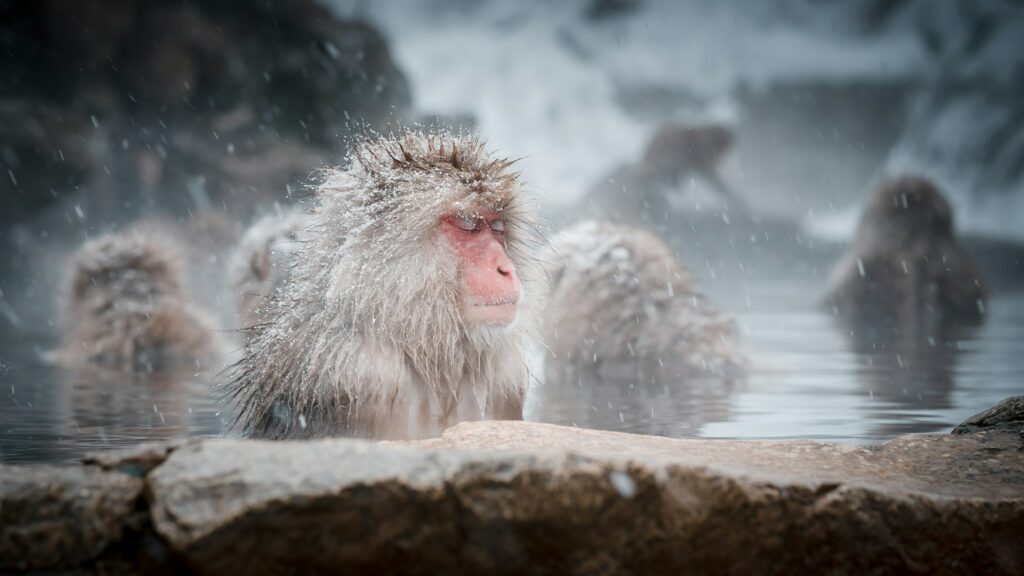
From 1 November to 31 March, the Jigokudani snow monkey park opens from 9 am to 4 pm, and the adult ticket costs 800 yen until 30 November 2026. From December to March, dated tickets can be booked online up to 90 days in advance.
Checked on against the official sources cited (park website, bus operator and passes).
In winter, Japanese macaques soak in a hot spring in the snow, in the mountains north of Nagano. The Jigokudani park, open since 1964, stays accessible all year round, but a winter visit takes more planning than it looks: shorter opening hours, dated tickets at peak times, bus connections and a snowy trail. This article gathers what is confirmed as of 15 November 2026, flags the points where sources disagree, and lists what still needs checking before you leave.
Opening hours: open in winter, but for less time
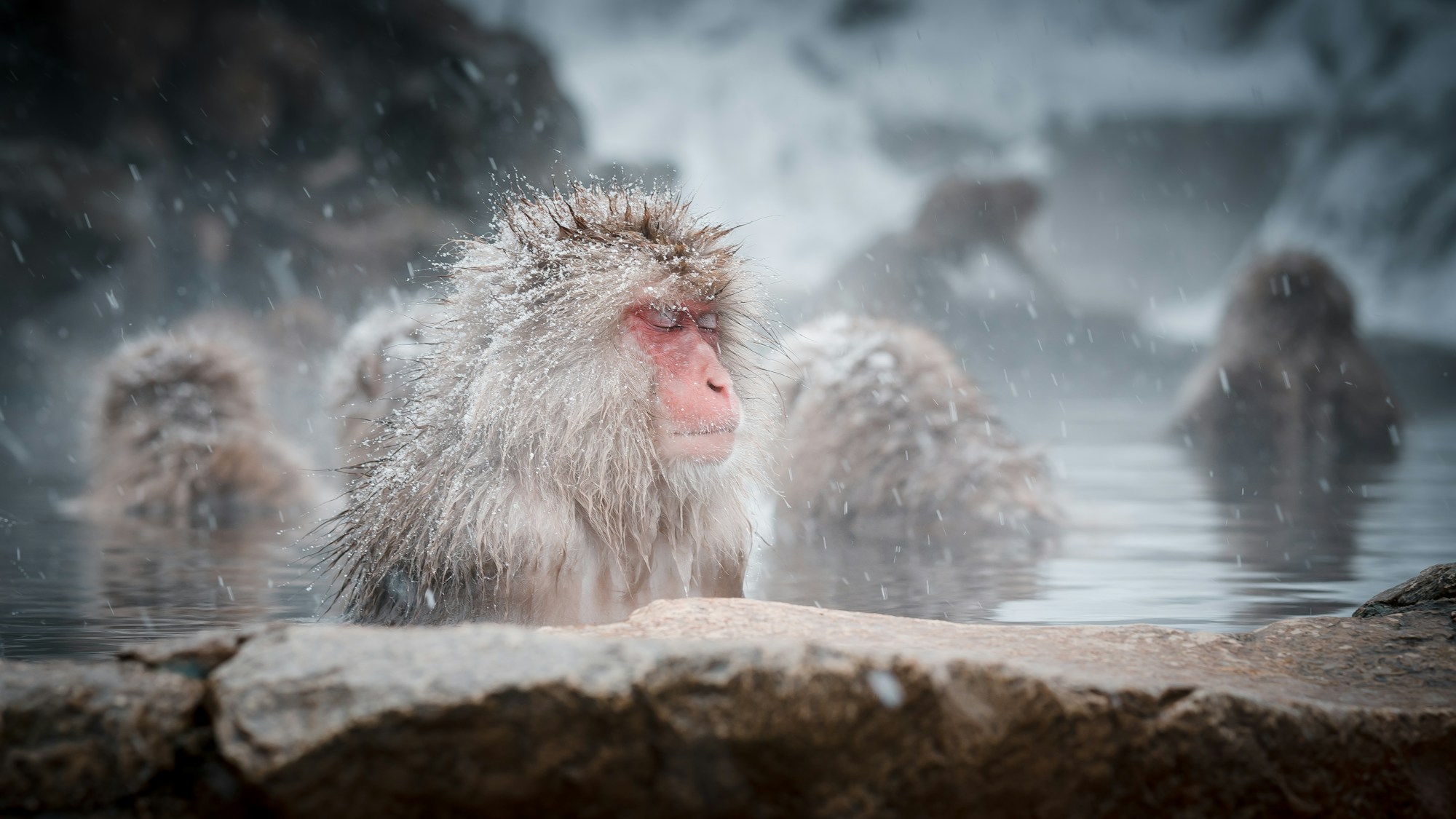
The park runs winter hours of 9 am to 4 pm from 1 November to 31 March, according to a notice dated 31 October 2026 on the park’s Japanese website, which the English guide page confirms. From 1 April to 31 October, it opens from 8:30 am to 5 pm. The park advises arriving 30 minutes before closing: in winter, that means being at the entrance by 3:30 pm.
Good to know before you go
- The monkeys are not guaranteed: the park says they can be absent during opening hours.
- The web ticket is not refunded if no monkey is visible.
- The trail and the park are snowy from December to March: wear suitable footwear.
Dated ticket: required at peak times
From December to March, and during Golden Week, Obon and New Year, the online dated ticket is mandatory. The park announced online sales on its Japanese website on 6 August 2026, and the operator’s FAQ confirms the rule. The sales rules, as shown on the operator’s page updated 13 August 2026, are:
- Tickets go on sale up to 90 days in advance, at midnight Japan time.
- You can cancel up to 3 days before the visit date.
- Payment goes through 3D Secure authentication.
- The ticket comes as a QR code or a 25-digit number.
Ticket prices: 800 yen until 30 November, then a revision announced
According to the park’s English guide page, checked on 15 November 2026, the adult ticket costs 800 yen and the child ticket 400 yen until 30 November 2026. The park announces a price revision from 1 December 2026, but its page doesn’t give the new amount. This article therefore publishes no figure for the following period: the price shown at checkout is the one that counts.
Age rules are not the same everywhere. The park lists a child rate for ages 6 to 17 and free entry under 5. The operator’s FAQ says 6 to 12 for children and under 6 for free entry. We won’t pick one: check the age bracket on the ticketing page before you buy, or ask the operator.
The park also mentions parking at 500 yen. That point is qualified further down, in the rules section.
From Nagano: train, local bus and a walk
From Nagano, the classic route has three legs: the Nagaden train to Yudanaka, the local bus, then a walk in winter.
The train is a limited express on the Nagaden line. The adult fare is 930 yen; a reserved seat costs 300 yen and a cabin 1,200 yen, according to ekitan. This train is not covered by the JR Pass, which only applies at JR Nagano Station.
| Option | Duration | Adult fare | Winter 2026-2027 |
|---|---|---|---|
| SNOW MONKEY train, Nagano to Yudanaka | about 45 min | 930 yen | not covered by the JR Pass |
| Local bus, Yudanaka to the park (terminus to be confirmed) | 10 to 15 min | 390 yen (200 yen child) | winter timetable not published |
| Walk, Kanbayashi to the park (if the bus stops at Kanbayashi) | 30 to 40 min | free | trail slippery from December to March |
| Express bus, Nagano to the park (green season) | about 50 min | 2,000 to 2,500 yen | not served, according to the operator |
| Separate winter bus, outbound | to be confirmed | 3,000 yen | 5 December 2026 to 5 April 2027 |
| Taxi, Yudanaka to the park (estimate) | about 20 min | about 1,600 yen | undated estimate, to be confirmed |
| One-day pass, train and local bus | same as the trip | 4,800 yen, entry included (green season) | winter price not announced |
| Express bus pass | about 50 min | 6,800 yen, entry included | valid 5 December 2026 to 5 April 2027 as shown, to be confirmed (express bus not served in winter) |
Source: snowmonkeyresorts.com, express bus timetable (page of 28 September 2026), ekitan.com, train guide (1 September 2026), snowmonkeyresorts.com, local bus timetable (updated 22 October 2026), checked on 15 November 2026. Amounts and durations are indicative.
The express bus is the most uncertain point. The operator’s page, updated 28 September 2026, says it does not serve the park stop from 5 December 2026 to 5 April 2027, and that a separate bus at 3,000 yen one way takes over. A third-party guide, by contrast, describes a service every 20 to 30 minutes, which the official timetable does not confirm. We therefore publish no winter express bus timetable. Before you go, confirm the service with the operator.
The express pass (6,800 yen, entry included) is nonetheless shown as valid from 5 December 2026 to 5 April 2027, a period when the same operator says its express bus does not serve the park. Don’t buy it for winter until the operator confirms the pass is valid in winter.
The local bus is the route to check. Its 390 yen fare and timetable come from the operator’s page updated 22 October 2026, in its green-season version, valid from 7 April to 4 December 2026. The terminus is still to be confirmed: the timetable shows arrival at the park, while the hiking page gives Kanbayashi as the starting point of the trail. No winter timetable is published for the Kanbayashi line as of the consultation date (15 November 2026), so green-season departures don’t apply in winter, and the full timetable is not reproduced here.
The walk from Kanbayashi takes 30 to 40 minutes in winter. The distance varies by source: about 1.6 km according to the operator, about 2 km according to the park. The trail is slippery from December to March, and there are no toilets along the way. The taxi from Yudanaka, about 20 minutes, costs about 1,600 yen according to an undated estimate: it’s a ballpark figure, not a fare.
Footwear and gear: what to bring
The park recommends rubber boots or après-ski boots, plus simple crampons, on its precautions page. It also notes that in winter temperatures can drop to -10 °C and that snow sometimes exceeds a metre, according to its « about » page, checked on 15 November 2026. Pack warm, waterproof clothing, and something to cover your head and hands. Gloves, a hat and sunglasses are general snow advice, not park requirements.
The operator rents boots (1,000 yen a day), a jacket (500 yen) and a locker (500 yen) on site, according to its page updated 16 October 2026. Crampons are offered at 1,350 yen, rental or sale depending on the source, to be checked on site. These prices date from autumn: check them before your visit.
The park is accessible neither by pushchair nor by wheelchair, and there is no paved road inside. Families with a young child should plan to carry them on the trail.
Park rules: flash, food and parking
The park allows photos without flash, according to its precautions page. The operator’s FAQ bans flash. Both sources lead to the same practice: take photos without flash.
Visitors must not feed the monkeys. The park says so in its guidelines.
Parking is listed at 500 yen on the park’s page, but the operator notes that private vehicles are not admitted during the winter peak. To plan your day, the train and bus remain the simplest option.
A limit of 2,000 visitors a day is being considered, according to an AFP report of 26 June 2026 picked up by CP24. The park does not confirm that this limit is in force at the time of checking. Don’t present it as settled, and ask the park whether it applies on the day of your visit.
The monkeys: a troop fed since 1964
The park opened in 1964, and the monkeys have been fed every day since then, according to the park’s own presentation. There is no fence between the monkeys and visitors, so the park does not guarantee they will be there. The site sits at about 850 metres above sea level.
One specialist site cites the Nagano tourist office for a troop of more than 200 individuals. That figure does not appear on the park’s website: we flag it without treating it as an official number.
Two studies from Kyoto University follow the effects of bathing and tourist numbers. The first, published 4 April 2018, looked at 12 adult females. It links winter bathing to lower stress hormones, and found no measurable effect from around 500 visitors a day. The second, announced on 20 January 2026 and published in the journal Primates (volume 67, pp. 199 to 211), describes subtle effects on lice and gut microbiota. Its authors call the results preliminary, so don’t draw firm conclusions.
Depending on your trip: family, first visit, tight budget
With children
Children pay 400 yen until 30 November 2026, but the age bracket differs by source. The pushchair won’t work: plan to carry the youngest on the 30 to 40 minute trail. The outbound journey takes 38 to 45 minutes by train and 10 to 15 minutes by bus, then 30 to 40 minutes on foot if the bus stops at Kanbayashi: roughly 1h20 to 1h40 each way.
For a first visit
The trip takes about 1h20 to 1h40 each way, by train, bus and on foot. Leave Nagano early to be at the entrance before 3:30 pm, the last time we recommend walking through the gate before the 4 pm closing. The step-by-step plan is below.
On a tight budget
The cheapest option is the train and local bus, then the walk: 930 yen and 390 yen each way, with no gear rental. A taxi costs more, about 1,600 yen according to an undated estimate, but it skips the walk.
With reduced mobility
The park is not accessible by wheelchair. The trail is snowy and has no toilets. This visit is therefore not suited to anyone who can’t walk 30 to 40 minutes on a snowy trail.
A possible plan from Nagano, in winter
This plan follows the park’s winter hours and the routes described above. No winter bus timetable is published for the local line: the bus terminus is to be confirmed, and the walk is only needed if the bus stops at Kanbayashi.
Leave Nagano by train to Yudanaka. Allow 38 to 45 minutes on the limited express, for 930 yen.
Take the local bus to the park or Kanbayashi. The trip takes 10 to 15 minutes and costs 390 yen. Check the timetable and the terminus with the operator the day before, since the published departures are for the green season.
Walk from Kanbayashi, if the bus stops there. Allow 30 to 40 minutes on a trail that is slippery from December to March, with crampons if you have them.
At the park, before the 4 pm closing. Arrive at least 30 minutes before closing, so before 3:30 pm, and keep the QR code or the 25-digit number handy.
Return. No winter bus is confirmed for the return. If no bus is confirmed for your return time, book a backup taxi from Yudanaka, about 1,600 yen according to an undated estimate.
Common mistakes
- Arriving after 3:30 pm in winter, when the park closes at 4 pm.
- Counting on an express bus to the park without the operator confirming winter service.
- Turning up at a peak time without a dated ticket.
- Assuming the JR Pass covers the trip: it only covers JR Nagano Station.
- Forgetting that the monkeys are not guaranteed, and that the web ticket is not refunded if no monkey is visible.
Budget: about 3,440 yen per adult
For an adult travelling from Nagano by train and local bus, then returning the same way, without gear: 1,860 yen for the train (930 yen × 2), 780 yen for the bus (390 yen × 2) and 800 yen for entry, about 3,440 yen in total. This assumes the return costs the same as the outbound, which we have not checked. Add 1,000 yen if you rent boots. Crampons cost 1,350 yen, rental or sale depending on the source, to be checked on site: if you have your own, bring them rather than rely on a rental.
The one-day pass, at 4,800 yen in green season with entry included, costs more than this calculation. Its winter price is not announced (another site gives 5,100 yen), and where it is sold differs: online and collected at Nagaden station according to one guide, in person only at Nagano station according to the operator. Before you buy, check the price and the point of sale.
What other guides don’t tell you
The points below appear in the official sources checked on 15 November 2026. They are missing from, or carry the wrong dates in, the mainstream guides we read.
- Price revision from 1 December 2026, with no amount published. Guides show 800 yen as the current price, with no switchover date. Official park guide (checked 15 November 2026).
- The Nagaden express bus does not serve the park stop in winter 2026-2027, according to the operator. A separate one-way bus at 3,000 yen runs instead; guides describe the stop without distinguishing by season. Operator, express bus timetable (page of 28 September 2026, checked 15 November 2026).
- The online dated ticket is mandatory at winter peak times. Some guides say it is only recommended, others deny it based on an older version of the page. Official park website (sales announcement of 6 August 2026, checked 15 November 2026).
- The local bus from Yudanaka to the park costs 390 yen one way for adults, not 310 yen. A February 2026 guide still shows 310 yen, from before the operator’s update. Operator, local bus timetable (updated 22 October 2026, checked 15 November 2026).
- The park accepts neither pushchairs nor wheelchairs, and the trail has no toilets. Several guides leave this out. Official park website, access (checked 15 November 2026).
- A Kyoto University study published in 2026 looks at this park’s monkeys. None of the mainstream guides we read mention it, and its results are preliminary. Kyoto University, press release of 20 January 2026 (checked 15 November 2026).
Frequently asked questions
Is the park open in winter?
Yes. From 1 November to 31 March, the park opens from 9 am to 4 pm, according to a notice dated 31 October 2026 on the Japanese park website, confirmed by the English guide page. Arrive at least 30 minutes before closing. The monkeys are not guaranteed: they can be absent during opening hours.
How much does entry cost?
Adult entry costs 800 yen and child entry 400 yen until 30 November 2026. The park announces a revision from 1 December 2026, with no amount on its English page, so check the price shown at checkout. Child age brackets differ by source: 6 to 17 for the park, 6 to 12 for the operator.
Do I need to book?
At peak times, yes. From December to March, and during Golden Week, Obon and New Year, the online dated ticket is mandatory. It goes on sale up to 90 days ahead, at midnight Japan time, and can be cancelled up to 3 days before the visit. If no monkey is visible, the web ticket is not refunded.
How do I get to the park from Nagano?
Take the Nagaden train to Yudanaka, about 45 minutes, for 930 yen. Then take the local bus, 390 yen and 10 to 15 minutes, to its terminus, which is still to be confirmed: sources disagree between the park and Kanbayashi. If the bus stops at Kanbayashi, the 30 to 40 minute walk begins, in winter. No winter timetable for the local bus is published as of the consultation date. A taxi from Yudanaka is possible, for about 1,600 yen according to an undated estimate.
Does the JR Pass cover the trip?
No, not for the Nagaden line. The JR Pass only covers JR Nagano Station, and the Nagano to Yudanaka train costs 930 yen in 2026 according to ekitan. The operator’s own pass, which includes train, bus and entry, costs 4,800 yen in green season, with no winter price announced as of the consultation date.
Does the express bus go to the park in winter?
According to the operator, in a page updated 28 September 2026, no: the express bus does not serve the park stop from 5 December 2026 to 5 April 2027. A separate one-way bus at 3,000 yen runs for that period. The same page contains an inconsistency on this point, so confirm the service with the operator before you travel.
Can I take photos with flash?
No. The park allows photos without flash, the operator’s FAQ bans flash, and both rules lead to the same practice. Visitors must not feed the monkeys, which the park also states.
Will the monkeys be there?
Not always. The park says the monkeys can be absent during opening hours, and the web ticket is not refunded if no monkey is visible. There is no guarantee of seeing them at a given time, so plan a journey of about 1h20 to 1h40 each way, and don’t make the visit the only reason for the trip.
When are the baby monkeys born?
The first babies arrive in late April or May, according to the park operator. Births happen outside the winter period, so a visit between December and March won’t show newborns.
What shoes should I wear?
The park recommends rubber boots or après-ski boots, with simple crampons. On site, the operator rents boots (1,000 yen a day) and a jacket (500 yen), according to its page of 16 October 2026. Crampons cost 1,350 yen, rental or sale depending on the source, to be checked on site: if you have your own, bring them. The trail is slippery from December to March.
Can I visit with a pushchair or a wheelchair?
No. The park is accessible neither by pushchair nor by wheelchair, and there is no paved road inside. The trail has no toilets. A person with reduced mobility would therefore need to walk the snowy trail.
Sources consulted
- Official park guide (in English): opening hours, ticket prices, guidelines and the announced price revision.
- Park access page (official site): walking route, accessibility, toilets.
- Park « about » page: altitude, winter climate (down to -10 °C, snow over a metre deep), presentation of the monkeys.
- Precautions (official site): equipment, photography, feeding the monkeys.
- Online ticketing (official site): dated tickets at peak times.
- Official park site (in Japanese): online sales announcement of 6 August 2026 and notice of 31 October 2026.
- Operator, express bus timetable: winter service, updated 28 September 2026.
- Operator, local bus timetable: departures and fares for the green season, updated 22 October 2026.
- Operator, advance ticket purchase: sales, cancellation, refunds, points of sale.
- Operator, passes: one-day passes; no two-day pass listed.
- Operator, FAQ: flash, age brackets, pushchairs.
- Operator, hike to the park: trail, crampons, equipment rental.
- Kyoto University, 2018 study: winter bathing and stress hormones, tourist numbers.
- Kyoto University, 2026 study: Primates, vol. 67, pp. 199 to 211, DOI 10.1007/s10329-025-01234-z.
- Ekitan, train guide: fare and journey time of the limited express (third-party source, 1 September 2026).
Research and checks carried out on 15 November 2026.

Plan your trip with Pixidia
Pixidia learns how you travel and helps you build a trip that truly fits you and everyone coming along.
Open the planner