

As of 5 November 2026, the 450-baht entry fee is not in force: it is a draft under consultation, with no firm start date. The government proposes 450 baht per foreign visitor, starting with air arrivals. No publication in the Royal Gazette has been found, and the first quarter of 2027 cited in the press remains a target, not a guarantee.
Checked on against the PRD press release of 17 August 2026 and Thai press articles dated August to October 2026.
Since the 17 August 2026 announcement, many travellers have been asking whether they will have to pay 450 baht on arrival in Thailand. The answer, as of 5 November 2026, is no: the proposal is still in consultation, and no adoption or publication has been found as of that date. This article separates what is official, what comes from the press and what is still unknown, so you know what to check before you fly and what you don’t need to worry about yet.
1. Where the project stands at 5 November 2026

A proposal under consultation, not a tax in force
The Ministry of Tourism and Sports presented the proposal in a Public Relations Department (PRD) press release dated 17 August 2026, after the National Tourism Policy Committee reviewed the principles on 14 August. The proposal was then put to public consultation. The PRD press release sets out a timeline, not a date for collecting the fee.
What the sources report as of this date
- The proposed amount is 450 baht per person, whatever the arrival mode (PRD, 17 August 2026).
- Public consultation ran from 24 August to 28 September 2026, with 5,954 responses (Nation, 25 August and 7 October 2026).
- No publication in the Royal Gazette has been found as of the consultation date, and no Cabinet decision is reported.
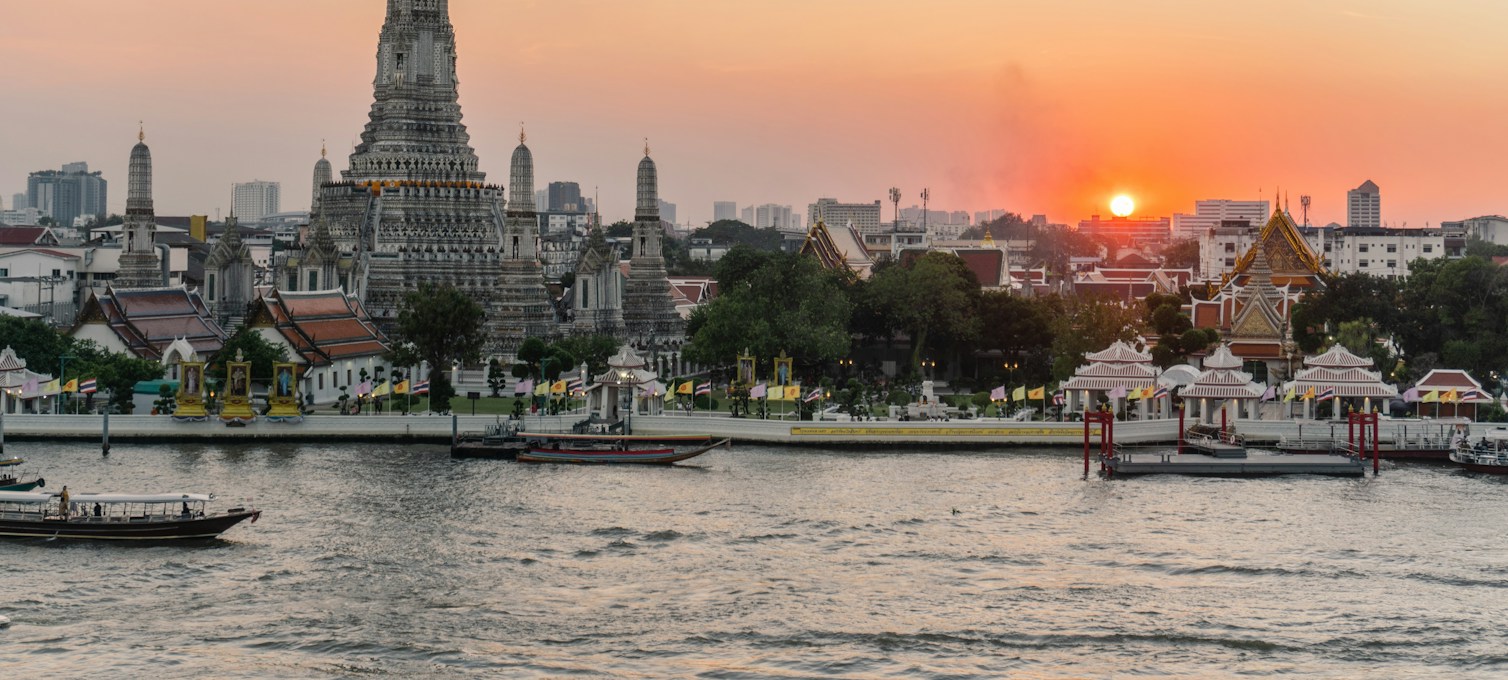
This card doesn’t cover the fee. It’s for anyone with a free day in Bangkok: a day trip to Ayutthaya, the former capital of the kingdom.
2. The timeline, and why it still gives no date
The 17 August 2026 press release doesn’t set any absolute date. It splits the project into two phases, and starts each one from a step that hasn’t happened yet: publication of the announcement in the Royal Gazette. Phase 1 covers air arrivals and starts 180 days after that publication. Phase 2, which targets land and sea arrivals, would start about 360 days after phase 1.
The table below lists the remaining steps, as the sources describe them. None has a firm date as of the consultation date.
| Step | Date | Status at 5 November 2026 |
|---|---|---|
| Review of the principles by the National Tourism Policy Committee | 14 August 2026 | Done, no final decision reported |
| Official PRD press release on the 450-baht amount | 17 August 2026 | Official announcement |
| Public consultation | 24 August to 28 September 2026 | Closed, 5,954 responses |
| Return to the committee, then Cabinet | No date set | No decision reported |
| Publication in the Royal Gazette | No date set | No publication found |
| Phase 1: air arrivals | 180 days after publication | Not fixed |
| Phase 2: land and sea arrivals | About 360 days after phase 1 | Not fixed |
Source: Nation, public consultation (25 August 2026) and PRD press release (17 August 2026), checked on 5 November 2026.
The most cited target, the first quarter of 2027, is not an official date. Thai Examiner presents it as a goal still to be confirmed after the Cabinet has reviewed the proposal (Thai Examiner, 7 October 2026). For an air phase to start in the first quarter of 2027, the Royal Gazette publication would have had to happen between early July and early October 2026. No such publication has been found. This is an inference from the 180-day timeline, not official information.
The reverse calculation is just as useful. If the text were published on 5 November 2026, the air phase could not start before 4 May 2027, and the land and sea phase would not come until about a year later. For a trip this winter, the thing to watch is the Royal Gazette publication: if it doesn’t happen, an arrival this winter would not fall under the air phase.
3. Who would be affected, and who isn’t explicitly
The proposal targets foreign visitors entering Thailand. It does not target Thai citizens, but that exclusion is not spelled out in the press release. Press coverage, including Tourmag and Le Petit Journal, infers it from the « foreign visitors » wording. So this is not an exemption you can rely on: it is a likely reading that the published text would need to confirm.
The proposal does, however, include a list of exemptions. It comes from the draft put to consultation, summarised by the Nation on 25 August 2026. The PRD doesn’t repeat it, and each category is still subject to criteria that haven’t been published.
| Category | Status in the draft | Note |
|---|---|---|
| Children under two | Exempt, subject to criteria | Wording « children under two » in the press |
| Work permit holders | Exempt, subject to criteria | Not to be confused with the 2023 list |
| Diplomatic or official passport holders | Exempt, subject to criteria | Criteria not published |
| Passengers in transit | Exempt, subject to criteria | Criteria not published |
| Crew members | Exempt, subject to criteria | Criteria not published |
| Border pass holders | Exempt, subject to criteria | Criteria not published |
| State and government guests | Exempt, subject to criteria | Press wording |
Source: Nation, public consultation (25 August 2026), checked on 5 November 2026. Provisional list, not repeated by the PRD.
Two points deserve a careful read. First, the Nextstep Hua Hin site, which details the proposal, warns that a retirement letter or another long-stay permit should not be treated as an exemption without explicit rules. If you travel on a status like that, don’t assume you are exempt. Second, private-sector players are asking for exemptions for border traders and frequent cross-border travellers (Nation, 40071948). No decision has been reported on that.
The proposal doesn’t address these cases at this stage.
4. Payment, proof and multiple entries
How it would be paid, if the proposal goes ahead
The payment method hasn’t been settled. Several channels are being considered, according to the PRD and Thai Examiner: payment built into the plane ticket, online payment on an official site, a mobile app, or self-service kiosks at entry points. The plane ticket is the most supported channel in the consultation, with 36.26% of responses, but it has not been formally adopted. Airlines opposed the previous tax, according to Toutelathailande.
What isn’t defined yet
- The proof to present: receipt, online confirmation, QR code or insurance certificate. No source specifies it.
- Where it would be checked: the text doesn’t say whether the proof would be verified at the border or earlier.
- What happens to multiple entries, covered below.
The proposal provides that someone who has paid can enter and leave several times within 30 days without paying again, provided they are covered by the planned insurance (Nation, 40070226, and PRD). This would mainly concern frequent land travellers. The conditions are not settled. Nextstep Hua Hin reminds readers that a 30-day payment window is « not an immigration authorisation »: it replaces neither the visa, nor the stay rules, nor the entry checks.
5. Insurance, revenue and sensitive figures
The government presents the fee as a way to fund the development of tourist sites, the protection of natural resources, promotion, and insurance covering death and medical costs for those who pay, « subject to policy terms » according to the PRD. The ministry targets at least 8 billion baht of revenue a year after collection and insurance costs, paid into the Tourism Promotion Fund (PRD, 17 August 2026; Thai Examiner, 7 October 2026). No source details the coverage, the provider, the limits or the length of the insurance linked to the payment. This article therefore does not put a figure on any coverage.
The Ministry of Public Health supports the proposal on condition that part of it funds insurance. The argument is that hospitals have recorded large unpaid bills for foreign patients, and that insurance would shift that risk onto insurers (Nation, 40071967, 7 October 2026). The figure cited is 7.02 billion baht of unpaid bills for the 2024 reference year: 16.96 billion billed, 9.94 billion collected, across 32 hospitals. That amount covers several categories of foreigners, not only tourists.
The Thai Hotels Association supports the principle of 450 baht but opposes compulsory insurance for all visitors. It proposes optional supplementary insurance at the immigration point, and raises several objections: coverage it considers too small, a 30-day period that doesn’t match a stay of 7 to 10 days, and a possible effect on the purchase of personal insurance (The Star, 15 October 2026). These reservations have not been resolved.
6. The sources don’t all say the same thing
Before you trust any article, including this one, you should know where the sources disagree. We flag these points without settling them.
- The amount before August 2026. In April 2026 the press still cited 300 baht by air and 150 baht by land (Nation, 40064625; The Star, 3 April 2026). The PRD press release of 17 August 2026 sets a single amount of 450 baht. Earlier announcements no longer describe the current proposal.
- Air only, or all modes. The press release sets 450 baht whatever the arrival mode, but phase 1 only covers air arrivals. Some articles present the fee as air-first, others as covering all arrivals. The reading kept here: all arrivals are eventually targeted, but in phases, and the date for the land phase is not set.
- Length of the consultation. Sources say the consultation lasted either 30 or 35 days. The dates reported by the Thai press (24 August to 28 September 2026) give a window of about five weeks. The exact number of days makes no practical difference to a traveller.
- The 1,450 baht total. VisasNews gives a total of 1,450 baht by adding the entry fee and another tax. That total would assume both taxes are in force, which they are not. It should not be written up as a real cost.
7. Taxes and rules not to confuse
The table below separates the 450-baht entry fee from nearby rules, some of which are already in force.
| Item | Amount or rule | Status at 5 November 2026 |
|---|---|---|
| Entry fee (proposal) | 450 baht per person | Under consultation, not in force |
| Departure tax (proposal) | 1,000 baht, according to the press | Postponed on 22 October 2026 by the Finance Minister, according to Nation |
| AOT airport charge | 1,120 baht per international passenger | In force since 20 June 2026, according to AOT |
| Digital arrival card (TDAC) | Free form | Mandatory since 1 May 2025 |
| Tourist visa exemption | 30 days | Tourism only; effective date not given here |
Sources: Nation, postponement of the departure tax (22 October 2026); TAT News, AOT charge (May 2026); FCDO, Thailand entry requirements, checked on 5 November 2026.
The departure tax needs a note. The 1,000 baht figure was reported by the press and doesn’t appear in the official text we could consult. The Finance Minister announced its postponement on 22 October 2026, and the Nation article says the 450-baht fee « is not cancelled ». The two proposals are not linked: don’t add them together. The 30-day visa, for its part, is an entry rule, not a tax: no payment is attached to it.
8. What the rule would change for your profile
At the consultation date, the fee doesn’t change anything about a trip. The profiles below show what to keep an eye on if the proposal goes through.
- Tourist staying under 30 days, arriving by air. This is the case most directly targeted by phase 1. Watch for publication in the Royal Gazette and the announcement of a payment method. A payment built into the plane ticket is the most supported channel in the consultation, without being formally adopted; the on-arrival step still has to be confirmed by the published text.
- Traveller arriving by land. This falls under phase 2, with no date. For a land crossing, check the Cambodia border situation in our dedicated article before you plan the route.
- Family with young children. Children under two appear on the draft’s exemption list, subject to criteria that haven’t been published. Don’t treat it as settled before the final text.
- Resident, retiree or long-term traveller. The proposal doesn’t address these cases. A retirement letter or long-stay permit should not be assumed to be exempt.
- Transit passenger or crew member. Transit and crew appear on the provisional list. Again, the criteria aren’t known.
For the stay rules and the organisation of your trip, see our visa-free stay article and the full Thailand itinerary.
9. What other guides don’t tell you
Online answers found during the research mix solid facts with assumptions. Here are five points checked against the PRD press release and dated Thai press, either missing from those answers or stated inaccurately there.
- The timeline depends on a Royal Gazette publication that had not been found as of the consultation date. The air phase starts 180 days after the Royal Gazette publication, and the land phase about 360 days after the air phase. No absolute date is therefore set. PRD press release (checked 5 November 2026, source dated 17 August 2026).
- The departure tax postponement doesn’t concern the entry fee. The Finance Minister postponed the departure tax on 22 October 2026, but the reported text specifies that the 450-baht fee is not cancelled. Nation, 40072627 (checked 5 November 2026, article dated 22 October 2026).
- Thai citizens are outside the scope, but that isn’t an exemption. The text targets foreign visitors. The published text doesn’t state an exemption for Thai citizens, and the press doesn’t turn it into a formal rule. Nation, 40070226 (checked 5 November 2026, article dated 25 August 2026).
- The consultation drew 5,954 responses, with 80.5% support for the proposal and 78.3% agreement on the amount. These figures measure the views of consultation respondents, not of all travellers. Nation, 40071948 (checked 5 November 2026, article from October 2026).
- The 7.02 billion baht of unpaid bills doesn’t only concern tourists. It covers 2024, 32 hospitals, and several categories of foreigners. It serves as an argument for the proposal, but it doesn’t measure the cost of tourism alone. Nation, 40071967 (checked 5 November 2026, article dated 7 October 2026).
10. Practical information to check before you travel
Mandatory for foreign nationals arriving by air, land or sea since 1 May 2025. It can be completed up to three days before arrival, and the official form is free. Third-party sites charge for this service, so use the official pages, such as the Thai embassy’s.
A 1,120 baht charge per international passenger has applied since 20 June 2026 at the six airports run by AOT.
Beyond the permitted stay, the fine is 500 baht per day, capped at 20,000 baht (FCDO, checked on 5 November 2026). This amount has nothing to do with the entry fee.
Frequently asked questions about the 450-baht entry fee
Do I have to pay 450 baht when I arrive in Thailand today?
No. As of 5 November 2026, the fee is a proposal: the consultation closed on 28 September 2026, no Royal Gazette publication has been found, and no Cabinet decision is reported. Nothing in the sources consulted indicates that payment is being collected. Check the PRD press release before you travel.
When will the fee take effect?
No date has been set. The most cited target in the press is the first quarter of 2027, presented as a non-binding intention. The air phase would start 180 days after the Royal Gazette publication, and the land and sea phase about 360 days after the air phase, according to the PRD press release of 17 August 2026.
Do Thai citizens have to pay the fee?
The text targets foreign visitors. The press infers that Thai citizens are outside its scope, but the published text doesn’t say so explicitly. It is not an exemption you can rely on, only a likely reading to be confirmed by the final text.
How will it be paid, and what proof will be needed?
The payment method hasn’t been settled. Payment built into the plane ticket is the most supported option in the consultation, with 36.26% of responses, but it has not been formally adopted. Other options under study include an official site, an app and kiosks at entry points. No proof has been defined at this stage.
Is this the same as the 1,000 baht departure tax?
No. The departure tax is a separate proposal, which the press reported at 1,000 baht. The Finance Minister announced its postponement on 22 October 2026, according to Nation. That announcement does not concern the 450-baht fee, which Nation says has not been cancelled.
Does one payment cover several entries?
The proposal says that someone who has paid could enter and leave several times within 30 days, provided they are covered by the planned insurance. The conditions are not settled. The mechanism does not replace a visa or the stay rules, as Nextstep Hua Hin points out.
Is insurance included, and what does it cover?
Part of the revenue would fund insurance covering death and medical costs, according to the PRD. The conditions, limits and provider have not been published. Pixidia doesn’t recommend any insurance product: for a policy, compare the cover before you travel.
Does the 30-day visa change because of this fee?
No. The visa exemption for a 30-day tourist stay is an entry rule separate from the fee, and it is not a payment. Its effective date isn’t covered in this article: check the current conditions before you travel.
Sources
- PRD, press release on the 450-baht fee: amount, phases and timeline (17 August 2026).
- Nation, public consultation: dates, draft and exemptions (25 August 2026).
- Nation, support and revenue: 5,954 responses and the 8 billion baht target (October 2026).
- Nation, Ministry of Public Health: 2024 hospital unpaid bills (7 October 2026).
- Nation, postponement of the departure tax: 22 October 2026.
- Thai Examiner, first quarter 2027 target: state of the proposal (7 October 2026).
- Thai PBS World, landing fee: payment channels and timeline (7 October 2026).
- Nextstep Hua Hin, proposal details: exemption list and caveat on residence permits (updated October 2026).
- The Star, industry and insurance: Thai Hotels Association positions (15 October 2026).
- FCDO, Thailand travel advice (entry): TDAC, visa and overstay (checked 5 November 2026).
- TAT News, AOT charge: 1,120 baht from 20 June 2026 (May 2026).
Research and checks carried out on 5 November 2026. No Royal Gazette publication had been found at that date: anything on this topic may change.

Plan your trip with Pixidia
Pixidia learns how you travel and helps you build a trip that truly fits you and everyone coming along.
Open the planner