
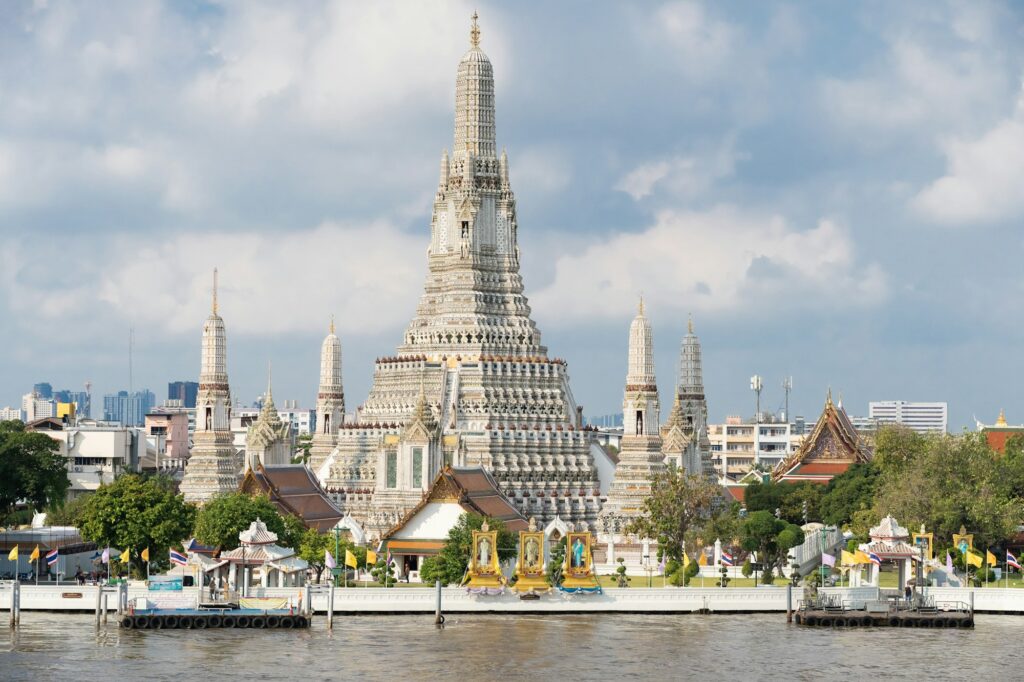
Since 15 September 2026, British travellers can stay in Thailand for 30 days without a visa, down from 60. The UK is on the list of 60 countries and territories covered. The rule comes from four announcements published in the Royal Gazette on 31 August 2026 and applies to tourism only. A three-week trip is not affected. For 31 to 60 days, you extend once in Thailand (1,900 THB, at the officer’s discretion) or apply for an e-visa before you fly. Complete the free TDAC within 72 hours before you arrive.
If you are going for less than a month, not much changes for you. If you had been dreaming of six or eight weeks across Bangkok, Chiang Mai and the islands, the maths looks different since 15 September. Here is what the text says, what it leaves deliberately vague, and what to do depending on how long you are staying. Where sources disagree, we say so: for those points, the only reliable reference is the Thai embassy or consulate.
What has changed since 15 September 2026
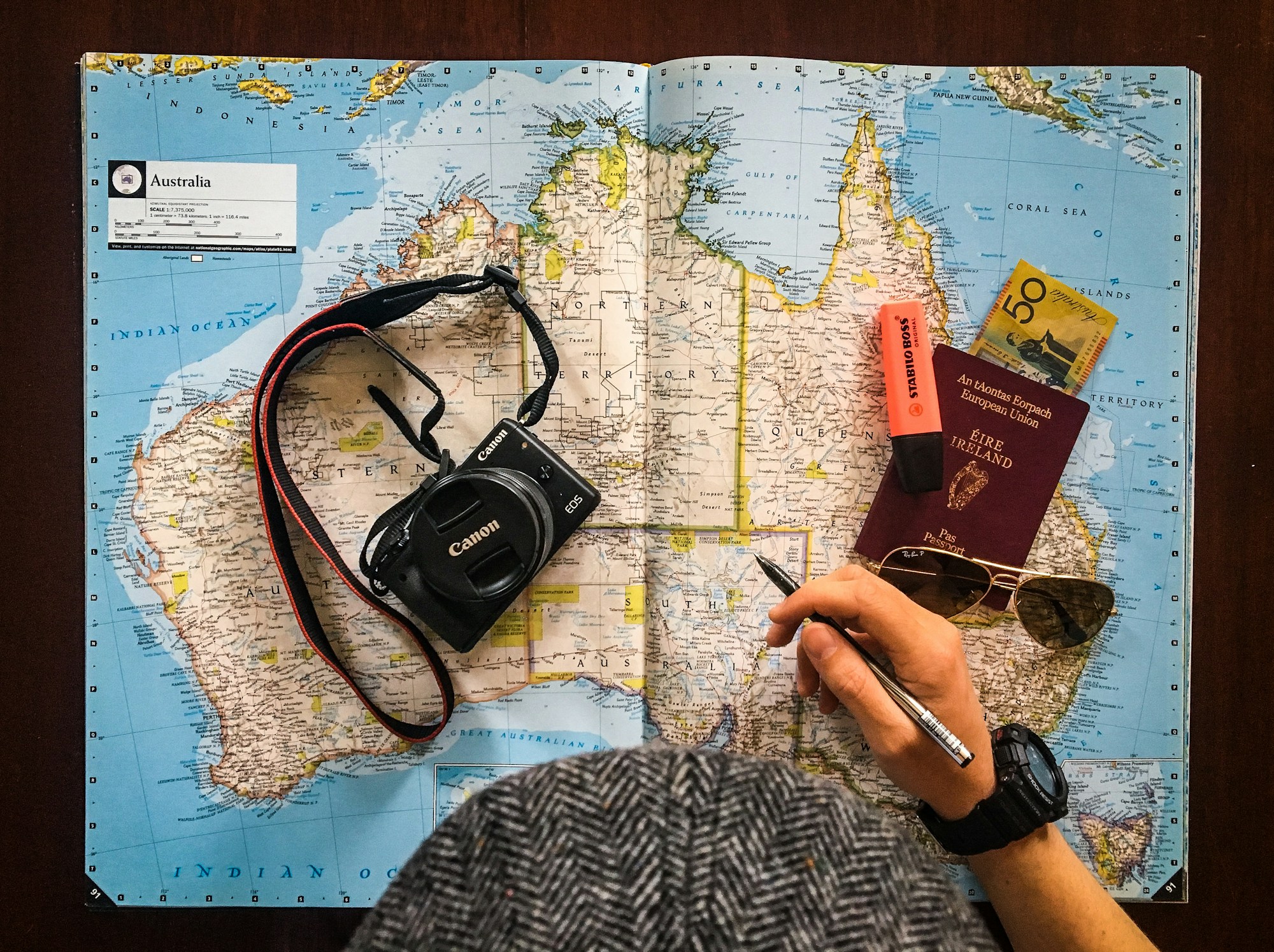
Visa-free stay drops from 60 to 30 days
According to the Tourism Authority of Thailand (TAT), the 60-day visa exemption in place since July 2024 has been replaced from 15 September 2026 by a 30-day exemption. It rests on four Ministry of the Interior announcements published in the Royal Gazette on 31 August, which took effect fifteen days later. The United Kingdom appears on the TAT list, alongside every EU member state, the USA, Canada and Australia. The text covers 60 countries and territories, after provisional lists circulated with 54 or 59: the UK’s own FCDO travel advice confirms that if you enter under the exemption scheme you can stay up to 30 days for tourism only. If you travel on a passport other than a British one, check your case with the embassy or consulate.
Another important nuance: the exemption now covers tourism only. According to TTG Asia, the 2024 scheme also covered short business visits, which is no longer expressly the case. The government cites national security, reciprocity and the fight against illegal activity carried out under the cover of a tourist stay.
What to remember
- It is the date of entry that counts: if you entered on or before 14 September 2026, you keep the 60 days granted at entry. If you entered on the 15th, you get 30 days.
- Seychelles and Mauritius move to 15 days. Visa on arrival now applies to just three countries (Azerbaijan, Belarus, Serbia), which does not concern you.
- Bilateral agreements (China, Russia, Vietnam and others) are not changed by these announcements.
How long are you staying? What to do
No need to read everything: find your length of stay in the table, and the rest of the article explains each row.
| Length of stay | Situation | What to do |
|---|---|---|
| 1 to 30 days | Direct exemption | TDAC within 72 hours before arrival, onward ticket, proof of funds |
| 31 to 60 days | Extended exemption or e-visa | 30-day extension in Thailand (1,900 THB) or a tourist e-visa applied for before departure |
| 61 to 90 days | E-visa plus extension | Tourist e-visa (60 days), then a 30-day extension, planned well in advance |
| More than 90 days | Long-stay visa | DTV for remote work, a multiple-entry visa or another visa suited to your plans |
A concrete example: 28 days fit within the exemption, but you only have two days of margin. A delayed or cancelled flight puts you in overstay. The arrival day is generally counted as day 1 and the deadline is shown on your entry stamp: photograph it as soon as you arrive, and book your onward flight for day 29 rather than the last day.
To build a trip that fits within the limit, our complete Bangkok, Chiang Mai and southern islands itinerary for 2 to 3 weeks (in French) is still a good starting point, and our comparison of Phuket, Krabi or Koh Samui helps you pick one island rather than three.
Extending your stay in Thailand: how it works
A 30-day extension, never a right
According to Thai Visa Services and Buch dein Visum, the exemption can be extended once by 30 days, bringing the total to 60 days. You apply at the immigration office, paying 1,900 THB in cash, and the officer has the final say.
Documents to bring
- Form TM.7, a passport photo and your passport with a copy of the relevant pages, entry stamp included.
- Proof of address (the TM.30 your host files) and your TDAC.
- Offices generally open from 8:30 to 16:30 on working days. You can apply up to 30 days before expiry, ideally at least 7 days before.
An online e-Extension via VFS also exists in a few cities (Bangkok, Chiang Mai, Nakhon Sawan, Tak, Kamphaeng Phet), but according to Freaking Nomads, you still have to go in person to receive the stamp. The immigration department’s THIM app, in a pilot phase, does not yet handle extensions.
TDAC, onward ticket, funds: entry requirements
What immigration may ask you on arrival
According to the Royal Thai Embassy, the TDAC (Thailand Digital Arrival Card) has been compulsory for all foreigners since 1 May 2025 and replaces the paper TM.6 form. It is free, filled in at tdac.immigration.go.th within the 72 hours before arrival, and sends a QR code by email. The FCDO says the same: all foreign nationals must complete it online before arriving, by air, land or sea. Fake sites charge 20 to 90 USD for the same formality: only use the official address and keep an offline screenshot of your QR code.
Onward ticket and proof of funds
- Onward ticket: immigration requires it and airlines check it at check-in. According to the embassy, a bus, train or boat ticket may be accepted, and your exit must be planned within the 30 days. Confirm with your airline if you are travelling overland. The FCDO also notes that evidence of onward or return travel may be requested, and that your passport must be valid for at least 6 months on arrival with at least one blank page.
- Funds: the official minimum, restated by the Thai government portal and echoed in the FCDO advice, is 10,000 THB per person under the exemption (20,000 THB per family). Some French sources cite 20,000 THB: to be safe, keep proof of that amount (cash or a statement). The final decision rests with the immigration officer.
- Accommodation: the address of your first night is asked for in the TDAC and may be checked at the desk.
Visa runs: why they are now a bad idea
Leaving the country and coming back to restart a 30-day stay, the famous « border run », was never a recommended plan. According to France’s foreign ministry travel advice (in French), the practice is considered illegal and exposes you to refusal of entry, even detention. Its page also states that only two visa-free entries are allowed per calendar year.
The Thai texts, relayed by Freaking Nomads, specifically limit land entries to two per calendar year, with exceptions for nationals of Malaysia, Brunei, Indonesia and Singapore. For air arrivals, no figure is published, but an officer can refuse entry if your passport shows a pattern of repeated in-and-out trips. As the French advice is broader than the Thai texts, do not count on unlimited entries and confirm the rule with the embassy or consulate before a multi-country trip.
Overstaying, on the other hand, is costly: 500 THB per day, capped at 20,000 THB, then a possible ban depending on the length, according to The Thaiger. The honest answer for anyone who wanted to stay three months is therefore a legal one: a tourist e-visa or, for remote work, a long-stay visa.
Staying more than 60 days: tourist e-visa or DTV
The tourist visa (TR) is applied for online at thaievisa.go.th. It gives 60 days on entry, extendable by 30 days, so 90 days in total. Budget around 2,000 THB (about €50): quoted fees vary between sources, so check the amount on the official site. Processing times range from a few days to several weeks, so allow at least four to six weeks, and have proof of funds ready (20,000 THB according to most sources).
The DTV (Destination Thailand Visa) targets other profiles. According to The Thaiger, it is valid for five years, with stays of 180 days extendable once, for a 10,000 THB fee and roughly 500,000 THB in savings to show. It is aimed at remote workers and so-called « soft power » profiles (Muay Thai or cooking courses, festivals), and is applied for from abroad. It is not a « big trip » visa: you need a justifiable plan. If you work remotely, our comparison of digital nomad visas in 2026 covers the alternatives.
Combining Thailand with its neighbours
Cambodia, Laos, Vietnam, Malaysia: by land or by air
Cambodia. According to ScandAsia, the land border has been closed on the Thai side since 23 June 2025, with no reopening date. To reach Angkor, you therefore need to fly to Siem Reap (about 1 hour 20 from Bangkok). Our Angkor Wat sunrise vs sunset and tickets guide will help you plan what comes next. The French foreign ministry’s pages on Thailand and Cambodia mention a danger zone near the border without quantifying it in the same way: check the FCDO and local advice before booking.
Laos and Malaysia. The Friendship Bridge between Nong Khai and Vientiane is working, and the Padang Besar and Sadao crossings into Malaysia are open. Be careful: coming back into Thailand by land uses one of the two annual land entries discussed above, which you should confirm with the embassy for your own case.
Vietnam. According to Vietnam Tourism, citizens of 12 countries including the United Kingdom are exempt from a visa for 45 days until 14 March 2028. There is no land border with Thailand: trips are made by air.
Myanmar. Best avoided in a tourist itinerary: the Mae Sai and Mae Sot crossings are not open to foreign tourists.
Practical info before you go
The TDAC and its QR code are handled from your phone: an eSIM activated before take-off saves you hunting for Wi-Fi on arrival.
From around €4 (indicative price, check before buying)Insurance is not compulsory to enter, but hospital stays and repatriation are expensive abroad, and the UK’s GHIC card does not apply in Thailand. Worth having if you extend your stay too.
Quote online in a few minutesTo compare mobile data options, our travel eSIM comparison covers the alternatives.
Frequently asked questions
How many days can you stay in Thailand without a visa in 2026?
Since 15 September 2026, 30 days for British passport holders, down from 60, and for tourism only. Source: TAT.
I was already in Thailand on 15 September: how many days do I have left?
If you entered on or before 14 September 2026, you keep the stay granted on entry, which is 60 days. The date of entry counts, not the date of departure. Source: EIG Law.
Is a three-week trip affected?
No: 21 days fit within the 30 days. You have nothing to do beyond the TDAC, the onward ticket and any proof of funds.
Can you extend your stay by 30 days?
Yes, once only, for 1,900 THB (about €50), at the immigration office and at the officer’s discretion. The total can reach 60 days. Source: Thai Visa Services.
Is the TDAC compulsory, and does it cost anything?
It is compulsory and free. Fill it in at tdac.immigration.go.th within the 72 hours before arrival and beware of sites asking for payment. Source: Royal Thai Embassy.
Do you need an onward ticket and proof of funds?
Yes for the onward ticket, planned within the 30 days. For funds, the official minimum is 10,000 THB per person, but some sources cite 20,000 THB: keep proof of that amount to be safe and confirm with the embassy. Source: Thai government portal.
What should you do to stay two or three months?
Apply for a tourist e-visa before you leave (60 days, extendable by 30), then consider a DTV if you work remotely. Avoid the visa run. Source: The Thaiger.
Is a visa run still possible?
It is strongly discouraged: the French foreign ministry calls it an illegal practice that exposes you to refusal of entry, and visa-free land entries are limited to two per calendar year under the Thai texts. Source: France Diplomatie.
Can you go to Cambodia overland from Thailand?
Not for now: the land border has been closed on the Thai side since 23 June 2025. Take a Bangkok – Siem Reap flight instead. Source: ScandAsia.
Is there a tourist entry tax in Thailand?
An entry fee has been talked about for several months, but it was not being applied according to the sources we consulted in early October 2026. Check official sites before you travel.
Sources
- UK FCDO, Thailand entry requirements: 30 days, TDAC, passport validity, funds
- TAT News: new 30-day and 15-day exemption rules
- France Diplomatie, Thailand page: entry and stay (in French)
- EIG Law: legal basis and transition rules
- TTG Asia: 60 countries, tourism only
- Freaking Nomads: limit on land entries
- Freaking Nomads: extensions and e-Extension
- Thai Visa Services: extending the exemption
- Buch dein Visum: 30-day extension
- Royal Thai Embassy: TDAC
- Thailand.go.th: reminder on proof of funds
- The Thaiger: DTV visa
- The Thaiger: overstaying
- ScandAsia: Thai-Cambodian border
- Vietnam Tourism: visa exemption for 12 countries including the UK
- Asia Lifestyle Magazine: average length of stay of French visitors
Information checked on 7 October 2026. Immigration rules change and their application varies between entry points: confirm sensitive points with the Thai embassy or consulate before you travel.

Plan your trip with Pixidia
Pixidia learns how you travel and helps you build a trip that truly fits you and everyone coming along.
Open the planner