
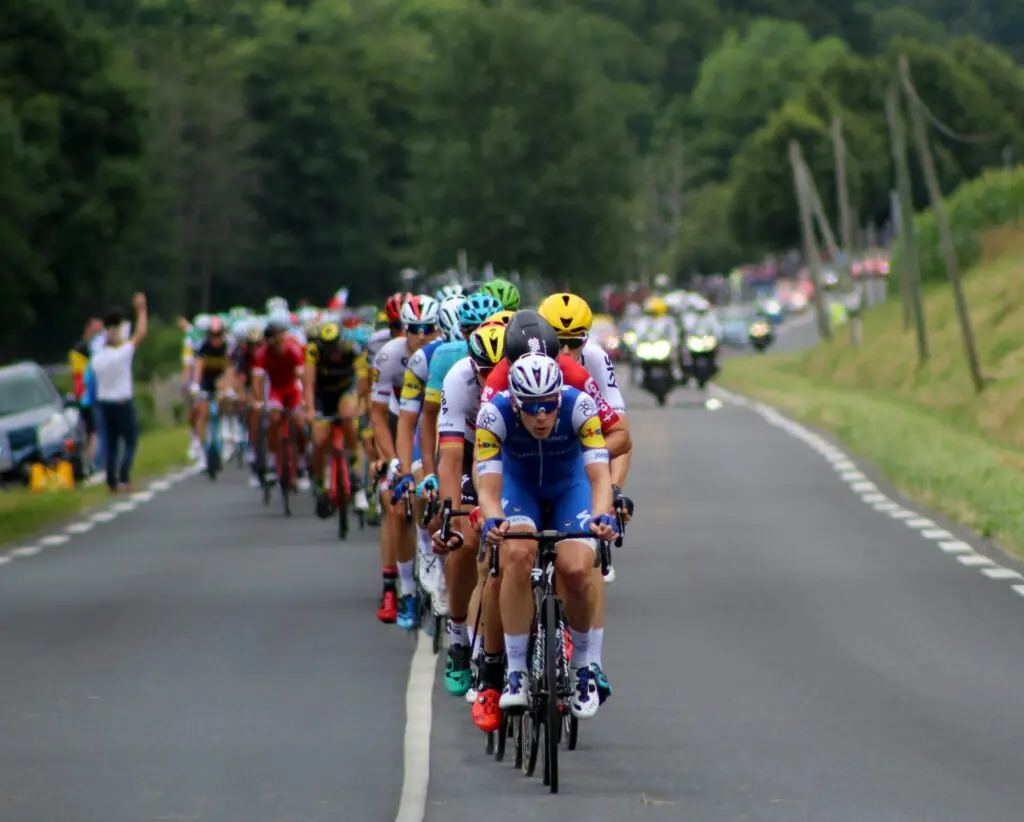
The Tour de France 2026 passes through Barcelona on Sunday 5 July 2026 during Stage 2 (Tarragona → Montjuïc, 178.4 km). The finish is estimated between 16:30 and 17:30 CEST (to be confirmed on letour.fr when the official roadbook is published). Roadside access is 100% free along the entire public route. To see the peloton three times from a single spot, the Montjuïc Castle climb (9.3%, max 13%) is the strategic choice: the 12.2 km final circuit is repeated three times. Arrive by 10:00 to secure the best barrier-side positions.
Sunday 5 July 2026, the Tour de France leaves Tarragona heading north to Barcelona over 178.4 km of Catalonia. Following the team time trial of the Grand Départ (Stage 1, 4 July), this mass-start stage offers two dramatically different experiences: 85 km of coastal festivity along the Costa Daurada — the Golden Coast — followed by a decisive final climb repeated three times on the mythical slopes of Montjuïc, where the first real battle for the yellow jersey unfolds. For British cycling fans travelling to Catalonia, choosing your spot requires genuine strategy: between Tarragona and Barcelona, you must weigh up Roman heritage, a Mediterranean intermediate sprint, a Catalan climb, or the stadium-like atmosphere of Barcelona’s iconic hill.
This guide details five concrete spectator spots, with estimated timings for both the publicity caravan and the peloton, public transport options from Barcelona, and positioning tips tried and tested by veteran roadside fans. All locations mentioned are freely accessible — the Tour de France is and remains a popular event open to everyone, as confirmed by barcelona.com.
Stage 2 at a glance: 178.4 km, two acts, one decisive final circuit
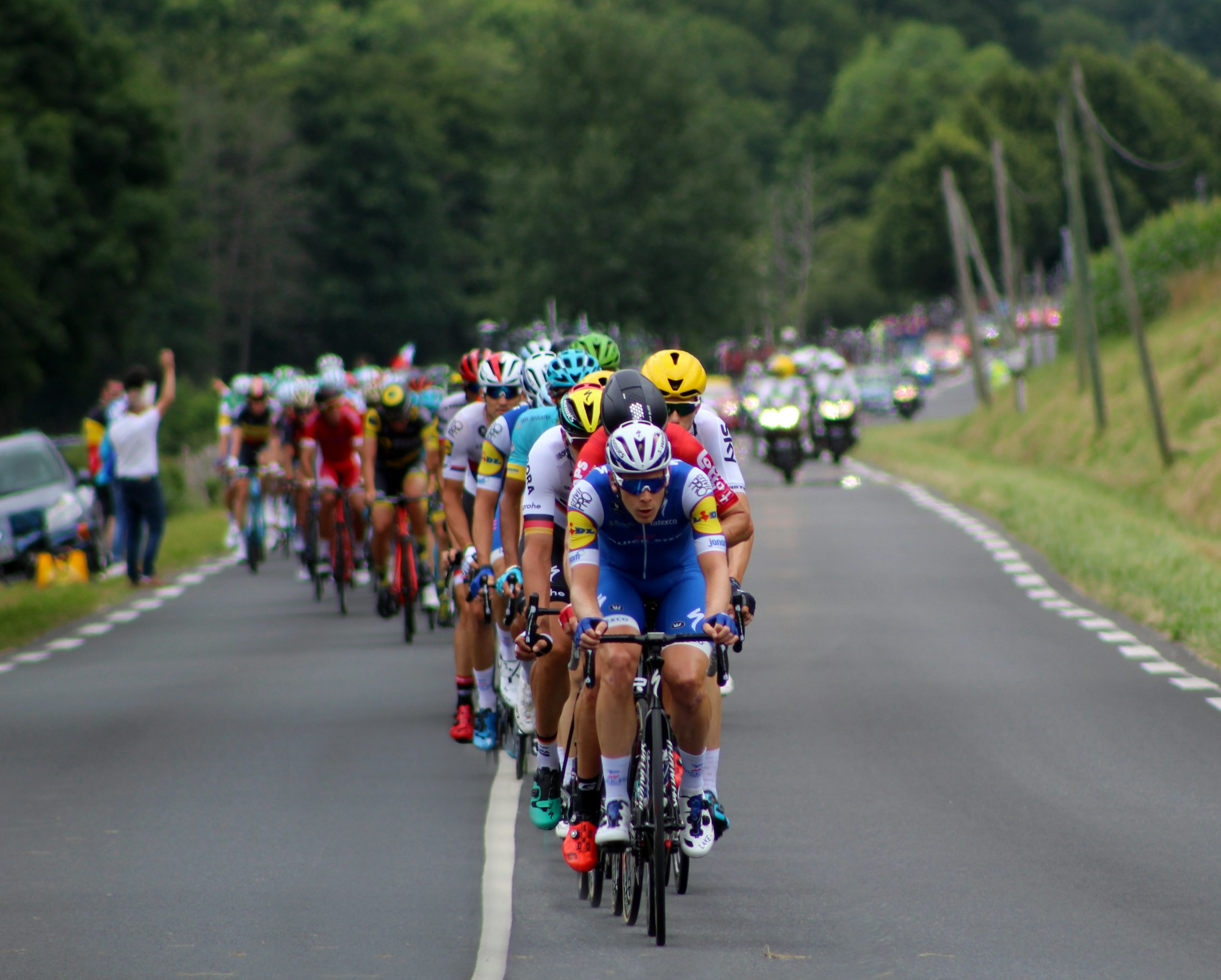
Stage 2 route profile
Stage 2 of the Tour de France 2026 runs from Tarragona to the Estadi Olímpic Lluís Companys on Montjuïc, Barcelona. According to Tarragona Digital and the official letour.barcelona website, the official distance is 178.4 km with a total elevation gain of approximately 2,400 m. The stage breaks into two acts:
- Act I — Flat Costa Daurada (km 0 to ~85): Tarragona, Torredembarra, El Vendrell, Calafell, Vilanova i la Geltrú, Sitges (intermediate sprint km 53), Garraf, Castelldefels, Gavà
- Act II — Rolling terrain (km 85 to 139.5): Begues climb (6.1 km at 6.5%), Molins de Rei, Côte de Santa Creu d’Olorda (8.4 km at 4.5%)
- Final circuit (km 139.5 to 178.4): 3 laps over the Montjuïc Castle climb (1.6 km at 9.3%, max 13%) — finish at Estadi Olímpic
- Publicity caravan: passes ~2 hours before the peloton, 150–170 vehicles, 30–45 min procession — free and festive
Spot 1 — Tarragona: Roman amphitheatre at the start (km 2–3)
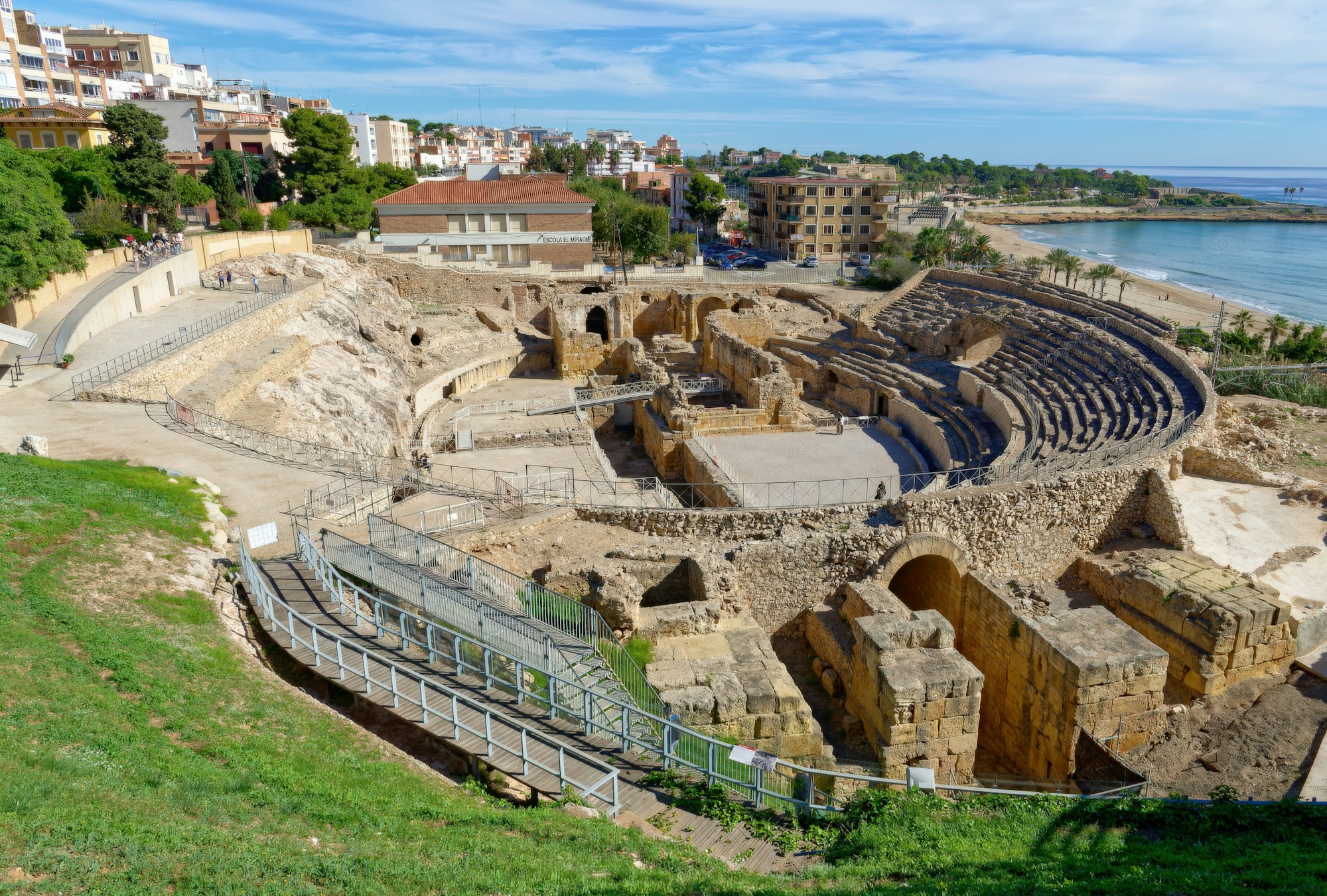
Tarragona — In front of the Roman Amphitheatre
The start route follows the Passeig de les Palmeres, with the 2nd-century Roman Amphitheatre — UNESCO World Heritage Site since 2000 — as a backdrop on the Mediterranean. This is one of the most photographed sequences of the 2026 Grand Départ, blending 2,000 years of history with the contemporary spectacle of world-class cycling, as highlighted by Tarragona Turisme. Tarragona is hosting the Tour de France for the very first time in its history.
During the neutralised roll-out (before the official start, given roughly 5–10 km after the flag-off), the peloton moves slowly — at 20–25 km/h rather than 45 km/h. That means several minutes of passing time rather than 8 seconds: enough to pick out individual riders, take sharp photos and soak up the atmosphere. The Grand Départ Village (official fan zone, animations, rider signings) is set up on Avinguda President Macià from 09:00.
Highlights
- Unique UNESCO backdrop — photos with the Mediterranean and Roman amphitheatre behind the peloton
- Slow neutralised peloton = extended viewing time = maximum experience
- Grand Départ Village with rider signings 1–2 hours before the official start
- Castellers (human towers, UNESCO Intangible Heritage) may perform alongside the event
Spot 2 — Sitges: intermediate sprint by the sea (km 53)
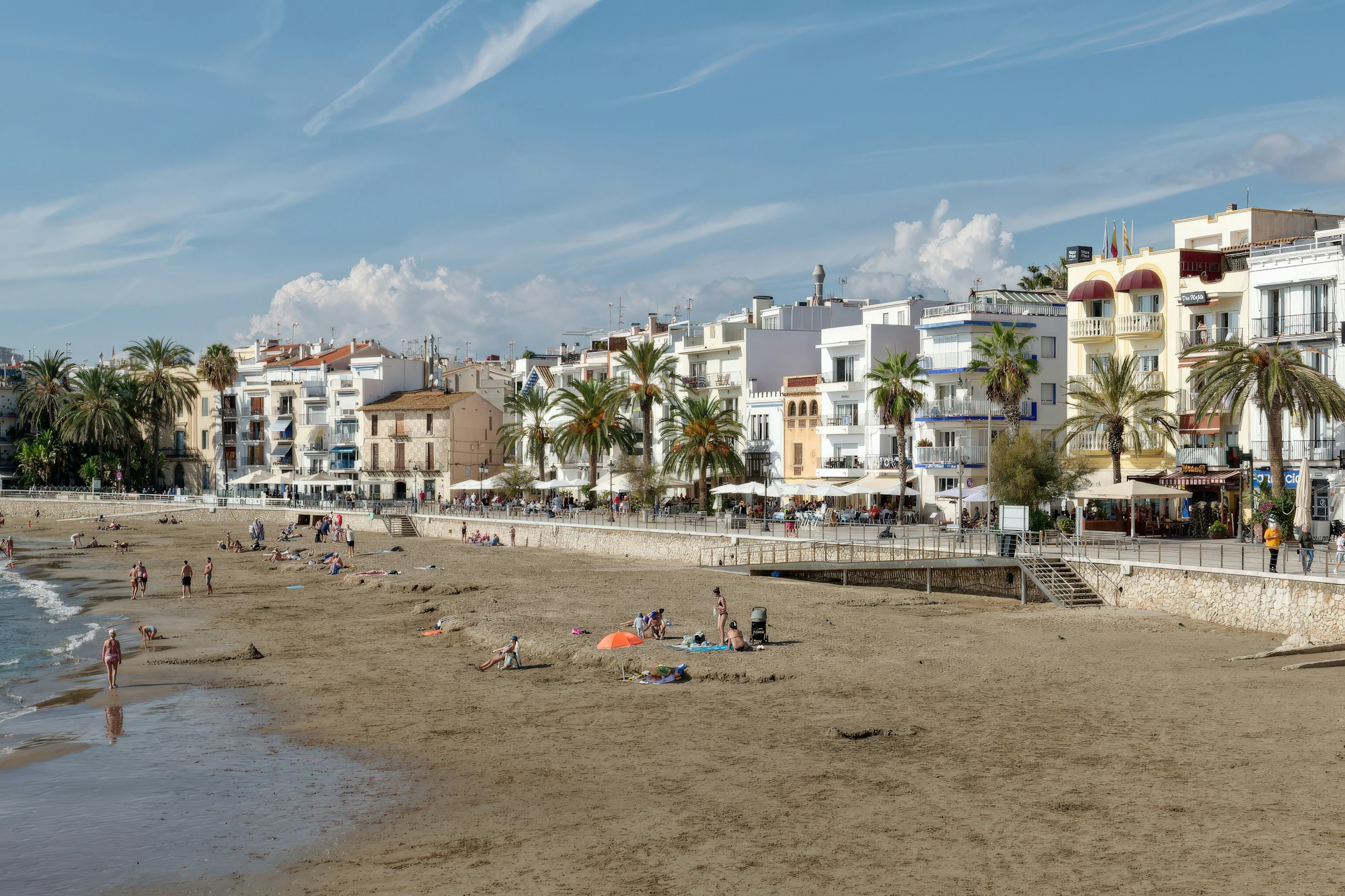
Sitges — Passeig Marítim (Intermediate Sprint)
Sitges — often called the « Saint-Tropez of Spain » — hosts the official intermediate sprint of Stage 2 on its Passeig Marítim, the seafront promenade along the Mediterranean. According to SitgesHillsVillas, it is at kilometre 53 that the sprinters will battle for bonus seconds. Sitges’ 26 beaches and terrace restaurants make it the ideal spot for combining roadside action with a day at the sea.
The town is reached from Barcelona in 34 to 42 minutes on the Rodalies R2 Sud line (approximately €6–7 return), with the station a 10-minute walk from the Passeig Marítim. To watch the sprint shape up, position yourself 100 to 400 m before the sprint banner: team trains are already forming at that point, making the tactics visible to the naked eye. The steps of the Església de Sant Bartomeu i Santa Tecla (Sitges old town, overlooking the Passeig) offer an elevated view of the action.
Highlights
- Intermediate sprint = visible racing action: you can see teams positioning 500–800 m before the banner
- Global broadcast backdrop of turquoise sea — guaranteed postcard shot
- Direct train from Barcelona in 40 min — combine Sitges morning + Montjuïc afternoon
- Publicity caravan ~12:00–12:30: 30–45 min of floats and free goodies
Spot 3 — Begues: the Catalan climb, first real test (km 85–91)
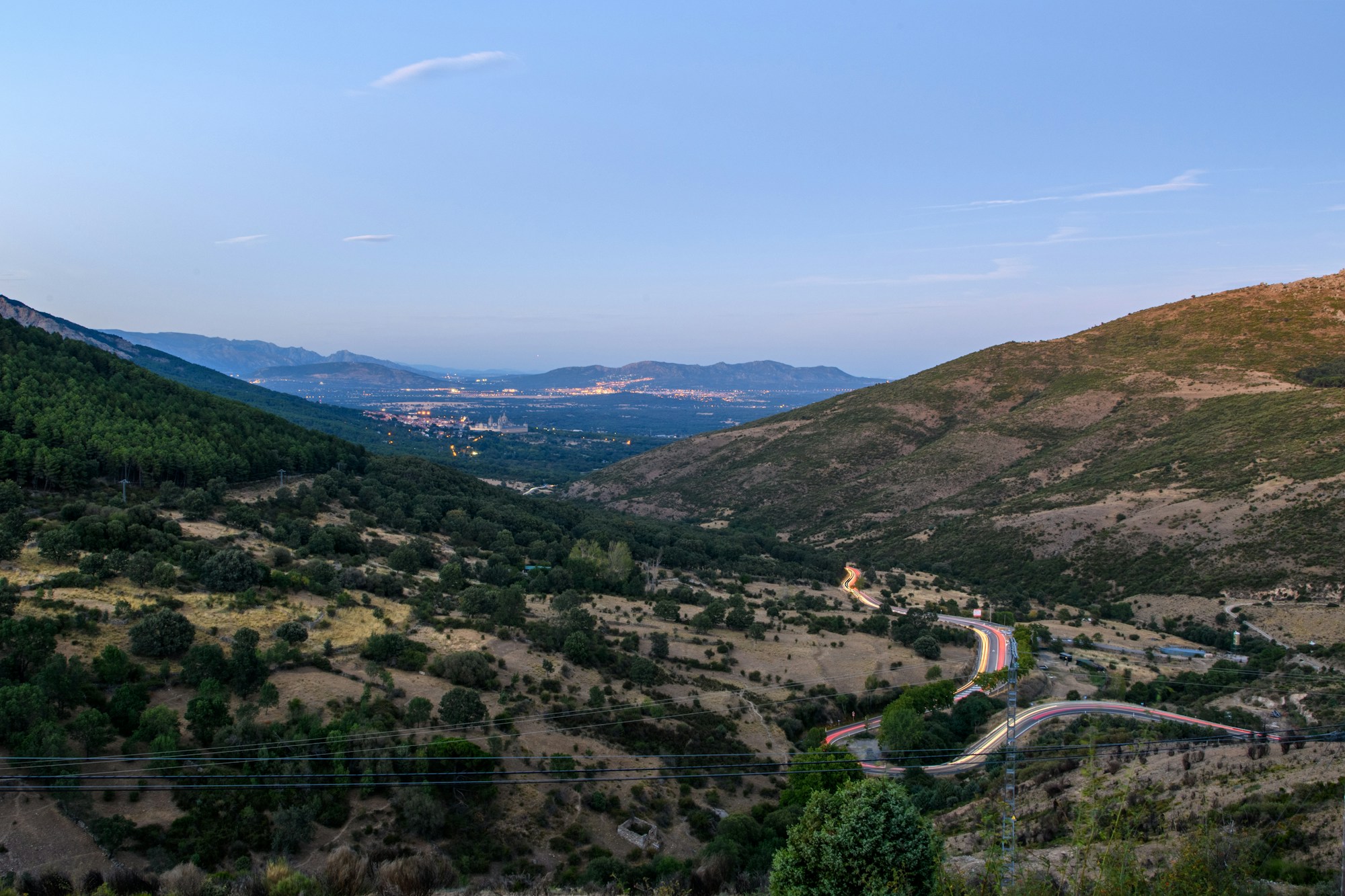
Begues — Begues Climb (6.1 km at 6.5%)
Begues is a village of 3,000 inhabitants perched at 399 m in the Baix Llobregat hills, reached from Castelldefels via the C-245. The Begues Climb (6.1 km at 6.5% average, with sections at 9–10%) is the first real test of Stage 2 after 85 km of flat terrain: sprinters’ legs, accustomed to riding in the bunch, will take their first shock, and GC teams begin to shed their lead-out trains. According to El Llobregat, the Baix Llobregat region is preparing for this historic event with animations in all the communes along the route.
To get there from Barcelona: Rodalies R2 to Castelldefels (~20–25 min from Sants, ~€5), then bus 902 Hife to Begues (~13 min). Cycling from Castelldefels is possible (5 km of climbing, allow 3–4 hours in advance). Roads on the climb are open to pedestrians and cyclists until approximately 90 minutes before the peloton arrives (standard Tour de France procedure).
Highlights
- First real climb of the stage = first possible attacks from GC teams (Pogacar, Vingegaard, Evenepoel)
- Mountain-col atmosphere: banners, horns, multilingual cheering — quintessential Tour de France
- Authentic Catalan countryside, away from urban crowds — ideal for photos with greenery and ridges
- 8–10 minutes of peloton passing time on a stretched climb vs 8–10 seconds on flat
Spot 4 — Castelldefels and Gavà: a historic first Tour passage (km 74–82)
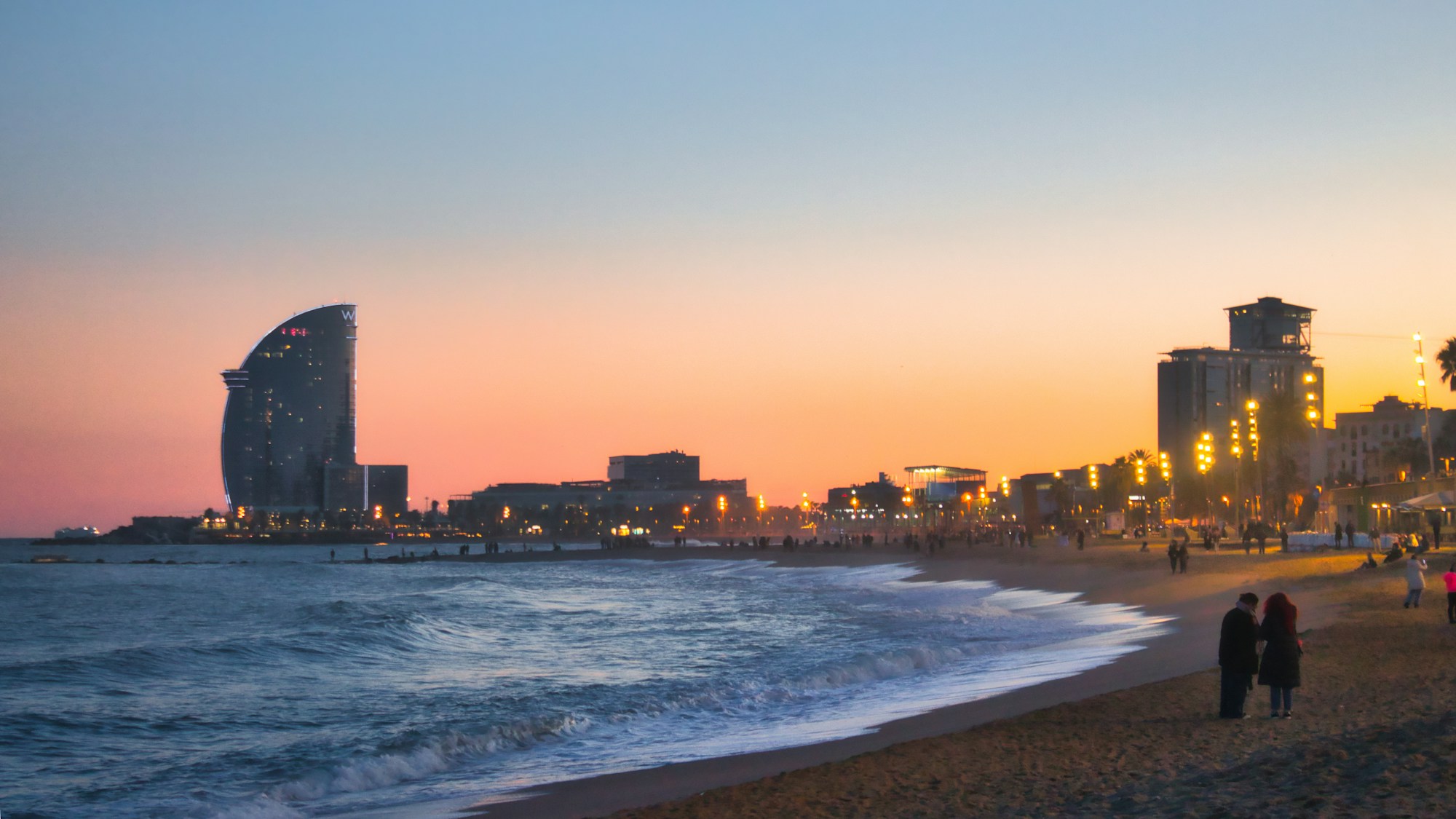
Castelldefels / Gavà — A historic Tour de France first
For the very first time in Tour de France history, the peloton will pass through Castelldefels, Gavà and Viladecans. According to castelldefels.digital and gava.info, the Baix Llobregat municipalities are preparing festive animations for residents who have never before seen La Grande Boucle on their streets.
This spot’s main appeal is its ease of access (20–25 minutes from Barcelona Sants, ~€5 return on Rodalies R2) and its proximity to El Prat airport (ideal for spectators flying in or out on 5 July). The road still follows the coastline in this section — riders are still in a compact peloton at ~45 km/h, about to begin the climbs. The passage lasts 8–12 seconds, but the local atmosphere is particularly warm for this once-in-a-lifetime community occasion.
Highlights
- Unique historic moment: the Tour de France’s first-ever visit to these Baix Llobregat communities
- Easiest access of all five spots: 20 min from Barcelona Sants, direct airport connection
- Strong local community atmosphere: residents celebrating the Tour’s first appearance on their streets
- Coastal views available (Passeig Marítim de Castelldefels)
Spot 5 — Montjuïc: the final circuit repeated 3 times (km 140–178)
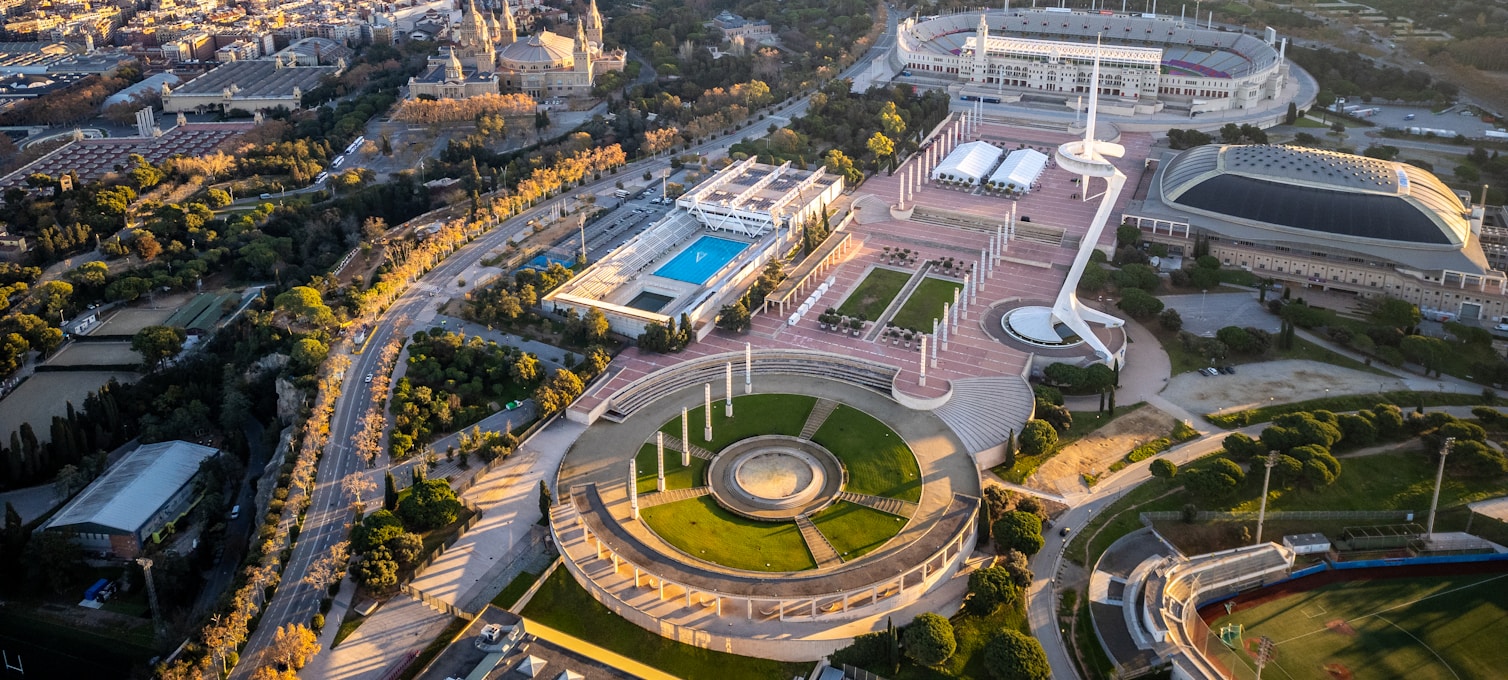
Barcelona — Montjuïc Castle Climb (Final Circuit × 3)
Montjuïc is the spot for Stage 2: this is where the race is decided, where the Tour favourites express themselves at full intensity for the first time, and where the Barcelona crowd creates a stadium atmosphere found only in the great Tour host cities. The finish at the Estadi Olímpic Lluís Companys will feel familiar to riders who know the Volta a Catalunya — notably its March 2026 finale, where Jonas Vingegaard (Visma-Lease a Bike) took overall victory on this very circuit, according to CyclingNews.
The Montjuïc Castle Climb (1.6 km at 9.3%, max 13%) is repeated three times in the 12.2 km final circuit. Riders are travelling at 18–22 km/h on the gradient — the stretched peloton files past for 2 to 5 minutes at each pass. From a single vantage point on the climb, you have the chance to see the Tour favourites — Pogacar, Vingegaard, Evenepoel, van der Poel — three times at arm’s length, faces clearly legible, for the price of a single metro journey.
To reach Montjuïc without a car (circuit roads close on 4 and 5 July): Metro L2 or L3 to Paral·lel, then the Funicular de Montjuïc (included in the T-Casual and Hola BCN passes). Buses 55 and 150 also serve the Parc de Montjuïc directly. The finish at Estadi Olímpic is only accessible as a paid VIP space.
Highlights
- 3 peloton passes from a single spot — an exceptionally rare feature in mass-start Tour stages
- 13% gradient: riders look up, faces are readable, expressions authentic
- Decisive for the general classification: the Stage 2 winner often gains a significant psychological advantage
- Festive Barcelona atmosphere: passionate Catalan crowd, Montjuïc transformed into an arena
Transport and budget: planning your 5 July
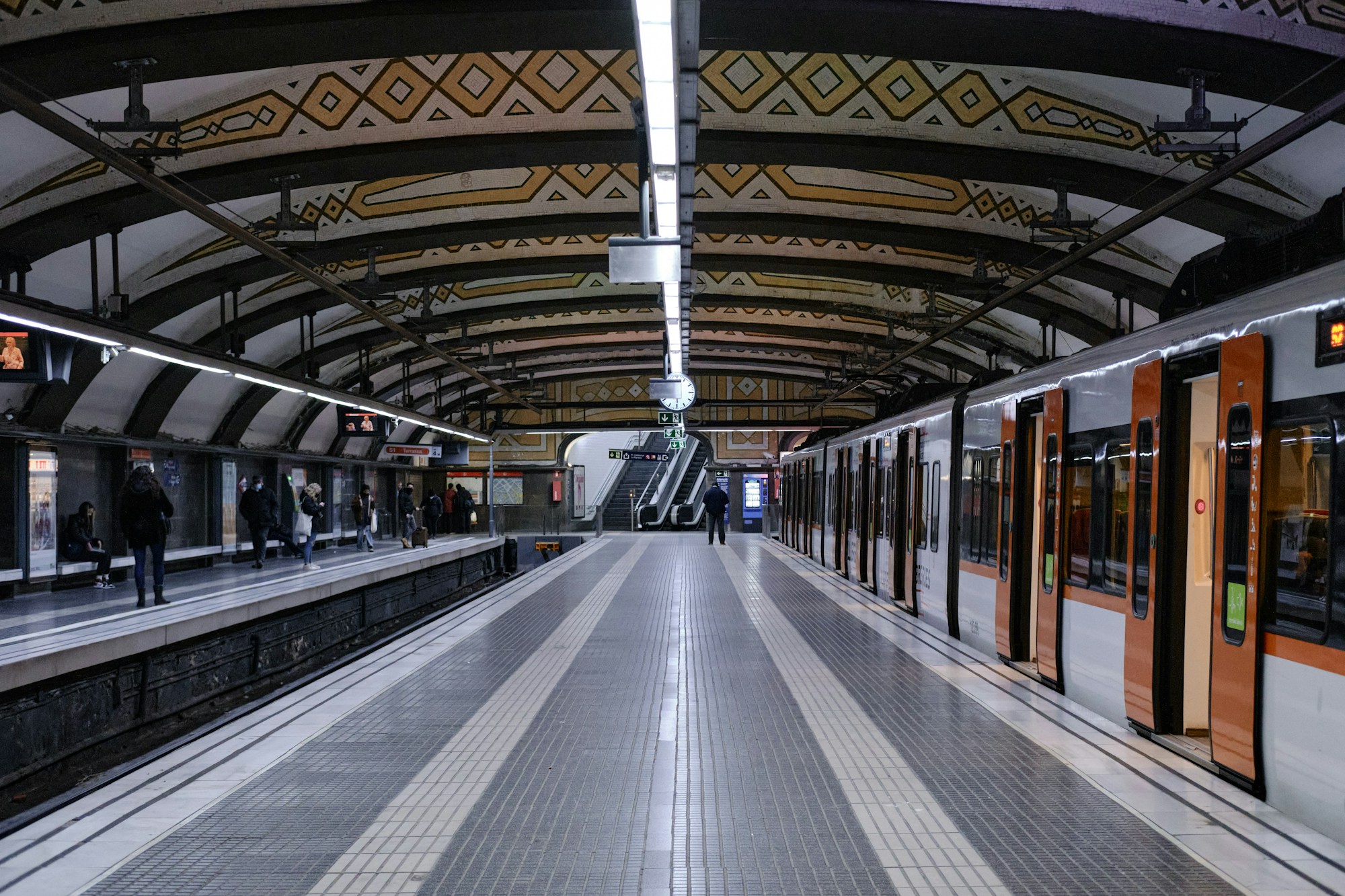
Getting to each spot and day budget
Route roads for Stage 2 close to private vehicles on the morning of 5 July. Public transport is the only option for all five spots. The backbone is the Rodalies R2 and R2 Sud network operated by Renfe, serving Tarragona, Sitges, Vilanova i la Geltrú, Castelldefels and Gavà from Barcelona Sants or Passeig de Gràcia.
| Spot | Line | Duration | Approx. return fare |
|---|---|---|---|
| Tarragona (spot 1) | Rodalies R2 Sud from Sants / P. Gràcia | ~55–70 min | ~€8–10 |
| Sitges (spot 2) | Rodalies R2 Sud from Sants / P. Gràcia | ~34–42 min | ~€6–7 |
| Begues (spot 3) | R2 → Castelldefels + bus 902 Hife | ~35–45 min total | ~€7–9 |
| Castelldefels / Gavà (spot 4) | Rodalies R2 from Sants | ~20–25 min | ~€5 |
| Montjuïc (spot 5) | Metro L2/L3 → Paral·lel + Funicular | ~20–30 min from city centre | Included in T-Casual |
The typical day budget per person is €20 to €55: transport (€5–15), food (€15–40), roadside entry €0 (free). The publicity caravan hands out free caps, goodies and snacks. VIP grandstands (Izoard Tribune, Relais Etape, Thomson Bike Tours at ~£4,700/7 days) are not required for a fantastic roadside experience.
Highlights
- 100% free access along the entire public route — the Tour de France is a popular event open to all
- Dense Rodalies network: 10–30 min frequency on R2/R2 Sud lines, T-Casual integrated fare
- T-Casual (10 journeys) = the economical solution for hopping between multiple spots in a day
- Accommodation: book well in advance — Barcelona hotels are showing +100 to +200% above usual rates for this weekend
Practical information for your roadside day
On Montjuïc on 5 July, mobile networks will be congested. A local eSIM gives you a reliable connection to follow the race live. Spain plans from $4 USD/1 GB — activate before you travel to stay connected without a physical SIM card.
From $4 USD / 1 GBNomad Insurance: global coverage from $56/4 weeks, including Spain and the Schengen area. Active sport coverage available. 10% off via our Ambassador link — ideal for UK cycling fans heading to the TDF 2026 Grand Départ.
From $56 / 4 weeksFrequently asked questions
What time does the Tour de France 2026 arrive in Barcelona (Stage 2)?
The Stage 2 finish at the Estadi Olímpic Lluís Companys (Montjuïc) is estimated between 16:30 and 17:30 CEST on Sunday 5 July 2026. The exact time depends on the official start time, not yet confirmed by ASO at time of publication (check the definitive schedule on letour.fr when the official roadbook is released). The three final passes on the Montjuïc circuit are estimated at ~16:20, ~16:45 and ~17:10 CEST.
Do you need tickets to watch Stage 2 of the Tour de France roadside?
No, roadside access along the entire public route is 100% free. The Tour de France is a popular event open to everyone, as confirmed by barcelona.com. Only the official VIP grandstands (Izoard Tribune, Relais Etape spaces) are ticketed. There is no entry fee for public roadside areas.
How do you get from Barcelona to Sitges for the Tour de France on 5 July?
The fastest link is the Rodalies R2 Sud from Barcelona Sants or Passeig de Gràcia, a direct journey of 34 to 42 minutes for approximately €6–7 return (or included in the T-Casual pass). Sitges station is a 10-minute walk from the Passeig Marítim. Aim to arrive in Sitges before 13:30 to position yourself ahead of the estimated peloton passage between 13:50 and 14:10 CEST. Check timetables on rodalies.gencat.cat before travelling.
Does the peloton pass Montjuïc more than once during Stage 2?
Yes — that is the defining feature of the Stage 2 final circuit: the 12.2 km loop around Montjuïc is repeated three times over the last 38.5 km. The Montjuïc Castle Climb (1.6 km at 9.3%, max 13%) is therefore ridden three times by the peloton. From a single vantage point on the climb, you will see the peloton pass three times at roughly 20–25 minute intervals, with 2 to 5 minutes of viewing time on each occasion — up to 15 minutes of live racing visible from one spot, according to CyclingStage.
How hard is Stage 2 of the Tour de France 2026?
Stage 2 is classified as hilly with a total elevation gain of ~2,400 m over 178.4 km. The main climbs are: the Begues Climb (6.1 km at 6.5%, summit at 399 m, km 85–91), the Côte de Santa Creu d’Olorda (8.4 km at 4.5%, km 128–136), and the Montjuïc Castle Climb (1.6 km at 9.3%, max 13%) repeated three times in the final circuit. Christian Prudhomme described the Montjuïc circuit as « the traditional Volta a Catalunya finale transposed onto the Tour de France », according to CyclingStage.
Sources
- letour.barcelona — Official TDF 2026 Grand Départ Barcelona website, Stage 2 (Ajuntament de Barcelona)
- CyclingStage — Stage 2 TDF 2026 route profile and key details
- Tarragona Digital — Official distance 178.4 km and municipalities on the route
- SitgesHillsVillas — Intermediate sprint confirmed on Passeig Marítim, Sitges km 53
- Gava.info — Historic first Tour passage through Gavà, Viladecans and Castelldefels
- castelldefels.digital — Historic first Tour de France visit to Castelldefels
- Barcelona.com — Free access and general organisation of the Tour in Barcelona
- CyclingNews — Volta a Catalunya 2026 finale on the Montjuïc circuit
- HedgehogCycling — Stage 2 profile and key points (UK cycling resource)
- Rodalies Generalitat de Catalunya — Rodalies timetables and service status
- SeekTravelRide — Tips for watching the Tour de France roadside
Research conducted on 28 May 2026 — passage timings are estimates; check the official roadbook on letour.fr for confirmed times.
Ready to experience the Tour de France 2026 in Catalonia?
The Catalan Grand Départ is a unique opportunity to combine a passion for cycling with exploring Barcelona and the Costa Daurada. Discover our itineraries around Barcelona and the Costa Daurada to complete your trip.
Explore our Spain itineraries