
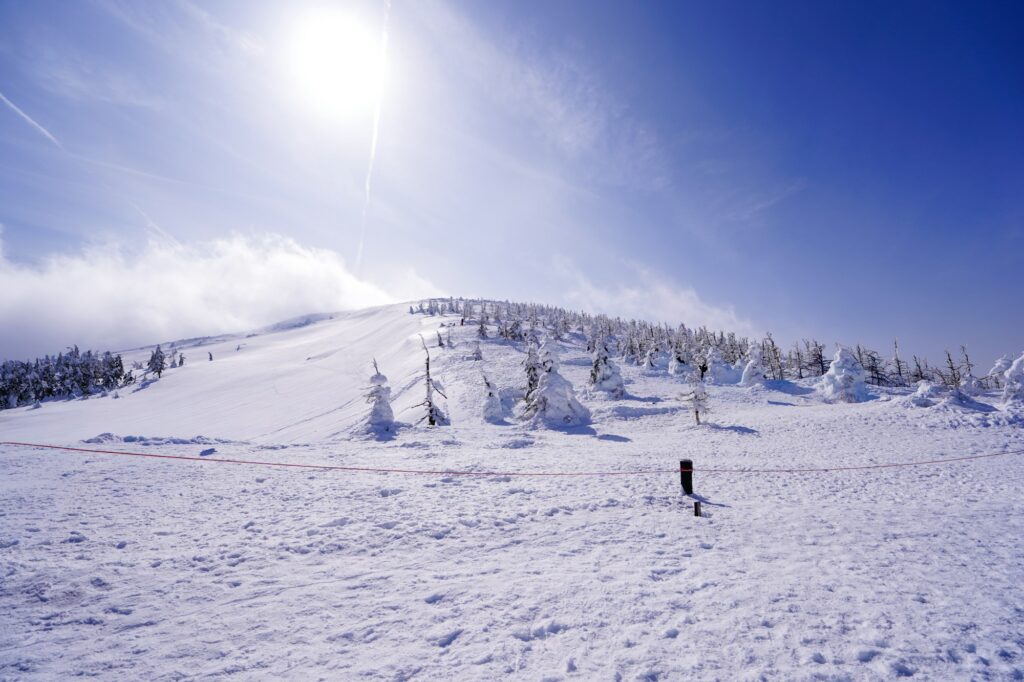
For the 2026-2027 season, the illumination evenings for the ice trees on Mount Zao are planned from late December to late February, but the exact calendar is still to be confirmed with the cable car operator. Three third-party sources list 31 evenings, from 26 December 2026 to 23 February 2027. The day cable car costs 4,400 yen return.
Checked on : operator pages read, parts of the Yamagata Prefecture PDFs read, three third-party sources flagged as such.
The ice trees of Mount Zao, known as juhyo, are fir trees coated in frost and snow that turn into almost unreal white shapes. The phenomenon depends on humid wind, very low temperatures at the summit and a forest of oshirabiso firs. Each winter, a few evenings let you see them lit up. The title says « 2027 »: it refers to the 2026-2027 winter season, which runs until February or March 2027.
1. Getting to Zao: from Sendai, Yamagata or Tokyo
Zao Onsen, the resort at the foot of the forest
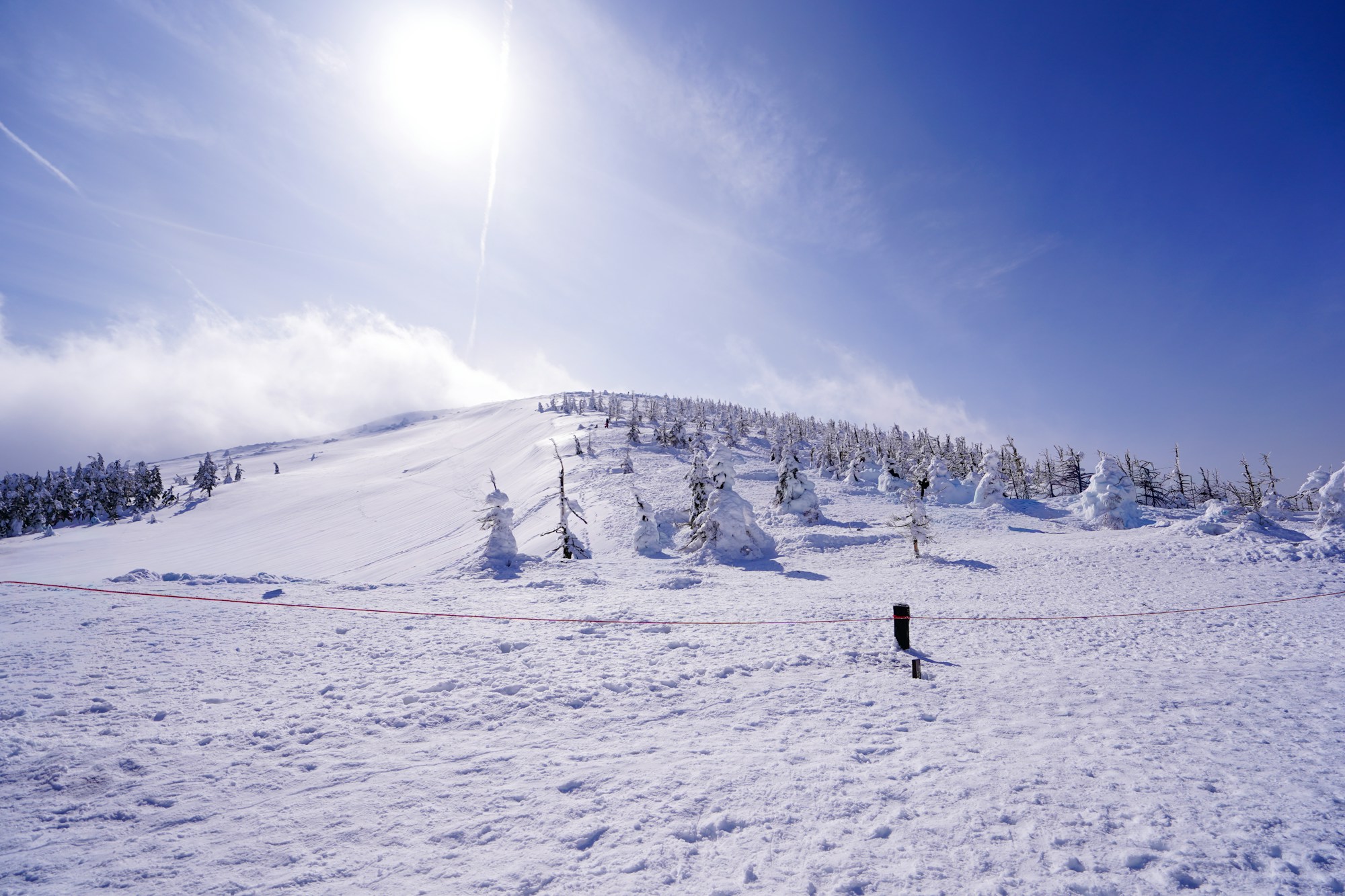
Zao Onsen is a hot spring resort at about 880 metres above sea level, at the foot of Mount Zao. It is the starting point of the Zao Sanroku cable car, which climbs towards the juhyo forest. Zao Onsen on Wikipedia.
There are three ways in. From Tokyo, the Tsubasa Shinkansen reaches Yamagata in about two and a half hours, for 11,670 yen in a reserved seat according to a specialist third-party site that checked the fares revised in March 2026. From Yamagata, a bus run by the local operator reaches Zao Onsen in about forty minutes. From Sendai, a direct winter bus takes about 100 minutes for 2,000 yen, with a reservation required according to a guide last updated in March 2025: this fare still needs to be reconfirmed.
Highlights of the route
- The Zao Sanroku cable car leaves from Zao Onsen and goes straight up to the juhyo forest.
- The bus from Yamagata needs no reservation, according to the Zao Onsen tourist office.
- Sendai has an airport and winter shuttles to Zao, running between 19 December 2026 and 31 March 2027 according to the operators.
If you spend a night in Sendai, a guided tour of the city’s izakayas and bars fits in before or after the climb. It does not show the trees or the cable car.
| Route | Stated duration | Stated fare | Data status |
|---|---|---|---|
| Tokyo ⇔ Yamagata (Tsubasa, reserved seat) | About 2 h 30 | 11,670 yen | Specialist third-party site, fares revised in March 2026 |
| Yamagata Station ⇔ Zao Onsen (bus) | About 40 min | 1,000 yen (tourist office) or 1,200 yen (operator cited) | To be checked with the operator |
| Sendai ⇔ Zao Onsen (direct winter bus) | About 100 min | 2,000 yen | Third-party guide, updated March 2025, reservation required |
| Sendai Airport ⇔ Zao (ANA ski shuttle) | Times in the operator’s PDF | 3,000 yen (third party) | Service from 19 December 2026 to 31 March 2027, fare to be confirmed |
Sources: jr-shinkansen.net, Zao Onsen tourist office, japan-guide, ANA, ski shuttle, checked on 27 November 2026.
2. Juhyo: an ice tree, not just frost
What the word means
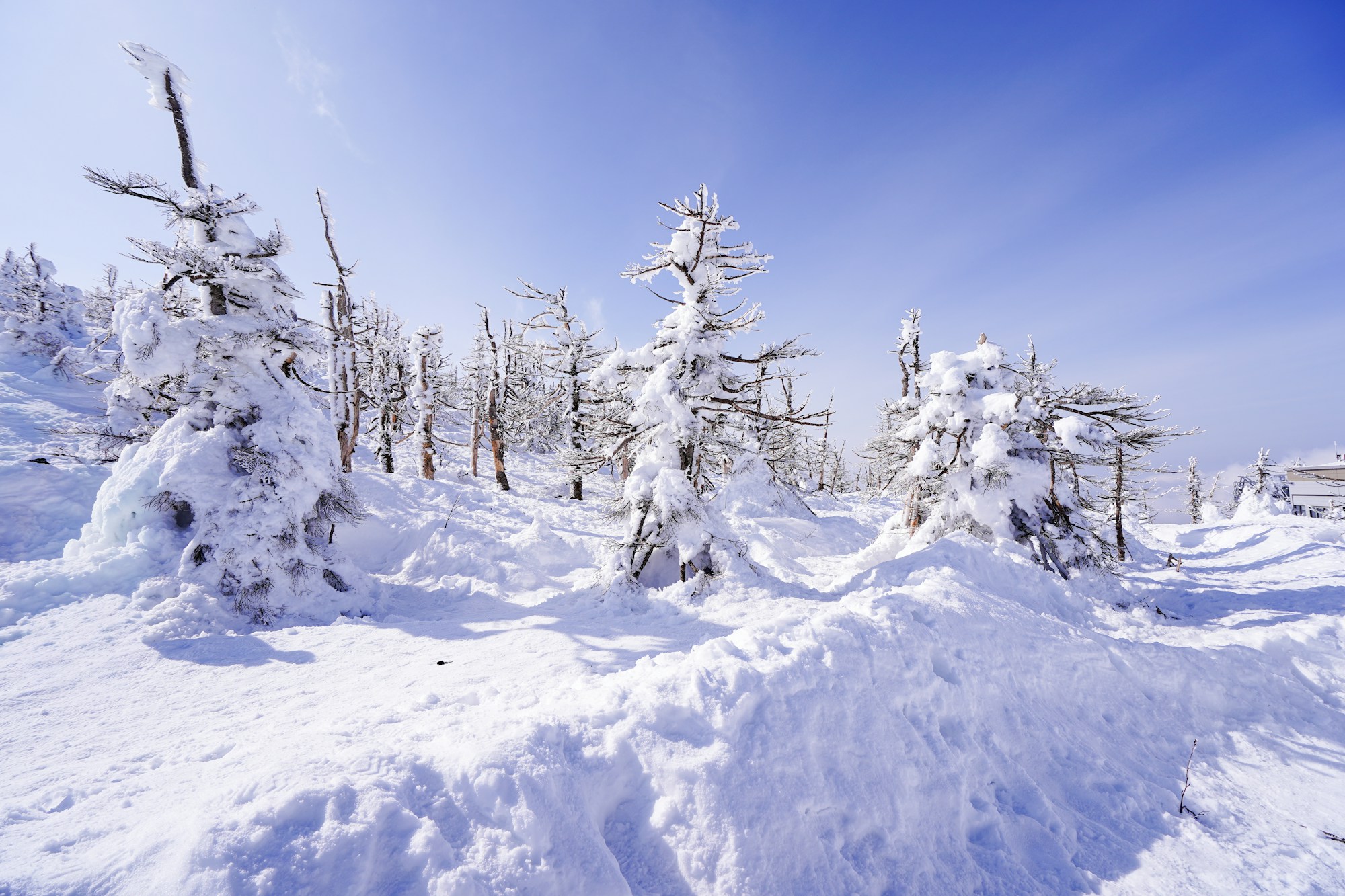
The Japanese word 樹氷 literally means a tree covered in frost. The Ministry of Land, Infrastructure, Transport and Tourism defines it as a tree covered in ice and frost, to be told apart from muhyo, the frost that forms on trees exposed to fog. Juhyo needs stronger wind and regular snowfall, which rounds the branches into massive white shapes. Ministry reference document, extract read in search results.
Mount Zao combines three factors: enough altitude for the snow to stay, exposure to the humid winter winds blowing in from the Sea of Japan, and a forest of oshirabiso whose dense foliage catches particles of frost. That forest is what made the site famous, and it is also its weak point, as we will see below.
How a tree becomes juhyo
According to the Ministry of Land, Infrastructure, Transport and Tourism, which quotes a statement from Miyagi Zao, formation happens in three stages: frosting, snow cover, then the snow setting. According to the operator’s juhyo page, the trees form from November to December, grow through January, reach their most spectacular shape in February and melt in March. Operator’s juhyo page.
- Oshirabiso firs hold frost thanks to their dense foliage.
- The phenomenon needs humid wind and a run of snow squalls over several weeks.
- In December, the trees are small and only partly formed; the peak comes in February.
3. The day cable car: fares and hours
Two stations, two altitudes
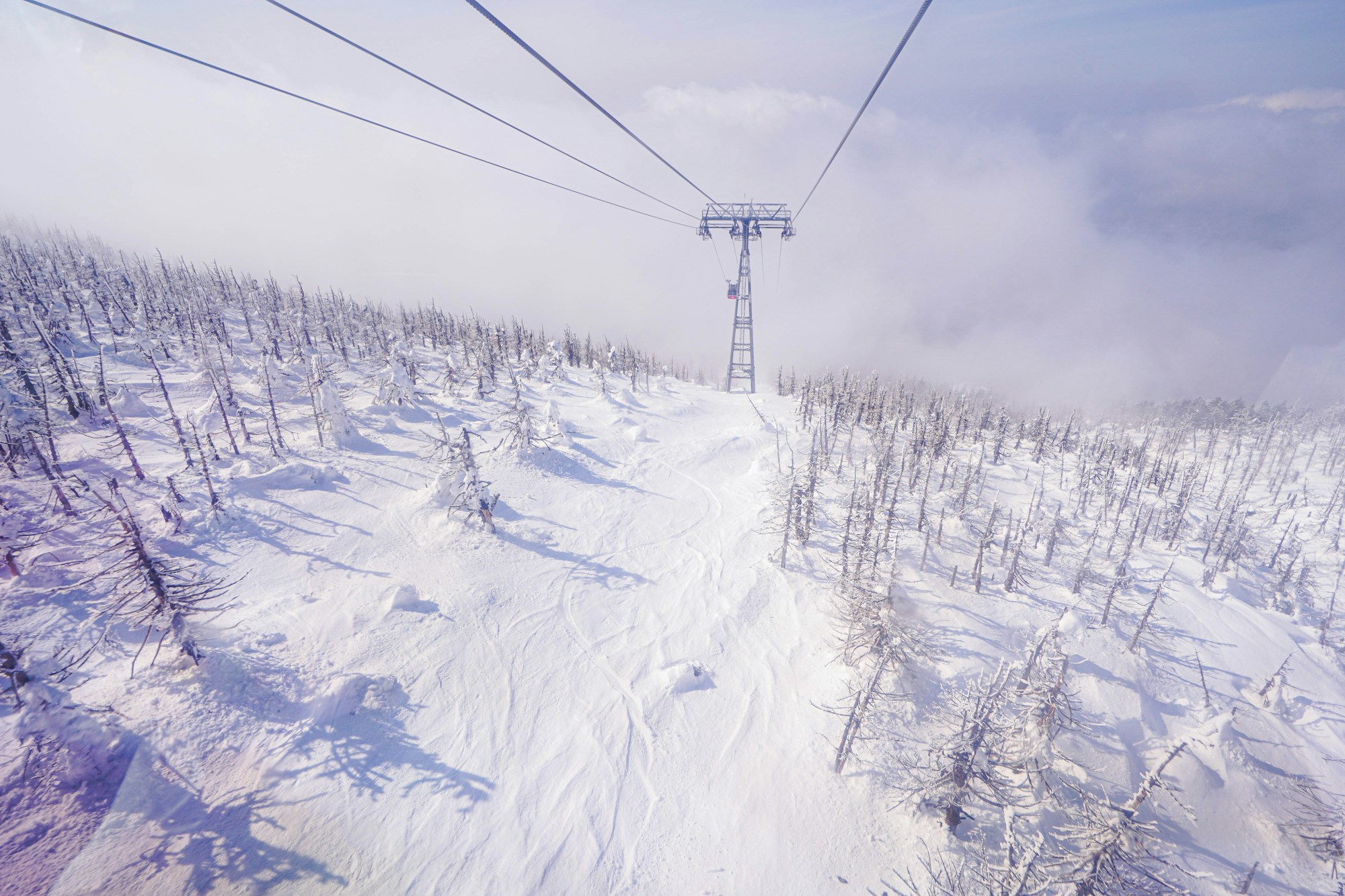
The Zao Sanroku cable car links Zao Onsen to two stations. Juhyo Kogen (樹氷高原駅), at 1,331 metres, sits on the plateau of the ice trees. Jizo Sancho (地蔵山頂駅), at 1,661 metres, is the summit, from where you walk into the juhyo forest. The fares below come from the operator’s winter page, which is not dated and was read on 27 November 2026.
The official winter season hours are 8:15 am to 4:45 pm for the Sanroku line and 8:30 am to 4:30 pm for Sancho. A ticket refund costs 100 yen per sheet, according to the same page. For questions, the operator answers at +81-23-694-9518.
Before you go
- Juhyo Kogen is enough to see the trees. The return ticket costs 2,200 yen for an adult, half the summit price.
- The summit is windy. Bring layers, gloves and goggles against the wind.
- Skis are not allowed in some tree areas, according to the operator’s juhyo page. The full list of zones is not published on the pages read.
| Section | Adult one way | Adult return | Child one way | Child return |
|---|---|---|---|---|
| Sanroku ⇔ Juhyo Kogen (1,331 m) | 1,200 yen | 2,200 yen | 600 yen | 1,100 yen |
| Sanroku ⇔ Jizo Sancho (1,661 m) | 2,200 yen | 4,400 yen | 1,100 yen | 2,200 yen |
Source: zaoropeway.co.jp, operator’s winter page (undated), checked on 27 November 2026.
4. The illumination evenings, 2026-2027
31 evenings, according to third parties
The ice trees are lit during a limited series of evenings. For 2026-2027, three third-party sources, WaTabi, Hidden Japan Gems and besttimeinjapan, give the same dates: Saturday 26 December 2026 to Tuesday 23 February 2027, 31 evenings, from 5 pm to 9 pm. No official page read lists this calendar.
The operator did publish a dated announcement on 4 October 2026 about the illumination and the Night Cruiser. Its content, shown as images, could not be read: the dates here come from third parties, who say they cite these announcements without quoting them. The evenings the third parties list are:
- December: 26, 27, 30 and 31.
- January: 1, 2, 3, 9, 10, 11, 16, 17, 22, 23, 24, 29, 30 and 31.
- February: 5, 6, 7, 10, 11, 12, 13, 14, 19, 20, 21, 22 and 23.
The night cable car and the Night Cruiser
The night cable car is a separate ticket from the day one. Three third-party sources give it at 4,600 yen for an adult and 2,300 yen for a child aged 6 to 11, against 4,400 yen by day at the official rate. The night fare grid was not read on an official page: confirm it before you book.
The Night Cruiser is a vehicle that drives among the lit trees. The official page for the 2026 offer, called Juhyo Illusion, lists four departures a day, at 5 pm, 6 pm, 7 pm and 8 pm. The ride lasts about 75 minutes, including about 30 minutes on board. It leaves from and returns to Juhyo Kogen station. Online booking opens seven days before each evening, and sales open in principle at 2 pm on the day they go on sale. If the trees have collapsed to the point where they are no longer visible, the trip is cancelled. The price does not appear in the text read on the official page: WaTabi and Hidden Japan Gems give 8,000 yen for an adult and 7,000 yen for a child, under the name Juhyo Genso Kairo (third party, to be confirmed).
| Offer | Adult | Child | Status |
|---|---|---|---|
| Day cable car, return to the summit | 4,400 yen | 2,200 yen | Official (winter page, undated) |
| Night cable car, return to the summit | 4,600 yen | 2,300 yen (ages 6 to 11) | Reported by three third-party sources, to be confirmed |
| Night Cruiser (Juhyo Illusion, or Juhyo Genso Kairo in third-party sources) | 8,000 yen | 7,000 yen | Reported by WaTabi and Hidden Japan Gems, to be confirmed; not read on the official page |
Sources: zaoropeway.co.jp, Juhyo Illusion 2026, WaTabi, Hidden Japan Gems, checked on 27 November 2026.
| Season | Dates | Evenings | Status |
|---|---|---|---|
| 2024-2025 | 27 December 2024 to 23 February 2025 | 35 | Past season, from Visit Yamagata |
| 2025-2026 | 27 December 2025 to 22 February 2026 | 35 or 36 depending on the source | Over, according to the operator (notice of 22 February 2026) |
| 2026-2027 | 26 December 2026 to 23 February 2027 | 31 | Three concordant third-party sources, to be confirmed; official announcement not read |
Sources: rurubu, tabi-mag, operator’s news list, checked on 27 November 2026.
5. A fragile landscape: the decline of the oshirabiso
Since 2013, the forest has been retreating
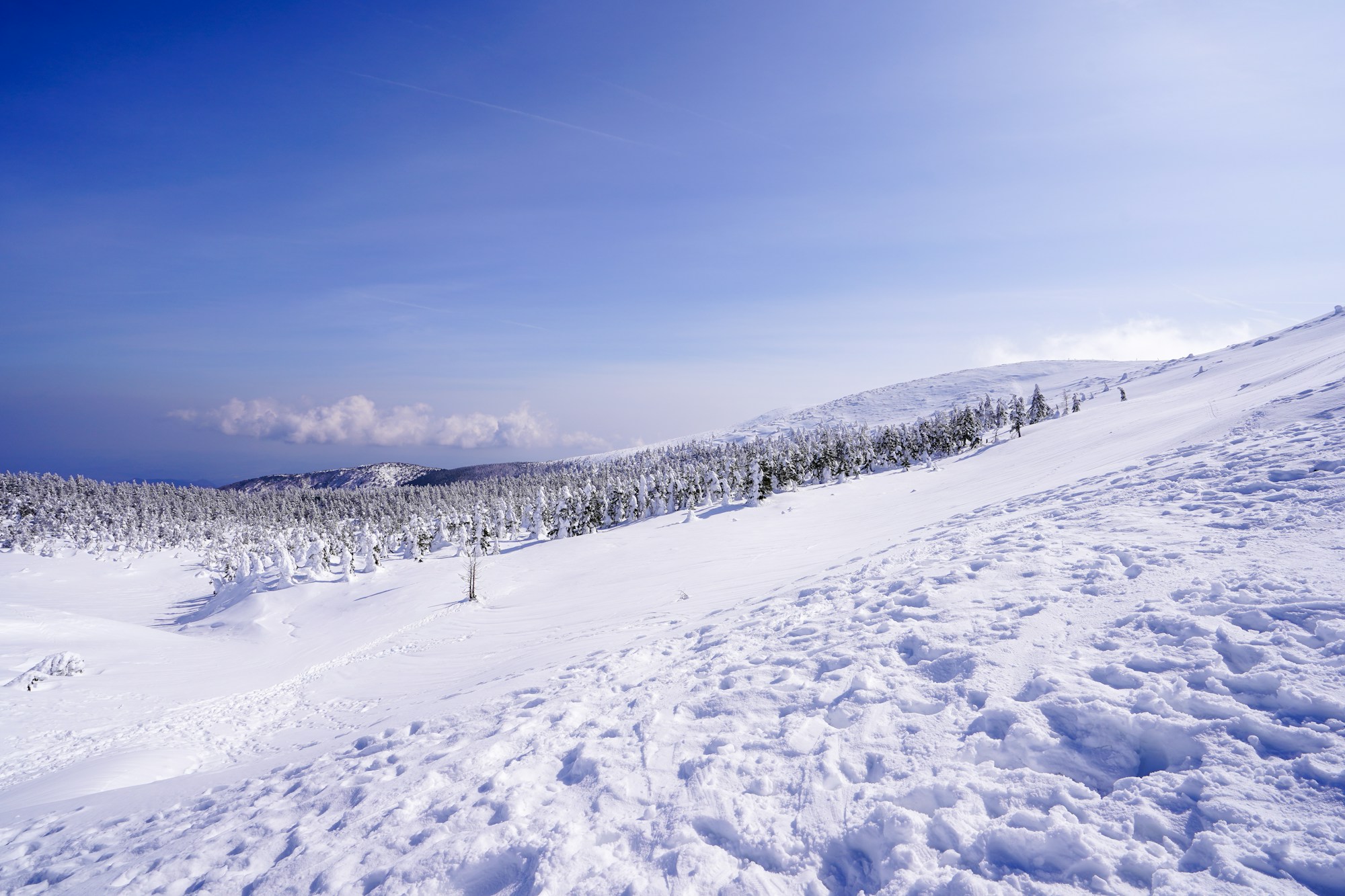
Since autumn 2013, an outbreak of moth larvae has weakened the oshirabiso, and bark beetles then finished off the weakened trees. On the Yamagata side, about 23,000 trees have died, a little under 20% of the forest. Near the summit, the prefecture counts about 6,700 dead trees. These figures date from 2024. Prefecture restoration committee report.
The prefecture set up a restoration committee on 13 March 2023, split into two groups: one technical (transplanting, sowing, monitoring), the other devoted to information and passing on knowledge. Regrowth is slow. According to the prefecture, it will take more than 70 years to recover a comparable summit forest, and the trees could stay fragile for decades.
In November 2024, a researcher from Yamagata University warned: “If things keep going this way, the ice trees will eventually stop forming.” This line comes from press coverage picked up by an archive search, not from a publication read directly. It is given here as an expert’s view.
6. Budget: what an evening at Zao costs
The budget breaks down into three items: transport, the climb and the evening. Accommodation is not priced here, because no booking page read was verified.
- Yamagata to Zao Onsen bus: about 1,000 to 1,200 yen per trip depending on the source, to be checked with the operator before you travel.
- Day cable car, return to the summit: 4,400 yen for an adult, 2,200 yen for a child. Juhyo Kogen costs 2,200 yen for an adult.
- Night cable car: 4,600 yen for an adult, reported by third parties, to be confirmed.
- Night Cruiser: 8,000 yen for an adult and 7,000 yen for a child, reported by WaTabi and Hidden Japan Gems (third parties, to be confirmed). It is a separate offer, on top of the night ticket.
- Tokyo to Yamagata train: 11,670 yen on the Tsubasa, reserved seat, normal season. The Japan Rail Pass does not cover the express supplement, and does not cover the valley bus.
A rise of about 5 to 6% in the Japan Rail Pass was announced for 1 October 2026: check the price when you buy.
7. A possible two-day plan
Day 1: arrival and evening
Arrive at Yamagata late in the morning, by the Tsubasa from Tokyo or by the shuttle from Sendai. Take the bus to Zao Onsen, drop your bags and climb to the summit late in the afternoon, before the day service closes at 4:45 pm. If you have booked a night ticket for an illumination evening, the evening starts at 5 pm, and third parties list the last uphill departure at 7:45 pm.
Watch out for the return: an unverified travel page lists a last bus at 7:50 pm from Zao Onsen to Yamagata. If that is correct, an evening that ends at 9 pm means sleeping on site. Check the time with the tourist office before you book.
Day 2: the day on the summit
Photographers recommend sunrise, when low light colours the trees. But the cable car does not open until 8:15 am at Sanroku, so for a sunrise at the summit the cabin is not enough. The realistic option is the light of late morning, from opening, or late afternoon. Guides disagree on the best time: some prefer the cold of the morning, which limits the trees sagging under the sun, others the golden evening light. Both views hold up.
Plan a walk through the juhyo forest on the marked trails, a stop at Juhyo Kogen, then a return to Zao Onsen early in the afternoon. A traditional public bath, the sentō, stays open in winter. The big outdoor bath, however, is closed this season according to one travel page, which should be checked.
A word on photography
A zoom lens helps isolate the shapes without sinking into the snow. Bring spare batteries and keep them warm, because the cold drains them quickly. The trees look most striking at dusk, when the floodlights light them up; on the summit, the wind means you only stop briefly, so prepare your framing in advance.
8. Depending on your profile
- First time: a daytime visit to the summit is enough to understand the phenomenon. The evening adds the spectacle, but it costs more and means sleeping over if the return does not work out.
- With family: the child ticket is half price on the cable car, that is 2,200 yen return to the summit. For the night ticket, the child fare for ages 6 to 11 is reported at 2,300 yen.
- Tight budget: Juhyo Kogen, at 2,200 yen return, gives access to the forest without going up to the summit. Skip the Night Cruiser if the budget is tight: it adds to the night ticket.
- Photographers: a zoom, spare batteries and gloves so you can handle the camera without freezing your fingers. Morning or late afternoon give the best light.
- Reduced mobility: no official information on the accessibility of the cable car and trails was read for this article. Ask the operator before you book.
9. Mistakes to avoid
- Booking the train before confirming the evenings. The 2026-2027 calendar is not confirmed by a readable official page.
- Comparing a night fare with a day fare. 4,400 yen by day at the summit and 4,600 yen at night, according to third parties: these are not the same offers.
- Thinking the Night Cruiser is included in the night ticket. It is a separate offer, booked online seven days before each evening.
What other guides don’t tell you
Three points that are missing or wrong in most guides, drawn from the operator’s pages.
- The summit is at 1,661 metres, Juhyo Kogen at 1,331 metres. One third party gives 1,841 metres: that is an error, and it distorts the idea of how cold it gets. Operator’s winter page (consulted on 27 November 2026).
- The Night Cruiser is booked seven days before each evening, with sales opening at 2 pm. Guides say to book « in advance » without giving the lead time or the opening hour. Juhyo Illusion 2026 page (consulted on 27 November 2026).
- The cable car season (11 December to 31 March) is not the illumination season. Guides talk about the illumination season, 26 December to 23 February, without saying when the day cabin opens. Operator’s winter page (consulted on 27 November 2026).
Practical information before you go
The 2026-2027 calendar is not confirmed by a readable official page. The operator answers at +81-23-694-9518.
The night ticket and the Night Cruiser are booked online. For the day cable car, the booking rule is not documented on the pages read, and neither are the cancellation terms in case of wind or snow.
Non-slip shoes, warm layers and goggles against the wind: advice that recurs in the guides read, with no official source.
Frequently asked questions about the ice trees of Mount Zao
When do the ice trees light up in 2027?
The 2026-2027 season plans illumination evenings from late December to late February; the exact calendar is to be confirmed with the cable car operator. Three third-party sources list 31 evenings, from 5 pm to 9 pm, between 26 December 2026 and 23 February 2027. The operator published an announcement on 4 October 2026, whose content could not be read. WaTabi.
How much does the cable car to the summit cost?
The day cable car costs 4,400 yen return for an adult to the summit, Jizo Sancho at 1,661 metres, and 2,200 yen for a child. Juhyo Kogen, on the tree plateau, costs 2,200 yen return for an adult. Three third-party sites report the night ticket at 4,600 yen, to be confirmed on the official page. Operator’s winter page.
How long does it take from Tokyo?
The Tsubasa takes about two and a half hours from Tokyo to Yamagata, for 11,670 yen in a reserved seat in normal season. Then allow about forty minutes by bus to Zao Onsen, for a total trip of about three hours and fifteen minutes, excluding waiting time. Sources vary between 2 h 22 and 3 h 30 depending on the timetable used: this article uses about two and a half hours. jr-shinkansen.net.
How do I get from Yamagata Station to Zao Onsen?
A bus run by Yamagata Kotsu reaches Zao Onsen in about forty minutes, with no reservation needed according to the tourist office. The fare is given as 1,000 yen by the tourist office and 1,200 yen by the operator cited in recent sources; check the amount when you travel. From Yamagata Airport, the shared taxi needs a reservation the day before, before 5 pm. Zao Onsen Tourist Office.
When is the best time to see the ice trees?
The peak comes in February, with a mid-February mention from the Japan National Tourism Organization and besttimeinjapan. The operator also points to February. In December, the trees are small and only partly formed. For light, photographers recommend sunrise or late afternoon, but the cable car does not open until 8:15 am.
Do I need to book the night cable car and the Night Cruiser?
For the Night Cruiser, yes, online: according to the operator, booking opens seven days before each evening, and sales open in principle at 2 pm on the day they go on sale. For the night cable car, the booking rule is not documented on the pages read: the operator answers at 023-694-9518. Guides report heavy crowds on Saturdays, Sundays, public holidays and over the New Year period. Juhyo Illusion 2026 page.
Will the ice trees disappear?
The decline has been real since 2013: about 23,000 oshirabiso have died on the Yamagata side. The prefecture estimates that the summit forest will take more than 70 years to rebuild. A researcher at the University of Tokyo, quoted in media reports from 2023, considers that the disappearance is possible by the end of the century under strong warming. This scenario is not a certainty, and no direct study has verified it. Yamagata Prefecture for the regrowth timeline.
Can you see the trees without taking the cable car?
The simplest option is the cable car, which leads to the juhyo forest in winter. One source says the Okama pass road is closed in winter, but which side (Miyagi or Yamagata) and the closing date are not confirmed. The cable car therefore remains the surest way to see the ice trees.
Sources
- Zao Ropeway, winter page : season, hours and fares for the winter season (undated).
- Zao Ropeway, juhyo page : monthly cycle of tree formation and ski restrictions.
- Zao Ropeway, Juhyo Illusion 2026 : Night Cruiser departures, duration and booking.
- Zao Ropeway, news list : announcement dated 4 October 2026, content not read.
- Zao Onsen Tourist Office, access : bus, airport shuttles and shared taxi.
- Yamagata Prefecture, restoration committee (2024) : mortality figures and restoration actions (PDF read in extract).
- Yamagata Prefecture, March 2025 document : regrowth timeline for the summit (PDF read in extract).
- Ministry of Land, Infrastructure, Transport and Tourism, reference document : definition of juhyo (extract read in search results).
- jr-shinkansen.net, Yamagata fares : Tokyo to Yamagata fare and duration, revised in March 2026.
- WaTabi, Zao Snow Monsters : dates, fares and Night Cruiser as reported by third parties (updated 29 October 2026).
- Hidden Japan Gems, Zao Snow Monsters : 31 evenings and reported fares (third party, published 11 October 2026).
Sources consulted on 27 November 2026. Dates and fares marked « reported », « third party » or « to be confirmed » should be checked with the operator before you travel.

Plan your trip with Pixidia
Pixidia learns how you travel and helps you build a trip that truly fits you and everyone coming along.
Open the planner