
The Venice Biennale 2026 « In Minor Keys » is ideally visited over 2 days: Giardini on day one, Arsenale on day two. Dates: 9 May to 22 November 2026 (closed Mondays, with exceptions). Ticket: €30 adult, 3-day pass €40, booking required on labiennale.org. For transport, the 48h vaporetto pass (€35) or 72h (€45) is sufficient — Line 1 serves the Arsenale and Giardini stops directly. Under-29s save with the Rolling Venice Card (€6): 72h pass for €27 instead of €45. Book Biennale tickets in advance for May–June.
From 9 May 2026, Venice transforms into the world capital of contemporary art. The 61st International Art Exhibition, titled « In Minor Keys », occupies two iconic sites in the Castello sestiere: the Giardini della Biennale and the historic buildings of the Arsenale. Between these two venues — a ten-minute walk apart — 111 artists and collectives from 99 countries offer a total artistic experience: intimate, polyphonic, rooted in the world’s diverse cultures.
Visiting the Biennale without preparation often means unexpected queues, a confused itinerary, or the wrong vaporetto pass. This practical guide gives you a timed 2-day programme with the right transport ticket, essential opening hours and the best spots to recharge between exhibitions.
This article is part of our series on the 2026 Biennale. For an overview, see our complete visitor guide to the Venice Biennale 2026.
Which vaporetto pass to choose for the Venice Biennale 2026?
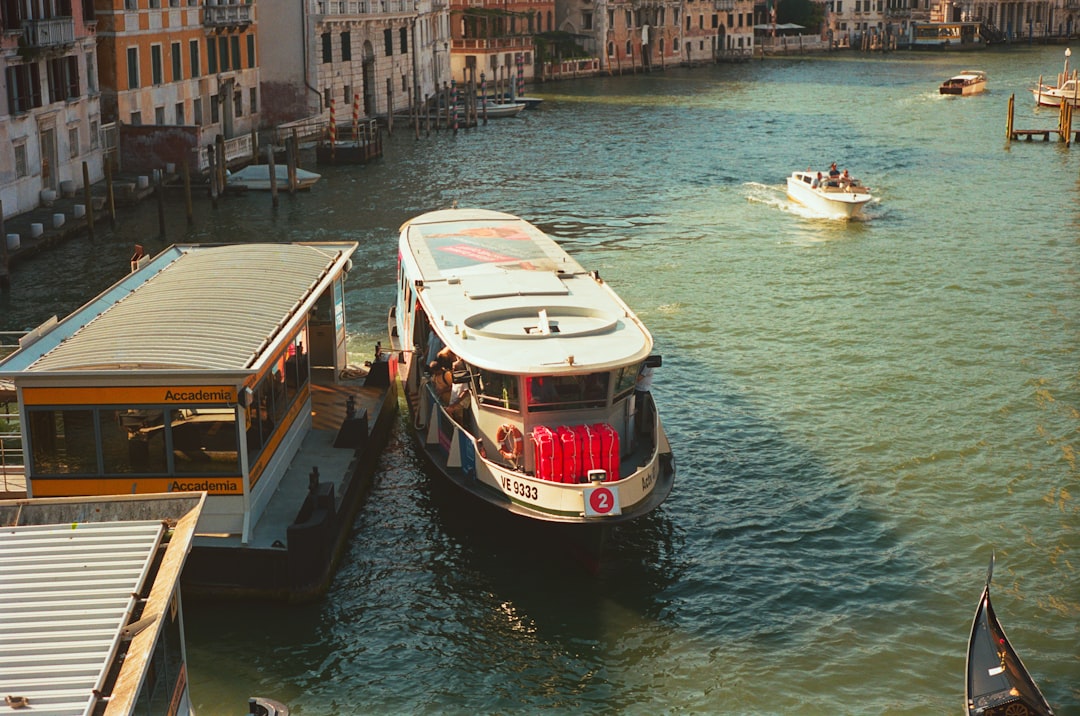
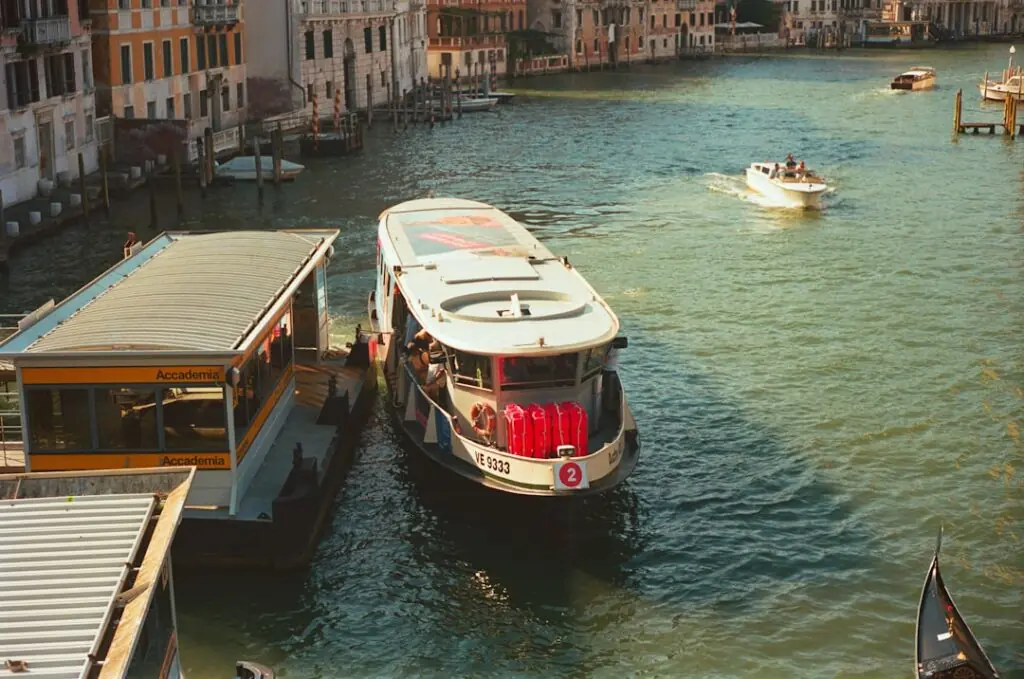
The vaporetto is the only logical transport to reach the Giardini and Arsenale from the main arrival points (Santa Lucia station, Piazzale Roma, Marco Polo airport). Line 1 — the most comprehensive — serves the Arsenale and Giardini stops in sequence, making it the ideal choice for your 2-day itinerary.
ACTV 2026 fares — summary
| Ticket type | Standard fare | Rolling Venice (6–29 years) |
|---|---|---|
| Single ticket (75 min) | €9.50 | — |
| 24h pass | €25 | — |
| 48h pass | €35 | — |
| 72h pass | €45 | €27 |
| 7-day pass | €65 | — |
How to buy your vaporetto pass
- AVM Venezia app (iOS & Android): buy and validate directly on your smartphone (VISA/Mastercard accepted)
- Hellovenezia desks: at Santa Lucia station, Piazzale Roma, Tronchetto and Marco Polo airport
- ACTV machines: at main landing stages, card or cash payment
- PuntoLIS resellers: at partner tobacconists (cash top-up possible)
Vaporetto lines for Biennale sites
- Line 1: the most popular, serves both Arsenale and Giardini stops along the Grand Canal from Ferrovia/Piazzale Roma — approx. 40 min journey
- Line 4.1: serves the Arsenale stop via the outskirts of Venice, less direct
- On foot: from San Marco, allow 15 min to the Arsenale and 25 min to the Giardini — pleasant and recommended for exploring Castello’s streets
For full details on tickets and opening hours, see our dedicated article: everything about Venice Biennale 2026 tickets and hours.
Day 1: the Giardini della Biennale (national pavilions)
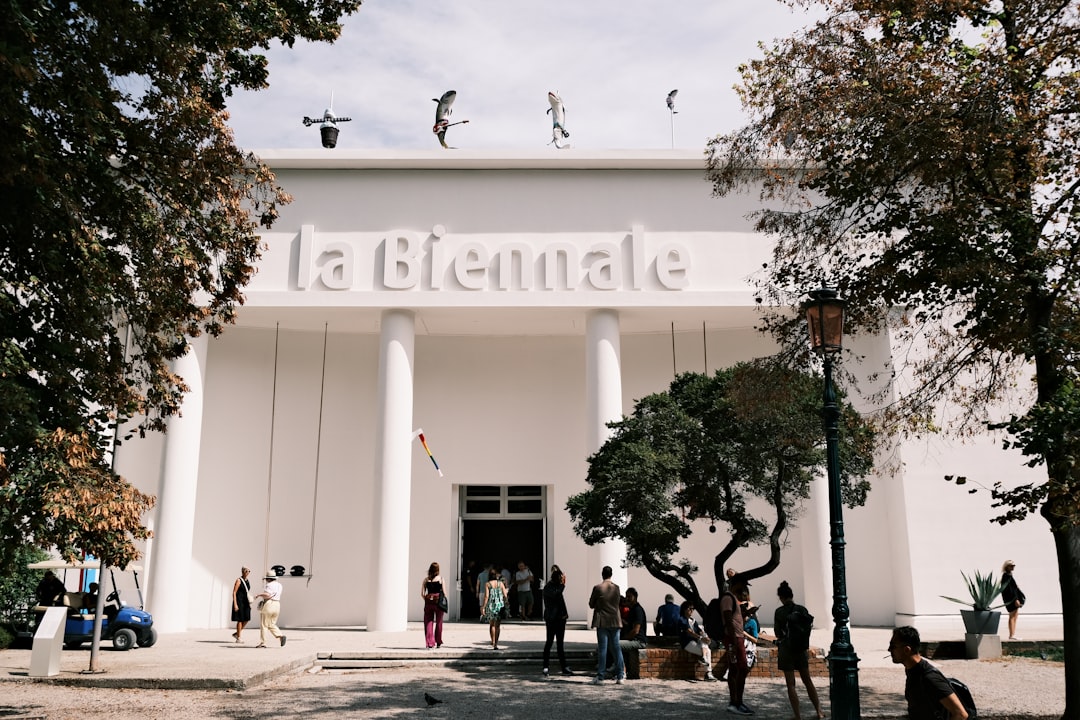
The Giardini della Biennale are the historic heart of the exhibition. These public gardens — the only ones in the entire city — house 30 permanent national pavilions, including the most iconic ones (the Central Pavilion, and the French, German, American and British pavilions). In 2026, the majority of national representations are deployed here.
Morning programme (11am–2pm): the flagship pavilions
Arrive at opening time, 11am, to avoid queues. Start with the Central Pavilion (Padiglione Centrale), which hosts the curatorial international selection of In Minor Keys. Allow at least 1.5 hours for this building alone.
Then move to the 2026 must-see pavilions:
- French Pavilion: Yousra Marzouk Barrada, recognised for her multidisciplinary practice combining artistic and social communities
- German Pavilion: the duo Sung Tieu + Henrike Naumann presents immersive installations exploring the political legacies of the Cold War and migration
- Applied Arts Pavilion: Gala Porras-Kim, developed with the Victoria and Albert Museum, questions the relationship between cultural artefacts and museum institutions
Lunch break: Serra dei Giardini
Inside the Giardini itself stands the Serra dei Giardini, a late 19th-century greenhouse converted into a café-restaurant. Ideally located, it offers a light, locally sourced menu — perfect for a break without leaving the site. Book for the lunch service in high season.
Afternoon (3pm–7pm): peripheral pavilions and gardens
In the afternoon, explore the smaller pavilions tucked into the leafy alleys of the Giardini. These less-crowded spaces often yield unexpected discoveries. Note that the Arsenale, accessible with the same ticket, also closes at 7pm — save it for the next day.
Day 2: the Arsenale, heart of the international exhibition
The Venice Arsenale — former naval base of the Serenissima Republic — is the Biennale’s most spectacular exhibition space. Its 11,400 m² of industrial halls host the international exhibition curated by Koyo Kouoh as well as some national pavilions. The scenography plays on the contrast between the raw medieval arsenal architecture and the contemporary artworks.
Morning programme (11am–1:30pm): the international exhibition
The main entrance of the Arsenale (Porta Magna) opens onto the Corderie — the long naves of the rope-making workshops. This is where the central exhibition In Minor Keys unfolds, structured around the seven thematic threads envisioned by Koyo Kouoh:
- Procession – Invocation: rituals, collective memory, intergenerational transmission
- The Creole Garden: cultural hybridisations, gardens as a metaphor for resistance
- The Shrines: sanctuaries, sacred objects, spatial reconstruction
- And four other thematic threads running through all the exhibited works
National pavilions at the Arsenale
Several national pavilions are housed directly in the Arsenale buildings. Among the most anticipated in 2026:
- Lebanon — « Don’t Get Me Wrong » by Nabil Nahas: immersive installation on the transmission of collective and artisanal knowledge through the revival of traditional crafts
- Syria — « The Tower Tomb of Palmyra » by Sara Shamma: painting, architecture, sound and olfaction to reconstruct the spatial memory of Palmyra, destroyed during the war
Afternoon (3pm–7pm): the Giardini dell’Arsenale gardens
The Arsenale gardens host outdoor installations and collateral events (31 for the 2026 edition). This is often where the most accessible and photographed works are found. On Fridays and Saturdays, the Arsenale stays open until 8pm — make use of this extra hour.
Biennale 2026 tickets: prices, discounts and booking
Biennale 2026 ticket prices
| Category | Single ticket | 3-day pass |
|---|---|---|
| Adult | €30 | €40 |
| Youth (under 26) | €16 | — |
| Senior (65 and over) | €20 | — |
| University student | €15 | — |
| Secondary school pupil | €10 | — |
| Child (under 6) | Free | — |
How to book tickets
Booking is done exclusively online on the official website labiennale.org. In May and June, queues without a reservation can reach 1.5 hours at the entrances. Plan ahead, especially for weekends.
Opening hours
- 9 May – 27 September 2026: 11am–7pm (Arsenale Fridays & Saturdays until 8pm)
- 29 September – 22 November 2026: 10am–6pm
- Closed on Mondays, except 11 May, 1 June, 7 September and 16 November 2026
Venice tourist access fee in 2026
If you are visiting as a day-tripper (no overnight stay in Venice), you must also pay the €5 access fee per person (over 14) on applicable days — mainly weekends and public holidays between April and July, from 8:30am to 4pm. Pay on the official site cda.ve.it to get a QR code to show if checked. Visitors staying overnight are exempt. Find all the details in our complete guide to the Venice tourist tax 2026.
Where to eat near the Giardini and Arsenale

The Castello sestiere, which houses both Biennale sites, is one of Venice’s most authentic neighbourhoods — far from the tourist restaurants of San Marco. This is where Venetians still live, and you can taste it in the food.
Serra dei Giardini — the café in the gardens
Nestled in a late 19th-century cast-iron and glass greenhouse, the Serra dei Giardini is the perfect lunch spot without leaving the Giardini site. Short menu, local and organic produce, verdant atmosphere. Warning: packed in high season — better to book or arrive at the start of service.
Via Garibaldi — the heart of aperitivo in Castello
Via Garibaldi is the main popular street in the neighbourhood, just steps from the Giardini. At aperitivo time (6pm–8pm), the bacari come alive. A few addresses to note:
- Ai Strani: the go-to bacaro on Via Garibaldi, varied cicchetti and craft beers — frequented by locals
- La Barrique Wine Bar: over a hundred wine references with refined cicchetti to accompany tasting
- La Rampa: on Salizada Sant’Antonin, one of the most authentic spots in Castello for a classic aperitivo
Al Mascaron — for a full meal
On Calle Lunga Santa Maria Formosa, Al Mascaron is a Venetian institution not far from the Arsenale. Venetian-style tripe, spaghetti alle vongole, homemade tiramisu — classics well executed at reasonable prices. Evening reservation recommended.
Practical information for your trip to Venice
Stay connected from the moment you arrive in Venice. Instant activation, no physical SIM to buy, coverage across the Italian network.
From €4.50Full coverage: cancellation, luggage, medical assistance. Ideal for peace of mind during the Biennale season.
From €0.99/dayFrequently asked questions about the Venice Biennale 2026
Which vaporetto pass is best for 2 Biennale days in Venice?
For a 2-day stay focused on the Biennale (Giardini + Arsenale), the 48h vaporetto pass at €35 is generally enough if you arrive the day before. Choose the 72h pass (€45) if you also want to explore other islands like Murano or the Lido. Travellers aged 6–29 should get the Rolling Venice Card (€6): it reduces the 72h pass to €27.
Which vaporetto line goes to the Giardini or Arsenale?
Line 1 is the most convenient: it serves both the Arsenale and Giardini stops along the Grand Canal from Santa Lucia station and Piazzale Roma. Allow about 40 minutes from the station. Line 4.1 also serves the Arsenale. From St Mark’s Square it is also possible to walk to both sites in 15 to 25 minutes through the streets of the Castello sestiere.
How much does a Venice Biennale 2026 ticket cost?
In 2026, the single ticket (Giardini + Arsenale) costs €30 for an adult. The 3-day pass is €40. Reduced prices apply: €16 for under-26s, €20 for seniors (65 and over), €15 for university students, €10 for secondary school pupils. Children under 6 enter free. Booking is done exclusively online at labiennale.org.
Is the Venice Biennale 2026 open every day?
No. The 2026 Biennale is closed on Mondays, with exceptions on 11 May, 1 June, 7 September and 16 November 2026. Opening hours: 11am–7pm from May to late September (Arsenale Fridays and Saturdays until 8pm), then 10am–6pm from October to November. Last entry is 15 minutes before closing.
How long does it take to visit the Venice Biennale?
Each site (Giardini or Arsenale) requires at least 3 hours — plan for a full half-day. A 2-day stay is ideal: Giardini on day one with the 30 national pavilions, Arsenale on day two with the international exhibition In Minor Keys and its 11,400 m². Wear comfortable shoes and bring water for warm days.
Do you need to pay the Venice tourist tax to visit the Biennale in 2026?
If you are coming as a day-tripper (no overnight stay in Venice), you must pay the €5 access fee on applicable days — mainly weekends and public holidays between 3 April and 26 July 2026, from 8:30am to 4pm. Visitors staying in a Venetian accommodation are exempt. Payment is made on cda.ve.it for a QR code. Children under 14 are exempt.
What is the theme of the Venice Biennale 2026?
The 61st International Art Exhibition of Venice is titled « In Minor Keys », a concept developed by curator Koyo Kouoh — the first African curator in the history of Biennale Arte — who passed away in May 2025. The exhibition brings together 111 participants from 99 countries around themes of resistance, memory, the Creole garden and care rituals. It runs from 9 May to 22 November 2026 at the Giardini and Arsenale.
Sources
- Biennale Arte 2026 — Official information — labiennale.org, accessed 5 May 2026
- Biennale Arte 2026 — Official tickets — labiennale.org, accessed 5 May 2026
- ACTV — Vaporetto fares 2026 — avm.avmspa.it, accessed 5 May 2026
- Rolling Venice Card — VeneziaUnica — veneziaunica.it, accessed 5 May 2026
- Venice access contribution 2026 — cda.ve.it, accessed 5 May 2026
- 61st Venice Biennale — Wikipedia — en.wikipedia.org, accessed 5 May 2026
- 12 Must-See Pavilions at the Venice Biennale 2026 — contemporarylynx.co.uk, accessed 5 May 2026
- The Bacari of Castello — Venice Bacaro Tour — bacarotourvenezia.com, accessed 5 May 2026
Ready to plan your trip to the Biennale?
Discover our personalised travel itineraries for Venice and Italy on Pixidia — created and shared by passionate travellers.
Explore Venice itineraries