
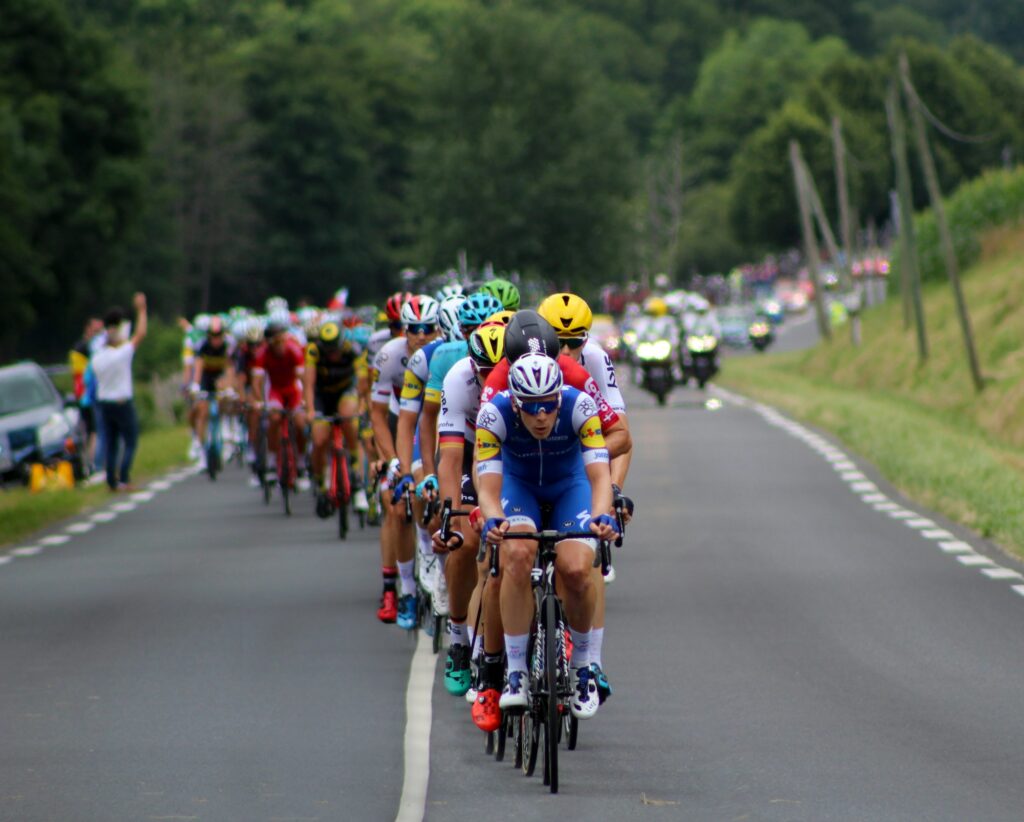
The Tour de France 2026 crosses 5 mountain ranges across 21 stages from 4 to 26 July. 30 classified climbs, 54,450m of total elevation gain, 3 brand-new cols (Col du Haag, Plateau de Solaison, Col de Sarenne SE side) and a double summit finish at Alpe d’Huez on 24 and 25 July — the first time this has happened since 1979. Spectator access is entirely free along the whole route. Book your mountain accommodation now: roads close from 6am on race morning at the major climbs.
Twenty-one stages, five mountain ranges, a peloton crossing France from south to north over three weeks. The Tour de France 2026 — the 113th edition according to Le Dico du Tour — is unlike any recent edition. After a historic Grand Départ in Barcelona, the riders attack the high mountains from stage 3 in the Pyrenees, before heading north to the Massif Central on Bastille Day (France’s national holiday, 14 July), then plunging into the Vosges and Jura in week two, before finishing with a brutal Alpine triptych that culminates in two consecutive summit finishes at Alpe d’Huez. For British cycling fans, this is a once-in-a-generation edition. This guide covers everything you need to choose your stage, plan your logistics and watch the Grande Boucle roadside — for free.
The route at a glance: 21 stages, 5 mountain ranges
According to Velofute and Dicodusport, the 2026 Tour totals 3,321 to 3,333 km depending on the source, with 54,450m of climbing — around 3,000m more than the 2025 edition.
| St. | Date | Start → Finish | km | Type | Elev. | Range |
|---|---|---|---|---|---|---|
| 1 | Sat 4 July | Barcelona → Montjuïc | 19.6 | TTT | ~500m | Catalonia |
| 2 | Sun 5 July | Tarragona → Barcelona | 168.5 | Hilly | ~1,200m | Catalonia |
| 3 | Mon 6 July | Granollers → Les Angles | 195.9 | Mountain | ~3,900m | Pyrenees |
| 4 | Tue 7 July | Carcassonne → Foix | 181.9 | Hilly | ~2,750m | Ariège Pyrenees |
| 5 | Wed 8 July | Lannemezan → Pau | 158.3 | Flat | ~900m | Pyrenean foothills |
| 6 | Thu 9 July | Pau → Gavarnie-Gèdre | 186.2 | Mountain ⭐ | ~4,150m | Central Pyrenees |
| 7 | Fri 10 July | Hagetmau → Bordeaux | 175.1 | Flat | ~400m | Landes-Gironde |
| 8 | Sat 11 July | Périgueux → Bergerac | 180.4 | Flat | ~600m | Dordogne |
| 9 | Sun 12 July | Malemort → Ussel | 185.5 | Hilly | ~2,700m | Corrèze-Limousin |
| — | Mon 13 July | Rest day — Aurillac (Cantal) | ||||
| 10 | Tue 14 July | Aurillac → Le Lioran | 166.6 | Mountain ⭐ | ~3,900m | Massif Central |
| 11 | Wed 15 July | Vichy → Nevers | 161.3 | Flat | ~500m | Central France |
| 12 | Thu 16 July | Magny-Cours → Chalon-sur-Saône | 179.1 | Hilly | ~900m | Burgundy |
| 13 | Fri 17 July | Dole → Belfort | 205.8 | Hilly | ~2,500m | Jura-Vosges |
| 14 | Sat 18 July | Mulhouse → Le Markstein | 155.3 | Mountain ⭐ | ~3,800m | Vosges |
| 15 | Sun 19 July | Champagnole → Plateau de Solaison | 183.9 | Mountain ⭐ | ~3,950m | Jura-Aravis |
| — | Mon 20 July | Rest day — Haute-Savoie | ||||
| 16 | Tue 21 July | Évian → Thonon | 26.1 | Individual TT | ~700m | Lake Geneva |
| 17 | Wed 22 July | Chambéry → Voiron | 174.7 | Transition | ~1,500m | Chartreuse |
| 18 | Thu 23 July | Voiron → Orcières-Merlette | 185.2 | Mountain ⭐ | ~3,800m | Southern Alps |
| 19 | Fri 24 July | Gap → Alpe d’Huez | 127.9 | Mountain ⭐⭐ | ~3,500m | Alps |
| 20 | Sat 25 July | Bourg-d’Oisans → Alpe d’Huez | 170.9 | Queen Stage ⭐⭐⭐ | ~5,600m | Alps |
| 21 | Sun 26 July | Thoiry → Paris Champs-Élysées | 133 | Flat | ~400m | Île-de-France |
Pyrenees: the mountains from week one (stages 3 to 6, 6–9 July)
The boldest call of the 2026 Tour: attacking the high mountains from stages 3 and 6, before the peloton has even found its rhythm. Four stages cross the Eastern Pyrenees, Ariège and the Hautes-Pyrénées between 6 and 9 July.
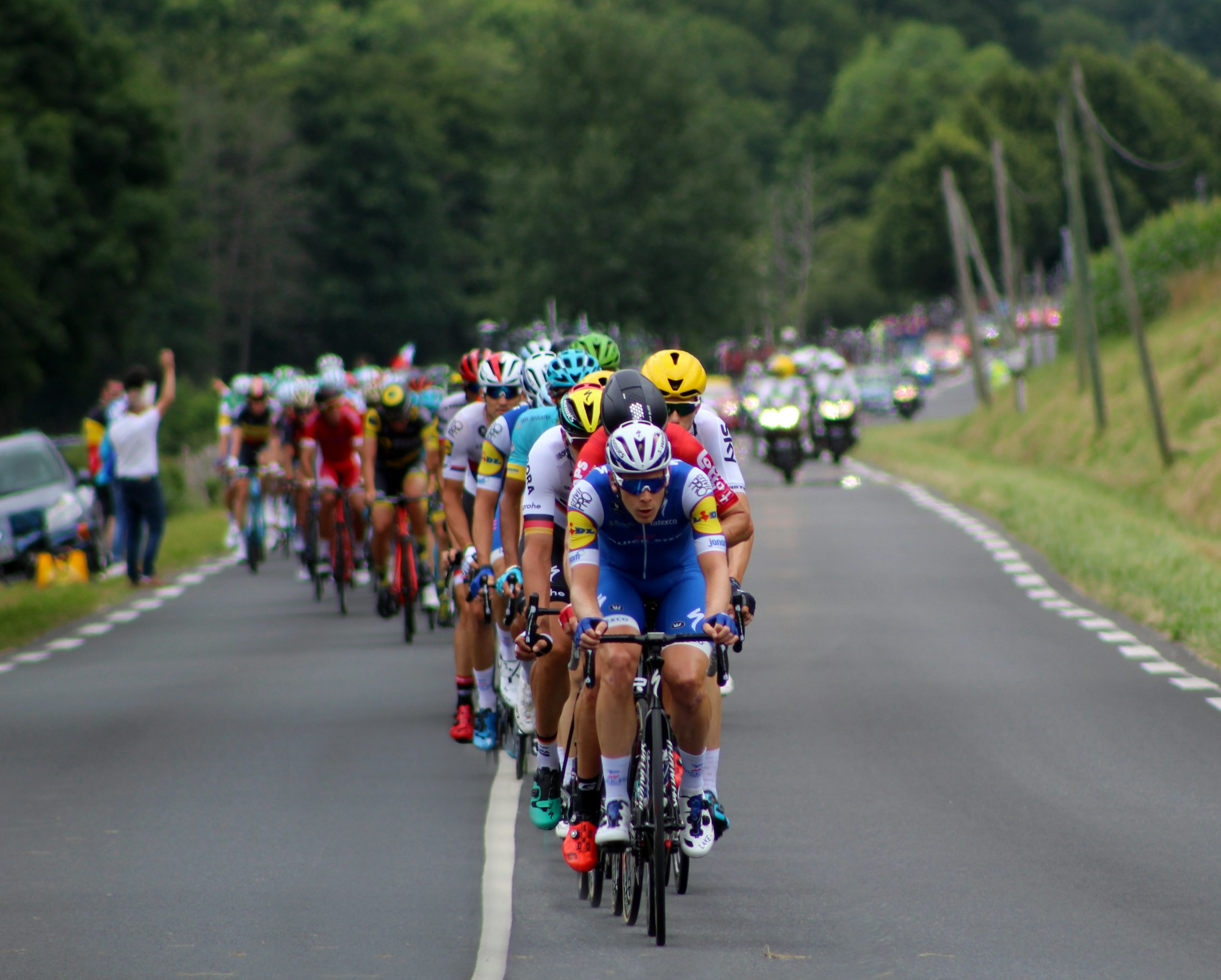
Stage 6 — Pau → Gavarnie-Gèdre (9 July): the unmissable new finish
This is the headline Pyrenean stage. According to the Hautes-Pyrénées department, stage 6 (186.2 km, ~4,150m elevation) crosses the Col d’Aspin (1,489m, Cat. 1) then the Tourmalet for the 86th time in Tour history, before a brand-new finish at Gavarnie-Gèdre — never previously used by the race.
The 5 best viewing spots on the Tourmalet
- Lacets de Tournaboup — open views, restaurants, ideal for families
- Parc à Mouton (2.2km above) — action, nature and valley views
- Voie Laurent Fignon (4km) — Restaurant Le Bastan open on race day
- La Cantine (5.2km) — stunning view over the Pic du Midi
- Virage de l’Oncet (6.4km, 400m from the summit) — see the last 6–7km in a single sweep
Stage 3 — Granollers → Les Angles (6 July): the first summit finish
The first true mountain stage (195.9 km, ~3,900m elevation) finishes at Les Angles (Eastern Pyrenees), a ski resort at roughly 1,600m — the first time the town has hosted a Tour finish. Accessible from Perpignan in 1h30 via the D29 road through Font-Romeu. Recommended accommodation: Latour-de-Carol, Font-Romeu, Bourg-Madame.
Stage 4 — Carcassonne → Foix (7 July): Ariège and Cathar castles
A hilly stage (181.9 km, ~2,750m elevation) suited to adventurous fans. The Col de Coudons (883m, Cat. 2) and Col de Montségur (1,059m, Cat. 2) bridge the Aude-Ariège transition. Carcassonne’s world-famous medieval citadel makes arriving the evening before well worthwhile. Foix is accessible via the A66 motorway.
Massif Central: mountain racing on Bastille Day (stage 10 — 14 July)
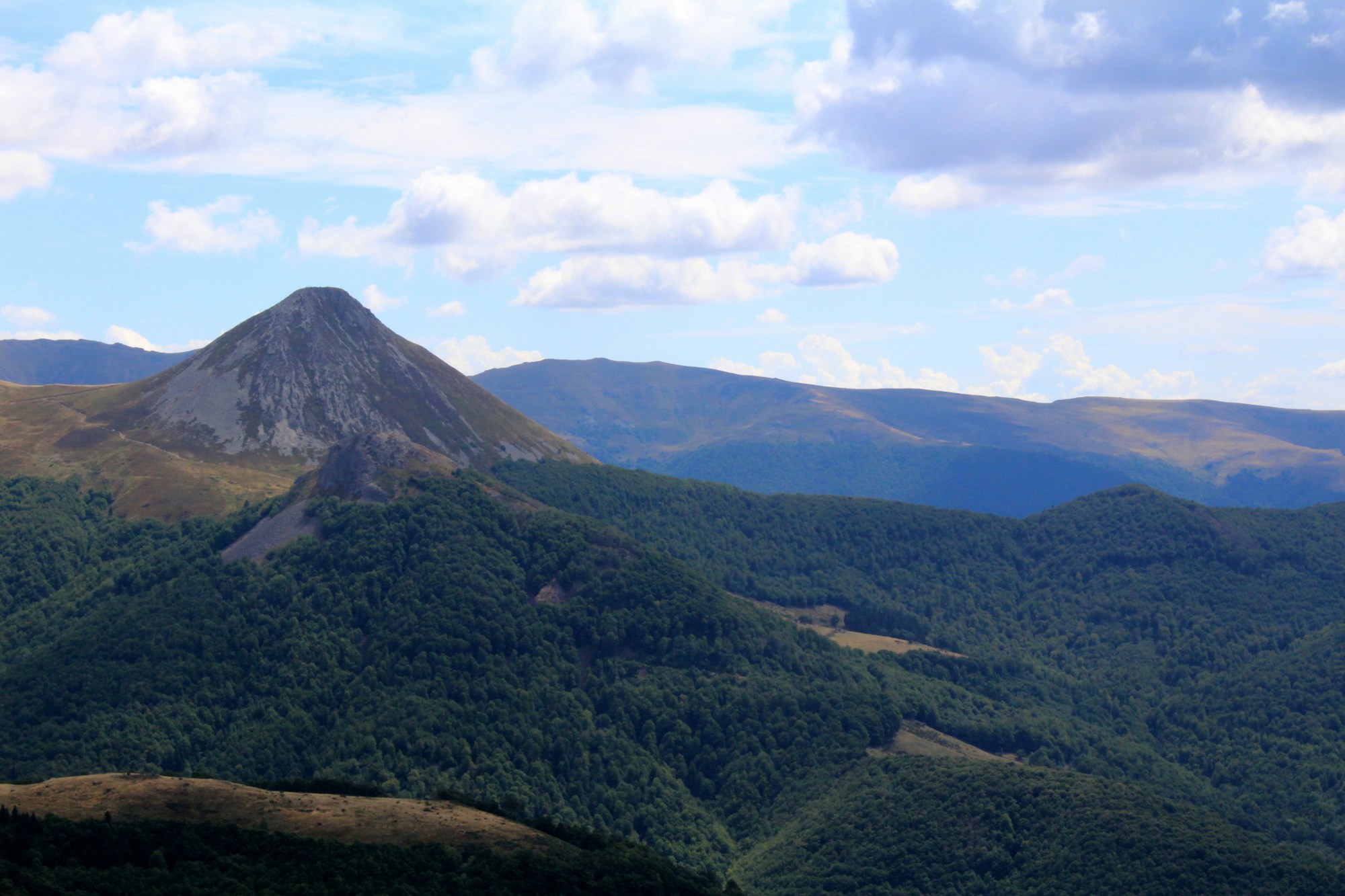
Stage 10 — Aurillac → Le Lioran (14 July): Bastille Day at altitude
Stage 10 (166.6 km, ~3,900m elevation) takes place on 14 July, France’s national holiday. This is mountain racing at its most festive, set against the volcanic landscape of the Cantal. It is the 4th time in Tour history the race has finished at Le Lioran — according to Le Lioran’s official site, the previous visit in 2024 saw Vingegaard put Pogačar under pressure. The duel resumes on the same roads. For British fans, 14 July falls on a Tuesday in 2026 — combining a long weekend trip to Paris with a Eurostar day trip south is a great option.
Highlights
- Col de la Griffoul (1,336m, Cat. 2): never used in Tour history — an audacious choice by race director Christian Prudhomme
- Puy Mary – Pas de Peyrol (1,589m): the summit of an ancient volcano, with incomparable Auvergne panoramas
- Rest day on 13 July in Aurillac: ideal for spotting the teams on training rides around the Cantal lanes
Vosges and Alsace: the Col du Haag makes its debut (stage 14 — 18 July)
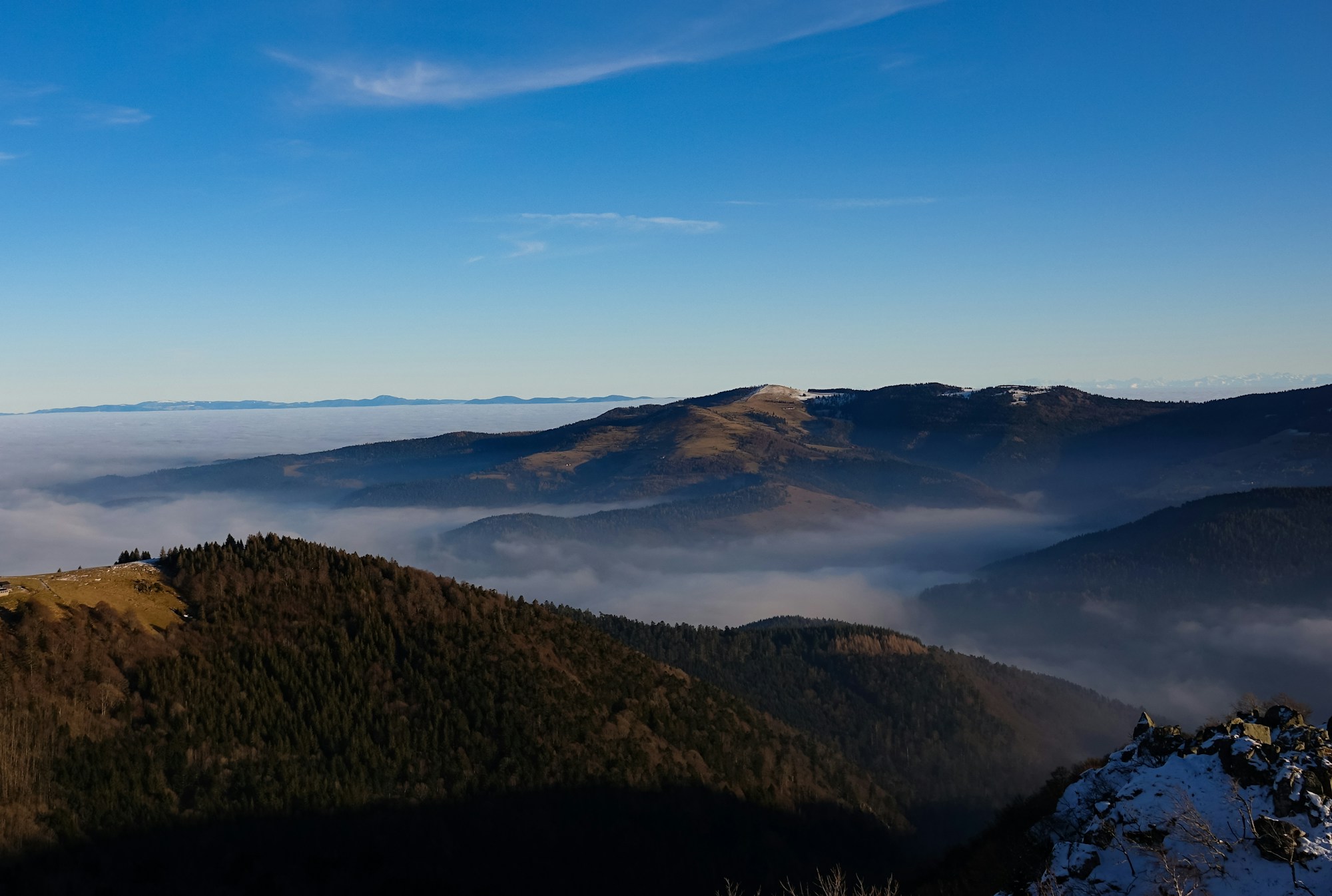
Stage 14 — Mulhouse → Le Markstein (18 July): the Vosges take centre stage
Stage 14 (155.3 km, ~3,800m elevation) is the major Vosges stage of this edition. According to France 3 Grand Est, the Col du Haag (1,233m, 11.2km at 7.3%, with ramps to 15%) makes its Tour de France debut — potentially the first HC-rated Vosges climb in race history.
Highlights
- Grand Ballon (1,424m summit): views across the Rhine plain, the Black Forest and, on a clear day, the Alps
- Col du Haag: « the toughest climb in the Vosges range » with ramps to 15% — comes the day after the Ballon d’Alsace on stage 13
- Free open access along the entire route, special shuttles from the valleys up to Fellering and Le Markstein
Stage 13 (Dole → Belfort, 205.8 km) is the longest stage of this edition — it sets the scene for the Vosges with the Ballon d’Alsace at its conclusion. According to Rêve de Vélo, the technical descent into Belfort will lay the groundwork for attacks the following day.
Jura and Aravis: the Plateau de Solaison — a genuinely new summit (stage 15 — 19 July)
Stage 15 — Champagnole → Plateau de Solaison (19 July)
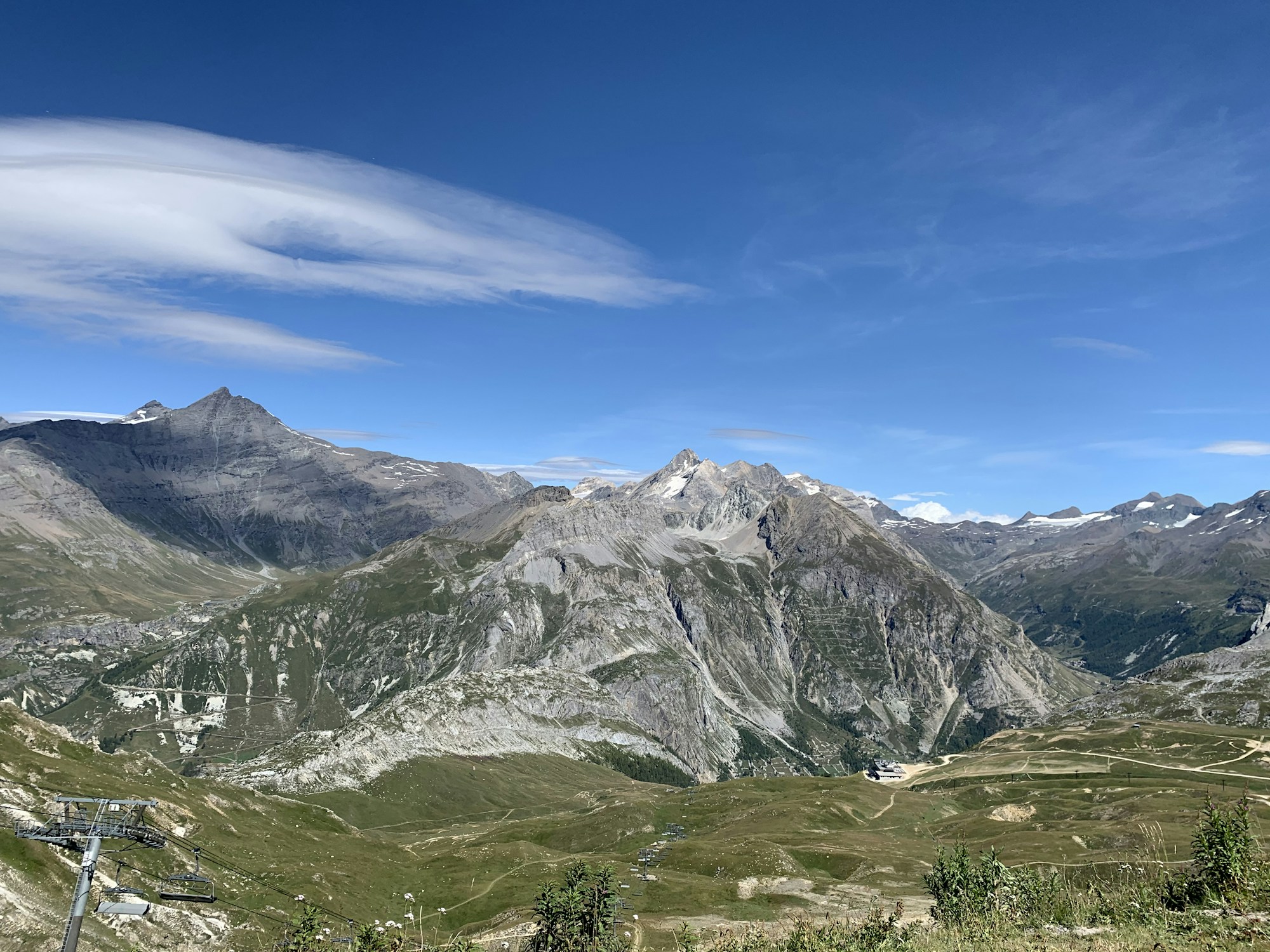
Stage 15 (183.9 km, ~3,950m elevation) is the last stage before the Haute-Savoie rest day. Race director Christian Prudhomme has called it « the queen stage before the Alps ». The Plateau de Solaison (11.3km at 9.1%, sections at 12%, 1,947m altitude) is the edition’s major new summit, according to Tourisme Haute-Savoie.
Highlights
- Cold sink phenomenon: −33.1°C recorded in January 2025 — the plateau stays cool even in July, so bring warm layers
- Village des Saveurs planned at the summit: Reblochon and Abondance cheeses, charcuterie, honey and craft beers
- Jonas Vingegaard won the 2022 Dauphiné on this very Solaison — a summit that suits him well
Alps: the final triptych with double Alpe d’Huez (stages 18–20, 23–25 July)
The third week of the 2026 Tour plays out in three acts. According to TodayCycling, stage 20 could « enter the legend » with its 170.9 km and 5,600m of climbing — potentially the hardest stage in 20 years. This edition is set apart by a double summit finish at Alpe d’Huez on 24 and 25 July, the first time this has happened since 1979 according to Ulysse.
Stage 18 — Voiron → Orcières-Merlette (23 July): a legend returns
Orcières-Merlette (1,825m) hosts the Tour for the 6th time in history. In 1971, Luis Ocaña inflicted an 8’42 » deficit on Eddy Merckx here — a founding moment of cycling mythology. Accessible from Gap in 45 minutes or from Grenoble in 1h30.
Stages 19 and 20 — Alpe d’Huez twice in a row (24–25 July)
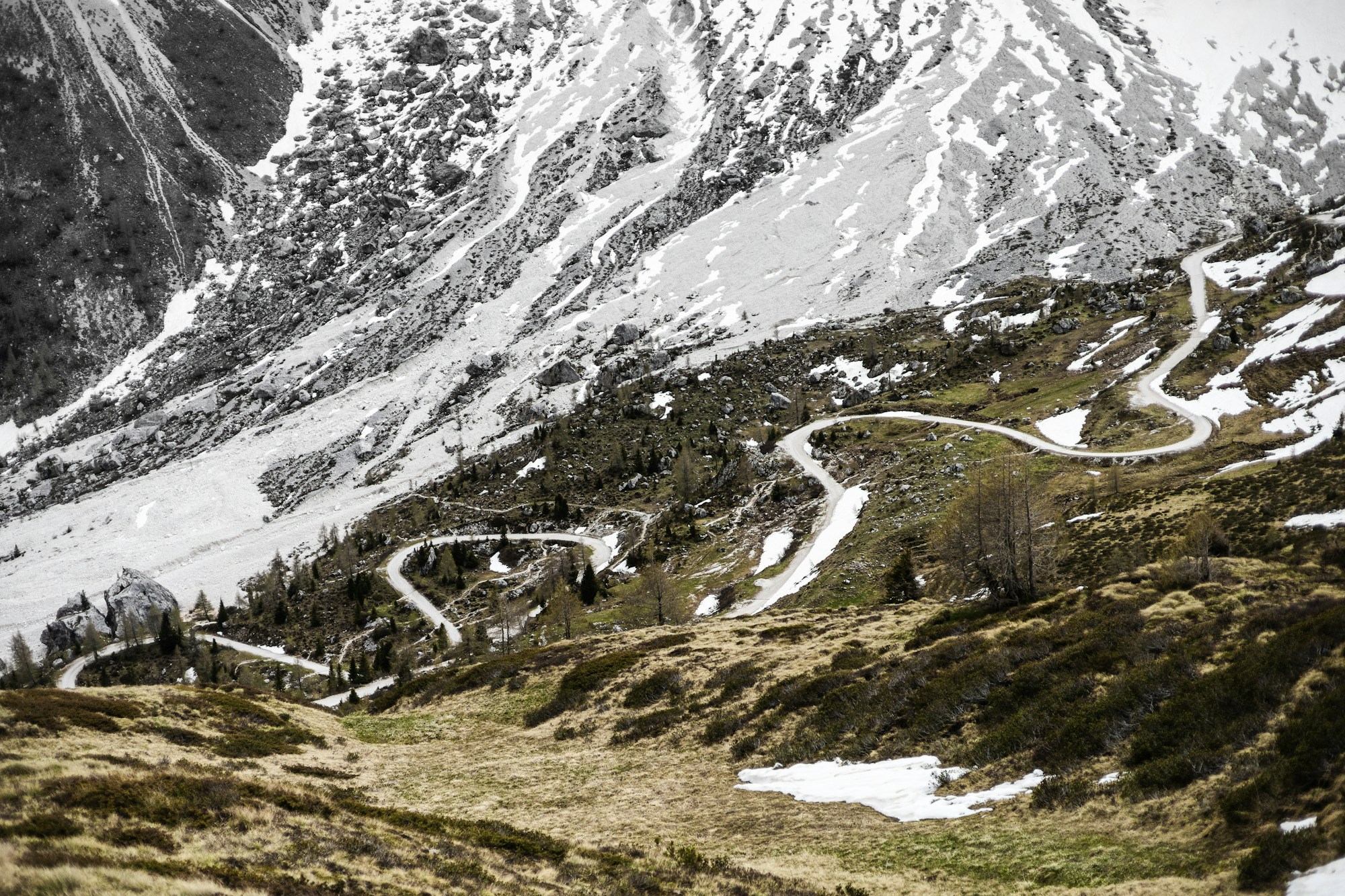
Thirteen-point-eight kilometres at an average of 8.1%, 21 numbered hairpins counting down from 21 at the base to 1 at the summit, each named after a historic stage winner. Hairpin 7 — the « Dutch Corner » — is an institution where thousands of Dutch supporters turn the road into a deafening orange corridor. For stage 20 (the queen stage, 170.9 km), the peloton climbs the Croix de Fer (2,067m, HC), the Télégraphe, the Galibier (2,642m — the roof of the 2026 Tour!) and the Col de Sarenne SE side (BRAND NEW) before the final finish. British fans will remember Geraint Thomas winning at Alpe d’Huez in 2018 on his way to overall victory — this double edition is the chance to make new memories.
Best viewing spots at Alpe d’Huez
- Hairpins 16–21 (lower section) — most accessible, ideal for families, long view of riders coming up from Bourg-d’Oisans
- Hairpin 7 « Dutch Corner » — extreme atmosphere, thousands of Dutch flags, beer and music at full volume
- Summit — giant screens, official village, entertainment. Arriving the night before is essential
- Col de Sarenne (stage 20 only) — accessible on foot or by bike from the Alpe d’Huez airstrip. Few people = exceptional views over the Écrins massif
L’Étape du Tour 2026 — for amateur cyclists
On 19 July 2026, the 34th edition of the Étape du Tour (Bourg-d’Oisans → Alpe d’Huez, 170 km, 5,400m elevation) welcomes 16,000 amateur cyclists. Register at letapedutourdefrance.com. A medical certificate is required. A unique opportunity to ride the same tarmac as the professionals — one week ahead of them.
The 3 brand-new climbs that will terrify the peloton
The 2026 Tour introduces three climbs that have never been used in the official race, according to Team Arkéa-Samsic.
| Climb | Range | Stage | Data | Noteworthy |
|---|---|---|---|---|
| Col du Haag | Vosges | 14 (18 July) | 1,233m — 11.2km at 7.3% — ramps to 15% | Potential first HC Vosges climb in Tour history, access from Saint-Amarin |
| Plateau de Solaison | Aravis | 15 (19 July) | 1,947m — 11.3km at 9.1% — sections above 12% | Cold sink phenomenon (−33.1°C in Jan 2025), unique weather feature |
| Col de Sarenne (SE side) | Alps | 20 (25 July) | 1,999m — 12.8km at 7.3% from Mizoën | Never climbed in competition, narrow road, descended only in 2013 |
Pogačar, Vingegaard, Seixas: who will win?
The battle for the yellow jersey pits two titans against each other according to Cyclingnews: Tadej Pogačar (UAE Team Emirates, odds 1.95:1), the overwhelming favourite after five Monument victories in 2026, versus Jonas Vingegaard (Visma-Lease a Bike, odds 3.50:1), who returned sharp from Paris-Nice and the Tour de Catalunya. French revelation Paul Seixas (19, Decathlon-CMA CGM) makes his Tour debut after winning the Flèche Wallonne and the Itzulia in 2026. According to Cyclingnews, he logged 43,373m of elevation gain in two weeks of altitude training. With only 26km of individual time trial (stage 16, Évian–Thonon), this race will be won in the mountains.
- Tadej Pogačar (UAE) — clear favourite (odds 1.95:1), targeting a 5th win that would equal Anquetil, Merckx, Hinault and Indurain
- Jonas Vingegaard (Visma) — advantage on cold endurance stages and time trials
- Remco Evenepoel (Soudal) — Olympic TT champion 2024, podium contender
- Paul Seixas (Decathlon-CMA CGM) — 19 years old, the darling of French crowds
Practical information for spectators
Planning your roadside budget
| Item | Budget option | Comfort option |
|---|---|---|
| Accommodation (per night) | £0–25 (camping) | £65–130 (hotel in stage towns) |
| Transport (3-week motorhome) | £600–750 fuel | £1,000–1,250 + tolls |
| Food (per day) | £18–35 (self-catering) | £42–85/day |
| VIP packages | N/A | £210–420/experience |
| TOTAL estimated 3 weeks (2 people) | £1,000–1,400 | £3,400–6,700 |
Essential apps
- Official Tour de France app — real-time tracking + geolocated caravan
- BBC Weather or The Weather Channel — essential before heading to a summit
- Waze — real-time road closures
- Park4Night — 370,000 camping and bivouac spots, including altitude sites
Watching the Grand Départ in Barcelona
If you’re planning to attend stages 1 and 2 in Barcelona before following the Tour into France, here is our complete guide to the best Viator experiences for the Grand Départ:
Stay connected throughout the entire route without roaming charges. Airalo offers Europe data plans you can activate directly from your phone — no physical SIM needed.
From £4 for 7 daysThree weeks following the Tour through the Pyrenees, Vosges and Alps demands solid coverage: trip cancellation, medical assistance at altitude, repatriation. SafetyWing’s Nomad Insurance covers Europe. 10% off via our Ambassador link.
From $56 / 4 weeksFrequently asked questions
What are the hardest climbs in the Tour de France 2026?
The hors-catégorie (HC) climbs in the 2026 Tour are: the Tourmalet (2,115m, 17.1km at 7.3%, stage 6), the Croix de Fer (2,067m, 24km at 5.2%, stage 20), the Galibier (2,642m — the highest point of the Tour, stage 20), the Col de Sarenne SE side brand-new (1,999m, 12.8km at 7.3%, stage 20), the Plateau de Solaison (1,947m, 11.3km at 9.1%, stage 15) and Alpe d’Huez (1,850m, 13.8km at 8.1%, stages 19 and 20). Stage 20 stacks four HC climbs in 171 km with 5,600m of elevation — potentially the toughest stage in 20 years according to TodayCycling.
Do you need to pay to watch the Tour de France 2026 roadside?
No, access is entirely free along the whole route — no ticket or reservation required. Simply arrive early, especially at the iconic climbs (Tourmalet, Alpe d’Huez, Galibier) where roads close from 6am on race morning. The publicity caravan (170 vehicles, 30 brands, thousands of freebies) passes 2 to 3 hours ahead of the riders.
How do I get to Alpe d’Huez for stages 19 and 20 of the 2026 Tour?
On race day, do not drive up — roads are closed several hours before the peloton passes. The night before, park at Bourg-d’Oisans or in the Oisans valley. On race day, take the T75 or T76 shuttle buses from Grenoble (€4.10) or local shuttles from Bourg-d’Oisans. From London: Eurostar to Paris (~2h15) + TGV Grenoble (3h) + shuttle. Accommodation at Alpe d’Huez: book now, rooms for 24 and 25 July are going fast. Budget options: Grenoble (1h30 drive) or villages such as Oz-en-Oisans and Vaujany.
Can you watch the Tour de France at the Tourmalet in 2026?
Yes, during stage 6 (Thursday 9 July, Pau → Gavarnie-Gèdre). This is the 86th time the Tourmalet has featured in the Tour. Roads close from 6am — you must arrive the night before to get a good spot at the summit. Free car parks at Barèges and Luz-Saint-Sauveur. Free shuttle buses from the Département 65 up to the col. The caravan passes at approximately 4:10pm and the riders reach the Gavarnie-Gèdre finish at approximately 5:20pm, according to the Hautes-Pyrénées department.
Who are the favourites for the Tour de France 2026?
Tadej Pogačar (UAE Team Emirates, odds 1.95:1) is the clear favourite after five Monument victories in 2026, including Milan-San Remo, the Tour of Flanders and Liège-Bastogne-Liège. Jonas Vingegaard (Visma-Lease a Bike, odds 3.50:1) is his chief rival. Remco Evenepoel (Soudal Quick-Step, 5.00:1) is a podium contender. French youngster Paul Seixas (19, Decathlon-CMA CGM) makes his Tour debut according to Cyclingnews. With only 26km of individual time trial, this race will be settled in the mountains.
What are the new features of the Tour de France 2026?
The 2026 Tour packs in several historic firsts: (1) Grand Départ in Barcelona — only the 3rd Spanish start in race history, (2) TTT with individual timing at the Montjuïc summit — a format unseen since 1971, (3) double summit finish at Alpe d’Huez (24 and 25 July) — the first time since 1979, (4) three climbs used for the very first time: Col du Haag (Vosges), Plateau de Solaison (Aravis), Col de Sarenne SE side, (5) brand-new finish at Gavarnie-Gèdre at the foot of the UNESCO-listed cirque, (6) Butte Montmartre climb tackled three times during the Paris finale.
Sources
- Le Dico du Tour — 2026 Stages — Official stage data, rankings, climbs
- Velofute — Detailed 2026 Tour de France route — Stage profiles, elevation data
- Dicodusport — TDF 2026 statistics — Full route statistics
- Ulysse — Alpe d’Huez TDF 2026 spectator guide — Double finish, spots, logistics
- Hautes-Pyrénées department — TDF 2026 — Stages 6 and 3, spectator logistics
- Tourisme Haute-Savoie — Plateau de Solaison TDF 2026 — Stage 15, local information
- France 3 Grand Est — Stage 14 Markstein — Vosges, Col du Haag, spectator access
- Team Arkéa-Samsic — 3 new climbs TDF 2026 — Col du Haag, Solaison, Sarenne SE
- TodayCycling — Stage 20 analysis — Queen stage, Galibier, Sarenne
- Cyclingnews — TDF 2026 preview and favourites — Pogačar, Vingegaard, Seixas analysis
- Le Lioran — TDF 2026 in the Cantal — Stage 10, Bastille Day, local information
- Cantal department — TDF 2026 — Stage 10 logistics, Puy Mary
- Rêve de Vélo — Stage 15 Solaison — Profile, climbs, practical information
- Mon séjour en montagne — Col de Sarenne spectators — Access, stage 20 restrictions
Data verified as of 29 May 2026.
Plan your Tour de France 2026
Pyrenees, Vosges, Jura or Alps — pick your stage or stages, book your accommodation now (mountain stage towns fill up fast) and get ready to experience the world’s most popular free sporting event. Pixidia offers complete itineraries linking several stages into a single road trip.
Discover Pixidia itineraries