
This article contains affiliate links. If you book through these links, Pixidia earns a small commission at no extra cost to you. Learn more
The European air passenger rights reform, adopted on 7 July 2026, guarantees a free personal item of 40 x 30 x 15 cm on all flights within the European Union. However, it does not standardise cabin bag (trolley) dimensions and does not make the cabin bag universally free — contrary to what many media headlines suggested. The main breakthrough is price transparency: airlines will have to display fares that include a cabin bag from the very first search results page. The new rules will come into force in the second half of 2027, after ratification by the EU Council.
What the law actually changes for cabin luggage
The new regulation introduces a clear distinction between two categories of luggage, which did not exist in the 2004 text. This is the backbone of the reform — and also the main source of media misunderstanding.
The free personal item: what is now guaranteed
Every passenger is now entitled to one free personal item with maximum dimensions of 40 x 30 x 15 cm (18-litre volume). In practice, this means a small rucksack, a handbag, a laptop sleeve, or a shopping bag. The item must fit under the seat in front of the passenger.
According to Euronews, this right is unconditional and free for all passengers, regardless of the fare chosen or the airline flown. It is a genuine improvement for travellers who travel light, particularly on short-haul routes.
Price transparency: the real game-changer
The most significant measure in the text is the price transparency obligation. According to DLA Piper, airlines will now have to display a fare that includes a standard cabin bag from the very first search results page. This provision puts an end to « drip pricing » — the practice of showing a very low headline price before adding surcharges (luggage, seat selection) in cascading steps.
Passengers who wish to travel without a cabin bag will still be able to opt for a lower fare through an opt-out mechanism. In plain terms, the « default » price will be higher than today, but the total cost will remain flexible.
This architecture is the result of a political compromise: Parliament initially wanted to guarantee a universally free cabin bag (100 cm combined dimensions, maximum weight of 7 kg), but the Council opposed this, backed by lobbying from low-cost airlines and their trade associations (A4E, IATA, ERA). According to the text’s rapporteur, Bulgarian MEP Andrey Novakov (EPP), the estimated additional cost of the reform is EUR 1.80 per ticket, a figure cited by the BTA news agency.
Airlines in disarray
Several carriers pre-empted the reform. The Lufthansa Group (Lufthansa, SWISS, Austrian Airlines, Brussels Airlines, Discover Airlines) launched an « Economy Basic » fare in May 2026 that only includes a personal item of 40 x 30 x 15 cm, with the standard cabin bag charged from EUR 15, according to The Brussels Times. Air France and KLM followed in June 2026 with a similar « Economy Basic » fare, charging between EUR 15 and EUR 35 per segment for a cabin bag, as reported by Travel-Dealz.
In 2024, Europe’s seven largest low-cost airlines generated over EUR 10 billion in revenue from cabin bag fees alone, with roughly EUR 3.5 billion for Ryanair alone, according to KNEWS.MEDIA and Forbes. The low-cost business model is directly threatened by the transparency obligation, which will force them to display a higher headline price.
What the law does not change: seven points to watch
Consumer organisations, led by Spain’s OCU (Organisation of Consumers and Users), have sharply criticised the text. According to OCU, the regulation even constitutes a « clear step backwards for passenger rights » on several fronts. Here is what does not change:
- No standardisation of cabin bag dimensions. Each airline keeps its own size limits: 55 x 40 x 20 cm at Ryanair, 55 x 40 x 23 cm at Lufthansa, 55 x 35 x 25 cm at Air France/KLM, 56 x 45 x 25 cm at British Airways. According to Horizn Studios, there is still no common European standard for the cabin trolley.
- No universal right to a free cabin bag. The standard cabin bag remains chargeable. Airlines can continue to restrict it to higher fare tiers (Priority, Light, Flex).
- No standardisation of weight limits. Each airline sets its own limit: 8 kg at Lufthansa, 10 kg at Ryanair, 12 kg at Air France/KLM, no weight limit but you must be able to lift it yourself at British Airways.
- Compensation amounts remain unchanged since 2005. EUR 250 for flights under 1,500 km, EUR 400 for 1,500 to 3,500 km, EUR 600 beyond. According to Euractiv, with cumulative inflation of 58.6% since 2005, the real purchasing power of compensation has fallen sharply: EUR 250 in 2026 is worth about EUR 158 in 2005 terms.
- The trigger threshold remains at 3 hours. The Council wanted to raise it to 5 or 6 hours; Parliament held firm on this « red line ».
- Extraordinary circumstances remain exempting. Natural disasters, war, extreme weather, disruptive passengers, and air traffic control strikes exonerate airlines. However, airline cabin crew strikes do NOT constitute extraordinary circumstances, unless they relate to demands that only public authorities can satisfy.
- Special items are not covered. Musical instruments, sports equipment, and oversized luggage remain governed by each airline’s terms and conditions and the Montreal Convention.
According to Europa Press, OCU particularly criticises the absence of common minimum dimensions for the cabin bag, which it describes as a source of legal uncertainty for travellers.
Cabin bag policies of major airlines (summer 2026)
The table below summarises the policies in force in summer 2026, verified against airline websites and cross-checked with research sources. The key distinction is the emergence of « Basic » fares at legacy carriers (Lufthansa Group, Air France/KLM, Brussels Airlines), which now mimic the low-cost model by excluding the cabin bag from the entry-level fare.
Allowed baggage
| Airline | Free personal item | Standard cabin bag |
|---|---|---|
| Ryanair | 40 x 30 x 20 cm | Priority only |
| easyJet | 45 x 36 x 20 cm | Up Front / Extra Legroom |
| Wizz Air | 40 x 30 x 20 cm | WIZZ Priority |
| Vueling | 40 x 30 x 20 cm | Optima / Family / TimeFlex |
| Norwegian | 25 x 33 x 20 cm | LowFare+ / Flex |
| Transavia | 40 x 30 x 10 cm | Included |
| Volotea | 40 x 30 x 20 cm | Standard+ |
| Lufthansa Group (Basic) | 40 x 30 x 15 cm | Not included |
| Air France / KLM (Basic) | 40 x 30 x 15 cm | Not included |
| British Airways | 40 x 30 x 15 cm | Included (all fares) |
| Iberia | 40 x 30 x 15 cm | Included (all fares) |
| Brussels Airlines (Basic) | 40 x 30 x 15 cm | Not included |
| SAS | 40 x 30 x 15 cm | Included |
Dimensions & pricing
| Airline | Cabin dimensions | Max weight | Cabin surcharge |
|---|---|---|---|
| Ryanair | 55 x 40 x 20 cm | 10 kg | EUR 6 – EUR 36 |
| easyJet | 56 x 45 x 25 cm | 15 kg | GBP 7 – GBP 40 |
| Wizz Air | 55 x 40 x 23 cm | 10 kg | EUR 5 – EUR 40 |
| Vueling | 55 x 40 x 20 cm | 10 kg | EUR 10 – EUR 59 |
| Norwegian | 55 x 40 x 23 cm | 10 kg | EUR 8 – EUR 20 |
| Transavia | 55 x 35 x 25 cm | 10 kg | Included |
| Volotea | 55 x 40 x 20 cm | 10 kg | EUR 10 – EUR 40 |
| Lufthansa Group (Basic) | 55 x 40 x 23 cm | 8 kg | From EUR 15 |
| Air France / KLM (Basic) | 55 x 35 x 25 cm | 12 kg | EUR 15 – EUR 35 |
| British Airways | 56 x 45 x 25 cm | No limit | Included |
| Iberia | 56 x 45 x 25 cm | 10 kg | Included |
| Brussels Airlines (Basic) | 55 x 40 x 23 cm | 8 kg | From EUR 15 |
| SAS | 55 x 40 x 23 cm | 8 kg | Included |
From the 2014 Vueling ruling to the 2026 reform: a legal tension
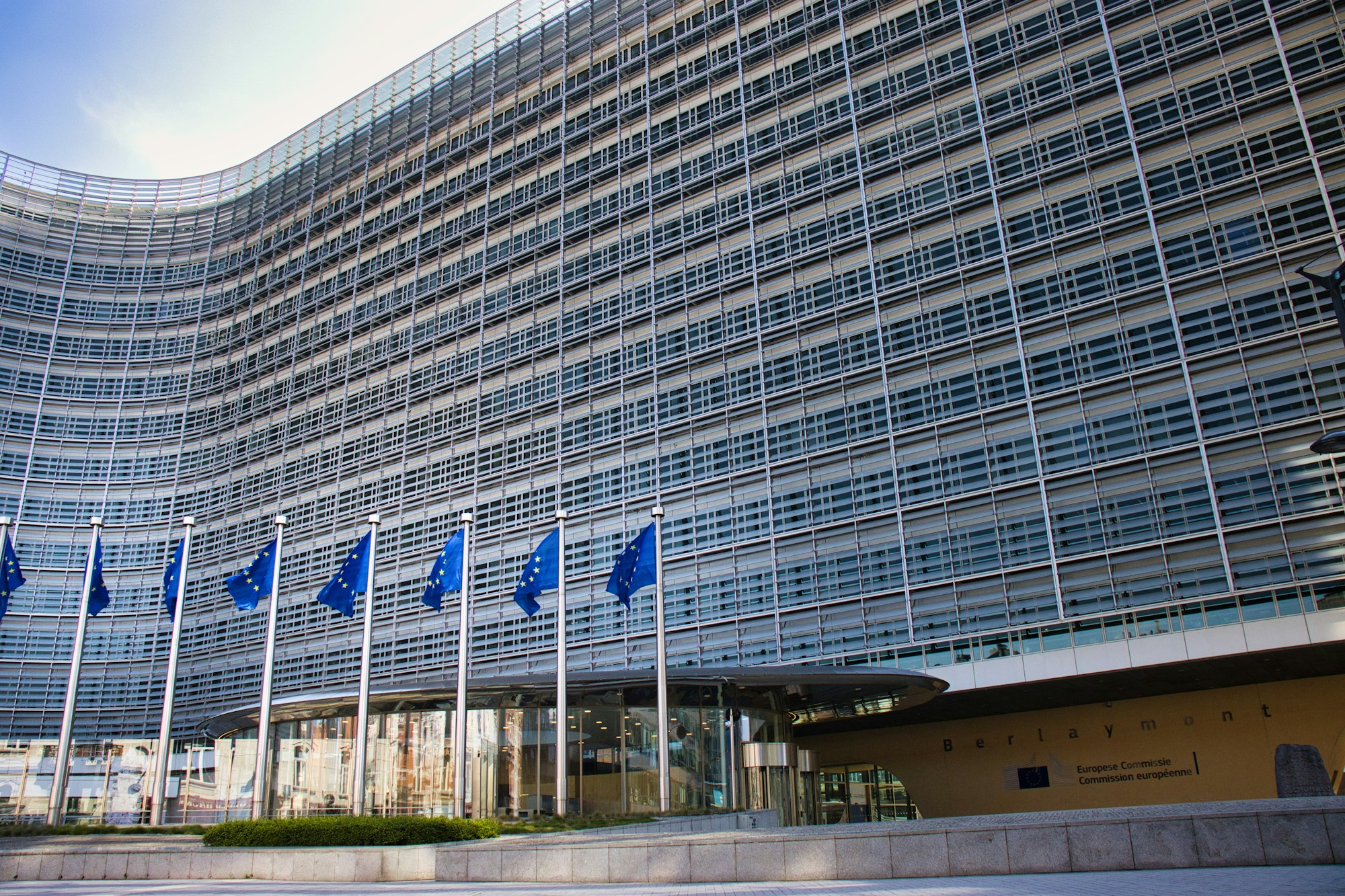
The 2026 reform did not emerge from a legal vacuum. It is part of a rich body of case law that has shaped the interpretation of the 2004 regulation far beyond its original text.
The landmark Vueling ruling (CJEU, 18 September 2014, C-487/12)
The Court of Justice of the European Union established a fundamental distinction: hold luggage, which generates additional costs for the carrier, can be charged as an ancillary service. Hand luggage, however, constitutes an « indispensable element of passenger transport » and cannot be subject to a price surcharge. The Court based this distinction on three arguments: handling hold luggage generates additional costs, the carrier’s liability is broader for checked baggage under the Montreal Convention, and hand luggage contains personal items linked to the passenger’s « dignity ».
It is precisely on this basis that Spain imposed EUR 179 million in fines on five low-cost airlines in 2024 (Ryanair EUR 107.8m, Vueling EUR 39.3m, easyJet EUR 29.1m, Norwegian EUR 1.6m, Volotea EUR 1.2m) for abusive practices including charging for cabin baggage, according to RTE and AeroTime.
But in October 2025, the European Commission opened an infringement procedure (INFR(2025)4019) against Spain, arguing that these fines violate the principle of pricing freedom under Regulation (EC) No 1008/2008. A position that sparked outrage among consumer organisations. Agustin Reyna, Director General of BEUC, said: « Seeing the Commission side with the airlines is disappointing for consumers. The Commission is essentially telling European consumers that hand luggage is a luxury item that should be paid for, » according to BEUC.
The Higher Regional Court of Hamm (Germany) also ruled in January 2025 that Vueling’s « Fly Light » clause, which limited the free cabin bag to a single small personal item, was invalid (ref. 13 UKl 4/25), as reported by Teltarif.
A tension between legislation and case law
The new regulation creates a paradoxical situation: by explicitly codifying the ability to charge for the cabin bag (via the opt-out mechanism), it could conflict with the Vueling case law, which described hand luggage as a non-chargeable essential element. Consumer organisations are already announcing legal challenges to test the compatibility of the new text with the principles established by the CJEU.
Beyond luggage: the other new rights
The reform goes far beyond the single issue of cabin luggage. Here are the most significant advances that affect all travellers.
Free family seating
Children under 14 must be seated free of charge next to an accompanying adult. This rule also applies to people with disabilities, reduced mobility, and pregnant women. Previously, low-cost airlines routinely charged EUR 5 to EUR 30 per person for seat selection, making family grouping a paid extra. According to France 24, this measure was one of the most eagerly awaited by families.
End of the « no-show » clause
The return flight can no longer be automatically cancelled if the passenger did not take the outbound flight. This practice, particularly penalising for business travellers facing unexpected events, had long been denounced.
Abolition of abusive ancillary fees
- Spelling correction on the ticket: free of charge
- Boarding pass printing at the airport: free of charge (if check-in is already completed)
- Digital boarding pass accessible without having to create an account or download a specific app
Strengthened rights for people with disabilities
According to the European Disability Forum (EDF), the regulation brings major advances: full reimbursement of lost or damaged mobility equipment (the roughly EUR 1,300 limit under the Montreal Convention is removed for wheelchairs), free and immediate provision of temporary replacement equipment, priority boarding, and keeping the wheelchair until the boarding gate with immediate recovery on arrival.
Rights during tarmac delays
After 30 minutes of being held on the tarmac with doors closed, the airline must provide adequate temperature, access to toilets, and free water. After 2 hours, the aircraft must return to a gate and allow disembarkation.
Automatic refunds
If the passenger chooses a refund rather than re-routing, it must be processed automatically, with no further action required, within 7 days (14 days if the purchase was made through an intermediary).
Processing deadlines
- Rights information within 4 days of an incident
- Acknowledgement of a claim within 7 working days
- Reasoned response or payment within 30 days
- Claim deadline for the passenger: 9 months after the flight
Timeline: when do these rules take effect?

Not before the second half of 2027, at the earliest September 2027. The legislative process follows a multi-stage timetable:
- Parliament vote: 7 July 2026 (completed)
- Ratification by the EU Council: expected August 2026
- Publication in the EU Official Journal: autumn 2026
- Entry into force: 20 days after publication
- Transition period: 12 months for airlines
- Effective application: September 2027 at the earliest
According to DLA Piper and Which?, travellers will not see any concrete change before this deadline. Until then, the current rules of Regulation (EC) No 261/2004 continue to apply in full.
How to enforce your rights: the new complaint mechanisms
The regulation significantly strengthens the tools available to passengers for enforcing their rights. Here is the standard procedure that will apply from 2027.
The claims procedure step by step
- Complaint to the airline: to be submitted within 9 months of the flight. The airline must acknowledge receipt within 7 working days and provide a reasoned response (or payment) within 30 days.
- Referral to the National Enforcement Body (NEB): in case of refusal or no response, the passenger can refer the matter to their country’s NEB within one year. In France, this is the DGAC (Directorate General for Civil Aviation); in the UK, it is the Civil Aviation Authority (CAA).
- Alternative Dispute Resolution (ADR): passengers must be clearly informed of their right to use approved mediation bodies. In the UK, the CAA approves two ADR schemes: AviationADR (covering Ryanair, easyJet, Wizz Air, Air France, KLM, TUI, and others) and CEDR (covering British Airways, Heathrow, Gatwick, and others). ADR is free for consumers and decisions are binding on airlines.
NEB decisions are now binding on both parties, subject to judicial appeal. Standardised claim forms will be available across the EU. According to EUbusiness, this harmonisation of procedures is one of the most concrete advances in the text.
Geographical scope: who is covered?
The regulation applies to all EU carriers on all their flights, as well as to non-EU carriers on flights departing from an EU airport. Intermediaries and flight comparison sites are also required to display the fare including the cabin bag.
UK-specific case: post-Brexit, the UK applies its own « UK261 » regime, which remains aligned with the 2004 regulation without incorporating the 2026 reforms. In practice, a British Airways or Jet2 flight departing from the UK is not covered by the new EU rules. However, a Ryanair or easyJet flight (EU airlines) departing from the UK is covered. On return legs from the EU, all flights are covered regardless of the airline. According to Timeout, the UK is expected to eventually align to avoid operational complexity. For UK-specific compensation, the amounts are GBP 220 (short-haul), GBP 350 (medium-haul), and GBP 520 (long-haul) under UK261 — which, unlike the EU regulation, also still allows the no-show clause for UK carriers.
Our tips for getting ahead of the reform now
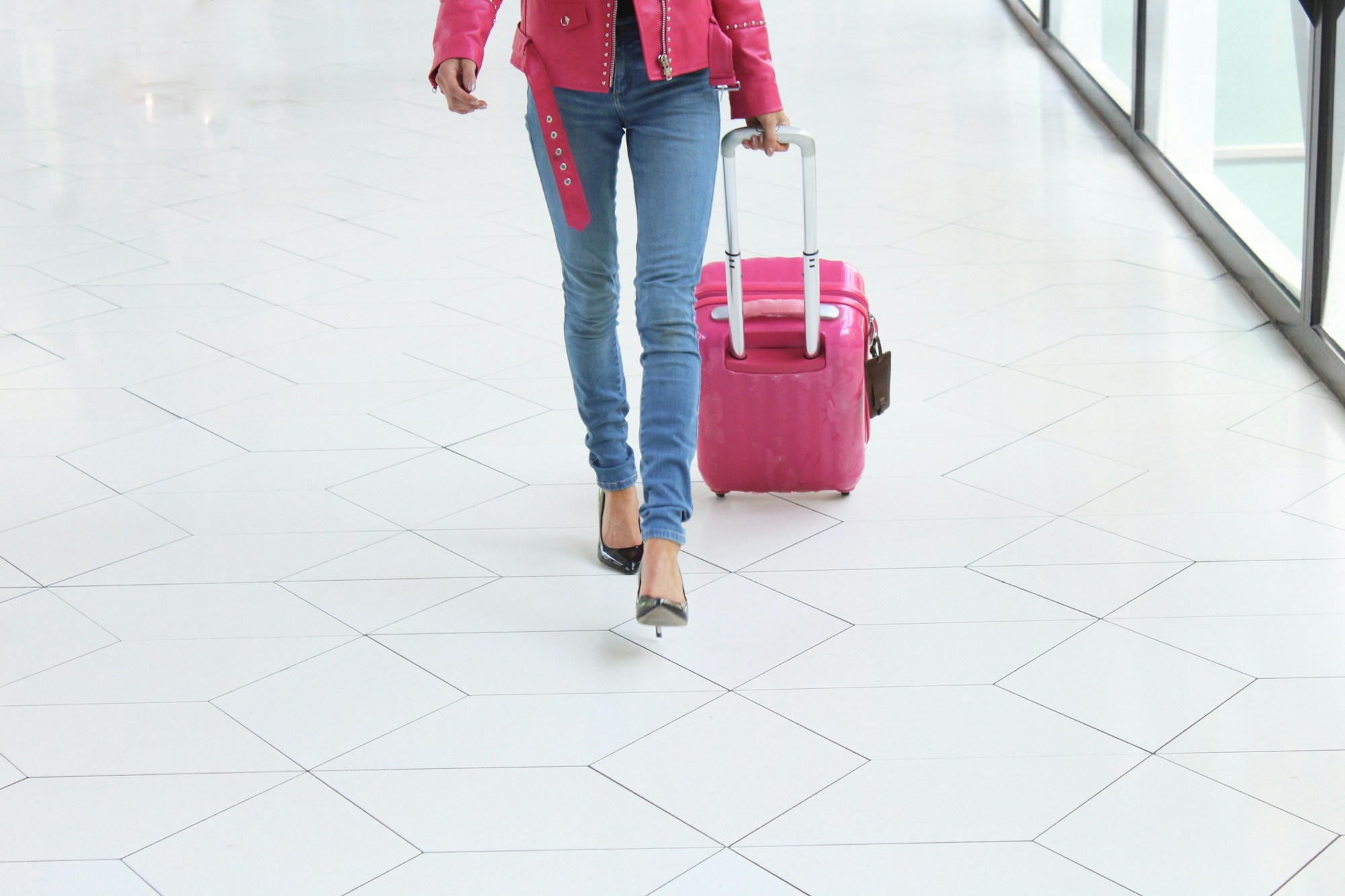
1. Always check the baggage policy before booking
The diversity of baggage policies is the rule, not the exception. Before booking, check the airline’s « Baggage » page and note three figures: the permitted dimensions for the personal item, those for the cabin bag, and the maximum weight. Compare them with your own bag’s dimensions.
2. Invest in a bag that fits the 40 x 30 x 15 cm standard
A small rucksack or bag designed to slide under an aircraft seat is now the most cost-effective piece of luggage. Brands like Cabin Max offer models specifically sized for low-cost airline limits. This 18-litre format is enough for a weekend if you pack light. Once your ticket is booked, let our Pixidia trip planner help you build an itinerary that feels like you.
3. Compare the total price, not the headline price
Price transparency will mechanically increase the fares displayed by comparison sites for low-cost airlines. To compare objectively, add up the ticket price, the cabin bag surcharge (if you need one), and any seat fees. A legacy carrier’s « basic » fare can become more competitive than a low-cost fare once extras are factored in. Before booking, also check whether your destination requires advance reservations: our article on European sites where advance booking is mandatory in 2026 has the full rundown.
4. Expect stricter gate checks
Ryanair has intensified gate bag checks in 2026, increasing agent bonuses from EUR 1.50 to EUR 2.50 per rejected bag, according to EuroWeeklyNews. If your bag exceeds the permitted dimensions, gate fees can reach 4 times the online pre-booking price.
Practical info for your next flight in Europe
Keep an internet connection to manage claims online, check baggage policies, or modify your booking. Europe eSIM from just a few euros.
EU261 compensation does not cover incidental costs or missed connections with separate tickets. Nomad Insurance: global coverage from $56/4 weeks. 10% off via our link.
From $56 / 4 weeksFrequently asked questions
Is the cabin bag now free on all flights in Europe?
No. The regulation only guarantees a free personal item of 40 x 30 x 15 cm, not the standard cabin bag (trolley). Airlines can continue to charge for the cabin bag, but they will have to display a fare that includes the cabin bag by default. You can then choose a reduced fare without the cabin bag.
What are the exact dimensions of the guaranteed free bag?
40 x 30 x 15 cm (18-litre volume). This corresponds to a small rucksack, a handbag, or a laptop sleeve. It must fit under the seat in front of you. This right is unconditional: it applies to all passengers, regardless of fare or airline.
Are cabin bag dimensions standardised across the EU?
No, and this is the main criticism from consumer organisations. Each airline keeps its own limits: 55 x 40 x 20 cm (Ryanair, Vueling), 55 x 40 x 23 cm (Lufthansa, Wizz Air), 55 x 35 x 25 cm (Air France/KLM), 56 x 45 x 25 cm (British Airways, easyJet). There is no common European standard.
When do these new rules take effect?
Not before the second half of 2027, at the earliest September 2027. The timetable includes ratification by the EU Council in August 2026, publication in the Official Journal in autumn 2026, then a 12-month transition period for airlines. Until then, the current rules of the 2004 regulation continue to apply.
Will low-cost airlines raise their fares?
Probably yes for the displayed price. Airlines will have to display a fare that includes the cabin bag by default, which will mechanically increase the price shown by comparison sites. Estimates range from +EUR 1.80 per ticket (European Commission) to +25% (easyJet). The total cost you actually pay may not change if you opt for the no-cabin-bag fare (opt-out).
Do these rules apply to flights between the UK and the EU?
Partially. Flights operated by EU airlines (Ryanair, easyJet, Wizz Air) departing from the UK are covered. Flights operated by UK airlines (British Airways, Jet2) departing from the UK fall under the non-reformed UK261 regime. On flights from the EU to the UK, all flights are covered.
Can I still take my return flight if I missed the outbound?
Yes. The « no-show » clause that allowed airlines to automatically cancel the return flight if you did not take the outbound is now banned under the new EU regulation. Your return ticket remains valid even if something goes wrong on the outbound leg. Note for UK travellers: this ban currently applies to EU carriers only; UK airlines operating under UK261 may still enforce no-show clauses until the UK aligns its legislation.
Have delay compensation amounts increased?
No. The amounts remain unchanged since 2005: EUR 250 (under 1,500 km), EUR 400 (1,500 to 3,500 km), EUR 600 (over 3,500 km). With cumulative inflation of 58.6% since 2005, the real purchasing power of this compensation has fallen considerably. For flights over 3,500 km with a delay of 3 to 4 hours, compensation is capped at EUR 300. For UK261 claims, the equivalent amounts are GBP 220, GBP 350, and GBP 520.
What can I do if my airline does not respect the new rules?
Submit a claim to the airline within 9 months of the flight. In case of refusal or no response within 30 days, refer the matter to your country’s National Enforcement Body. In the UK, this is the Civil Aviation Authority (CAA); in France, the DGAC. You can also use an approved ADR body: AviationADR or CEDR in the UK, both free for consumers. NEB decisions are now binding on airlines.
- Euronews : European Parliament vote of 7 July 2026
- OCU : Analysis of the new EU regulation by the Spanish consumer organisation
- DLA Piper : Detailed legal analysis of the EU261 reform
- Forbes : EU Air Passenger Reform: What To Know And Who Really Benefits
- IATA : Position of the air transport association
- Which? : Guide to the new cabin bag rules
- Timeout : Impact of the reform on UK travellers
- France 24 : Ici l’Europe: strengthened air passenger rights
- BTA : Statement by rapporteur Andrey Novakov
- RTE : Spanish fines and EU infringement procedure
- BEUC : Collective complaint against 7 airlines (May 2025)
- EDF : Advances for people with disabilities
- The Brussels Times : End of free cabin bag at Brussels Airlines
- The Guardian : easyJet’s reaction
- EUbusiness : Strengthened enforcement mechanisms
- EuroWeeklyNews : Intensification of Ryanair bag checks
- Teltarif : OLG Hamm ruling on Vueling’s Fly Light clause
- Horizn Studios : Comparative guide to cabin bag dimensions by airline
- Euractiv : Analysis of the erosion of compensation purchasing power
- Eurocontrol : European air traffic figures 2025
- IATA : « Save a Life, Not a Bag » campaign (June 2026)
- Travel-Dealz : New Air France/KLM Basic fare
- Simple Flying : Analysis of the Lufthansa Economy Basic fare
- KNEWS.MEDIA : Analysis of low-cost airline baggage revenues
- Forbes : Airline ancillary revenues
- UK Civil Aviation Authority : ADR for aviation complaints

Plan your trip with Pixidia
Pixidia learns how you travel and helps you build a trip that truly fits you and everyone coming along.
Open the plannerExplore our travel magazine
Hundreds of articles, guides and inspiration for your next trips around the world.
Discover the magazine