
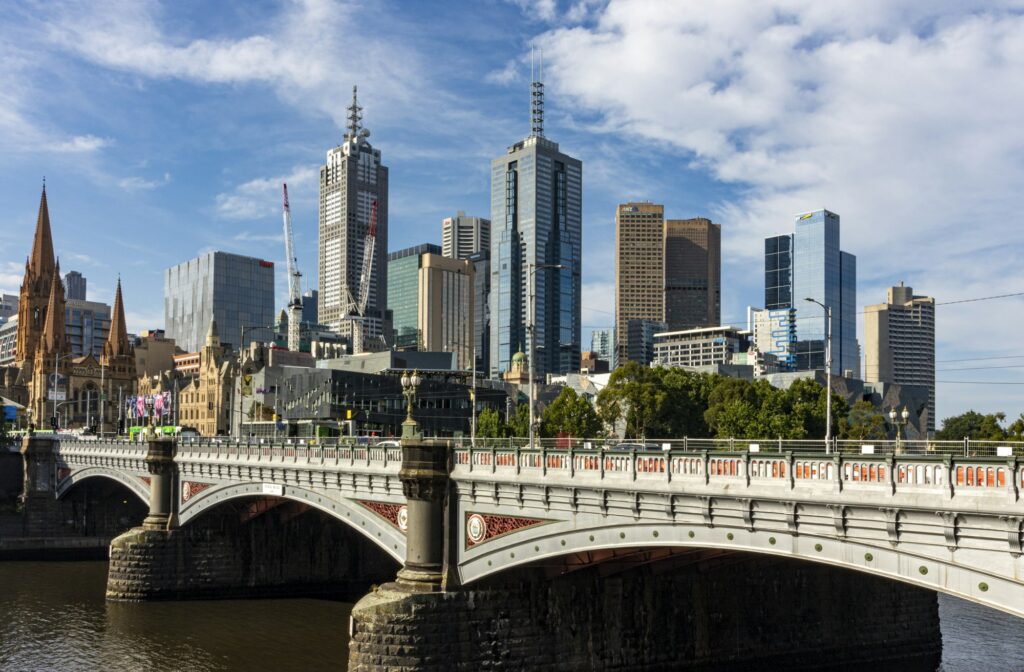
The Melbourne International Film Festival 2026 runs from Thursday 6 to Sunday 23 August, with the 74th edition unrolling more than 300 films across 12 venues in Melbourne and 9 in regional Victoria. The opening film Wicker, starring Olivia Colman and Alexander Skarsgård, kicks things off on 6 August at Hoyts Melbourne Central, ahead of the MIFF Awards ceremony on 22 August. Expect to pay $12 to $28.50 AUD a session, with part of the programme streaming online via MIFF Online until 30 August. Book your accommodation early: August is statistically the cheapest month of the year to sleep in Melbourne.
Every August, while the northern hemisphere basks in summer, Melbourne comes alive in its own way: screenings in darkened cinemas, red carpets and queues outside heritage picture houses. The Melbourne International Film Festival (MIFF), founded in 1952 and now one of the oldest film festivals still running anywhere in the world alongside Venice and Cannes, celebrates its 74th edition in 2026, from 6 to 23 August. The timing lines up neatly with a double accolade for the host city: Melbourne has just been named the world’s 3rd most liveable city by the Economist Intelligence Unit and the world’s best city by the Time Out rankings, adding extra shine to a trip built around the big screen.
This guide covers the festival’s programme and venues, the budget and weather to expect for a southern-hemisphere winter in Melbourne, and the activities that fill the hours between screenings just as pleasantly, from the Great Ocean Road to the vineyards of the Yarra Valley.
1. MIFF 2026 at a glance: dates, venues and tickets

A veteran festival, between heritage and southern winter
Founded in 1952 in Olinda, in the Dandenong Ranges, under the name « Olinda Film Festival », renamed Melbourne Film Festival as early as 1953 and then Melbourne International Film Festival in 1984, MIFF celebrates its 74th edition in 2026, from Thursday 6 to Sunday 23 August. It has only been cancelled once in 74 years, in 2020, due to the pandemic. According to miff.com.au, artistic direction for 2026 sits with Al Cossar, in the role since 2019, alongside Damien Hodgkinson (festival CEO) and Caroline Pitcher (CEO of VicScreen, the Victorian state government’s screen funding agency). Cossar sums up the festival’s spirit like this: « MIFF is the maximalist way to enjoy all of what cinema can offer in the midst of a Melbourne winter. »
The full programme, unveiled on 9 July 2026, brings together more than 300 films, documentaries, short films and extended-reality works according to Variety Australia, screening across 12 venues in Melbourne (including 2026 newcomer Village Cinemas Crown in Southbank) and 9 venues in regional Victoria, with screenings on 14-16 and 21-23 August. If you can’t make it in person, MIFF Online streams a selection of the programme nationwide from 14 to 30 August via ACMI Cinema 3.
As for tickets, single sessions cost between $12 and $28.50 AUD according to miff.com.au, with 6- or 12-session multipasses to bring down the per-session cost, and a U26 membership at $26 AUD for under-26s, valid for 12 months. Concession pricing is also available for students, Health Care Card, Carer Card and Seniors Card holders, and members of film industry unions.
Highlights
- 74th edition of one of the oldest film festivals still running anywhere in the world, alongside Venice and Cannes
- MIFF Online lets you follow part of the programme from anywhere in Australia, from 14 to 30 August
- Free tickets for First Nations communities and accessible screenings (sensory-friendly, captioned access)
Several of the festival’s venues, including the Capitol and the Forum, sit right among the historic laneways and buildings of the city centre. A guided walking tour beforehand is a good way to get your bearings in Melbourne before diving into back-to-back screenings.
2. The 2026 programme: Wicker, headliners and Bright Horizons
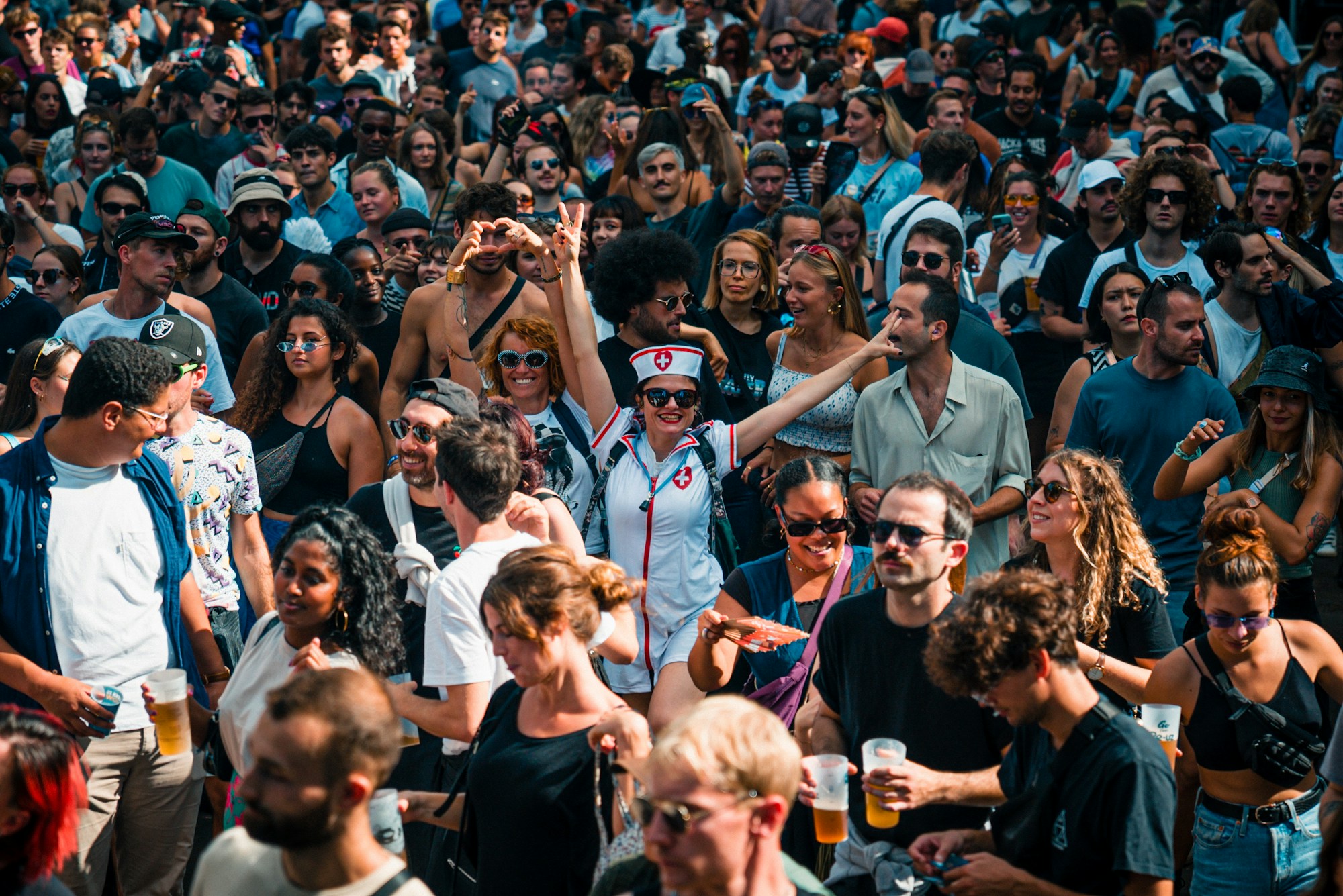
Wicker opens the festival, carried by an international cast
Opening night on 6 August at Hoyts Melbourne Central belongs to Wicker, directed by husband-and-wife duo Eleanor Wilson and Alex Huston Fischer, starring Olivia Colman, Alexander Skarsgård, Peter Dinklage, Richard E. Grant and Elizabeth Debicki, with cinematography by Lol Crawley (Oscar winner for The Brutalist). The film, already screened at Sundance Film Festival, is also competing in the Bright Horizons competition, according to FilmInk.
The rest of the programme lines up several names to watch: Dead Man’s Wire, Gus Van Sant’s first film in several years, starring Al Pacino and Bill Skarsgård; Minotaur, a political thriller from exiled Russian director Andrei Zvyagintsev, Grand Prix winner at Cannes 2026; and Bitter Christmas, which screened in competition at Cannes under its original title Amarga Navidad, directed by Pedro Almodóvar. On the documentary side, Tina Arena: Unravel Me traces 50 years of the Australian singer’s career in a world premiere, and the SBS series The Airport Chaplain, with Hugo Weaving and Claudia Karvan, is filmed around Melbourne Airport.
New for 2026: the Armani Beauty Cinema Club presents six films from Venice, Berlin and Cannes at an opening night at the Capitol Theatre on 13 August, alongside the MIFF Shorts Awards. On the awards side, the Bright Horizons Award ($140,000 AUD) recognises first and second features — one of the most generous feature film prizes on the global festival circuit, part of a total MIFF 2026 prize pool exceeding $300,000 AUD across all categories, handed out at the MIFF Awards ceremony on 22 August.
Highlights
- Wicker in its Australian premiere, fresh off its Sundance Film Festival run
- New Armani Beauty Cinema Club partnership: six films from Venice, Berlin and Cannes
- The Uncle Jack Charles Award ($20,000 AUD) recognises a First Nations Australian creative talent
3. Where to watch: venues between heritage and modernity

12 venues in Melbourne, 9 across regional Victoria
The festival’s heart beats at ACMI (Australian Centre for the Moving Image), on Federation Square: this national museum of screen culture, founded in 2002 and home to a collection of more than 250,000 items, hosts a large part of the programme. Around it, several heritage venues make up the city-centre circuit: the Astor Theatre in St Kilda, Melbourne’s last single-screen cinema still running continuously since 1936; the Forum, built in 1929 in a Gothic-Romanesque style; the Capitol, with its « Chicago Gothic » architecture recently restored by RMIT University; and Cinema Nova, in Carlton, which opened in 1992. According to miff.com.au, IMAX Melbourne, attached to Melbourne Museum, has the largest cinema screen in the southern hemisphere.
New for 2026: Village Cinemas Crown, in Southbank, joins the list of partner venues, alongside Hoyts Melbourne Central and Kino Cinema. Beyond Melbourne, 9 venues across regional Victoria (Ballarat, Bendigo, Castlemaine, Healesville, Rosebud, Sale, Warrnambool and two venues in Geelong) host screenings on 14-16 and 21-23 August. For viewers who can’t travel, MIFF Online streams a national selection of the programme via ACMI Cinema 3, from 14 to 30 August.
Highlights
- The Astor Theatre, Melbourne’s last single-screen cinema running continuously since 1936
- 9 additional venues across regional Victoria, with screenings on the festival’s last two weekends
- MIFF Online (ACMI Cinema 3) extends access to the programme nationwide until 30 August
4. Melbourne in the southern winter: weather, budget and where to stay

An award-winning city, a mild but changeable winter
August sits at the heart of the southern winter (June to August in the southern hemisphere): expect average temperatures of roughly 7 to 15°C, with around 50mm of rain spread across some 14 days in the month according to Weather Atlas. Melbourne remains famous for its « four seasons in one day » climate, a phrase popularised by musician Neil Finn (Crowded House) in a 1992 song of the same name. Pack several layers, a waterproof jacket and shoes that can handle the bluestone cobbles of the laneways. The local time zone is AEST (UTC+10): Australian daylight saving doesn’t kick back in until October.
It’s no coincidence that Melbourne lends itself so well to a winter trip built around a festival: the city has just been ranked the world’s 3rd most liveable city by the Economist Intelligence Unit (Global Liveability Index 2026, behind Copenhagen and Vienna, ahead of Sydney), and the world’s best city in Time Out’s 2026 ranking of the world’s most beautiful cities. It’s also the country’s top interstate visitor destination, drawing 3.5 million visitors a year according to Visit Victoria.
On the budget side, August is statistically the cheapest month of the year to sleep in Melbourne: expect an average of around $150 to $190 AUD a night across all standards, roughly 16% below summer peak season, with dorm beds available for just a few dollars a night according to Budget Your Trip. As for neighbourhoods, the CBD remains the most practical base for hopping between the central venues (ACMI, Capitol, Forum, Hoyts, Kino), thanks to its Free Tram Zone covering most of the city centre. Fitzroy appeals for its bohemian vibe and independent cafés, Southbank for its upscale hotels and proximity to Village Cinemas Crown, and St Kilda for its seaside feel, budget-friendly hostels and the Astor Theatre right on the doorstep.
No direct flight currently connects London to Melbourne: every route transits through an Asian or Gulf hub, commonly Singapore, Dubai or Doha. All the more reason to prepare properly for a long-haul flight before diving into back-to-back screenings from your first days on the ground.
Highlights
- August, the cheapest month of the year to stay in Melbourne, around 16% below peak season
- Free Tram Zone across the entire CBD, handy for hopping between venues
- St Kilda combines the beach, budget-friendly hostels and the historic Astor Theatre
5. Beyond the cinemas: what to do between screenings
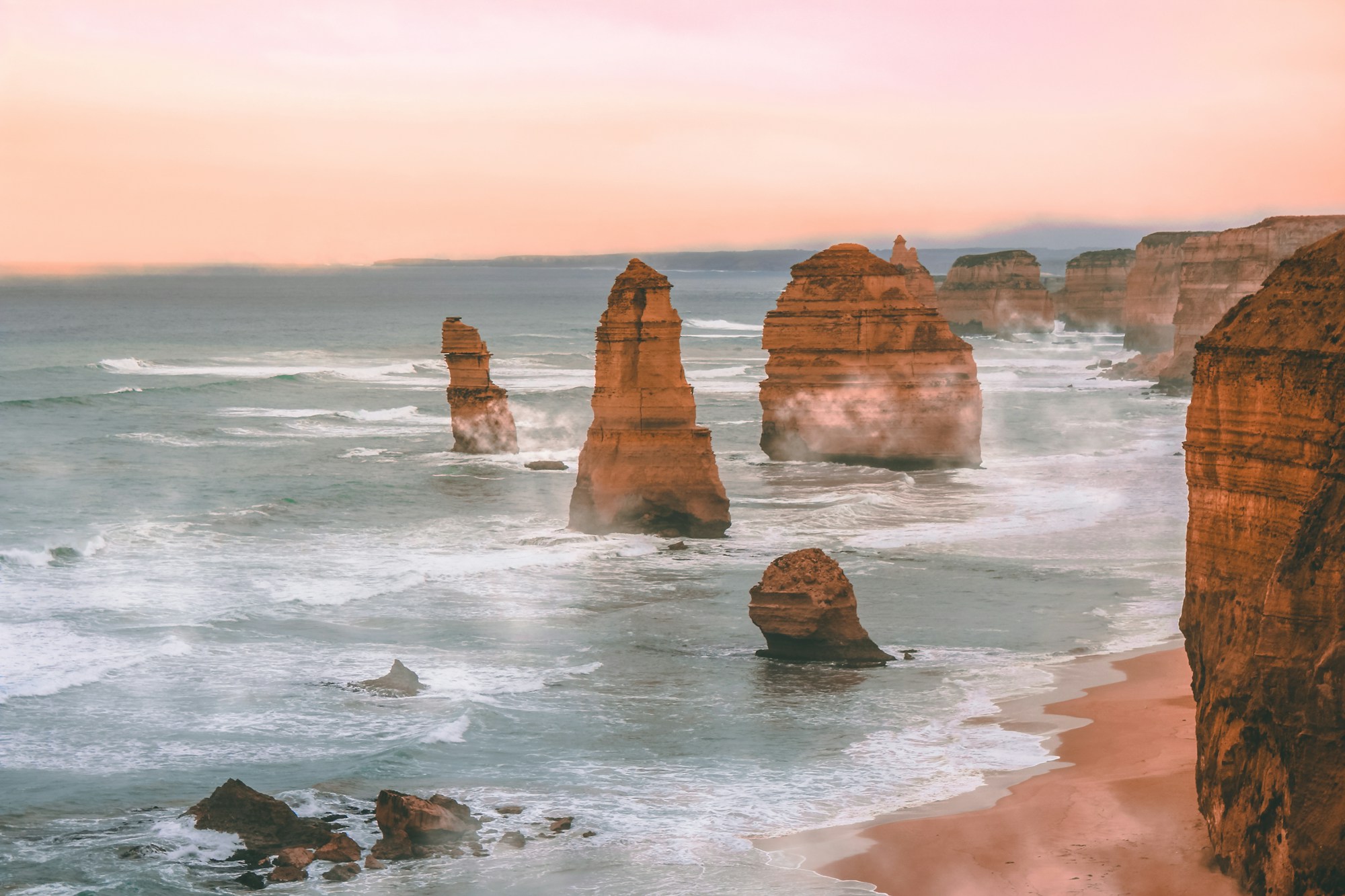
From the Twelve Apostles to the vineyards of the Yarra Valley
MIFF’s programme only takes up your evenings and part of your days, leaving plenty of room to explore around Melbourne between screenings. The Great Ocean Road and its Twelve Apostles remain the most popular excursion: access is free year-round, but most specialist guides recommend at least 2 nights on site rather than a single day trip, which is generally considered too rushed to enjoy secondary viewpoints like Gibson Steps or Loch Ard Gorge.
Closer by, the Yarra Valley (around a 1-hour drive) brings together well-known wineries (Yering Station, Domaine Chandon) and the Healesville Sanctuary wildlife park, with a sunrise hot air balloon flight as an optional extra. The Dandenong Ranges, 30km away, are also worth the detour: the village of Olinda, where MIFF was born in 1952 under its original name, the heritage Puffing Billy steam train and Sherbrooke Falls make for an easy-to-reach nature half-day.
For wildlife, Phillip Island and its colony of more than 30,000 little penguins (the smallest penguin species in the world) put on a sunset parade, with earlier start times in winter (11:45am versus 1:45pm in summer). Without leaving Melbourne, St Kilda Pier offers a free alternative by booking ahead, with a colony of around 1,400 birds visible from a boardwalk that reopened in late 2024. For a more active winter, dedicated buses leave Federation Square for the snowfields of Mt Baw Baw (2hr45, the closest) or Mt Buller (3hr15, Victoria’s largest lift network).
To combine several of these excursions with festival screenings without losing time replanning everything, building a complete itinerary is the simplest way to fit your free days around the MIFF programme.
Highlights
- Olinda, in the Dandenong Ranges, is the village where MIFF was born in 1952
- St Kilda Pier: a free alternative to Phillip Island for watching little penguins without leaving Melbourne
- Dedicated buses from Federation Square to the snowfields of Mt Buller and Mt Baw Baw
Practical information for your trip
Between the layovers via Singapore, Dubai or Doha and getting around between venues, activating an eSIM before you fly means you won’t be hunting for Wi-Fi to check a screening time.
From $4 USDThe UK-Australia Reciprocal Health Care Agreement covers Medicare GP visits and public hospital care, but not medevac, repatriation or private treatment — exactly what matters most if something goes seriously wrong far from home.
From $56 / 4 weeksCompare flights connecting via Singapore, Dubai or Doha: with no direct route from London, fares vary widely between carriers depending on the season.
Flight comparison toolFrequently asked questions
What are the exact dates of the Melbourne International Film Festival 2026?
The festival runs from Thursday 6 to Sunday 23 August 2026 (18 days), with a nationwide online stream from 14 to 30 August via MIFF Online, and screenings in regional Victoria on 14-16 and 21-23 August. Source: miff.com.au.
Is Melbourne’s MIFF the same as the Mumbai festival?
No. The acronym « MIFF » is also used by the Mumbai International Film Festival, a documentary-focused event, as well as the Malaysian International Furniture Fair — two events entirely unrelated to Melbourne’s international film festival. Source: Wikipedia.
How much does a ticket to MIFF 2026 cost?
Between $12 and $28.50 AUD per session, with 6- or 12-session multipasses to bring the per-session cost down, and a U26 membership at $26 AUD a year for under-26s. Source: miff.com.au.
Where does the festival take place in Melbourne?
Across 12 venues in Melbourne (ACMI, Astor Theatre, Capitol, Forum, IMAX, Cinema Nova, Hoyts Melbourne Central, Kino Cinema, and 2026 newcomer Village Cinemas Crown) and 9 venues in regional Victoria. Source: miff.com.au.
What’s the weather like in Melbourne in August?
It’s the heart of the southern winter: average temperatures of roughly 7 to 15°C, frequent but moderate rain (around 50mm over 14 days), and a changeable climate nicknamed « four seasons in one day ». Source: Weather Atlas.
Do UK citizens need a visa?
Yes, but it’s a quick online process: British passport holders can apply for the free eVisitor (subclass 651) or the ETA (subclass 601, about $20 AUD), both valid for tourist stays of up to 3 months. Source: GOV.UK.
Are there direct flights between London and Melbourne?
Not currently: every route transits through an Asian or Gulf hub, notably Singapore, Dubai or Doha. Qantas plans non-stop Sydney-London flights from October 2027 under Project Sunrise, but a non-stop Melbourne service hasn’t been confirmed. Source: Executive Traveller.
What is there to do in Melbourne outside the cinemas?
The Great Ocean Road and its Twelve Apostles, the Yarra Valley and its vineyards, the Dandenong Ranges (where MIFF was born in 1952), and Phillip Island for spotting little penguins are among the most popular excursions from Melbourne. Source: Visit Victoria.
Sources
- MIFF, Festival Info – official dates and structure of the 2026 edition.
- MIFF, Ticket FAQs – pricing and ticketing details.
- MIFF, Venues – list of partner venues in Melbourne and regional Victoria.
- MIFF, MIFF Awards – prize amounts and award categories.
- Wikipedia, Melbourne International Film Festival – festival history since 1952.
- FilmInk, MIFF Unveils 74th Festival Program – full programme and opening film.
- Variety Australia, MIFF 2026 Full Program – headliners and programme figures.
- The Curb, MIFF 74 Press Release – official announcement of the 74th edition.
- ACMI, MIFF 2026 – the festival’s hub venue at Federation Square.
- Invest Victoria, Melbourne ranked 3rd globally EIU 2026 – 2026 liveability ranking.
- Live in Melbourne, world’s best city Time Out 2026 – Time Out Best Cities ranking.
- Weather Atlas, Melbourne in August – monthly climate averages.
- GOV.UK, foreign travel advice for Australia – eVisitor and ETA entry requirements for British citizens.
- Executive Traveller, will Melbourne miss out on Qantas Project Sunrise? – non-stop London flight plans and current connections.
- Budget Your Trip, cost of hotels in Melbourne – accommodation budget by season.
- Visit Great Ocean Road, the Twelve Apostles – access and stay recommendations.
- Parks Victoria, St Kilda Pier penguins – free alternative to Phillip Island.
- World Travel Index, safety in Melbourne – practical advice for travellers.
Research conducted in July 2026, drawing on official sources and specialist press.

Plan your trip with Pixidia
Pixidia learns how you travel and helps you build a trip that truly fits you and everyone coming along.
Open the planner