
If you’re planning a trip to Italy in August 2026, expect a country split in two. Fewer than 40% of Italians travel specifically that month, according to Facile.it (41.4% per Federalberghi), and 87.6% of those who do stay within Italy. It’s Milan and Turin, the country’s business-driven northern cities, that empty out the most, while Naples runs at 91% hotel occupancy, the best in the country. Calabria is growing fastest of all (+10.54% in arrivals), with the mountains close behind (+2.3% in overnight stays) as travellers escape the heat. Book beaches and restaurants in the south ahead of time, and make the most of the quiet up north.
Milan slows to a crawl, its pavements all but empty, while Tropea is booked solid and Calabria is breaking arrival records. There’s nothing quite like it in Britain, where staggered annual leave means offices rarely close all at once — in Italy, whole industries down tools together every summer, and the country reshuffles itself for a few weeks. Anyone planning a trip to Italy in late July or August asks the same question every year: should you expect shuttered streets, or is it smarter to follow the crowd south, or up into the mountains? The numbers for 2026 tell a more nuanced story than the old cliché of a country switched off. This guide breaks down which cities genuinely empty out, where Italians actually go, and how to shape your own itinerary around it.
A country that goes on holiday all at once
Between 1 and 23 August 2026, Italy expects 17.4 million tourists on its soil: 8.4 million Italians and 9 million foreign visitors, driving direct tourism spending above €9 billion, according to Cna Turismo e Commercio estimates relayed by Vivere in Italien. Across the month as a whole, Assoturismo and Florence’s Centro Studi Turistici count 96.7 million overnight stays (+1.1% on 2025), split almost evenly between Italians (52 million) and foreign visitors (44.7 million), according to Sky TG24.
But that volume doesn’t translate into a uniform exodus. According to the Tecnè survey for Federalberghi, 36.2 million Italians will take a holiday between June and September 2026, and 87.6% of them will stay within Italy: the seaside keeps its place as destination number one, well ahead of Croatia, Greece or Spain for the small share who do travel abroad, reports Mondobalneare. And August no longer has the monopoly on holidays it held a generation ago: according to Facile.it, fewer than 40% of holidaymakers will travel specifically in August 2026, against 41.4% from another pollster, Federalberghi. The two surveys don’t share a methodology, but they tell the same underlying story: July and September eat into August’s share a little more every year, driven by remote work and staggered leave, notes Facile.it.
What hasn’t changed, though, is the mechanism behind the peak around 15 August. In Italy, almost every business outside the multinationals shuts its doors at the same time for one to three weeks: a system inherited from post-war collective agreements that leaves employees practically no say over when their leave falls. Italian law guarantees a minimum of four weeks’ paid leave a year, often extended to 26 or 32 days under collective agreements, notes VacationTracker. The result: it isn’t the whole country that leaves at once, but entire slices of its economy, city by city, shutting down together.
Milan, Turin, Bologna: the industrial north turns into a ghost town
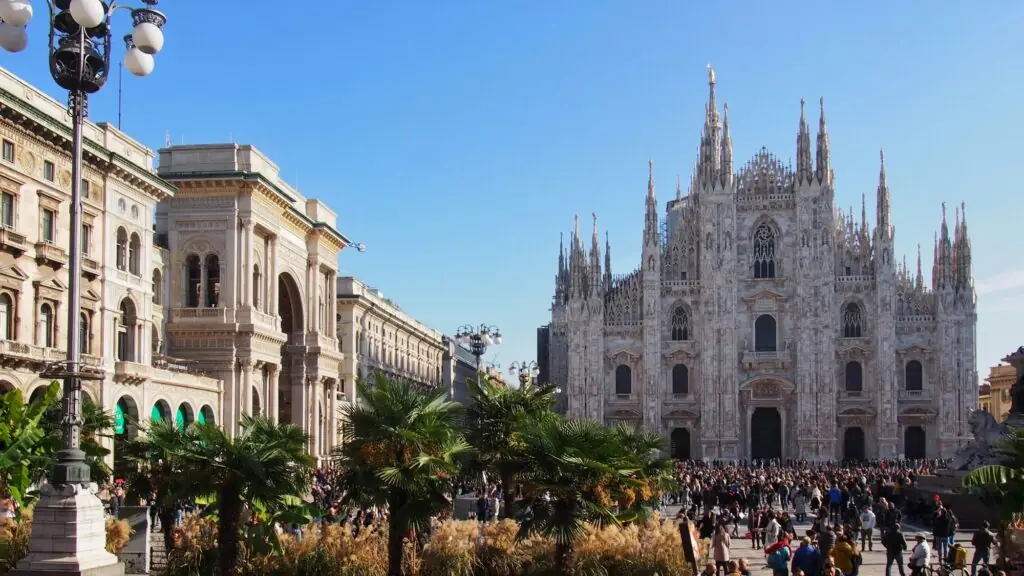
If one Italian city genuinely empties out in August, it’s Milan. Unlike Rome or Florence, the Lombard capital isn’t primarily a tourist city: it’s a business city, and when commercial and industrial activity stops, the city empties out with it. More than a third of shops, bars, restaurants, pastry shops and gelaterias traditionally close between 5 and 24 August, according to Mediolan. Only the fashion district, which depends directly on tourism, stays largely active.
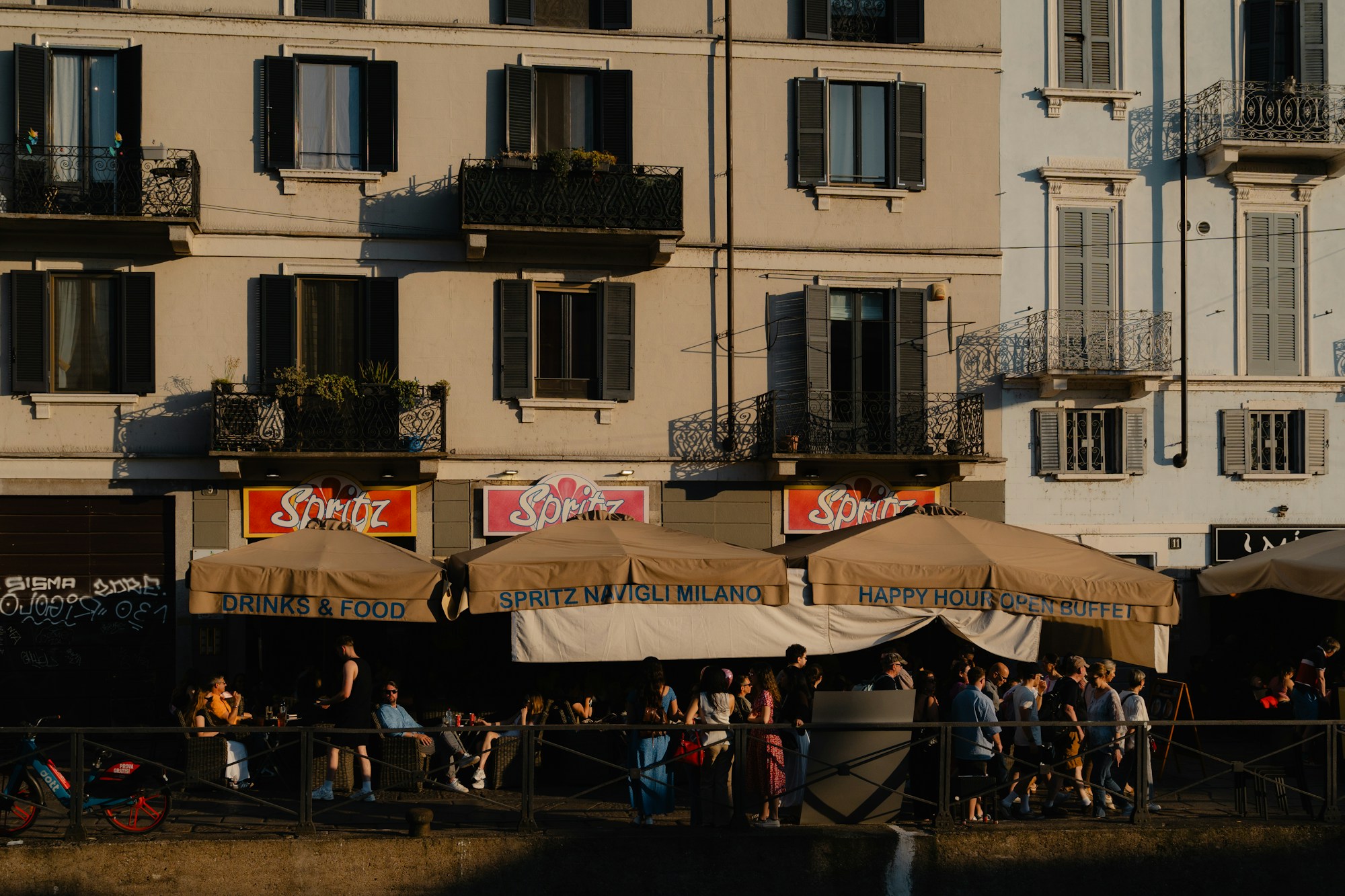
Milan in August: quiet by day, lively by night
The quiet has an upside: air quality improves measurably, with NO2 and fine-particle levels down noticeably since the Area B and Area C low-traffic zones came into force, an effect that August’s near-empty roads amplify for a few weeks, according to Il Giorno. To extend your stay beyond the city, our pick of Lake Como day trips from Milan stays accessible year-round, including when the city itself slows to a crawl.
Highlights
- Museums and major sights without the usual queues, now that Milanese locals are away
- The Navigli district stays lively after dark, with canal-side terraces and aperitivo
- Next to no traffic anywhere in the centre
In Turin, the phenomenon has an even more specific origin: up until the 1990s, the Fiat factory’s annual shutdown mechanically emptied the whole city, with workers and their families heading south or to the Ligurian coast en masse. « La grande fabbrica ha chiuso anche quest’anno e così, di conseguenza, fa tutta Torino » (« the big factory has closed again this year, and so, as a result, does the whole of Turin »), as Torino Oggi once put it. The city has since diversified its economy and is never completely empty any more, but the reputation of a city that falls silent in August still clings to it.
In Bologna, a university city, the closure is more institutional than economic: the University of Bologna’s general administration shuts for a full week, from 11 to 15 August, the university itself confirms. On the restaurant side, no blanket rule applies: some historic addresses choose to stay open as a refuge for visitors and for the Bolognese who’ve stayed behind, while others close for several weeks, according to a survey by Italian Gourmet. It’s worth checking case by case rather than assuming a wholesale closure.
Rome, Florence, Naples: the city empties, the tourist trail doesn’t
In the big tourist cities of central and southern Italy, the pattern flips. Residential neighbourhoods genuinely do empty out (Romans, Florentines and Neapolitans go on holiday too), but the central tourist areas stay full, sometimes busier than usual, carried by foreign visitors. In Rome, traffic jams vanish and queues at the major sights get shorter, while neighbourhood restaurants close for two to four weeks. Our full guide to what closes and stays open during Ferragosto breaks down exactly which sites and shops remain accessible, city by city.
Naples takes this logic all the way, and it’s the real twist of summer 2026: rather than follow the crowd out of town, the city has deliberately kept shops, restaurants and everyday venues open right through August to capture tourism. The result is stark: Naples posts 91% hotel occupancy in August, the best performance in the country, ahead of Rome (80%) and Florence. « Top performer è Napoli, con un tasso di occupazione al 91% » (« Naples is the top performer, with a 91% occupancy rate »), confirms Maria Carmela Colaiacovo, president of Confindustria Alberghi, quoted by VesuvioLive. For an international traveller, that’s a strong argument: the city that closes the least is also the one that stays the most alive.
Florence, meanwhile, illustrates a different and more structural phenomenon than the summer lull. The emptiness that worries local commentators isn’t an August one: it’s a resident population loss stretched over several years, with thousands of residents displaced by short-term lets in the historic centre. « Firenze si sta svuotando da anni » (« Florence has been emptying out for years »), as Firenze Urban Lifestyle sums it up. It’s a separate issue from Ferragosto, but it explains why the city can feel less lived-in than it used to, whatever the season.
Calabria, the real tourism breakout of 2026
While Puglia, Sardinia and Sicily fight over the Italian summer’s usual media coverage, a region that’s long stayed in the background is growing faster than any other. Calabria has logged +10.54% in total arrivals since the start of 2026, the strongest growth in the country, and +23.19% in foreign arrivals, an all-time record for the region, according to InformaCalabria. « Regina assoluta della crescita in Italia » (« the undisputed queen of growth in Italy »), as the local outlet headlined it.
This shift is no accident: the region invested €47 million in destination marketing between 2023 and 2025, for an economic impact estimated at €5.8 billion, or 14.1% of Calabria’s GDP over the period, reports ANSA Calabria. Foreign tourists spend an average of €1,114.60 per person there, and Tropea, a town perched on a cliff above a white sand beach, ranks among the standout destinations in the south for this Ferragosto 2026.
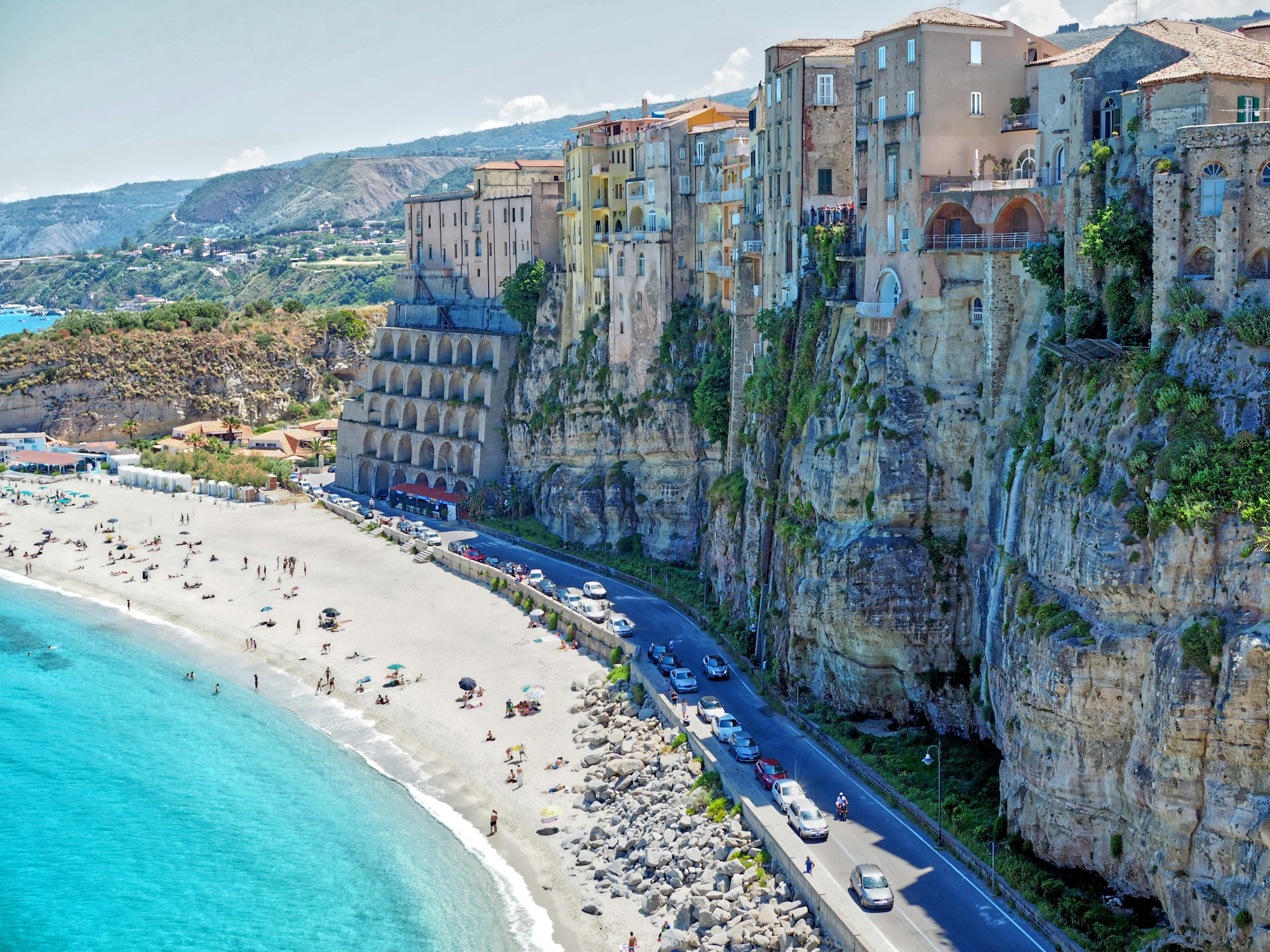
Tropea and the Costa degli Dei
The Costa degli Dei (Coast of the Gods), which stretches from Tropea to Capo Vaticano, stays less crowded than Puglia or Sardinia despite the rise in visitor numbers. It also has a distinctive local food scene, well away from the most touristy addresses: nduja, a fiery spreadable pork sausage, or pasta chijna, pasta stuffed with ragù and meatballs, a Calabrian Ferragosto classic.
Highlights
- Cliffs and turquoise water, with Tropea perched on its rock
- Still less crowded than the most talked-about seaside destinations
- Distinctive local food, away from standardised tourist menus
The mountains: summer’s destination in their own right
The clearest trend of summer 2026 isn’t playing out on the coast, but at altitude. Overnight stays in the mountains are up 2.3% for August, the strongest growth of any destination category, well ahead of the seaside (+0.9%) or art cities (+0.3%), according to Assoturismo data relayed by Globalist. The cause is direct: with twenty-five to twenty-seven major Italian cities under a red heat-alert in early August, a growing number of holidaymakers, Italian and foreign alike, are looking up towards the peaks rather than out to sea.
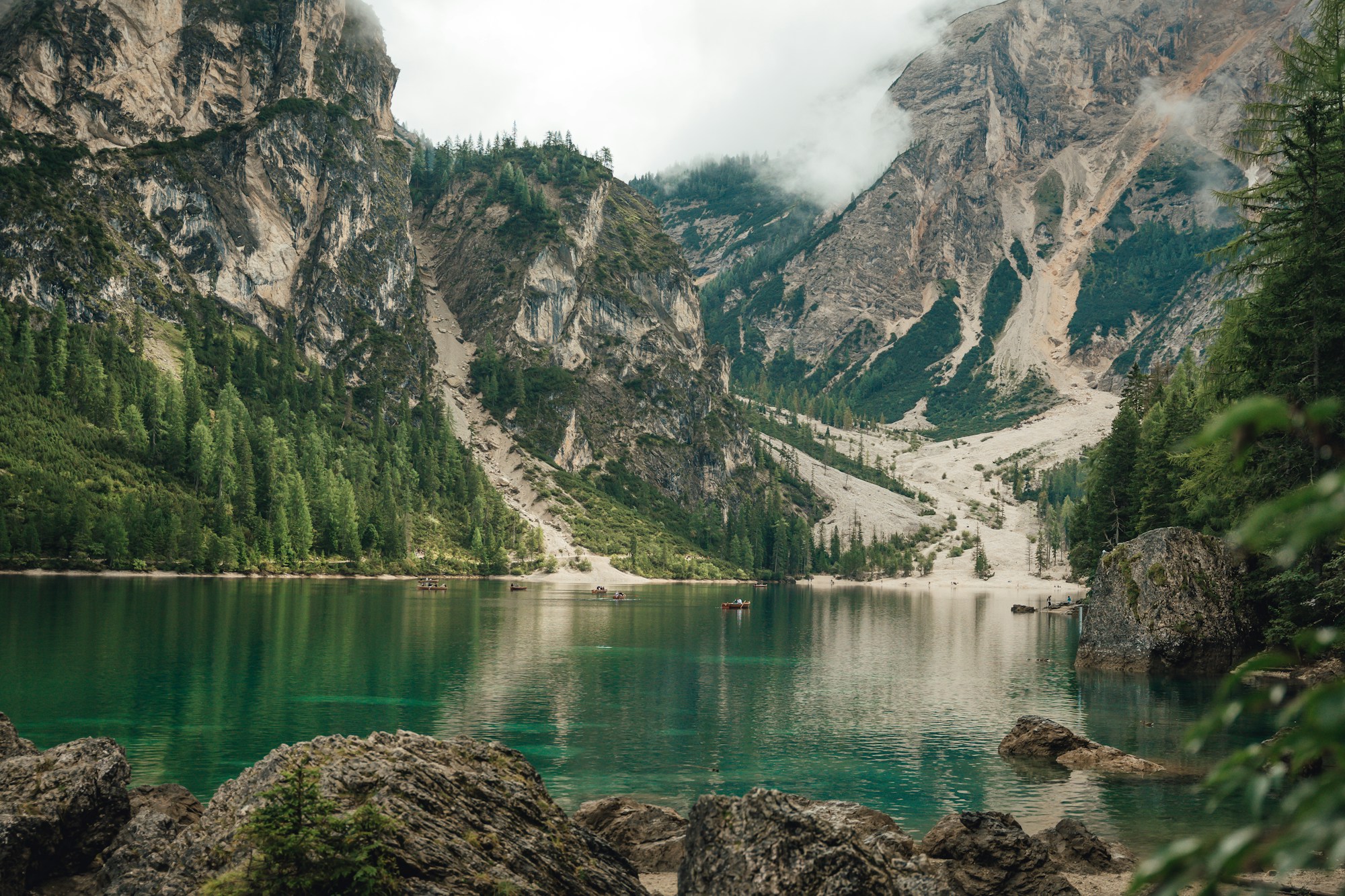
The Dolomites: a high-altitude refuge from the heat
The visitor profile is shifting along with the trend: operators are reporting a marked influx of American and Asian tourists, booking longer stays in 4- and 5-star hotels, with a season that could stretch to the end of October according to some local operators, reports Il Dolomiti. For other high-altitude options elsewhere in Europe, our pick of cool European national parks widens the choice beyond Italy.
Highlights
- 10-15°C cooler than the lowlands, a genuine alternative to repeated heat alerts
- Iconic lakes (Braies, Carezza) and mountain huts accessible as day trips
- A summer season becoming a destination in its own right, not just a winter add-on
Planning your own trip: dates to avoid and new rules to know
For a traveller planning a trip to Italy in August 2026, the traffic calendar matters just as much as the choice of destination. The ACI (Automobile Club d’Italia) confirms several bollino nero days, the maximum traffic alert: Saturday 1 August in the morning, then the weekend of 7-9 August, described as the busiest of the summer, followed by further peaks on 15-16, 22-23 and 29-30 August, according to ACI L’Automobile. Anas estimates more than 440 million vehicle journeys between 20 July and 6 September. The advice that comes up in every source is the same: travel on weekdays where you can, and avoid the 7am-1pm and 1pm-7pm windows on bollino rosso or nero days. Our article on where to go in the second half of August also covers the window when prices start dropping, once the 15 August peak has passed.
Several of the country’s most fragile sites have also shifted to strict tourist-access controls for 2026. At the Cinque Terre, booking is now compulsory, with a cap of around 400 people an hour on the Via dell’Amore and fines of up to €2,500 for walking the trails in flip-flops. In Capri, guided groups are capped at 40 people with compulsory wireless headsets, and Florence has banned restaurant terraces in its UNESCO-listed centre since March 2026, reports Forbes. Venice is bringing back its day-tripper fee (€5 in advance, €10 for late bookings, applying across 60 days in 2026 versus 54 in 2025), according to Timeout. Our overview of overtourism across Europe in 2026 rounds up the other sites on the continent where booking has become essential.
Sardinia, for its part, has rolled out a capped-access beach system for 2026 (« spiagge a numero chiuso« ), with compulsory online booking on platforms that vary by area: La Pelosa caps visitors at 1,500 a day, while Cala Brandinchi and Lu Impostu cap at 3,352 with a €2 ticket, according to La Nuova Sardegna. It’s worth checking the specific platform for each beach before you go, rather than counting on open access.
One last point is worth putting in perspective: the « record » prices that do the rounds every summer, like the €238,000 quoted for a week in Puglia’s Ceglie Messapica, don’t correspond to any trip actually sold. A Codacons study confirmed it was a glitch in Booking.com’s dynamic pricing algorithm, not a real asking price, reports La Terra di Puglia. The real signal behind these viral numbers is more modest but genuine: a week in a three-star place during Ferragosto costs a family €2,025 on average, up 12.6% year-on-year.
Practical info for your trip
Stay connected whether you’re wandering Milan’s quiet streets or the Costa degli Dei, so you can check a capped-access beach booking in Sardinia or find the nearest late-night pharmacy.
Data plans available from arrivalNomad Insurance covers medical care, baggage and trip disruption for a stay in Italy, whether you’re based in a quiet northern city or moving between the coast and the mountains.
From $56 / 4 weeksFrequently asked questions
Which Italian cities empty out the most in August?
Milan, and especially Turin, the industrial and business cities of the north, empty out most noticeably: their economic activity stops, and residents have no tourist-driven reason to stay. Rome, Florence and Naples, by contrast, stay active thanks to international tourism, even though their residents leave too, according to Mediolan.
Where do Italians actually go on holiday in August?
87.6% stay within Italy, and 12.4% travel abroad, mainly to Croatia, Greece and Spain. The seaside still dominates preferences overall, but the mountains are growing fastest in 2026 (+2.3% in overnight stays), and Calabria is the region gaining the most in arrivals, according to Mondobalneare.
Why is Calabria growing so fast in 2026?
The region has logged +10.54% in total arrivals, the strongest growth in the country, and +23.19% in foreign arrivals, an all-time record, following a €47 million destination-marketing investment between 2023 and 2025, according to InformaCalabria.
Does Naples stay lively despite the August exodus?
Yes, and it’s actually the liveliest city in the country on that measure: 91% hotel occupancy in August 2026, ahead of Rome (80%) and Florence. Neapolitan shop and restaurant owners have deliberately chosen to stay open through August to capture tourism, according to VesuvioLive.
Should you avoid Milan and Turin in August?
Not necessarily. More than a third of shops, bars and restaurants close in Milan between 5 and 24 August, but museums and major sights stay open, often without the usual crowds. It’s a good time to visit outside the neighbourhood addresses, rather than a reason to skip the cities altogether.
Is it true that all Italians go on holiday in August?
Less and less so. According to Facile.it, fewer than 40% of holidaymakers travel specifically in August 2026, against 41.4% from another pollster, Federalberghi. The two surveys don’t measure exactly the same thing, but they agree on an underlying trend: departures spread a little further across July and September every year, according to Facile.it.
Which days should you avoid on Italy’s roads in August 2026?
Saturday 1 August in the morning, the weekend of 7-9 August (the busiest of the summer according to the ACI), then the weekends of 15-16, 22-23 and 29-30 August. It’s best to travel on weekdays and avoid the 7am-1pm and 1pm-7pm windows on bollino rosso or nero days, according to ACI L’Automobile.
Are the €238,000-a-week prices in Puglia real?
No. That figure, like the €297,000 recorded in Florence, corresponds to a confirmed glitch in Booking.com’s dynamic pricing algorithm, documented by a Codacons study, not a price actually paid by any traveller, according to La Terra di Puglia.
Sources
- Office Holidays: official date of Ferragosto 2026
- Vivere in Italien: 17.4 million tourists expected between 1 and 23 August
- Sky TG24: 96.7 million overnight stays forecast for August 2026
- Globalist: breakdown of overnight stays by destination type
- Mondobalneare: 36.2 million Italian holidaymakers, 87.6% staying in the country
- Facile.it: fewer than 40% of Italians travel specifically in August
- TGCOM24: the trend towards spreading departures across July and September
- VacationTracker: the legal framework for paid leave in Italy
- Mediolan: shop closures in Milan in August
- Il Giorno: improved air quality in Milan
- Torino Oggi: the legacy of Fiat’s annual shutdown in Turin
- Università di Bologna: the university’s summer closure schedule
- VesuvioLive: Naples, 91% hotel occupancy in August
- Firenze Urban Lifestyle: the structural emptying-out of Florence’s historic centre
- InformaCalabria: Calabria, Italy’s fastest-growing tourism region in 2026
- ANSA Calabria: the economic impact of the region’s tourism investment
- Il Dolomiti: the mountain visitor boom and the extended season
- Il Dolomiti: alpine guides’ warning on trails made dangerous by the heat
- ACI L’Automobile: official calendar of bollino nero days
- Forbes: new anti-overtourism restrictions (Cinque Terre, Capri, Florence)
- Timeout: the renewed day-tripper fee in Venice
- La Nuova Sardegna: Sardinia’s capped-access beach system
- La Terra di Puglia: the pricing glitch behind the viral record prices
Research and fact-checking carried out in August 2026.

Plan your trip with Pixidia
Pixidia learns how you travel and helps you build a trip that truly fits you and everyone coming along.
Open the planner