
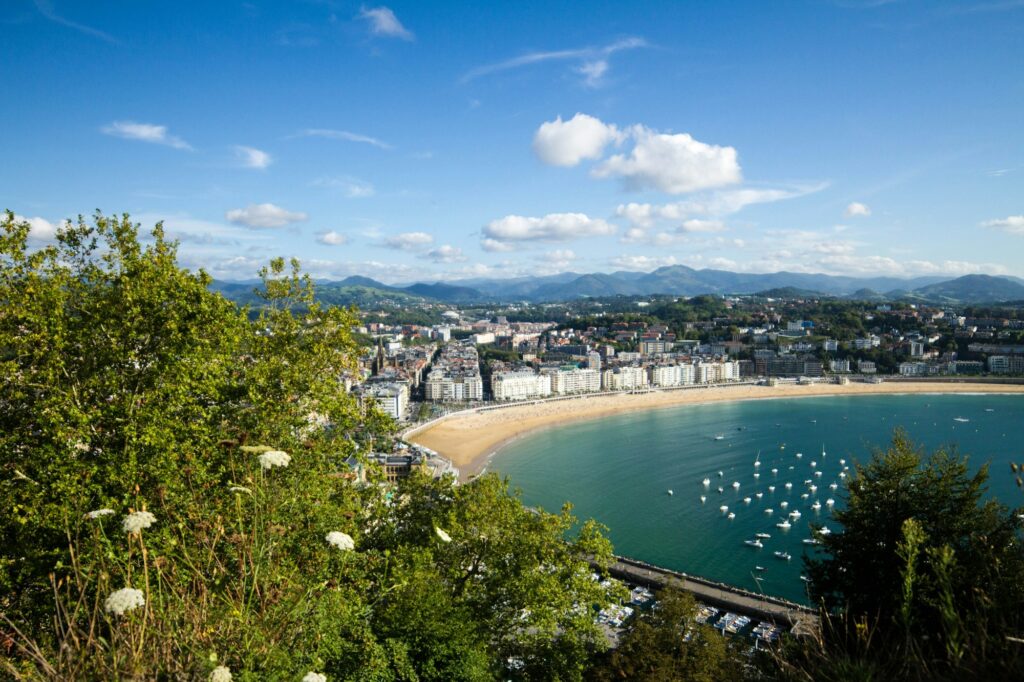
The 2026 San Sebastián International Film Festival (74th Zinemaldia) runs from 18 to 26 September 2026 and remains the most accessible of Europe’s major film festivals: no accreditation is required. Every screening is open to the public with a ticket from €8.75 (galas from €80 to €95, children’s screenings from €2). Werner Herzog receives the Donostia Award, Fatih Akin opens with « Ghost Song » and Michaël R. Roskam closes with « Le Faux Soir ». General sale opens on 13 September.
In San Sebastián, the film festival is no fortress. No badge to chase, no quota reserved for industry professionals: the 74th edition of the International Film Festival (Zinemaldia), from 18 to 26 September 2026, sells its tickets to the public just like a neighbourhood cinema. The opening and closing galas, the daily red carpet, the stars dropping into pintxo bars — it is all accessible. Here is how to watch films and eat pintxos without accreditation, on a controlled budget.
1. The Zinemaldia at a glance: a festival that loves its audience

Born in 1953, open to everyone
Founded in 1953, the San Sebastián International Film Festival (Donostia Zinemaldia in Basque) is one of the four FIAPF « A-category » festivals, alongside Cannes, Venice and Berlin. It screens around 200 films per edition across seven competitive sections, from the Sección Oficial (competing for the Golden Shell) to Perlak and Culinary Zinema. According to the daily El País, it is « the film festival that loves its audience the most »: in 2024, 123,211 of the 172,301 admissions were bought by the general public — 71.5%.
The 2026 edition is also a transitional one: it is the last led by José Luis Rebordinos (in post since 2011), replaced from January 2027 by Maialen Beloki, the first woman to head the festival. The poster, unveiled in June, honours Ricardo Darín and the theme of film crafts. The festival’s heart beats at the Kursaal, the two glass cubes designed by Rafael Moneo facing Zurriola beach, where the stars stay at the María Cristina palace. To measure the contrast with the far more locked-down Festival de Cannes, read our guide to Cannes 2026 without a professional badge.
Highlights
- One of the world’s four « A-category » festivals — the most accessible of the bunch
- 71.5% of 2024 admissions sold to the general public, galas included
- Screenings introduced by the film teams, often with unannounced Q&As
The Zinemaldia ritual is not confined to the cinemas: between two screenings, the whole city turns into one giant tasting room. To explore the Parte Vieja without overthinking it, the Secret Food Tours food tour takes you to the locals’ favourite counters, pintxos, wine and cider included.
2. Tickets without accreditation: the heart of the system
A ticket like the cinema, for almost everything
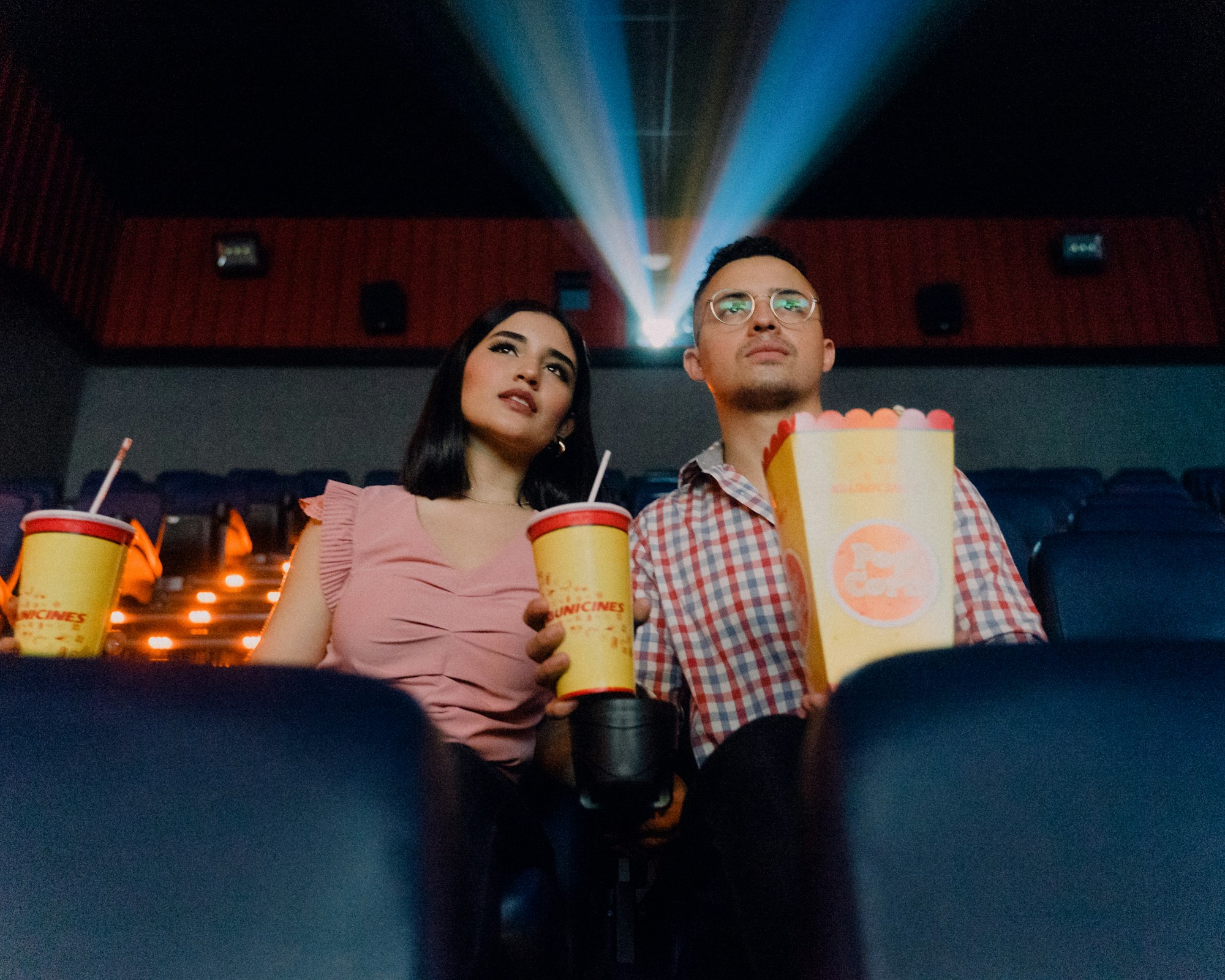
In San Sebastián, no accreditation is required to attend screenings, including the opening and closing galas. The 5,556 accredited guests of the 2025 edition (professionals, press, industry) only get booking priority. The general public buys tickets online on sansebastianfestival.janto.es, at the Zinemaldi Plaza box offices (lower level of the Kursaal, open from 17 September) or through the Kutxabank network. The standard price is €8.75 per screening (€10.50 in zone B of the Kursaal’s K1 auditorium), with worthwhile discounts: -25% from 10 tickets bought together, i.e. €6.56 per screening, -50% with the Kutxabank-Gazte youth card, -10% with the Donostia-Kultura card at the box office.
The 2026 sales calendar is already partly under way: Velódromo screenings went on sale on 18 August (the « Go!azen 13 » youth screening sold out in a few hours), Culinary Zinema dinners open on 28 August, galas (opening, closing, Donostia Award) on 2 September, and the phased general sale on 13 September. A festival pass (all K1 screenings + galas) exists but is poorly documented: email to order it before 2 September if you are interested. The ground rules: numbered seats except at the Velódromo and in Tabakalera’s Z room, arrive 30 minutes early at the Kursaal, Victoria Eugenia and Principal (15 minutes elsewhere), cancellations possible up to 30 minutes before the screening, maximum 4 tickets per person.
Highlights
- Opening and closing galas open to the public — just buy a ticket
- -25% from 10 tickets: the equivalent of €6.56 per screening for a couple over 4 days
- « Sold out » screenings free up: cancellations are resold until 30 minutes before
3. The 2026 lineup: opening, closing and the Donostia Award

Ghost Song, Le Faux Soir and a competitive selection
The opening film, on 18 September at the Kursaal, is « Ghost Song » by Fatih Akin, a world premiere competing for the Golden Shell: the story of a love cut short by death, told across 40 nights of dreams, which the director describes as a mix between Patrick Swayze’s « Ghost » and Sartre’s philosophy. The closing night, on 26 September, goes to « Le Faux Soir » by Michaël R. Roskam, out of competition: a European preview recreating the Belgian Resistance operation that printed a fake issue of the daily « Le Soir » under Nazi occupation, starring Arieh Worthalter, Mélanie Thierry and Bouli Lanners.
The 2026 Donostia Award goes to Werner Herzog, announced on 8 August: at 83, the director of « Aguirre, the Wrath of God » and « Fitzcarraldo » (~80 films across six decades) will receive his award at the opening gala on 18 September, preceded at the Victoria Eugenia by the screening of his new film « Bucking Fastard ». In the official competition (16-17 films), you will find Pablo Larraín, Mike Leigh, Nicole Garcia, Jesse Eisenberg or Fred Cavayé (with « Les Misérables », a new adaptation of Victor Hugo). The Perlak section, which rounds up the year’s best films, opens with « Minotaur » by Andrey Zvyagintsev (Grand Prix at Cannes 2026) and closes with « Juste une illusion » by Olivier Nakache and Éric Toledano: eleven of its sixteen titles come from Cannes, including the Palme d’Or winner « Fjord » by Cristian Mungiu.
Other highlights: the Zabaltegi-Tabakalera section (21 titles, including Jane Schoenbrun and Bruno Dumont), the José Giovanni retrospective (20 films, 1960-2001), a record number of entries in the Nest competition (503 films from 232 schools in 61 countries) and Culinary Zinema, which pairs food documentaries with dinners at the Basque Culinary Center (€90, €175 for the Mitani sushi dinner). To compare the four big film festivals of the year, see our panorama of Cannes, Venice and Berlin 2026.
Highlights
- Opens with « Ghost Song » by Fatih Akin, in competition (world premiere)
- Donostia Award 2026: Werner Herzog (2025 winner Jennifer Lawrence will not be back)
- Perlak: 11 films from Cannes 2026, including Mungiu’s Palme d’Or winner « Fjord »
4. The venues: the whole festival on foot
Kursaal, Victoria Eugenia, Tabakalera: a compact city
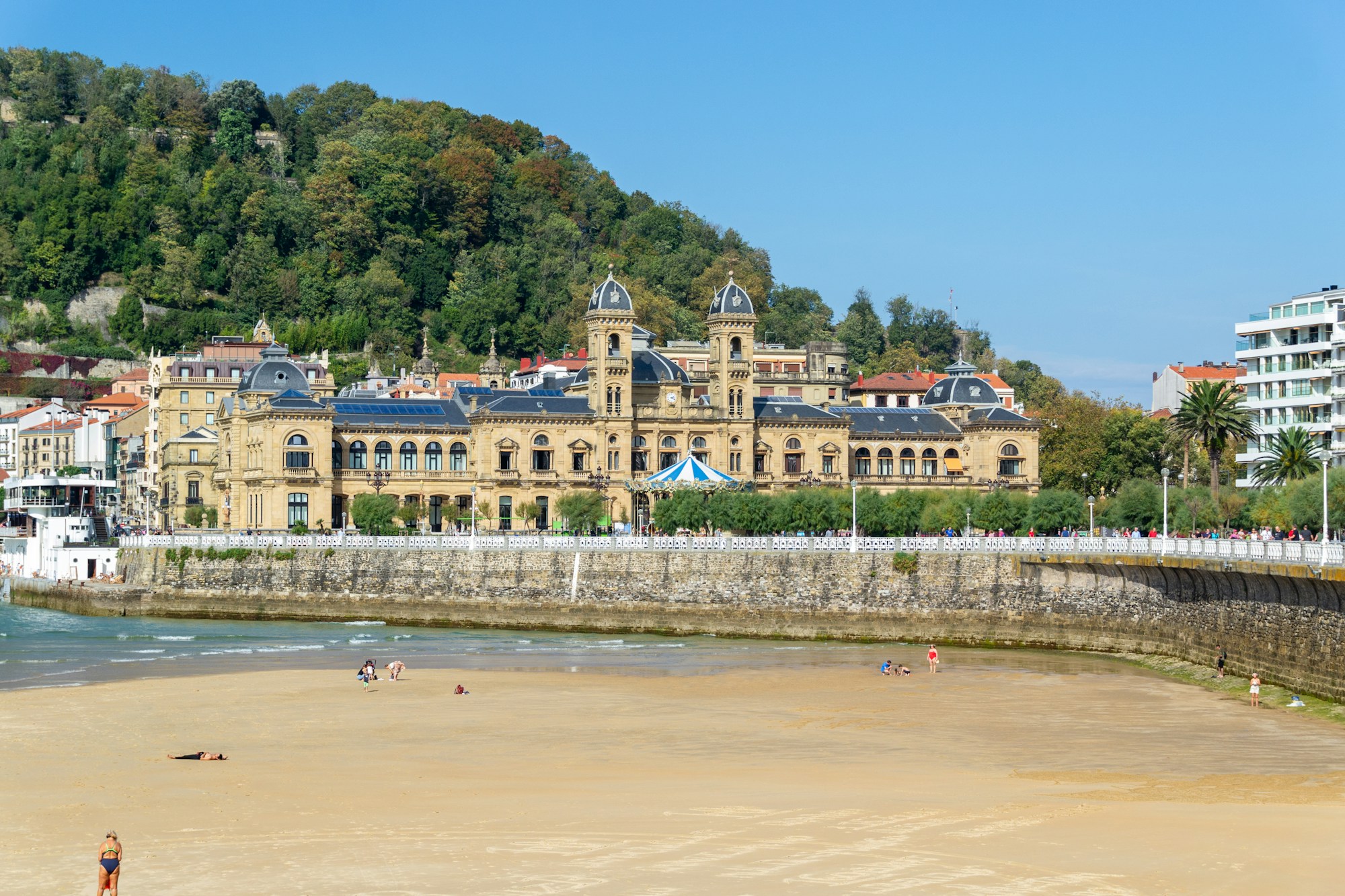
San Sebastián’s great strength is its compactness: every venue is within 15 minutes’ walk of the others. The festival HQ is the Kursaal, whose K1 auditorium (~1,806 seats) hosts the galas and the Official Selection, facing Zurriola beach where you can swim between films (the water is ~20 °C in late September). The Zinemaldi Plaza box office sits on the lower level, chef Andoni Luis Aduriz’s Muka restaurant on the ground floor. The Teatro Victoria Eugenia (~1,000 seats) hosts the Perlak previews and the Donostia Award screening; the Teatro Principal, Cines Príncipe (7 screens) and Cines Trueba (2 screens) cover the Parte Vieja. At Tabakalera, the former tobacco factory turned cultural centre, you will find the Zabaltegi-Tabakalera section, the restored Klasikoak films and the Nest competition.
For the popular screenings, the Antonio Elorza Velódromo, ten minutes from the centre in the Amara district, becomes with its 400 m² giant screen one of the largest cinemas in Europe: €8.75 tickets, free unnumbered seating (arrive early), and a live broadcast of the closing gala on 26 September. The Aquarium and San Telmo Museum host special screenings. To get your bearings and understand the city in two hours, the small-group « San Sebastián Essentials » walking tour covers the history and key sights between two films.
Highlights
- All venues within 15 minutes’ walk: no stress between screenings
- Velódromo: the closing gala live on the giant screen for €15
- Tabakalera: restored films, talks and debates with free access
5. Red carpet and stars: the free show
Stars at pavement level
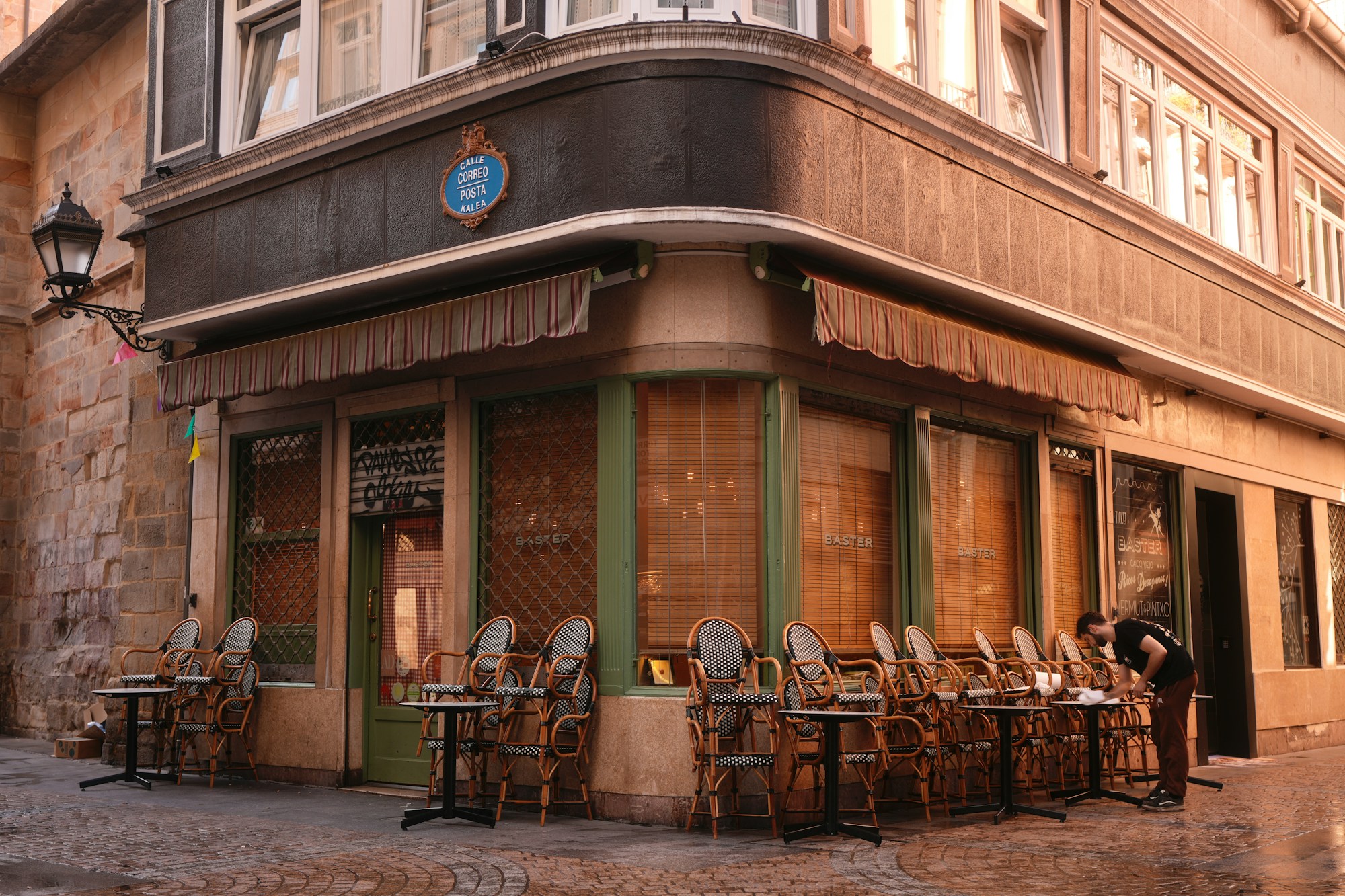
Every evening, about 60 metres of red carpet unroll in front of the Kursaal, on the Paseo de la Zurriola, for the evening premieres (screenings start between 6:30 pm and 8:30 pm, star arrivals begin 45 to 60 minutes earlier). The public settles behind the barriers and the stars take their time: selfies and autographs are common. It is free, open to everyone, and it happens even in the rain, so bring an umbrella. The carpet, 100% recycled, is even reused after the festival: the 2023 one was turned into bags for the food bank collection.
The other prime spot is the Hotel María Cristina, the 1912 Belle Époque palace where the jury and the stars stay: Elizabeth Taylor, Al Pacino, Robert De Niro or Juliette Binoche have all passed through. Waiting at the entrance or in the lobby is a chance to bump into the crews, and fans also crowd the back door. But San Sebastián’s particularity is that the actors move freely around the city, on foot, through the Parte Vieja and into the pintxo bars: El País says it is « very easy » to run into a star there. The posters of the films in competition are displayed opposite the María Cristina, and the photocall is visible from behind the barriers. For a different, far more inaccessible festival format, check out our guide to the Cannes Film Festival 2026 for the general public.
Highlights
- Free daily red carpet in front of the Kursaal, selfies possible
- Hotel María Cristina: the lobby and the back door, prime star spots
- Stars walk the city and the pintxo bars on foot
6. Pintxos and txikiteo: eating between screenings
Txikiteo, the festival’s national sport
The Zinemaldia is often described as « the tastiest film festival in the world »: between two screenings, the whole city practises the txikiteo, the bar crawl. The rules are simple: maximum two pintxos per bar, taste the speciality then move on. The cold pintxos on the counter are the warm-up; the magic is in the hot pintxos ordered from the waiter, often written on chalkboards: Idiazábal risotto, carrillera, foie. You pay on trust in traditional bars (you recite what you ate), tipping is not expected and some Parte Vieja bars only take cash. The windows: 12:30-3:30 pm and 7:30-11:00 pm, with many bars closed on Mondays and Tuesdays. Budget €15-25 per person for an evening of 4-5 bars, €30-50 for a bigger crawl with drinks (txakoli, zurito at ~€2.50, Basque cider).
The cult addresses of the Parte Vieja: La Cuchara de San Telmo (cochinillo, foie, carrillera), Borda Berri (risotto at €4.20, rib kebab at €5.30), Txepetxa (the anchovy, €2.90), Gandarias (sirloin with foie), Ganbara (mushrooms, txangurro), Goiz Argi (prawn skewer), La Viña (the festival’s official cheesecake) and Casa Vallés, where the gilda was born in 1946 — olive, guindilla pepper and anchovy, named after Rita Hayworth. The Gros district, between the Kursaal and the Zurriola, offers a more local, cheaper version (Bodega Donostiarra, Bergara, El Cine). For quick meals: NAP (Neapolitan pizzas served continuously until 11:30 pm) or the Mercado de la Bretxa. Mikel Larrañaga’s famous « ruta magistral » fits into €19: low-temperature egg at Atari, anchovies at Txepetxa, kebab and risotto at Borda Berri, ice cream to finish.
If you want to extend the food experience beyond the festival, our 7-day Basque Country itinerary (surf, pintxos and villages) completes the picture, on both the French and Spanish sides.
Highlights
- Txikiteo evening across 4-5 bars: €15-25 per person
- The « ruta magistral »: 3 bars, €19, the best of the Parte Vieja
- Gros district: local counters 5-10 min from the Kursaal, 15-25% cheaper
7. Where to stay and how to get there: the keys to the trip
The festival lasts nine days and central hotel prices rise 40-60% during the week, so book two to three months ahead. Indicative 2026 ranges: 3-star and boutique hotels €95-160 per night, 4-star €140-340, guesthouses and hostels €45-60. The best value is the Gros district (15-25% cheaper than the centre, 5-10 minutes’ walk from the Kursaal); Amara, near the Velódromo and the station, and Antiguo, next to the Antiguo Berri screens, are quiet alternatives. Outside the city, Irun (hotels from ~€45, 25-30 minutes by train or bus), Hondarribia and Zarautz (hostels €18-41) offer big savings, as long as you watch the last evening trains (the E2 line runs until ~10:30 pm). Beware of hotels labelled « San Sebastián » that are actually in distant suburbs: always check the real walking distance to the Kursaal.
How to get there from the UK
- Train: Eurostar London St Pancras-Paris Gare du Nord (~2h15, from ~£67) then Metro line 4 to Montparnasse, TGV Paris-Hendaye (~4h45-5h, from ~€30-43 booked ahead) and Euskotren E2 Hendaye-Donostia (35-40 min, €2.90, every 30 min until ~10:30 pm) — about 9 hours door to door
- Plane: Biarritz (easyJet from London Gatwick or Ryanair from Stansted, ~1h50; bus ~€10 to Donostia) or Bilbao (Vueling from London Gatwick, ~2h; direct PESA bus ~1h20, €14 online)
- On the ground: a very walkable city, Dbus bus ~€1.85 per trip, Mugi card at €0.59, car not recommended (Illunbe park-and-ride on Saturdays)
On budget, a 3-day trip excluding international transport works out at ~€185-300 on a tight plan (hostel, 6 screenings at €8.75, pintxos) and ~€400-800 in comfort (3-star hotel, optional galas from €50-95). The -25% from 10 tickets trick turns a couple’s 4-day cinema budget into €65.60 instead of €87.50. Late-September weather is mild and unstable: 20-23 °C by day, 14-17 °C at night, about 10 rainy days in the month. Pack a raincoat (red carpets happen in the rain) and a light layer for the air-conditioned Kursaal screens.
Practical info for your stay in San Sebastián
Stay connected from touchdown to check the box office and the programme. Instant activation, no physical SIM card.
From €4.50Medical cover and cancellation for a festival long weekend — peace of mind for those non-refundable tickets.
From $56 / 4 weeksFrequently asked questions about the 2026 San Sebastián Film Festival
Do you need accreditation to watch films at the San Sebastián Film Festival?
No. All public screenings, galas included, are open to anyone who buys a ticket. Accreditation, reserved for professionals, press and industry (5,556 in 2025), only gives booking priority. In 2024, 123,211 tickets were sold to the general public — 71.5% of admissions according to El País.
How much does a screening ticket cost at the Zinemaldia 2026?
€8.75 for a regular screening (€10.50 in zone B of the Kursaal K1), with -25% from 10 tickets bought together (€6.56 per screening) and -50% with the Kutxabank-Gazte youth card. Children’s screenings start at €2, the Velódromo costs €8.75 (€15 for the closing-night screening on 26/09), opening and closing galas €80-95, the Donostia Award gala €50-55 and Culinary Zinema dinners €90 (€175 for the Mitani sushi dinner).
When should I buy my tickets for the 2026 San Sebastián Film Festival?
Velódromo screenings have been on sale since 18 August, Culinary Zinema dinners open on 28 August, galas (opening, closing, Donostia Award) on 2 September and the phased general sale on 13 September. Everything happens online on sansebastianfestival.janto.es, at the Zinemaldi Plaza box offices (lower level of the Kursaal) or through the Kutxabank network.
Can you see stars at the San Sebastián Film Festival without a ticket?
Yes, for free. The red carpet unrolls every evening in front of the Kursaal on the Paseo de la Zurriola, the public settles behind the barriers and the stars take time for selfies. The Hotel María Cristina, where the jury and actors stay, is another spot, and the stars wander freely around the city, even into the pintxo bars of the Parte Vieja.
Who receives the Donostia Award 2026?
Werner Herzog, announced on 8 August 2026. At 83, the director of « Aguirre » and « Fitzcarraldo » will receive his award at the opening gala on 18 September at the Kursaal, preceded at the Victoria Eugenia by the screening of his new film « Bucking Fastard ». Jennifer Lawrence, the 2025 winner, is not returning in 2026.
Are films at the Zinemaldia subtitled in English?
Not systematically. Films screen in their original version with Spanish subtitles in most sessions; some sessions have English subtitles, but it is not guaranteed. Check each screening on the official programme.
Where can I stay during the festival on a budget?
The Gros district offers the best value: 15-25% cheaper than the centre, 5-10 minutes’ walk from the Kursaal. Amara and Antiguo are quiet alternatives. Outside the city, Irun has hotels from ~€45 (25-30 minutes by train), Hondarribia and Zarautz hostels from €18-41. Book 2-3 months ahead: central prices rise 40-60% during the festival.
How do I get to San Sebastián from the UK?
By train: Eurostar London St Pancras to Paris Gare du Nord (~2h15, from ~£67), Metro line 4 to Montparnasse, TGV Paris-Hendaye (~4h45-5h, from ~€30-43 booked ahead), then Euskotren E2 to Donostia (35-40 min, €2.90, every 30 min until ~10:30 pm) — about 9 hours door to door. By plane: Biarritz (easyJet from London Gatwick or Ryanair from Stansted, ~1h50; bus ~€10 to Donostia) or Bilbao (Vueling from London Gatwick, ~2h; PESA bus ~1h20, €14 online). Hondarribia airport also serves Madrid and Barcelona.
Sources
This article was written from official sources and verified on 27 August 2026:
- Official regulations of the 74th edition – San Sebastián International Film Festival
- Official Tickets FAQ – sansebastianfestival.com
- El País – « the festival that loves its audience the most »
- EFE – Fatih Akin opens the Zinemaldia with « Ghost Song »
- Hollywood Reporter – Roskam’s « Le Faux Soir » to close the festival
- El Periódico – Werner Herzog, first Donostia Award 2026
- Europapress – 181,183 attendees at the 73rd edition
- El Diario Vasco – ticket sales guide
- Euskadiko Orkestra – Concierto & Proyección on 19/09
- Naiz – del Toro’s « Frankenstein », 2025 surprise film
- Hendaye Tourism – Euskotren Topo (frequency and prices)
- Hotels Vetted – accommodation guide by district 2026
- Topland – pintxos and txikiteo guide
- La Razón – the €19 pintxo route
- Mirror – London to San Sebastián by train: Eurostar, TGV and Euskotren
- momondo – cheap flights from London to Biarritz

Plan your trip with Pixidia
Pixidia learns how you travel and helps you build a trip that truly fits you and everyone coming along.
Open the planner