
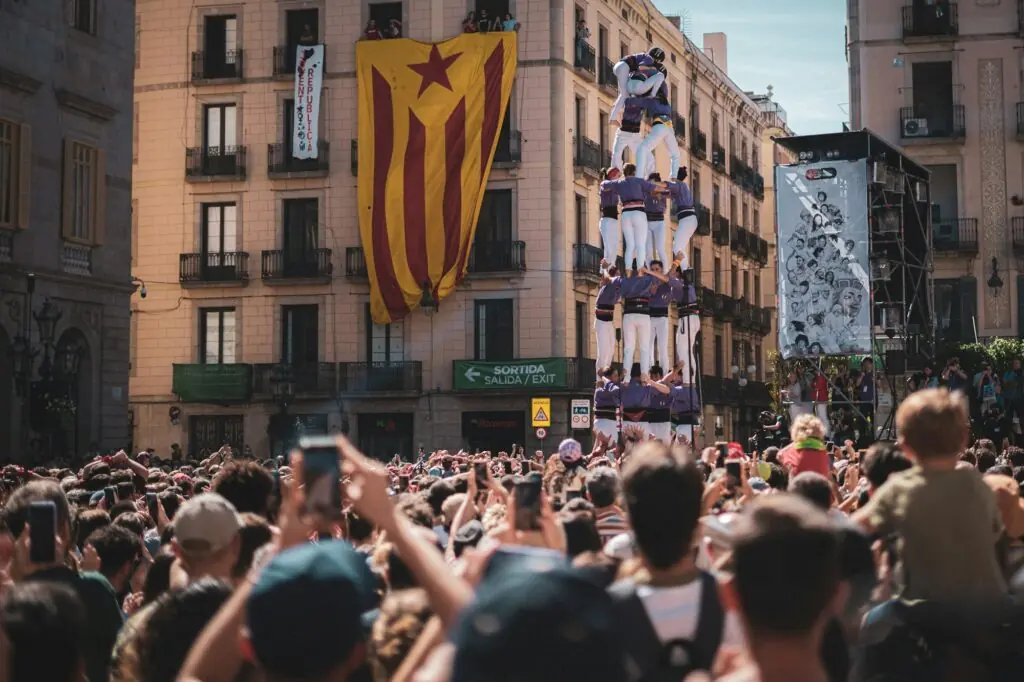
La Mercè 2026 runs from Wednesday 23 to Sunday 27 September in Barcelona, with Shanghai as the festival’s first-ever Asian guest city. The correfoc fire-run takes place on Saturday 26 September on Passeig de Gràcia (6pm for the child-friendly version, 8.30pm for the adult one), the human-tower display (diada castellera) is on Thursday 24 September around midday on Plaça de Sant Jaume, and the closing fireworks show moves to a new site this year, Bogatell Beach, on Sunday 27 September at 10pm. Everything is free: turn up at least an hour before each highlight to get a decent spot.
Five days, three headline events, and dates worth double-checking against last year’s edition. From Wednesday 23 to Sunday 27 September 2026, Barcelona celebrates its patron saint festival with close to 500 activities spread across all ten districts. This guide focuses on what actually shapes a trip during La Mercè: where to stand for the correfoc without getting singed, what time to arrive on Plaça de Sant Jaume for the castells, and why the closing fireworks show can no longer be watched from Montjuïc this year.
1. Correfoc: where to watch safely
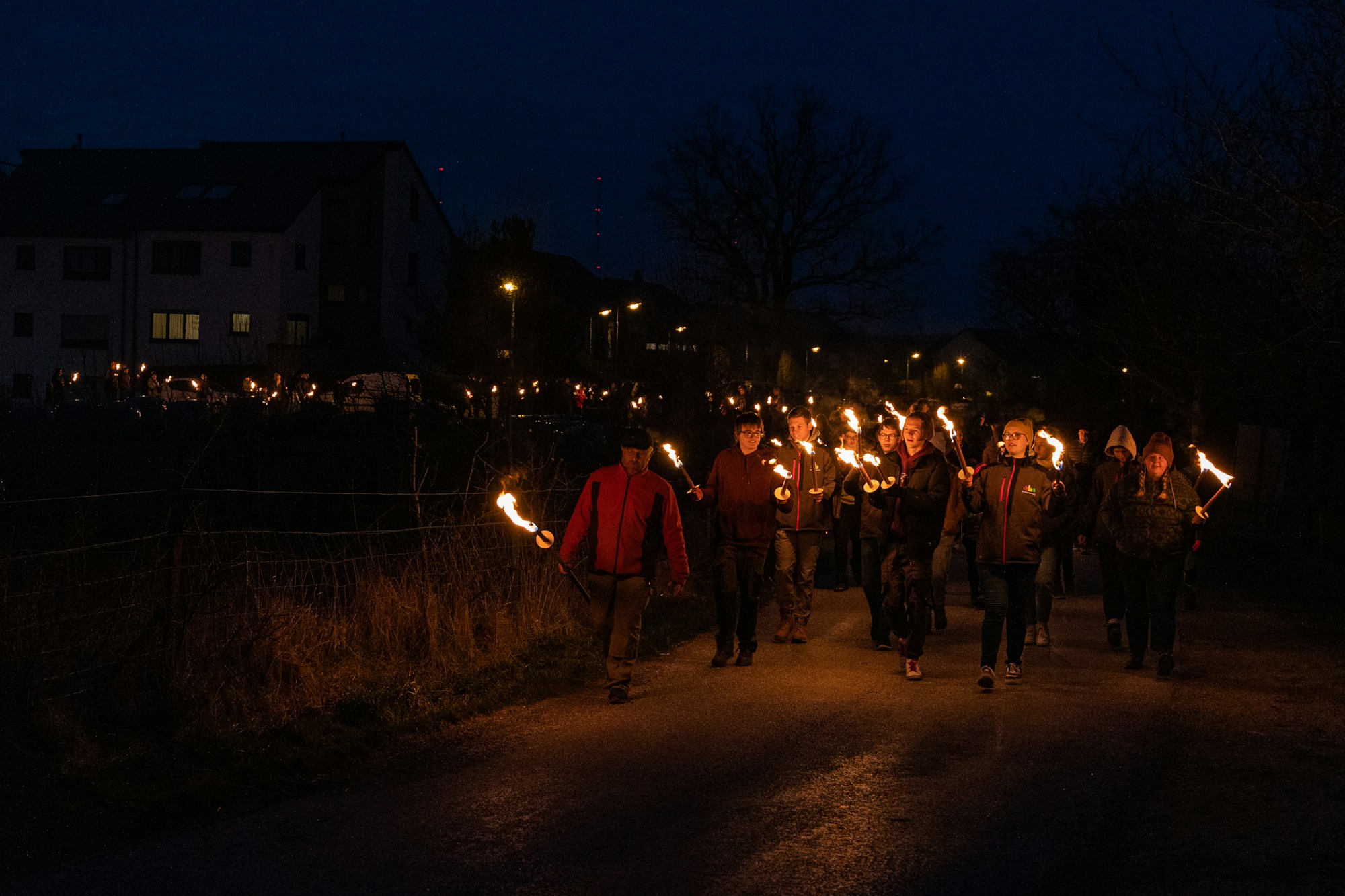
Passeig de Gràcia, Saturday 26 September
The correfoc, literally « fire-run », is a parade where diables dressed as demons and fantastical beasts (dragons, mules, bulls) spin flamethrowers and showers of sparks through the crowd. It’s anything but a spectator sport: according to the Barcelona City Council, the tradition draws on the Ball de Diables, documented as early as the 12th century, but today’s highly pyrotechnic version dates from the 1970s: the word « correfoc » first appeared in 1977 at the Festa Major del Clot, and the first official La Mercè correfoc was staged in 1978 by the theatre collective Comediants.
Since 2022, the route has moved from the historic Via Laietana to Passeig de Gràcia, covering around 600 metres between Carrer de Provença and Carrer del Consell de Cent. In 2026, two sessions run back-to-back on Saturday 26 September: a gentler kids’ version at 6pm and a considerably more intense adult version at 8.30pm. According to Catalan News, more than 80,000 spectators had already packed Passeig de Gràcia by 8.30pm in 2025.
Highlights
- New for 2026: the Porta de l’Infern, a 4 × 8 metre structure that kicks off the show
- A dedicated kids’ version at 6pm, designed to ease younger visitors in before the adult show’s intensity
- Punts lila (purple points, for reporting sexist and LGBTI-phobic behaviour) are set up along the route
Park Güell is actually hosting a special show on 24 and 26 September as part of Gaudí Year 2026 and the park’s centenary. A skip-the-line guided tour lets you dodge the queue and enjoy the site without eating into your La Mercè schedule.
2. Castells: human towers and UNESCO heritage
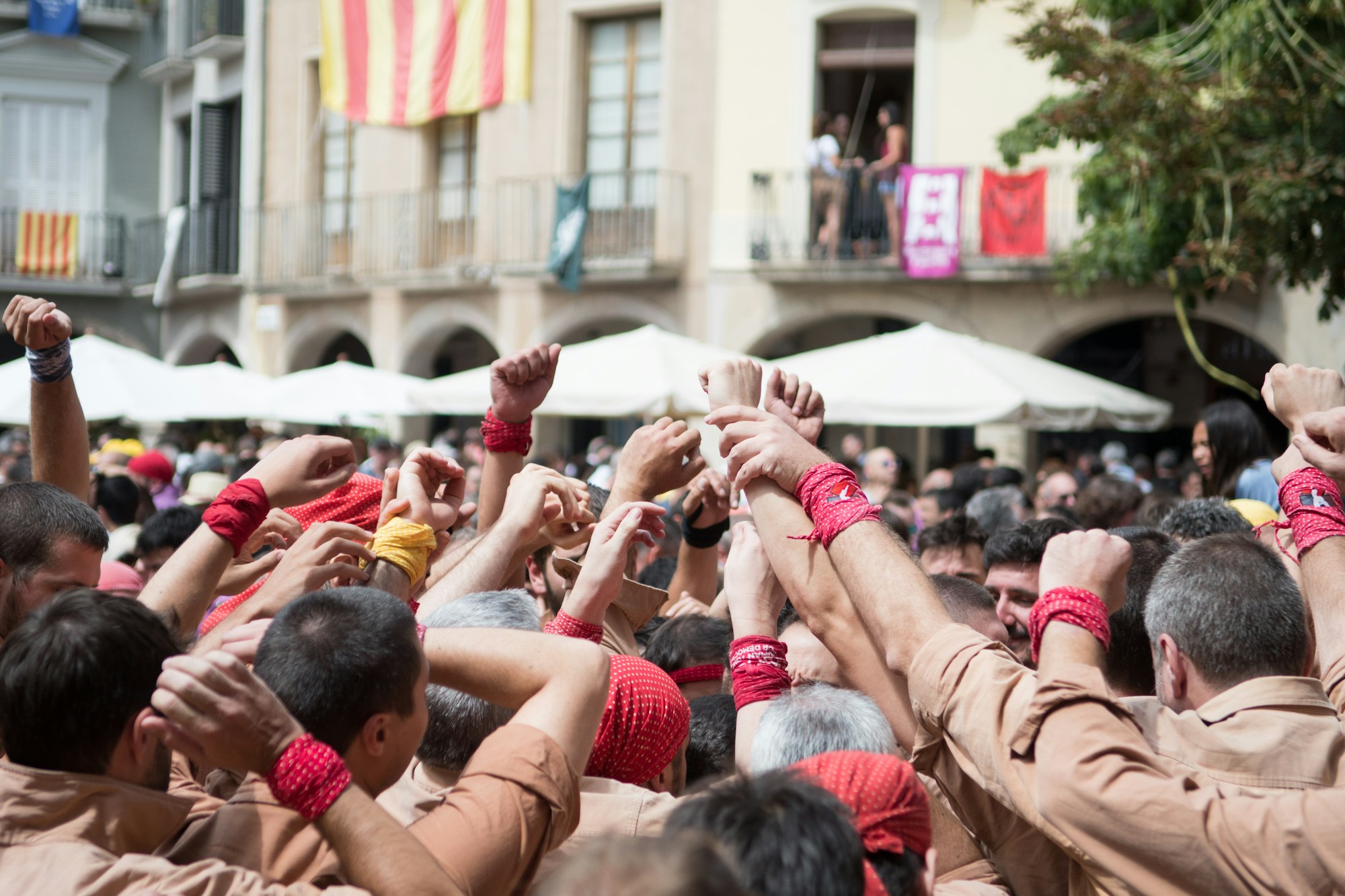
Plaça de Sant Jaume, Thursday 24 September
Castells are human towers built by amateur teams called colles, stacked level by level (usually 6 to 10 tiers): the sturdiest members form the base, while the lightest, often children, climb to the top. The enxaneta, typically a very young child, crowns the tower and raises an arm to signal success, met with total silence followed by applause. According to UNESCO, this knowledge was inscribed on the Representative List of the Intangible Cultural Heritage of Humanity on 16 November 2010; it’s passed down purely through practice, generation after generation within each colla.
Barcelona has six active colles: Castellers de Barcelona (1969, red shirts), Castellers de Sants (1993, grey), Castellers de la Vila de Gràcia (1997), Castellers del Poble Sec (1999), Castellers de la Sagrada Família (2002) and Colla Jove de Barcelona (2010). The diada castellera de la Mercè, which brings all of these colles together on Plaça de Sant Jaume, takes place on Thursday 24 September, a public holiday in the city in honour of its patron saint, according to the official programme from the City Council.
Highlights
- All six Barcelona colles build their towers in front of the town hall and the Generalitat palace
- The Pla de la Generalitat side offers one of the best viewing angles
- The tallest, most spectacular attempts are usually saved for later in the day
3. The Piromusical: new site at Bogatell Beach
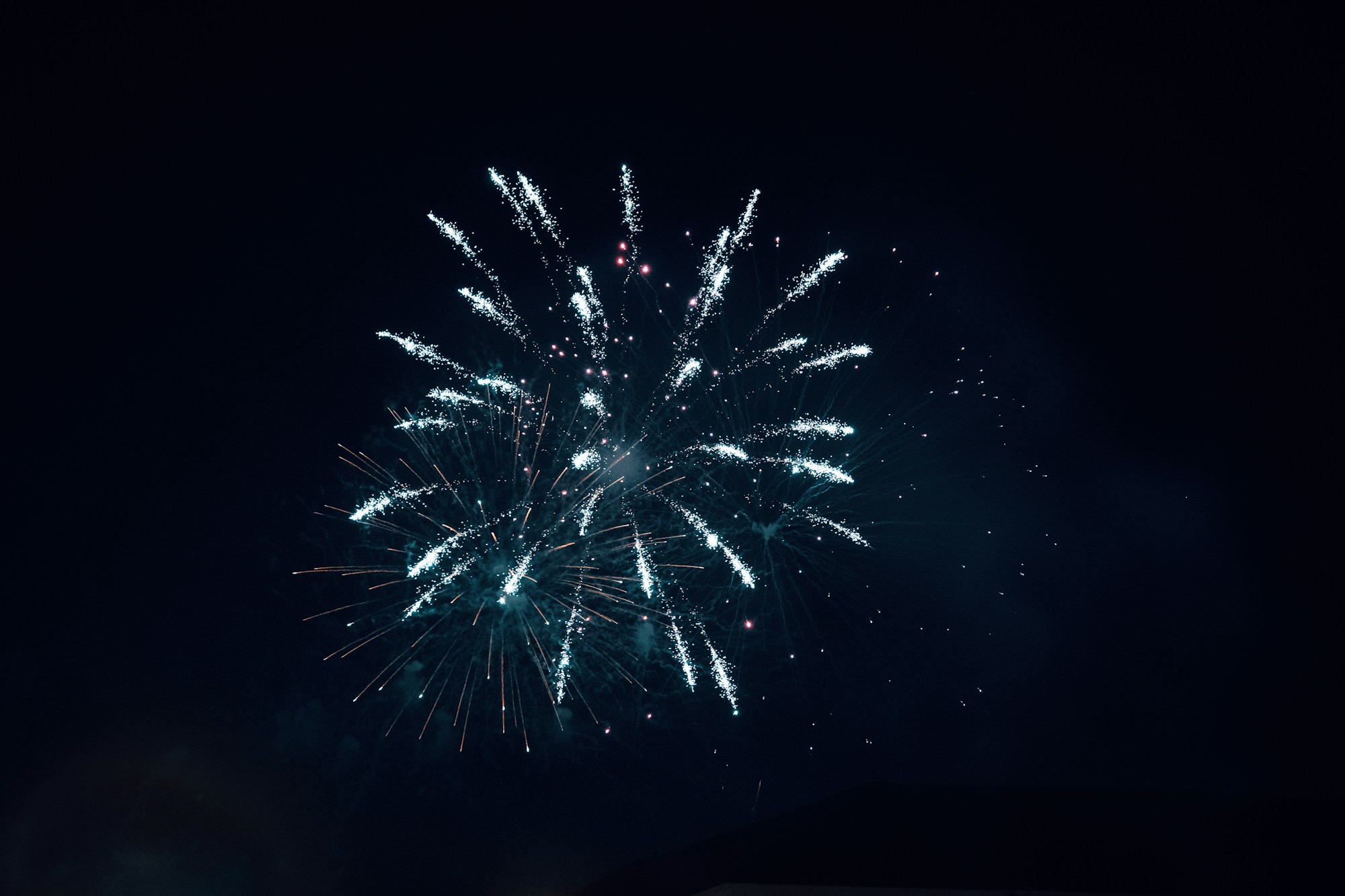
Bogatell Beach, Sunday 27 September, 10pm
The piromusical is the fireworks show synchronised to music that closes every La Mercè. Big change for 2026: because of building works at Fira de Montjuïc, the show is leaving Avinguda Maria Cristina, its historic site by the Font Màgica, for Bogatell Beach. The move is confirmed by six independent sources, including Catalan News and 3Cat. In 2025, more than 110,000 people gathered on Avinguda Maria Cristina for the show at its historic site.
The 2026 soundtrack is by Josep Montero, singer with Catalan band Oques Grasses, chosen after the controversies of 2024 (soundtrack by Rosalía) and 2025 (Estopa), both criticised for featuring too few songs in Catalan. According to VilaWeb, Montero has deliberately built a Catalan-heavy programme for this edition.
Highlights
- By metro: line L4, Bogatell or Llacuna/Poblenou stations
- You can watch from anywhere along the seafront, not just the beach itself
- Nearby bus routes: 6, 36, 41, 92, 141
4. The rest of the programme: dates to note
Beyond the three headline events, La Mercè 2026 packs in close to 500 activities, including 109 concerts across 14 to 16 stages featuring artists from around thirty countries, according to the City Council’s press office. Shanghai is the festival’s first-ever Asian guest city, marking 25 years of twinning between the two cities.
- Sunday 20 September, 8.30am: Cursa de la Mercè, a 10km popular run between Carrer d’Aragó and Plaça Catalunya, with a record 17,200 runners
- 22 and 23 September, 10pm: « Formes de Barcelona » drone show, around 300 synchronised drones above Barceloneta beach
- Wednesday 23 September, 6.30pm: opening Pregó at the town hall’s Saló de Cent
- Thursday 24 September: free open days at around fifty museums, including the Picasso Museum, the Joan Miró Foundation and the MNAC, according to beteve.cat
- 24 and 26 September: a special show at Park Güell marking Gaudí Year 2026 and the park’s centenary — it first opened to the public in 1926
5. Where to stay and what to budget
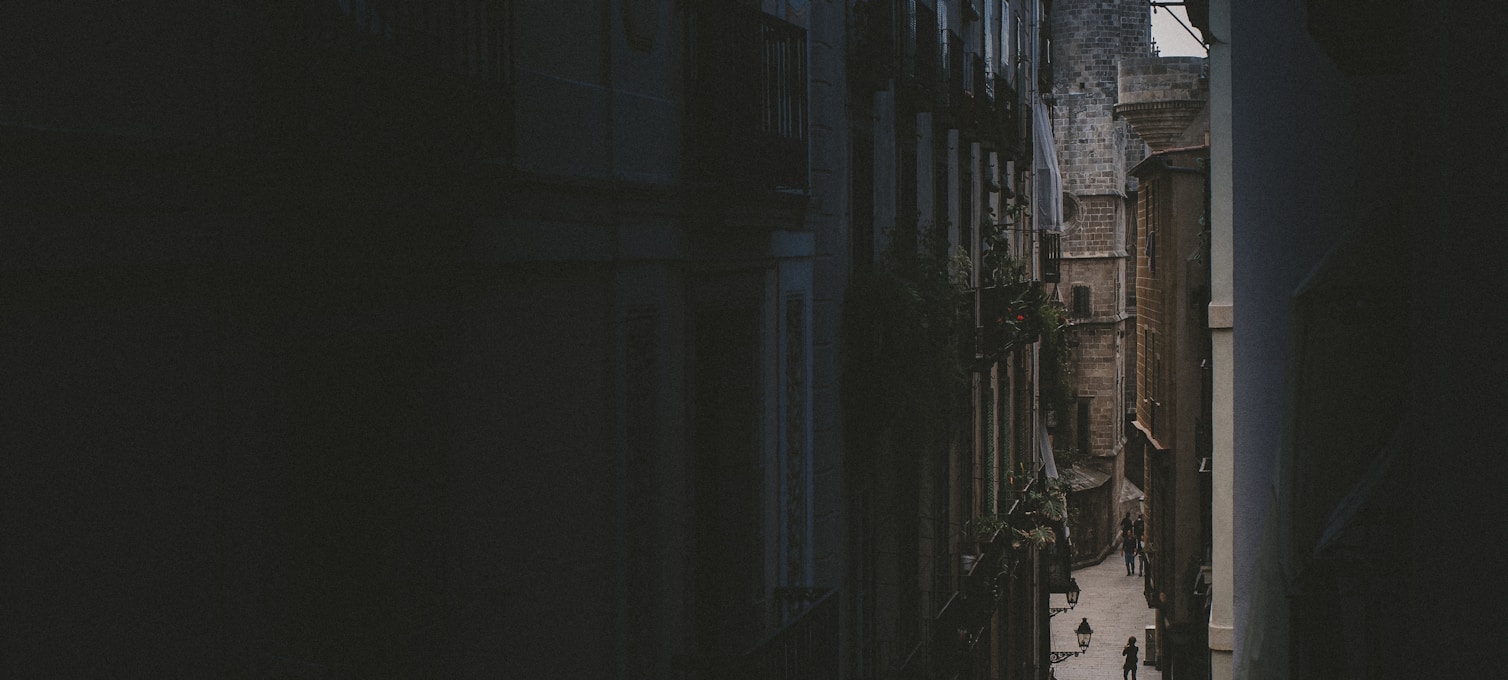
El Born, Eixample or Barri Gòtic
Accommodation prices climb noticeably during La Mercè week, especially in Barri Gòtic and El Born. Book at least three to four weeks ahead, more if you want to be in the centre. El Born strikes the best balance between atmosphere and price, Eixample has the most convenient transport links for a first trip, and Barri Gòtic offers a more atmospheric — if noisier at night — medieval feel, with no metro station inside the neighbourhood itself. For softer prices, the Maresme coast (Calella, Santa Susanna) is 40-60 minutes away by suburban train, and Castelldefels or Sitges around half an hour.
A Barcelona trip budget also needs to factor in the 2026 tourist tax, charged per night on top of your accommodation and slightly higher in the city centre. If you’d rather start from a ready-made framework than piece every step together yourself, a 5-day Barcelona itinerary can be adapted around the La Mercè dates.
The city centre is very walkable. Beyond that, the metro is fast and runs late throughout the festival. From El Prat airport, expect around €35-50 by taxi, €5.90 on the L9 metro line, or €4.90 on the Rodalies train. Skip the car: street closures and near-impossible parking are the norm on festival days. As for the weather, late September sees average temperatures of 24-27°C, a sea still warm enough to swim in at 24°C, and rain that tends to fall as short showers rather than sustained downpours.
Getting there from the UK is straightforward: British Airways, easyJet, Vueling, Ryanair and Wizz Air all fly direct from London to Barcelona, with a flight time of roughly 2 hours 10 minutes and dozens of departures a week — worth booking early, since September is typically one of the cheaper months on the route. One practical heads-up for 2026: since 10 April, UK arrivals into Spain go through the EU’s Entry/Exit System (EES), which records a facial scan and fingerprints at your first crossing — build in extra time at passport control, especially during busy periods. ETIAS pre-authorisation is not yet required for short trips, but it’s worth checking the latest guidance on gov.uk before you travel.
Practical info for your trip
Stay connected without swapping your SIM card: activate it in a few minutes straight from the app.
From a few euros for several days of dataCover for cancellations, luggage and medical costs during your time in Spain — handy if anything goes wrong in the middle of a 100,000-strong crowd.
From $56 / 4 weeksFrequently asked questions
What are the official dates of La Mercè 2026?
The festival runs from Wednesday 23 to Sunday 27 September 2026, with Thursday 24 September as the main day (patron saint’s day, a public holiday in Barcelona). Watch out: some secondary sources mistakenly list « 23-28 September », carrying over the previous edition’s calendar. For 2026, the official source barcelona.cat/lamerce clearly confirms 23-27 September.
Is the festival free to attend?
Yes — nearly every event, including concerts, parades, the correfoc, castells and piromusical, is completely free and needs no booking.
Where can I watch the correfoc safely?
Stay behind the barriers set up along Passeig de Gràcia, between Carrer de Provença and Carrer del Consell de Cent. Wear long-sleeved cotton clothing, a hat and eye protection, and avoid alcohol and glass containers.
Where and when can I see the castells (human towers)?
On Plaça de Sant Jaume, on Thursday 24 September around midday. Arrive at least an hour early for a good view, as the square fills up fast.
Where does the piromusical take place in 2026?
On Bogatell Beach, on Sunday 27 September at 10pm. This is a major change from previous editions, which were held on Avinguda Maria Cristina near the Font Màgica at Montjuïc, due to construction works at the Fira.
Is the correfoc suitable for children?
There’s a gentler kids’ version at 6pm. The adult version at 8.30pm is considerably more intense (noise, heat, crowd density) and isn’t recommended for very young children at the front.
How much time should I plan for La Mercè?
Two to three days are enough to catch all three headline events (castells, correfoc, piromusical). The full festival, with its music and cultural programme, runs over five days.
Do I need to book my hotel well in advance?
Yes — at least three to four weeks ahead, since prices rise noticeably in the centre (Barri Gòtic, El Born) during festival week.
Sources
- La Mercè 2026 (Barcelona City Council, official): dates, programme and guest city
- Correfoc (Cultura Popular, Barcelona City Council): origin and symbolism of the correfoc
- Diada castellera de la Mercè (Barcelona City Council): date and location of the 2026 castells
- Human towers (UNESCO Intangible Cultural Heritage): 2010 UNESCO inscription
- La Mercè 2026 extends the festival to Parc de les Glòries and Bogatell Beach (Catalan News): new piromusical site
- La Mercè 2026, full programme (3Cat): detailed programme and venue change
- Josep Montero scores the piromusical (VilaWeb): controversy and 2026 soundtrack
- Correfoc La Mercè 2025 (Catalan News): crowd numbers and how the correfoc unfolds
- Staying safe at correfoc (Barcelona Tourist Guide): safety advice
- 109 concerts for La Mercè 2026 (Press Office): official music programme
- Portes obertes per la Mercè 2026 (beteve.cat): free museums on 24 September
- Cursa de la Mercè (Barcelona City Council): 20 September popular run
- EU Entry/Exit System (UK Government): EES rules for UK travellers to Spain
Research carried out in September 2026 using official sources (barcelona.cat, Barcelona City Council) and leading Catalan press (3Cat, beteve.cat, VilaWeb, Catalan News).

Plan your trip with Pixidia
Pixidia learns how you travel and helps you build a trip that truly fits you and everyone coming along.
Open the planner