
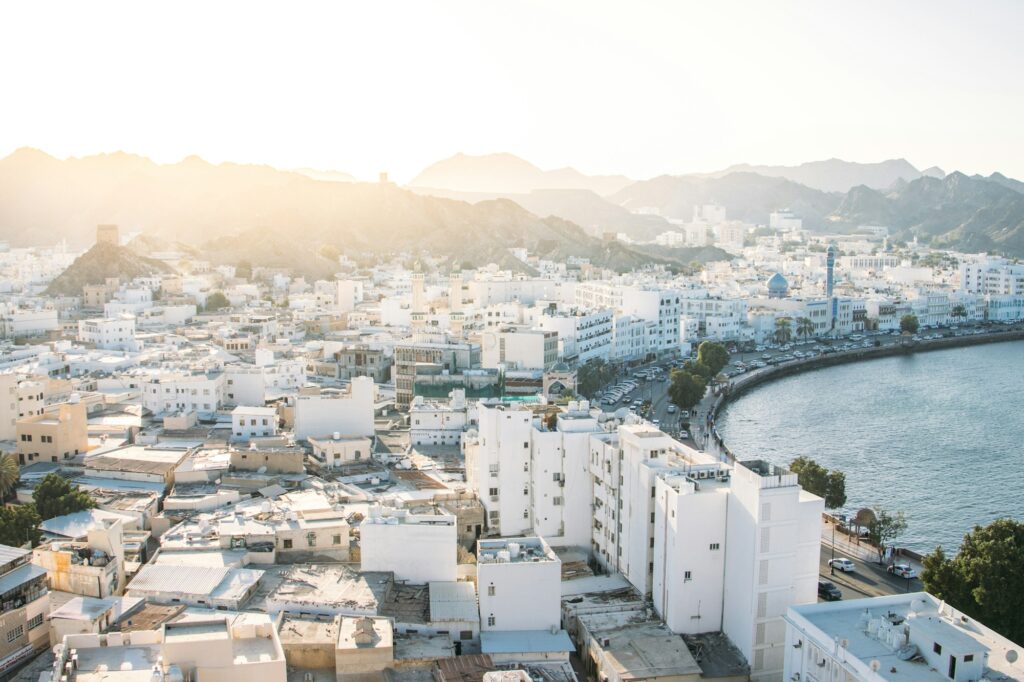
Muscat suits anyone who finds Dubai too dense: a low-rise white capital, a proper neighbourhood souq and wadis 1h30 down the road. But 2026 is a year of regional war. The FCDO does not advise against travel to Oman as a whole, yet it flags Iranian strikes and retaliatory attacks in the region, Oman included, since 8 July, and warns of possible flight cancellations and airspace closures. France Diplomatie (update of 10 September 2026) urges heightened vigilance across Oman and advises against Salalah, Duqm, Musandam and the Yemen border. Muscat and its airport are operating. Check the FCDO page before you book, keep your tickets flexible and read the war exclusions in your travel insurance.
Muscat isn’t playing in the same league as Dubai, and that’s exactly what people go there for. No skyline, no mega-mall at the centre of everything: just a city stretched between the Gulf of Oman and the Hajar mountains, where minarets rise above the rooftops. This guide compares the two cities honestly, covers what to do around Muscat, and gives a full section to what the authorities are saying about 2026, without playing it down or blowing it up.
1. A low-rise white capital on a human scale
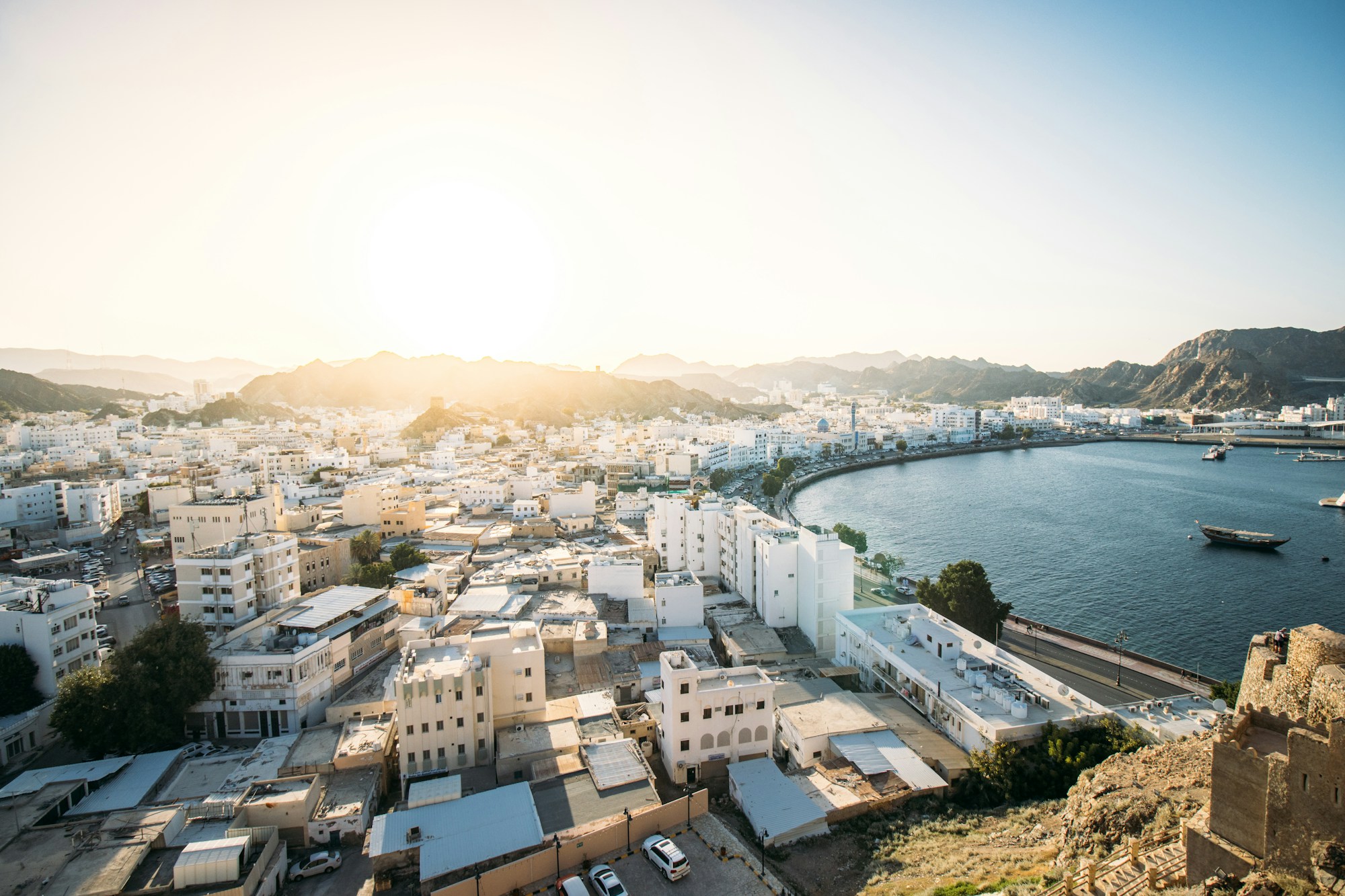
Muscat at a glance
Muscat is built on a narrow strip between sea and mountains, stretching roughly 50 km from Seeb to Old Muscat. Planning rules cap building heights (around ten storeys, 40 m) and call for a predominantly white finish, as The EastAfrican reports. The result: forts, minarets and mountains make the skyline, not towers. Lonely Planet describes a city wedged between mountains and sea, with buildings painted a uniform white.
The country isn’t chasing mass tourism: Oman welcomed around 4 million visitors in 2025, with an average stay of 6.5 nights, according to national statistics centre figures relayed by Muscat Daily. Life is organised by district: Muttrah for the old port and souq, Old Muscat for the palace and forts, Ruwi for cheap local meals, Qurum and Shati Al Qurum for the beach, hotels and the Opera House.
In Old Muscat, Al Alam Palace, the sultan’s official residence, is for looking at from the outside only. The Al Jalali and Al Mirani forts guard the mouth of the bay; check whether you can go inside before promising anyone, as access isn’t guaranteed. The National Museum of Oman, opposite the palace, rounds off a morning.
Highlights
- A city you can explore at your own pace, without permanent queues or theme-park crowds
- Sea, wadis and mountains within two hours’ drive
- An old souq where haggling is still the norm, with stalls of frankincense and silverware
2. Travelling to Muscat in 2026: what the authorities say
The title of this article promises a « gentler » Arabia: the gentleness is urban and cultural, not a matter of security. Since 28 February 2026 the region has been at war: US-Israeli strikes on Iran, Iranian retaliation on several Gulf states, as Euronews summed it up (in French). Oman has been hit on the periphery: according to Wikipedia, strikes or drone attacks targeted sites in Duqm, Salalah and Sohar from March, then Musandam. A ceasefire agreed in April ended on 8 July, per Wikipedia as well.
Muscat isn’t among the sites hit in the sources we consulted, and its airport is operating, with passenger volumes below normal and schedules adjusted day by day, according to Wego (7 September 2026). Oman also acts as a mediator: Al Jazeera reports the Iran-Oman agreement of 26 August on a temporary route through the Strait of Hormuz. None of this says « it’s safe ». It says the situation is moving, and you should re-read the advice before every departure.
Official advice (as of 20 September 2026)
- United Kingdom: no advice against travel to Oman as a whole. The FCDO page (last updated 22 July 2026 when we read it on 20 September) notes strikes and retaliatory attacks by Iran across the region, Oman included, since 8 July. It tells travellers to be ready for flight cancellations and periodic airspace closures, to keep departure plans under review, to stay away from areas around security or military facilities and to get appropriate travel insurance.
- France: heightened vigilance across the country. Advised against except for compelling reasons: the Salalah region, Duqm, Musandam and the border with Yemen. Update of 10 September 2026 on France Diplomatie (in French). It is stricter than the FCDO’s wording, so it’s worth reading as a second opinion.
- United States: Level 3 (« Reconsider travel ») according to Wego, plus a security alert from the embassy in Muscat dated 19 September 2026.
- Health: on 13 March 2026 France Diplomatie issued a health alert about rising measles cases. Check your vaccinations with your GP or travel clinic before you go.
Insurance: the point everyone forgets
The conflict has been treated as a « known event » since 28 February 2026. Policies bought after that date generally exclude disruption linked to the Middle East war, as Insurance Journal and Insurance Business explain. Read the exclusions, ask your insurer or travel agent in writing, and don’t set off assuming « war » is covered. The FCDO’s own line is to get insurance that covers your itinerary, planned activities and expenses in an emergency. Favour flexible tickets and leave slack on connections: Oman Air flies Heathrow to Muscat nonstop, but routes skirt Iran, Iraq and Lebanon and flights take longer than the usual timetable.
At sea: pick a licensed operator
On 27 January 2026 an excursion boat capsized about 2.5 nautical miles off Sultan Qaboos Port: 25 French nationals were on board, three died and two were slightly injured, according to Arab News FR and franceinfo (both in French). A Royal Oman Police investigation was opened and we haven’t found any published conclusion to date. A new licensing framework now requires tourism operators to hold a licence from the Ministry of Heritage and Tourism, with a six-month compliance window for existing operators, according to Skift (28 April 2026). In practice: book with a licensed operator, check that every passenger has a life jacket before departure, and refuse a boat that looks overloaded.
On land: when it rains, wadis are non-negotiable
The floods of 20 to 30 March 2026 in the north of the country killed ten people, according to Wikipedia. Wadis (dry valleys that fill suddenly) are a far bigger danger for travellers than the capital. See the Wadi Shab section below.
Salalah and its Khareef (the green season, June to September) are among the places France currently advises against, so we don’t feature them here. For the country as a whole, our 10-day itinerary across the sultanate remains the reference for the route; this guide sticks to Muscat and its immediate surroundings.
3. Muscat or Dubai: choosing without kidding yourself
The two cities are about an hour’s flight apart, yet they answer almost opposite cravings. Dubai has been hit by strikes too, including Dubai International and the Jebel Ali port according to Wikipedia, and is rolling out measures to restart visits, per CNN (28 July 2026). For the Emirates side, our Dubai and Abu Dhabi guide and our piece on layovers in Doha and Abu Dhabi cover the ground.
Dubai wins if you want
- Late nights, clubs, restaurants open everywhere
- Theme parks, shows, record-breaking towers: spectacle concentrated in a few districts
- A short, highly organised trip with no hire car
Muscat wins if you want
- Nature on your doorstep: wadis, coves, the Daymaniyat Islands, the Wahiba desert about 3 hours away
- A souq you actually stroll through, not an air-conditioned mall
- Calm: alcohol is limited to 4-5 star hotels and licensed restaurants (minimum age 21, banned in public spaces), and hotel bars close around midnight on weeknights
Price, with caution. Structurally, Muscat is cheaper: Oman Spirit, a commercial site, puts a mid-range hotel 20 to 40% below Dubai; take the order of magnitude, not the percentage. In 2026 the gap is blurred: Dubai hotel prices have fallen sharply since the strikes. Compare today’s rates before you decide. If you’re weighing Saudi Arabia instead, our Oman vs Saudi Arabia comparison answers that other question.
4. Three places not to miss in Muscat
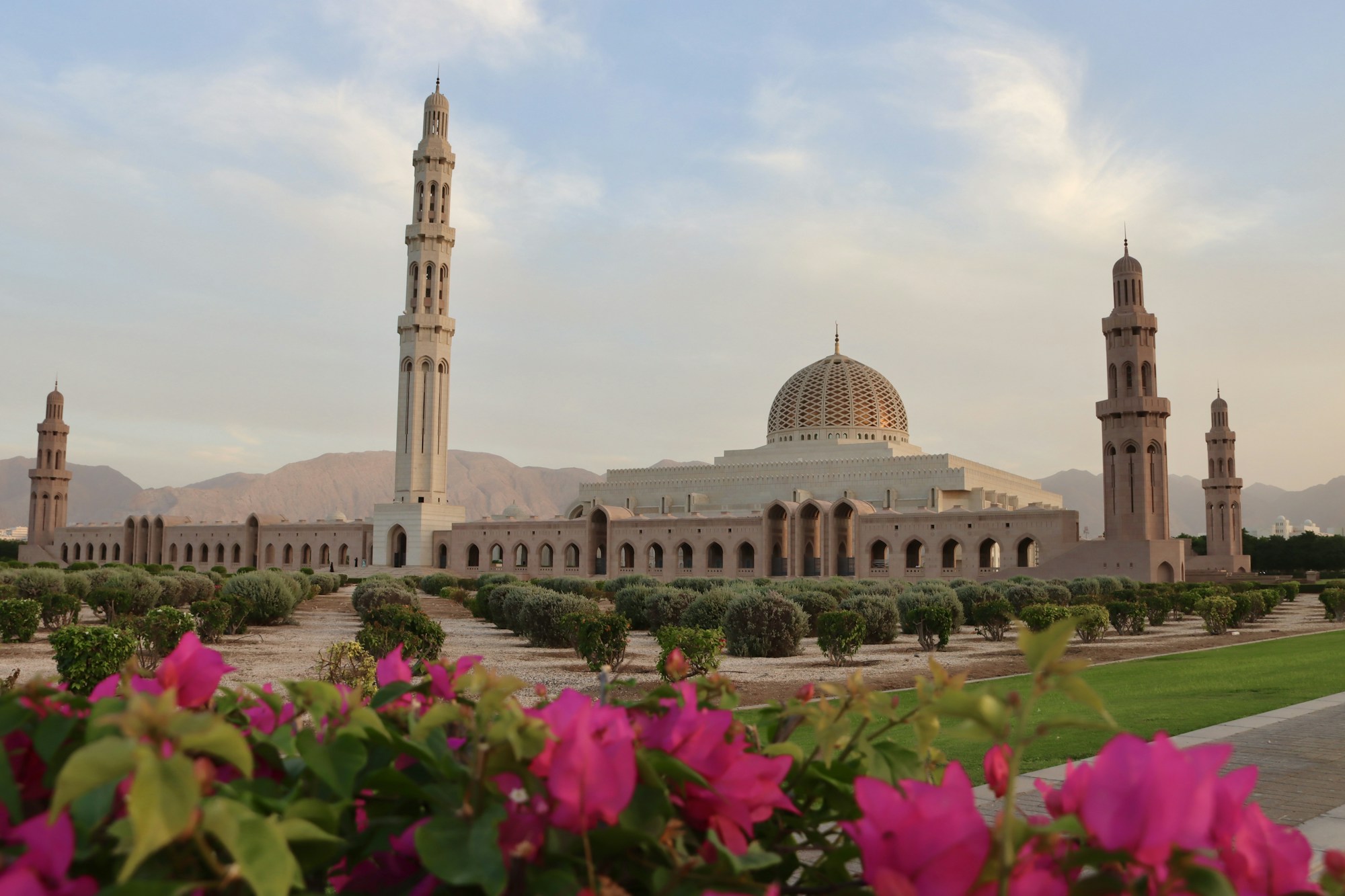
The Sultan Qaboos Grand Mosque
Building work began in 1992 and finished in 2001. Non-Muslims can visit in the morning, Saturday to Thursday, according to the Diwan of the Royal Court website; entry is free. Some sources give 8am rather than 8:30am: treat the Diwan’s hours as the reference and arrive before 10am.
The dress code is strict: women need long, loose, opaque clothing covering arms and legs, plus a scarf over the hair; men need long trousers and covered shoulders. An abaya and headscarf are lent at the entrance, but it’s better to arrive prepared. Shoes off, phone silenced.
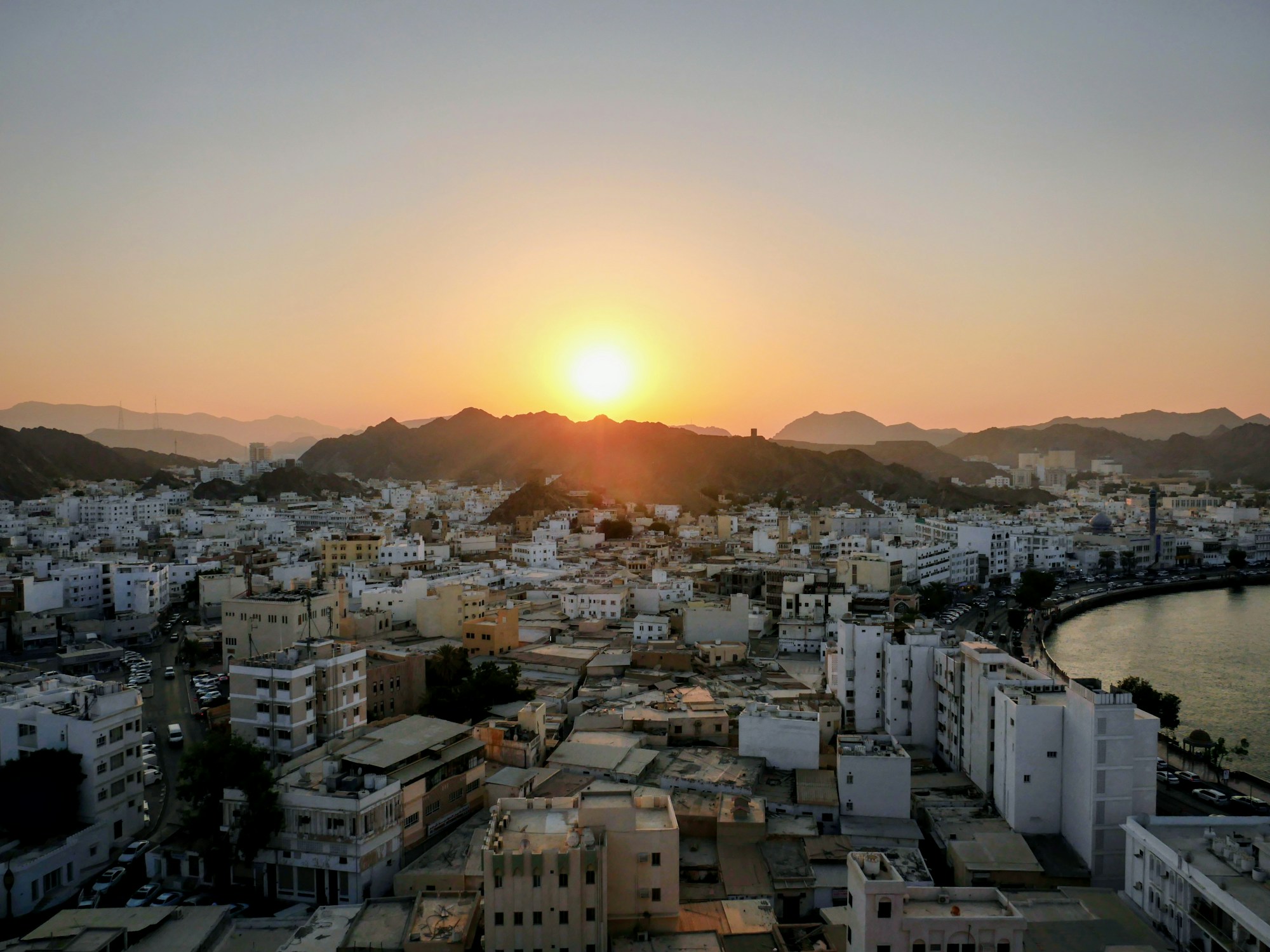
Muttrah: souq, corniche and fish market
Muttrah souq is reckoned to be the oldest market in the country, about two centuries old, with lattice roofing shading the lanes. You’ll find frankincense (oliban), terracotta incense burners, silverware, perfumes, spices and mandoos, the wedding chests of the Hajar mountains. Haggling is expected, with a smile. The best slot is late afternoon, when the shops reopen after the break.
Finish on the corniche, about 3 km of waterfront, with the fish market and the marina on the north side. Muttrah Fort, which overlooks the eastern end, isn’t open to visitors; you can, however, climb its flank for the view, according to Oman Observer.
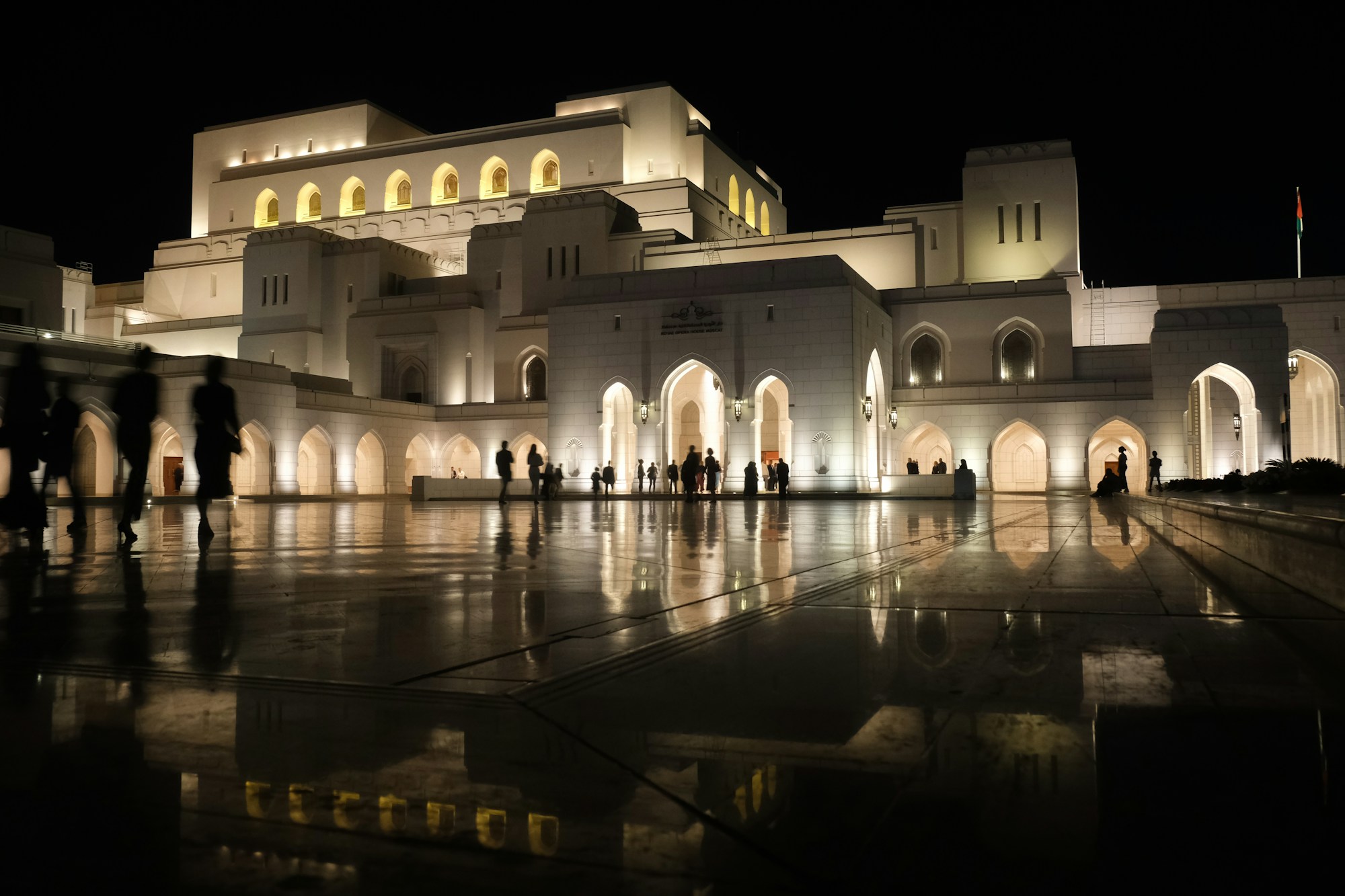
The Royal Opera House Muscat
The Opera House opened on 12 October 2011 and seats about 1,100. The official site offers daytime tours every 20 minutes, in smart-casual dress; ignore third-party sites that list other slots or formal dress for the tour. For a performance, check the dress code directly on rohmuscat.org.om.
The 2026-2027 season, marking the 15th anniversary, opens in October 2026 with Verdi’s Rigoletto in a Franco Zeffirelli production. The programme also includes Sindbad: The Omani Sailor, a new work with Müpa Budapest, and an evening with Elīna Garanča, according to Muscat Daily. For the rest of the evening, Shati Al Qurum and Qurum have shisha cafés open late and Lebanese or Omani restaurants; don’t expect Dubai-style nightlife.
5. Nature around Muscat: Wadi Shab and the Daymaniyat Islands
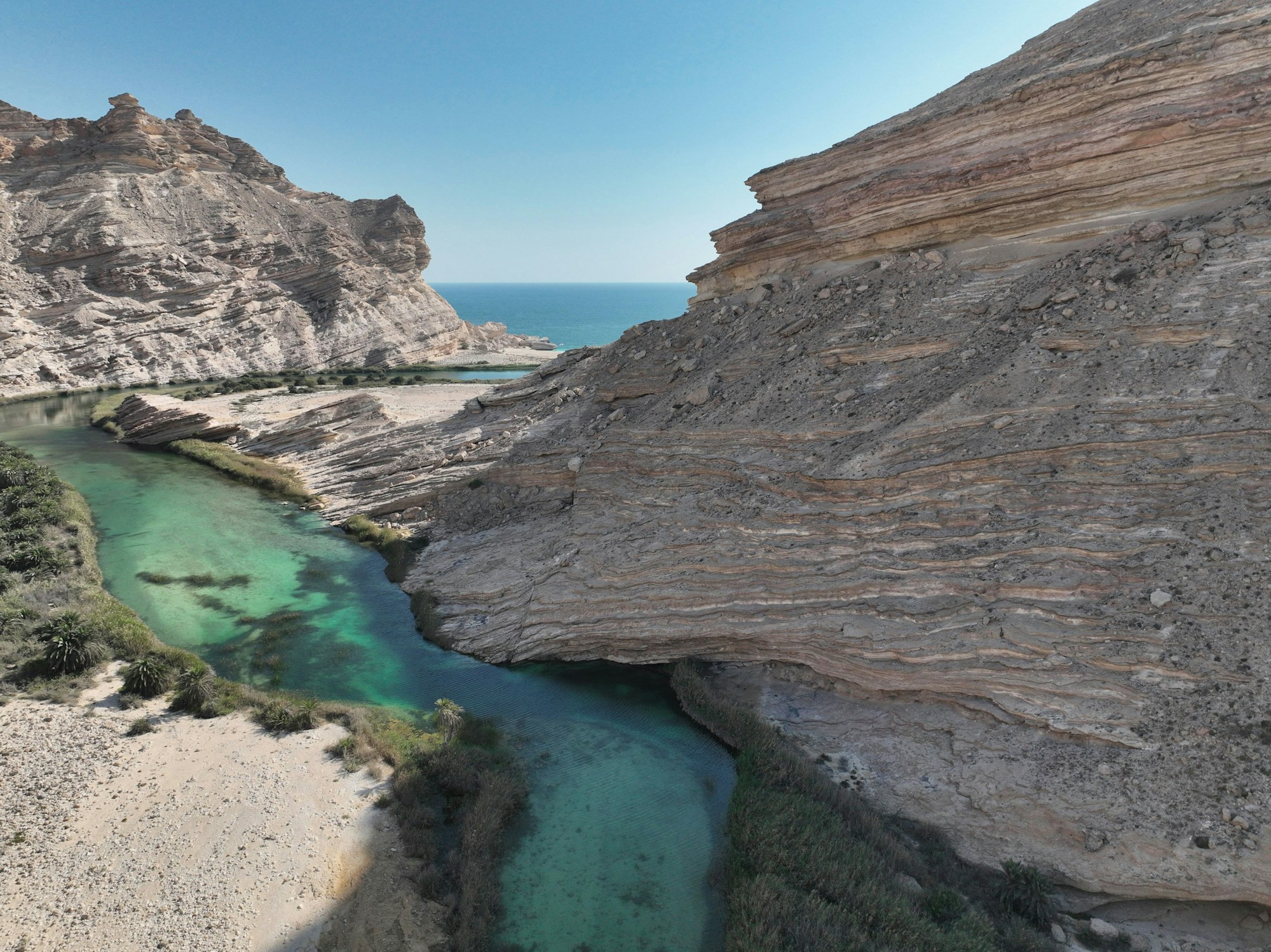
Wadi Shab and the Bimmah sinkhole
You set off from the village of Tiwi: a short boat crossing, then a 2.5 km walk each way (85 m of ascent, easy to moderate) to the pools, according to Walk My World. Bring water shoes, arrive early (the coaches pour in around 10:30am) and avoid Fridays and Saturdays, the Omani weekend. At the Bimmah sinkhole, swimming is fine but jumping in isn’t recommended: the depth varies and there are rocks.
The Daymaniyat Islands
This nature reserve is about 45 minutes away by boat. Snorkelling is possible all year round; landing on the islands, though, is only allowed in winter (November to April depending on the operator), the rest of the year being reserved for turtle nesting. Apply the rule from section 2 here: licensed operator, life jackets checked.
6. Visa, flights, budget, season: the practicalities from the UK
Visa and flights
- Visa: British citizens can visit Oman for up to 14 days without a visa, with a passport that has an expiry date at least 6 months after arrival. Overstaying costs up to 10 OMR a day, capped at 500 OMR in total. Source: FCDO entry requirements. For longer stays you need an e-visa (20 OMR for 30 days, 50 OMR for one year, per France Diplomatie): check the current fee before you apply.
- Flights: Oman Air is the only airline flying London Heathrow to Muscat nonstop, around 7h10 to 8h10 with about 11 weekly departures (FlightConnections). British Airways doesn’t currently fly the route nonstop. One-stop options via Doha take around 10 hours, but read our layovers guide first. Flight times are stretched in 2026 by rerouting. Check flight status before you leave.
- From the airport: official taxi 12-18 OMR to the centre, Mwasalat A1 bus at 1 OMR (about 45 minutes to Ruwi). Taxis have been relocated to level 0 since 13 May 2026 (Oman Observer).
- Car: the best way to fan out. Bank card in the driver’s name, minimum age 25, international driving permit recommended (Salt in our Hair). Zero tolerance on drink-driving; a 4×4 is only needed for the Wahiba dunes. Drive on the right.
- Plugs: Type G (the same as the UK), 240 V. No adaptor needed for UK devices.
Budget per day and per person, excluding flights
According to Muscat Oman Tours estimates, expect around 35 to 50 OMR (€80-115) a day on a budget, 70 to 110 OMR mid-range and from 180 OMR at the top end. The rial is worth roughly €2.2 to 2.4: recalculate (and convert to sterling) when you leave. A full local meal costs a few rials. These ranges vary strongly with the season: according to hotel aggregators, January is the most expensive month and June the cheapest.
When to go
October to April, with a high season from December to February (25 to 27°C) according to Climates to Travel. From April to September average highs exceed 34°C, with peaks above 40°C. Outside the hot season hotels are cheaper, but an air-conditioned car becomes a must. Two dates to know: Ramadan 2027, from 8 February to 9 March, limits daytime dining and alcohol service; National Day brings public holidays observed on 25 and 26 November 2026, with busy hotels. The Omani weekend is Friday and Saturday.
Good to know on the ground
- Shoulders and knees covered in public, stricter in religious sites. Ask permission before photographing people.
- Leave the drone at home: it needs authorisation, and having it seized at the airport is the biggest risk.
- A tip of 2 to 5 OMR is customary for a driver or guide.
Practical info before you go
An eSIM saves you hunting for a shop on arrival. Compare it with the cards sold at the airport (Ooredoo, Omantel), whose 5 OMR offer gives around 7 GB.
Plans by data volumeBefore you buy, ask the insurer in writing how it treats events linked to the regional conflict: policies taken out after 28 February 2026 generally exclude war.
Read the exclusions before you payFrequently asked questions
Is it safe to go to Muscat in 2026?
That depends on your appetite for risk, and the situation is changing. The FCDO does not advise against travel to Oman as a whole but notes Iranian strikes and retaliatory attacks in the region, Oman included, since 8 July, and warns of possible flight cancellations and airspace closures. France Diplomatie urges heightened vigilance across Oman and advises against Salalah, Duqm, Musandam and the Yemen border except for compelling reasons (update of 10 September 2026). Muscat and its airport are operating, but check the official page just before you leave. FCDO.
Do British citizens need a visa for Oman?
Not for stays of up to 14 days, as long as your passport is valid for at least 6 months after you arrive. Overstaying can cost up to 10 OMR a day. For longer stays you’ll need an e-visa. FCDO entry requirements.
Is Muscat cheaper than Dubai?
Structurally yes, especially for mid-range hotels. In 2026 the gap is less clear-cut because prices in Dubai have fallen sharply since the strikes. Compare current rates before you choose.
What is the best time to visit Muscat?
October to April, with a high season from December to February (25 to 27°C). Summer often tops 40°C. Climates to Travel.
How do you visit the Sultan Qaboos Grand Mosque?
Entry is free for non-Muslims from Saturday to Thursday, 8:30am to 11am, and the mosque is closed on Fridays. The dress code is strict: long, loose clothing and a headscarf for women, long trousers for men. Diwan of the Royal Court.
Can you drink alcohol in Muscat?
Yes, but only in 4-5 star hotels and licensed restaurants, from age 21 for non-Muslims. It is banned in public spaces, on beaches and in cars, and there is zero tolerance when driving. Oman Spirit.
Does my travel insurance cover war?
Generally not for policies taken out after 28 February 2026, which exclude disruption linked to the Middle East conflict. Read the exclusions and ask your insurer for written confirmation. Insurance Journal.
Is there a direct flight from London to Muscat?
Yes, with Oman Air from London Heathrow, around 7h10 to 8h10 and about 11 flights a week. British Airways doesn’t currently operate the route nonstop. In 2026 routes avoid Iran, Iraq and Lebanon, so journey times can be longer than advertised. FlightConnections.
Sources
- FCDO: Oman travel advice: British advice, strikes, airspace, insurance (page updated 22 July 2026, read 20 September 2026)
- FCDO: Oman entry requirements: visa-free stay, passport validity, overstay fines
- France Diplomatie: Oman, travel advice (in French): vigilance level, areas advised against (10 September 2026)
- France Diplomatie: entry and stay (in French): e-visa fees
- Wego: Is it safe to fly through Muscat: airport status (7 September 2026)
- Wego: Is it safe to travel to Oman: US advisory level
- Wikipedia: 2026 Iranian strikes on Oman: timeline of the strikes
- Wikipedia: 2026 Iran war ceasefire: ceasefire
- Wikipedia: 2026 Iranian strikes on the UAE: strikes on Dubai
- Wikipedia: 2026 Oman floods: March 2026 floods
- Euronews: the war in the Middle East disrupts tourism (in French)
- Al Jazeera: Iran-Oman agreement on Hormuz (26 August 2026)
- CNN: Dubai tourism incentive (28 July 2026)
- Arab News FR: boat sinking off Oman (in French)
- franceinfo: three French nationals dead in the sinking (in French)
- Skift: Oman’s new tourism rules (28 April 2026)
- Insurance Journal and Insurance Business: « known event » exclusions
- Sultan Qaboos Grand Mosque (Diwan of the Royal Court): hours and access
- Royal Opera House Muscat: tours
- Muscat Daily: ROHM 2026-2027 season
- Muscat Daily: 4 million visitors in 2025
- Lonely Planet: Muscat, sea, souqs and serenity
- The EastAfrican: Muscat, the capital that refuses to build upwards
- Oman Observer: Muttrah Corniche and airport taxis
- Walk My World: Wadi Shab
- Salt in our Hair: renting a car in Oman
- Climates to Travel: Muscat climate
- Oman Spirit: Oman vs Dubai and alcohol in Oman (commercial site, orders of magnitude)
- FlightConnections: London Heathrow to Muscat
Information checked on 20 September 2026. Official advice changes fast: re-read it before every departure.

Plan your trip with Pixidia
Pixidia learns how you travel and helps you build a trip that truly fits you and everyone coming along.
Open the planner