

As of 15 June 2026, transiting through Doha or Abu Dhabi remains possible but carries real risk. Qatar Airways operates 140 daily departures to 120+ destinations; Etihad and Emirates together cover 217 more. The Strait of Hormuz is closed to 98% of normal traffic, pushing jet fuel up +130% (IATA). Australia has issued a « Do Not Travel » for Qatar (transit included); Canada « Avoid all travel » for the UAE. A 14-point peace MOU is scheduled for signing on 19 June in Geneva. Allow minimum 2h30 connection times and verify your travel insurance covers advisory zones.
A historic peace agreement could be signed on 19 June 2026 in Geneva — but as of 15 June, the Strait of Hormuz remains closed to 98% of its normal traffic, and the French, Australian and Canadian governments are maintaining their most severe travel advisories. Since 28 February 2026, the Gulf geopolitical crisis has paralysed the two largest aviation hubs in the world, cancelled more than 52,000 flights and stranded 22,500 seafarers in the Persian Gulf. Qatar Airways has since reached 120 destinations and is targeting 150 as of 16 June. Etihad operates 80 destinations, Emirates 137. But Iranian airspace remains an absolute NO-FLY zone, EASA is maintaining its CZIB alert until 24 June, and Australia has classified Qatar as « Do Not Travel » — even for transit stopovers. Here is the full situation as of 15 June 2026, with every fact that matters before you book.
The Gulf Aviation Crisis Since 28 February 2026: Full Timeline
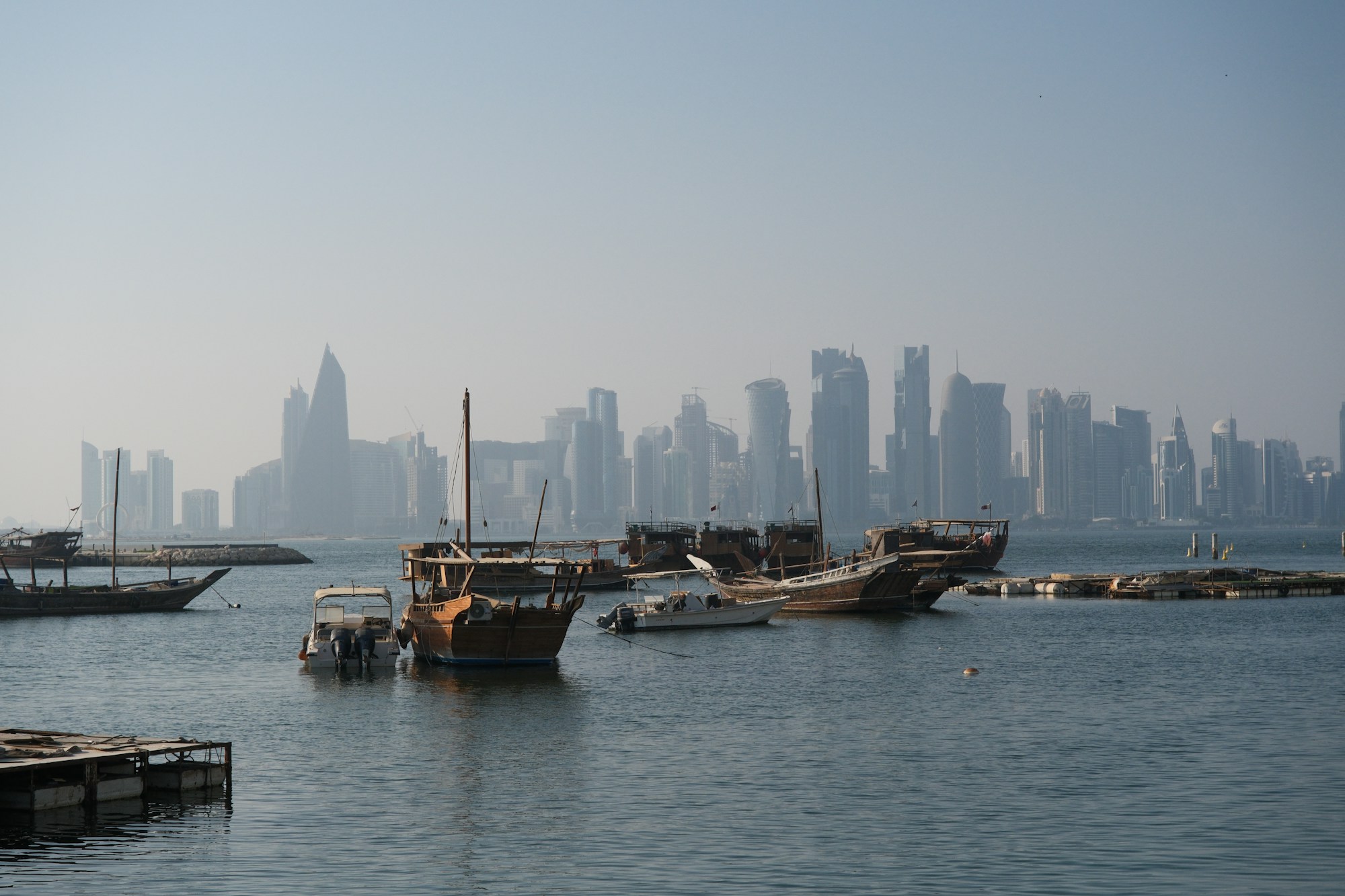
The Persian Gulf: From Total Paralysis to a Deal in Sight
The trigger is precisely dated. On 28 February 2026, American-Israeli strikes against Iran provoked Iranian retaliations targeting the entire Gulf region. Within hours, the airspaces of Iran, Iraq, Israel, Qatar, Kuwait, Bahrain and the United Arab Emirates closed or faced severe restrictions. The three major hubs — Dubai, Doha and Abu Dhabi — found themselves at a standstill or severely disrupted. More than 52,000 flights were cancelled out of the 98,000 scheduled between 28 February and 13 March 2026. More than one in three travellers who typically transited through this region found themselves stranded or rerouted.
Timeline from April 2026 — the facts that matter
- 8 April: US-Iran ceasefire of 2 weeks, brokered by Pakistan
- 13 April: Trump announces a US naval blockade of Iranian ports
- 21 April: Trump extends the ceasefire « indefinitely »
- 4 May: GCAA declares UAE airspace « back to normal » — Iran still strikes that day (but not airports)
- 3 June: Iranian strike on Kuwait Airport (1 dead); intercepted drone debris falls on Abu Dhabi
- 7–8 June: Collapse of the truce, direct Iran-Israel exchanges
- 9–10 June: US resumes strikes — 49 Tomahawks on targets 40 miles from Tehran
- 11 June: IRGC re-declares the Strait of Hormuz closed to ALL vessels
- 13 June: Iran rules out signing a deal on 15 June
- 14 June: Announcement of a 14-point MOU — signing scheduled 19 June in Geneva; Trump orders halt to naval blockade
Strait of Hormuz: The Economic Epicentre of the Crisis — Status as of 15 June 2026
-98% Traffic: The Number That Says It All
The Strait of Hormuz is the passage point for 20% of the world’s oil and 18% of liquefied natural gas. Since the IRGC’s re-declaration of closure on 11 June 2026, only 2 vessels transited on 14 June — against an average of 94 per day in normal times. That is a 98% reduction in normal maritime traffic. The consequences for travellers, airlines and transport costs are massive.
The scale of the maritime paralysis
- Approximately 600 tankers trapped inside the Gulf + 240 tankers outside waiting
- 22,500 seafarers stranded on more than 1,550 vessels — a silent humanitarian crisis
- Brent at around $79/barrel (peak of $126 in March 2026)
- Regional jet fuel up +130% according to IATA — passed on to airline tickets
- De-mining estimated at minimum 6 months by the Pentagon (April 2026 assessment)
- Return to normal oil flows: not before 2027 according to ADNOC
The MOU announced on 14 June provides for an « immediate and toll-free » reopening of the Strait if the agreement is signed on 19 June in Geneva. But even if signed, de-mining and restoring maritime confidence will take weeks. The impact on regional flight prices will remain significant in all short-term scenarios.
Direct impact on flight prices (as of 15 June 2026)
- Dubai → New Delhi: from AED 800 to AED 2,293 (+186%)
- Air France-KLM: fuel surcharges +€50 to +€100 since 11 March 2026
- Alternative routes via Istanbul / Nairobi / Addis Ababa: +15 to +30% vs pre-conflict levels
Doha (Qatar): 120 Destinations Reached, but Australian « Do Not Travel » — Status as of 15 June

Doha’s Airspace: Managed Corridors With Mandatory NOTAMs
Doha is the hub of Qatar Airways, which normally serves 170 destinations. Since the partial reopening in March 2026, Qatari airspace has operated via managed corridors with mandatory NOTAMs, rated EASA Caution Level 3. The operational situation has significantly improved for airlines, but several governments have tightened their official advisories since April.
Notable: Australia has classified Qatar at « Do Not Travel » level — its maximum alert — explicitly including transit stopovers. This is one of the rare cases where such a restriction applies to simple airport transit. Australian nationals in transit in Doha are therefore officially advised against this by their government, even without leaving the airport.
What official governments say (as of 15 June 2026)
- French Ministry of Foreign Affairs (MEAE) (updated 29 April 2026): travel to Qatar advised against except for imperative reasons
- UK FCDO: Qatar — « essential travel only »
- Australia DFAT: Qatar — « Do Not Travel » (maximum level), transit explicitly included
- US State Department: Level 3 « Reconsider Travel » for Qatar
- Canada: « Do Not Travel » for Qatar
Qatar Airways: 140 Daily Departures, 150+ Destinations From 16 June
Qatar Airways: The Fastest Recovery in Recent Aviation History
Qatar Airways has made a spectacular comeback from the 93% cancellation rate at the peak of the crisis. As of 9 June 2026, the airline has reached 140 daily departures from Doha to 120+ destinations. From 16 June, it is targeting 150+ destinations, including the return of the A380 to Heathrow and Bangkok. This is a powerful symbolic milestone — but key routes remain suspended.
Routes still suspended as of 15 June 2026
- Istanbul, Auckland, Boston, Brussels, Tehran, Oslo, Venice: still suspended
- Recommended minimum connection time: 2h30 to 3h (vs 90 min before the crisis)
Qatar Airways’ rebooking policy (as of 15 June 2026)
- Rebooking policy ended for new tickets issued since 16 May 2026
- Old tickets (travel until 15 September 2026): free date change until 31 October 2026
- Sources: LoyaltyLobby, Wego (direct verification on qatarairways.com recommended)
Abu Dhabi (UAE): « Normal » According to GCAA, but June Incidents and Canada on Red Alert

Abu Dhabi: Operational in Theory, Tense in Practice
The GCAA (General Civil Aviation Authority of the UAE) declared UAE airspace « back to normal » on 4 May 2026. Etihad and Emirates have been operating continuously from Abu Dhabi and Dubai since that date. But the ground reality is more nuanced: residual routing restrictions are in place until 23 June 2026, and EASA is maintaining its Caution Level 3 alert on the UAE.
On 3 June, a serious incident was a reminder of how fragile the situation remains: an Iranian strike on Kuwait Airport (1 dead) led to the suspension of Etihad flights to Kuwait, while intercepted drone debris fell on Abu Dhabi the same day. The event did not disrupt operations at AUH, but led Canada to raise its travel advisory for the UAE.
What official governments say (as of 15 June 2026)
- French Ministry of Foreign Affairs (MEAE) (updated 24 April 2026): UAE — « advised against except for imperative reasons »
- UK FCDO: UAE — « essential travel only »
- Canada (since 1 June 2026): UAE — « Avoid all travel »
- US State Department: Level 3 « Reconsider Travel » for the UAE
Etihad and Emirates: New Routes, Kuwait Suspended, Emirates at 96% of Network
Etihad Airways: 80 Destinations and Active Expansion Despite the Crisis
Etihad Airways currently operates around 80 destinations and has even launched new routes in June 2026: Damascus (12 June), Zanzibar (14 June), Palma de Mallorca (12 June) and Kraków (16 June). This expansion reflects a degree of operational confidence. However, flights to Kuwait have been suspended since 3 June following the Iranian strike on Kuwait City Airport.
Etihad’s flexibility policy remains one of the most generous in the sector: fee waiver on change charges active until 31 March 2027 for all tickets affected by the crisis. The Etihad stopover programme (up to two free hotel nights in Abu Dhabi) is maintained. Sources: Wego, Gulf News.
Emirates: 96% of Network Restored Despite Record Profits
Emirates has delivered a remarkable performance: despite the crisis, the airline has restored 96% of its global network, operating 137 destinations in 72 countries, and announced record revenues and profits. The airline benefited from passenger reallocations that could no longer transit through other hubs. Source: LoyaltyLobby, Gulf News.
EASA and Airspaces: NO-FLY Iran-Iraq, Caution 3 on Qatar and UAE (CZIB Until 24 June)
EASA Alert CZIB 2026-03-R12: What It Means Concretely
The EASA Conflict Zone Information Bulletin CZIB 2026-03-R12 is in force until 24 June 2026. It classifies regional airspaces into several categories with distinct risk levels. The situation has evolved since the initial April alert, but the fundamental restrictions remain in place.
Map of airspace restrictions as of 15 June 2026
- Iran: absolute NO-FLY for European airlines (EASA) — unchanged since 28 February
- Iraq: absolute NO-FLY (EASA) — unchanged
- Qatar (Doha): Managed corridors with mandatory NOTAMs — EASA Caution Level 3
- UAE (AUH/DXB): « Normal » according to GCAA since 4 May; residual routing restrictions until 23 June — EASA Caution Level 3
- Bahrain: Restricted corridors until at least 7 August 2026
- Kuwait: Near-suspended since 3 June (strike on the airport)
Alternative Hubs as of 15 June 2026: Istanbul No. 1 Worldwide, Kenya +33%, Singapore Airlines Without Dubai

1. Istanbul (IST) / Turkish Airlines — No. 1 Worldwide for Transit in 2026
Istanbul via Turkish Airlines has become the No. 1 worldwide transit hub during the crisis, with 303 destinations in 131 countries. Turkish airspace is fully operational, with no restrictions related to the Gulf conflict. Turkish Airlines runs one of the most generous transit programmes: free hotel accommodation depending on class and origin, city access via the TourIstanbul programme. Ticket prices via this hub remain more affordable than via Gulf hubs on most routes.
2. Nairobi (NBO) / Kenya Airways — +33% Passengers, Slightly Over Capacity
Jomo Kenyatta Airport in Nairobi has absorbed a significant share of traffic diverted from the Gulf. Kenya Airways is recording +33% passengers and +250% cargo since the start of the conflict. Capacity is beginning to show signs of strain, which may translate into tighter connections or delays. Worth monitoring if you choose this option.
3. Singapore (SIN) / Singapore Airlines — Dubai Suspended Until 2 August 2026
Singapore Airlines has suspended its flights to Dubai until 2 August 2026. However, Europe-Asia routes transiting through Singapore are fully operational and represent a quality premium alternative for travellers to Southeast Asia and Australia.
4. Addis Ababa (ADD) / Ethiopian Airlines — The African Corridor, Free 7-Day Transit Visa
Ethiopian Airlines via Addis Ababa is an underrated and economically attractive alternative. The route runs 100% outside the conflict zone. A Paris-Bangkok via Addis Ababa can be found for between €700 and €900 return — compare with the €2,000 to €3,000 currently asked via Gulf hubs. Ethiopian is a Star Alliance member (miles accrual), and Addis Ababa offers a free 7-day transit visa — ideal for a mini African stopover.
5. Helsinki (HEL) / Finnair — The Polar Route for Japan and South Korea
For Tokyo, Seoul and Northeast Asian destinations, Finnair via Helsinki remains the reference. The polar route completely avoids the Middle East conflict zone. Helsinki Airport offers a stopover programme with negotiated hotel deals. Iberian alternative to consider: TAP Air Portugal, which allows adding up to 10 days in Lisbon or Porto at no extra cost.
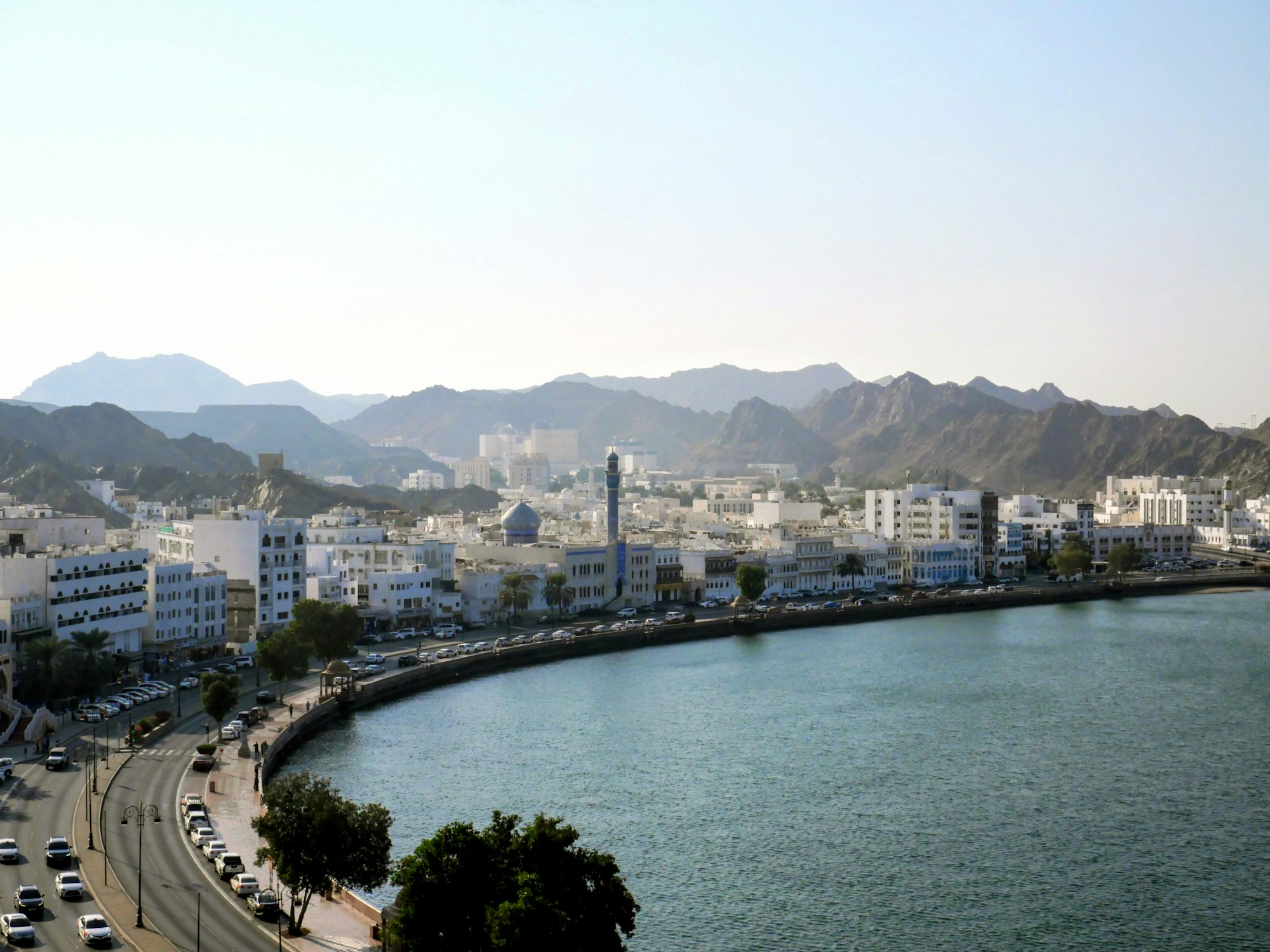
Muscat (Oman): Still Operational, the Crisis Revelation
Muscat remains one of the few Middle Eastern hubs to have maintained continuous operability since 28 February. Muscat Airport (MCT) is fully operational, outside the direct conflict zone. French nationals benefit from a free visa on arrival for stays under 14 days — perfect for an extended stopover in the old Mutrah district, Fort Al-Jalali or the souks without commercial pressure.
Your Rights If Your Flight With a Layover in Doha or Abu Dhabi Is Cancelled
What EU Regulation CE 261/2004 Says in Case of Armed Conflict
The Gulf crisis has revealed an important legal gap for many travellers. The fixed compensation of €250 to €600 provided by EU Regulation CE 261/2004 does not apply if the cancellation results from extraordinary circumstances such as armed conflict or airspace closure. However, and this is crucial: you retain a real right to full refund or rerouting.
Essential points to remember
- Always request the refund OR rerouting — your airline is obliged to offer one of the two options
- Check your travel insurance: most standard policies exclude armed conflicts — read the clauses before booking
- If you travel to a zone classified as « Do Not Travel » or « Avoid all travel », your standard insurance is generally voided
- Do not panic-buy tickets: current prices remain inflated by demand
- Prioritise flexible and modifiable tickets for all your trips to the region
Practical Information for Travelling in the Region During the Crisis
Stay reachable from the moment you land at any hub. Instant activation, coverage in 200+ countries.
From €4.50Make sure your insurance covers conflict zones. SafetyWing provides comprehensive travel medical insurance, even in geopolitical risk areas.
From $1.49/dayFrequently Asked Questions About Layovers in Doha and Abu Dhabi in June 2026
Can you still transit through Doha in June 2026?
Yes, transit flights via Doha are possible as of 15 June 2026: Qatar Airways operates 140 daily departures to 120+ destinations. But several governments strongly advise against this transit. The French government recommends avoiding Qatar « except for imperative reasons » (updated 29 April 2026), Canada formally advises against Qatar, and Australia has placed Qatar on « Do Not Travel » — its maximum level — explicitly including transit stopovers. Allow a minimum of 2h30 to 3h for connections. Check your travel insurance: if your country has issued a « Do Not Travel » advisory, your cover may be voided.
What is the MOU announced on 14 June 2026 and what does it change for travellers?
On 14 June 2026, a 14-point Memorandum of Understanding (MOU) was announced, with a signing scheduled for 19 June 2026 in Geneva. This agreement provides notably for an « immediate and toll-free » reopening of the Strait of Hormuz if signed. In parallel, Trump ordered the halt to the US naval blockade of Iranian ports. For travellers, if the agreement is signed as planned, a gradual easing of the aviation situation in the following weeks can be anticipated — but official advisories will likely remain in force for several weeks after signing. Do not plan a trip to the region based solely on this agreement until it is effective and confirmed.
Why does the Strait of Hormuz matter for air travellers?
The Strait of Hormuz is the passage point for 20% of the world’s oil. Its closure to 98% of normal traffic (2 vessels on 14 June vs 94/day normally) has caused a +130% rise in regional jet fuel prices according to IATA. This rise is directly passed on to flight tickets: Air France-KLM fuel surcharges (+€50 to +€100), a +186% increase on some regional routes, and prices globally up 15 to 30% even on alternative routes. Around 600 tankers are trapped in the Gulf and 22,500 seafarers are stranded. Even if the 19 June agreement is signed, the Pentagon estimates de-mining the strait will take at least 6 months, and ADNOC does not anticipate a return to normal oil flows before 2027.
Is my Qatar Airways rebooking policy still valid?
It depends on your ticket issue date. For tickets issued before 16 May 2026 with travel planned until 15 September 2026, Qatar Airways offers a free date change until 31 October 2026. However, the crisis rebooking policy is officially over for all new tickets issued since 16 May 2026 — standard fare conditions apply. Always check conditions directly on qatarairways.com or contact customer service before modifying your booking. Sources: LoyaltyLobby, Wego.
Is Abu Dhabi Airport safe for a stopover in June 2026?
Abu Dhabi Airport (AUH) is operational and the GCAA declared it « normal » since 4 May 2026. Residual routing restrictions are in place until 23 June 2026. However, on 3 June, intercepted drone debris fell on Abu Dhabi following the Iranian strike on Kuwait Airport. This context led Canada to raise its advisory for the UAE to « Avoid all travel » (1 June 2026). The French government maintains its advisory « except for imperative reasons » (updated 24 April). EASA classifies the UAE at Caution Level 3. If you are a Canadian national, check your insurance before travelling: zones classified as « Avoid all travel » are generally excluded from standard policies.
What are the best alternatives to transiting through the Gulf right now?
As of 15 June 2026, the best alternatives depending on your destination are: Istanbul (Turkish Airlines, 303 destinations in 131 countries, fully operational, No. 1 worldwide for transit), Addis Ababa (Ethiopian Airlines, Star Alliance, Paris-Bangkok at €700–900 return, free 7-day transit visa), Nairobi (Kenya Airways, +33% passengers but watch capacity), Singapore (Singapore Airlines, Dubai suspended until 2 August, but Europe-Asia routes operational) and Helsinki (Finnair, polar route for Japan and South Korea). Prices on all these routes are up 15 to 30% compared to pre-conflict levels, but remain well below fares via Doha or Abu Dhabi.
Does my travel insurance cover a stopover in an area with a travel advisory?
Most likely not, depending on your policy. Most standard travel insurance policies exclude armed conflict zones or countries subject to an official travel advisory from your government. If your country has issued a « Do Not Travel » or « Avoid all travel » advisory (Australia for Qatar, Canada for the UAE), and you choose to travel there anyway, cover is generally voided. Specialist insurers like SafetyWing offer policies specifically covering geopolitical tension zones. Read the « armed conflict » and « advisory zones » clauses before any travel to the region, even for a simple stopover.
Is Etihad still flying to Kuwait from Abu Dhabi?
No. Etihad Airways suspended its flights to Kuwait since 3 June 2026, following the Iranian strike on Kuwait City International Airport (1 dead, 3 June). Kuwait airspace has been near-suspended since this incident. To reach Kuwait, check which Gulf carriers are still active on this route and verify your government’s official advisory before travelling. Etihad continues to operate around 80 destinations from Abu Dhabi, with new routes launched in June (Damascus, Zanzibar, Palma, Kraków). The fee waiver on changes remains active until 31 March 2027. Sources: Wego, Gulf News.
Sources Used for This Article (Updated 15 June 2026)
- French Ministry of Foreign Affairs (MEAE) — Travel Advice: Qatar (updated 29 April 2026)
- French Ministry of Foreign Affairs (MEAE) — Travel Advice: United Arab Emirates (updated 24 April 2026)
- Australia DFAT Smartraveller — Qatar: Do Not Travel
- Canada — Travel Advice: United Arab Emirates (« Avoid all travel », 1 June 2026)
- UK FCDO — Travel advice: Qatar (« Essential travel only »)
- UK FCDO — Travel advice: United Arab Emirates
- EASA — Conflict Zone Information Bulletin CZIB 2026-03-R12 (valid until 24 June 2026)
- LoyaltyLobby — Emirates 96% network restored (18 May 2026)
- LoyaltyLobby — Qatar Airways: 120+ destinations reached on 9 June 2026
- Air Journal — Day 15 of the war in the Middle East: 52,000 flights cancelled, 6 million passengers affected
- Travel and Tour World — DXB and AUH operational confirmed
- Air Journal — EASA: increasingly narrow air corridors
- Ulysse.com — Resumption of Dubai / Abu Dhabi flights: Emirates and Etihad
- Ulysse.com — Ethiopian Airlines, Gulf alternative: Paris-Bangkok €700–900
- Le Figaro Nautisme — Passenger rights: CE 261/2004 and armed conflicts
- IATA — Regional jet fuel +130%, airline surcharges
- ADNOC — Normal Hormuz flows not before 2027
- Wikipedia — Iran-Qatar conflict during the 2026 Iran War
Plan Your Next Trip With Pixidia
The situation is evolving rapidly. Pixidia is tracking the latest information on Gulf stopovers and available alternatives. Create your personalised itinerary and receive real-time alerts on flights and alternative hubs.
Explore destinations