
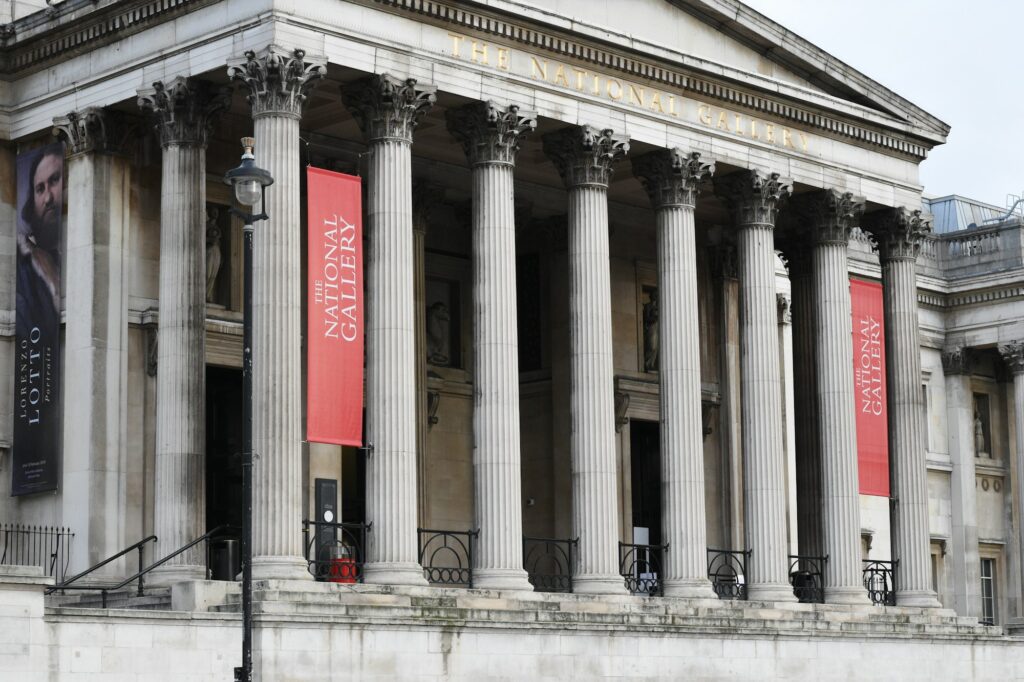
The exhibition « Van Eyck: The Portraits » opens at the National Gallery in London on Saturday 21 November 2026 and closes on Sunday 11 April 2027. According to the gallery’s press release, it brings together ten portraits by Jan van Eyck: nine paintings and one drawing, lent from Berlin, Bruges, Vienna and Dresden, plus two paintings from the National Gallery’s own collection. The full price is £18, audio guide included. Under-18s and members get in free. The concession rate, the general on-sale date and whether booking is compulsory have not been published yet, so book a free ticket to get in more quickly.
It’s the first time, according to the National Gallery, that these portraits have been brought together. The thread of the exhibition comes down to one idea: Van Eyck gave the portrait a new place, painting merchants, craftsmen and close acquaintances with individual precision. For a visitor coming to London from outside the capital, the practical questions come down to a handful: when to go, how much to pay, whether to book, and what to sort out before leaving. Some answers aren’t published yet. So this article separates what the official sources confirm from what still needs checking.
1. The exhibition at a glance
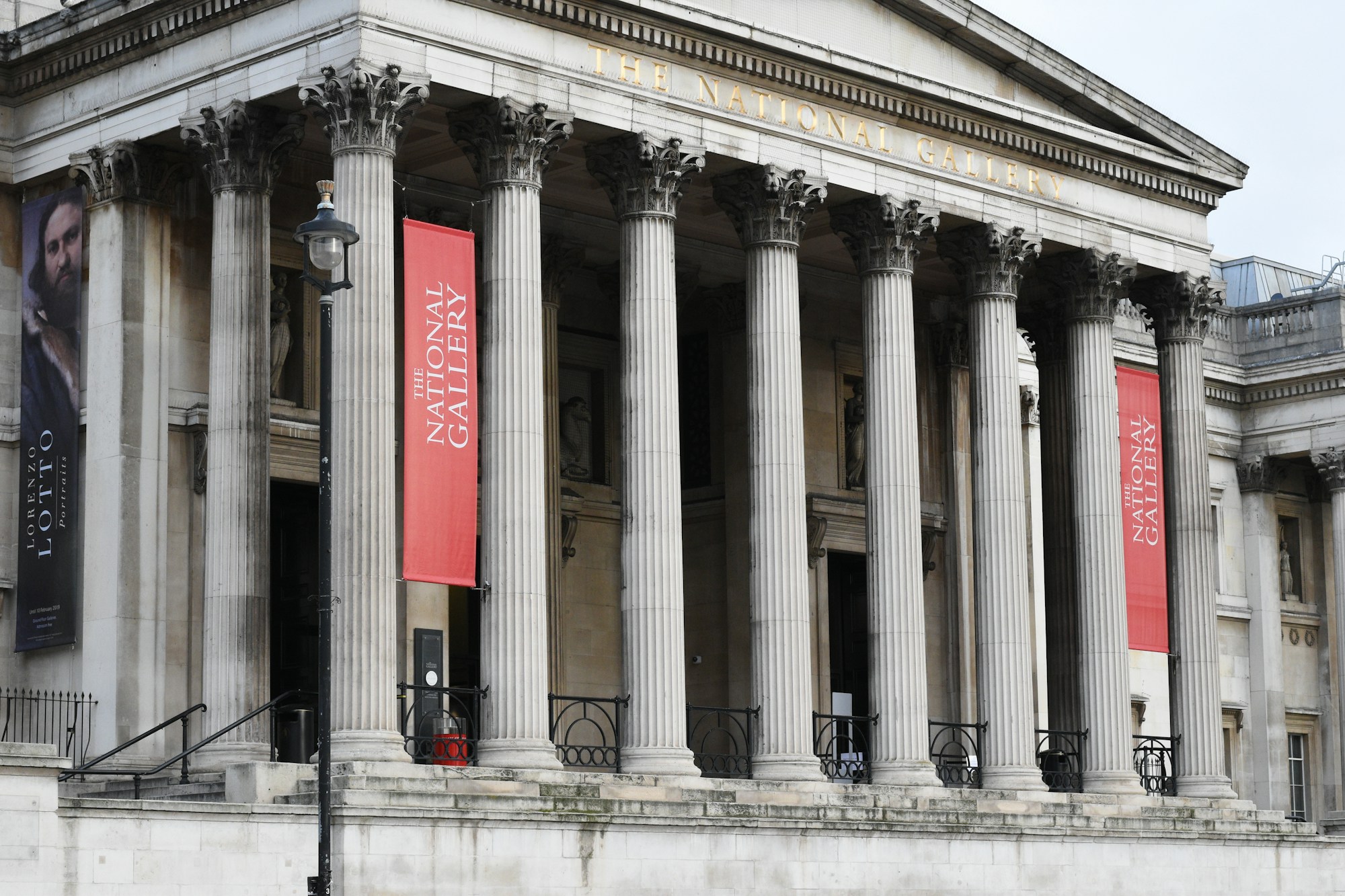
Van Eyck: The Portraits, at Trafalgar Square
The National Gallery presents « Van Eyck: The Portraits » from Saturday 21 November 2026 to Sunday 11 April 2027, in its Trafalgar Square building in the heart of London. The main entrance is through the Sainsbury Wing. The gallery’s press release is signed by curator Emma Capron and quotes the director, Sir Gabriele Finaldi. According to the specialist press, this is the first exhibition devoted entirely to the artist’s portraits. This article calls it « Van Eyck’s portraits » for readability.
Highlights
- Ten portraits, nine paintings and one drawing, according to the gallery’s press release.
- Around half of the roughly twenty surviving autograph paintings by Van Eyck.
- The gallery’s permanent collection stays free: only the exhibition is paid.
Guided tours sold by third-party operators are another way to see the museum. The listing below is one example. It covers a route through the collection’s most important paintings. It doesn’t mention the Van Eyck exhibition and doesn’t say whether the exhibition ticket is included, so read the full offer before you book.
2. Jan van Eyck and the individual portrait
A rare painter and a new idea
Jan van Eyck was born around 1390 in Maaseik, near Maastricht, and died in Bruges in 1441, according to the notice from the Kunsthistorisches Museum in Vienna. Only about twenty autograph paintings survive, which makes every gathering of them exceptional. The National Gallery holds several, including the double portrait of the Arnolfini couple, one of its best-known paintings.
The heart of the exhibition is a thesis put forward by curator Emma Capron: the portrait took full shape in the 1430s. Earlier images, stylised, with kneeling donors or funeral effigies, hardly let you recognise an individual. Van Eyck painted the face of one specific man, with his features, his gaze and his inscriptions. Historians tend to qualify the idea of an « invention »: the individual portrait existed before him. What changes is the direct observation of the sitter, and the way the portrait becomes a work in its own right.
The clientele changes too. The sitters aren’t princes but merchants, goldsmiths and the artist’s close circle. The portrait of Jan de Leeuw, painted in 1436 and kept in Vienna, shows a Bruges goldsmith presenting a ring, according to the Vienna museum’s notice. These paintings say something about the city: a rising urban middle class that chose to be painted with its trade in view.
Highlights
- Sitters from trade and craft, not only from the court.
- Painted inscriptions, sometimes dated, in Latin and Greek.
- A recognised autograph drawing, the only one generally accepted as the artist’s, according to the Morgan Library & Museum.
3. The ten portraits, one by one
The National Gallery’s press release announces ten portraits: nine paintings and one drawing. The table below lists the works whose lender and date appear in the documents we consulted. The three remaining paintings aren’t detailed in these releases, so the official list on the exhibition page is the reference.
| Work | Date | Lender or collection |
|---|---|---|
| Portrait of the Arnolfini couple (NG186) | 1434 | National Gallery, London |
| Portrait of a Man, known as « Self Portrait? » (NG222) | 1433 | National Gallery, London |
| Portrait of a Man in a Red Chaperon (presumed Arnolfini) | c. 1435 to 1438 | Gemäldegalerie, Berlin |
| Margaret, the artist’s wife | 1439 | Musea Brugge (Groeningemuseum) |
| Portrait of an Elderly Man, known as « A Scholar? » | 1438 (?) | Kunsthistorisches Museum, Vienna |
| Jan de Leeuw | 1436 | Kunsthistorisches Museum, Vienna |
| Portrait of an Elderly Man (drawing) | around 1438 (dating varies between sources) | Kupferstich-Kabinett, Dresden |
The two National Gallery paintings are the best known. The Arnolfini couple, dated 1434 and acquired in 1842, is « probably » a portrait of Giovanni di Nicolao di Arnolfini, an Italian merchant based in Bruges, and his wife, whose identity remains unknown. The NG222 portrait is, according to the museum, « almost certainly » a self-portrait by Van Eyck: its official title keeps a question mark for that reason.
The Léal Souvenir (NG290, 1432) also belongs to the gallery, but it isn’t among the loans published so far. Don’t count it among the exhibition’s works unless the gallery confirms it.
The Dresden drawing is the only Van Eyck drawing generally accepted as his, according to the Morgan Library & Museum. It is closely linked to the Vienna portrait, and it’s one of the threads running through the exhibition. A drawing in the British Museum, attributed to Rogier van der Weyden, is also on show. It serves as a comparison with portrait practice in the neighbouring Brussels workshop: it isn’t a Van Eyck, and it isn’t one of the ten portraits.
4. Tickets, prices and booking
The prices below are the ones the gallery publishes. To convert them we used the European Central Bank reference rate of 8 October 2026: £1 is worth €1.1807, so the full price is roughly €21. The euro amount moves with the exchange rate, so check the rate on the day you buy.
| Audience or offer | Price | Published conditions |
|---|---|---|
| Full price | £18 (about €21) | Exhibition audio guide included |
| Under 18 | Free | Free entry |
| Gallery members | Free | Priority booking open; the 20 November preview is fully booked |
| Concession (students, seniors) | Not published | Don’t assume anything: check the website |
| Curator’s talk, Friday 20 November, 11am to 12pm | £15 | Members only, fully booked at the date of consultation |
| Online tour, Thursday 21 January 2027, 4pm to 5pm GMT | £12 | Members only, one ticket per account |
Book, or not?
The exhibition page has a « Book now » button that leads to the booking calendar. The visit plan recommends a free ticket for priority entry and useful information before your visit. It also notes that walking in without a booking is still possible. What the pages don’t say is whether booking is compulsory for this specific exhibition, or when general sales open. An earlier announcement pointed to sales opening in September 2026, with a price still to be confirmed. As of today, the gallery hasn’t published a general on-sale date.
For members, priority booking is already open, and the 20 November preview is fully booked. Membership may be worth it if you plan to return several times over the season. Check its terms on the gallery’s website, since its price isn’t covered in this article.
5. Access, opening hours and bags
Getting to the gallery and what to bring
The building is on Trafalgar Square. The main entrance is in the Sainsbury Wing. The gallery’s visit plan doesn’t mention any Underground station: for directions, use the Transport for London journey planner or a navigation app from your accommodation.
The building opens every day from 10am to 6pm, with late opening on Fridays until 9pm. It is closed on 24, 25 and 26 December, and on 1 January. Opening hours specific to the exhibition haven’t been published. Some rooms are closed for works, and some paintings have been moved, so the plan recommends checking the collection search before your visit.
The gallery asks visitors to bring as little as possible. Every door has metal detector gates, and bags and rucksacks are checked. The cloakroom accepts bags up to 56 x 25 x 45 cm. The page says wheeled luggage, including cabin bags, isn’t admitted, without specifying whether the ban applies to the cloakroom or to the galleries: ask at the front desk before you turn up with a suitcase.
Visiting from abroad: the ETA
If you’re visiting from outside the UK, you’ll need an Electronic Travel Authorisation (ETA). The UK government website gives the fee as £20 and notes that visitors from Europe generally need an ETA rather than a visa. The page we checked doesn’t say when the £20 fee takes effect. Our guide to the ETA before London covers the application, and is worth reading before you book your flight.
6. Reading the portraits
The points still open
The National Gallery writes « probably » about the Arnolfini couple, and the Berlin museum, which lends the portrait in the red chaperon, describes a painting « generally considered » to show the same merchant, without « ultimate certainty ». Linking the two faces is therefore a well-argued hypothesis, not proof. Both museums say so themselves.
The Léal Souvenir, held in London, carries a Greek inscription, TUM OTHEOS, whose meaning the gallery admits is uncertain. Readings vary: a proper name, Tymotheos, according to an old proposal, or « then God », the version the museum adopts. The museum adds that it doesn’t know who the man is or why he holds a scroll. A minority reading, from a 1979 article, sees an allusion to a tomb and to the Battle of Othée, but it rests on a disputed reading of the last letter.
The Dresden drawing was long linked to Cardinal Niccolò Albergati, a Carthusian from Bologna. That identification is now considered unlikely, because the sitter wears lay clothing. The Morgan Library & Museum presents him as an anonymous scholar, and the institutions don’t all date the work in exactly the same way.
For the NG222 portrait, the museum writes « almost certainly »: the face is almost certainly Van Eyck’s own. An Amsterdam inventory from 1655 already described it as a self-portrait by the artist’s hand. The background, now black, was probably blue originally: that black is almost certainly a later overpaint. A strong attribution isn’t a certainty, and the gallery words it with care.
7. A possible route through London
Half a day or a full day
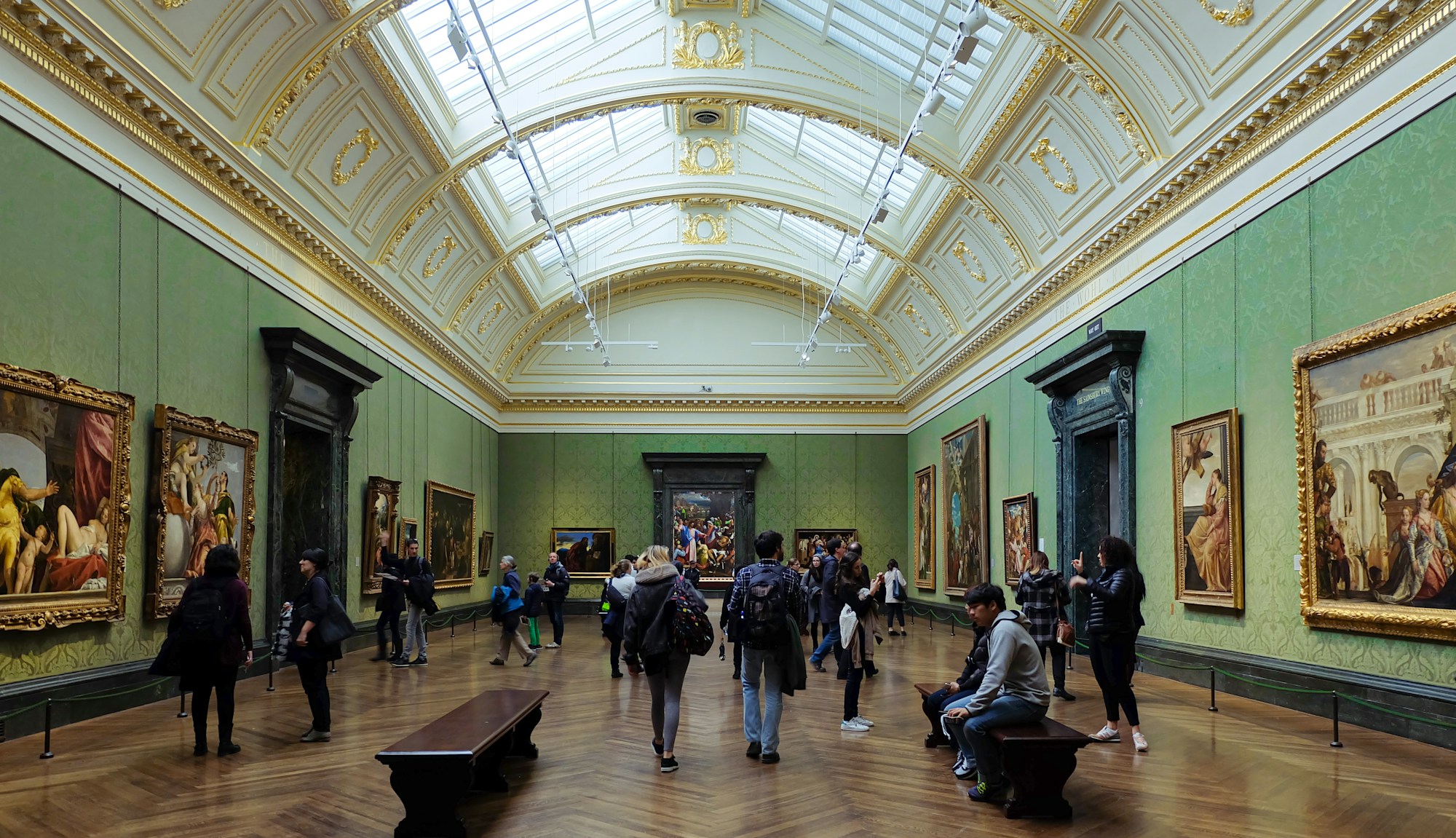
If the exhibition is your only reason to visit, half a day is enough. For a fuller day, here is one possible plan, to adapt to your own timings and slots.
Morning: get in at opening
Arrive at 10am with your free booked ticket. Bag checks are systematic, so leave large bags in the cloakroom, which accepts bags up to 56 x 25 x 45 cm. Keep in mind that works may close some rooms of the collection.
Midday: the exhibition
Allow at least an hour and a half for the ten portraits and their labels. This is an estimate, not an official duration, but it leaves time to compare the faces, the inscriptions and the frames, which are at the heart of the show.
Afternoon: the collection and another exhibition
The permanent collection stays free. The gallery is also showing Renoir and Love in the Sainsbury Wing until 31 January 2027, with tickets from £20 to £25 depending on the day, and free entry for under-18s. Its « Pay What You Wish » offer applies to the Renoir exhibition, on Fridays: it doesn’t apply to Van Eyck. Don’t mix up the two.
Further afield: Bruges
The portrait of Margaret, the artist’s wife, dated 1439, belongs to the Groeningemuseum in Bruges, the city where Van Eyck worked. It travels to London for the exhibition: if you hope to see it back in Bruges, check where it is on the day you plan to visit. If your stay overlaps the start of November, our guide to free Bonfire Night fireworks rounds off this route.
8. Which visit for which profile
The same ticket doesn’t suit everyone in the same way. This table sums up the choices by profile, based on the published conditions.
| Profile | What matters | Watch out for |
|---|---|---|
| First visit to the National Gallery | Full price of £18, audio guide included | Book the free slot, and pack light |
| Family with children | Free entry for under-18s, a ticket for each adult | Check which rooms are closed for works before you come |
| Tight budget | The permanent collection is free, the exhibition costs £18 | The concession rate isn’t published: don’t count on it |
| Visitor with reduced mobility | The guided tour listing says it is suitable for wheelchair users | That note doesn’t cover the exhibition: ask the gallery |
| Art history enthusiast | Curator’s talk on 20 November, online tour on 21 January 2027 | Both events are for members only |
If Van Eyck is new to you, start with the gallery’s two paintings. Comparing the London portrait with the Berlin one, which is presumed to show the same man, is the best way into the exhibition’s question: how does a face become proof of identity?
Practical info to plan your trip
An eSIM saves you swapping SIM cards or paying roaming charges during your stay. Plans come in different durations and data allowances, and you choose from the partner’s shop.
Plans by duration and data allowanceTravel insurance covers medical costs and some unexpected events during your trip. The price depends on your age, the length of your stay and the cover you choose: compare the plans before you pay.
Price by profile and trip lengthFrequently asked questions
When does the Van Eyck exhibition at the National Gallery run?
« Van Eyck: The Portraits » opens on Saturday 21 November 2026 and closes on Sunday 11 April 2027, according to the official National Gallery page. Press access is on Wednesday 18 November 2026. Opening hours specific to the exhibition haven’t been published: the building opens from 10am to 6pm, with late opening on Fridays until 9pm. Exhibition page, National Gallery.
How much is the ticket?
The full price is £18, audio guide included, which is about €21 at the ECB rate of 8 October 2026. Under-18s and gallery members get in free. The concession rate isn’t published on the official page: don’t assume one, check when you book. The euro amount depends on the exchange rate on the day you buy. Official prices.
Do I need to book a time slot?
The exhibition page has a « Book now » button, and the visit plan recommends a free ticket to get in faster. The gallery says you can still come in without a booking, but neither the exhibition page nor the plan says whether booking becomes compulsory for this show. To avoid queuing, book as soon as the calendar opens. Plan your visit.
How many portraits are on show?
The National Gallery’s press release announces ten portraits by Jan van Eyck: nine paintings and one drawing. The published loans come from Berlin, Bruges, Vienna and Dresden, plus two paintings from the gallery. Three paintings aren’t detailed in the releases we checked: the official list on the exhibition page is the reference. Press release.
Will the Arnolfini Portrait be on show?
Yes. The Arnolfini Portrait, dated 1434, belongs to the National Gallery, which lists it among the works shown alongside the NG222 portrait. The gallery says the sitters are « probably » Giovanni di Nicolao di Arnolfini, an Italian merchant based in Bruges, and his wife, whose identity remains unknown. NG186 record.
Is the Léal Souvenir part of the exhibition?
Not according to the press releases published so far. The painting (NG290, 1432) is held by the National Gallery, but it isn’t in the published list of loans. If it’s the reason for your visit, check the official list of works before you go. NG290 record.
Do I need an ETA to visit London from Europe?
The UK government website gives the ETA fee as £20 and says that visitors from Europe generally need an authorisation rather than a visa. The date the fee takes effect isn’t stated on the page we checked. Check the official tool when you book your flight. GOV.UK, Electronic Travel Authorisation.
Can I bring a wheeled suitcase?
The gallery’s page says wheeled luggage, including cabin bags, isn’t admitted, and that the cloakroom takes bags up to 56 x 25 x 45 cm. The text doesn’t say whether the ban applies to the cloakroom or to the galleries. To avoid a surprise at the entrance, ask at the front desk before you come with a suitcase. Visit plan.
Sources
- Van Eyck: The Portraits, exhibition page: dates, prices, booking, number of portraits announced
- National Gallery press release: ten portraits, lenders, curator, catalogue
- National Gallery visit plan: opening hours, access, security, bags, free booking
- Curator’s talk, 20 November 2026: audience, price, booking status
- Online tour, 21 January 2027: format and member price
- NG186, The Arnolfini Portrait record: dating, identification, 1842 acquisition
- NG222, Portrait of a Man (Self Portrait?) record: dated inscription, attribution, conservation
- NG290, Portrait of a Man (‘Léal Souvenir’) record: inscriptions, unidentified sitter
- Renoir and Love exhibition page: prices and the Pay What You Wish offer, limited to Fridays of that exhibition
- GOV.UK, Electronic Travel Authorisation: ETA fee and conditions for European visitors
- Kunsthistorisches Museum Wien, Jan de Leeuw: artist’s dates of birth and death, portrait notice
- Staatliche Museen zu Berlin, Jan van Eyck’s Portrait of a Man in a Red Chaperon: identification and conservation of the painting
- Morgan Library & Museum, Van Eyck to Mondrian: Dresden drawing, subject and dating
- ECB exchange rate via Frankfurter: £1 = €1.1807 on 8 October 2026
Sources consulted on 9 October 2026. Prices and dates should be checked on the official pages before each purchase.

Plan your trip with Pixidia
Pixidia learns how you travel and helps you build a trip that truly fits you and everyone coming along.
Open the planner