
The Zibelemärit 2026 takes place on Monday 23 November, from 6 am to 6 pm, in Bern’s old town, with sales from 4 am. Entry is free. In 2025, 34.9 tonnes of onions were on offer across 98 onion stalls. Switzerland Tourism recommends the train. For well-stocked stalls, arrive between 5 and 8 am.
Checked on against the official sources cited (Switzerland Tourism, BLS, SBB) and the regional press for the 2025 figures.
One Monday a year, the historic old town of Bern is covered in plaited onions. The Zibelemärit mixes a farmers’ market with a street festival, from the first sales at 4 am to the afternoon confetti battle. Most guides copy the same figures and the same hours, often out of date or contradicting each other. This article cross-checks the official sources, corrects the gaps and offers a realistic plan for 2026, separating what is confirmed from what still needs checking.
1. Date, opening hours and location of the Zibelemärit 2026
The Bern onion market at a glance
The Zibelemärit, “onion market” in Bernese dialect, takes place every year on the fourth Monday of November. In 2026, the calendar puts it on Monday 23 November, according to the official Switzerland Tourism listing, confirmed by the BLS page (both checked on 9 October 2026). Be wary of the phrase “last Monday in November”, used by some sites: in 2026 the last Monday falls on the 30th, so you would arrive a week late. The date also moves from year to year, falling on 24 November in 2025 and 25 November in 2024: an out-of-date guide will get the Monday wrong.
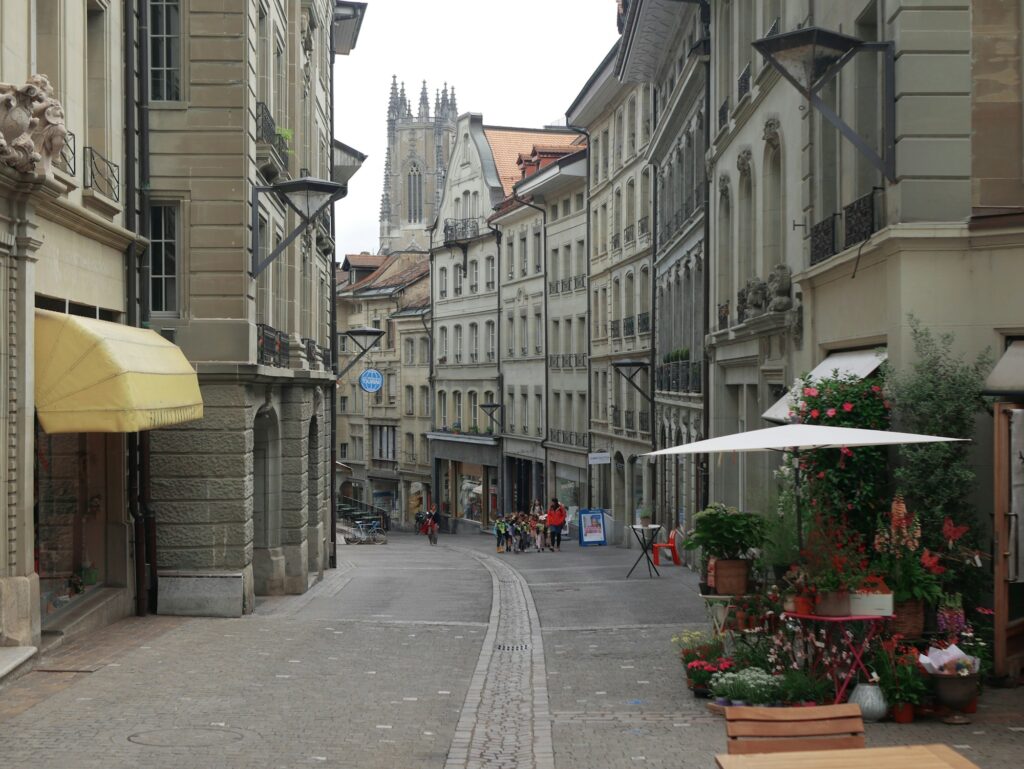
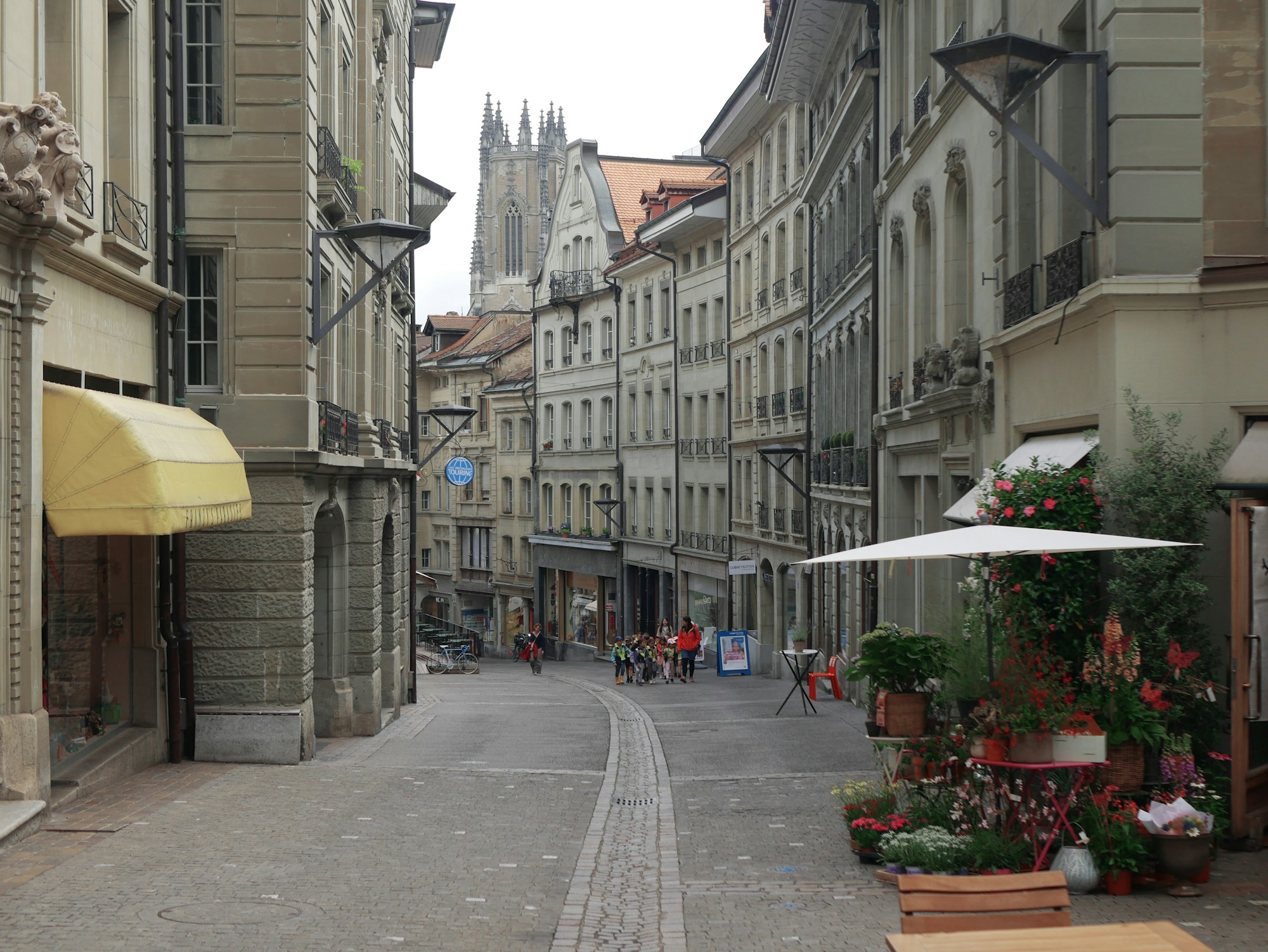
The market fills the main streets and lanes of the historic old town, Waisenhausplatz and Bundesplatz. The old town has been a UNESCO World Heritage Site since 1983 and has roughly six kilometres of arcades, according to Bergwelten: the longest covered shopping promenade in Europe, which makes a welcome shelter when November is wet, as it was in 2025.
Highlights
- Free entry, no ticket needed, according to Time Out
- A custom on Switzerland’s Living Traditions list since 2011
- A market you explore on foot, from the station to the Bundesplatz, under the arcades
No Viator product carries the market’s name. The card below features the walking tour of the old town that runs on Monday 23 November: 2 hours, up to 15 participants, an English-speaking guide, and a meeting point on a small square next to the General Secretariat, according to the product listing. No French-speaking guide is offered on this listing. A private tour in English is also available the same day, at €68.13 per person.
2. The day, hour by hour
There is no official programme for the Zibelemärit: the organisers set the market hours, not the entertainment. The table below therefore separates what is official from what is customary or taken from a previous edition. Each row shows its status, so you know what to check before getting up at 3 am.
| Time | What happens | Status |
|---|---|---|
| 1:00 am | Start of the closure of private traffic in the centre | Cantonal police 2022, to be reconfirmed |
| 4:00 am | First sales, among regulars | Announced by Switzerland Tourism and BLS, with no official opening time |
| 6:00 am | Official opening of the market | Official |
| 4:00 pm | Confetti battle | Tradition, no official time |
| 6:00 pm | Official closing of the market | Official |
| Around 10:00 pm | Traffic reopens | Cantonal police 2022, to be reconfirmed |
Source: Switzerland Tourism and cantonal police press release relayed by plattformj.ch, checked on 9 October 2026.
Which time to believe when the guides disagree?
Switzerland Tourism and BLS give an opening at 6 am and a closing at 6 pm, with first sales from 4 am. But the French Wikipedia page talks about an opening around 3 to 4 am and a closing at 4 pm, a travel agency mentions visitors arriving “from 5 am”, and an expat website lists a parade at 11:30 am that nobody else confirms. Stick to the official figures: 6 am to 6 pm, with an informal phase before the opening. The traders set up even earlier: La Télé describes them at work from 3 am in 2025.
The best slot for what you’re after
For well-stocked stalls, the window is 5 am to 8 am: that’s when you can buy a good plait and catch the working atmosphere, with the smell of garlic, onion tart and mulled wine. Around midday the centre fills up: the tens of thousands of visitors reported by the press all crowd into the same lanes. If you dislike getting confetti in your mouth, leave the centre before 4 pm. Pack a warm coat too: according to Bluewin, the days of 2024 and 2025 were “just above zero”, and nume.ch advises dressing warmly.
3. Getting to Bern without a car, luggage included
This is where the guides are at their thinnest. Switzerland Tourism simply recommends the train, “no traffic jams and no searching for parking”. The useful details are elsewhere, and some still need checking for 2026.
By train from France
Search extracts from SNCF Connect suggest a journey of around 4 h 34 from Paris, with a change in Basel or Lausanne (the page itself would not load, so treat the figure as indicative). We found no fare for this journey from France. From Basel, the trip to Bern takes about an hour, with tickets from €19 if you book early and an average of €38, according to an extract from Omio. The SBB is adding train capacity for the occasion, as its Freizeit page explains.
If you still want to drive
The only detailed source is the 2022 press release from the Bern cantonal police, relayed by plattformj.ch: private traffic was largely closed in the centre from 1 am to around 10 pm, all parking spaces in the centre were removed, Schützenmatte included, and badly parked vehicles were towed. Park-and-ride car parks stayed accessible, and coach bays were planned at Aargauerstalden and Winkelriedstrasse. The 2026 press release had not been published by 9 October 2026: treat these rules as likely, not confirmed, and watch for cantonal police announcements in November.
Where to leave your bags
If you arrive with a suitcase, Bern station offers lockers with a maximum storage time of 96 hours (red-grey and blue lockers, paid by card or Twint) or 72 hours (blue lockers, paid in cash), plus a left-luggage desk at the Reisezentrum (travel centre) at CHF 6 to 16 per day, for up to 23 kg per bag, with limited capacity. According to the SBB (checked on 9 October 2026). On a festival day, arrive early to have a chance of finding a free locker.
Travel tickets: what changed in 2026
The Swiss Half-Fare Travelcard rises from CHF 120 to CHF 150 in 2026, according to Travel Switzerland; point-to-point tickets and day passes stay at current prices. For a single day in Bern, the half-fare travelcard (CHF 150) hardly pays off: the day pass price still needs confirming on sbb.ch. If you stay the night, the Bern Ticket would give free access to public transport in zones 100 and 101, including the Marzilibahn, the Gurten funicular and the Münster lift, according to extracts from bern.com (the page returns a 403 error, so check the figure with your accommodation).
| Item | Value | Source or status |
|---|---|---|
| Market entry | Free | Time Out |
| Swiss Half-Fare Travelcard 2026 | CHF 150 (CHF 120 in 2025) | Travel Switzerland |
| Swiss day pass, 2nd class | To be confirmed | Not checked on sbb.ch at the time of writing |
| Station locker, maximum storage | 96 h (card or Twint), 72 h (cash) | SBB |
| Reisezentrum left-luggage | CHF 6 to 16 per day, 23 kg per bag | SBB |
| Waisenhausplatz Christmas market | 27 November to 24 December 2026 | BLS |
| Bern Ticket (night in Bern) | Free public transport, zones 100 and 101 | bern.com extracts, to be reconfirmed |
Source: SBB, Travel Switzerland, BLS and Time Out, checked on 9 October 2026.
4. The market in figures: fewer onions than you’d think
Brochures repeat “more than 50 tonnes of onions and garlic” and “more than 200 stalls”. Those figures belong to past editions, such as the 2014 record (about 60 tonnes); since 2018, the regional press has reported much lower numbers. The table below gathers the figures found for recent editions, with their gaps: when a year does not publish a figure, the cell says “n.c.” (not communicated) rather than an invented estimate.
| Year | Onions (tonnes) | Total stalls | Onion stalls |
|---|---|---|---|
| 2014 (record) | About 60 | n.c. | n.c. |
| 2018 | 48 | 628 | 171 |
| 2019 | 51 | About 590 | n.c. |
| 2021 | About 20 | 325 | n.c. |
| 2023 | 30 | 470 | 100 |
| 2025 | 34.9 | 359 | 98 |
Source: La Télé (2025), SRF (2023) and 1815.ch (2018), checked on 9 October 2026. The 2020 edition was cancelled.
A clear drop in onion stalls
The table is straightforward. In 2023, SRF counted 470 stalls, 100 of them selling onions, against more than 600 stalls and 200 onion stalls ten years earlier. In 2025, 98 remained out of 359. The tonnage has also fallen, from 60 tonnes at the 2014 record to 34.9 tonnes last year, a drop of roughly 42%. The reason given is the work: plaiting is manual, and a third-generation grower says the effort no longer pays off in yield, but he carries on out of tradition. The organisers, for their part, turn away 200 to 300 stall applications each year to keep the market balanced.
What comes with the crowds
Attendance remains high: the media speak of “tens of thousands” of visitors, including in the rain in 2025. An upper estimate of 60,000 people is circulating, but no official source confirms it, so quote it with care. On the coach front, SRF counted more than 120 in 2015 and 70 in 2023, 15 of them from abroad. Finally, the 2020 edition was cancelled because of Covid, the first cancellation in more than a century according to nau.ch, before a return in 2021 with 325 stalls.
5. What to eat, what to bring home, how to pay
Street food
According to Switzerland Tourism and IamExpat, you can eat Zibelechueche (onion tart), Chäschueche (cheese tart), onion soup, onion pizza, sausage, Chnoblibrot (garlic bread) and mulled wine. For something sweet, the stalls sell Magenbrot (spiced honey cake), Nidletäfeli (caramels), roasted almonds and candyfloss. On the spot, the easiest option is to eat standing up while you wander the lanes.
Plaits, and everything that isn’t onion
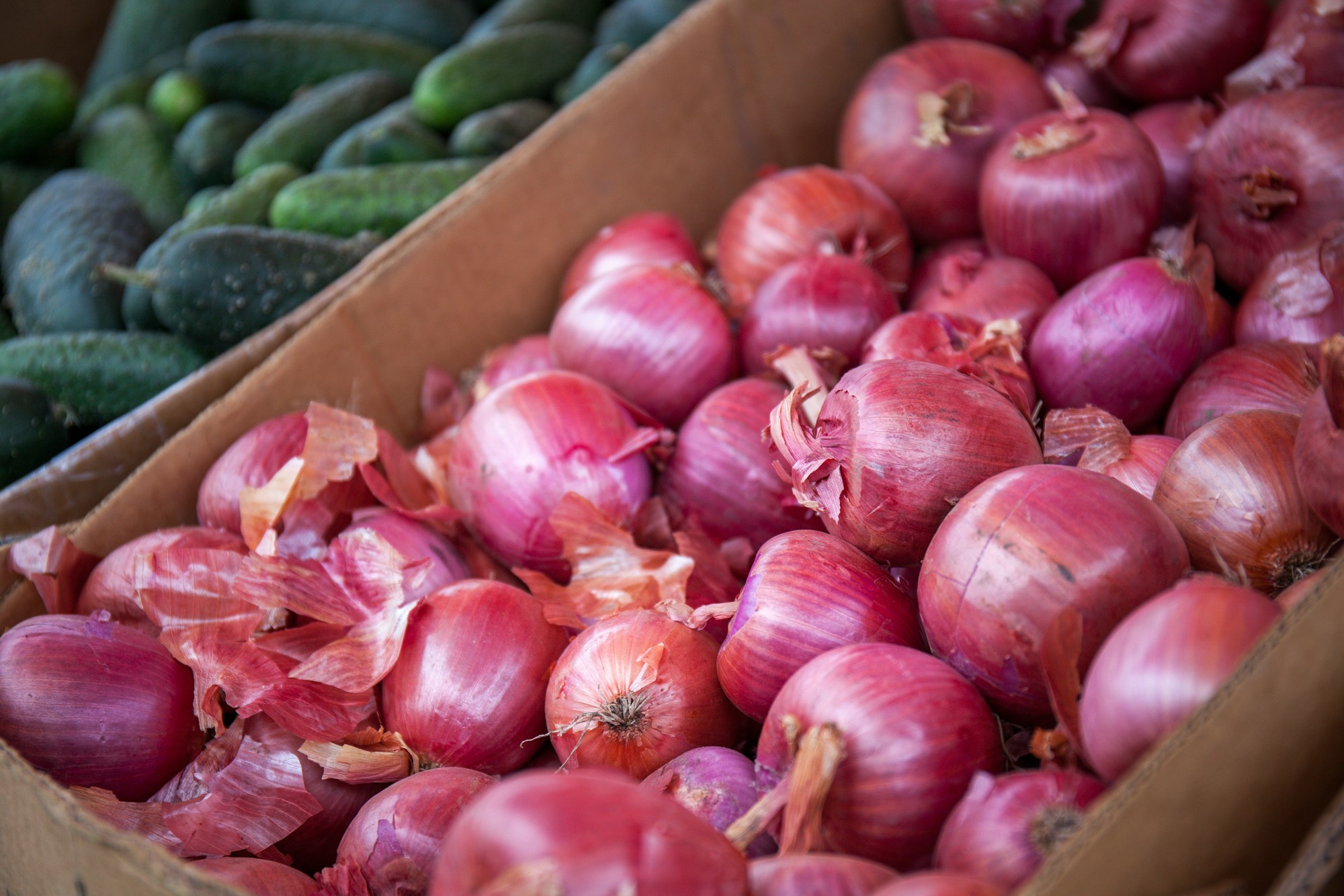
Farmers from the Seeland and the Fribourg Vully bring plaits, wreaths and figurines made of onions and garlic. Plaits decorated with dried flowers can reach ten kilos according to nume.ch, and serve as lucky charms as well as winter stores. The figurines change from year to year: BSC Young Boys players made of onion were spotted in 2019. Around the onions you’ll also find winter vegetables (leeks, celeriac, carrots, salsify), walnuts, textiles, jewellery, pottery, a legacy of the Chachelimärit, and toys.
Paying on the spot
Many sellers prefer cash, according to IamExpat: bring Swiss francs in small notes. Another thing to know: no open source publishes a price for a plait, a slice of tart or a mulled wine, so we quote none. According to Helvetic Kitchen, this lack of price tags goes back to an old custom: people haggled directly with the farmers, which would also explain the 4 am start.
6. The confetti battle: what to expect
The Konfettischlacht starts around 4 pm, according to Europe For Visitors, Time Out and Helvetic Kitchen, who agree on this point; no official time is published. The ammunition is sold by traders, and the battle is open to participants of all ages. Children add squeaky plastic hammers, a tradition described by SRF as early as 2015. According to Helvetic Kitchen, a laugh, a yawn or a mouthful of onion tart each earn you a handful of confetti: the rule fits in one sentence, so keep your mouth shut.
No public rule on what may be thrown has been found, so we claim no ban. As a precaution, protect your eyes with glasses, avoid clothes that are hard to clean, and leave fragile items at the hotel. In 2000, police confiscated 80 potentially dangerous objects, according to swissinfo, and since 2017 major Bern events have come with concrete barriers and plainclothes police, according to nau.ch.
7. Where does the market come from? A legend and some dates
Between a 1405 legend and a market recorded around 1850
The legend says that after the fire in Bern in 1405, farmers from Fribourg who came to help the residents were rewarded with the right to sell their onions. The story is appealing but undocumented: Wikipedia presents it as a legend, yet some media repeat it without reservation. What is established is the creation of an autumn fair in Bern in 1439, the St. Martin’s fair, which falls around 11 November.
The onion market proper only appears in the records around 1850-1860, when farm women from the Vully and Seeland came to sell their vegetables, with the arrival of the railway. The folklorist Rudolf J. Ramseyer, cited by the canton of Bern, sees it as a remnant of the Martinimesse, which then lasted two weeks. Another sign of this status: in 2011 Switzerland minted a commemorative 10-franc coin in its series of Swiss customs, showing a bear in front of a plait of onions, according to Numista. It was designed by Stefan Haenni of Thun, with a maximum circulation of 94,000 coins and 12,000 in a presentation case.
Key takeaways
- Say “legend of 1405”, never “founded in 1405”
- The safe dates are 1439 for the fair and around 1850 for the onion market
- The Zibelemärit remains the most visited custom on the canton’s calendar, according to the Federal Office of Culture
8. Which plan suits your profile
Families
Children love the confetti part and the squeaky plastic hammers. For well-stocked stalls, stick to the 5 am to 8 am window: a 4 am start is hard to keep up with young children, and the crowds build towards midday. If your children are sensitive to noise, leave the centre before 4 pm, when the confetti battle starts. No public source details pushchair or wheelchair access: check with Bern Welcome before you go.
Tight budget
Entry is free, and the market takes half a day to visit. The expensive part is transport: we found no fare from France, only the journey time, around 4 h 34 with a change (indicative). Between Basel and Bern, however, a ticket is offered from €19 when booked early, with an average of €38 (Omio, extract). For a night in Bern, we found no price data targeted at the market date. Plaits, slices of tart and mulled wine have no published price, so no cost benchmark is possible for food, and the cheapest option remains eating on the go.
First visit to Bern
Pair the market with a city visit: the morning at the Zibelemärit, the afternoon under the arcades after dodging the confetti. The old town has roughly six kilometres of arcades, according to Bergwelten. The walking tour featured above lasts 2 hours, with an English-speaking guide, and the Viator listing shows full cancellation up to 24 hours before departure.
The Christmas market opens after the Zibelemärit: dates and hours for 2026
The Christmas market doesn’t replace the Zibelemärit: it only opens on 27 November at Waisenhausplatz and on 28 November at Münsterplatz, according to the BLS. The 2026 hours are as follows: Waisenhausplatz 10:00 am to 8:00 pm Monday to Saturday and 10:00 am to 6:00 pm on Sunday; Münsterplatz 11:00 am to 6:30 pm Monday to Thursday, 11:00 am to 8:00 pm on Friday and 10:00 am to 6:00 pm at weekends. We found no data on attendance at these markets. To compare with other cities, see our complete guide to Christmas markets in Europe 2026.
What other guides don’t tell you
Five points emerge from cross-checking official sources, regional press and transport operators’ pages. Each one corrects or adds to what most guides repeat.
- Promotional figures no longer match what happens on the ground. The brochures announce more than 50 tonnes and more than 200 stalls. In 2025, the press reports 34.9 tonnes from 98 onion stalls out of 359 stalls, against a record of 60 tonnes in 2014, according to La Télé (checked on 9 October 2026; regional press, no open municipal statement found).
- In 2022, traffic was closed off the centre and parking removed. Switzerland Tourism gives the reason to come by train: “no traffic jams and no searching for parking”. The 2022 cantonal police press release details a closure from 1 am to around 10 pm, according to plattformj.ch (checked on 9 October 2026; the 2026 release had not been published at that date, to be reconfirmed).
- Official hours are 6 am to 6 pm, with no programme. Guides contradict each other on a 4 pm closing, a 5 am start and an 11:30 am parade. The reference is the one from Switzerland Tourism (checked on 9 October 2026): opening at 6 am, closing at 6 pm, sales from 4 am.
- Station lockers have a strict maximum storage time. The guides consulted (Time Out, Europe For Visitors, Switzerland Tourism) don’t mention it, yet the visitor who arrives from afar has luggage: 96 h or 72 h depending on the locker and payment method, according to the SBB (checked on 9 October 2026).
- The Christmas market hasn’t started yet. Time Out presents the Christmas market as the immediate follow-on from the onion market, but the one on Waisenhausplatz, a square included in the Zibelemärit area, only opens on 27 November, according to the BLS (checked on 9 October 2026).
Practical information before you go
Switzerland is outside the European Union: check your mobile operator’s roaming terms, or activate a local eSIM before you leave to keep your data working in Bern’s lanes. Our travel eSIM comparison details the options.
Plans vary by duration and data volumeA train journey with a change, a night in town and an early-morning departure: insurance covers the surprises along the way. See also our travel insurance comparison.
Price depends on trip lengthFrequently asked questions about the Zibelemärit
What is the date of the Zibelemärit 2026?
The Zibelemärit 2026 takes place on Monday 23 November 2026, the fourth Monday of November. The date comes from the Switzerland Tourism listing, which names Bern Welcome as organiser. Don’t go by “last Monday in November”: this year, that would be the 30th.
When does the Zibelemärit start and finish?
The market officially opens at 6 am and closes at 6 pm, with first sales from 4 am among regulars. Some sites give other hours, such as a 4 pm closing or crowds from 5 am: only the official slot counts, according to Switzerland Tourism.
What happens during the Konfettischlacht, and when?
The confetti battle starts around 4 pm, with no official time published. Traders sell the ammunition, and participants of all ages throw confetti in the streets of the centre. Children add plastic hammers. Helvetic Kitchen sums up the rule: keep your mouth shut. As a precaution, protect your eyes too.
How do I get there without a car, and can I park?
Switzerland Tourism recommends the train: allow around 4 h 34 from Paris with a change, according to SNCF Connect extracts. By car, parking in the centre was removed and private traffic largely closed from 1 am to around 10 pm in 2022, according to the cantonal police press release. To be reconfirmed for 2026.
What is there to eat at the Zibelemärit?
There is onion tart (Zibelechueche), cheese tart, onion soup, onion pizza, sausage, Chnoblibrot (garlic bread) and mulled wine. For something sweet: Magenbrot, Nidletäfeli and roasted almonds. The list comes from Switzerland Tourism; no prices are published.
Is entry free, and do I need to book?
Entry is free and you don’t need a ticket, according to Time Out. Your costs are transport, food and any night in Bern, not access to the festival itself.
Is it true the market dates back to 1405?
No, it’s an unproven legend linked to a fire in Bern and to help from farmers from Fribourg. The established history records an autumn fair set up in 1439 and an onion market recorded around 1850-1860, according to Wikipedia.
What is the Zibelemärit 10-franc coin?
It’s a commemorative 10 CHF coin minted by Swissmint in 2011, in the series of Swiss customs. It shows a bear in front of a plait of onions, according to Numista. Its mintage is limited to 94,000 coins in circulation and 12,000 in a presentation case, which makes it a collector’s item.
Where can I leave my bags in Bern on market day?
At the station, lockers hold bags for up to 96 h (paid by card or Twint) or 72 h (paid in cash). The Reisezentrum left-luggage desk charges CHF 6 to 16 per day for 23 kg per bag, with limited capacity, according to the SBB.
Sources
- Switzerland Tourism, Onion market Zibelemärit listing: 2026 date, official hours, scope
- BLS, Zibelemärit: 2026 date, hours, advice to come by train
- BLS, Bern Christmas markets 2026: dates and opening hours of the markets
- SBB Freizeit, Zibelemärit: extra trains
- SBB, station lockers: maximum storage times, left-luggage fees
- plattformj.ch, 2022 cantonal police press release: traffic and parking
- La Télé, 2025 edition: tonnage and number of stalls
- Bluewin, Zibelemärit 2025 in the rain: temperatures “just above zero”
- SRF, Immer weniger Zwiebeln am Zibelemärit: decline in stalls, coaches
- 1815.ch, 2018 edition: tonnage and stalls
- nau.ch, 2020 cancellation: first cancellation in more than a century
- Travel Switzerland, public transport prices 2026: half-fare travelcard
- Time Out Switzerland, Zibelemärit: free entry
- Wikipedia, Zibelemärit: history, 1405 legend
- Canton of Bern, Traditions page: Martinimesse, cultural context
- Europe For Visitors, Bern onion market: confetti battle
- Numista, 10 francs Berner Zibelemärit 2011: commemorative coin
Research carried out on 9 October 2026; Viator walking tour checked on 11 October 2026
Plan your trip with Pixidia
Pixidia learns how you travel and helps you build a trip that truly fits you and everyone coming along.
Open the planner