
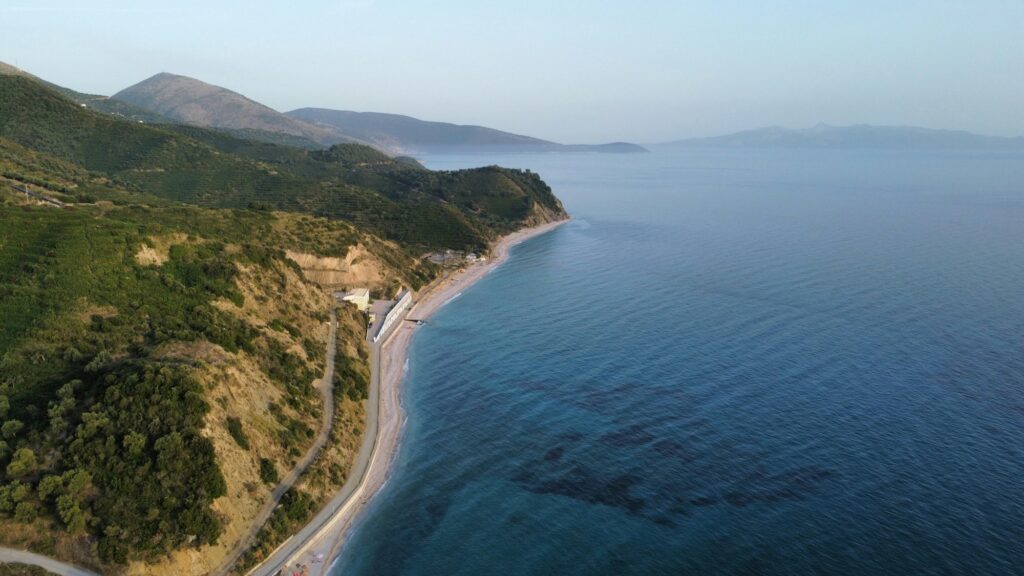
+65% increase in searches in just one year. Albania has emerged as 2026’s most surprising travel discovery — and for once, the reality lives up to the hype. Between Tirana’s dynamic capital revival, the turquoise Ionian Riviera and Berat, the UNESCO Ottoman masterpiece, this small Balkan nation offers in two weeks what other destinations take years to reveal. And at 30 to 50% less than neighbouring Greece or Croatia.
This comprehensive guide, based on recent sources and 2025–2026 traveller reports, gives you all the tools to plan your Albania trip: best times to visit, must-sees, traps to avoid, and insider tips only experienced travellers know.
Why Albania is booming in 2026
The destination rewriting the travel map
Albania welcomed over 10 million visitors in 2023 — a 35% increase on the previous year, according to Le Routard. In 2026, the trend is accelerating: travellers are actively seeking less-crowded, more affordable destinations without sacrificing beauty. Albania ticks every box.
Thirty-five years after the fall of communism in 1991, Albania stands as the Mediterranean’s « last frontier » — intact landscapes, living culture and prices that recall what Greece looked like two decades ago.
Key advantages for UK travellers
- No visa required for British passport holders (up to 90 days)
- Direct flights from London to Tirana in under 3 hours
- 2 UNESCO World Heritage sites: Berat and Gjirokastër
- Ionian Riviera far less crowded than the Croatian coast
- Excellent, largely undiscovered Mediterranean cuisine
When to visit Albania: best times and realistic budget
The smart traveller’s calendar
According to experienced travellers, peak season (mid-July to mid-August) is best avoided: traffic jams on the Riviera, overcrowded beaches, inflated prices. Early June or the whole of September hits the sweet spot — the sea is still warm but crowds have noticeably thinned.
Season-by-season guide
- April–May: Ideal for inland exploration. Green landscapes, hiking, temperatures 20–25°C. Low prices.
- June: Perfect balance of beach and culture. 28°C. Beaches not yet overrun.
- July–August: Scorching (35°C+), heavy crowds, high prices. ❌ Not recommended.
- September: The best overall month. Sea at 25°C, thin crowds, lower prices. ✅✅✅
- October: Excellent for cities and interior. Off beach season.
Realistic 2026 budget
Based on recent traveller data: budget travel £20–40/day (hostel, street food, public transport); mid-range £45–80/day (3-star hotel, restaurants, activities); comfort £100–200/day (boutique hotel, fine dining, private tours). The cost of living averages 40% lower than the UK.
1. Tirana: the capital’s remarkable rebirth
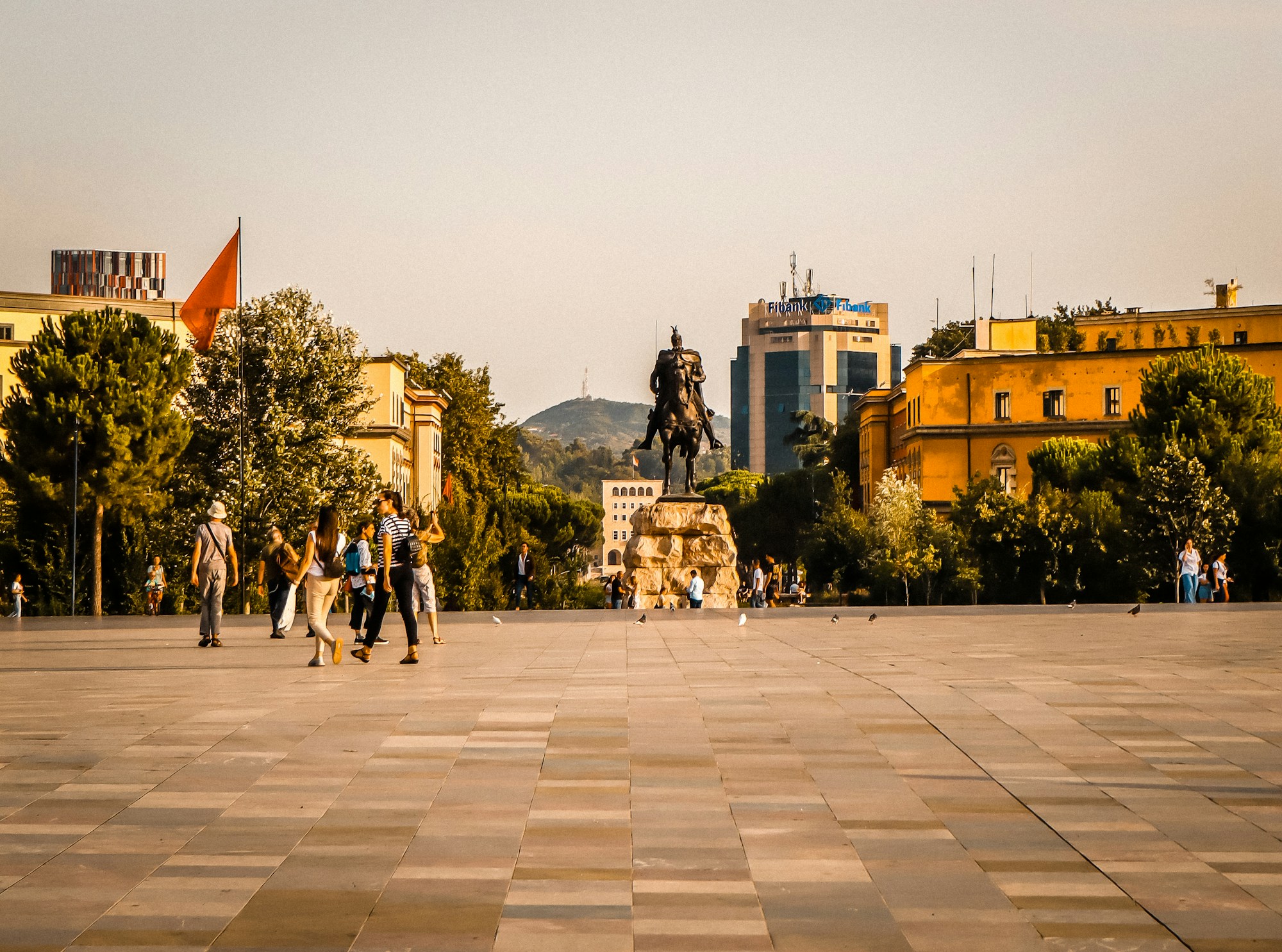
The capital that surprises everyone
Gleaming new towers stand alongside communist-era relics in a capital undergoing rapid transformation. According to Nomadic Matt, Tirana is evolving quickly into a cosmopolitan city with buzzing cafés, eclectic museums and a booming digital scene.
Tirana’s must-dos
- Bunk’Art 1 & 2: Former communist bunkers converted into museums. 100 rooms between history and contemporary art. Unmissable.
- Skanderbeg Square: Heart of the capital with the Et’hem Bey Mosque and the National History Museum.
- Blloku Quarter: Once reserved for the communist elite, now Tirana’s trendiest neighbourhood — bars, restaurants, galleries.
- Albanian food: Try fërgesa (peppers and tomatoes in a clay pot) and byrek (spinach pastry) — a seriously underrated cuisine.
Tirana’s nightlife scene
A revelation. Tirana is home to Nouvelle Vague Tirana, ranked 27th best bar in the world in 2025 — and nightlife costs 60–70% less than in London or Rome.
2. The Albanian Riviera: the Ionian coast before the crowds arrive
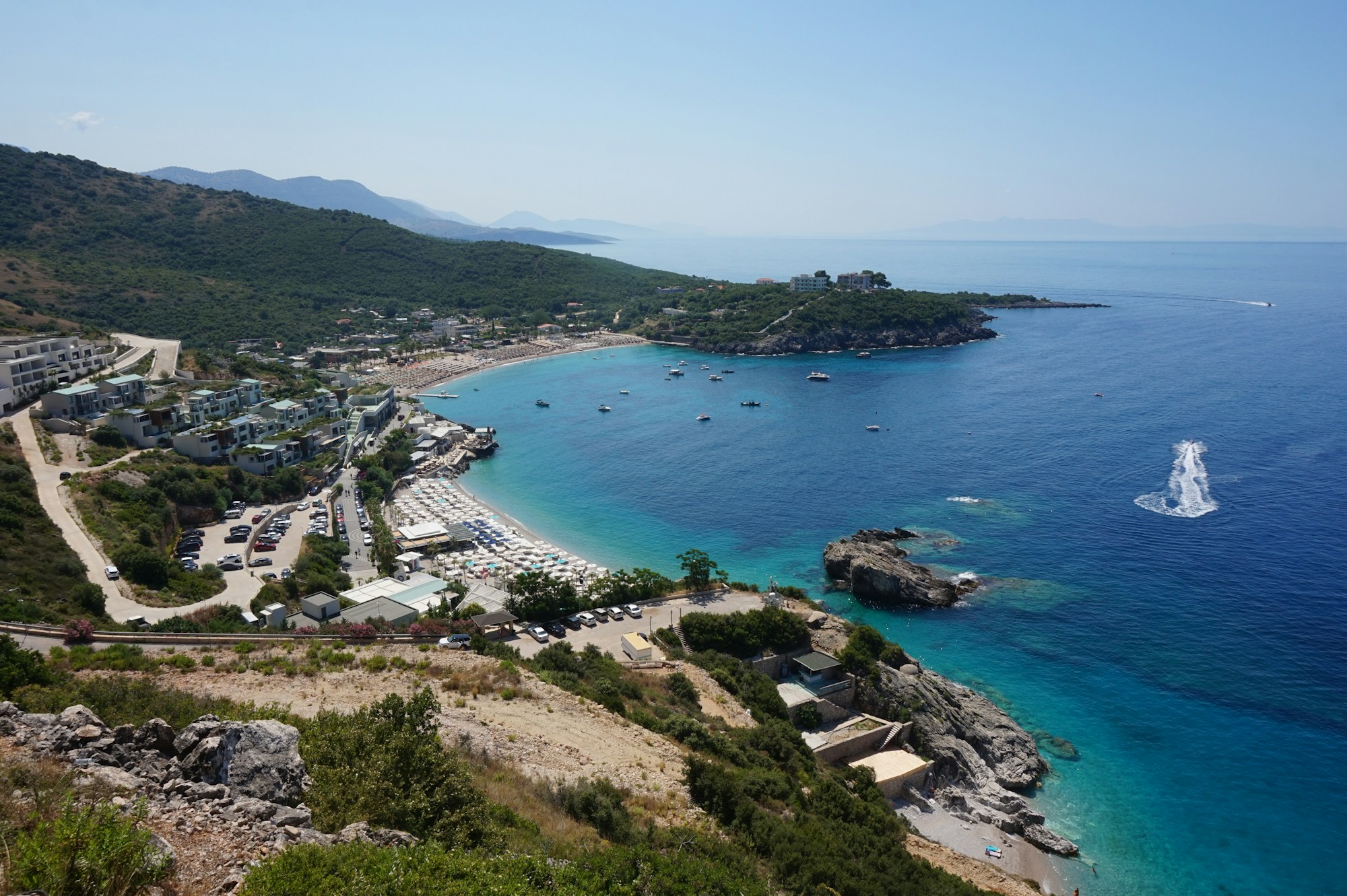
170km of near-untouched Ionian coastline
The Albanian Riviera stretches 170km between Vlorë and Sarandë, at the foot of the Ceraunian Mountains which plunge directly into the Ionian Sea. It’s the Mediterranean’s last well-kept secret — described by seasoned travellers as « the Amalfi Coast of the Balkans ».
The Riviera’s essential stops
🏖️ Dhërmi — The most spectacular
A wide bay with cliffs plunging into iridescent waters and a hilltop medieval village above. Don’t miss Gjipe beach, accessible only on foot (40-min hike) or by boat — an isolated paradise nestled between towering cliffs. Budget: £45–70/day.
🌊 Himarë — The authentic one
For a less touristy experience with a unique Greco-Albanian cultural blend. Several peaceful beaches (Livadi, Llamani, Jale) and a Byzantine castle with spectacular views over the Ceraunian Mountains. Budget: £35–55/day.
🏝️ Ksamil & Sarandë — Albania’s « Maldives »
Ksamil is often dubbed « Europe’s Maldives » for its white sand and turquoise waters. Sarandë is the ideal base for exploring the whole region. The ferry from Corfu (10+ crossings per day in high season) is the easiest way to arrive.
- Llogara Pass: breathtaking panorama over the Riviera from 1,000m altitude
- Porto Palermo: Ottoman castle in a turquoise bay
- Borsh Beach: one of Albania’s longest beaches
3. Berat: the city of a thousand windows
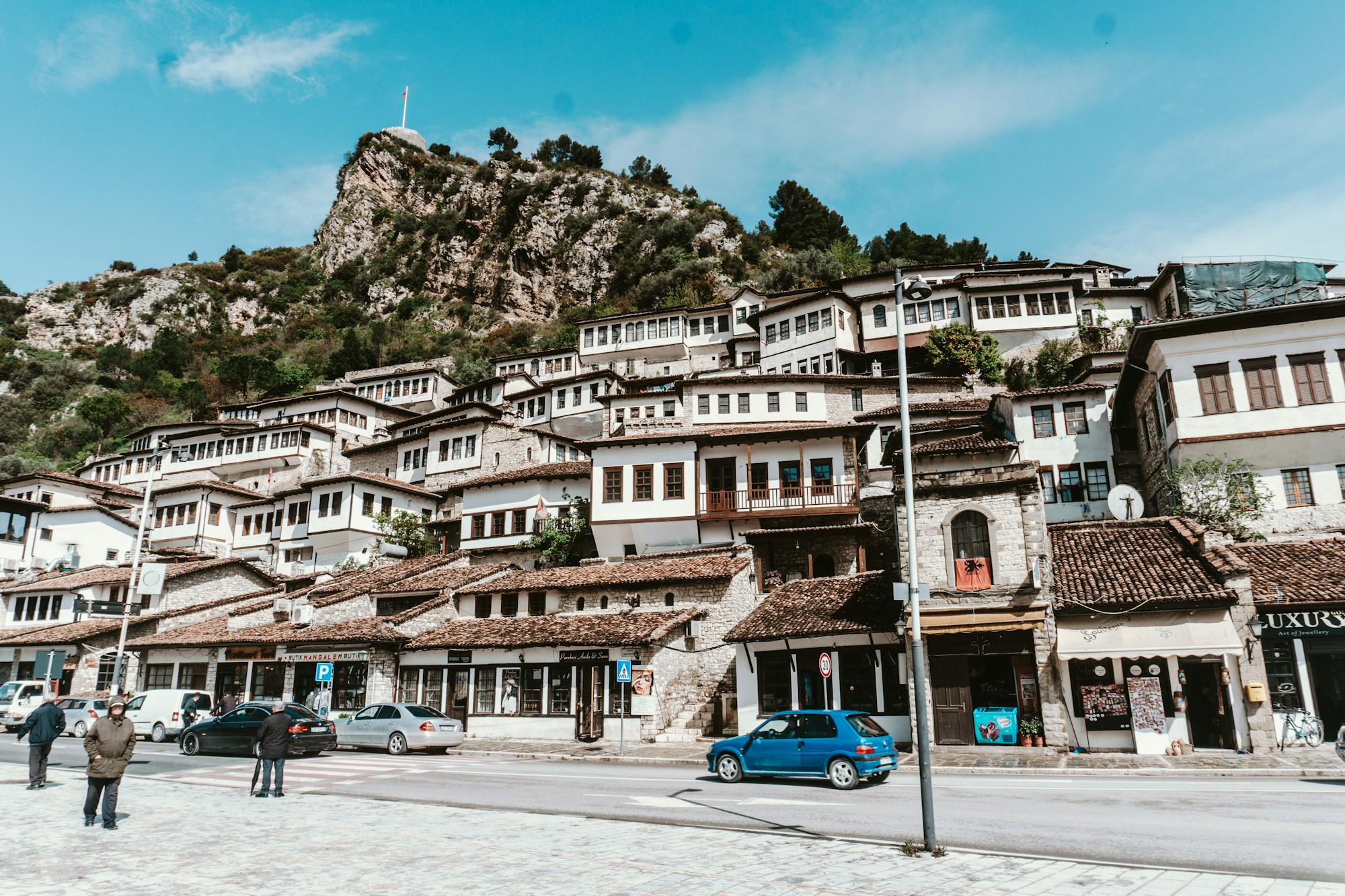
2,500 years of continuous history
Berat, nicknamed « the city of a thousand windows », is often the highlight of any Albania trip. Like Matera in Italy, it’s been continuously inhabited since the 4th century BC. Its white Ottoman houses stack up the hillside, their large windows giving the impression of a city watching back.
Old Berat consists of two neighbourhoods separated by the Osum river: Mangalem (livelier, with shops and restaurants) and Gorica (quieter, more local feel). Up at the top, families still live inside the medieval castle — this is a living museum, not a dead one.
Essential things to do in Berat
- Wander through Mangalem at sunrise (before the coach tours arrive)
- Visit Berat Castle and its 30 Byzantine chapels
- Try tave kosi (lamb baked in yoghurt) in an old quarter tavern (£8–13)
- Day trip to the Alpeta vineyards at Roshnik (just a few km away)
4. Gjirokastër and the Blue Eye: stone city, crystal water
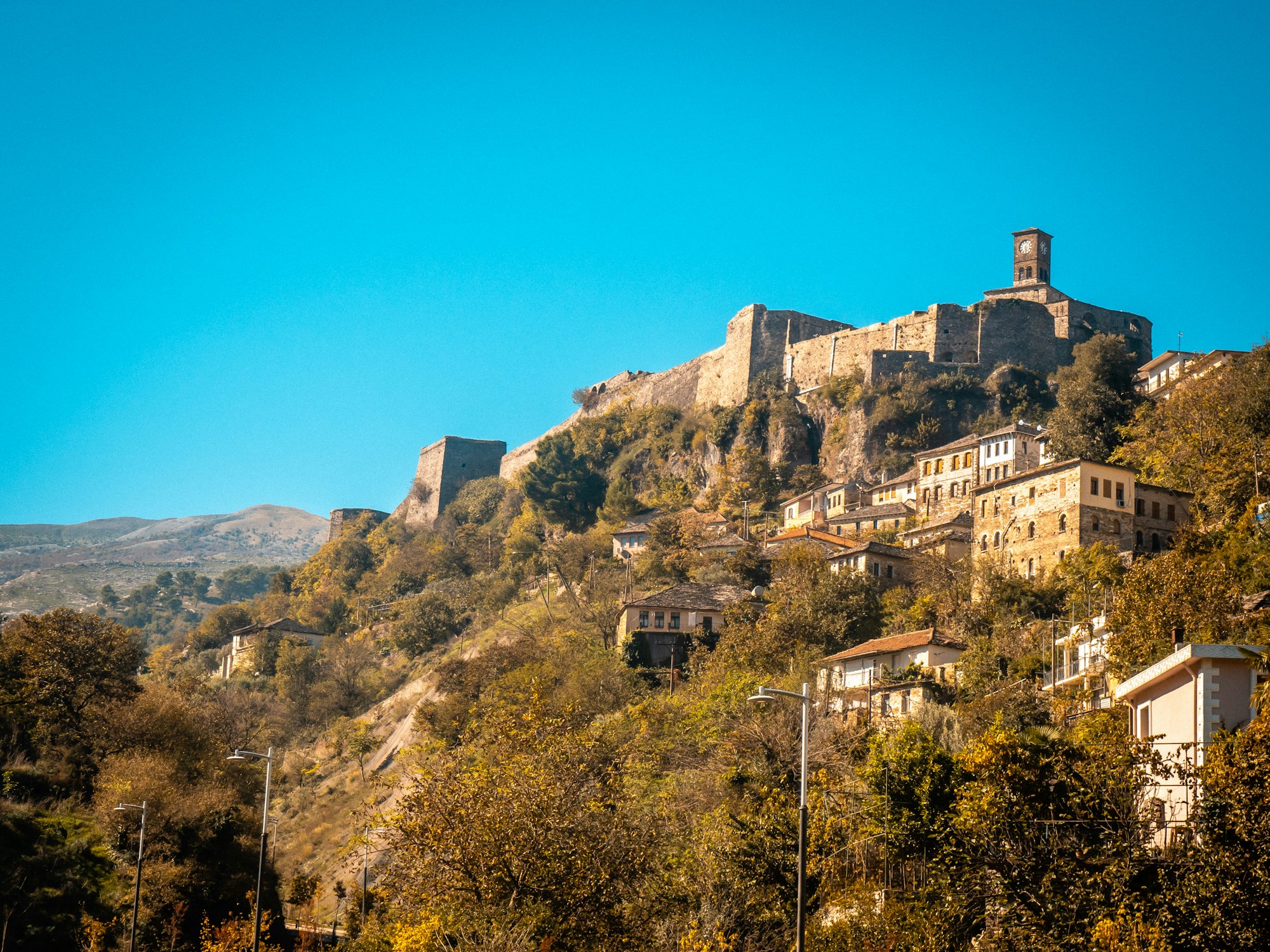
Two southern jewels worth combining in one day
Gjirokastër — The stone city
Nicknamed « the city of stone », Gjirokastër is an Ottoman citadel whose black-and-white geometric cobbled streets feel frozen in time. Its 4th-century fortress overlooks the surrounding gorges and mountains. A 12th-century bazaar, the magnificent Zekate House (1812), and a Cold War bunker museum 800 metres long: this is the birthplace of Albania’s great writer Ismail Kadare.
The Blue Eye (Syri i Kaltër) — A natural phenomenon
Just 35km from Gjirokastër, the Blue Eye is a karst spring with supernaturally blue water you can see to over 50 metres depth. According to diving experts, its 18 m³/second flow is staggering — divers have descended without touching the bottom. The cyan-turquoise colour of this karst hole exists nowhere else in Europe.
- Blue Eye access: 2km track off the Sarandë–Gjirokastër road. Entry 200 lekë (~€2).
- Combine Gjirokastër + Blue Eye in the same day from Sarandë
- Cold War bunker museum inside the 800m underground tunnel
5. Butrint National Park: 2,500 years of history under the trees
Albania’s finest archaeological site
Butrint condenses 2,500 years of history into a few hectares: Greek, Roman, Byzantine and Venetian remains coexist within lush Mediterranean vegetation. Greek settlers from Corfu established a colony here in the 6th century BC; Romans took control in 167 BC. Today you wander between well-preserved arches, colonnades and mosaics — in an atmosphere quite unlike arid archaeological sites.
- Public bus from Sarandë (200 lekë, ~€2) or shared taxi
- Open 8am to sunset; Acropolis Museum 9am–7pm
- Shaded site — ideal on scorching summer days
- The more you explore, the more you discover (wear closed shoes)
6. Essential practical information: visas, transport, money and safety
Everything you need to know before you go
📋 Visas and entry requirements for UK travellers
British passport holders do not require a visa for stays of up to 90 days. A valid passport is required — ensure it’s valid for at least 3 months beyond your planned return date. No visa on arrival, no ETIAS required (Albania is not in the EU).
- ✅ No visa for UK passport holders (up to 90 days)
- ✅ Valid UK passport required
- ✅ No mandatory vaccinations (recommended: DTP, Hep A/B)
- ⚠️ Albania is NOT in UK roaming coverage — data charges apply
🚗 Getting around
A hire car is strongly recommended for exploring the Riviera and interior. According to experienced travellers, Albania’s roads are in good condition in 2025–2026 — paved, smooth and well-maintained. Buses and furgons (shared minibuses) connect major cities without fixed schedules. For the Riviera from Corfu, the ferry is ideal (10+ daily crossings in high season).
💰 Money and payments
The currency is the Albanian lek (1 EUR ≈ 96 lekë in March 2026). Bring cash — even online bookings usually require cash payment on arrival. Expect ATM fees of around €6 to €9 (600 to 900 lekë) per withdrawal.
🛡️ Safety
Albania is generally very safe for tourists. Its crime index (45.4 in 2024) is comparable to Canada’s. Violent crime against tourists is extremely rare. The main risk is road safety — drive carefully, especially at night on mountain roads.
Prepare your Albania trip
Stay connected from the moment you land. Albania has no UK roaming coverage — an eSIM is essential. Instant activation before you travel.
From £4Nomad Insurance: worldwide medical coverage from $56/4 weeks. 10% off with our link.
From $56 / 4 weeksFrequently asked questions about travelling to Albania
Is Albania safe for British tourists?
Yes, Albania is generally very safe for tourists. Its crime index (45.4 in 2024) is comparable to Canada’s. Violent crime against tourists is extremely rare. The main risk is road safety — drive carefully, especially at night on mountain roads. Albanian hospitality is deeply rooted in the cultural code of Besa, which emphasises protecting and honouring guests.
When is the best time to visit Albania?
The best periods are May–June and September–October. These months offer ideal weather, prices 30–40% lower than July–August, and far fewer crowds. Peak season (mid-July to mid-August) is best avoided: traffic jams, overcrowded beaches, high prices. September is often considered the single best month — the sea is still at 25°C but crowds have noticeably thinned.
Do British citizens need a visa for Albania?
No, British passport holders do not need a visa for stays under 90 days. A valid UK passport is required, with at least 3 months’ validity beyond your planned return date. Albania is not in the EU and not part of the Schengen Area — no ETIAS is required either.
What budget should I plan for 10 days in Albania?
For mid-range travel (3-star hotels, mix of restaurants and public transport), budget around £800–1,200 for two people over 10 days, excluding flights. Budget travellers (hostels, street food) can manage on £350–600 for two. Flights from London to Tirana (2h45) are available from around £75 return. Albania averages 40% cheaper than the UK.
How do you get around between Tirana, Berat and the Riviera?
A hire car offers the best flexibility (roads are in good condition in 2026). From Tirana, allow 2 hours to Berat and 3–3.5 hours to the Riviera. Buses and furgons (shared minibuses) connect major cities for £1.50–10 depending on distance, without fixed schedules. The ferry from Corfu to Sarandë is ideal for reaching the Riviera from Greece (10+ crossings daily in high season).
Can you pay by card in Albania?
Outside major hotels and some Tirana restaurants, you’ll need to pay cash (Albanian lekë) for almost everything. Even online bookings via Booking.com typically require cash payment on arrival. Plan to carry around £600–700 per person for a 10-day trip, and withdraw regularly (around €6 to €9 fee per ATM transaction).
Can you combine Albania and Greece (Corfu) in one trip?
Absolutely — it’s one of the most popular combinations in the region. Fly to Corfu (many direct UK flights in summer), then take the ferry to Sarandë (30–45 minutes, several crossings daily in high season). This sea arrival, with the Ceraunian Mountains as a backdrop, is one of the Balkans’ most spectacular approaches. From Sarandë you have easy access to the Riviera, Butrint and Gjirokastër.
Why has Albania seen such huge growth in tourism in 2026?
Albania benefits from a perfect storm of factors in 2026: travellers seeking less-crowded, more affordable destinations; a country 30–50% cheaper than Greece or Croatia; a near-untouched Riviera; two UNESCO cities (Berat and Gjirokastër); and improved access (direct London flights, Corfu ferry). The destination is following the same trajectory as Croatia or Portugal did a decade ago — now is the time to visit before mass tourism takes hold.
Sources
- Le Routard — Albania, travel trend 2026
- Simbye — Albania travel costs 2026
- Nomadic Matt — Albania travel guide
- Never Ending Footsteps — Real cost of travel in Albania
- Finding Alexx — Albanian Riviera travel guide
- Tanriv Erdi Travels — Best things to do in Berat
- Adventure Albania — Butrint National Park
- VoyageAlbanie.com — The Blue Eye spring
- Ajdinis Travel — Is Albania safe for tourists?
- Something of Freedom — Albanian Riviera guide
Research conducted on 24 March 2026 — 79 sources consulted.
Ready to explore Albania?
Tirana, Berat, the Ionian Riviera… Plan your Albanian itinerary with Pixidia and discover our curated activities, accommodation and unique experiences.
Explore itineraries