
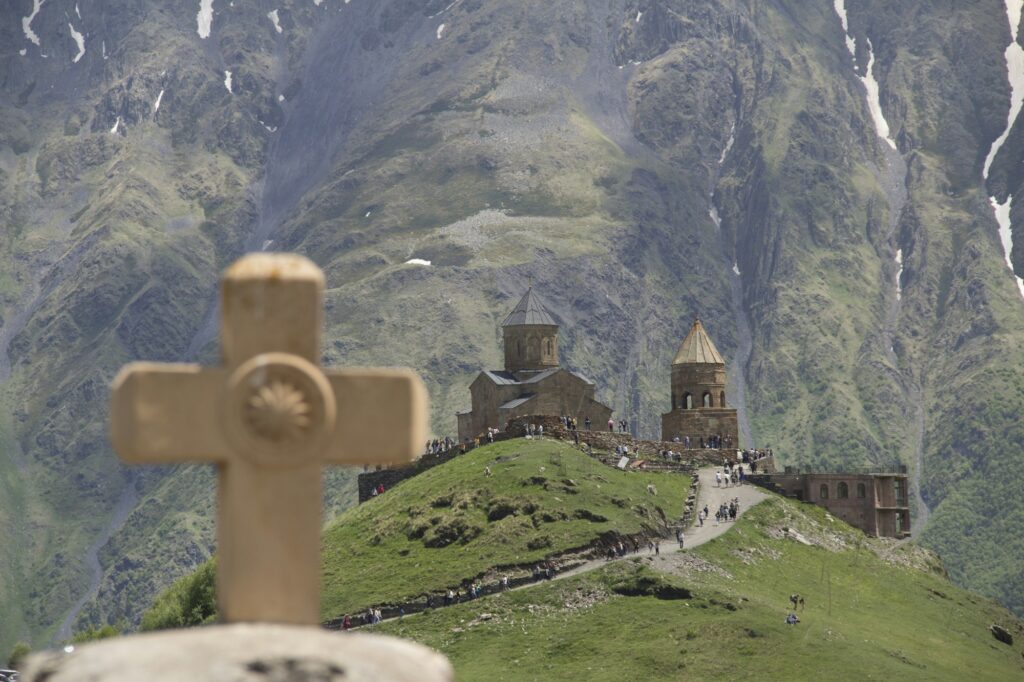
Third-highest tourism growth worldwide in 2024. Albania is no longer whispering — it’s roaring. According to the World Tourism Organization (UNWTO), the country recorded the 3rd highest tourism growth in the world last year, with visitor numbers up 80% compared to 2019. On the other side of the Balkans, Georgia captivates with its monasteries perched at 2,200 meters, its eight-thousand-year-old vineyards, and a cost of living that would put any European capital to shame. These two hidden gems share the same destiny: destinations that are still authentic, still affordable, but not for much longer. Ryanair is opening a base in Tirana in April 2026 with 450 weekly flights, the first luxury resorts are sprouting along the Albanian Riviera, and prices in Ksamil have already tripled in five years. Here’s why 2026 is the year — or never — to discover Albania and Georgia, before the secret is fully out.
Part 1 — Albania: The Mediterranean’s Last Secret
Long closed off to the world under Enver Hoxha’s dictatorship (1944-1985), Albania remained a blind spot on European tourism for decades. The result: while Croatian beaches were overflowing with cruise ships and Dubrovnik was imposing visitor quotas, the turquoise coves of the Albanian Riviera remained virtually deserted. But the numbers speak for themselves: 11.1 million visitors between January and October 2025 (a 7% increase over 2024), and the curve keeps climbing. Albania is experiencing what Croatia went through in the early 2010s — except that everything here is still two to three times cheaper.
The Albanian Riviera: Dream Beaches (For Now)
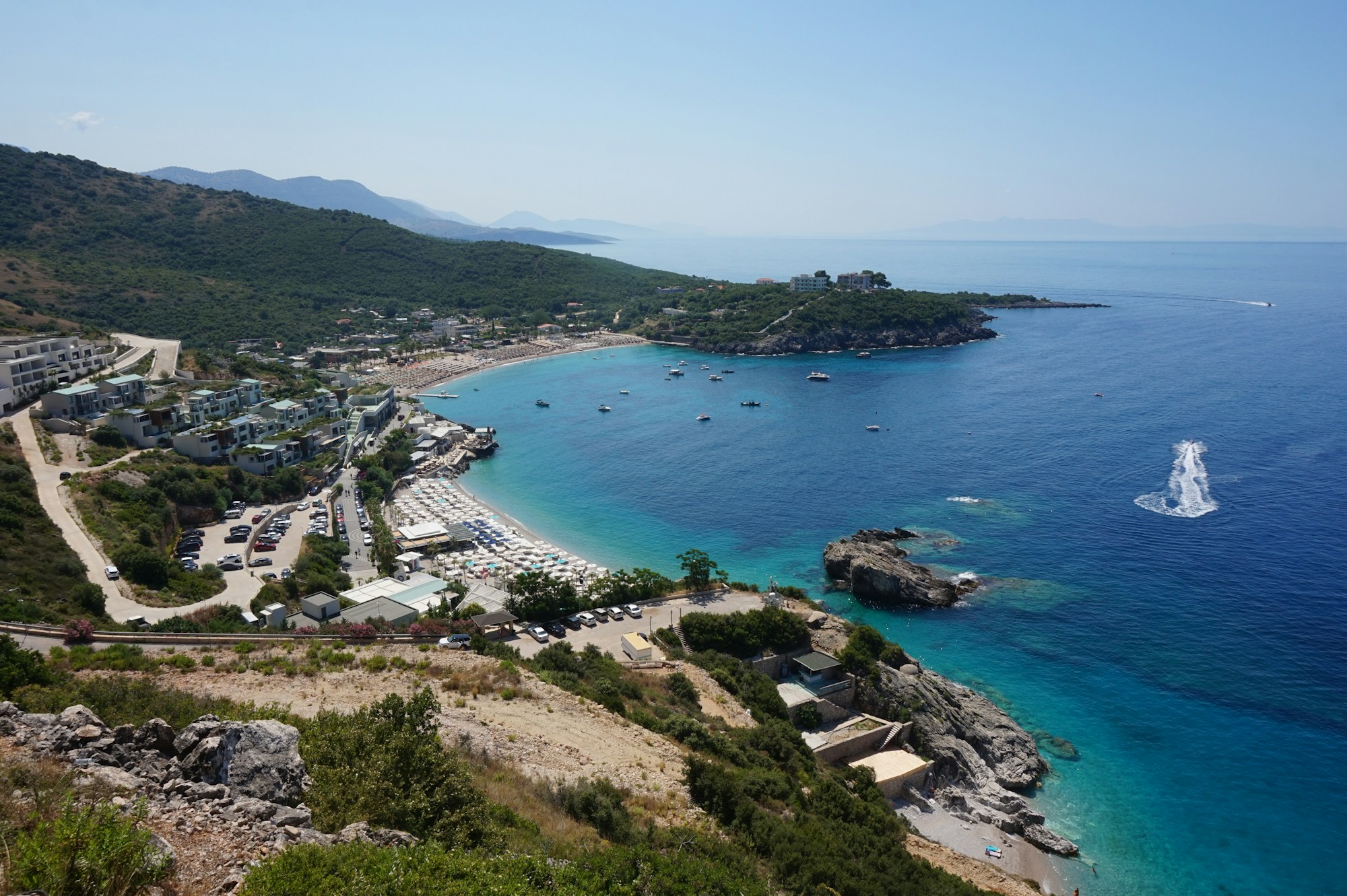
From Dhermi to Ksamil: The Ionian Coast Without the Crowds
The Albanian Riviera stretches roughly 120 kilometers between Vlore and Sarande, along the Ionian Sea. Its waters easily rival those of the neighboring Greek islands — Corfu is just a 30-minute ferry ride away — yet prices remain significantly lower. According to Budget Your Trip, a backpacker spends an average of $44 per day in Albania (including accommodation, meals, and transport), while a mid-range trip costs around $107 per day. For comparison, Croatia costs nearly double.
Dhermi is arguably the most beautiful beach in the country: a cove of white pebbles framed by olive-covered cliffs. Himare, a little further south, offers a fishing village atmosphere with fresh seafood restaurants where a kilo of mussels costs no more than 5 euros. As for Ksamil, at the gates of Butrint National Park (a UNESCO-listed archaeological site), its small islands are reminiscent of the Maldives — but a sunbed now costs 20 to 25 euros a day in peak season, a sign that gentrification is underway.
Highlights
- Turquoise waters comparable to Greece, at half the price
- Secluded coves accessible only by boat (Gjipe Beach)
- Butrint National Park, a Greek and Roman UNESCO World Heritage Site
- Fresh seafood at bargain prices (full meal from 8-12 euros)
Berat: The City of a Thousand Windows
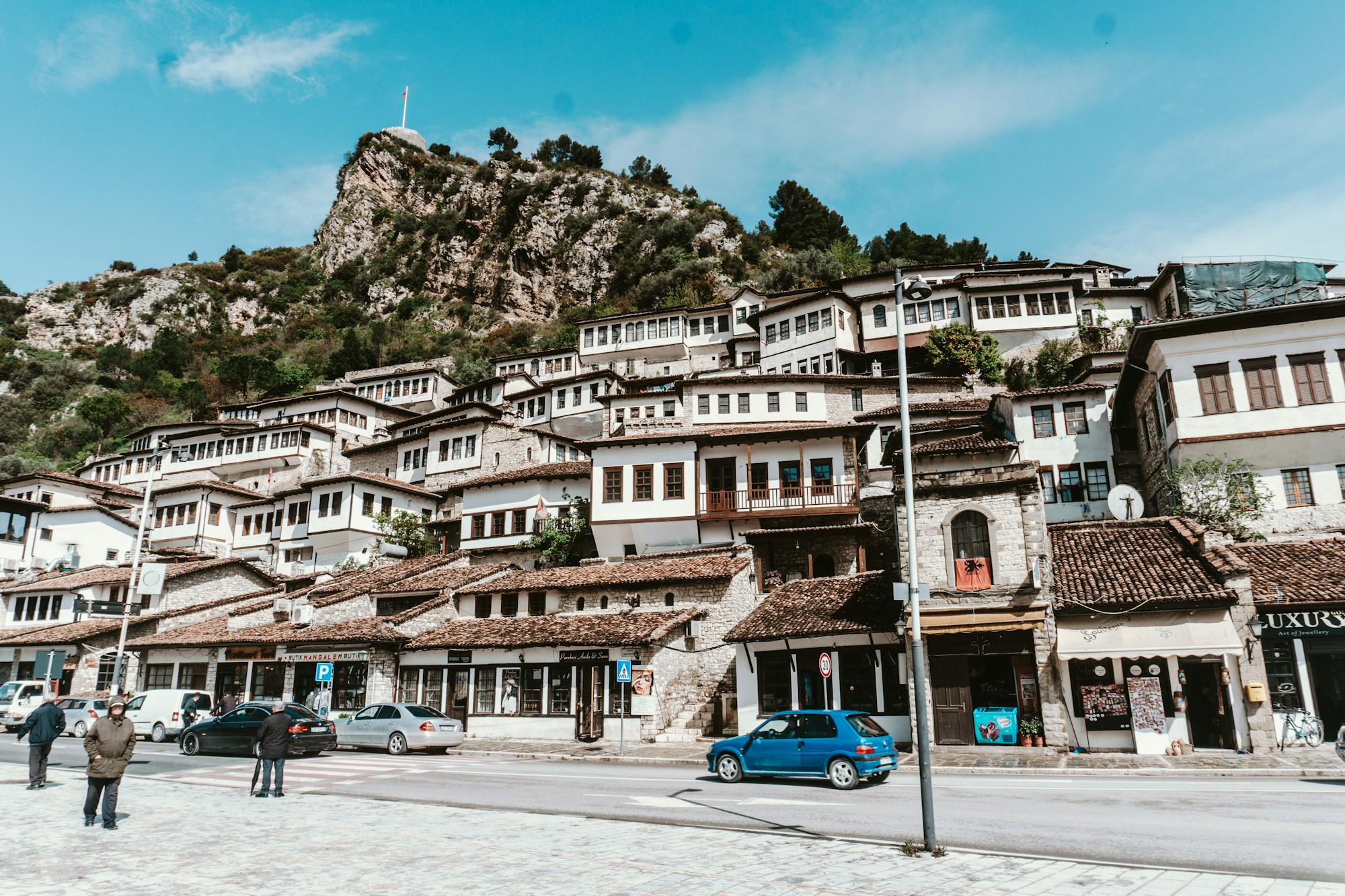
2,400 Years of Ottoman and Byzantine History
Listed as a UNESCO World Heritage Site since 2008, Berat is one of the oldest continuously inhabited cities in the Balkans. Its nickname, the City of a Thousand Windows, comes from the unique architecture of the Mangalem quarter: dozens of white Ottoman houses stacked on the hillside, their symmetrical windows seeming to watch over the Osum valley like so many eyes. Visitor numbers have quadrupled since 2019, according to data from the Albanian Ministry of Tourism (INSTAT), yet the city retains a gentle charm that similar places like Mostar in Bosnia have lost.
Don’t miss the Kalaja fortress, a castle that has been inhabited since antiquity, whose narrow streets still shelter Byzantine churches adorned with 13th-century frescoes by the master painter Onufri. Below, the Christian quarter of Gorica offers a mirror view of Mangalem, separated by Gorica Bridge, one of the most photographed bridges in Albania. In the evening, restaurants along the Osum River serve tave kosi (lamb baked in yogurt) for 4 to 6 euros — a national dish you shouldn’t miss.
Highlights
- Intact Ottoman architecture, UNESCO-listed
- Onufri’s Byzantine frescoes inside the fortress
- Authentic local cuisine at gentle prices
- Peaceful atmosphere, far from mass tourism
The Albanian Alps: The Theth-Valbona Trek
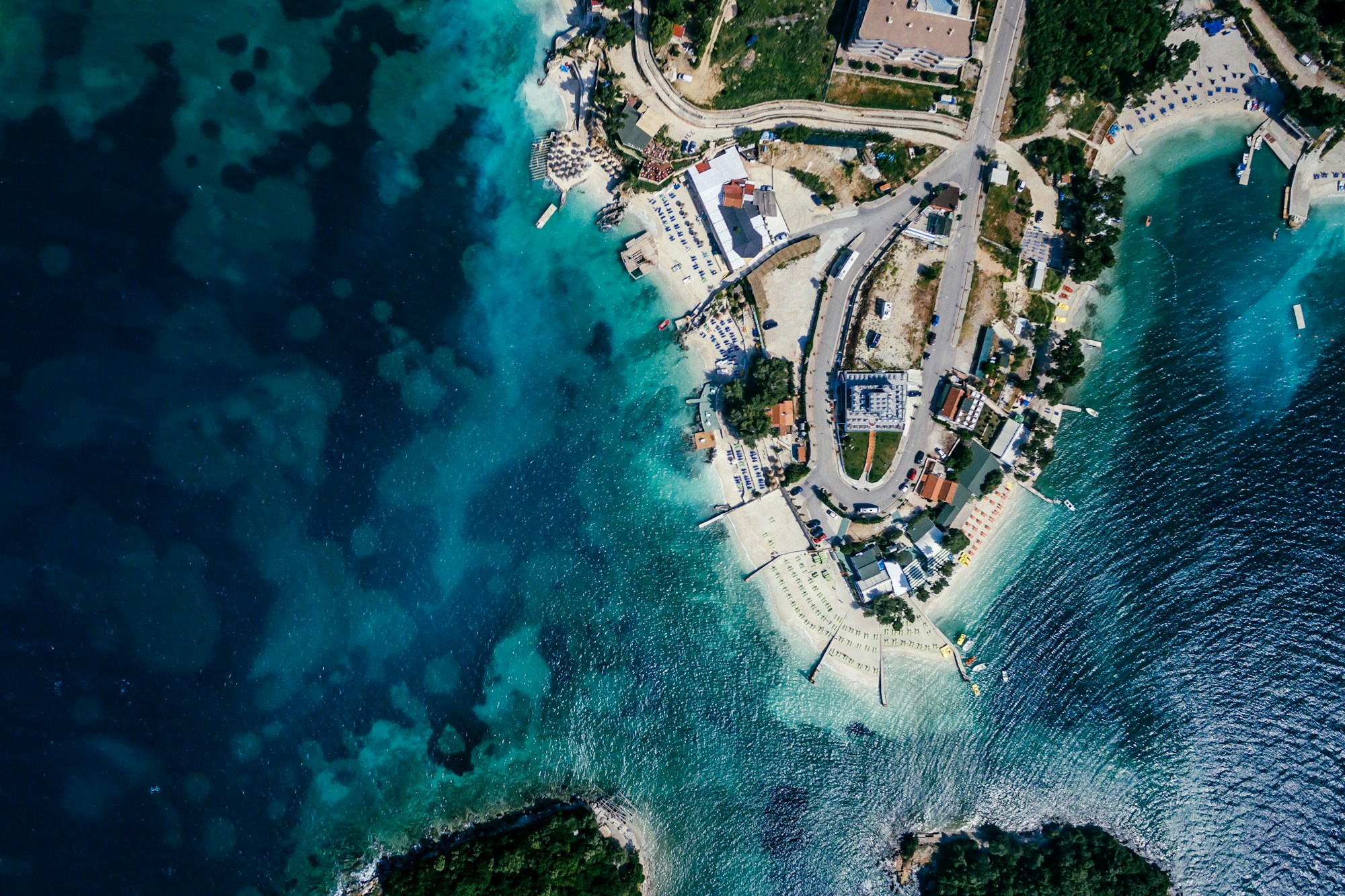
The Dolomites of the Balkans, Without the Price Tag
Northern Albania harbors a secret even better kept than its Riviera: the Albanian Alps (Alpet Shqiptare), a wild massif of karst peaks, dizzying gorges, and remote villages where time seems to stand still. The most iconic trek connects Theth to Valbona: 15 kilometers across the Valbona Pass (1,815 m), with roughly 1,000 meters of elevation gain. According to Nomadic Matt, it’s one of the most spectacular hikes in Europe — and likely the least crowded.
The Theth valley, with its stone church, waterfall, and « Lock-in Tower » (an isolation tower linked to the blood feuds of the Kanun code), is a microcosm of deep Albania. Family-run guesthouses offer room and board for 15 to 25 euros per person, homemade meals included. From Theth, a ferry crosses Lake Koman — often compared to the Norwegian fjords — to reach the Valbona valley. For lovers of raw nature, a detour through Permet and the Benja thermal baths (free, open-air) offers a moment of total disconnection, just a few kilometers from the Vjosa, proclaimed Europe’s last great wild river and designated a national park in 2023.
Highlights
- Theth-Valbona trek, 15 km through the Albanian Alps
- Lake Koman ferry, comparable to the Norwegian fjords
- Family-run guesthouses with homemade meals (15-25 euros/night)
- Vjosa, Europe’s last wild river, now a national park
Part 2 — Georgia: The Caucasus’ Hidden Treasure
If Albania is the Mediterranean’s best-kept secret, Georgia is the Caucasus’. This small country of 3.7 million inhabitants, wedged between Russia, Turkey, and Azerbaijan, boasts an astonishing diversity of landscapes and cultures: monasteries perched on the edge of precipices, 8,000-year-old vineyards, snow-capped peaks above 5,000 meters, and a capital where Art Nouveau meets medieval sulfur baths. All on a budget that defies European comparison: according to Never Ending Footsteps, a backpacker can live on $14 a day in Georgia — three times less than in Albania. However, note that since January 1, 2026, a mandatory health insurance with minimum coverage of 30,000 GEL (approximately 10,000 euros) is required upon entry.
Tbilisi: The Raw Charm of the Capital
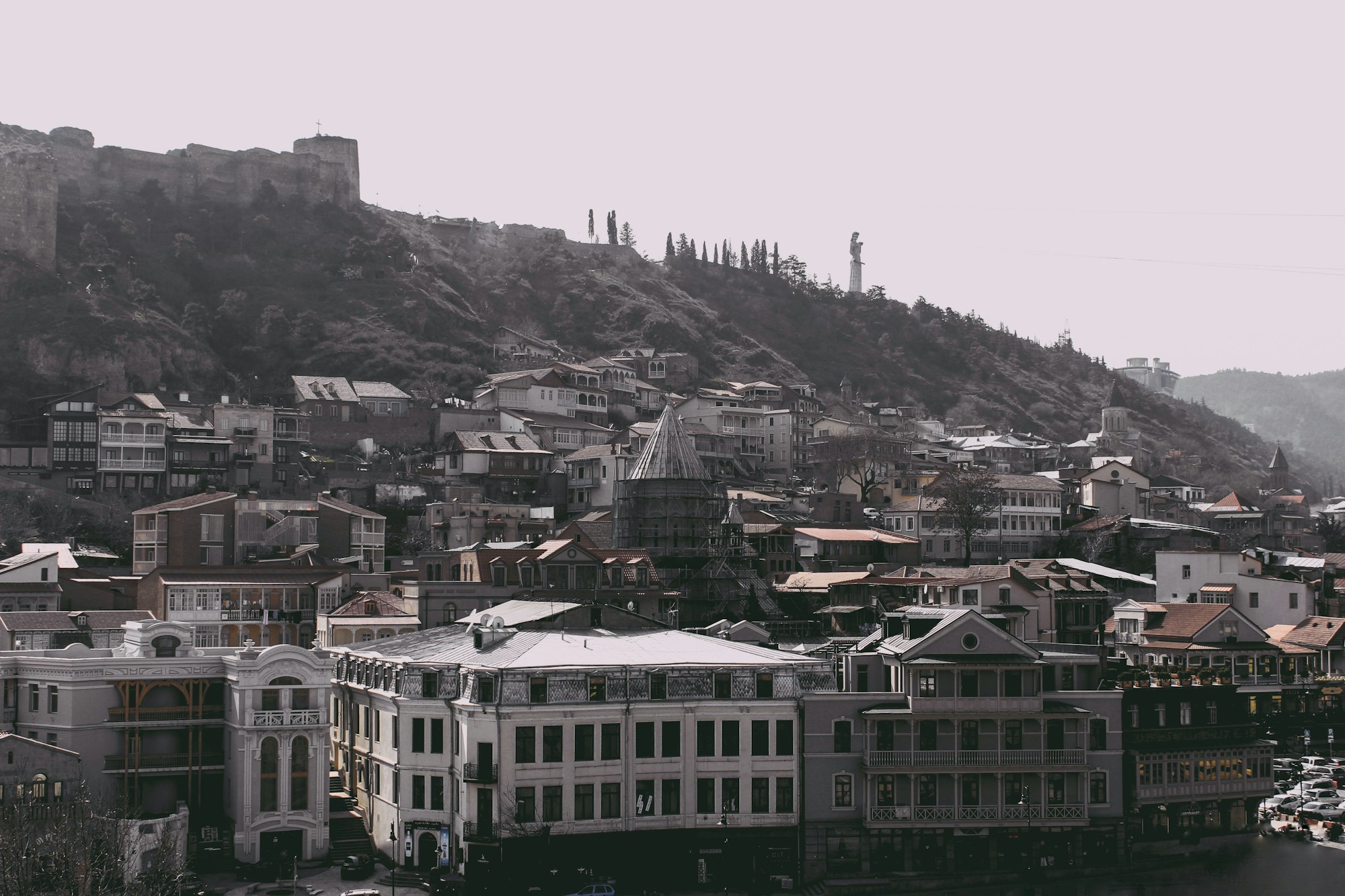
Art Nouveau, Sulfur Baths, and Legendary Cuisine
Tbilisi doesn’t look like any other European capital. The old town is a labyrinth of cobblestone streets lined with wooden houses featuring carved balconies, where Georgian Art Nouveau blends with Persian and Soviet architecture. The Abanotubani quarter is famous for its sulfur baths — brick domes where you soak in sulfurous water at 40°C for 5 to 15 GEL (2 to 5 euros). According to Lonely Planet, Tbilisi is one of Europe’s most underrated capitals, with a food scene in full bloom.
And what a food scene it is. Khachapuri (cheese-stuffed bread, sometimes topped with an egg and butter in its Adjarian version) is a meal in itself for 3 to 5 GEL (1 to 2 euros). Khinkali — giant dumplings stuffed with spiced meat — are eaten by hand, by the dozen, for just a few cents each. Add Georgian natural wine (more on that later) and you have one of the best food-value ratios in the world. For getting around, the Bolt app is the local Uber: a ride across Tbilisi costs between 4 and 10 GEL (1.50 to 3.50 euros).
Highlights
- Abanotubani sulfur baths (from 2 euros admission)
- Georgian cuisine, among the finest in the Caucasus
- Art Nouveau old town listed as Georgian heritage
- Emerging nightlife scene (clubs, natural wine bars)
Kazbegi: The Monastery Above the Clouds
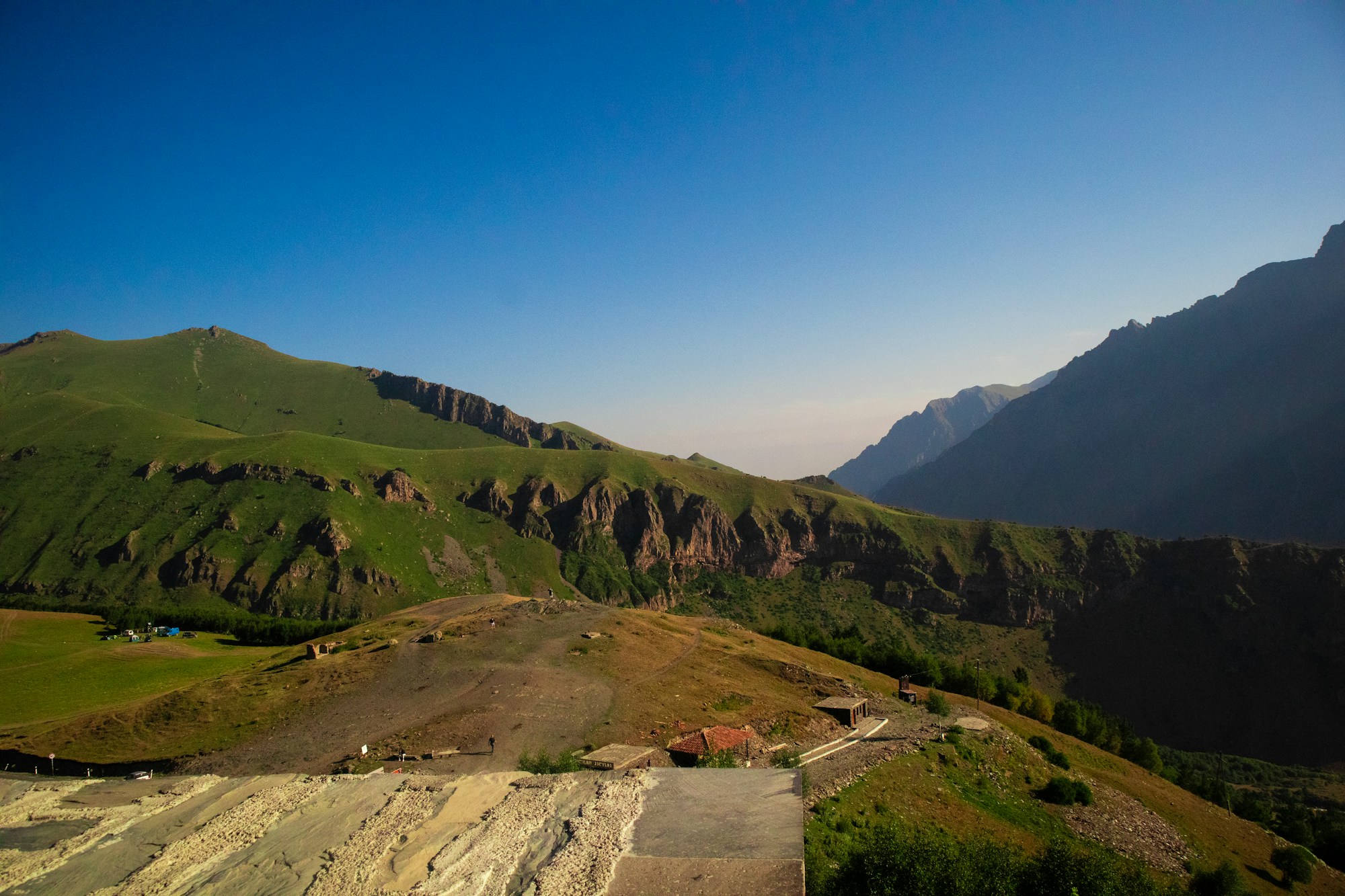
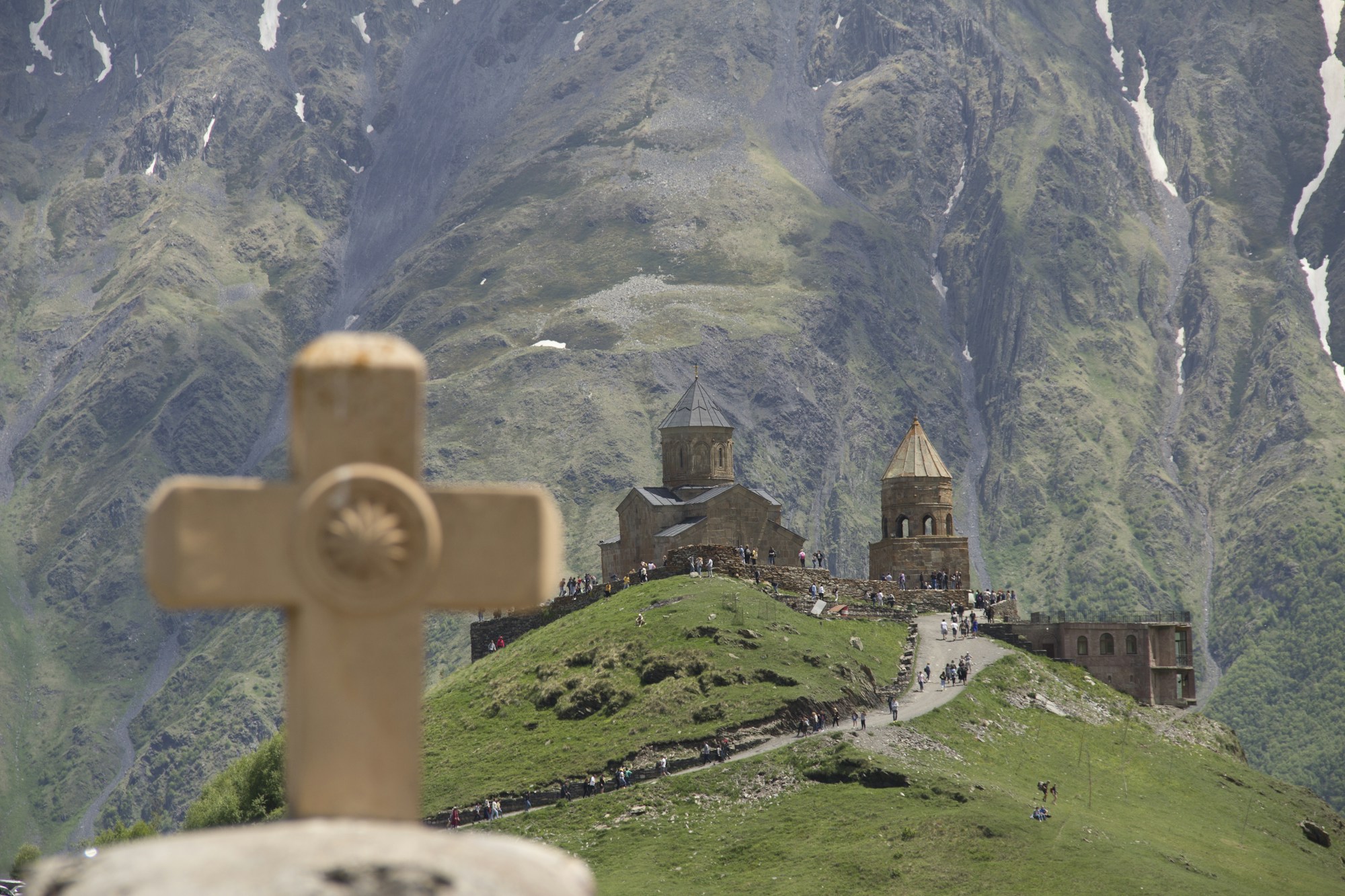
Gergeti Trinity Church Facing Mount Kazbek (5,047 m)
Georgia’s most iconic image has to be earned: the Gergeti Trinity Church, built in the 14th century at 2,170 meters altitude, facing the imposing mass of Mount Kazbek (5,047 m). To reach it from the village of Stepantsminda (formerly Kazbegi), allow about 1.5 hours of hiking on a steep trail — or 20 GEL by 4×4 if your legs refuse to cooperate. On a clear day, the view of Kazbek’s glaciers is one of the most spectacular in the entire Caucasus.
The journey from Tbilisi is a spectacle in itself: the Georgian Military Highway, used since antiquity, winds for 150 kilometers through the Aragvi gorge, crosses the Cross Pass (2,379 m), and runs alongside the Ananuri fortress perched above its emerald lake. Marshrutkas (shared minibuses) connect Tbilisi to Stepantsminda in 3 hours for 10 GEL (3.50 euros). For hikers, the region offers multi-day treks to the Gergeti Glacier or the Juta Valley, with family-run guesthouses where a night with breakfast costs 30-50 GEL (10-18 euros).
Highlights
- Gergeti Church, Georgia’s most photographed landmark
- Georgian Military Highway, one of the Caucasus’ most scenic road trips
- Treks to the glacier and the Juta Valley
- Family-run guesthouses with home cooking (10-18 euros/night)
Svaneti: Medieval Towers at the Edge of the World
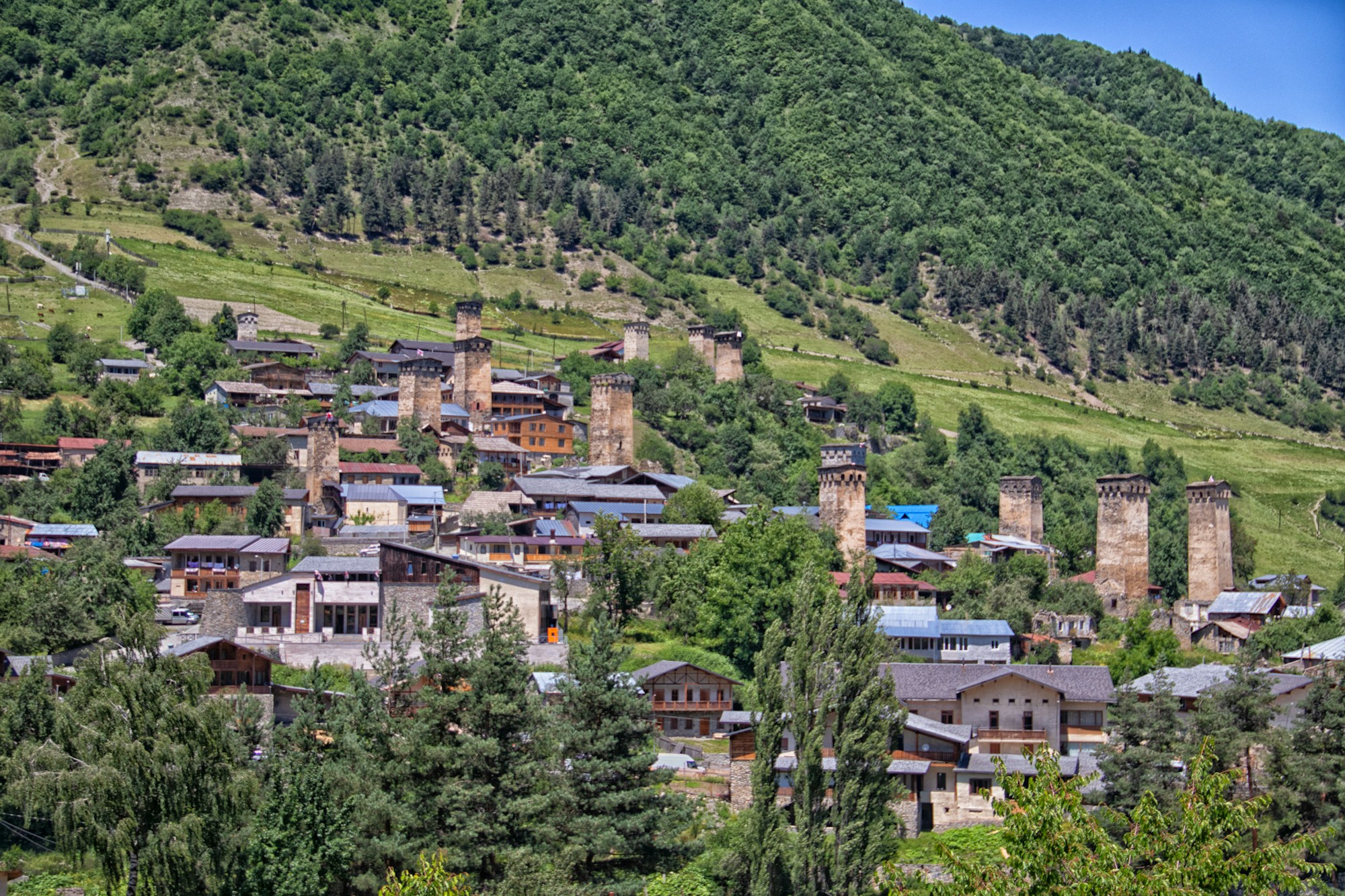
Mestia and Ushguli: The Deep Caucasus, UNESCO-Listed
Upper Svaneti, a UNESCO World Heritage Site, is arguably Georgia’s most enchanting region. Its villages, dominated by medieval defense towers (koshkebi) dating from the 9th to 12th centuries, seem to have been preserved in the amber of time. Mestia (1,500 m), the regional capital, is the starting point for a four-day trek to Ushguli, considered one of the highest continuously inhabited villages in Europe (2,200 m).
The trail crosses alpine meadows, skirts glaciers, and passes through Svan communities where centuries-old traditions (polyphonic singing, family blood feuds resolved by custom) are still alive. For the less sporty, a 4×4 connects Mestia to Ushguli in 3 to 4 hours along a bumpy but breathtaking track. From Tbilisi, a domestic flight to Mestia (Vanilla Sky, about 65 GEL or 23 euros) soars over the Greater Caucasus range — a spectacle in itself. Another option for adventurers in the region: Tusheti, accessible only via the Abano Pass, considered one of the most dangerous roads in the world (open from mid-June to late September only).
Highlights
- Svan medieval towers, UNESCO-listed
- 4-day Mestia-Ushguli trek through the Caucasus
- Ushguli, one of Europe’s highest inhabited villages
- Scenic Tbilisi-Mestia flight for 23 euros
Kakheti: 8,000 Years of Wine in Clay Jars
The Birthplace of Winemaking
Georgia is not just a wine-producing country: it is the wine country, in the most literal sense. Archaeological excavations in the Kakheti region have uncovered wine residues dating back to 6,000 BC, making Georgia the birthplace of winemaking, 3,000 years before Greece or Italy. To this day, many winemakers still practice the ancestral qvevri method: large clay jars buried in the ground where grapes ferment with their skins, seeds, and sometimes stems for several months. This technique, inscribed on the UNESCO Intangible Heritage list, produces amber wines with atypical tannins, known as « orange wines, » which have become the darling of natural wine bars worldwide.
The Alazani Valley, the backbone of Kakheti, is dotted with wine estates where tastings are typically free or cost between 10 and 30 GEL (3.50 to 10 euros) for 5 to 8 wines. Don’t miss Sighnaghi, the « City of Love, » a fortified hilltop village with 360-degree views of the vineyards and the Caucasus. The rtveli season (grape harvest, September-October) is the ideal time for the experience: families invite travelers to stomp grapes barefoot in stone presses, followed by a supra — the traditional Georgian feast led by a tamada (toastmaster).
Highlights
- World’s oldest winemaking region (8,000 years)
- Qvevri method listed as UNESCO Intangible Heritage
- Free or dirt-cheap tastings at wine estates
- Sighnaghi, a fortified village with panoramic vineyard views
Albania vs Georgia: The Complete Comparison
Both destinations share common DNA — authenticity, affordable budgets, breathtaking landscapes — but offer radically different experiences. Here’s a table to help you choose (or combine both).
| Criterion | Albania | Georgia |
|---|---|---|
| Backpacker budget | ~$44/day (source) | ~$14/day (source) |
| Mid-range budget | ~$107/day | ~$38/day |
| Currency | Lek (ALL) — cash economy | Lari (GEL) — cards OK in cities |
| Visa (EU/US citizens) | Exempt (90 days) | Exempt (1 year for 75+ countries) |
| Best time to visit | May-Jun, Sep-Oct | May-Jun, Sep-Oct |
| Flights from Europe | Ryanair Tirana (from April 2026), Transavia | Wizz Air Kutaisi (from 30 euros), Turkish via Istanbul |
| Main draw | Beaches and Ionian Riviera | Mountains and ancient wine |
| Signature trek | Theth-Valbona (1 day, 15 km) | Mestia-Ushguli (4 days, 58 km) |
| Cuisine | Tave kosi, byrek, fresh fish | Khachapuri, khinkali, qvevri wines |
| UNESCO sites | 4 sites (Berat, Gjirokaster, Butrint, Lake Ohrid) | 3 sites + 1 Intangible Heritage (qvevri) |
| Tourism level | Booming (+80% vs 2019) | Steadier growth, still unspoiled |
| Mandatory insurance | No | Yes (since Jan 2026, min 30,000 GEL) |
Combining Albania and Georgia: The Perfect Trip
The good news? These two countries pair perfectly for a 3- to 4-week trip in September, the ideal window for both destinations. Here’s our suggested itinerary:
Suggested Combined Itinerary (21-28 days)
- Days 1-3: Tirana and surroundings (Bunk’Art, Pazari i Ri market)
- Days 4-5: Berat (City of a Thousand Windows, fortress)
- Days 6-7: Gjirokaster (City of Stone, Blue Eye)
- Days 8-12: Albanian Riviera (Himare, Dhermi, Ksamil, Butrint)
- Days 13-14: Flight from Tirana to Kutaisi (connection via Vienna or Istanbul)
- Days 15-17: Tbilisi (old town, sulfur baths, food scene)
- Days 18-19: Kazbegi (Military Highway, Gergeti)
- Days 20-23: Svaneti (Mestia, trek to Ushguli)
- Days 24-26: Kakheti (Sighnaghi, grape harvest, wine tastings)
- Days 27-28: Return to Tbilisi, flight home
Transport Tips
There are no direct flights between Tirana and Tbilisi, but several connecting options go through Istanbul (Turkish Airlines, 3-5 hour layover) or Vienna (Austrian/Wizz Air). Budget between 80 and 200 euros for this segment when booking 2-3 months ahead. In Albania, getting around is done mainly by furgon (shared minibuses), which are reliable but run without fixed schedules: they leave when full. In Georgia, marshrutkas work the same way, supplemented by the Bolt app in cities.
Estimated Combined Budget
For a 3-week trip (backpacker style), budget approximately 900 to 1,200 euros excluding international flights: about 600-700 euros for the Albania leg (10-12 days) and 300-500 euros for the Georgia leg (10-14 days), where the cost of living is significantly lower. For mid-range travel, expect 2,000 to 2,800 euros for the same itinerary with 3-star hotels and quality restaurants.
Frequently Asked Questions
Are Albania and Georgia safe for tourists in 2026?
Yes, both countries are considered safe for travelers. Albania has a very low tourist crime rate, and the areas visited by tourists (Riviera, Berat, Gjirokaster, Tirana) pose no particular concerns. In Georgia, Tbilisi, Kakheti, and Svaneti are very safe. Simply avoid the border areas with Abkhazia and South Ossetia (occupied territories). Check your government’s travel advisories before departure for the latest updates.
Do I need a visa to visit Albania and Georgia?
No. Citizens of the EU, US, UK, Canada, Australia, and many other countries are visa-exempt in both countries. Albania grants a visa-free stay of 90 days. Georgia is even more generous: citizens of over 75 nationalities can stay for up to one year without a visa. However, note that since January 1, 2026, Georgia requires mandatory health insurance with minimum coverage of 30,000 GEL (approximately 10,000 euros) for entry.
What budget should I plan for 2 weeks between Albania and Georgia?
On a backpacker budget, plan for approximately $600 to $800 for 2 weeks (excluding international flights): about $44/day in Albania and $14/day in Georgia according to Budget Your Trip. For mid-range travel (3-star hotels, restaurants), expect $1,400 to $1,800. International flights from Europe cost between 100 and 300 euros round-trip to Tirana (Ryanair) or Kutaisi (Wizz Air). The connecting flight between the two countries (via Istanbul or Vienna) adds 80 to 200 euros.
When is the best time to visit Albania and Georgia?
Both countries share the same ideal window: May-June and September-October. In May-June, temperatures are pleasant (20-28°C), sites are uncrowded, and prices are at their lowest. In September-October, you enjoy a perfect Indian summer, the grape harvest in Kakheti, and still-warm beaches in Albania. Avoid July-August if possible: the Albanian Riviera gets packed and inland Georgia can be sweltering. Mountain treks (Theth-Valbona, Mestia-Ushguli) are only passable from June to September.
Can I pay by card in Albania and Georgia?
The two countries have different approaches. Albania remains largely a cash-based economy: most restaurants, taxis, and small shops only accept cash in Lek. Bring a Wise or Revolut card for fee-free ATM withdrawals. In Georgia, the situation is more modern: credit and debit cards are accepted in most hotels, restaurants, and supermarkets in Tbilisi and major cities. However, in rural areas (Svaneti, Tusheti), cash in Lari remains essential.
How do I travel between Albania and Georgia?
There are no direct flights between the two countries. The best option is a connecting flight via Istanbul (Turkish Airlines, approximately 5-7 hours total) or Vienna (Austrian Airlines/Wizz Air). Budget 80 to 200 euros depending on timing and how far ahead you book. Within each country, local transport is affordable: furgons (shared minibuses) in Albania and marshrutkas in Georgia, both operating on a fill-up-and-go basis. The Bolt app is essential in Georgia for urban taxis.
Is health insurance really mandatory to enter Georgia in 2026?
Yes. Since January 1, 2026, Georgia requires valid health insurance for all foreign visitors, with minimum coverage of 30,000 GEL (approximately 10,000 euros). This insurance must cover medical expenses, hospitalization, and repatriation. You can purchase it from your regular insurer or from travel-specialized insurers like World Nomads or SafetyWing. Proof of insurance may be requested upon arrival at the airport. Albania, on the other hand, does not require mandatory insurance (though it is highly recommended).
Do I need to speak Albanian or Georgian to travel in these countries?
No, it’s not essential, but learning a few words is always appreciated. In Albania, younger generations increasingly speak English (and sometimes Italian, a legacy of the diaspora). On the Riviera and in tourist towns, you’ll get by in English. In Georgia, English is widespread in Tbilisi and tourist areas, but virtually non-existent in remote villages in Svaneti or Tusheti. The Georgian alphabet (mkhedruli) is unique in the world — learn at least « gamarjoba » (hello) and « madloba » (thank you), Georgians love it. Google Translate works offline in both languages if you download them in advance.
Sources
- UNWTO — Global Tourism Data 2024
- PureAlb — Albania Ranks Top 3 Globally for Tourism Growth 2024
- Travel and Tour World — 11.1 Million Visitors in Albania (Jan-Oct 2025)
- Ryanair Corporate — Tirana Base Opening April 2026
- Budget Your Trip — Albania Travel Budget
- Never Ending Footsteps — Georgia Travel Budget
- UNESCO — Butrint (Albania)
- UNESCO — Historic Centers of Berat and Gjirokaster
- UNESCO — Upper Svaneti (Georgia)
- UNESCO Intangible Heritage — Qvevri Winemaking Method
- IUCN — Vjosa, Europe’s Last Wild River
- INSTAT — Albanian Statistics Institute
- GeoConsul — Mandatory Health Insurance Georgia 2026
- Lonely Planet — Tbilisi
- Nomadic Matt — Albania Guide
- U.S. Department of State — Travel Advisories
- Never Ending Footsteps — Albania Budget (Cash Economy)
Research conducted in February 2026. Prices, entry requirements, and practical information are subject to change.
Ready to Discover These Hidden Gems?
Create your custom Albania-Georgia itinerary with Pixidia. Our personalized routes combine the best sites of both countries with handpicked accommodations and authentic local experiences — all at a budget that’s hard to beat.
Explore All Itineraries