

China’s Mid-Autumn Festival 2026 falls on Friday 25 September, with an official public holiday running from 25 to 27 September. Unlike some other Chinese holidays, no weekend is swapped to compensate. It stays separate from National Day (1-7 October), with only 3 working days between the two. In 2024, Mid-Autumn alone generated 107 million domestic trips in China, well below the scale of the October Golden Week. For a UK traveller, it’s the most liveable window in China’s autumn calendar: enough atmosphere to feel the festival, short enough to dodge the real chaos.
Three public holidays, a full moon, and a country on the move by the tens of millions. The Mid-Autumn Festival (中秋节) is China’s second most important celebration after Chinese New Year, and 2026 brings a clean setup: a straight 25-27 September break, with no calendar juggling, followed a week later by National Day from 1 to 7 October. The two stay officially separate, unlike the exceptional 2025 merger that created an 8-day holiday and 888 million trips. Here’s how to read this calendar, where to watch the full moon, and how to plan a trip to China without getting caught out by crowds or logistics.
25-27 September 2026: a break distinct from the Golden Week
The Mid-Autumn Festival falls every year on the 15th day of the 8th month of the Chinese lunar calendar, which places it between 6 September and 6 October in the Gregorian calendar depending on the year: 25 September in 2026, 15-17 September in 2027. The date was confirmed by the General Office of China’s State Council in its official notice of 4 November 2025, which sets the public holiday from Friday 25 to Sunday 27 September 2026, 3 days in total.
What makes 2026 different is the absence of « 调休 » (a compensatory workday shifted to a Saturday or Sunday): with 25 September falling naturally on a Friday, the weekend follows on without any forced swap. That’s been welcomed in China after years of criticism over reshuffled public holidays. National Day (the Golden Week) follows barely a week later, from 1 to 7 October 2026, with two Saturdays worked in compensation. Between the two breaks there are only 3 working days (28-30 September): by booking them off, a Chinese employee could theoretically string together 13 days of holiday in a row. For a UK traveller the constraint is different, since it depends on the 30-day visa-free window rather than annual leave rules, but it’s a useful clue to why China will be on the move again in mid-October.
The golden triangle: Beijing, Xi’an, Shanghai in ten days
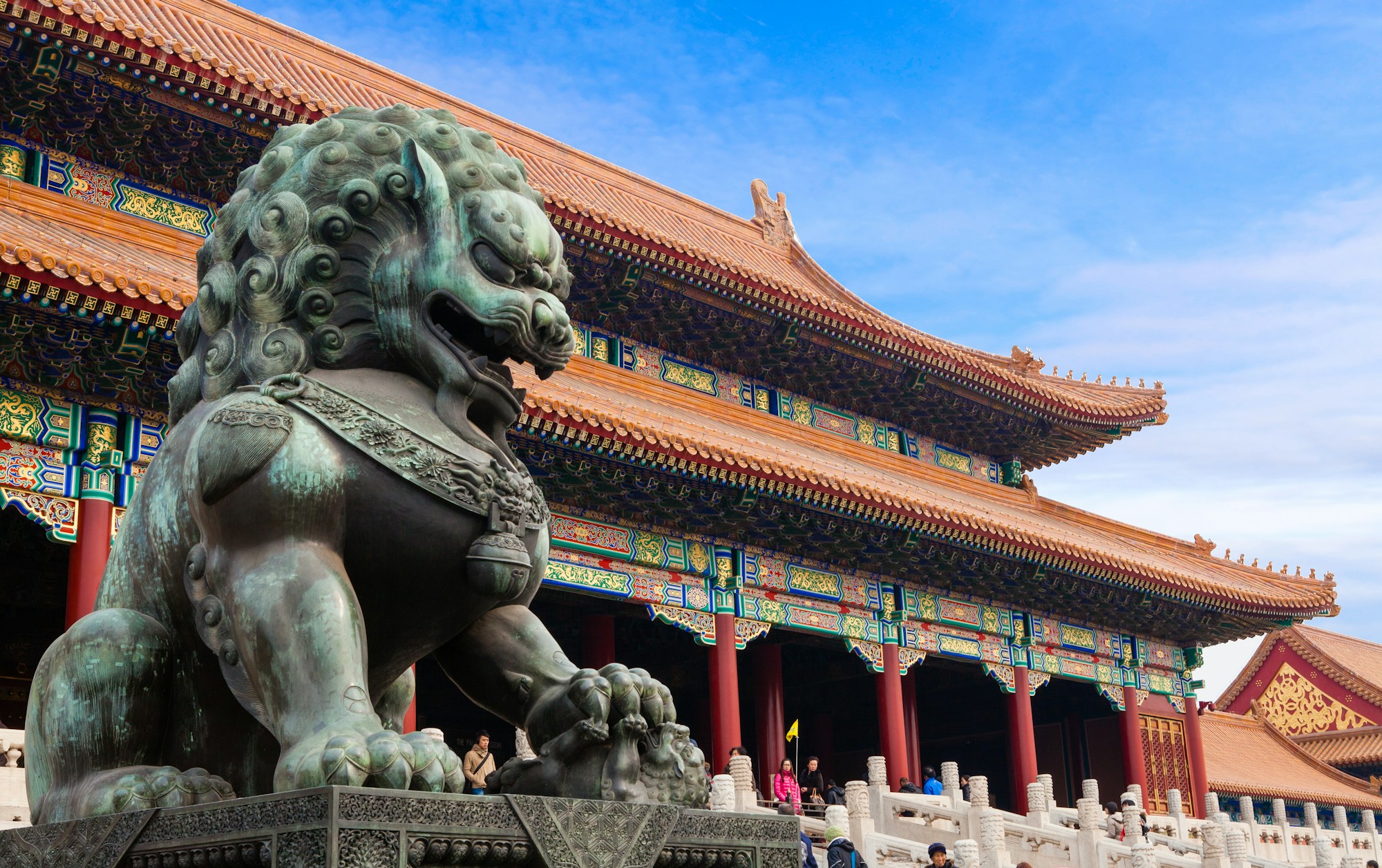
The classic route for a first trip built around the Mid-Autumn break links Beijing (Forbidden City, Great Wall, hutongs), Xi’an (Terracotta Army, city wall, Muslim Quarter) and Shanghai (the Bund, Yu Garden, Lujiazui), on an open-jaw ticket flying into one city and out of the other. Budget 4 days in Beijing, 2 in Xi’an and 4 in Shanghai, connected by high-speed trains (4h30 to 5h30 between Beijing and Xi’an).
At the Forbidden City, online booking is compulsory, with one ticket per passport per day, capped at 40,000 visitors daily, through the official site bookingticket.dpm.org.cn. At the Great Wall, the Badaling section absorbs 70% of visits and fills up fast during public holidays: the Mutianyu section, far less crowded, is the better bet. In Xi’an, the Terracotta Army is best seen starting with Pit 3, then Pit 2, and Pit 1 (the busiest) last.
Highlights
- Open-jaw ticket into Beijing, out of Shanghai, to skip a wasted return flight
- High-speed trains bookable via the 12306 system or Trip.com, no Chinese phone number required
- Passport required for every entry ticket and for train station check-in
Where to watch the full moon: Hangzhou, Shanghai, Hong Kong
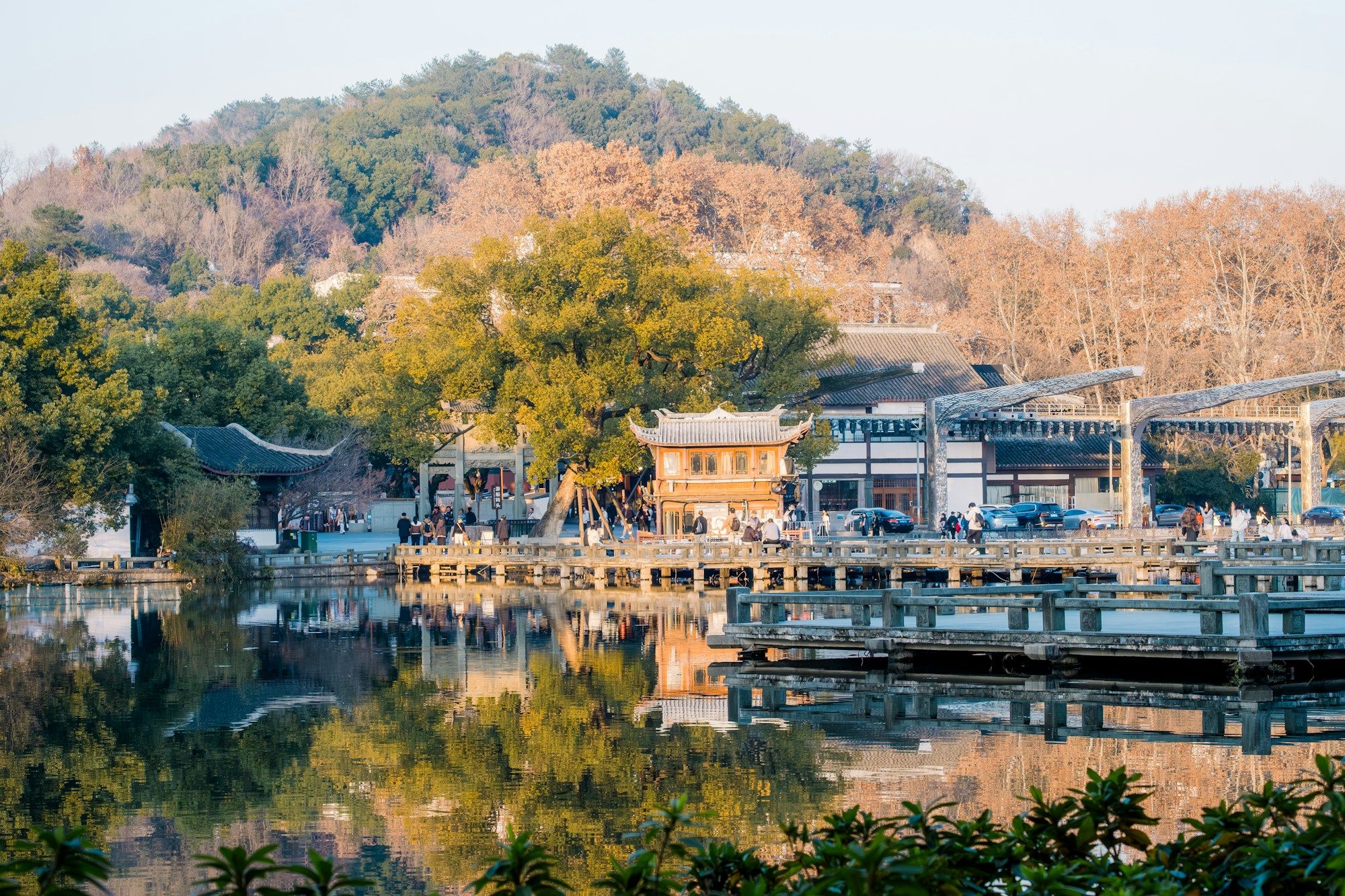
Hangzhou, West Lake
The Three Pools Mirroring the Moon (三潭印月), on West Lake, are considered the country’s number one moon-viewing spot: three miniature pagodas whose openings are lit with candles on the night of the festival, creating a play of reflections with the moon on the water. Boats leave from Lakeside Park or the Tomb of Yue Fei, for around 55 yuan. The site gets very busy that evening: plan to arrive 1-2 hours early, or push the trip to a weeknight in early October for a calmer mood with a moon that’s still nearly full.
Shanghai and Hong Kong
In Shanghai, Yu Garden hosts the city’s most celebrated lantern fair, in a highly photogenic Ming-dynasty setting; the Bund also lights up with lanterns along the river. In Hong Kong, the Mid-Autumn Lantern Carnival at Victoria Park runs from 17 to 27 September 2026, featuring the Hong Kong Tourism Board’s first-ever « International Lantern Spectacular »: more than 3,000 lanterns from 20 countries and regions, including historic pieces from Nanjing dating back 1,700 years. Free entry, lanterns lit until midnight on the night of the festival.
- Yu Garden in Shanghai: lanterns and Ming-dynasty architecture, premium atmosphere
- Victoria Park in Hong Kong: free, 3,000 lanterns from 20 countries in 2026
- Chengdu, Jinli Ancient Street: traditional shows and the panda base, particularly pleasant in September
Traditions: mooncakes, lanterns and the legend of Chang’e
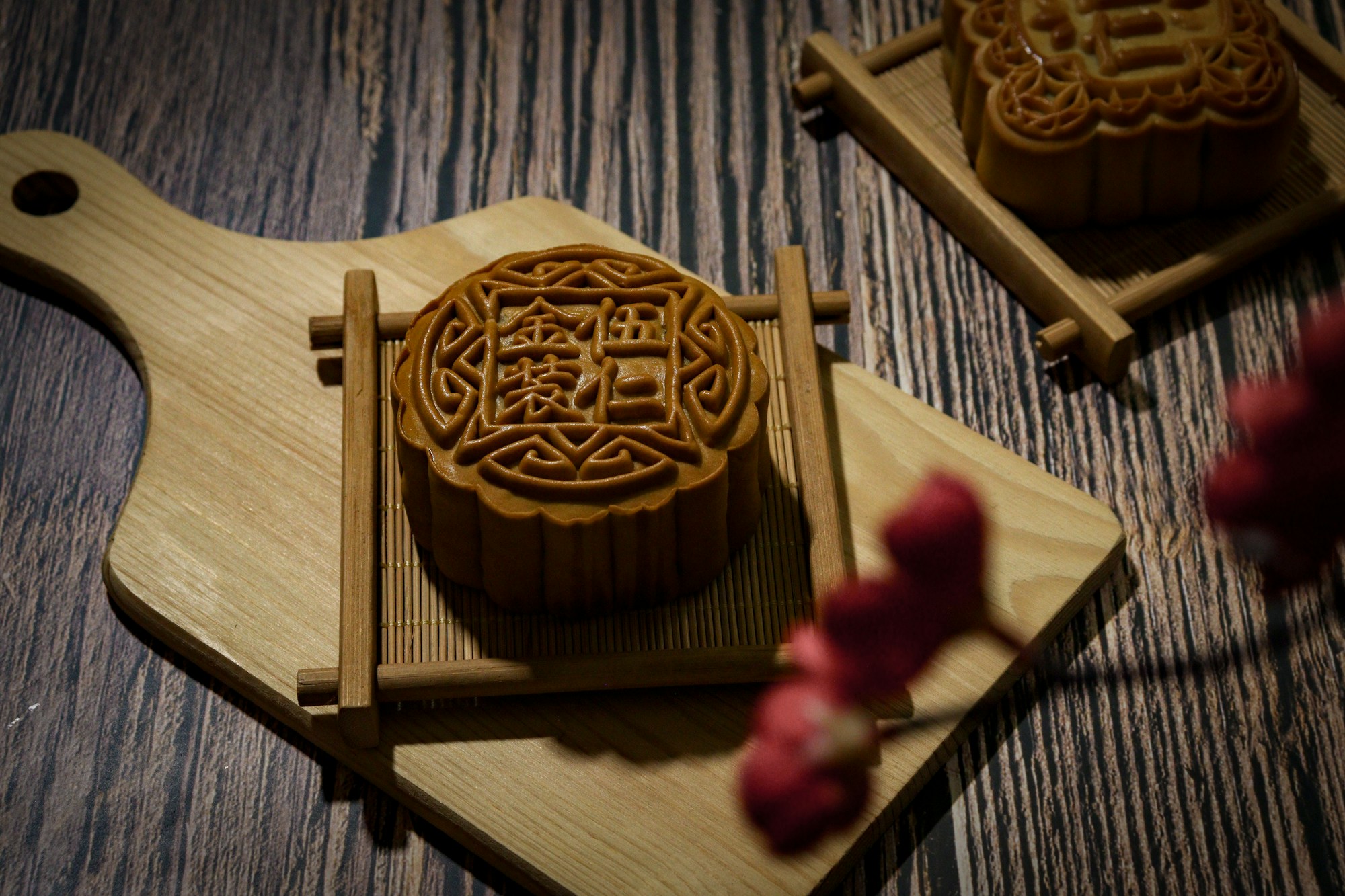
The festival celebrates the legend of Chang’e and the archer Hou Yi: after saving the earth by shooting down nine surplus suns, Hou Yi is given an elixir of immortality, which he hides so he can stay with his wife. Chang’e ends up drinking it and floats away to the moon, her heavenly home. Ever since, the full moon has symbolised family reunion, and mooncakes (月饼) are its ritual offering. A modern nod: China’s lunar probes are all named after Chang’e, right up to the Chang’e-6 mission, which landed on the far side of the Moon.
There are at least six regional styles of mooncake: Cantonese (thin, glossy crust, lotus paste and salted egg yolks, the most exported), Beijing-style (elaborate decoration), Suzhou (flaky lard-based pastry), Chaoshan (mung bean filling), Yunnan (honey ham or rose petals) and Hong Kong « ice-skin » (no baking, kept in the fridge). Premium boxes from supermarkets or hotels cost 100-200 yuan for 5-9 pieces, meant as gifts; on street markets, expect more like 5-20 yuan a piece, for a more authentic and affordable version. Shelves fill up about a month before the festival: a traveller arriving in early September will already find them everywhere.
Jiangnan water towns and crowd-free alternatives
Autumn is one of the best seasons to visit the water towns of the Yangtze delta: pleasant temperatures, lower humidity, evening strolls along canals lit up with lanterns. In Wuzhen, the Dongzha and Xizha districts remain the most beautiful, but the town gets extremely crowded during the October Golden Week: the shorter Mid-Autumn break is a far more liveable time to go. Xitang, sitting at the junction of Shanghai, Jiangsu and Zhejiang, keeps a more genuinely lived-in feel. In Suzhou, the 9 UNESCO-listed classical gardens, including the Humble Administrator’s Garden (1509), are best visited from 7:30am with an e-ticket booked 3-7 days ahead.
For travellers who want to avoid crowds entirely over the break, a few options stand out from specialist China guides: the western Silk Road (Kashgar, where Central Asian communities generally don’t celebrate the festival), Inner Mongolia (the Ulan Butong grasslands are at their golden peak between 25 September and 1 October), lesser-known sections of the Great Wall (Jinshanling, Huanghua Cheng, Jiankou), or Beihai and Xiapu, well off the domestic tourism radar. If your trip extends beyond China, our guide to Asia’s best weather windows helps you plan the rest of the journey without walking into the monsoon.
- Suzhou: classical UNESCO gardens, chrysanthemum displays in autumn
- Western Xinjiang and Inner Mongolia: autumn colours and almost no domestic tourism
- Yangtze River cruise (Three Gorges): September-October among the best months, ahead of the Golden Week peak
Practical info for a UK traveller in China
China’s unilateral 30-day visa-free policy has covered UK ordinary passport holders (alongside dozens of other nationalities) since 17 February 2026, extended through 31 December 2026: for a tourist stay of that length, no visa application is needed, just a valid passport. Not every country gets the same deal (the US remains excluded): our 2026 passport index breaks down the access gaps by nationality. Every foreign visitor must also register with the local Public Security Bureau within 24 hours of arrival, a formality most hotels handle automatically by scanning the passport at check-in.
Alipay or WeChat Pay linked to an international bank card are close to essential day-to-day: the single-transaction limit for verified foreign users rose to $5,000 in early 2026. Still, carry 100-300 yuan in cash for small street stalls. To stay connected, an international roaming eSIM remains the most reliable way around the Great Firewall (Google, WhatsApp, Instagram are blocked even with a local SIM): our 2026 travel eSIM comparison lines up the options before you go. On flights, October (right after Mid-Autumn) is statistically one of the cheaper months on the London-China route; our piece on new flight routes to Asia also explains why some journeys have gotten longer since Middle East airspace closures.
Prepaid data plans for mainland China, activated before you leave, no physical SIM swap needed.
Plans from around $4.50 for 1GB / 7 daysAn uncovered medevac from China can run to £35,000-£50,000, with payment often demanded upfront before treatment.
Plans from $56 / 4 weeksFrequently asked questions
What is the exact date of the Mid-Autumn Festival 2026?
The festival falls on Friday 25 September 2026, the 15th day of the 8th lunar month. The official public holiday runs from 25 to 27 September 2026, 3 days total, with no make-up workday. Source: official notice from China’s State Council.
Are Mid-Autumn Festival and National Day linked in 2026?
No, they stay officially separate in 2026: Mid-Autumn runs 25-27 September, National Day runs 1-7 October, with only 3 working days between them. That’s unlike 2025, when they exceptionally merged into one 8-day break.
Do UK travellers need a visa to visit China during this period?
No, not for a tourist stay of up to 30 days: China’s visa-free policy for UK ordinary passport holders has been in effect since 17 February 2026 and runs through 31 December 2026. A valid passport is enough, with no prior application.
Will China be crowded during these 3 days?
Yes, but far less than during the October Golden Week or Chinese New Year: 107 million domestic trips were recorded for Mid-Autumn alone in 2024, against 888 million during the exceptional 8-day merged break in 2025.
What’s the best place to watch the full moon in China?
The Three Pools Mirroring the Moon, on West Lake in Hangzhou, are considered the country’s number one spot, followed by Yu Garden in Shanghai and the lantern displays at Victoria Park in Hong Kong.
What are mooncakes and where can you try them?
Traditional round pastries (月饼) symbolising family reunion, made in at least six regional styles (Cantonese, Beijing, Suzhou, Chaoshan, Yunnan, Hong Kong). They’re sold in every supermarket and street market from early September onward.
Sources
- Official notice from China’s State Council: 2026 public holiday calendar, published 4 November 2025.
- PublicHolidays.cn: Mid-Autumn Festival dates 2026-2028.
- ChinaHighlights: moon-viewing spots in Hangzhou.
- CPO Hong Kong: Mid-Autumn Lantern Carnival 2026, official dates.
- ChinaHighlights: guide to regional mooncakes.
- Gov.cn: domestic travel statistics.
- ChinaDiscovery: Forbidden City ticket booking.
- GOV.UK: foreign travel advice for China, including the 2026 visa exemption.
- Chinese Consulate-General in Manchester: notice on China’s visa waiver policy for the UK.
- Simology: connectivity and eSIM in China.

Plan your trip with Pixidia
Pixidia learns how you travel and helps you build a trip that truly fits you and everyone coming along.
Open the planner