
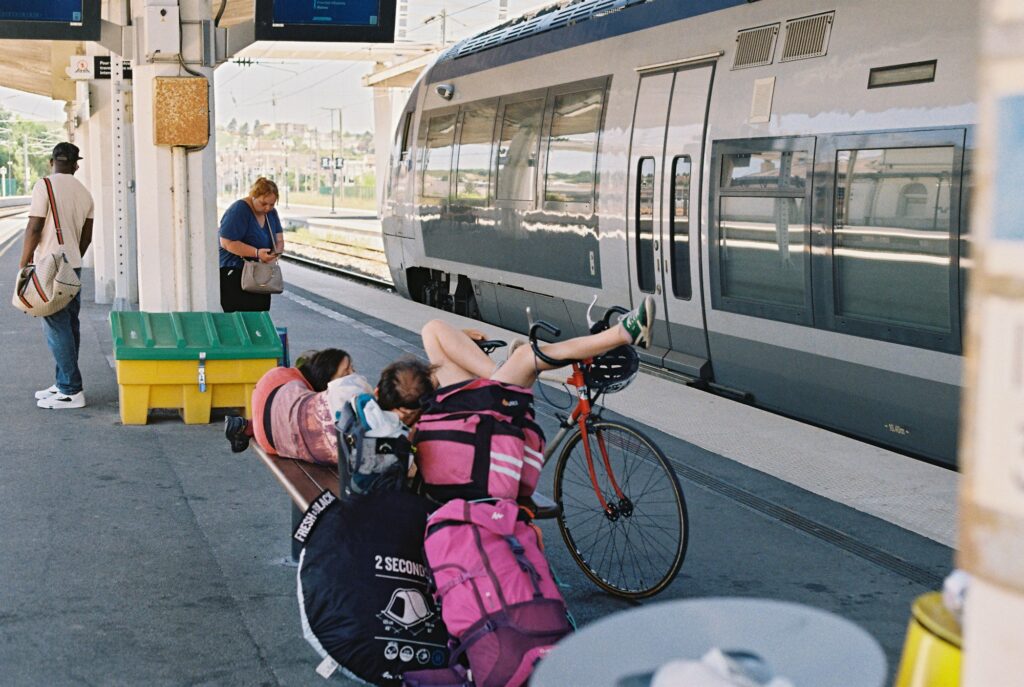
Yes, from Sunday 13 December 2026, fatbikes are no longer allowed on TGV INOUI or Intercités trains. Dismantled, or folded into a bag of 90 × 130 × 50 cm, a bike still travels free and without a reservation. The official sources do not settle the case of a dismantled fatbike.
Checked on against the official sources cited (service-public.gouv.fr, SNCF Connect).
From 13 December 2026, fatbikes will no longer be allowed on board TGV INOUI or Intercités trains. The rule fits in one sentence, but it raises very practical questions: can a dismantled bike still travel, what does a bike that stays assembled cost, and what happens to a ticket bought before the date? This article sets out what the official sources say, flags what is still open, and tells you where to check before you travel.
1. What changes on 13 December 2026
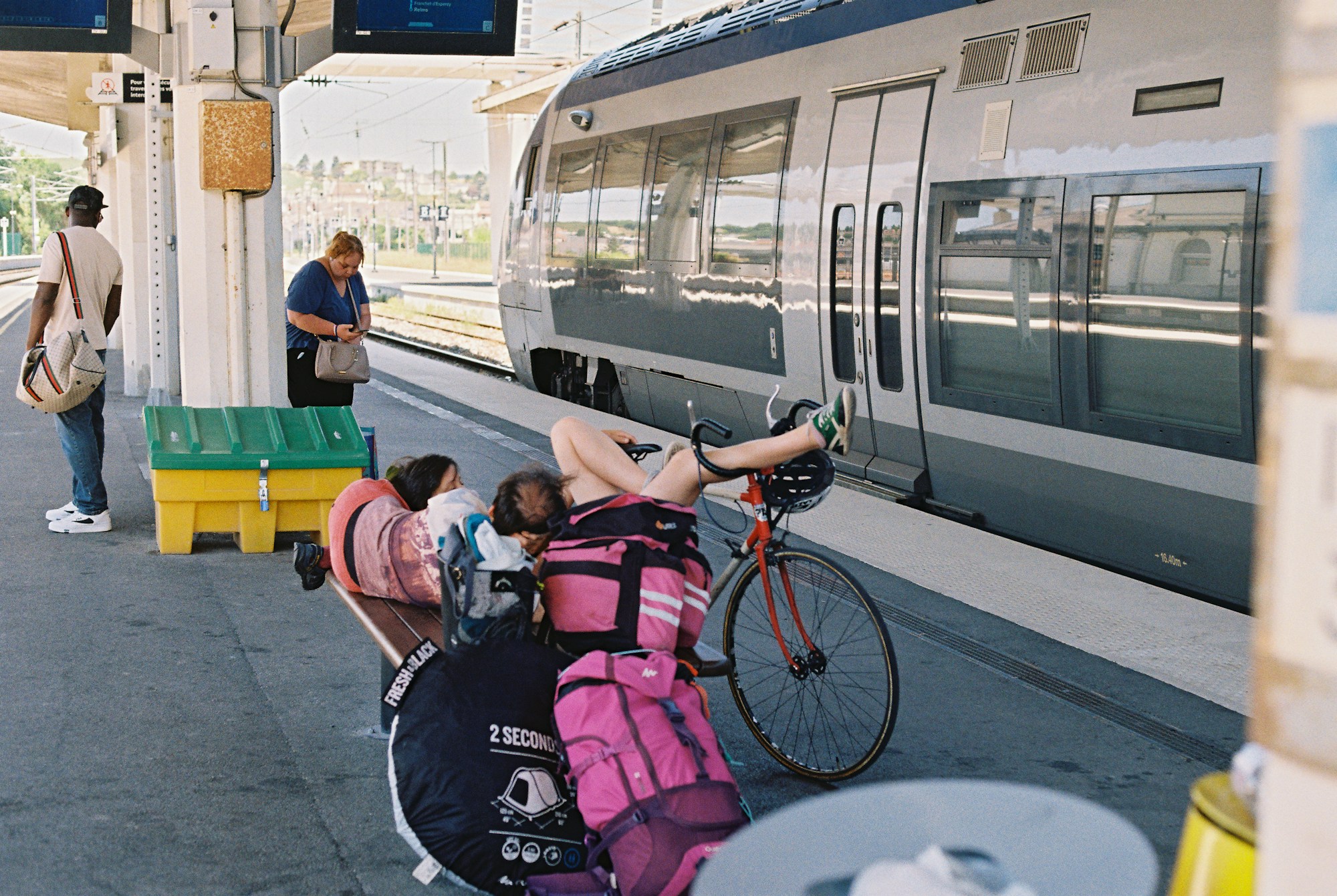
Sunday 13 December 2026, with the SNCF’s annual timetable change
The rule takes effect on Sunday 13 December 2026, when SNCF moves to its new annual timetable. It is described by service-public.gouv.fr (article A19110) and by the SNCF Connect help page on bike transport. Both sources cover the same trains: TGV INOUI and Intercités, by day and by night.
The bikes that will no longer be admitted on board are:
- fatbikes: « fatbike » is not a regulatory category, the word mainly refers to bikes with very wide tyres;
- bikes with more than two wheels;
- bikes whose dimensions go beyond those of a standard bike, with two thresholds cited: 185 cm long and 6 cm wide for the tyres. The texts we read do not agree on how the two thresholds relate. This article takes the cautious reading: a bike that exceeds either threshold is considered affected;
- gyropods and hoverboards.
Length is measured overall, from end to end. The press makes this explicit: Roulez Jeunesse (22/10/2026) speaks of « the greatest length of the bike from one end to the other, equipment included », and Gardannais Libre (04/11/2026) of « overall, accessories included ». A long mudguard or a rear rack can therefore push a bike over the threshold, even when the frame looks reasonable.
Some bikes were already refused before this date: recumbent bikes, tricycles, cargo bikes and longtails, according to service-public (article A19110). The press also cites tandems (Roulez Jeunesse, Ulysse, and UFC-Que Choisir via Gardannais Libre) and bikes packed in a cardboard box (Journal du Geek, 13/10/2026). Neither category appears in the official text we read.
For a fuller look at the trains and stations concerned, our article on the new TGV InOui 2026 covers the rolling stock in service.
Key points
- Dismantled or folded bike in a bag of 90 × 130 × 50 cm: free, no reservation
- Bike not dismantled: seat to reserve when you buy the ticket
- Charging batteries is banned on board, even with the battery removed
If you want to see the Loire châteaux from Tours, this small group heads to Chambord and Chenonceau, with lunch in a family château. For other day trips from the Loire, see our guide to the Loire châteaux from Paris or Tours.

2. Fatbike not dismantled, dismantled or folded: what gets through
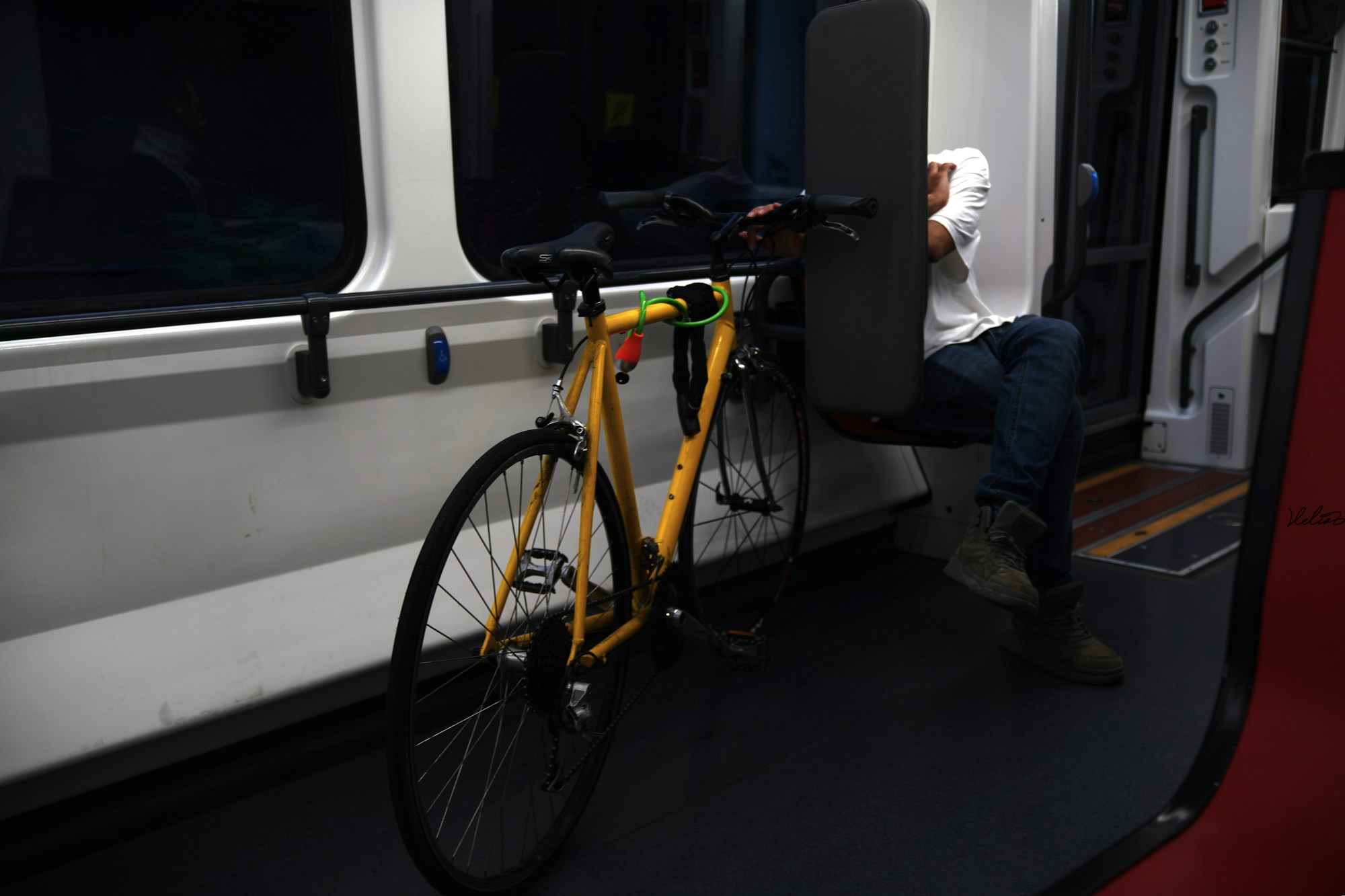
The 90 × 130 × 50 cm bag: free, no reservation
A bike that is dismantled or folded, packed in a bag of 90 × 130 × 50 cm at most, travels like luggage. service-public gives the same dimensions, and SNCF Connect says this bike travels free and without a reservation. A dismantled bike goes in the luggage areas (extract from the SNCF Voyageurs page, not read directly).
A folding bike packed in a 90 × 130 × 50 cm bag travels as luggage, free and without a reservation (Gardannais Libre, citing UFC-Que Choisir; service-public).
What the sources do not settle: the case of a dismantled fatbike in a bag. The size rule targets the bike, and the official text does not say explicitly whether a dismantled fatbike is still accepted. Until SNCF publishes a written answer, do not assume the bag is enough.
Bike not dismantled: a seat to reserve when you buy
For a bike that is not dismantled on TGV INOUI or Intercités, the seat is reserved when you buy your ticket, and seats are limited. The press cites €10 per journey, according to UFC-Que Choisir (Gardannais Libre, 4 November 2026), and a range of €5 to €10 according to Consoglobe (22 October 2026). Confirm the amount before you buy.
Key points
- Free bag: 90 × 130 × 50 cm at most for TGV INOUI and Intercités
- Bike not dismantled: reserve at ticket purchase, fare to be confirmed
- Ticket bought before 13 December: check the conditions with the seller
Where do you put your bike on the TGV? A bike that is not dismantled takes the bike space reserved on board, and there are only a few. A dismantled or folded bike in a bag goes in the luggage areas (extract from the SNCF Voyageurs page, not read directly: check before departure). For the TGV M, see our article TGV M Paris-Marseille: dates, seats, fares and bikes.
| Train | Bike not dismantled | Bike dismantled or folded in a bag | Reservation |
|---|---|---|---|
| TGV INOUI | Admitted with a reserved seat; €5 to €10 according to the press | Free, bag of 90 × 130 × 50 cm | Not dismantled: compulsory at purchase. Dismantled: none |
| Intercités by day | €10 per journey according to an extract of the SNCF Voyageurs page; €5 on some lines according to a Belgian version of SNCF Connect | Free, bag of 90 × 130 × 50 cm | Compulsory at purchase for a non-dismantled bike; Clermont-Ferrand-Béziers: free without reservation (extract) |
| Intercités by night | €10 per journey (SNCF extract) | Free, bag of 90 × 130 × 50 cm | Compulsory at purchase |
| OUIGO Grande Vitesse | Not admitted | Bag of 130 × 90 × 50 cm at most, under 30 kg, €5 per journey option | Option to take out; can be added up to 30 minutes before departure (extract) |
Source: SNCF Connect, bike transport help, ouigo.com, bike transport, checked on 19 November 2026. The Intercités lines come from search extracts, not read in full.
3. Ticket bought before 13 December: the question remains open
We found no official answer for a ticket bought before 13 December for a journey taken after that date. Neither service-public nor the SNCF Connect page we read covers it.
What to do: check the conditions of your ticket on the site or app where you bought it, and contact customer service if you booked a bike seat. Do not assume the reservation will be kept, or that it will be refunded.
The same reasoning applies to a bike seat already reserved. If your journey falls after 13 December and your bike is a fatbike, that is the first question to ask, before you buy a bag or dismantle the bike.
4. TER, Transilien and regional networks: a different system
The national rule does not apply to TER or Transilien trains, which are run by the regions and their transport authorities. Rules change from one network to another, and from one period to the next. The table lists what we could find. The regional pages were mostly read as search extracts, rarely in full: check them before a journey.
| Network | Rule found | Period | Source |
|---|---|---|---|
| Transilien (Île-de-France) | Bike free, no reservation; banned on weekdays from 6:30 to 9:30 am and from 4:30 to 7:30 pm | Period not found | Transilien « Bikes on board » page, extract |
| Occitanie (liO) | Reservation free but compulsory; without a reservation, an on-board check costing at least €10 | Every day from 1 July to 31 August, then weekends and public holidays | liO page « Travelling with your bike », extract |
| Auvergne-Rhône-Alpes | Free transport without reservation outside reservation periods, within the available seats | Depends on the period | TER AURA « bike boarding » page, extract; one press article cites €1 during the reservation period |
| Hauts-de-France | Free reservation, compulsory on some lines | 1 May to 1 November 2026, a period already over at the publication date | TER Hauts-de-France page, extract |
| Nouvelle-Aquitaine | €3 bike ticket on the Hendaye-Bayonne-Tarbes line; the press cites €1 for the region | 1 May to 27 September 2026 | TER Nouvelle-Aquitaine « bike ticket » page, extract |
Source: regional TER and Transilien pages, search extracts, checked on 19 November 2026. Fares and periods change every year: date them before reusing.
For a fatbike on a TER or Transilien, the sources we read give no national answer. An online summary claims that fatbikes are banned on TER: no source we read confirms it. If you travel regionally with a fatbike, ask the region concerned.
5. Batteries, fines and checks
- Charging on board is banned, even with the battery removed. The SNCF Connect page states that charging batteries is banned on board trains. Journal du Geek (20/10/2026) cites a €150 fine for this case.
- Non-compliant luggage: €50 minimum. service-public refers to a €50 fine per excess or non-compliant item, which can go up to €150.
- Unreserved bike in Occitanie. The on-board check costs at least €10 (liO page, extract).
6. What to do before 13 December with a fatbike
There is no universal solution. The options below rely on the rules we found, from the simplest to the most demanding.
- Test the bag before the day you travel. Dismantle the bike at home, pack it in a 90 × 130 × 50 cm bag and measure the whole thing once full. If the bag does not close within these dimensions, luggage transport is ruled out.
- Ask before you book. SNCF customer service can answer the specific case of a dismantled fatbike and a ticket already bought. Keep the written answer.
- Take a TER or Transilien when you can. The rules are regional: check each network, as described above.
- Compare with a slimmer bike. A mountain bike whose tyres do not exceed 6 cm and that measures no more than 185 cm overall stays admitted unfolded, with a reservation. This conclusion follows the cautious reading of the thresholds, with no specific source for mountain bikes: check the real dimensions of your bike.
What other guides don’t tell you
These points are missing from short guides, or badly rendered in online summaries. Each one links to a source checked on 19 November 2026.
- The date coincides with the SNCF’s annual timetable change. 13 December 2026 is a Sunday. Guides say « from 13 December » without linking it to this timetable. service-public.gouv.fr, article A19110 (checked 19 November 2026).
- The 185 cm length is measured overall. Accessories and equipment count, which changes the answer for a fatbike fitted with a mudguard or a rear rack. Roulez Jeunesse (22/10/2026) and Gardannais Libre (04/11/2026) specify this, which service-public does not. Checked on 19 November 2026.
- OUIGO Grande Vitesse does not take non-dismantled bikes, even before the reform. The new rule only covers TGV INOUI and Intercités, but the confusion is common in summaries. ouigo.com, bike transport (checked 19 November 2026).
- No official reason is given. The regulatory text gives no motive. The press points to crowded spaces and on-board safety, without any confirmation from SNCF. service-public.gouv.fr, article A19110 (checked 19 November 2026).
- The price of a non-dismantled bike is not on the SNCF page we read. The €10 and the €5 to €10 range come from the press. SNCF Connect, bike transport help (checked 19 November 2026).
Why this measure, and the figures behind it
SNCF has not officially explained the measure. Two explanations circulate in the press: spaces designed for standard bikes, and the growing size and power of electric bikes (Journal du Geek, 13 October 2026; Consoglobe, 22 October 2026). These are journalists’ readings, not the company’s position.
The French e-bike (VAE) market is shrinking: 507,000 units sold in 2025, 16% fewer than in 2024 (Observatoire du cycle, presented 24 April 2026).
On space, Reporterre cited in 2025 that 49% of TGV INOUI trains did not allow travel with a non-dismantled bike. This is an older figure: date it in any use.
Frequently asked questions
Can a fatbike still board a TGV INOUI after 13 December 2026?
No, not as a non-dismantled bike: from Sunday 13 December 2026, fatbikes are no longer admitted on board TGV INOUI and Intercités trains (service-public.gouv.fr). For a dismantled fatbike packed in a 90 × 130 × 50 cm bag, the official sources do not settle the case. Ask SNCF customer service before you travel.
How do I reserve a bike on the TGV?
For a non-dismantled bike, the seat is reserved when you buy your ticket, and the reservation is compulsory. There is no separate bike ticket on TGV INOUI: the reservation is made with the ticket, according to the SNCF Connect page checked on 19 November 2026. A dismantled or folded bike in a bag travels without a reservation. The sources we read do not confirm that a seat can be added after purchase.
Where do I put my bike on the TGV?
A non-dismantled bike takes the bike space reserved on board, and there are only a few: reserve it when you buy. A dismantled or folded bike in a bag goes in the luggage areas (extract from the SNCF Voyageurs page, not read directly: check before departure).
How much does a bike cost on the TGV?
A dismantled or folded bike in a 90 × 130 × 50 cm bag is free. For a non-dismantled bike on TGV INOUI, the press cites €10 per journey, according to UFC-Que Choisir relayed by Gardannais Libre on 4 November 2026, and a range of €5 to €10 according to Consoglobe. Confirm the amount before you buy.
Which bag should I use for the TGV?
For TGV INOUI and Intercités, the bag must measure 90 × 130 × 50 cm at most (SNCF Connect; service-public). OUIGO Grande Vitesse accepts a 130 × 90 × 50 cm bag, under 30 kg (ouigo.com). Eurostar indicates a 135 × 85 × 30 cm bag on its bike page. For trips to London, its bike fee is €50 if you book more than 48 hours before departure and €70 within 48 hours; trips outside the UK cost €30 (eurostar.com, page with no update date shown). Check the bag once it is full, not just empty.
Does a folding bike fit on the TGV?
Yes. A folding bike packed in a bag of 90 × 130 × 50 cm at most travels as luggage, free and without a reservation (Gardannais Libre, citing UFC-Que Choisir; service-public, article A19110).
Does a mountain bike fit on the TGV?
A standard mountain bike that is not dismantled is still admitted, provided it meets both thresholds: 185 cm overall and tyres of 6 cm at most. This is the cautious reading used in this article, because the texts we read do not agree on how the two thresholds relate. The reservation is made at purchase. Dismantled and packed in a 90 × 130 × 50 cm bag, it travels free and without a reservation.
What is the risk if I board a non-compliant bike?
A fine of at least €50 per non-compliant item, which can reach €150, according to service-public (article A19110, checked 19 November 2026). The simplest step is to measure the bike before departure and not try to get through the station with an oversized vehicle.
Can I charge my electric bike on the train?
No. Charging batteries is banned on board (SNCF Connect, checked 19 November 2026). Journal du Geek (20/10/2026) says it stays banned even when the battery is removed from the vehicle, and cites a €150 fine. Charge the battery before you leave.
Does Lyria accept bikes?
Not confirmed. An extract from an SNCF Connect page (Swiss version) mentions free transport in luggage areas, but the bag sizes it gives differ from one source to another. No full Lyria page was read: do not rely on any specific rule, and check with Lyria before you travel.
Is OUIGO affected by the ban?
Not by the 13 December rule cited in the sources, which covers TGV INOUI and Intercités. OUIGO Grande Vitesse already does not take non-dismantled bikes. It accepts a 130 × 90 × 50 cm bag, with a €5 per journey option (ouigo.com, checked 19 November 2026).
What happens to my ticket if I bought it before 13 December?
We found no official answer. Check the conditions of the ticket on the site or app where you bought it, and contact customer service if you booked a bike seat. Do not assume the reservation will be kept, or that it will be refunded.
Why does SNCF ban fatbikes?
SNCF has given no official reason, either in the regulatory text or on its help page. The press points to spaces crowded with bikes designed for standard use, and to on-board safety (Journal du Geek, 13 October 2026; Consoglobe, 22 October 2026).
What about TER trains?
TER trains are run by the regions, and the national rule does not apply to them. Depending on the network, transport ranges from free to a free but compulsory reservation, or a bike ticket costing a few euros. No source we read confirms a national ban on fatbikes on TER: check the website of the relevant region.
Can a folding electric scooter go on the TGV?
The sources disagree. One article says a scooter folded within 90 × 130 × 50 cm is accepted (Journal du Geek, 20 October 2026), while another announces restrictions depending on the model (Gardannais Libre, 4 November 2026). We do not settle this without the official SNCF page.
Sources
- service-public.gouv.fr, article A19110 : rule, effective date, dimensions, fines (published 28 October 2026, checked 19 November 2026).
- SNCF Connect, bike transport help : fares, reservation, bag, batteries (checked 19 November 2026).
- OUIGO, bike transport : Grande Vitesse rules (checked 19 November 2026).
- Eurostar, bikes page : bag and fees (checked 19 November 2026, no update date visible).
- Regional TER and Transilien pages : Transilien, liO, TER AURA, TER Hauts-de-France, TER Nouvelle-Aquitaine (search extracts, checked 19 November 2026).
- Press, to be cross-checked : Roulez Jeunesse (22 October 2026), Gardannais Libre (4 November 2026), Consoglobe (22 October 2026), Journal du Geek (13 and 20 October 2026), Ulysse (24 October 2026).
- Observatoire du cycle, e-bike (VAE) sales 2025, presented 24 April 2026 (relayed by Caradisiac) ; Reporterre, 18 April 2025, updated 2 May 2025.
Sources checked on 19 November 2026.

Plan your trip with Pixidia
Pixidia learns how you travel and helps you build a trip that truly fits you and everyone coming along.
Open the planner