
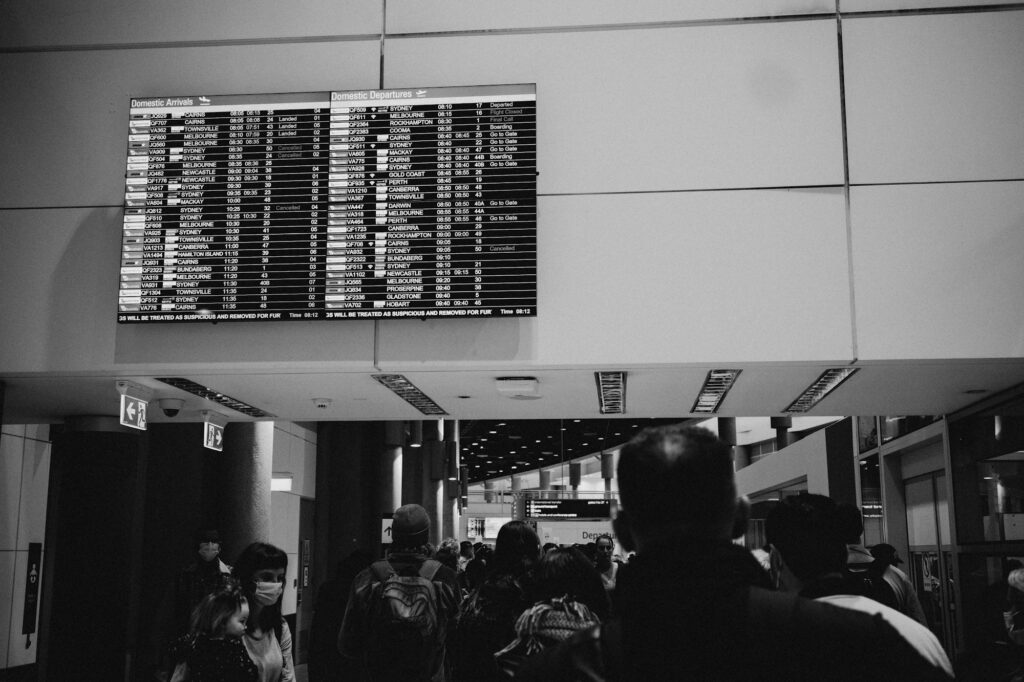
Yes. French pilots’ and cabin crew unions have given notice of a strike running from 00:01 on Saturday 17 October 2026 to 23:59 on Wednesday 21 October (Paris time), the first weekend of the French Toussaint school holidays. It targets airlines whose crews are on French contracts, such as Air France or Transavia according to the press. As of 7 October no cancellations have been announced and the notice can still be withdrawn. Keep your booking, watch your airline’s app from 14 October and line up a plan B. If you’re flying out of the UK, most English schools only break up for half-term on 23 October, after the strike window closes.
This strike notice is real, but it isn’t a strike yet. Five unions representing French pilots and cabin crew have filed a national notice right as the school holidays begin, and no airline has published a revised flight schedule. This page separates what’s confirmed from what isn’t, explains which passenger-rights rules apply if you’re flying between the UK and France, and shows what you can do today so you don’t end up stuck at the airport. Last checked: 7 October 2026.
What’s confirmed, and what isn’t
A notice that’s been maintained, not carried out, not withdrawn
The notice is documented by a joint union letter dated 1 August 2026 that we’ve read in full (in French): the unions’ letter to the ministers sets a strike mandate allowing « all means of action, including strike action ». According to Air Journal and TourMaG (both in French), it runs from Saturday 17 October at 00:01 to Wednesday 21 October at 23:59, Paris time. In UK terms, that’s 23:01 on Friday 16 October to 22:59 on Wednesday 21 October, as the clocks don’t change until 25 October. The unions behind it are the SNPL, UNSA-PNC, SNPNC-FO, SNGAF and UNAC.
What we know so far
- The notice exists and hasn’t been withdrawn: Bladi still called it « current » on 5 October.
- The unions say they’re « ready to resume dialogue », so a withdrawal before 17 October is still possible.
- 17 October is the first day of the Toussaint (All Saints) holidays for French school zones A, B and C and Corsica, with classes resuming on Monday 2 November. English half-term is a week later in most areas (26-30 October), though some councils break up earlier, so check your own school’s calendar.
What nobody knows yet
- How many pilots and cabin crew will actually walk out.
- How many flights will be cancelled: no airline has published an adapted schedule. The French civil aviation authority (DGAC) only sets cancellation quotas for air traffic controllers, who are state employees, not for airline crew strikes. Be wary of any « official » percentage you come across.
- The exact list of airlines affected, which is the press’s deduction rather than an official text.
Who’s affected, and why they’re striking
The notice covers « air transport and aerial work companies whose employees are subject to French law », including foreign airlines when their crews are on French contracts. That’s the test that matters, not the nationality of the aircraft. According to the press (billet.flights, Économie Matin), the airlines potentially affected are Air France, Transavia France, Corsair, French Bee, Air Caraïbes, Air Corsica, Air Austral and, for their French-contract crews, easyJet and Volotea. For UK travellers, that makes the Air France, Transavia and easyJet routes between London, Manchester, Edinburgh and French airports the ones to watch. That list is a cross-check of press reports: no official text confirms it airline by airline. Ryanair isn’t named by any source.
By contrast, airlines whose crews aren’t under French law (Air Algérie, Royal Air Maroc, Tunisair, Lufthansa, British Airways, Emirates) aren’t directly targeted. That’s a deduction from the scope of the notice, not a guarantee, so check with your airline.
A dispute that isn’t about pay
The demand concerns the reform of the combined pension-and-employment rules (« cumul emploi-retraite »), article 102 of France’s 2026 social security financing law, which takes effect on 1 January 2027. Flight crew belong to a separate pension scheme, the CRPN, and want the law to exclude it explicitly. The government has only offered a ministerial circular (a letter of 29 July), which the unions call « precarious by nature ». Figures on pension cuts circulating in the press aren’t backed by an official text, so we’re not repeating them.
Why does that matter to you as a traveller? Because the demand is aimed at the state, not at your airline. That affects how long the dispute might last (a vote or a promise could be enough) and, as we’ll see below, how your right to compensation might be argued.
Past strikes: use with caution
To give a sense of scale, here’s an old benchmark: during the 2016 Air France pilots’ strike, the airline said it was running around 75 to 80% of its flights. That predicts nothing for October 2026, because this strike is unprecedented in scope (every airline under French law) and in its cause.
Your rights if your flight is cancelled or delayed
Refund and care: guaranteed. Compensation: uncertain.
Which rules apply depends on where your flight takes off, not on your passport. If you fly from France to the UK or anywhere else, EU Regulation 261/2004 applies on any airline, as it does to flights into the EU on an EU airline (Corsica and overseas departments included). If you fly from the UK to France, the UK’s own version, UK261, covers every flight departing the UK and flights arriving in the UK on UK or EU airlines, according to the Civil Aviation Authority (CAA). A London-Paris flight on Air France can therefore fall under both regimes, but you can only be compensated once.
Under either regime, whatever the reason for the cancellation (strikes included), you’re entitled to:
- Your choice of a refund of your ticket within 7 days, or rerouting at the earliest opportunity or at a later date.
- Care while you wait: meals, refreshments, a hotel and transfers if you need an overnight stay, plus two communications. Keep every receipt.
- Written information about your rights, and priority care for passengers with reduced mobility and unaccompanied minors.
The flat-rate compensation: the point other sites skip
Under EU261 the amounts are €250 (up to 1,500 km), €400 (intra-EU flights over 1,500 km and trips of 1,500 to 3,500 km) and €600 (over 3,500 km). UK261 pays £220, £350 and £520 on the same distance bands. They’re only due if the airline can’t prove « extraordinary circumstances », and if you’re told about the cancellation less than 14 days before departure. For a flight on 21 October, that 14-day cut-off falls today.
As a rule, a strike by the airline’s own staff isn’t an extraordinary circumstance. That’s the line taken by the EU Court of Justice in case C-28/20 (23 March 2021), which matters for EU261 claims on flights leaving France. But in point 45 the ruling leaves room for a strike over demands that only public authorities can meet. Here the demand targets a law, so an airline can argue it doesn’t control the cause of the dispute and refuse to pay. You can answer that a strike remains a business risk, that exemptions are read narrowly and that the dispute has been known about since July. As far as we know, no court has ruled on this exact situation.
One extra caveat for UK261 claims: that ruling post-dates Brexit, so UK courts aren’t bound by it. The CAA says strikes unrelated to the airline, such as air traffic control or airport staff, count as extraordinary circumstances, and a walkout by the airline’s own crew generally doesn’t, but we haven’t found a UK ruling on a case like this one.
Our position: always claim the compensation, but don’t treat it as a given. If you’re refused, challenge it with a written complaint. For flights from France you can then go to the DGAC passenger-rights portal or the Médiateur Tourisme et Voyage, and the limitation period is 5 years. For flights from the UK, escalate to the airline’s CAA-approved alternative dispute resolution scheme, and the time limit is generally 6 years in England and Wales (5 in Scotland). By contrast, a strike by air traffic controllers, which is outside the airline’s control, rules compensation out: we cover that case in our article on the French air traffic control strike in October 2026, which also notes that a controllers’ strike announced for 7 to 10 October was denied.
Alternatives to flying during the half-term and Toussaint holidays
Train, coach, car or another airline
The rule of thumb: the shorter the flight, the better a train replaces it, and the earlier you should book, because Saturday 17 October is a big departure day in France. SNCF’s autumn sales have been open since 11 March 2026 (in French), so seats are still available, though for less time at the lowest fares. If you’re coming from the UK, Eurostar is the obvious swap for London-Paris flights and connects you into the French high-speed network.
The options, from simplest to most flexible
- TGV INOUI and OUIGO: INOUI tickets can be exchanged and refunded free of charge up to 7 days before departure (check the conditions when you buy), while OUIGO is cheaper but without free changes. For the south-east or south-west, it’s the most direct alternative.
- Train + Air with Air France and SNCF, if your short flight is cancelled: air-and-rail connections from 27 stations.
- Coaches such as FlixBus or BlaBlaCar Bus: cheaper, slower, sometimes overnight, with routes to Lyon, Marseille, Barcelona or London.
- Driving, carpooling or car hire: budget for tolls and fuel, and plan ahead for the big departure weekend. From the UK, that means booking Eurotunnel or a ferry early.
- Another airline or another airport (Beauvais, Orly, Lyon, Brussels-Charleroi): first check that the crews aren’t under French law, because an airline that isn’t named isn’t necessarily safe.
Special cases to plan for
Corsica piles up the risks: Air Corsica pilots have a separate notice from 9 to 16 October, just before, according to TourMaG. The French Caribbean and Réunion have almost no substitute: build in slack on both the outbound and return legs. Flights to the Maghreb are only affected if they’re operated by an airline with French-contract crews, like Air France or Transavia.
The timeline to follow until 17 October
- Today, 7 October: dig out your booking references, install your airline’s app and switch on notifications.
- 8 to 14 October: watch for any withdrawal of the notice (statements from the unions, your airline or the French government).
- 14 to 15 October: the first adapted schedules may drop, as strikers must declare themselves at least 48 hours ahead. It’s also the last window to change a flexible-fare flight on the 17th.
- 16 October: at the latest, the airline must inform passengers, 24 hours before the strike starts.
- 17 to 21 October: check your flight status before leaving home.
- 22 October: back to normal expected, though rotations may stay out of step for 24 to 48 hours. Most of England has half-term from 26 to 30 October, so the strike will be over by then, but check for knock-on delays.
One insurance point: the notice has been public since 18 September, so a policy taken out after that date generally won’t cover a cancellation caused by this strike. Some travel insurance policies and bank accounts cover delays and cancellations under conditions: read your policy wording.
Practical info for a smooth trip
Stay reachable and check your airline’s app if plans change, including abroad, without swapping your SIM card or paying roaming charges.
Plans depend on the destinationBuy cover before an event is announced: a policy taken out after 18 September won’t cover this strike. Useful for your next trips.
Online quote based on your tripFrequently asked questions
Is the 17 to 21 October 2026 strike confirmed?
The notice is confirmed, the strike itself isn’t. A joint union notice (SNPL, UNSA-PNC, SNPNC-FO, SNGAF, UNAC) covers 00:01 on Saturday 17 October to 23:59 on Wednesday 21 October, and it was still in place on 7 October. The unions say they’re open to talks, though, so it could be withdrawn before then.
Which airlines are affected by the French crew strike?
All those whose crews are under French law. According to the press, that means Air France, Transavia France, Corsair, French Bee, Air Caraïbes, Air Corsica, Air Austral, and easyJet and Volotea for their French-contract crews. The list isn’t official: check the « industrial action » page of your airline.
Why are French pilots and cabin crew striking in October 2026?
They want the law to exclude their pension fund, the CRPN, from the reform of combined employment and pension income that applies from 1 January 2027. It isn’t a pay dispute and it doesn’t depend on any one airline.
How many flights will be cancelled during the strike?
Nobody knows yet. No airline had published an adapted schedule on 7 October, and the French civil aviation authority doesn’t set a cancellation quota for crew strikes. Passengers must be told at least 24 hours before the strike starts.
Is my flight on 16 October affected?
No, as the notice starts at 00:01 French time on 17 October (23:01 on 16 October in the UK). A knock-on effect on aircraft rotations is conceivable for badly positioned planes, but no source documents it so far.
What should I do if my flight is cancelled because of the strike?
Choose between a refund within 7 days and rerouting, ask for care (meals, hotel, transfers) and keep every receipt. These rights apply whatever the cause of the cancellation, under EU261 or UK261. Screenshot the announcement showing the time.
Am I entitled to €250, €400 or €600 (or £220, £350 or £520) in compensation?
Possibly, but it isn’t guaranteed. A strike by an airline’s own staff generally isn’t an extraordinary circumstance (CJEU, C-28/20), unless the demand is one only public authorities can meet (point 45). As this one targets a law, the airline may refuse. Claim anyway and challenge any refusal.
Is this different from a French air traffic controllers’ strike?
A controllers’ strike is outside the airline’s control: no compensation, but refund, rerouting and care are still due. Details are in our air traffic control article.
Does my travel insurance cover this strike?
Generally not if you bought it after the notice became public on 18 September. Some travel insurance policies and bank accounts cover delays and cancellations under conditions: read your policy wording.
Are flights to Morocco, Algeria and Tunisia affected?
Only if they’re operated by an airline whose crews are under French law, such as Air France or Transavia. North African national carriers aren’t directly targeted, but confirm with your airline.
Sources
- UK Civil Aviation Authority, Am I entitled to compensation?: UK261 scope, amounts and extraordinary circumstances.
- Regulation 261/2004 as assimilated in UK law, legislation.gov.uk: passenger rights on UK departures.
- Regulation (EC) No 261/2004, EUR-Lex: air passenger rights in the EU.
- CJEU, judgment C-28/20 of 23 March 2021, EUR-Lex: staff strikes and extraordinary circumstances.
- DGAC, air passenger rights: official French complaints portal (in French).
- Joint union letter to the ministers, 1 August 2026: strike mandate and demands (in French).
- Air Journal, 19 September 2026: dates and times of the notice (in French).
- TourMaG, 18 September 2026: announcement of the national strike (in French).
- Ulysse, 21 September 2026: « no cancellations announced at this stage » (in French).
- Bladi, 5 October 2026: notice still current (in French).
- billet.flights: airlines named by the press (in French).
- Économie Matin: staff notice over Toussaint (in French).
- TourMaG, Air Corsica: pilots’ notice from 9 to 16 October (in French).
- French Ministry of Education, school calendar: Toussaint holidays (in French).
- GOV.UK, school term and holiday dates: check your local council for half-term dates.
- Voyager en train: opening of autumn 2026 ticket sales (in French).
- Voyages d’Affaires: historical benchmark from the 2016 Air France strike (in French).
Research carried out on 7 October 2026. The notice can be withdrawn at any time: check your airline’s official pages before you travel.

Plan your trip with Pixidia
Pixidia learns how you travel and helps you build a trip that truly fits you and everyone coming along.
Open the planner