
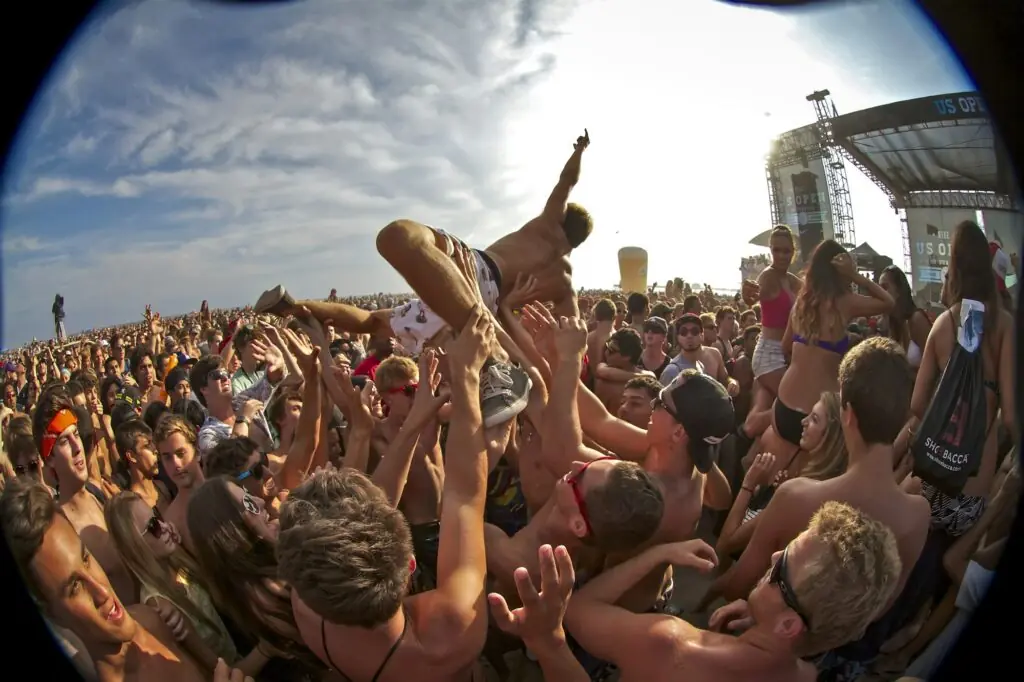
Fuji Rock Festival 2026 runs from Friday 24 to Sunday 26 July at Naeba, Niigata, with a free pre-festival day from 23 July. The xx, Khruangbin, Massive Attack and Fujii Kaze, making his festival debut, headline a line-up of more than 180 artists across a dozen stages built straight into the forest. The 3-day pass (¥57,000-59,000) was already sold out by June 2026. Your best bet is a single-day ticket, or extend the trip to take in Niigata’s onsen and sake scene, the region’s other big draw.
Fuji Rock Festival hasn’t actually taken place near Mount Fuji since its very first edition, yet it remains Japan’s biggest outdoor music gathering, tucked into the forest around Naeba, Niigata Prefecture. This guide covers the 2026 line-up, ticket prices in yen, getting there from the UK and around Japan, and the thing that really sets this festival apart: the onsen, sake and Koshihikari rice of a region still overlooked by most visitors from outside Japan.
The 24-26 July 2026 Weekend: Line-Up, Headliners and Ticket Status

The xx, Khruangbin, Massive Attack and Fujii Kaze’s Debut
According to the official festival website, the 2026 edition runs from Friday 24 to Sunday 26 July, with a free pre-festival day from 23 July (camping and the Oasis area open from midday). It’s the 29th edition of an event held every year since 1997 by SMASH Corporation, aside from the 2020 postponement and the all-domestic 2021 edition, both down to the pandemic.
On 20 February 2026, a first wave of 66 artists revealed the headliners, according to The Japan Times: The xx, headlining for the first time behind a new album after nine years of silence, plus Khruangbin and Massive Attack, back on top of the bill after sixteen years away. Two of this year’s biggest names are homegrown British acts: The xx formed in Wandsworth, south-west London, while Massive Attack are Bristol through and through, the group widely credited with founding trip-hop. The one moment nobody will want to miss is Saturday 25 July, when Japanese superstar Fujii Kaze plays Fuji Rock for the first time. Two cancellations to note: Tinariwen (originally billed for 24 July) and Japanese Breakfast (26 July), both for reasons specific to the artists.
The full timetable, published in June 2026 by Skream! Japan, lists more than 180 artists across a dozen stages, including seven historic main stages set among the pine forest surrounding Naeba. One direct consequence: the 3-day pass and the Saturday day ticket were already sold out by June 2026, weeks before the gates even opened.
Highlights
- The xx, Khruangbin and Massive Attack headline, alongside the long-awaited Fuji Rock debut of Fujii Kaze on Saturday
- More than 180 artists across a dozen stages, several of them tucked deep in the forest
- A free pre-festival day from 23 July, with camping and the Oasis area open from midday
Fancy extending the experience once the music stops? This workshop lets you create your own sake blend, the great speciality of a region with 89 breweries, the highest concentration anywhere in Japan:
Why the Fuji Rock Festival Isn’t Held Near Mount Fuji
The festival’s name is close to a marketing mystery for newcomers today. Founded in 1997 by Masahiro Hidaka (SMASH Corporation), inspired by his visits to Glastonbury Festival in the UK during the mid-1980s, the event really did launch at the foot of Mount Fuji, at the Fuji Tenjinyama Ski Resort. That first edition turned to chaos: a typhoon hit on day one, Red Hot Chili Peppers played through the storm despite Anthony Kiedis’s broken arm, and day two, sunny as it was, had to be cancelled on safety grounds, according to Wikipedia.
In 1998, the punishing heat of Tokyo Bayside Square, used as a one-off fallback venue that year, convinced organisers to head back to the mountains the following year. Since 1999, the festival has been based at the Naeba ski resort, in the town of Yuzawa, Niigata Prefecture, around 200km north of Tokyo. If you’re after an actual view of Mount Fuji during your trip to Japan, our Hakone day trip from Tokyo is the better bet, under an hour from the capital on a completely different train line.
| Year | Key milestone |
|---|---|
| 1997 | First edition at the foot of Mount Fuji; typhoon and day two cancelled |
| 1998 | One-off stop at Tokyo Bayside Square (Toyosu) |
| 1999 | Permanent move to Naeba, Niigata; switch to the 3-day format |
| 2012 | All-time attendance record: 140,000 festival-goers |
| 2020-2021 | Postponed (Covid-19), then the only fully domestic edition in the festival’s history |
| 2026 | 29th edition; 3-day pass sold out by June |
Few events in Japan can match that kind of staying power: Kyoto’s Gion Matsuri, which dates back to the year 869, remains the ultimate benchmark for traditional festivals. Fuji Rock has spent three decades becoming the country’s biggest music event, a world away from traditional summer festivals like Tanabata, the star festival celebrated right across the archipelago.
Attendance That’s Defying Japan’s Tourism Slowdown
According to Mixmag Asia, the 2025 edition (the 28th) drew 122,000 festival-goers across four days: 16,000 on the free Thursday, 33,000 on Friday, 39,000 on Saturday and 34,000 on Sunday, the strongest turnout since the pandemic. That figure stood at 96,000 in 2024. The all-time record dates back to 2012, with 140,000 attendees drawn in part by Radiohead and The Stone Roses. The trend looks set to continue into 2026: the 3-day pass and Saturday ticket were already sold out by June, weeks ahead of the opening set.
| Year | Attendance |
|---|---|
| 2012 | 140,000 (all-time record) |
| 2024 | 96,000 |
| 2025 | 122,000 |
| 2026 | 3-day pass and Saturday sold out by June |
According to The Japan Times, overseas ticket buyers made up around 10% of 2025 sales, a figure organisers themselves consider an undercount, since plenty of purchases go through Japanese intermediaries. Tickets sold in 60 countries, led by Taiwan, South Korea and China, but with a growing Western base. There’s an interesting paradox shaping up for 2026: just as Japan braces for its first annual drop in overseas visitors in several years (41.4 million expected against a record 42.7 million in 2025, according to Travel And Tour World), Fuji Rock itself is filling up faster than ever.
Niigata, the Snow Country: Onsen, Sake and Rice After the Concerts
The Real Terroir Behind the Festival
Niigata is what the Japanese call Yukiguni, the snow country, made famous by Nobel laureate Yasunari Kawabata’s novel of the same name. Over 3 metres of precipitation falls on the region every year, close to 2 metres of it as snow: as it melts each spring, that exceptionally pure water irrigates the rice paddies and built the reputation of Koshihikari rice, especially the Minamiuonuma Koshihikari variety, one of the most sought-after in Japan, according to The Japan Times.
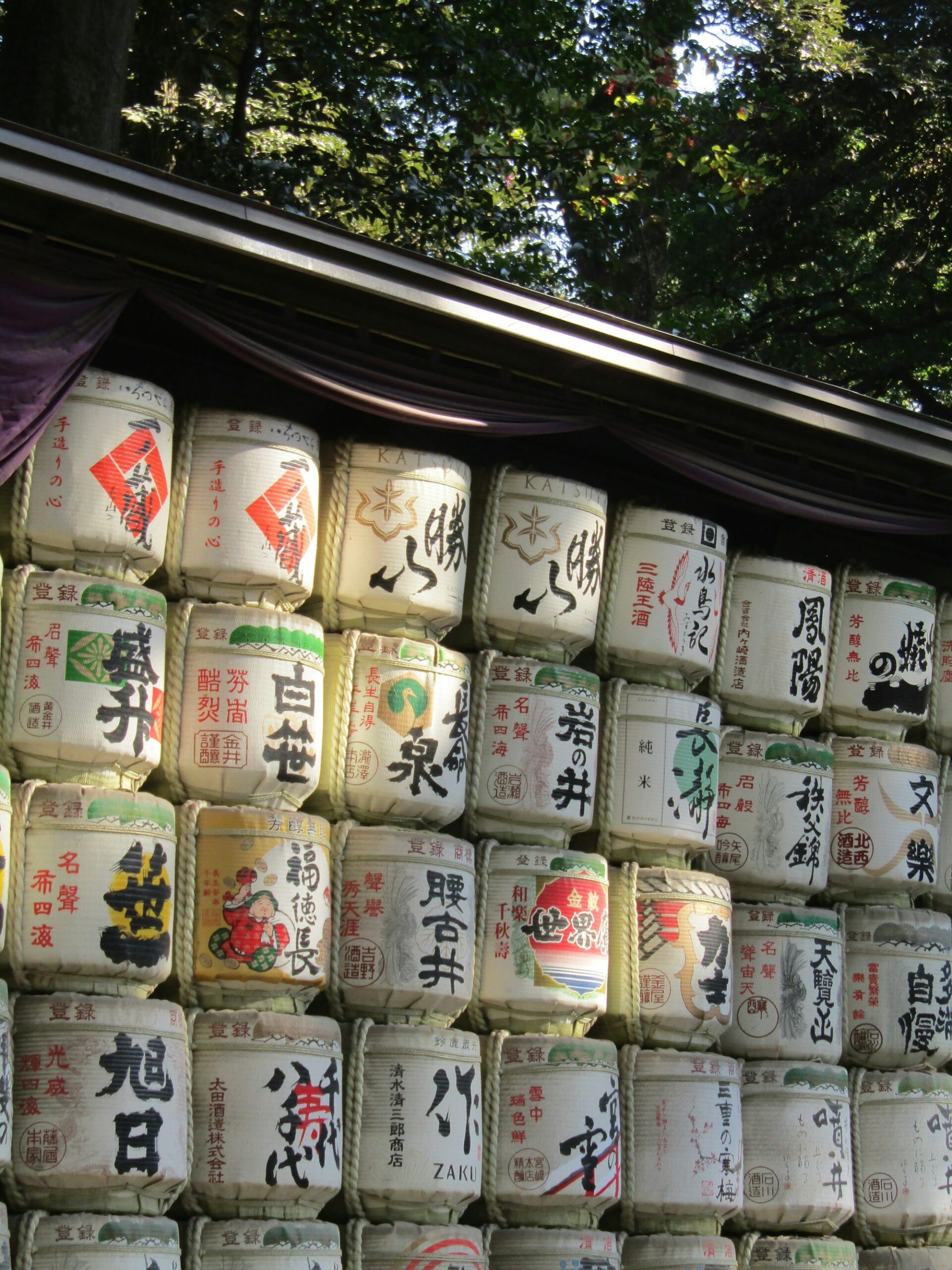
That same water also explains why Niigata is home to 89 sake breweries, more than any other Japanese prefecture. The Minamiuonuma area, where Naeba sits, is home to respected houses like Hakkaisan and Takachiyo Shuzo. At Echigo-Yuzawa station, about 30 minutes from the site, the Ponshukan museum lets you taste more than 100 different sakes, and even take a 41°C sake bath.
Niigata ranks as Japan’s third biggest hot-spring region, with 137 hot-water sources spread across its 30 municipalities, according to THE NIIGATA. Less than 20 minutes from Naeba, Okuyuzawa Kaikae Onsen is one of only three hot springs in Japan reputed to treat eye conditions, with more than 700 years of history behind it. A good way to stretch the festival weekend out beyond a night under canvas.
Highlights
- 89 sake breweries, the highest concentration anywhere in Japan
- Historic onsen less than 20 minutes from Naeba, including one of only three in Japan said to be good for the eyes
- Minamiuonuma’s Koshihikari rice, irrigated by melting snow, among the most prized in the country
If Japanese food excites you as much as the music does, our guide to premium foodie experiences in Tokyo pairs perfectly with this Niigata detour, before or after the festival.
Weather, Prices and Other Things to Watch For
Late July falls right at the tail end of Japan’s rainy season (tsuyu): sudden afternoon downpours, the famous « guerrilla rainstorms », are common. The site also sits at 1,000m altitude, with sharp temperature swings between day and night. It’s no accident that weather has always been the festival’s Achilles heel, from the typhoon at its 1997 founding edition to the cancelled All Night Fuji show in 2009. Pack serious wet-weather gear: umbrellas are banned on site.
On budget, the 3-day pass (¥57,000-59,000, or roughly £265-275 at 2026 exchange rates) is regularly flagged as pricey by the specialist press. Add transport, accommodation and food, and budget closer to £685-1,030 for a 3-4 day stay on the ground as an international visitor.
One more thing to watch for: only buy tickets through official channels (e+, Ticket Pia, Ticketmaster Singapore, KKTIX, tixCraft). The official festival FAQ is unambiguous: any ticket bought elsewhere is invalid, with no refund guaranteed if something goes wrong.
The festival claims the title of « the cleanest festival in the world »: recycled biodiesel, partial solar power and closed-loop recycling run with the NGO iPledge, according to Zenbird Media. There’s still a paradox common to every major festival, though: attendee travel accounts for up to 80% of the total carbon footprint of an event like this. Worth noting, given Massive Attack, one of 2026’s headliners, once turned down a slot at Coachella over environmental concerns.
Planning Your Trip: Getting There, Where to Stay, Budget and Visa
Here’s the full pricing grid for the 2026 edition, given exclusively in yen (any exchange rate is for guidance only):
| Pass | Price | Status (June 2026) |
|---|---|---|
| 3-day pass (advance) | ¥57,000 | Sold out |
| 3-day pass (general sale) | ¥59,000 | Sold out |
| Day ticket — Friday | ¥26,000 | Available |
| Day ticket — Saturday | ¥26,000 | Sold out |
| Day ticket — Sunday | ¥26,000 | Available |
| Friday Night pass | ¥16,000 | Available |
| Youth rate (1 day, under 22/17) | ¥18,000 | Varies by day |
| Camping (full stay) | ¥6,000 | Available |
Flying in from the UK
British Airways, JAL and ANA all fly non-stop from London Heathrow to Tokyo Haneda, around 35 flights a week between them, with a flight time of roughly 13 hours 50 minutes. Fares swing hugely by date: expect anywhere from around £425-590 at the very cheapest to well over £1,000 in late July, one of the busiest and priciest weeks of the year to fly, so it pays to book early. Japan sits 8 hours ahead of the UK in July (Japan doesn’t observe daylight saving, and the UK is on British Summer Time), so build in a day or so to shake off the jet lag before the festival starts.
From Tokyo: Shinkansen or Local Trains
The fastest route from Tokyo to Echigo-Yuzawa station is the Joetsu Shinkansen, around 90 minutes for ¥6,500-6,800 one way. A cheaper alternative runs via local trains (Tokyo-Takasaki-Minakami-Echigo-Yuzawa), under ¥4,000 but with three changes and roughly 4 hours of travel. From the station, an official shuttle reaches the Naeba site in 40-60 minutes, for ¥2,000-3,000 depending on the option. One key thing to flag: the last set of the night usually finishes after the last train back to Tokyo has gone, so unless you’re staying on-site or nearby, you may need to leave before the final act wraps up.
Plenty of festival-goers build in a stop in Tokyo before heading to Niigata: our guide to Shimokitazawa covers ten vintage-and-coffee experiences well off the beaten track, perfect for filling the time before you head out.
Where to Stay: Camping, Ryokan or Echigo-Yuzawa
Camping is still the most popular and cheapest option: ¥6,000 per person for the whole stay, with gear not provided but available to hire on site or send ahead by post. Somewhere between 15,000 and 17,000 people camp each year. Hotel options around Naeba are limited and often allocated by lottery (the Naeba Prince Hotel and its 1,224 rooms is the big one): book months ahead. A solid alternative is to stay in Echigo-Yuzawa and shuttle in daily.
Budget, Visa and Payment
On daily spending, a meal on site runs ¥500-1,600, and guides suggest budgeting $60-100 a day on top of tickets and accommodation. Good news for card payments: ATMs at 7-Eleven convenience stores accept foreign cards fee-free, in 12 languages, 24 hours a day. On paperwork, British passport holders don’t need a visa either: the UK is among the countries granted visa-free entry to Japan for tourist stays of up to 90 days, according to the Japanese Ministry of Foreign Affairs (see also the latest GOV.UK travel advice before you fly).
Practical Information for Your Trip
Stay connected the moment you land, no local SIM card to track down and no worrying about network overload once the festival crowds arrive.
From $4 (1GB)Cover for the unexpected, weather, long days on your feet, camping, while you’re in Japan. Nomad Insurance starts from $56 per 4 weeks, 10% off through our link.
From $56 / 4 weeksFrequently Asked Questions
What are the exact dates of Fuji Rock Festival 2026?
The festival runs from Friday 24 to Sunday 26 July 2026, with a free pre-festival day from 23 July (camping and the Oasis area open from midday), according to the official website.
Why is it called Fuji Rock if it isn’t held near Mount Fuji?
Because its very first edition, in 1997, genuinely took place at the foot of Mount Fuji, before a typhoon pushed organisers to permanently relocate the event, from 1999 onward, to the Naeba ski resort in Niigata Prefecture.
How much does a ticket for Fuji Rock 2026 cost?
The 3-day pass is ¥57,000 in advance and ¥59,000 at general sale (roughly £265-275), but it had already sold out by June 2026. Subject to availability, Friday and Sunday day tickets remain at ¥26,000 and the Friday Night pass at ¥16,000.
How do you get to Fuji Rock from Tokyo?
By Joetsu Shinkansen to Echigo-Yuzawa station (around 90 minutes, ¥6,500-6,800), then an official shuttle to the Naeba site (40-60 minutes, roughly ¥2,000-3,000).
Can you camp on site?
Yes, it’s the most popular and cheapest option: ¥6,000 per person for the whole stay. Gear isn’t provided, but can be hired on site or sent ahead by post. Between 15,000 and 17,000 people camp each edition.
What’s the weather like at Naeba in late July?
The site sits at 1,000m altitude, right at the tail end of Japan’s rainy season: sudden thunderstorms are possible, with sharp temperature swings between day and night. Serious wet-weather gear is a must; umbrellas are banned on site.
Do UK citizens need a visa for this trip?
No. British passport holders can enter Japan visa-free for tourist stays of up to 90 days, the same exemption France and many other countries benefit from, according to the GOV.UK travel advice and the Japanese Ministry of Foreign Affairs.
Is the festival actually eco-friendly?
It claims the title of the cleanest festival in the world (recycled biodiesel, partial solar power, closed-loop recycling with the NGO iPledge). Attendee travel remains the single biggest source of its carbon footprint, though, as with any major festival.
What else is there to do in the region after the festival?
Niigata is packed with well-known onsen (Echigo-Yuzawa, Kaikae, Matsunoyama), sake breweries you can tour like Hakkaisan, the Ponshukan sake museum, and, 30-45 minutes away, the permanent installations of the Echigo-Tsumari Art Triennale and the Hoshitoge rice terraces.
Sources
- FUJI ROCK FESTIVAL ’26 — Festival Information — Official dates and details for the 2026 edition
- FUJI ROCK FESTIVAL ’26 — Tickets — Full official pricing grid
- FUJI ROCK FESTIVAL ’26 — FAQ — Official 2026 FAQ
- The Japan Times — Announcement of the first wave of the 2026 line-up
- NiEW — Detail on the first 66 announced artists
- Skream! Japan — Full timetable, more than 180 artists across 12 stages
- Mixmag Asia — 2025 attendance report
- Wikipedia — Fuji Rock Festival — Full history since 1997
- The Japan Times — Share of international ticket buyers
- Japan Travel (JNTO) — Official Echigo-Yuzawa destination page
- THE NIIGATA — Official hot-spring recommendations by area
- The Japan Times — Special feature on Niigata rice and sake
- Wikipedia — Echigo-Tsumari Art Triennial — The region’s art triennale
- Japanese Ministry of Foreign Affairs — Visa exemption list, including the UK
- GOV.UK — Japan travel advice — Entry requirements for British passport holders
- Travel And Tour World — Japan’s 2026 national tourism context
- Zenbird Media — The festival’s sustainability approach
Information verified on 2 July 2026.

Plan your trip with Pixidia
Pixidia learns how you travel and helps you build a trip that truly fits you and everyone coming along.
Open the planner