
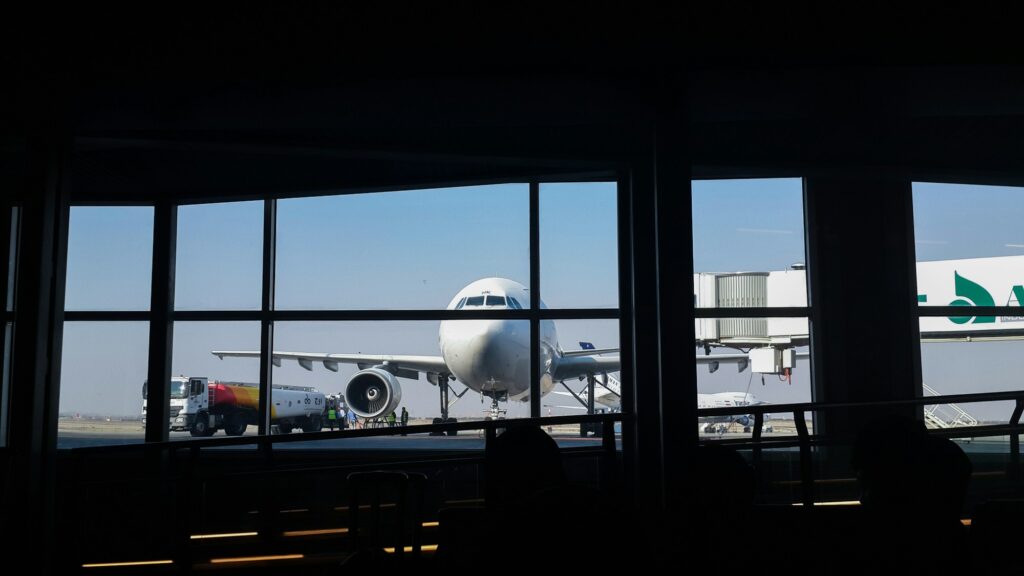
Mahan Air has been sanctioned by the EU since 2019-2020 and Iran Air since October 14, 2024 — there are no more direct flights between Europe and Iran. Since the US-Israeli strikes of February 28, 2026, and the closure of Iranian airspace, reaching Iran is impossible or extremely dangerous. The French government classifies all of Iran as a red zone: all travel is strongly advised against. The ceasefire in effect since April 8, 2026 expires on April 22 — the situation remains explosive.
In October 2024, the European Union sanctioned Iran Air, Mahan Air, and Saha Airlines for their role in transferring ballistic missiles to Russia. This was already a shock for the tens of thousands of European residents of Iranian origin and dual nationals who relied on these airlines to visit family. Then on February 28, 2026, the US Operation Midnight Hammer and Israeli strikes plunged Iran into open warfare, closing its airspace and paralyzing all regional air connections. Airports evacuated in Dubai, Qatar Airways canceling 4,929 flights, Tehran’s Imam Khomeini Airport completely closed until mid-March: this guide covers everything you need to know if you have family in Iran or want to understand your situation.
Mahan Air and Iran Air: timeline of a progressive ban
From 2011 to 2024: a ban in stages
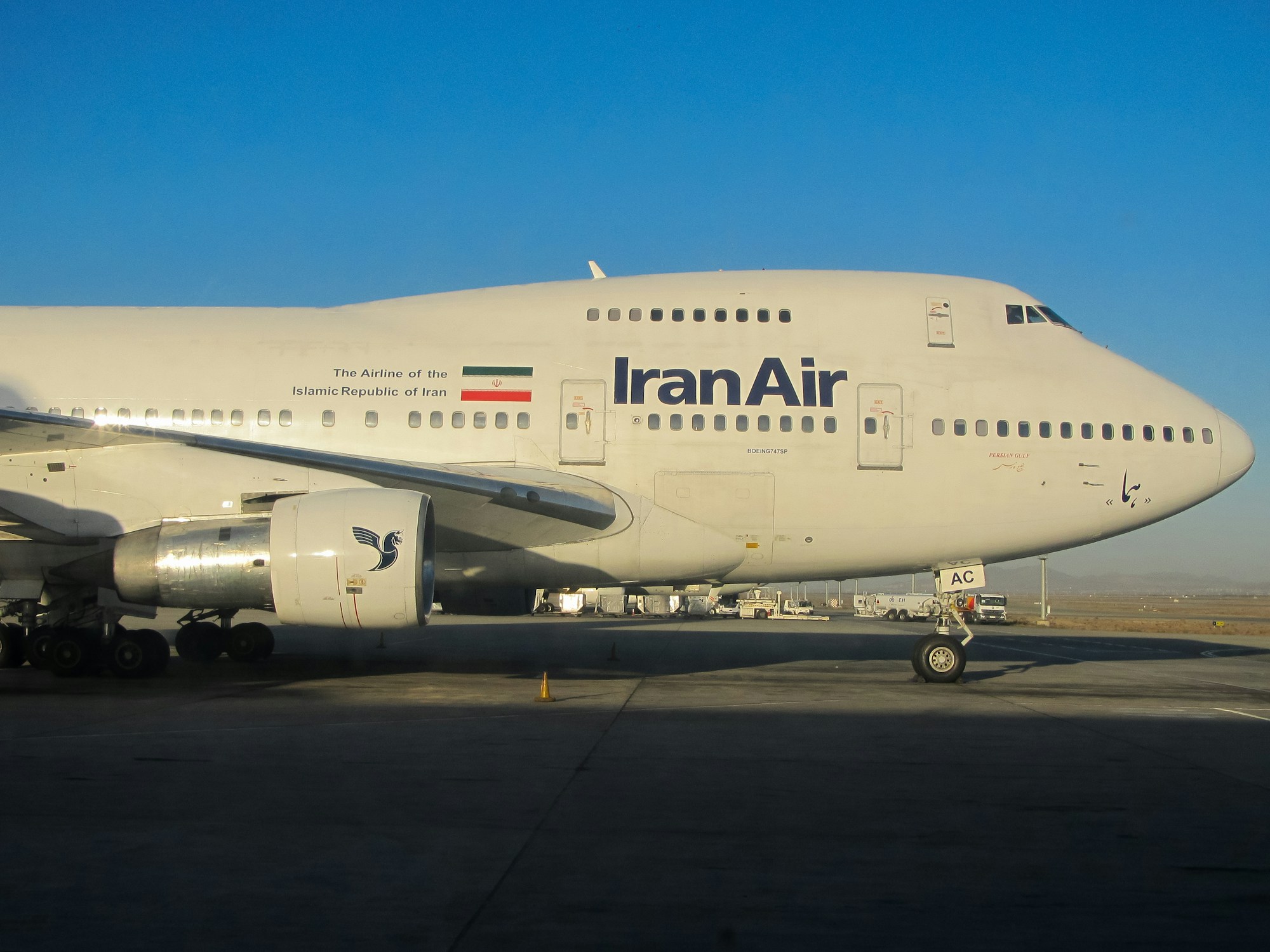
The history of sanctions against Iranian airlines began long before 2026. Mahan Air was placed on the US Treasury blacklist as early as 2011, for providing logistical support to the Quds Force, the special unit of the Islamic Revolutionary Guard Corps (IRGC) responsible for foreign operations. Between 2019 and 2020, the airline was banned in France, Germany, Italy, and Spain, accused of transporting weapons to Syria and Lebanon, and IRGC personnel. In 2024, new evidence emerged suggesting Mahan Air was transporting weapons to Russia.
On October 14, 2024, the European Commission took a decisive step. The EU Council adopted sanctions against Iran Air, Saha Airlines, and Mahan Air — in direct response to the transfer of Iranian ballistic missiles to Russia, a red line explicitly drawn by the European Council as early as March 2024. The decision took effect immediately: asset freezes, travel bans, and a prohibition on any transactions with these companies for EU persons or entities.
Iran Air’s reaction was immediate: the following day, the national carrier canceled all its flights to Europe — Rome, Milan, Vienna, Hamburg, Cologne, Frankfurt, and Paris — to avoid any incident at European airports. Iran Air was the last airline still operating regular flights between the EU and Iran. Its withdrawal ended direct connections.
February 28, 2026: the war that paralyzed Middle Eastern skies
Aviation chaos timeline: June 13, 2025 to April 8, 2026
To understand the 2026 situation, we must go back to June 13, 2025, when Israel launched Operation Rising Lion against Iranian nuclear sites, scientists, and energy infrastructure. On June 22, 2025, the United States conducted Operation Midnight Hammer, targeting the nuclear facilities at Fordo, Natanz, and Isfahan with B-2 Spirit stealth bombers. Iran retaliated, but the conflict saw a relative pause in autumn 2025.
That respite was short-lived. In December 2025 and January 2026, massive protests shook Iran, driven by economic collapse and the freefall of the rial. Then, on February 28, 2026, a new wave of US-Israeli strikes targeted Iranian military and government sites — including the assassination of Supreme Leader Ali Khamenei. Iran responded with missile and drone strikes against Israel, US bases across the Middle East, and Arab countries in the region. The Strait of Hormuz was closed.
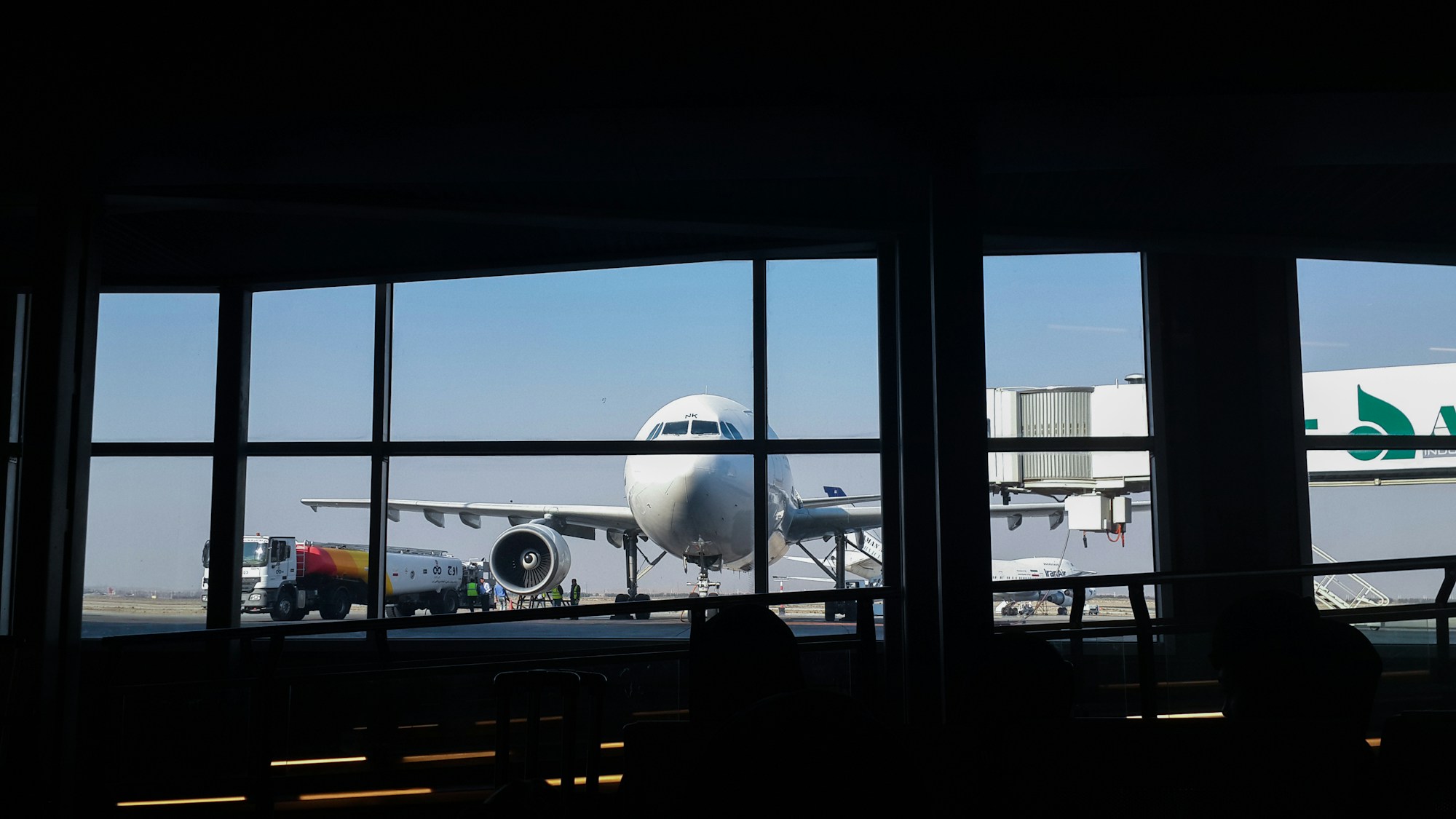
The aviation carnage was immediate: at least eight countries simultaneously closed their airspace — Iran, Israel, Iraq, Jordan, Qatar, Bahrain, Kuwait, and the United Arab Emirates. Dubai International Airport, the world’s busiest, was evacuated after Iranian retaliatory strikes. Hamad Airport in Doha suffered missile and drone attacks directly targeting civilian infrastructure. Between February 28 and March 24, 2026, Qatar Airways canceled 4,929 flights — 89% of its scheduled services. Tens of thousands of passengers were stranded in departure halls.
In Tehran: Imam Khomeini International Airport (IKA) appeared completely closed until at least mid-March, according to FlightAware data. Skies above the Iranian capital were empty. For passengers whose flights were canceled, see our guide on force majeure and your rights if your flight was canceled.
Situation on April 19, 2026: a fragile ceasefire expiring on April 22
A two-week ceasefire that failed to deliver
A temporary two-week ceasefire was announced on April 8, 2026. US Vice President JD Vance called it a « fragile truce. » High-level negotiations that followed in Islamabad ended without agreement. Worse: the United States announced plans for a naval blockade of Iranian ports and the Strait of Hormuz, which Iran warned it would treat as an act of war. The ceasefire expires on April 22, 2026 — three days from the date of this article.
EASA has updated its Conflict Zone Information Bulletin (valid until April 24): European operators must avoid the airspace of Bahrain, Iran, Iraq, Israel, Jordan, Kuwait, Lebanon, Qatar, the UAE, Oman, and Saudi Arabia. A narrow exception exists for southern Oman and Saudi Arabia above flight level 320.
Hub status (April 19, 2026)
- Istanbul (IST): Turkish Airlines and Pegasus have suspended all flights to Iran until at least end of April
- Dubai (DXB): Emirates and flydubai have partially resumed, but flights to Iran remain suspended or require prior approval from Iranian civil aviation
- Doha (DOH): Qatar Airways gradually resuming — mid-May at earliest for partial connections
- Yerevan (EVN): Armenian airspace remains open — increased traffic from diverted routes
- Tbilisi (TBS): Georgian Airways has maintained continuous operations — stable regional hub
- Air Arabia (Sharjah): announcing a resumption on Mashhad, Shiraz and Lar — but only with prior approval from the Iranian Civil Aviation Authority
Franco-Iranian dual nationals: a critical legal and human situation
Non-recognition of dual nationality: the fundamental legal trap
The Iranian diaspora in France numbers tens of thousands of people — based mainly in the Paris region. They are directly affected by the current situation. But before addressing the question of flights, it is essential to understand the fundamental legal reality: Iranian authorities do not recognize dual nationality.
A Franco-Iranian dual national entering Iran on their Iranian passport will not be able to request French consular protection. The French embassy will not necessarily be informed of an arrest or detention. Consular visit requests face long delays and are granted rarely, randomly, with very short notice. Furthermore, male dual nationals over 17 who are not current with their Iranian military service face additional difficulties at entry.
The Cécile Kohler and Jacques Paris case: a concrete warning
These two French nationals illustrate the risks. Arrested in Iran, they were detained there for over three and a half years. In May 2025, France had brought the matter before the International Court of Justice, arguing that Iran was violating the Vienna Convention on Consular Relations. The Quai d’Orsay had only obtained four consular visits, under very restrictive conditions. Cécile Kohler and Jacques Paris were received at the Élysée Palace on April 8, 2026, after arriving in Paris that same day — five months after being transferred to the French residence in Tehran.
Alternative options: corridors still theoretically viable

Yerevan and Tbilisi: the two northern corridors that remain open
First and foremost: this section does not encourage travel to Iran. It aims only to provide factual information to those who, due to exceptional circumstances (humanitarian family emergency, repatriation), need information on corridors still theoretically viable.
The northern corridor via the Caucasus is the least compromised: Paris → Yerevan (Air France or Austrian/Lufthansa via connection) → land border at Nordouz or Astara toward Iran. Armenian airspace (Yerevan FIR) has remained open and is even seeing increased traffic as flights divert north to bypass the closed Middle East corridor. The Armenia-Azerbaijan corridor has become one of the main substitute routes. Georgian Airways has maintained operations from Tbilisi and resumed its flight to Tel Aviv in mid-April.
The Iran-Armenia and Iran-Turkey land borders are currently open, according to French authorities — but with a strong recommendation to verify before traveling to these borders by road.
Summary table of options (April 19, 2026)
| Route | Status | Risk |
|---|---|---|
| Paris → Tehran direct (Iran Air) | ❌ Canceled since Oct 2024 | Maximum |
| Paris → Istanbul → Tehran (Turkish) | ❌ Suspended until end of April | Very high |
| Paris → Dubai → Tehran (Emirates) | ❌ Suspended (approval required) | Very high |
| Paris → Yerevan + land border | ⚠️ Yerevan OK, border risky | High |
| Paris → Tbilisi + land border | ⚠️ Tbilisi OK, border risky | High |
| Paris → Doha → Tehran (Qatar Airways) | ❌ Suspended until mid-May | Maximum |
FAQ — Your questions about banned Iranian airlines and travel to Iran
Can you still fly to Iran from Europe in April 2026?
No. Two obstacles make this impossible or extremely dangerous. First, Iran Air has not operated any flights to Europe since October 15, 2024 (EU sanctions). Second, since the February 28, 2026 strikes and the ensuing war, Iranian airspace is closed or extremely restricted. All non-sanctioned airlines (Turkish Airlines, Pegasus, Emirates, Qatar Airways) have suspended their routes to Iran. The French government classifies all of Iran as a red zone: all travel is strongly advised against.
Could Mahan Air or Iran Air be unsanctioned soon?
This is highly unlikely in the short term. The European sanctions framework targeting Iranian missile and drone transfers was expanded in May 2024 and renews annually. Given the ongoing war, any easing requires a durable resolution to the conflict. Aviation experts estimate that assuming a real peace agreement, it would still take several months for airlines to reconstitute their traffic rights and resume European operations.
I am a Franco-Iranian dual national and my family is in Iran. What should I do?
The situation is very difficult. Do not travel to Iran — the Quai d’Orsay strongly advises against all travel. If your family is in immediate danger, contact the Crisis and Support Center (CDCS) of the Quai d’Orsay, available 24/7: +33 1 53 59 11 00. Remember that Iranian authorities do not recognize dual nationality — if you enter Iran on your Iranian passport, you cannot benefit from French consular protection. Register on ARIANE (ariane.diplomatie.gouv.fr) if not already done. For money transfers to Iran, financial sanctions severely complicate bank transfers — consult a lawyer specializing in sanctions law.
Are Iran’s land borders open?
According to French authorities as of April 19, 2026, Iran’s land borders, particularly toward Armenia and Turkey, are currently open. However, the French government recommends verifying before traveling to these borders, as the situation can change rapidly. This option remains extremely risky and strongly advised against, even in a family emergency. Border crossing conditions can change without notice.
My flight to Iran or the region was canceled — am I entitled to compensation?
This is a complex question. In principle, airspace closures related to armed conflict may qualify as « extraordinary circumstances » excluding the compensation obligation under EU regulation CE 261/2004. However, airlines are still required to offer you a full refund or rebooking. Some airlines have also offered more generous voluntary refund policies — Turkish Airlines, for example, offered free rebooking until May 10, 2026. Use a free eligibility check service to assess your specific situation.
When could air connections to Iran resume?
No expert is willing to give a precise date. The ceasefire expires on April 22, 2026, and the Islamabad negotiations failed. The United States has announced a naval blockade of Iranian ports. « Assuming a lasting ceasefire — or better yet, a peace agreement — it will take a few months for normal aviation fuel production and delivery to resume, » estimates one industry analyst cited by ABC News. Airlines are unlikely to resume their routes before clear evidence of stability. For Iran Air specifically, EU sanctions would also need to be lifted — a long and uncertain political process.
Can I send money to my family in Iran?
Financial sanctions severely complicate transfers to Iran. Credit cards and traveler’s checks are not accepted in Iran. Most European banks refuse to make wire transfers to Iranian accounts due to sanctions. Informal transfer systems (hawala) are used by the diaspora, but carry legal risks depending on amounts and tracing. Consult a lawyer specializing in sanctions law before any transfer.
Are there non-EU-sanctioned airlines still operating to Iran?
As of April 19, 2026, all major non-sanctioned airlines (Turkish Airlines, Pegasus, Emirates, flydubai, Qatar Airways, Kuwait Airways) have maintained their suspensions of flights to Iran. Air Arabia from Sharjah has announced a resumption on some Iranian cities (Mashhad, Shiraz, Lar) but only with prior approval from the Iranian Civil Aviation Authority — a lengthy and uncertain process. A few Central Asian carriers (Uzbekistan Airways, FlyArystan) theoretically maintain connections to Tehran, but with exorbitant fares, very volatile conditions, and required authorizations. These options should only be considered as a last resort and with consular support.
Sources
- EU Council — Sanctions decision of October 14, 2024 against Iranian airlines
- France Diplomatie — Travel advice for Iran (updated March 2026)
- Al Jazeera — Airspace closures during the strikes (February 28, 2026)
- Safe Airspace — Conflict zone airspace, Iran
- OPSGROUP — Middle East operational picture (April 2026)
- The National — Airline updates (April 9, 2026)
- Time Magazine — War impact on Middle East travel
- CH-Aviation — EU sanctions on Iran Air, Mahan Air and Saha Airlines
- Simple Flying — Airlines most disrupted by airspace closures
- ABC News — War impact on flight costs (April 18, 2026)
Plan your trip once the situation stabilizes
Find our geopolitical analyses and travel advice for the region in our magazine.
Discover the travel magazine