
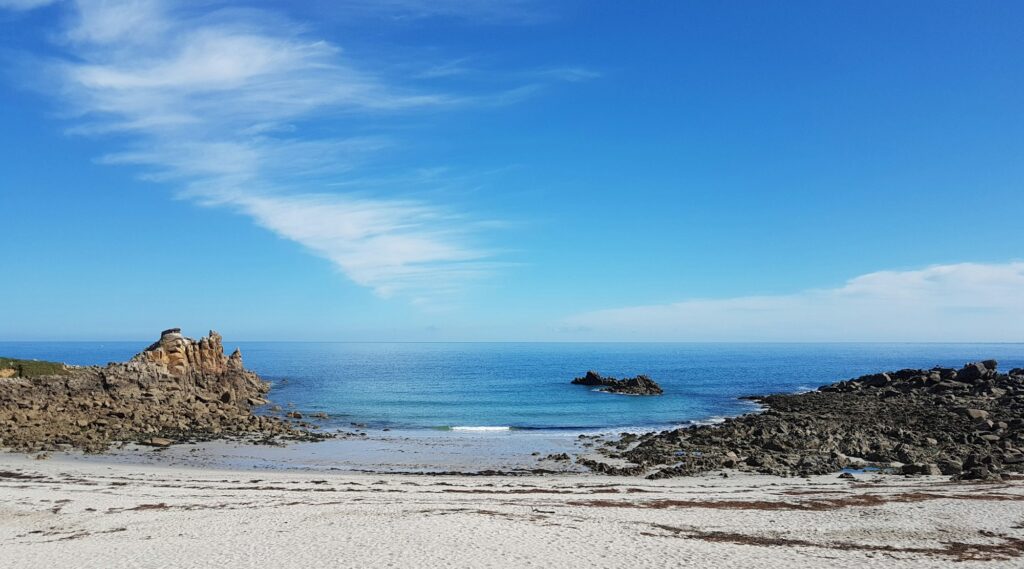
Brittany tops France’s summer rankings for the first time, claiming 23% of travel intentions (SiteMinder, 12,000 respondents) — overtaking the Côte d’Azur. Normandy has been named Europe’s Most Desirable Region at the Wanderlust Awards 2025 (208,000 readers). The Opal Coast recorded +6.7% overnight stays in 2025. This northern pivot is driven by three forces: the coolcation boom (+300% in searches), a budget 20–30% lower than the Mediterranean, and an exceptional 2026 events calendar — Monet centenary, D-Day 82nd anniversary, Carnac UNESCO.
For British travellers, Northern France has always been the secret that Europeans kept to themselves. Now it’s out. Brittany records 14–22°C in summer — cooler than a heatwave week in London — and rarely exceeds 25°C. Normandy offers chalk cliffs and apple-orchard shade. The Opal Coast has Atlantic winds and seals at low tide, reachable via Eurostar to Lille or a 90-minute DFDS ferry from Dover. These three regions are not trending by accident: they answer a measurable, documented demand from an industry tracking over a dozen data sources. Here is why travel professionals rank them at the top of summer 2026, and how to get the most out of a trip from the UK.
1. Brittany — France’s biggest summer revelation of 2026
Brittany — n°1 for the very first time
According to the SiteMinder Changing Traveller Report 2026 (12,000 travellers across 14 countries), Brittany has secured 23% of summer holiday intentions — overtaking the Côte d’Azur for the very first time. This is backed by hard numbers: the region recorded 22.4 million overnight stays in the 2025 season, including 4.8 million international overnight stays — a historic record, up +11.6% according to INSEE Flash Bretagne 116. British visitors (+3.9%), Germans (+17.2%) and Dutch (+10.8%) alone account for 3 million of those nights.
The inscription of the megaliths of Carnac and the shores of Morbihan on the UNESCO World Heritage List on 12 July 2025 opens the first post-inscription summer. With 550+ monuments spread across 30 communes and the famous alignments (Le Ménec, Kermario, Kerlescan — over 3,000 standing stones), Carnac joins the world’s most spectacular sites. Guided visits are compulsory during high season to protect the stones. In 2026, the UNESCO designation is generating a spotlight effect among international visitors — particularly from the UK — who are discovering a site that has long been under-celebrated outside France.
The coolcation trend is not a gimmick: searches for cool-climate destinations have risen +300% in a single year according to Ulysse. With a hotter-than-average summer forecast (+1°C above normal for France, most pronounced in the south-east), Brittany acts as a natural thermostat. On the Pink Granite Coast, the Crozon peninsula or the wild coast of Quiberon, temperatures rarely exceed 22°C — and that is a genuine selling point in a summer of heatwaves.
On the events front, the Festival Interceltique de Lorient celebrates its 55th edition from 31 July to 9 August 2026. Over 700,000 visitors are expected, with Agnes Obel, Yann Tiersen, Eluveitie and Cécile Corbel on the bill. The 2026 guest of honour is Cornwall — which will draw a particularly strong English-speaking crowd and make this a natural trip for British music fans.
Highlights
- Carnac UNESCO — first summer since inscription (12 July 2025), 3,000+ standing stones, 550+ listed monuments
- GR34 coastal path — 2,100 km of coastline from Mont-Saint-Michel Bay to Saint-Nazaire, France’s most-walked coastal trail
- Pink Granite Coast (Perros-Guirec) — uniquely coloured rock formations, ideal for families
- Festival Interceltique de Lorient — 55th edition, 31 July–9 August, Cornwall as guest of honour, 700,000 visitors expected
- Value for money — Brittany camping in July–August: from £870/week for a mobile home, lower tourist tax than French Riviera
For a full guide to the region, see our article 10 Brittany campsites still available for the Whitsun bank holiday 2026.
2. Normandy — an internationally recognised gem

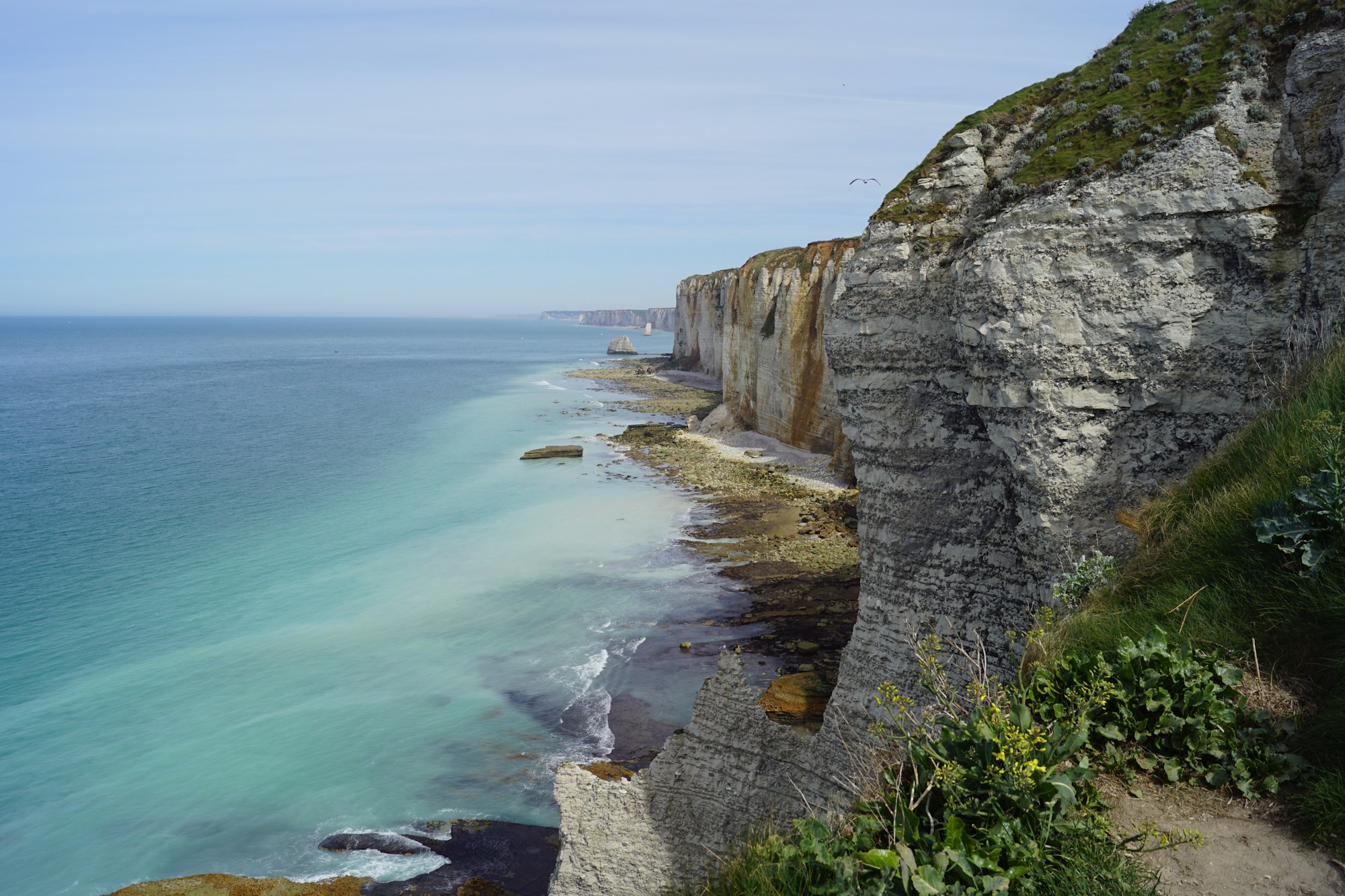
Normandy — three reasons to visit this summer
Summer 2026 is a once-in-a-generation edition for Normandy. Three major occasions converge: the 82nd anniversary of D-Day (6 June), the centenary of Claude Monet’s death (5 December 1926) celebrated all year with 100+ events, and the loan of the Bayeux Tapestry to the British Museum from September 2026 — an event that will not happen again in our lifetime. These three drivers explain why Wanderlust Magazine (4.8 million readers, the UK’s biggest travel title) voted Normandy « Europe’s Most Desirable Region » at the Wanderlust Awards 2025 (208,000 voters).
The D-Day Festival Normandy runs from 30 May to 14 June 2026. The official international ceremony takes place on 6 June at Langrune-sur-Mer (Sword Beach), with international delegations in attendance. Over 70 events are scheduled: re-enactments, parachute drops at Carentan, vintage vehicle parades, concerts. Entry to ceremonies is free. With 5.5 million annual visits to the memorial sites, Normandy is the top European destination for heritage tourism — and British visitors make up its largest international contingent.
The Monet centenary has generated an impressive programme. Giverny gardens and house are open 1 April–1 November (€13). The exhibition Before the Water Lilies at the Musée des Impressionnismes Giverny (27 March–5 July, €12) brings together 30 rarely seen works. The Festival Normandie Impressionniste (6th edition, 29 May–27 September 2026) includes 67 projects in 43 towns, featuring monumental installations by Ai Weiwei at MuMa Le Havre and light projections by Mika Ninagawa on Rouen Cathedral.
The Bayeux Tapestry at the British Museum (September 2026–July 2027) is expected to draw a surge of British visitors towards Normandy — many will want to see the original before it departs, or explore the places that inspired it while the Bayeux museum is closed for renovation. According to the British Museum, the exhibition could attract up to 7.5 million visitors in London.
Highlights
- D-Day 82nd anniversary — 6 June 2026 at Langrune-sur-Mer (Sword Beach), 70+ events 30 May–14 June, free entry
- Monet centenary — Giverny gardens, MuMa Le Havre, 67 art projects in 43 towns until 27 September
- Bayeux Tapestry — see it before it travels to the British Museum in September 2026, a once-in-a-lifetime opportunity
- Mont-Saint-Michel — 2.79 million visitors in 2025; visit early morning or evening to beat the crowds
- VéloWestNormandy — 190–210 km from D-Day beaches to Mont-Saint-Michel, perfect train+bike touring
For the full commemoration programme, read our dedicated article: D-Day Festival Normandy 2026: complete guide to the commemorations.

Giverny — the Monet centenary in pictures
The Musée des Impressionnismes Giverny hosts the exhibition Before the Water Lilies (27 March–5 July 2026), tracing the 20 years of research Monet undertook before his most famous series (30 paintings, several never shown publicly). MuMa in Le Havre presents Monet in Le Havre from 5 June to 27 September (80 works). In Rouen, nocturnal light projections by Mika Ninagawa transform the cathedral facade into a luminous artwork until September.
Highlights
- Giverny gardens in June–July: roses, irises and the lily pond all at peak bloom simultaneously
- Exhibition Before the Water Lilies: 30 paintings documenting Monet’s research (until 5 July)
- Ai Weiwei monumental installation at MuMa Le Havre as part of the Impressionist Festival
3. The Opal Coast — Northern France’s best-kept secret
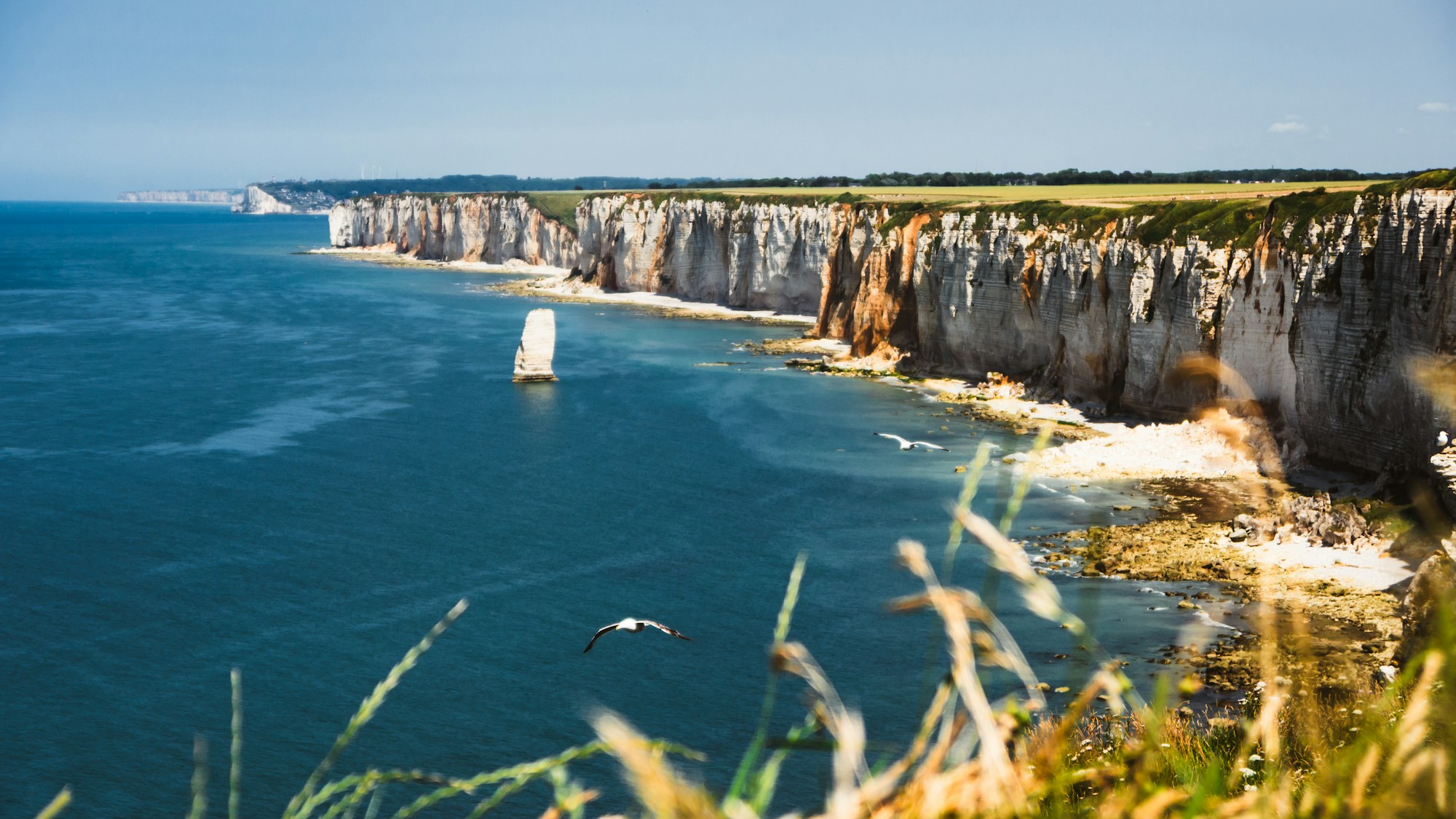
Opal Coast — 120 km of largely unspoilt coastline, one hop from Dover
While Brittany and Normandy dominate the headlines, the Opal Coast is quietly surging. Hauts-de-France recorded 11 million overnight stays in 2025 (+6.7%), with outdoor accommodation rising +15.5% — the strongest growth of any French metropolitan region. International visitors now account for 29.2% of overnight stays, led by British visitors (the largest foreign contingent), Germans (+22.2%) and Belgians (+15.3%). For UK travellers, this is arguably the most accessible short-break destination in continental Europe.
Nausicaá in Boulogne-sur-Mer marks its 35th anniversary in 2026, after 900,000 visitors in 2025. The highlight: the new vessel Vent d’Opale (245 passengers, 1–1.5 hour sea trips around the headlands), a new science hub with 4 laboratories, and a revamped Mr. Goodfish exhibition. Europe’s largest national marine centre (36,000 marine animals, 900 species) is the ideal day out for families crossing from Dover.
The unspoilt nature is a second major draw. The GR120 « Randonnée des Deux-Caps », classified as a Grand Site de France, links Cap Blanc-Nez (132 m white chalk cliffs — on a clear day you can see the White Cliffs of Dover, just 28 km away) to Cap Gris-Nez (the closest point in continental Europe to England) over approximately 20 km. The Slack dunes (between Wimereux and Ambleteuse, 200 ha) contain a fragile nature reserve with rare flora. Baie d’Authie (Berck-sur-Mer) offers sightings of around 50 common seals and 30 grey seals, arriving 2 hours before low tide, supervised by Picardie Nature volunteers.
The Fête de la Mer in Boulogne-sur-Mer (16–19 July 2026, free admission) gathers tall ships and traditional boats in the Bassin Napoléon, with 40+ bands on 3 stages, 3-hour mini-cruises and a « sea-to-plate » market. Boulogne remains France’s largest fishing port: buying directly at the fishermen’s quay is a must. The Vélomaritime (EuroVelo 4), which runs 1,500 km from Roscoff to Dunkirk — including 150 km along the Opal Coast in 6 stages — is rideable April to October.
Highlights
- GR120 Deux-Caps walk — Grand Site de France, 20 km between Cap Blanc-Nez and Cap Gris-Nez, views of England on clear days
- Nausicaá 35th anniversary — new vessel Vent d’Opale, new science hub, 900,000 visitors/year
- Seals at Baie d’Authie — 50+ seals observable at low tide at Berck-sur-Mer with volunteer supervision
- Land yachting at Berck — world capital of the sport since 1965 (Éole Club), 12 km of flat beach
- Easiest access from the UK — DFDS Dover–Calais 90 min, up to 30 sailings/day, from £89 car + 4 passengers
4. What the travel industry data shows
Behind the popular enthusiasm, there are numbers. Here is the data that tourism professionals (regional boards, INSEE, Atout France) are publishing for summer 2026.
| Indicator | Brittany | Normandy | Opal Coast / Hauts-de-France |
|---|---|---|---|
| Summer 2026 holiday intentions (SiteMinder, 12,000 respondents) | 23% — n°1 | 17% — n°3 | N/A (included within Hauts-de-France) |
| Overnight stays 2025 season | 22.4 M (+5.7%) | 83.0 M (stable) | 11 M (+6.7%) |
| International overnight stays 2025 | 4.8 M (+11.6%) — historic record | British 17.2%, Dutch 16.6%, US 16.3% | +12.9% (29.2% of total) |
| International recognition | SiteMinder n°1 France for first time ever | Wanderlust Awards 2025 « Europe’s Most Desirable Region » | Record outdoor season (+15.5%) |
| Budget vs Mediterranean | 20–30% cheaper | £520 average stay (most affordable major coastal region) | 88% cottages under €100/night |
The Ipsos/Europ Assistance 2026 barometer (25th edition, 7 April 2026) confirms a wider European trend of domestic tourism: 51% of French households plan to holiday exclusively in France, up 15 percentage points in a year. Average budget remains contained at €1,864. In this climate of value-seeking, the North-West — reachable from London in under 3 hours (Eurostar to Paris then TGV to Rennes, or ferry from Portsmouth), and 20–30% cheaper than the Riviera — offers a compelling pitch for British travellers too.
The coolcation phenomenon reinforces the structural trend: according to Ulysse, searches for cool-climate destinations have jumped +300%. Météo-France projects a +1°C thermal anomaly for France in summer 2026, most pronounced in the south-east. North-west France benefits from a permanent Atlantic buffer effect — exactly what British travellers already know from home.
Practical information for summer 2026
Brittany: Eurostar London St Pancras to Paris (2h15, from £39) then TGV to Rennes (1h25). London to Brest is approximately 5 hours door-to-door. Brittany Ferries also run direct from Portsmouth to Saint-Malo (9–11h overnight).
Normandy: Brittany Ferries Portsmouth–Caen (6h, 3 sailings/day). Or Eurostar to Paris then Paris Saint-Lazare→Caen 1h45 by train. Eurostar from £39 advance.
Opal Coast: DFDS Dover–Calais 90 min (up to 30 crossings/day, from £89 car + 4 passengers). Eurostar London–Lille (1h20) + TER or short drive. Calais–Boulogne is 30 min by car.
In Normandy: B&Bs from €57/night, 2-star hotels from €39/night. Motorhome stays are booming (+27.71% in 2025): 30 dedicated pitches (7 new in 2026).
In Brittany: campsites from €1,000–1,200/week (mobile home) in July–August — most fully booked since March. Self-catering gîtes and B&Bs still available in September, 30–40% cheaper.
On the Opal Coast: 88% of self-catering properties under €100/night according to destinationcotedopale.com.
For non-EU travellers visiting the D-Day sites, Carnac or Nausicaá: a France eSIM activatable in 2 minutes, covering all three regions. From approximately £4.50 / 1 GB / 7 days; an unlimited 10-day plan from ~£28.
From ~£4.50 / 7 daysNomad Insurance: global coverage from $56/4 weeks. Covers D-Day site visits, hiking the GR34, and watersports along the Opal Coast. 10% off via our link.
From $56 / 4 weeksFrequently asked questions
Is Brittany really cheaper than the Côte d’Azur for summer 2026?
Yes. Holiday rentals in Brittany and Normandy are 20–30% cheaper than the Mediterranean coast in July–August (Expedia 2026). Tourist taxes are also lower: roughly €37/week for Brittany camping versus €71/week in the French Riviera (source: Ulysse). One caveat: Brittany campsites for July–August have been fully booked since mid-March 2026. Alternatives include self-catering gîtes and B&Bs, which remain available for longer.
When should I book for Brittany in summer 2026?
The ideal window was before 17 March 2026: over 50% of summer bookings were confirmed by then. If you haven’t booked yet, seaside campsites for July–August are largely full. Options: Gîtes de France self-catering cottages available until June, less mainstream « glamping » stays (treehouses, yurts) that are less saturated, or shifting your trip to September — same mild climate, 30–40% cheaper, far fewer crowds. Belle-Île in September is genuinely exceptional. Source: Ulysse.
Is Mont-Saint-Michel too overcrowded to visit in summer 2026?
Mont-Saint-Michel welcomed 2,793,985 visitors in 2025 (+3.1%), with peaks of 30,000 people per day in summer. No visitor caps are planned for 2026. Tips: arrive before 10 am or after 4 pm, avoid the D-Day weekend (6 June) and August bank holiday weekends. Car parking was expanded by +30% for summer. Quieter alternatives within an hour: Avranches, Cancale, Saint-Suliac, Granville. Source: Ulysse.
What are the must-sees for the Monet centenary in Normandy?
Three priority visits for the Monet centenary: 1) Giverny gardens and house (1 April–1 November, €13) + exhibition Before the Water Lilies at the Musée des Impressionnismes (27 March–5 July, €12, 30 rarely seen works); 2) MuMa Le Havre, Monet in Le Havre (5 June–27 September, 80 works); 3) Festival Normandie Impressionniste (29 May–27 September, 67 projects in 43 towns, including Ai Weiwei at MuMa). Train Paris to Vernon-Giverny from €10, 46 min. Source: Ulysse.
Is the Opal Coast worth the trip from England?
Absolutely — and it is the easiest destination in France to reach from England. DFDS Dover–Calais: 90 minutes, up to 30 sailings per day, from £89 for a car + 4 passengers. The GR120 Deux-Caps walk (Cap Blanc-Nez to Cap Gris-Nez, approximately 20 km) is one of France’s finest coastal walks, classified as a Grand Site de France — and on a clear day you can see the White Cliffs of Dover. Nausicaá (900,000 visitors/year, 900 marine species) has launched the new vessel Vent d’Opale for 2026. Boulogne-sur-Mer is just 30 minutes from Calais. Source: DFDS, France Bleu Nord.
Can you still walk freely on the Étretat cliffs in 2026?
Yes, but with important restrictions in place since 2025. The Trou à l’Homme tunnel and the Chambre des Demoiselles cave are closed. Approaching within 5 metres of cliff edges is prohibited, with a €135 fine. If you need a rescue, costs can be billed (fire service €900–1,000, helicopter €2,500–3,000/hour). With 1.7 million annual visitors and an average of 3 fatalities per year, Étretat remains magnificent but must be treated with respect. Source: CNNews.
What is the best cycling route connecting Brittany, Normandy and the Opal Coast?
The Vélomaritime (EuroVelo 4) runs 1,500 km from Roscoff (Brittany) to Dunkirk, hugging the Normandy and Opal Coast shorelines for 150 km in 6 stages — fully continuous, rideable April to October. For a condensed version: the VéloWestNormandy (190–210 km, D-Day beaches to Mont-Saint-Michel) takes 5–7 days in train+bike mode. The GR120 Opal Coast (~20 km, 1–2 days) completes the picture. Sources: lavelomaritime.fr, normandie-tourisme.fr.
Sources
- SiteMinder Changing Traveller Report 2026 — Brittany overtakes Côte d’Azur, 12,000 respondents, 14 countries
- INSEE Flash Bretagne 116 — Tourist frequentation Brittany, 2025 season
- Tourisme Bretagne — 2025 season report — CRT Brittany professional data
- CRT Normandie — Key tourism figures 2025 — 83 million overnight stays
- Tendance Ouest — Wanderlust Awards Normandy — Europe’s Most Desirable Region
- Hauts-de-France Tourism — Record 2025 season — 11 million overnight stays, +6.7%
- Diplomatie.gouv.fr — UNESCO Carnac — Inscription of 12 July 2025
- Festival Normandie Impressionniste — 2026 programme, 67 projects in 43 towns
- D-Day Overlord — 82nd anniversary calendar — Langrune-sur-Mer ceremony
- British Museum — Bayeux Tapestry — Loan from September 2026
- Festival Interceltique de Lorient — 55th edition 2026 programme, Cornwall as guest of honour
- France Bleu Nord — Nausicaá 35th anniversary — New vessel Vent d’Opale, 900,000 visitors
- Ville de Boulogne-sur-Mer — Fête de la Mer 2026 — 16–19 July, free admission
- Ulysse — Coolcations 2026 — +300% in searches for cool destinations
- Ulysse — Brittany bookings summer 2026 — Campsites full since mid-March
- Ulysse — Mont-Saint-Michel overtourism 2026 — 2.79 million visitors
- Ulysse — Monet centenary 2026 — Full exhibitions programme
- Ipsos/Europ Assistance — Summer holidays 2026 — 51% of French staying in France (+15 pts)
- Ulysse — Campsite tourist tax 2026 — Regional comparison
- La Vélomaritime — EuroVelo 4 Opal Coast — 150 km in 6 stages
- Parc Naturel Régional Caps et Marais d’Opale — 40th anniversary 2026, 40 cards to collect
- Camping-Car Park — 2025 Normandy report — +27.71% motorhome overnight stays
- DFDS — Dover to Calais — Up to 30 daily sailings, 90-min crossing
- Seat61 — London to Paris Eurostar — From £39 advance, 2h15
- Brittany Ferries — Portsmouth to Caen — 6 hours, 3 daily sailings
Sources consulted on 18 May 2026. Most recent data available at this date.
Ready to plan your summer in Northern France?
Brittany, Normandy, Opal Coast: three destinations, three atmospheres, one summer. Pixidia helps you build your itinerary around your interests, budget and pace — from Dover to Brest.
Explore France itineraries