
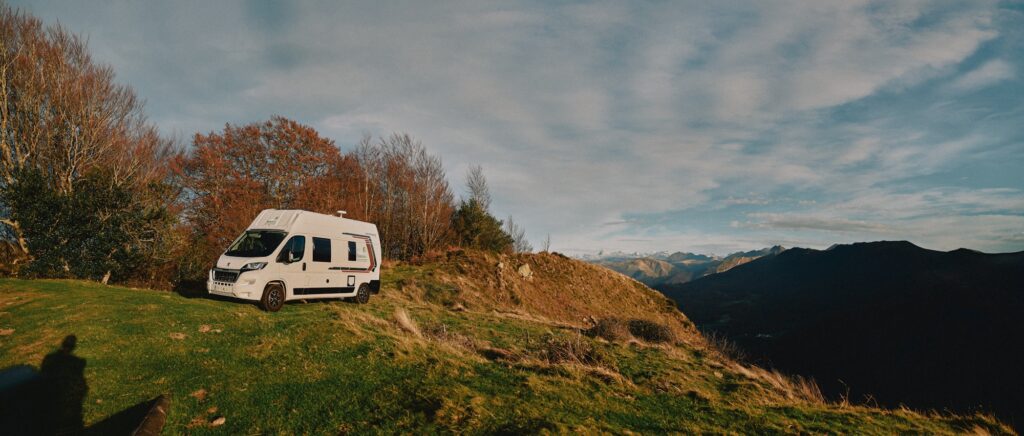
The camper van has established itself as one of the most liberating ways to explore France. In 2026, 160 000 leisure vehicles are registered each year in France, 56 % of which are converted vans, and 65 % of French people say they are drawn to nomadic tourism. Spring is the ideal season: mild temperatures, absent crowds, clear roads, and in May, several public holidays in a row (May 1st, May 8th, Ascension on May 14th, Whit Sunday on May 25th) to create true pockets of freedom. According to Ulysse.com, half of all van buyers in 2025 were first-time owners.
This itinerary takes you from the wild coast of Brittany to the peaks of the Pyrénées, passing through the Aubrac plateau and the Basque coast. Five regions, ten spots, a breakdown of the regulations, and van life events you won’t want to miss: everything you need to plan your best spring in a van.
1. Northern Brittany — Côte de Granit Rose & Secret Trégor
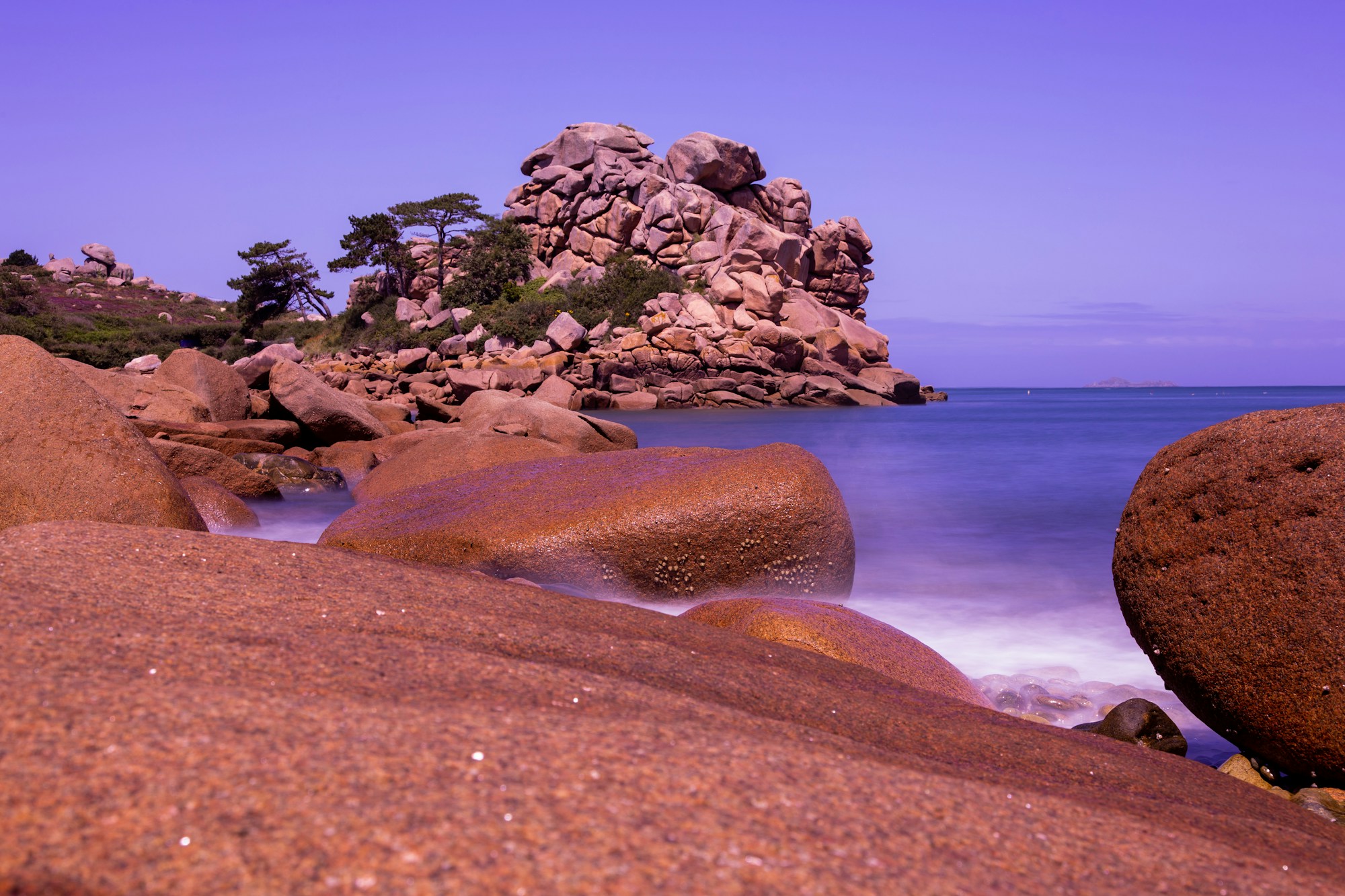
Perros-Guirec, Trégastel & Belle-Isle-en-Terre (Côtes d’Armor)
The Côte de Granit Rose is renowned as one of the most beautiful natural sites in Brittany. Its 10 kilometres of coastline between Perros-Guirec and Trébeurden shelter almost otherworldly pink rock formations at sunrise. With 16 % of motorhome holiday intentions for summer 2025, Brittany tops the list of favourite destinations for French van lifers — and spring is the right time to go: the sites are deserted, flowers are blooming, and the light is sublime. According to Génération Voyage, spring falls ideally between mid-April and late May.
For parking, the Linkin car park right in the centre of Perros-Guirec, or the quieter one at Louannec, provide a practical base. After the coast, head towards Belle-Isle-en-Terre, listed among the 100 most beautiful villages in France in 2024. The municipal aire (5 € all-inclusive, water, electricity, waste disposal) accommodates 5 vehicles alongside the river, perfect for trout fishing. From there, the gorges du Corong trail — one of Brittany’s most secretive hikes — is just 10 km away, according to Visite en Bretagne.
- Budget: Perros aire 8–10 €/night · Belle-Isle 5 € all-inclusive · ~30–50 €/day
- Best time: Mid-April to late May (deserted sites, blooming season)
- Key spot: Pointe de l’Arcouest → ferry crossing to Île de Bréhat
- App: Park4Night (Linkin, Louannec, Lampaul-Plouharzel)
2. Southern Brittany — Gulf of Morbihan & Crozon Peninsula
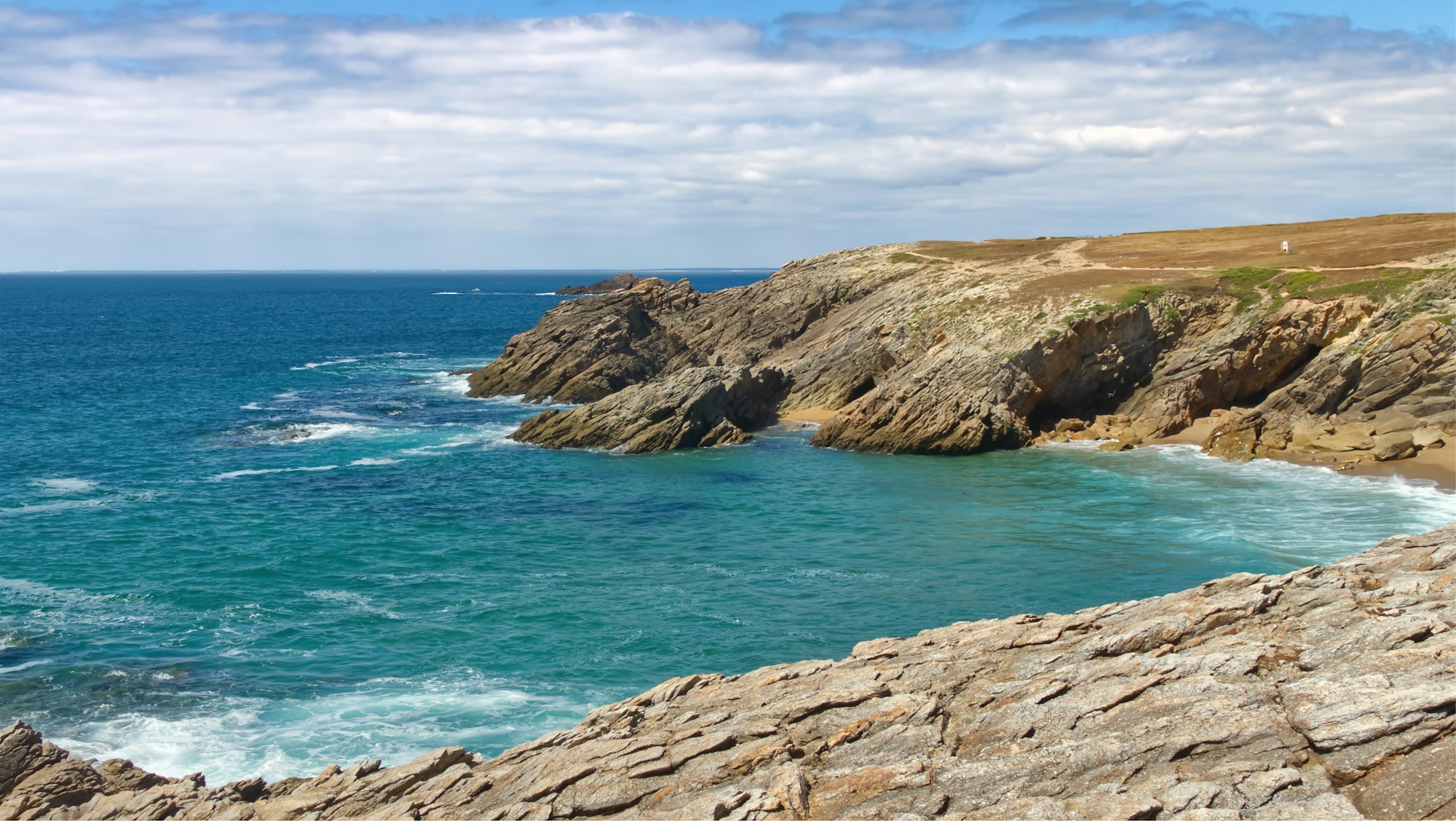
Gulf of Morbihan (Vannes) & Crozon Peninsula (Finistère)
The Gulf of Morbihan packs into just a few dozen kilometres an « inland sea » dotted with islands: Houat, Hoedic, Île-aux-Moines, Île d’Arz. The van lifer’s strategy is to use the vehicle as a land base and set out on day trips to the islands from the dedicated aire. The Aire des Îles at Baden is the go-to reference: 70 stabilised pitches, 16A electricity, drinking water, waste disposal, showers, wifi, 800 m from the ferry to Île-aux-Moines, with a direct view of the Gulf, from 13.70 €/night according to Aire des Îles.
Further west, the Crozon Peninsula packs more than ten near-virgin beaches, sea caves and Second World War bunkers into just 50 km². The Lampaul-Plouharzel aire (8–10 €/night) gives direct access to the dunes and the coastal footpath. The Pointe du Raz marks the end of the world in Brittany: on a clear day you can make out the Île de Sein and the Vieille lighthouse. According to Van Away, it is one of the most accessible hikes for van lifers.
- Budget: Aire des Îles Baden 13.70 € · Island crossing 5 € · ~40–55 €/day per couple
- Best time: May (before summer saturation)
- Must do: Ferry to Île-aux-Moines · GR 34 coastal path · Pointe du Raz
- Alternatives: France Passion at Morbihan wine estates
3. The Aubrac Plateau — Wild Massif Central
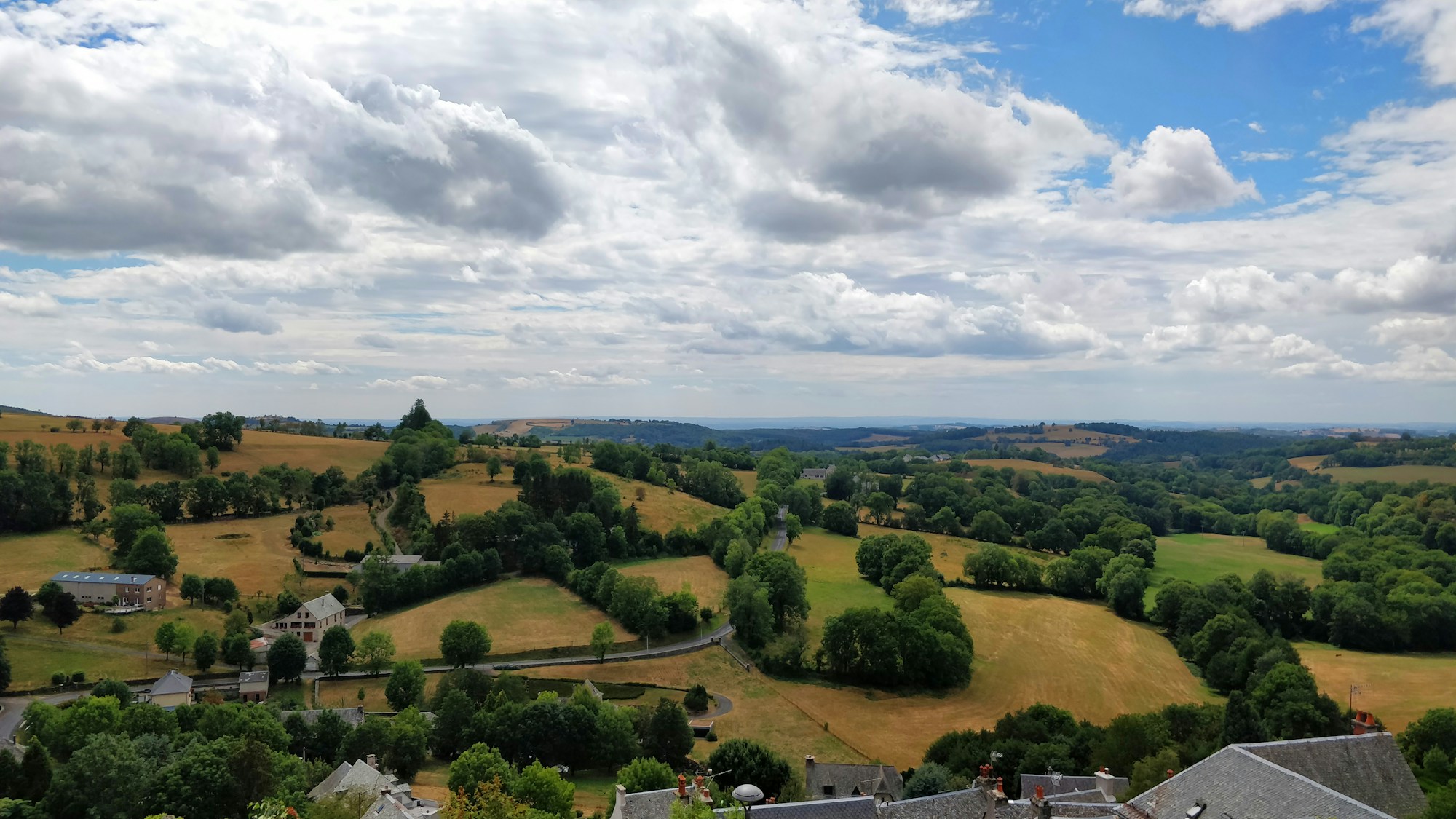
Nasbinals, Laguiole & the Route des Lacs (Aveyron/Lozère/Cantal)
The Aubrac is the absolute antithesis of mass tourism. Sitting between 900 and 1 468 m above sea level, this plateau spread across three departments (Aveyron, Lozère, Cantal) offers silent steppes stretching as far as the eye can see, stone shepherd huts, and herds of caramel-coloured cows. In spring, the Transhumance resumes: the cows move up from the valleys to summer pastures, producing the Laguiole and fresh Tomme cheeses that go into aligot. It is also the season when wild flowers burst into bloom and the trails of the GRP Tour des Monts d’Aubrac can be explored almost in solitude, according to Ecovoyages.
The Route des Lacs (17 km) serves as a scenic drive to discover the Cascade du Déroc and the mountain lakes perched above 1 000 m, such as Lac de Born. Nasbinals is the central village of the Aubrac: its free aire lets you roam on foot to explore the surroundings. Set up here and head out for day trips — you will be on your own. The aligot at the local restaurant (14–18 €) is unmissable after a day’s effort.
- Budget: Nasbinals aire often free · ~30–40 €/day all-inclusive
- Best time: Mid-May to early June (Transhumance + blooming season)
- Must do: Route des Lacs · Cascade du Déroc · GRP Tour des Monts d’Aubrac
- Gastronomy: Aligot, Laguiole, Truffade, local gentian spirit
4. Basque Country — Iraty Forest & Basque Coast
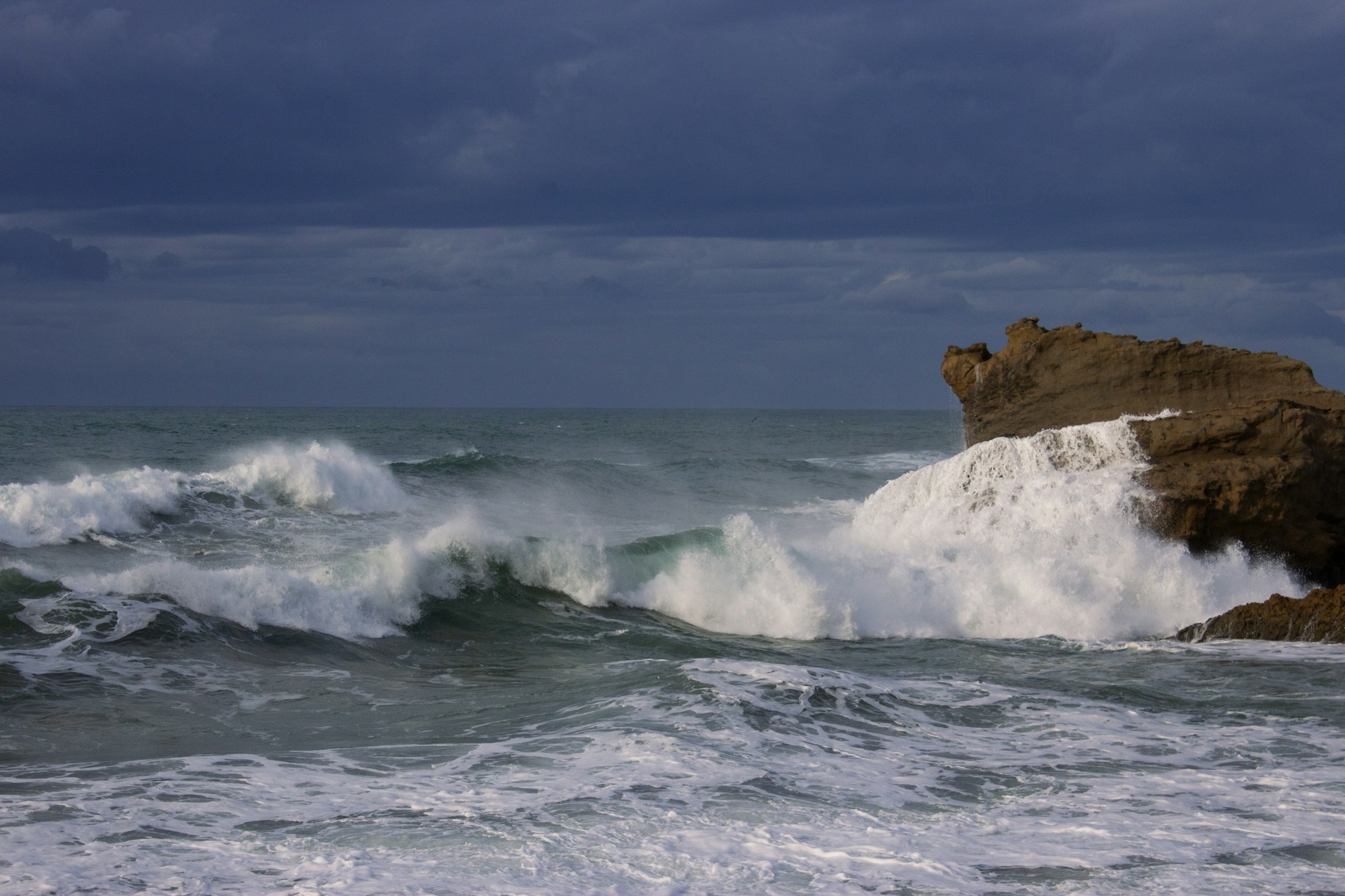
Iraty Forest (64), Espelette, Ainhoa & Basque Coast from Biarritz to Hendaye
The Basque hinterland is almost unknown compared to the coast. The Iraty Forest, one of the largest beech forests in Europe, offers several parking areas perfectly suited to vans and converted vehicles. The lesser-known Basque territory reveals Espelette (famous for its PDO chilli peppers and facades adorned with strings of dried red peppers) and Ainhoa, listed among the most beautiful villages in France, a gem of traditional architecture. You can stay for free with a local winemaker, farmer or Basque craftsperson through the France Passion network, an approach that brings you authentically close to the local culture.
On the coast, the Basque corniche road between Biarritz and Hendaye offers a spectacular panorama. Guéthary, the smallest village on the Basque coast, is a former whale-fishing village that has become a renowned surf spot (the Parlementia wave). Vans can park on the Alcyons jetty. In Biarritz, the Aire Milady specifically welcomes vans and campervans (electricity, water, waste disposal, 15–25 €/night). Ilbarritz beach, between Biarritz and Bidart, offers near-free parking in spring with a direct view of the Atlantic.
- Budget: Coast 15–25 €/night · Interior 5–12 € or free · ~45–65 €/day
- Best time: April–May (mild weather, few crowds, surf)
- Hidden spots: Col d’Ibardin, Iraty Forest, Guéthary
- Must taste: PDO Espelette chilli, Txakoli, Pintxos
5. The Pyrénées — Ossau Valley, Gavarnie & Ariège Pyrénées
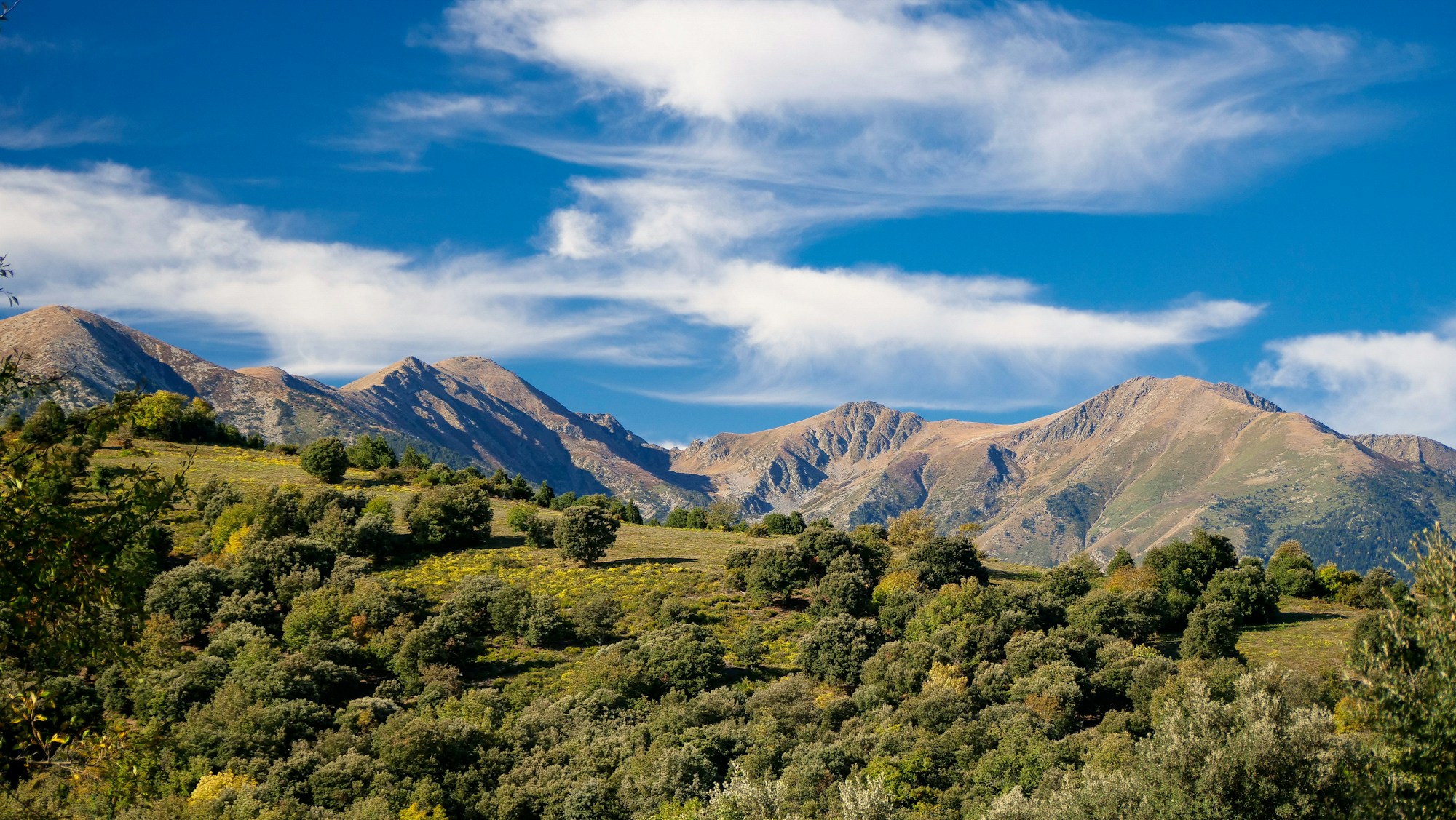
Ossau (64), Cirque de Gavarnie (65) & Ariège Pyrénées (09)
The Pyrénées, often less talked about than the Alps, have nothing to envy them: they win visitors over with their unspoiled character and extraordinary diversity. The Ossau Valley is one of the most spectacular: Lac de Bious-Artigues (1 416 m above sea level) is the starting point for the Tour des Lacs d’Ayous, one of the finest hikes in the Pyrénées. Mountain lakes accessible by car or motorhome, in a wild and grandiose setting, according to N-PY. Horses, cows and sheep roaming semi-freely add a touch of magic.
The Cirque de Gavarnie in spring is a unique spectacle: dozens of waterfalls cascade from the summits, including the great 417 m waterfall, one of the highest in France. A few kilometres away, the Cirque d’Estaubé receives ten times fewer visitors for equivalent beauty — a well-kept secret. Further east, the Ariège Pyrénées (Regional Nature Park of 2 468 km²) offer one of the wildest itineraries: the prehistoric caves of Niaux and Mas-d’Azil, Saint-Lizier and its episcopal palace, and marmots to observe freely. The Ariège is the least touristic department in the Pyrénées — an absolute find.
- Budget: Hiking car parks 3–8 €/day · Laruns aire free · ~40–60 €/day
- Best time: Late May–June (roads reopen, waterfalls in full flow)
- Must-sees: Lac Bious-Artigues · Cirque de Gavarnie · Cirque d’Estaubé
- Van tip: Prefer a compact van (T6, Crafter) for narrow mountain roads
6. Van Life Regulations in France 2025–2026
Parking vs. Camping: the fundamental distinction
Sleeping in your van is equivalent to parking, which is legal (maximum 7 days in the same spot). Setting up a table and chairs outside is equivalent to camping, which is prohibited on public roads. As long as the vehicle’s engine is off, with no external elements (chocks, awning, furniture) and occupying only one space, it is legally parked — not in a camping situation. Several municipalities do, however, limit uninterrupted parking to 7 days via local by-laws, according to Camping Car France.
Low Emission Zones (LEZ) 2026
More than 40 major French cities impose access restrictions for LEZs. Driving without a Crit’Air sticker or with an invalid one exposes you to a fine of 68 € for light vehicles, and up to 450 € for motorhomes over 3.5 tonnes, according to Club Camping Car. Check your Crit’Air sticker before you set off.
Driving licences in 2026
From 2025, holders of a category B licence can drive, under certain conditions, a leisure vehicle up to 4.25 tonnes — a major change that opens access to many modern motorhomes. Beyond that weight, a C1 licence remains compulsory.
Restrictions to be aware of
Wild camping is prohibited on beaches, in nature parks, and on private property without authorisation. The mayor can restrict motorhome parking by municipal by-law — but a blanket ban across an entire municipality is illegal. Always check the signs at the entrance to villages.
7. Van Life Events Not to Miss in Spring 2026
Van life is gaining ground and the number of dedicated events in France is exploding. The team at Wikicampers has counted more than 20 van life events in 2026. Here are the unmissable ones this spring:
-
En Van Simone — Issoire (Auvergne)
17–19 April 2026 — Exhibitors’ village, food trucks, bivouac, crafts and wellness area, cinema space, concerts and DJ sets. One of the most convivial gatherings on the French van life scene. -
Camper Van Week-End — Brissac-Loire-Aubance (Anjou)
24–26 April 2026 — Set in the grounds of the Étang campsite, this event brings together renowned conversion builders, bivouackers and enthusiasts in a relaxed atmosphere. 3-day bivouac: 40 € online, 50 € on-site. -
Salon des Aventuriers (5th edition) — Lanton, Bassin d’Arcachon
Spring 2026 — With its feet in the water on the Bassin d’Arcachon, this friendly event celebrates its 5th anniversary. Entry by registration. -
Breizh Vanlife Festival — Saint-Malo (Brittany)
14–16 June 2026 — 4th edition at the Cité d’Aleth campsite, right on the ocean front. The unmissable Breton van life event, ideal for rounding off a Brittany itinerary. -
Provence Van Week-End — Marignane
30–31 May 2026 — 4×4 vehicles, travel pods, motorhomes, converted vans, equipment suppliers, tour operators, second-hand space. Free entry.
8. Budget & Practical Tips for Spring
Average budget for a couple
In 2026, the average daily budget for a couple in France is around 50–65 €/day (fuel, food, parking), according to Ulysse. For a full month, budget between 700 and 2 000 € depending on your level of self-sufficiency and leisure activities. Avoid driving every day: fuel accounts for 30–40 % of the total budget, according to EasyCamper.
Essential apps
- Park4Night — Over 215 000 community-sourced spots, ideal for natural spots
- CaraMaps — More geared towards equipped aires and campsites, with a travel guide approach
- Camping Car Park — Service aires open 24/7, 365 days a year, with electricity, water and waste disposal
- France Passion — 2 200 farmers, winemakers and craftspeople who welcome you for free for 24 hours
- HomeCamper — Camping with a local host, an increasingly popular alternative
Van rental
Yescapa, Europe’s number-one peer-to-peer rental platform (24 000 vehicles), offers rates 20–30 % cheaper than professional rental companies, from 40 €/day with insurance included. WeVan offers premium vehicles (VW California) at more than 20 agencies across France from 130 €/day.
Recommended spring equipment
- Solar panel (effective in spring, charges during stops)
- Minimum 10 L water reserve (villages close their water points out of season)
- Waterproof jacket (frequent rain in Brittany and the Basque Country)
- Up-to-date Crit’Air sticker (LEZs in 40+ cities)
Practical information for your van life in France
Compare available vans and motorhomes in France. 20–30 % cheaper than traditional rental companies, insurance included.
From 40 €/dayComprehensive coverage for van travel with total peace of mind, from 0.99 €/day.
From 0.99 €/dayFAQ — Your questions about van life in France
Can you sleep in your van in a public car park in France?
Yes, it is legal. A motorhome or camper van falls under category M1 of the Highway Code, just like an ordinary car. As long as the vehicle’s engine is off, there are no external elements (table, chairs, awning) and it occupies only one space, it is legally parked — not in a camping situation. However, several municipalities limit uninterrupted parking to a maximum of 7 days via local by-laws. Beyond that, the van risks being towed. Always check the signs at the entrance to towns.
Is wild camping allowed in France?
No, wild camping is prohibited on beaches, in nature parks (including the Parc National des Pyrénées), on private property without authorisation, and in state forests. However, bivouacking in the mountains is tolerated between 7pm and 9am in certain areas of national parks — particularly within one hour’s walk of a refuge. Always check the specific rules for each area before setting up. Park4Night and van life forums are excellent resources for identifying legal spots.
What driving licence do you need for a van or motorhome in 2026?
A category B licence is sufficient to drive a motorhome with a GVW of less than 3.5 tonnes. Since 2025, category B licence holders can drive, under certain conditions, a leisure vehicle up to 4.25 tonnes — a major development that gives access to many newer motorhomes. Above 4.25 tonnes, a C1 licence is compulsory. For standard converted vans (Sprinter, Crafter, Ducato), a category B licence is sufficient in almost all cases.
What are the best apps for finding van life spots in France?
Park4Night dominates the market with over 215 000 community-sourced spots, particularly useful for natural spots, free spots and off-the-beaten-track discoveries. CaraMaps is better suited to equipped aires (electricity, water, waste disposal) and works like a structured travel guide. Camping Car Park lists official service aires, accessible 24/7. For stays with local hosts, France Passion (2 200 farms and wine estates) and HomeCamper ideally complement these tools.
Is spring really the best season for van life in France?
Spring (April–June) is ideal for several reasons: the landscapes are at their most beautiful (flowers in bloom, swollen mountain waterfalls), summer crowds are absent, aire rates are lower, and mountain roads progressively reopen. In May, several public holidays (May 1st, May 8th, Ascension on May 14th, Whit Sunday on May 25th) allow you to create long weekends. Brittany is particularly stunning from mid-April to late May, and the Pyrénées reach their peak beauty from late May to June as the snow melts.
How do you handle Low Emission Zones (LEZs) with a van?
In 2026, more than 40 major French cities have introduced LEZs. Without a valid Crit’Air sticker, fines range from 68 € (light vehicles) to 450 € (motorhomes over 3.5 tonnes). Get your Crit’Air sticker from the official website certificat-air.gouv.fr before you leave. Diesel vans registered before 2011 and petrol vans registered before 2006 are often the most restricted. A good strategy is to park the van on the outskirts and use public transport for city-centre visits.
What budget should you set aside to rent or buy a converted van?
For buying, budget between 7 000 € for an older self-converted Transporter and up to 80 000 € for a brand-new high-end conversion. For renting, 2026 rates range from 40–80 €/day via private owners (Yescapa) to 130–200 €/day for premium vehicles through WeVan or Spothit. In low season (spring outside public holidays), rates are generally 20–30 % lower than in summer. Peer-to-peer rental remains the most economical solution for a first trip.
Is solo van life in France safe?
Yes, France is one of the safest destinations for solo van life. Municipal motorhome aires are generally well lit and secure. In rural areas, Park4Night spots confirmed by the community are reliable. For women travelling alone, forums such as Van Life Solo Women and apps like iOverlander help identify spots recommended by other van lifers. It is always advisable to share your itinerary with someone close to you and to lock your van carefully at night.
Sources
- Génération Voyage — Côte de Granit Rose by motorhome
- Wikicampers — Côte de Granit Rose route
- Aire des Îles — Gulf of Morbihan
- Morbihan Tourism — Motorhome
- Van Away — Parking in the Basque Country
- Ma Famille en Van — Basque Country
- N-PY — Accessible Pyrenean lakes
- Van Away — Bivouac in the Pyrénées
- Tas 2 Cailloux — Van road trip in the Pyrénées
- Camping Car France — Parking regulations
- Utilicare — Motorhome regulations 2025
- Club Camping Car — 2026 standards
- Wikicampers — Van Life Events 2026
- Fourgon le Site — Van Life Festivals 2026
- EasyCamper — Van life France guide
- Ulysse — Camper van summer 2026
Plan your van life in France with Pixidia
Discover our detailed itineraries to organise every stage of your road trip through France: accommodation, activities, restaurants and off-the-beaten-track experiences.
Explore itineraries