
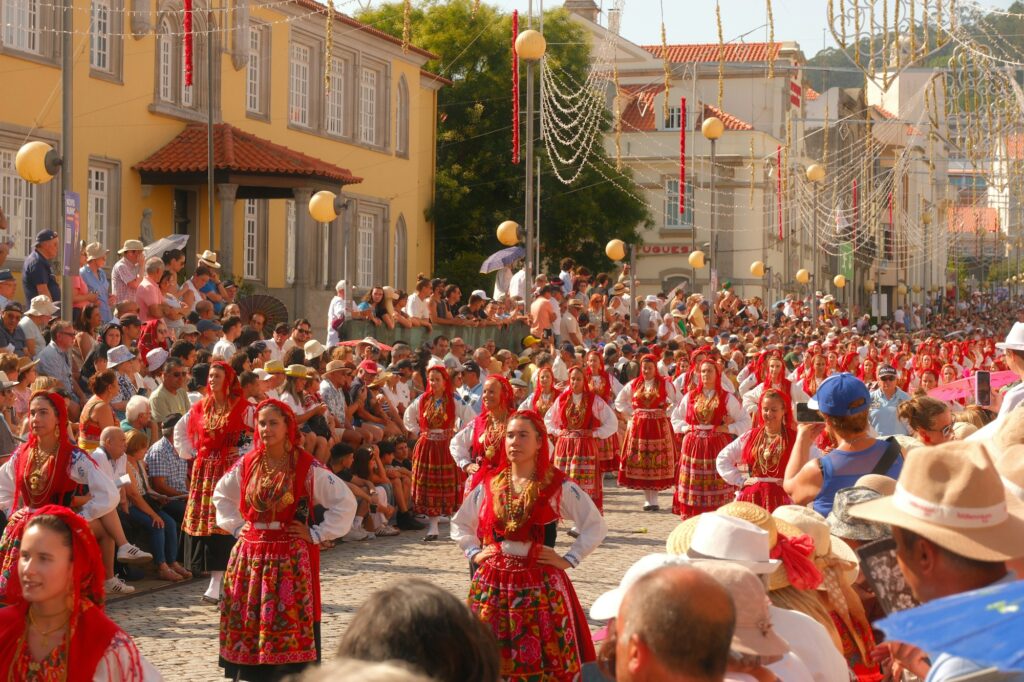
Romaria d’Agonia 2026 runs from 15 to 23 August in Viana do Castelo, in northern Portugal. The 2024 edition drew 1,052,266 visitors, with a single-day peak of 438,000 people. This year, the festival won the Prémio Cinco Estrelas Regiões 2026 alongside the Santuário de Santa Luzia and the region’s traditional filigree jewellery. Processions, parades and fireworks are all free to attend — book your accommodation months ahead, as prices spike during the festival.
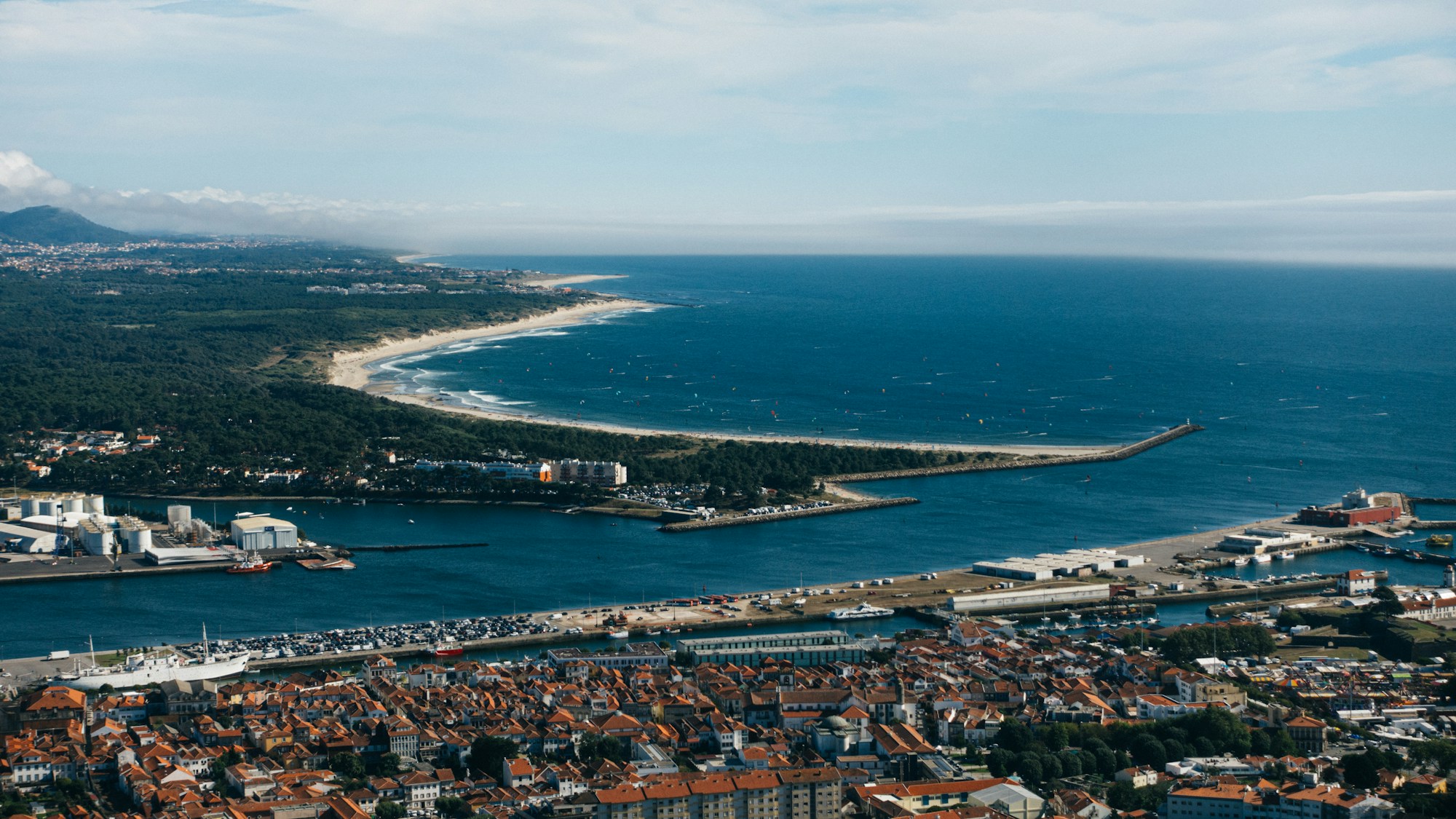
Every year in mid-August, Viana do Castelo — a city of 40,000 people at the mouth of the Rio Lima — absorbs more than a million visitors in just nine days. Born from a fishermen’s brotherhood founded in 1744, the Romaria de Nossa Senhora d’Agonia has become, according to the Portuguese press, « a rainha das romarias »: the queen of the country’s popular pilgrimage festivals. Here’s what you need to know to experience the 2026 edition: the day-by-day programme, the history of the devotion, the traditional costume and filigree gold that define the festival’s identity, and the practical details for planning your stay.
Romaria d’Agonia 2026: official dates and full programme
Nine days of celebration, from 15 to 23 August
After weeks of public uncertainty, the dates for the 2026 edition are now confirmed and published in black and white: the Romaria de Nossa Senhora d’Agonia runs from 15 to 23 August 2026, according to the official programme published by the Câmara Municipal de Viana do Castelo. The dates are confirmed consistently by festasdagonia.com, the site of organiser VianaFestas, which states « 15 A 23 AGOSTO 2026 », as well as by Visit Portugal, the national tourist board. The 24th Craft Fair opens as early as 7 August at the Jardim Público, and the closing Serenata fireworks display runs into the night of 23-24 August.
| Date | Time | Programme |
|---|---|---|
| 7 August | 4pm-11pm | Opening of the 24th Craft Fair, Jardim Público |
| 15 August | 9.30pm | Transladação, opening night procession |
| 16 August | 4pm | Domingar na Romaria, new Sunday-costume parade |
| 18 August | 10pm | Festa do Traje |
| 19 August | 4pm | Desfile da Mordomia |
| 20 August | 2.30pm, then midnight | Procissão ao Mar, then Fogo da Santa fireworks |
| 21 August | 10am, then midnight | Romaria dos Pequeninos, then Fogo Preso fireworks |
| 22 August | 4pm, then midnight | Cortejo Histórico/Etnográfico (« Lendas de Amor »), then Fogo do Meio |
| 23-24 August | 4pm, then overnight | Procissão Solene, then closing Serenata |
In total, the four fireworks nights (Fogo da Santa, Fogo Preso, Fogo do Meio and the closing Serenata) add up to roughly 100,000 pyrotechnic shots, according to Olhar Viana do Castelo. The 2026 theme of the Cortejo Histórico/Etnográfico, « Lendas de Amor » (Legends of Love), translates into hearts of every size and material adorning the allegorical floats, according to the Jornal de Notícias. This year’s mordoma, 21-year-old Mafalda Brandão from the Areosa parish, was chosen in March from among 20 finalists.
Highlights
- Programme fixed and officially published, with no risk of a calendar change
- Nine days of celebration, with a pre-opening from 7 August
- Four fireworks nights for around 100,000 shots in total
A devotion more than 280 years old: from Viana’s fishermen to the queen of the romarias
From a fishermen’s brotherhood to a national phenomenon
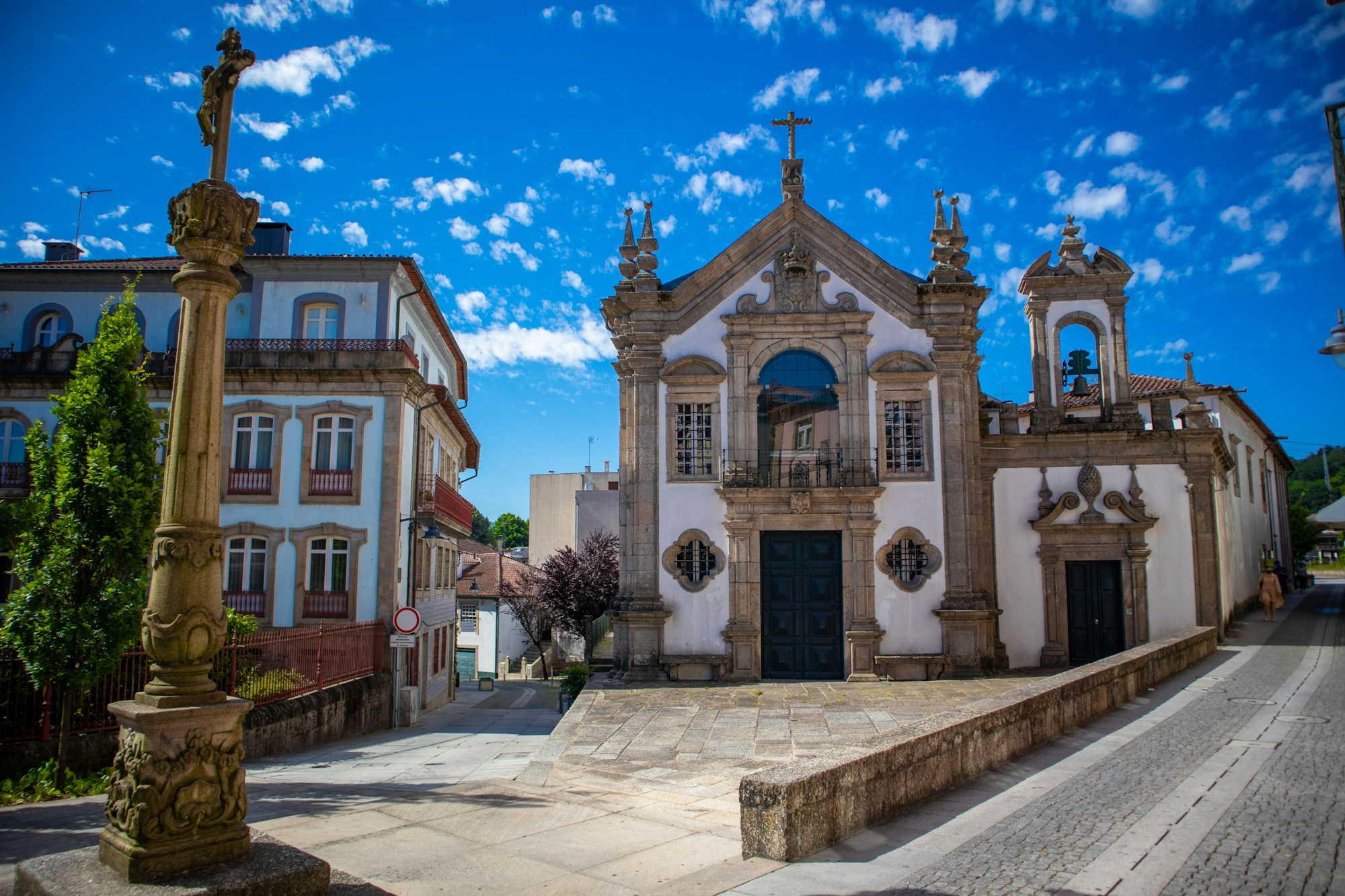
It all began in 1744, when a brotherhood dedicated to Nossa Senhora da Agonia was founded by the fishermen of Viana, who invoked her protection against the dangers of the sea, according to A Portuguese Affair. The chapel was built in 1751, and a royal decree authorised a free fair on 18, 19 and 20 August in 1772. In 1783, church authorities approved an annual solemn mass on 20 August, which became a municipal public holiday — the conventional starting point of the « institutionalised romaria », a phrase widely used by the Portuguese press, according to dagonia.pt.
The festival then grew in successive layers: in 1861, the sober « Festa Solene » was overtaken by the « Romaria d’Agonia » proper, which added singing, dancing and popular entertainment; by 1862, more than 50,000 people were already gathering for the fireworks alone. The gigantones and cabeçudos — giant puppets that still dance through the streets today — were imported from the neighbouring Galician tradition in 1893. The Costume Festival appeared in 1906, and the first agricultural parade, ancestor of today’s Cortejo Histórico/Etnográfico, dates back to 1908. In 2013, the festival was recognised as « Intangible Heritage of Municipal Interest », according to Wikipedia.
In April 2026, the Romaria reached a new symbolic milestone by winning the Prémio Cinco Estrelas Regiões 2026, an award that assessed more than 1,000 entries through around 500,000 consumer votes. Notably, Viana do Castelo swept the board that year, with two other winners from the same list: the Santuário de Santa Luzia (Monuments category) and Filigrana (Crafts category), according to the Câmara Municipal de Viana do Castelo.
Highlights
- More than 280 years of continuous devotion, from 1744 to today
- Gigantones and cabeçudos imported from Galicia as early as 1893
- A regional hat-trick in 2026: the Romaria, the Santuário de Santa Luzia and Filigrana
Traje à vianesa and filigree: the gold and costume at the heart of the festival
Costume and gold as family savings and a mark of status
The traje à vianesa is the festival’s most iconic costume, but it comes in several variants depending on the occasion and social status: the traje de lavradeira (festive rural costume, reserved for major occasions), the traje de domingar (a simplified version for Sunday mass and market, showcased by the new « Domingar na Romaria » parade), the traje de gala, the traje de mordoma worn during the Desfile da Mordomia, and the traje de varina of the Ribeira fishwives, according to dagonia.pt. A colour code structures the outfit: a red skirt for an unmarried woman, blue for a married woman, and black for mourning. The Museu do Traje, housed since 2004 in the former Bank of Portugal building, traces 200 years of Viana costume history through a collection of 900 pieces.
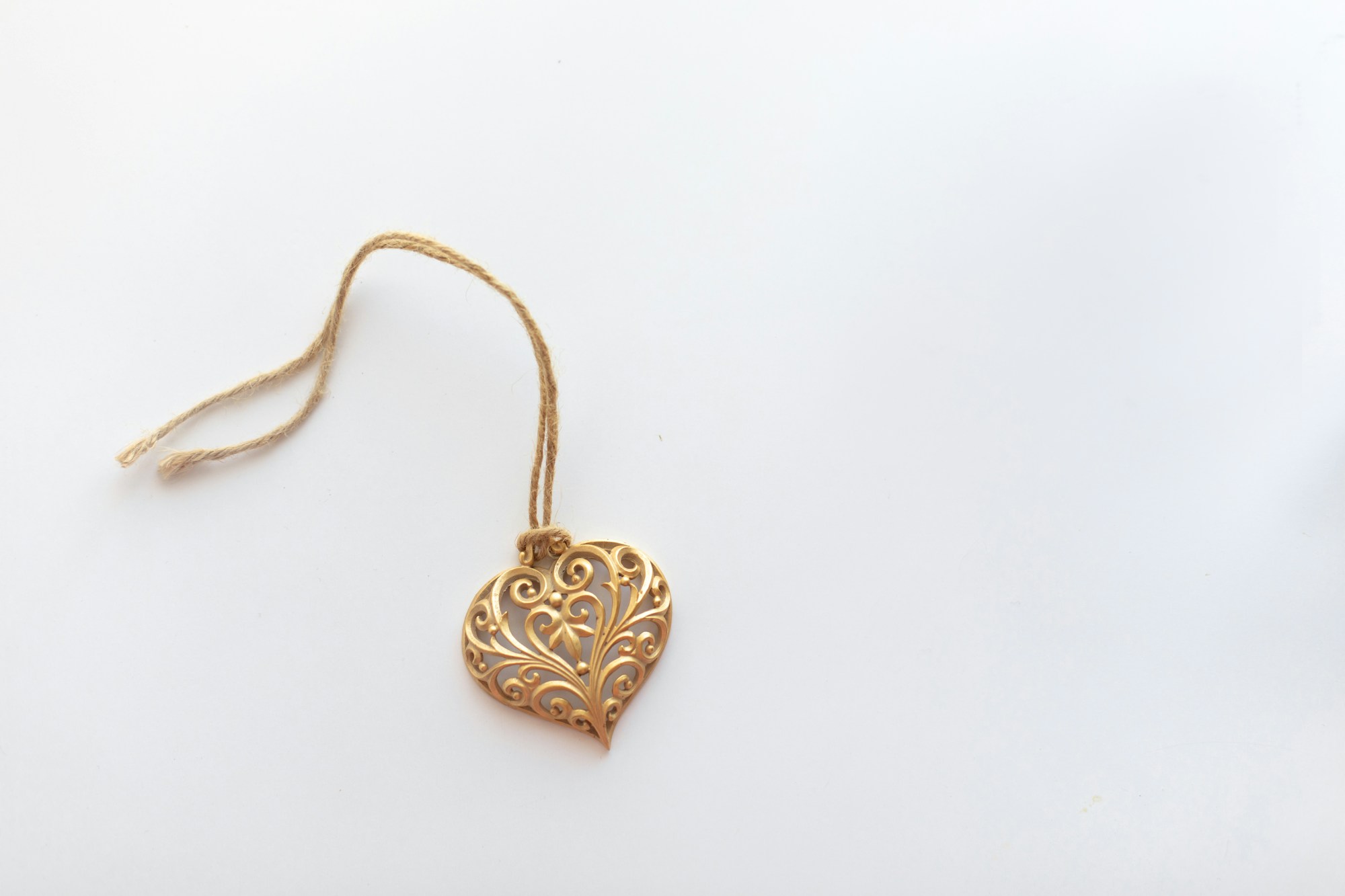
Portuguese filigree developed independently from the 17th century onward, with its own repertoire of motifs distinct from neighbouring Galician filigree. Since 2018, any piece made using traditional handcrafted methods carries the « Filigrana de Portugal » hallmark, along with a uniquely coded certificate. The most iconic piece is the Coração de Viana (Heart of Viana), created in the late 18th century at the request of Queen D. Maria I, then popularised by D. Maria II during her visit to Viana do Castelo in 1852. Originally a symbol of devotion to the Sacred Heart, it’s now seen as a symbol of love and fidelity, traditionally given by mothers to their daughters and passed down through generations, according to Descobrir Portugal.
Highlights
- The Museu do Traje is open year-round, even outside the Romaria period
- The « Filigrana de Portugal » hallmark guarantees an authentic handcrafted piece
- The Coração de Viana is traditionally passed down from mother to daughter
Procissão ao Mar, Cortejo Histórico and Desfile da Mordomia: the must-see moments
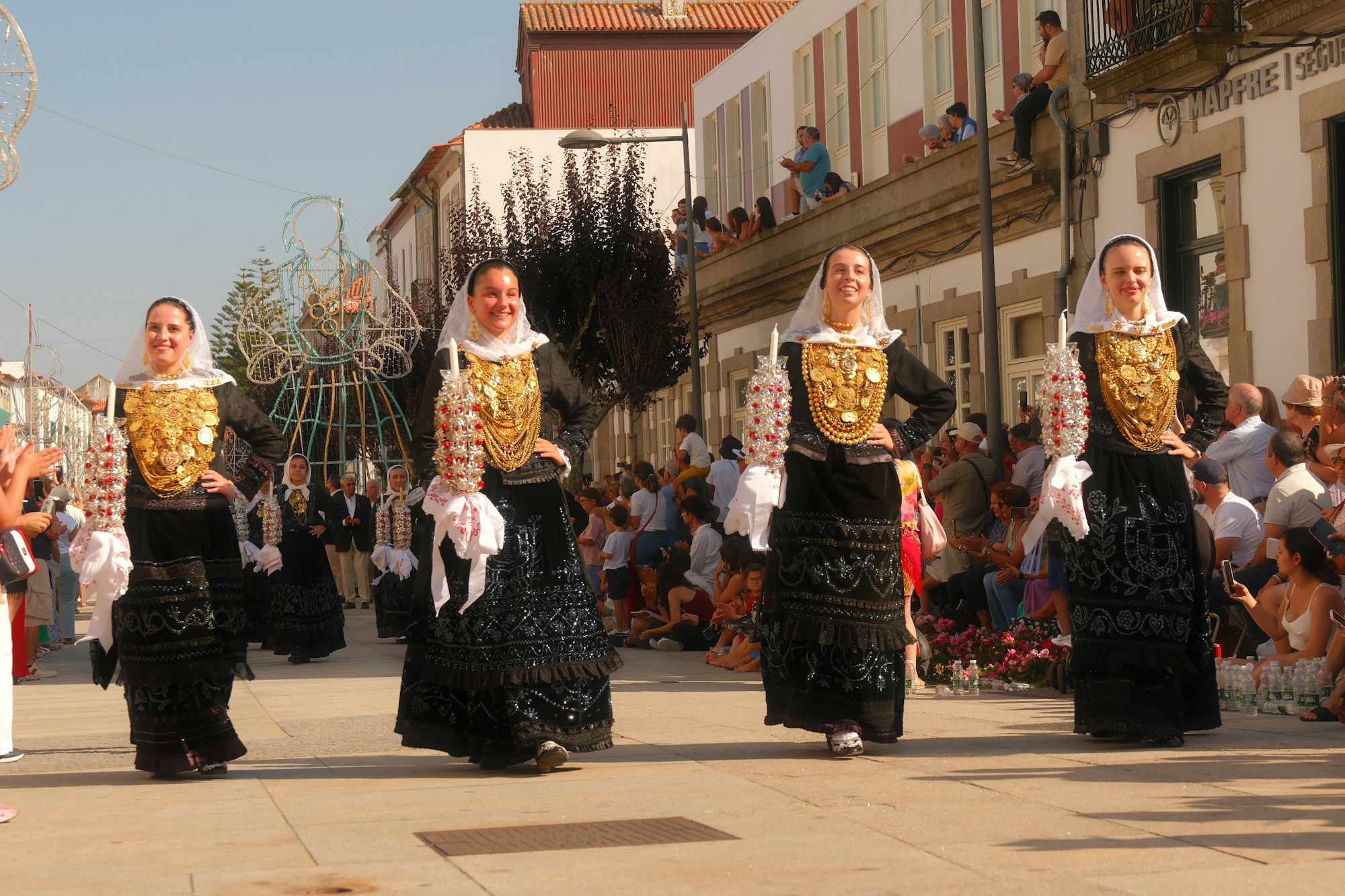
Three visual highlights, on three different days
The Procissão ao Mar, on 20 August at 2.30pm, brings together more than 100 decorated fishing and pleasure boats that jointly « bless » the River Lima. The statues of Nossa Senhora d’Agonia, Nossa Senhora de Monserrate, Nossa Senhora dos Mares and São Pedro — each weighing around 600kg — are carried on the shoulders of men in traditional checked shirts, watched by thousands of people lining the riverbanks, according to festasdagonia.com.
The Cortejo Histórico/Etnográfico, on 22 August at 4pm, is described by Turismo Porto e Norte as a « living museum » involving more than 3,000 participants, hundreds of tableaux vivants and dozens of allegorical floats. The Desfile da Mordomia, on 19 August at 4pm, brings together hundreds of women in traditional gold costume showing off the family jewellery; a recent edition gathered a thousand mordomas from 12 Portuguese districts and ten countries, according to Visit Portugal. In 2025, the 1,000-entry cap for the parade was reached in just two days and twenty hours, prompting organiser VianaFestas to open 76 extra spots after a wave of online frustration, according to Olhar Viana do Castelo — a sign of the event’s growing popularity, but also of its logistical limits.
Highlights
- The banks of the Rio Lima: the best ground-level vantage point for the Procissão ao Mar
- The Cortejo Histórico/Etnográfico is the most photogenic moment of the Romaria
- Gigantones standing 3.5 to 4 metres tall, some imported from Belgium
Experiencing the Romaria like a local: crowds, food and the surrounding area
Crowds are extreme on peak days: during the 2024 edition, the Procissão Solene day alone drew 438,000 people. Arriving at least an hour early for processions and fireworks, wearing comfortable shoes for walking on the cobblestones, and booking restaurants ahead are the three tips most often recommended by local guides. For a calmer experience with children, Friday or Sunday are noticeably quieter than Saturday. The soundscape, meanwhile, never changes: ever-present accordions and drums (bombos), gigantones and cabeçudos dancing through the streets, and daily brass bands. August is also the « month of return » for the Portuguese diaspora: many emigrants come back specifically for the Romaria, which functions as a reunion space where traditions pass from grandparents to grandchildren. The mayor of Viana do Castelo, Luís Nobre, describes the festival as « an experience to feel and carry in your heart », built on memory, faith and emotion, according to Rádio Geice.
On the food side, the city’s signature dish is Bacalhau à Viana (salt cod, Viana-style), a nod to the city’s past as a departure port for cod fishermen bound for Newfoundland and Greenland. Viana do Castelo was also historically the main export port for Vinho Verde, made from native grape varieties like vinhão and loureiro. If you extend your trip south, the Douro Valley is well worth the detour, especially as the September harvest approaches.
To extend your visit beyond the festival itself, Monte de Santa Luzia, reachable by funicular, offers a view over the estuary once named the « third most beautiful panorama in the world » by National Geographic back in 1927. The Navio-Hospital Gil Eanes, a former hospital ship for the cod fishing fleet now turned floating museum, is the second most-visited museum in northern Portugal. Finally, a day trip to Ponte de Lima, the country’s oldest town, or to Caminha, rounds out a stay built around the Romaria nicely.
One thing worth flagging: the fireworks schedule can change at the last minute depending on the fire risk level. In 2022, the fireworks went ahead despite a risk rated « very high » by the authorities; in 2025, by contrast, several displays were cancelled and then rescheduled due to a prolonged government fire alert, according to Rádio Renascença. The dates of the event itself aren’t affected by this kind of risk — only the precise fireworks schedule can change.
If you’d like to compare with other major summer festivals in Portugal, our guide to São João de Porto 2026 and our feature on the Festa de São Pedro in Lisbon cover very different, more urban and secular atmospheres compared to Viana do Castelo’s Marian devotion. For a longer trip combining Porto, Lisbon and the Algarve, our 10-day Portugal itinerary is a solid base to adapt around the Romaria.
Practical info for your trip to Portugal
Stay connected the moment you land at Porto or Lisbon airport, without hunting for a local SIM card: set up takes just a few minutes.
Data plans from a few eurosCoverage built for hours on your feet in the crowd and August heat, with an online quote in minutes.
From $56 / 4 weeksFrequently asked questions
What are the exact dates of Romaria d’Agonia 2026?
From 15 to 23 August 2026, with a craft fair opening as early as 7 August and a closing Serenata on the night of 23-24 August. These dates are confirmed by the official programme from the Câmara Municipal de Viana do Castelo.
Is Romaria d’Agonia free to attend?
Yes. All the major events (processions, parades, fireworks) are free and take place in public spaces. Only certain museums, such as the Navio-Hospital Gil Eanes (€4.50), and accommodation or restaurants, come at a cost.
What’s the best day to attend if you only have one day?
20 August (Procissão ao Mar and the Fogo da Santa fireworks) or 22 August (Cortejo Histórico/Etnográfico) are the absolute highlights, but also the busiest. For a calmer experience, 16 or 21 August offer more authentic, less crowded moments.
How do you get to Viana do Castelo from Porto or Lisbon?
From Porto, it’s about 1h15 to 1h24 by train from Porto-Campanhã station. From Lisbon, expect around 4h28 by train or 4h15 to 4h31 by Rede Expressos coach. The relevant airport is Porto (OPO), 66-68km from Viana do Castelo.
Do you need to book accommodation far in advance?
Yes, several months ahead is essential: prices rise sharply and availability shrinks as the Romaria approaches, an event that draws more than a million visitors over the period.
Where does the traje à vianesa come from, and why so much gold?
The traje à vianesa is the festive costume of the Minho region, with several variants depending on the occasion and marital status (a red skirt for an unmarried woman, blue for a married woman, black for mourning). Filigree gold, like the Coração de Viana, historically represented family savings and was passed down through generations, far more than a simple ornament.
Is Romaria d’Agonia recognised by UNESCO?
No. It has been recognised since 2013 as « Intangible Heritage of Municipal Interest », a local Portuguese status distinct from a UNESCO listing, which doesn’t exist for this event to date.
Where’s the best place to watch the sea procession and fireworks?
The banks of the Rio Lima, near Praça da Liberdade and Jardim Público, offer the best street-level views — arrive at least an hour early. Monte de Santa Luzia, reachable by funicular, offers a panoramic view over the estuary from above.
Sources
- Câmara Municipal de Viana do Castelo: official 2026 programme
- Festas d’Agonia (VianaFestas): official dates and programme
- Festas d’Agonia: Procissão ao Mar
- Visit Portugal: official overview of the Romaria
- Visit Portugal / Turismo Porto e Norte: Cortejo Histórico/Etnográfico and Desfile da Mordomia
- Wikipedia: history of the Romaria
- A Portuguese Affair: origins of the devotion
- dagonia.pt: history of the Festas d’Agonia
- dagonia.pt: history of the traje à vianesa
- Descobrir Portugal: history of the Coração de Viana
- Câmara Municipal de Viana do Castelo: Prémio Cinco Estrelas Regiões 2026
- Olhar Viana do Castelo: fireworks, 100,000 shots
- Olhar Viana do Castelo: 2025 Desfile da Mordomia controversy
- Jornal de Notícias: 2026 theme « Lendas de Amor »
- Observador: 2024 attendance figures
- ominho.pt: 2022 attendance
- Comboios de Portugal: Porto-Viana do Castelo trains
- Busbud: Lisbon-Viana do Castelo coaches
- Pousadas de Juventude: Viana do Castelo youth hostel
- Rádio Geice: quote from mayor Luís Nobre
- Rádio Renascença: 2025 fireworks postponement
- Fundação Gil Eannes: museum ship
- Câmara Municipal de Viana do Castelo: food and wine
Research conducted on 6 August 2026.

Plan your trip with Pixidia
Pixidia learns how you travel and helps you build a trip that truly fits you and everyone coming along.
Open the planner
How to get to Viana do Castelo and where to stay during the Romaria
Porto, the most practical gateway
From Porto, the Celta/Intercidades line from Porto-Campanhã station reaches Viana do Castelo in 1h14 to 1h24, with around forty trains a day and fares from €2 to €9, according to Comboios de Portugal. The relevant airport is Porto Francisco Sá Carneiro (OPO), 66-68km away, linked to central Viana by a direct bus every three hours (about 45 minutes). If you’re flying in from the UK, OPO is well connected, with direct budget flights from London and other major airports on easyJet and Ryanair, plus British Airways and TAP — the flight itself takes around 2 hours 20 minutes. From Lisbon, expect about 4h28 by train from Lisboa Oriente (€16 to €70), or 4h15 to 4h31 by Rede Expressos coach, with an average fare of €11 and around twenty daily departures, according to Busbud. Viana do Castelo’s train station is about a 15-minute walk from the historic centre.
For accommodation, the historic centre remains the most practical area, close to the Capela de Nossa Senhora da Agonia and Praça da República. Quieter alternatives (Esposende, Vila Praia de Âncora, Afife, or Tregosa, about twenty minutes away by car) help keep costs down. On a tight budget, the Pousada da Juventude de Viana do Castelo has rooms from around €60 a night — though spots for the Romaria period book up very early. Parking is almost impossible in the centre on peak days: aim for the outlying car parks (Hospital de Santa Luzia, the industrial zone) and avoid moving your car once it’s parked.
Highlights