

Space tourism in 2026 spans four real price tiers. Weightlessness flights start at €7,500 (Air Zero G), stratospheric balloons at $50,000 (World View), suborbital hops at $750,000 since Virgin Galactic reopened Delta-class bookings in March 2026, and orbital missions to the ISS at $55 million (Axiom Space). Blue Origin’s New Shepard remains suspended until 2028, while Vast Space’s Haven-1 — the first independent commercial station — targets an early-2027 launch. For most travellers, a parabolic flight or stratospheric balloon remains the realistic entry point before 2030.
September 2024: four civilians stepped into the void of space for the first time in history. Jared Isaacman and Sarah Gillis, aboard SpaceX’s Dragon capsule, each spent twelve minutes floating 1,400 kilometres above Earth — higher than any human since Apollo. This is not science fiction — this is space tourism in 2026. A sector now offering a dizzying range of experiences: from weightlessness in a plane starting at €7,500, to 18-day orbital missions at $55 million. A complete state of play for an industry rewriting the frontiers of travel — and one of the boldest entries on any 2026 travel bucket list.
1. Axiom Space: Orbital Missions to the ISS

The undisputed leader of private orbital tourism
Axiom Space is today the world’s leading provider of private human spaceflight services. Its missions take crews of four to the ISS for two to three weeks, during which passengers conduct 20 to 50 scientific experiments in microgravity. According to Sacra, the company charges approximately $55 million per seat.
Mission Ax-4, launched in June 2025, transported astronauts from India, Poland and Hungary on the first human space missions sponsored by those nations in over forty years. It lasted 18 days — the longest Axiom mission to date. NASA awarded Axiom new private flight missions in 2026, with an Ax-5 launch planned no earlier than January 2027.
What the trip includes
- 15 weeks of intensive training in Houston (ISS systems, emergency procedures)
- Transport in SpaceX Crew Dragon from Kennedy Space Center
- 14 to 18 days aboard the ISS, in the American segment
- Participation in 20–50 microgravity research experiments
- Panoramic view of Earth from low orbit
2. SpaceX Polaris Dawn: The First Private Spacewalk in History
12 September 2024: humanity crosses a new threshold
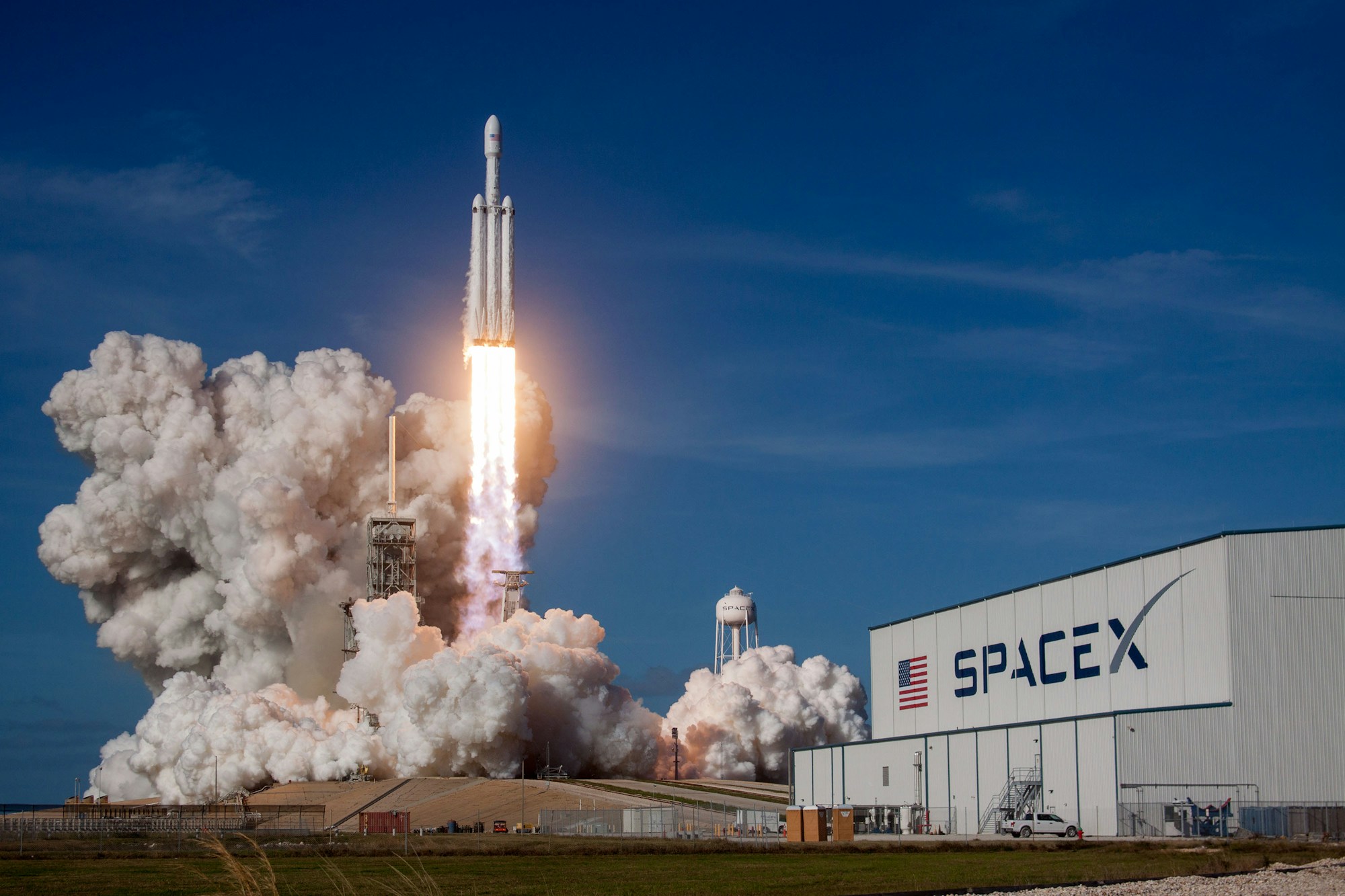
The Polaris Dawn mission, launched 10 September 2024, remains the most historic moment of modern space tourism. Jared Isaacman and mission specialist Sarah Gillis each spent twelve minutes outside the Crew Dragon capsule. It was the first commercial EVA in history, performed in spacesuits developed entirely by SpaceX.
According to Astronomy Magazine, this mission set the record for the most people simultaneously in the vacuum of space. Gillis, at 30, became the youngest person to complete an EVA.
What this mission foreshadows
- Private spacewalks for ultra-wealthy tourists from the late 2020s
- Polaris 3: first crewed flight of Starship, the largest rocket ever built
- Validation of commercial EVA suits for future Axiom Station missions
- Survival technologies tested on civilians (not professional astronauts)
3. Virgin Galactic Delta: Return to Suborbital Flight in 2026
The pioneer returning with an improved spacecraft
Virgin Galactic ceased flights of its VSS Unity spacecraft in June 2024 to focus on developing the Delta-class, a new generation capable of flying up to eight times per month with six passengers. According to SpaceNews, test flights are scheduled for Q3 2026, with private commercial flights beginning in autumn 2026.
CEO Colglazier had signalled a price increase above the last published $600,000 — and the confirmed figure landed at $750,000 per seat, 40% above the $450,000 charged in August 2021, according to the Albuquerque Journal. Ground testing of the new Delta-class spaceships began in April 2026, with the roughly 675-strong waiting list now looking at a targeted fourth-quarter 2026 commercial debut.
The three-day training
- Day 1: classroom work (flight physics, procedures)
- Day 2: flight simulators and centrifuge training
- Day 3: final preparation and suborbital flight to the Kármán line
4. Weightlessness in a Plane: Real Microgravity Without Leaving the Atmosphere
Zero-G Corp (USA) and Air Zero G (Europe): 7.5 minutes of true weightlessness
Parabolic flights are the most authentic weightlessness experience accessible without going to space. The aircraft performs parabolic arc manoeuvres: it climbs at 45° subjecting passengers to 1.8 G, then dives to create seconds of total weightlessness. Each parabola offers approximately 30 seconds of zero gravity. Over 15 parabolas, you accumulate 7.5 minutes in microgravity — the same as Alan Shepard on America’s first space flight.
In Europe, Air Zero G operates a modified Airbus A310 from Bordeaux-Mérignac, in partnership with CNES. It is the same aircraft that trains professional ESA astronauts. August 2026 flights are already full according to Air Zero G’s booking page. Price: €7,500 per person (VAT included).
In the USA, Zero-G Corporation operates the G-Force One (modified Boeing 727) from multiple cities (Cape Canaveral, Las Vegas, San Francisco). Price: from $8,200. Flights are temporarily suspended for maintenance at time of publication.
Additional parabolas
- Several parabolas at 1/6 G (lunar gravity) — simulating walking on the Moon
- Several parabolas at 1/3 G (Martian gravity)
- Then 15 parabolas of total weightlessness (0 G)
5. Blue Origin New Shepard: Suspended Until 2028
98 passengers transported, but a forced pause
Since its first crewed flight in 2021, Blue Origin’s New Shepard has transported 98 people beyond the Kármán Line (100 km), including celebrities such as Katy Perry, William Shatner and journalist Gayle King. The flight lasts ten minutes: a few minutes of propulsion, then approximately 4 minutes of weightlessness with six large windows overlooking the curvature of the Earth.
Bad news: on 30 January 2026, Blue Origin announced the suspension of tourist flights for at least two years, to concentrate resources on Blue Moon landers for NASA’s Artemis lunar programme. A return of the tourism programme is possible from 2028.
6. Stratospheric Balloons: World View at $50,000 and Zephalto at $132,000
Seeing the curvature of the Earth without a rocket
World View Enterprises offers a 5-day experience including the stratospheric flight from iconic sites: Grand Canyon, Great Barrier Reef, Serengeti, Northern Lights in Norway, Amazon, Pyramids of Giza. The Explorer capsule accommodates 8 passengers and 2 crew members for a gentle climb to 32 km. More than 1,000 reservations have already been recorded at $50,000.
Zephalto, the French startup in partnership with CNES, takes the concept to ultimate luxury: gourmet meal with a Michelin-starred chef at 25 km altitude, in a six-passenger capsule. The price starts at $132,000 and commercial flights are in development from France.
Advantages of stratospheric balloons
- Medically accessible to almost all adults (slow ascent, no G-forces)
- 6 to 12 hour flight (vs 10 min suborbital) — more time to contemplate
- View of the curvature of the Earth and the darkness of space
- Reduced environmental footprint (zero emissions, recycled balloons)
7. Vast Space Haven-1: The First Independent Commercial Space Station
The orbital hotel arrives in 2027
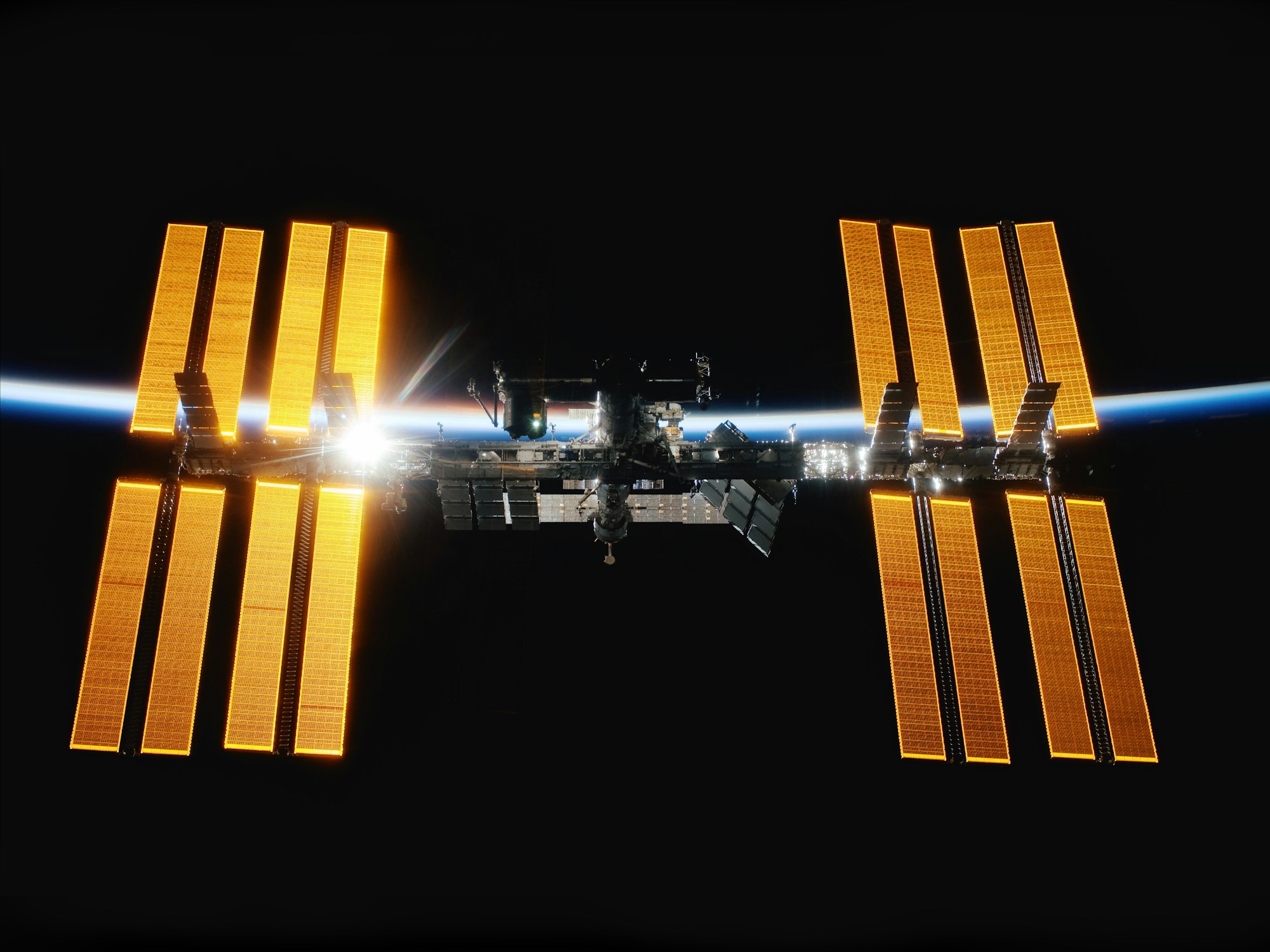
Haven-1, built by startup Vast Space, will be the first independent commercial space station in history. Scheduled to launch aboard a Falcon 9 in early 2027, it will inaugurate paid visits approximately one month after entering orbit. The first Vast-1 mission will take four astronauts for thirty days in a station deliberately designed to look like science fiction — a blurring of orbit and entertainment that echoes a wider shift back on Earth, covered in our guide to immersive travel experiences reshaping 2026.
Vast Space roadmap
- 2027: Haven-1 launch and first 30-day missions
- 2028: First Haven-2 modules (permanent, larger station)
- 2030: Haven-2 operational with permanent crew
Explore the Houston centre where Axiom Space astronauts train — a stone’s throw from the hangars where space history is made.
From €44Summary: All experiences compared
| Experience | Type | Price | Duration | 2026 Availability |
|---|---|---|---|---|
| Axiom Space (Ax-5) | Orbital ISS | ~$55–70M | 18 days | Launch Jan. 2027 |
| SpaceX Polaris 3 | Orbital / EVA | Not disclosed | ~5 days | To be confirmed |
| Virgin Galactic Delta | Suborbital | From $750,000 | ~90 min | Q4 2026 |
| Blue Origin New Shepard | Suborbital | ~$150,000–300,000 | ~11 min | ❌ Suspended 2 years |
| Zero-G Corporation | Plane weightlessness | ~$8,200 | ~2h (15 parabolas) | Maintenance (TBD) |
| Air Zero G (Europe) | Plane weightlessness | €7,500 | ~3h (15 parabolas) | Full Aug. 2026 |
| World View | Strat. balloon | $50,000 | 5 days (6–12h flight) | Commercial underway |
| Vast Space Haven-1 | Orbital station | ~$50–80M (est.) | 30 days | 2027 |
| Zephalto | Luxury strat. balloon | ~$132,000 | ~6h | In development |
Practical information for planning your space adventure
Stay connected anywhere in the world during your travels for training or space flights. Instant activation, no physical card.
From €4.50For your trips to the USA (Houston training, Cape Canaveral), Europe or worldwide for your space adventure. Full coverage, 24/7 assistance.
From €0.99/dayFrequently asked questions about space tourism
Do you need to be in perfect health for space tourism?
Companies generally accept passengers between 18 and 75 years old, some having flown people in their 80s. Orbital flights (Axiom) require a thorough multi-week medical evaluation, similar to professional astronauts. Suborbital flights (Virgin Galactic) require one day of medical evaluation, and parabolic weightlessness flights (Air Zero G, Zero-G Corp) are accessible to almost everyone, with the same constraints as a commercial flight. Disqualifying conditions for all flights: severe hypertension, serious heart conditions, pregnancy.
How long does training last before an orbital flight?
For an orbital flight with Axiom Space, clients spend approximately 15 weeks at Axiom’s facilities in Houston learning ISS systems, emergency procedures and microgravity life protocols. For a Virgin Galactic suborbital flight, training lasts three days: one day in a classroom, one day in simulators, and one final preparation day before the flight. For parabolic weightlessness flights, no prior training is required — a few-hour briefing session suffices.
Are parabolic weightlessness flights really safe?
Yes. Zero-G Corporation is subject to the same Part 121 safety standards as commercial airlines like Delta or Southwest. With over 850 flights and 22,000 passengers without a major accident over 20 years, the safety record is impeccable. Air Zero G in Europe is certified by the European Aviation Safety Agency and uses the same protocols as during ESA astronaut training. Common side effects are limited to nausea (prevented by appropriate medication).
What is the difference between a suborbital and an orbital flight?
A suborbital flight (Blue Origin, Virgin Galactic) climbs above the Kármán Line at 100 km but does not orbit the Earth: it follows an arc trajectory and falls back. Weightlessness lasts approximately 4 to 5 minutes. An orbital flight (Axiom Space, SpaceX) reaches sufficient altitude to orbit the Earth at several km/s, enabling weeks of continuous microgravity. The cost difference is proportional: from $750,000 for suborbital to over $55 million for orbital.
Can a private tourist perform a spacewalk (EVA)?
The first private spacewalk in history was performed during Polaris Dawn in September 2024 by Jared Isaacman and Sarah Gillis. For now, EVAs for private tourists require near-professional-level funding and training. Private spacewalks accessible to ultra-wealthy tourists are expected in the second half of the 2020s, notably via Axiom Station once operational (2027–2028). The price of a mission including an EVA would most likely exceed $100 million.
How much time passes between booking and the space flight?
The lead time varies considerably depending on the experience. For an Axiom orbital flight: generally 1 to 3 years between booking and launch. For Virgin Galactic: the current waiting list of 675 people suggests a delay of 2 to 5 years. For parabolic weightlessness flights (Air Zero G, Zero-G Corp): between a few weeks and a few months, depending on availability. For stratospheric balloons (World View): probably 1 to 2 years as the fleet deploys.
When will space tourism become accessible to the general public?
Analysts estimate that suborbital flights could drop to around $100,000 per person by 2030 as flight frequency increases and technology matures. Orbital flights will likely remain in the tens of millions until the late 2030s. Parabolic weightlessness flights (€7,500–$8,200) and stratospheric balloons ($50,000) are already the most accessible options today. Mass-market orbital hotels remain in science fiction territory for now — perhaps after 2035.
Sources
- Axiom Space (official site) — Orbital mission details, training, Axiom Station
- Sacra Research — Business analysis and Axiom Space revenue
- Space.com — First private spacewalk, Polaris Dawn
- SpaceNews — Virgin Galactic Delta and 2026 schedule
- CNN — Blue Origin New Shepard flight suspension (Jan. 2026)
- MIT Technology Review — Haven-1 and first commercial station
Research conducted in March 2026, last fact-checked in July 2026
Ready to plan your first space trip?
Space tourism starts now — whether it’s a weightlessness flight to experience microgravity, or a visit to Kennedy Space Center to feel history within reach. Explore all our adventure travel and extreme expedition itineraries.
Explore all itineraries