
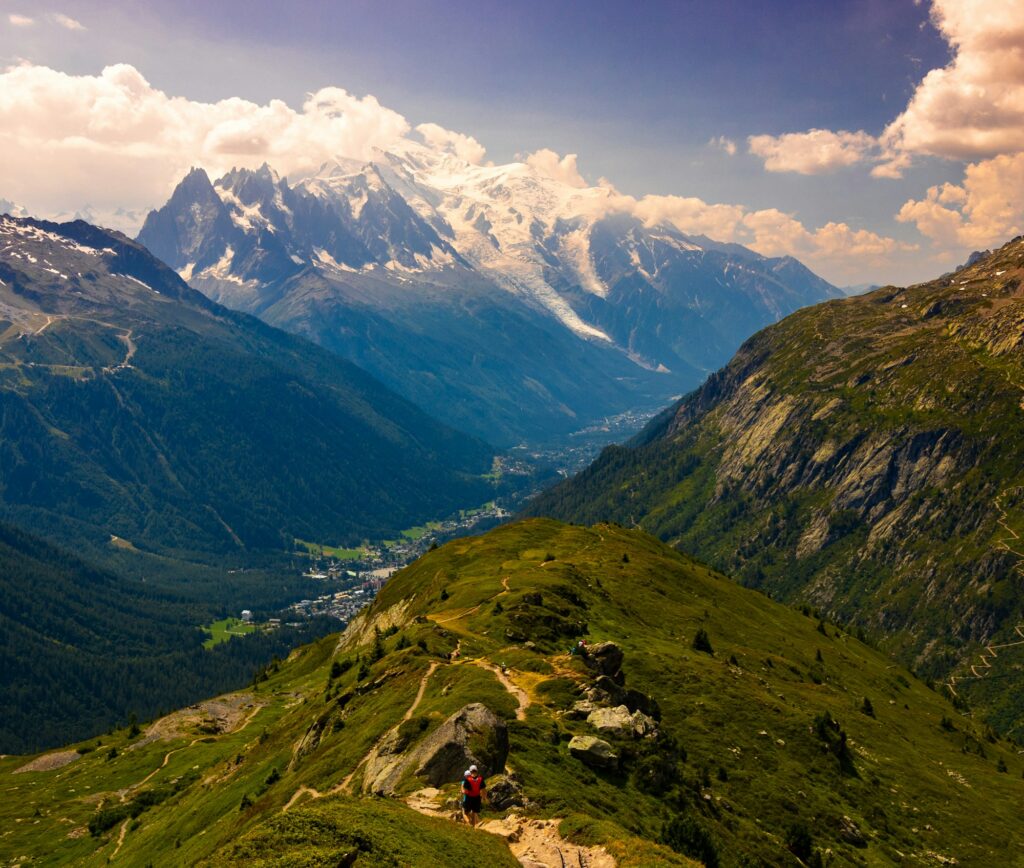
The UTMB Mont-Blanc turns Chamonix into the world’s trail-running epicentre every late August, with eight races running from Monday to Sunday. The flagship race, the UTMB itself, loops 174 km with around 9,900 m of elevation gain across France, Italy and Switzerland. Since 2022, entry to the three finals (UTMB, CCC, OCC) has gone through a weighted lottery based on Running Stones: official communications put the threshold at around 25 stones for roughly a 50% chance of selection. Budget a minimum of around €3,200 for a single qualification attempt. Book accommodation as early as you can: central Chamonix properties often sell out before the lottery results are even announced, typically in late January.
For one week every late August, Chamonix stops being just another mountain resort. Eight races run back-to-back, drawing around 10,000 runners from more than 100 nationalities and, according to local press estimates, close to 50,000 visitors into the valley. Whether you’re chasing a start number or just coming to cheer someone on, understanding how the lottery works, the schedule of the eight races and the best spots to watch from changes how you experience the whole week. This guide covers what you need to know before committing, without stating a fixed date for the next edition until the organisers confirm one themselves on the official site.
1. The Eight Races of UTMB Week
From the ETC’s 15 km to the UTMB flagship’s 174 km
UTMB week isn’t one race — it’s eight. The PTL (Petite Trotte à Léon) kicks things off on Monday morning: roughly 300 km and 25,000 m of elevation gain, run in teams of two or three on an unmarked course that changes every year, with no official ranking. A two-person team that loses a member has to withdraw; a three-person team can continue as a pair under certain conditions. Next comes the MCC, 40 km with 2,350 m D+, starting in Martigny-Combe in Switzerland and crossing the Col de la Forclaz then the Col de Balme before reaching Chamonix via Argentière. The TDS (148 km, roughly 9,300-9,500 m D+, starting in Courmayeur) is generally seen as the most technical race per kilometre. The YCC, reserved for young runners born between 2007 and 2012, is run over two days: Tuesday in Courmayeur across three age categories, then Wednesday in Chamonix for the top 200 finishers from the day before. The ETC (15 km, starting Tuesday in Courmayeur) is the only race of the week that doesn’t finish in Chamonix. Finally come the three UTMB World Series finals: the OCC (60 km, starting Thursday from Orsières in Switzerland), the CCC (101 km, starting Friday from Courmayeur), and the UTMB itself, a 174 km loop with around 9,900 m D+ across France, Italy and Switzerland via the Col de la Seigne. According to Trail Runner Magazine, the 2026 edition brought together 846 elite athletes from 54 nationalities, while SPORTéco puts the total at around 10,000 runners, 129 nationalities, and a 46% female share on the elite field alone.
Highlights
- The PTL is run in complete navigational self-sufficiency, with no markings and no official ranking
- The TDS has the steepest elevation-to-distance ratio of the week (around 63 m per km)
- The flagship UTMB crosses three countries on a single 174 km loop
2. How to Enter: UTMB Index, Running Stones and the Ballot Draw
A weighted lottery, not a standard entry form
Since 2022, classic ITRA points no longer determine entry to UTMB races. The system now rests on two pillars: the UTMB Index (a runner’s level, calculated across the 20K/50K/100K/100M distances) and Running Stones — genuine lottery tickets earned by finishing a race on the UTMB World Series circuit (1 to 4 stones depending on distance, doubled for « Majors » events). Stones can be accumulated with no time limit, but go dormant if no new stone is earned within 24 months, according to Running Lookout. The ITRA still serves as the global reference for ranking runners and rating race difficulty through its « km-effort » formula (distance in kilometres, plus elevation gain divided by 100), according to the ITRA’s official FAQ.
The draw itself is weighted: an individual’s odds equal the ratio between their number of stones and the cumulative total of stones held by all applicants. In 2026, roughly 25,000 pre-registration requests were logged, up 30% on 2024, for a selection rate of around 22%, according to reference-trail.fr. New for 2026: a 30% weighting bonus in the draw for runners who commit to reaching the valley without a personal car, an option taken up by around two-thirds of applicants according to u-trail. The rhythm observed for the 2026 edition tends to repeat year to year — though it’s always worth re-checking on the official site — with solidarity bibs opening in mid-December, a roughly twelve-day pre-registration and draw window in January, results published around ten days later, then a two-to-three-week confirmation and payment window.
Highlights
- A single Running Stone is enough to be eligible for the draw across all three finals
- The solidarity bib (a donation of roughly €2,200-€2,550) guarantees a place outside the lottery, within a limited quota
- A carbon contribution, calculated from declared mode of transport, has been mandatory for all participants since 2026
3. Budget and Gear: What an Entry Attempt Really Costs
The UTMB entry fee (flagship race) has ranged between roughly €400 and €480 depending on the year and the source — never treat this as a fixed figure for the next edition; check the official site for the current rate. For comparison, French ultra-trails of a similar distance, such as the Échappée Belle (149 km, around €200) or the Diagonale des Fous (165 km, around €185), cost roughly half as much, according to u-trail.
| Item (2026 edition) | Amount or number |
|---|---|
| UTMB race bib | €479 (official price) |
| Admin fee at payment | about 8%, roughly €517 in total |
| Running Stones for the TDS | 4 |
| Running Stones for the MCC | 2 |
| Running Stones for the ETC | 1 |
| Running Stones for the YCC | 1 |
For a single qualification attempt, not counting prior years of preparation, Outside.fr puts the minimum budget at around €3,100 (with a €430 entry fee; with the 2026 entry fee of €479, Pixidia’s calculation gives about €3,200): roughly €510 to earn a Running Stone (qualifying race, travel and accommodation included), around €430 for the entry fee, about €1,037 for mandatory gear if buying everything new, roughly €140 for a return train journey from Paris, and around €1,000 for five nights on site. A broader estimate, factoring in private transfers and pricier accommodation, puts the realistic budget between €2,500 and over €4,500 per person.
The Mandatory Gear List: The Often Underestimated Cost
The organisers no longer stick to two fixed weather kits: they publish a mandatory base list (waterproof jacket and over-trousers, warm layer, waterproof warm hat and gloves, two head torches — one with a red-light mode required on a specific section of the course — survival blanket, food and water reserve, navigation device, personal cup), topped up by a « flexible » additional list activated according to the weather forecast announced 24 hours before each start, according to RunMotion Coach. For a full new kit, budget around €1,037: trail running pack (around €160), technical jacket (around €200), trail shoes (€200-€400), two head torches (around €100), plus the remaining mandatory items. Checks take place before the start, during the race and right through to the finish: a runner missing any of the mandatory gear risks penalties that can go as far as disqualification.
4. The 2026 Edition in Numbers: A Snapshot of the Competition
This data covers the 2026 edition, which finished in late August: it’s here to give a sense of the competition level and the selection mechanics, not to announce anything about a future edition. On the flagship UTMB, Ben Dhiman (USA) won in 18:16:29, becoming the first man to finish under 19 hours, ahead of Baptiste Chassagne and Caleb Olson, according to iRunFar. On the women’s side, Blandine L’Hirondel took the win in 21:54:49, ahead of Rachel Entrekin and Emily Schmitz. Two notable absences shaped the pre-race predictions: Kilian Jornet, who had announced his return to Chamonix after four years away, and Jim Walmsley, the 2023 winner, both withdrew through injury.
Of the 2,407 starters on the UTMB, 1,681 finished — a 69.84% finish rate, in line with a dropout rate that has hovered around a third of the field every year since 2021, according to u-trail, rather than a one-off for this edition. On prize money, total payouts across the three finals — UTMB, CCC and OCC — reached €271,000, including €92,000 for the UTMB alone, split equally between men and women: €20,000 for first place, down to €1,500 for tenth. Since 2024, the UTMB group has significantly raised these prizes through the HOKA Prize Purse, with the stated goal of making elite athletes’ careers more financially viable.
5. Watching UTMB Week as a Spectator
Free start and finish, but logistics to plan if you’re following a runner
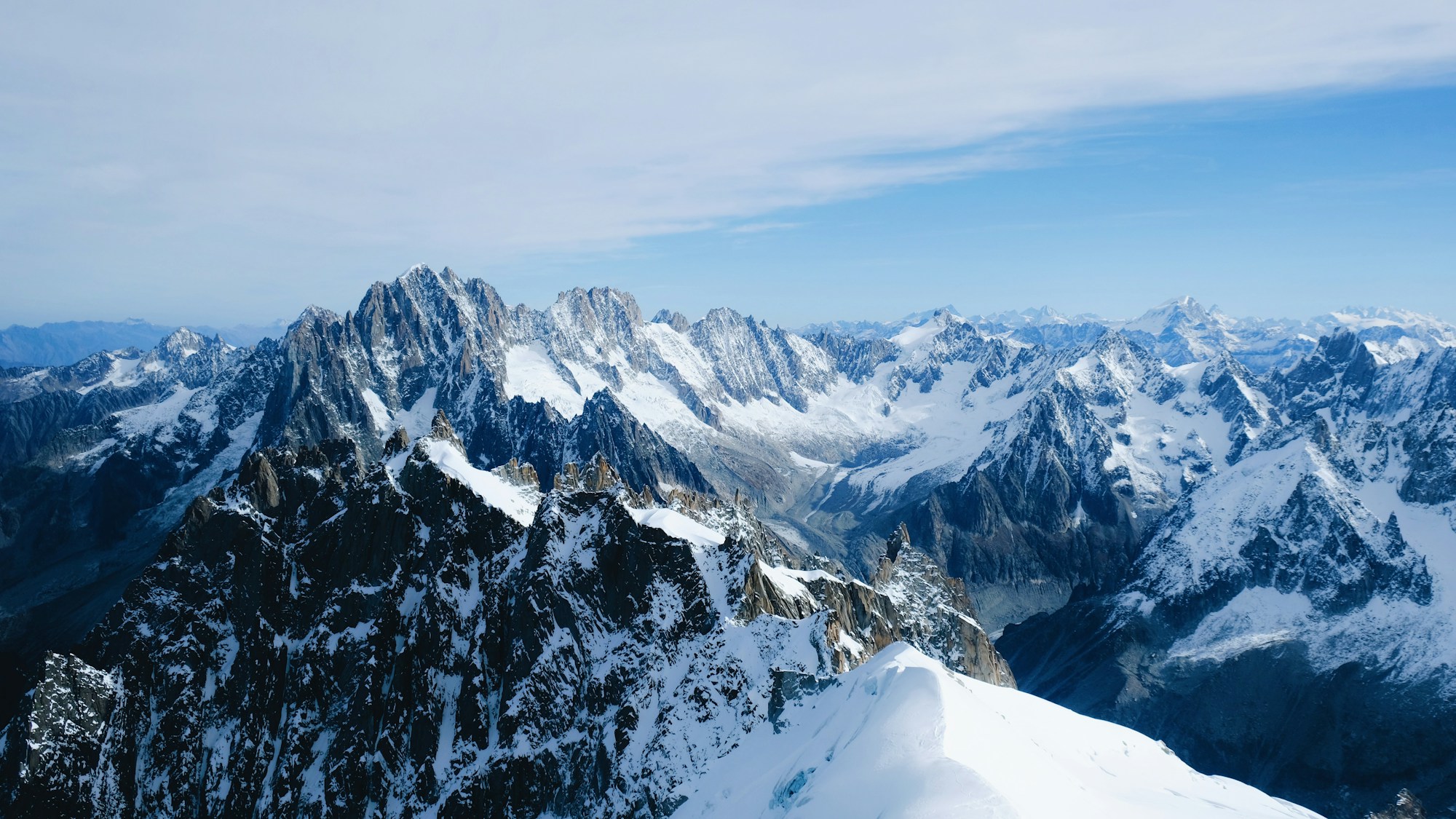
Access to the start and finish in Chamonix, at Place du Triangle de l’Amitié near the Saint-Michel church, is free. Private cars, however, are banned during the races from several villages along the route (Les Contamines, Saint-Gervais, Courmayeur, La Fouly, Champex, Col de la Forclaz, Trient and Vallorcine), according to Running Westward Ho. To reach certain strategic aid stations like Trient or Champex-Lac, a paid UTMB Mobility Pass is required — around €20 to follow the MCC, up to €65 for the full UTMB across several countries. It only goes on sale in a limited window ahead of the event, with no sales on site, according to u-trail. Note that this pass is different from the crew ticket included in a runner’s bib, a distinction that regularly trips up first-time supporters.
Along the course, the atmosphere shifts dramatically depending on where you post up: festive with a DJ at Saint-Gervais (km23), neon-lit tunnels at Notre-Dame de la Gorge (km37), a « Mediterranean » feel in Courmayeur, relative calm at Rifugio Bonatti with views of the Grandes Jorasses (km96), the high point of the course at Grand Col Ferret, 2,536 m (km106), a family atmosphere at Champex-Lac (km128, one of the few aid stations where runners’ crews are allowed to approach), a costumed fan zone at Vallorcine (km158), then an emotional final climb to La Flégère before the finish, according to the Suunto blog. To follow along without travelling, the LiveTrail app and live.utmb.world offer free real-time GPS tracking, backed up by TV coverage on several partner channels — though the video feed cuts out overnight.
Highlights
- Champex-Lac (km128) remains one of the few aid stations where runners’ crews are allowed
- Grand Col Ferret (km106, 2,536 m) offers the most spectacular viewpoint on the course
- La Flégère, the final climb before Chamonix, is where the most emotional finishes play out
6. Where to Stay and How to Get to Chamonix
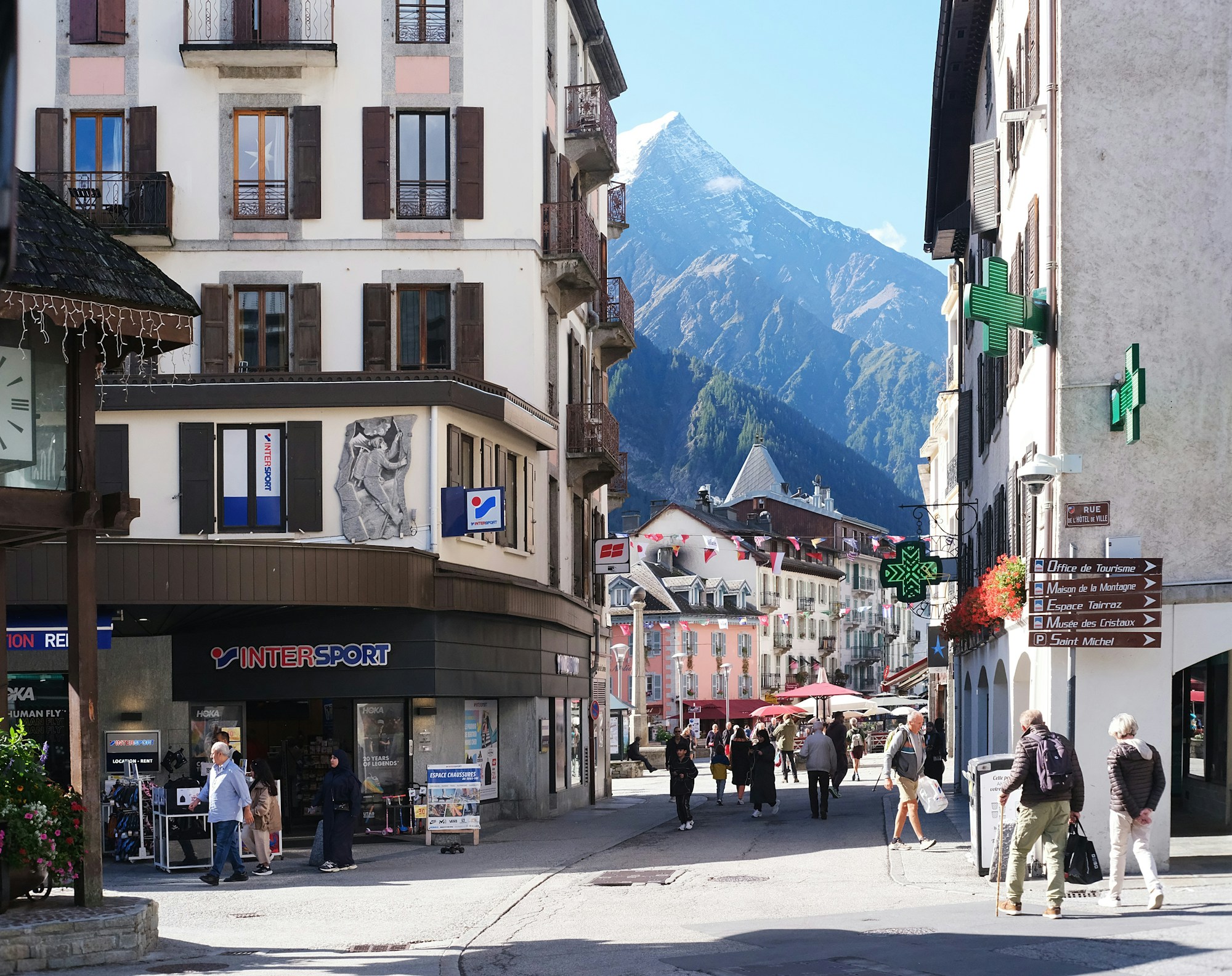
The busiest week of the summer in Chamonix
The nearest airport is Geneva (GVA), around 88-100 km away — roughly an hour’s drive via the Autoroute Blanche (A40), or about 1h15 by direct bus. Geneva is well connected from the UK, with direct flights from London (Heathrow, Gatwick and City) on British Airways, easyJet and Swiss. There’s no direct rail link: allow about 3h29 with connections via the cross-border Léman Express network and then the Mont Blanc Express, according to Chamonix.net. This local train also serves Servoz, Les Houches, Argentière and Vallorcine, handy for cheaper accommodation outside the centre while staying well connected.
Late August remains the busiest period of the summer in Chamonix. Premium properties in the town centre are often booked out before the lottery results are even announced in late January — a real logistical risk for anyone waiting to be selected before booking. Many hotels impose a minimum stay of five to seven nights during the week, with a baseline rate typically observed around €200 a night in the town centre. Cheaper alternatives exist in Les Houches, Argentière, Servoz or Vallorcine, with rates typically around €50-€90 a night depending on the property. Centralised accommodation booking runs through the tourist office (bookingutmb.chamonix.com). For motorhomes, there’s just one official spot in town, at the Grepon car park near the Aiguille du Midi.
Highlights
- The Carte d’Hôte, handed out by most accommodation providers, gives free access to the local train and valley buses
- Les Houches, Argentière and Vallorcine offer noticeably lower rates than the town centre
- The Mont Blanc Express connects the whole valley without needing a car
7. Controversies: Overtourism, Environmental Impact and Entry Fees
The event doesn’t escape criticism. Local press has documented residents and shopkeepers feeling « mixed » about the scale of the event, with the recurring observation that « Chamonix can’t stretch any further », according to ICI Pays de Savoie: around 50,000 visitors over the full week, against just some 2,500 runners at the start of the flagship UTMB. Some observers also point to a contradiction between the organisers’ environmental messaging and the hundreds of PTL runners crossing glacial areas otherwise described as fragile in the face of climate change — a defence from event management that part of the public considers unconvincing, according to u-trail.
Entry fees are also criticised, running roughly twice as high as comparable French ultra-trails, and the €2,200-€2,550 solidarity bib is seen by part of the community as at odds with trail running’s original, grassroots values. The Running Stones system is contested too: by forcing runners to race UTMB circuit events for a shot at a bib, some trail runners experience it as a form of calendar capture — a grievance cited as one reason a portion of runners have grown disillusioned with the brand. UTMB group’s pricing strategy has fuelled other one-off tensions: at a related event on the same circuit, Trail Alsace by UTMB, several price tiers sold out within minutes of registration opening, with one participant reporting their price jumped from €210 to €230 while they were still waiting in the online queue — an isolated case, but a telling one.
For runners not selected in the draw, several alternatives offer a comparable profile with a less competitive selection process: the Tor des Géants (142 km, 11,000 m D+), the Val d’Aran by UTMB in the Pyrenees (163 km, 10,000 m D+, part of the same world circuit), the Transju’ (up to 110 km, a solid plan B early in the season), or the Marathon du Mont-Blanc as a first taste of the massif, according to u-trail.
8. Beyond Race Week: What to Do in Chamonix
For crew who aren’t following a runner continuously, or for anyone extending their stay beyond race week, the Chamonix valley offers several options reachable on foot or by cable car. The Aiguille du Midi, a 3,842 m summit, is reached by cable car for a round-trip adult fare of €60.20-€83 depending on the season, with free but mandatory booking during peak season, according to the Chamonix tourist office. Lac Blanc (2,352 m, in the Aiguilles Rouges massif) is reached via the Flégère cable car followed by around two hours of easy walking, suitable for families with children aged 8-10 and up, with views over the Mont-Blanc massif, the Drus and the Mer de Glace. Parc de Merlet (alpine wildlife viewing), the Gaillands treetop adventure course and rafting on the Arve round out the summer offering.
For more committed outdoor enthusiasts, our guide to via ferrata in the Alps covers several routes accessible from the valley, while our Alpine escapes guide details other bases for exploring the massif outside trail season. On the weather front, August sees daily temperatures between 12 and 26°C and around 18 dry days over the month — a broadly favourable window, but with a real risk of storms, as the 2026 edition demonstrated, when the start was delayed by two hours and the route altered because of two successive storm systems, according to France 3 régions.
On the food front, the town centre has several addresses regularly cited by local guides: Bistrot des Sports for traditional cuisine, JOIA for an Italian menu and wood-fired pizzas, L’Atmosphère on the banks of the Arve for European cooking, or Le Petit Social, a casual café-bar open from 7am to 10pm. Higher up, the Crèmerie du Glacier at the foot of Les Grands Montets and Comptoir de Plan Praz serve tartiflette and fondue with views over the massif, according to Mountain Dropoffs. Each edition also gets mainstream media coverage: in 2026, the documentary Ultra-trail du Mont-Blanc, la course de leur vie (The Race of Their Lives) followed three runners on France 3 and then France 2, later available on france.tv.
Practical Info for Your Trip
A prepaid eSIM to stay connected in Chamonix and follow LiveTrail without relying on your accommodation’s Wi-Fi — activate it before you leave.
From a few euros depending on the planNomad Insurance covers outdoor activities at altitude, useful for a trip that mixes racing, spectating and mountain outings. 10% off via our link.
From $56 / 4 weeksFrequently Asked Questions
How many Running Stones do you need to be sure of running the UTMB?
There’s never an absolute guarantee, since the system is a weighted lottery, but official UTMB communications put the threshold for roughly a 50% chance of selection at around 25 Running Stones. A single stone is enough to be eligible for the draw — each extra stone simply adds another chance, according to u-trail.
What’s the difference between ITRA points and the UTMB Index?
ITRA points measure a race’s difficulty using the km-effort formula and feed the global runner ranking managed by ITRA. The UTMB Index is a system specific to the UTMB group, used since 2022 as an entry requirement for UTMB races, alongside Running Stones, replacing the old ITRA points requirement.
Can you follow the UTMB without travelling to Chamonix?
Yes. The LiveTrail app and live.utmb.world offer free real-time GPS tracking of every runner, backed up by TV coverage on several partner channels. The video feed does cut out overnight, though — only GPS tracking stays active.
Do you need a car to follow a runner during UTMB week?
No — and on several sections it’s not even possible: private cars are banned from several villages along the route during the races. Crews need to use the official shuttles via a UTMB Mobility Pass bought in advance, during a limited sales window.
When should you book accommodation for UTMB week in Chamonix?
As early as possible. It’s the busiest week of the summer in Chamonix, and premium town-centre accommodation is usually booked out before the lottery results are even announced, typically in late January.
Are there alternatives to the UTMB if you’re not selected in the draw?
Yes, several races offer a comparable profile and distance with a less competitive selection process: the Tor des Géants (142 km, 11,000 m D+), the Val d’Aran by UTMB in the Pyrenees (163 km, 10,000 m D+, part of the same UTMB World Series world circuit), or the Marathon du Mont-Blanc as a first taste of the massif.
How much does it cost to enter the UTMB?
For the 2026 edition, the UTMB race bib costs €479 according to the official price list. An administration fee of about 8% is added at payment, roughly €517 in total. Entry is not open to everyone: you first need to be drawn in the lottery or collect enough Running Stones, then confirm your place within the deadlines set by the organiser.
Sources
- montblanc.utmb.world — Official event website
- Official entry conditions — UTMB Mont-Blanc
- ITRA — Global ranking and race rating
- UTMB Mont-Blanc — Wikipedia — Event history
- UTMB Index — Wikipedia — How the entry system works
- reference-trail.fr — Lottery draw mechanics
- u-trail — Running Stones and selection odds
- Outside.fr — Budget for a qualification attempt
- Suunto Blog — Best spectator viewpoints
- Chamonix.net — Access and transport from Geneva
- ICI Pays de Savoie — Local impact and controversies
- iRunFar — 2026 edition results
Research conducted on 3 September 2026.

Plan your trip with Pixidia
Pixidia learns how you travel and helps you build a trip that truly fits you and everyone coming along.
Open the planner